

PRACTICAL SOBRIETY
npub1qtpg...5dq8
Helping my brothers and sisters get sober and live the life they were meant to. Get in touch. We can do this.
#sobriety #sober #getsober #sobercoach #sobercoaching #sobrietycoach #sobrietycoaching #quitbooze #quitdrinking #stopdrinking #alcohol #alcoholfree
Notes (12)
Stop ranking and judging yourself.
Your worth cannot be measured by comparison to anyone.
You're priceless and incomparable.
#BobProctor
#huahin #thailand

 #dogs #animals #poms #pomeranian #pomeranians #nature #Photography
GETTING CLOSE TO FINISHING MY GETTING SOBER BOOK. IF YOU WOULD LIKE A PRE-RELEASE COPY DM ME. FREE TO ALL BITCOINERS.

A man is someone how has become completely selfless—dead to himself.
GET SOBER 08: THE BALANCE OF BEHAVIOUR
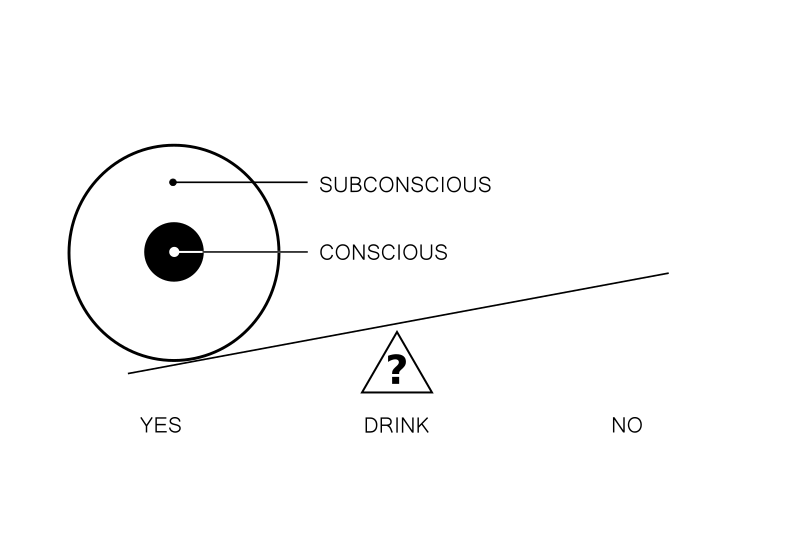
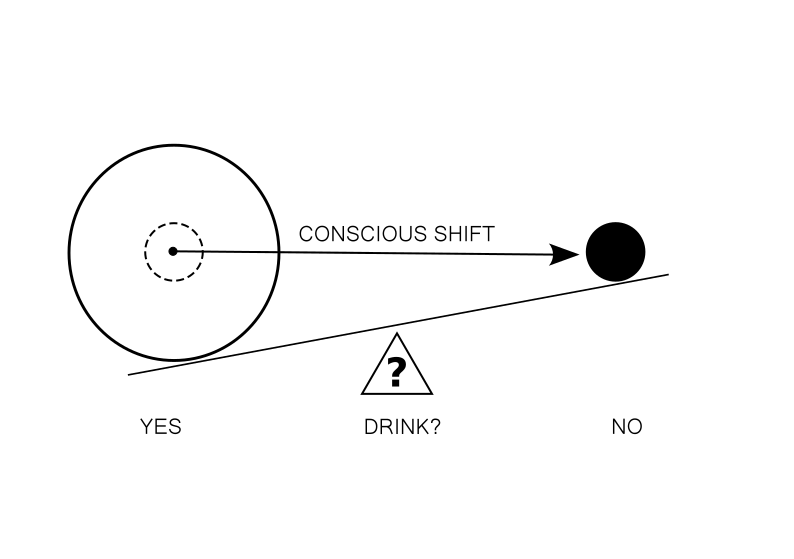
In terms of sobriety, the two minds are fragmented. They want different things. And the subconscious is the one that throws its weight around to get what it wants in the long run. Changing it is like turning around a tanker. That’s the bad news, but you already know this. The good news is that it has weaknesses: it’s not that smart. It has no ability to think for itself. It has no ability to accept or reject ideas. It just accepts whatever gets into it. (We’ll cover how things get into the subconscious later.) The conscious mind on the other hand is more agile. More cunning. It can strategise and plan. It’s just that it’s fickle, weak, and has very little stamina. But if it understands itself and the opponent, knows the territory, and can anticipate what’s coming, it can win. It’s like jiu jitsu: leverage and technique allow a smaller competitor to overcome the larger. So let’s start by understanding the dynamics at play to see who wins the behaviour game, when, and why.
--PLAY TIME
For most of your life, you weren’t even aware there was a fight. Your conscious mind thought that going out and getting wasted with your friends was an excellent idea. It was a badge of honour to down several shots, and because all of your friends were doing it, your subconscious was into it too. Your subconscious and conscious minds were aligned and were essentially in cahoots to beat you up. Behaviour is firmly balanced towards drinking.
 --MAKE IT STOP
This dynamic can only go on until the damage is hurting and it’s not funny anymore. The conscious mind realises it’s got a big problem: it’s in the cage with a 500-pound gorilla and it likes to play. The door is locked and you are going to duke this out one way or another. You need to put the toys away. You don’t have the skills or strength to deal with this. Plus, you’re absolutely exhausted from all the fun you’ve been having before you realised that it isn’t ending anytime soon. The behaviour is firmly balanced towards drinking. But hope is here.
--MAKE IT STOP
This dynamic can only go on until the damage is hurting and it’s not funny anymore. The conscious mind realises it’s got a big problem: it’s in the cage with a 500-pound gorilla and it likes to play. The door is locked and you are going to duke this out one way or another. You need to put the toys away. You don’t have the skills or strength to deal with this. Plus, you’re absolutely exhausted from all the fun you’ve been having before you realised that it isn’t ending anytime soon. The behaviour is firmly balanced towards drinking. But hope is here.
 Until the next time...
But before I go, remember: working on sobriety is an iterative process. We never fail, only learn. Be kind to yourself and never give up.
Marky
#sobriety #sober #getsober #sobercoach #sobercoaching #sobrietycoach #sobrietycoaching #quitbooze #quitdrinking #stopdrinking #alcohol #alcoholfree #getsober08
Until the next time...
But before I go, remember: working on sobriety is an iterative process. We never fail, only learn. Be kind to yourself and never give up.
Marky
#sobriety #sober #getsober #sobercoach #sobercoaching #sobrietycoach #sobrietycoaching #quitbooze #quitdrinking #stopdrinking #alcohol #alcoholfree #getsober08
--MAKE IT STOP
This dynamic can only go on until the damage is hurting and it’s not funny anymore. The conscious mind realises it’s got a big problem: it’s in the cage with a 500-pound gorilla and it likes to play. The door is locked and you are going to duke this out one way or another. You need to put the toys away. You don’t have the skills or strength to deal with this. Plus, you’re absolutely exhausted from all the fun you’ve been having before you realised that it isn’t ending anytime soon. The behaviour is firmly balanced towards drinking. But hope is here.
Until the next time...
But before I go, remember: working on sobriety is an iterative process. We never fail, only learn. Be kind to yourself and never give up.
Marky
#sobriety #sober #getsober #sobercoach #sobercoaching #sobrietycoach #sobrietycoaching #quitbooze #quitdrinking #stopdrinking #alcohol #alcoholfree #getsober08 Thoughts, feelings, actions. That's how it works....
What are you thinking?
GET SOBER 07: TWO MINDS AND THE BODY
Do you really know who you are?
You want to drink and you don't.
What's all that about? It's because there's more to you than just you.
For the sake of simplicity—and to provide us with a useful model of our behaviour—we will break down "you" into three components: the conscious mind, the subconscious mind, and the body. Together, these three elements are experiencing and engaging in the addictive behaviour while simultaneously trying to find a way out.
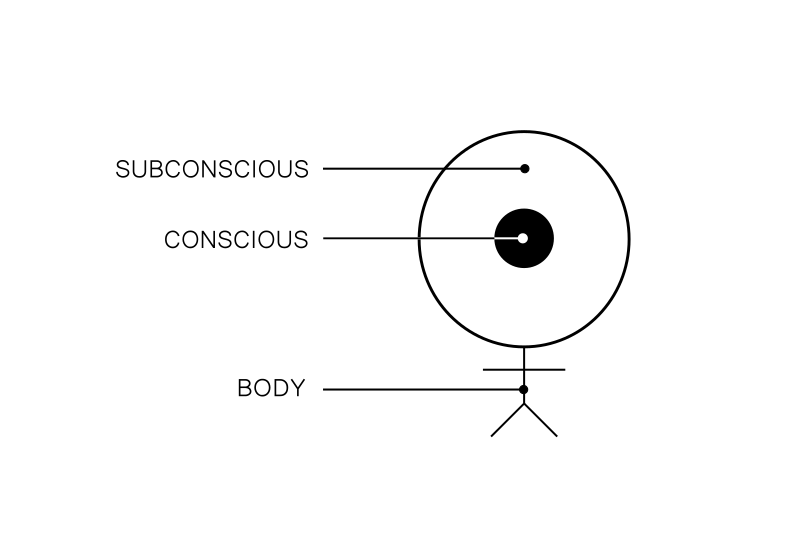 Let’s take a look at each of these and see what role they play.
THE BODY
The simplest to describe is the body. Essentially, it's just a passive instrument—a dumb terminal. It acts as a vessel, carrying out the commands of the two minds. In the context of addictive behaviour, it's like the minion of the two minds, running errands such as fetching another bottle of wine before the store shuts; the same drive to head to the gym at the start of the day is mysteriously absent. From the body's perspective, one of these choices leads to a dreadful hangover, regret, an empty wallet, and a shell of a person. The other promises a rush of endorphins and a healthier, stronger version of itself. This is not to say that the body doesn’t have huge importance in recovery, just that working with the body is generally downstream of the two minds. Improving the health of the body does, however, feed back into the health of the minds.
CONSCIOUS MIND
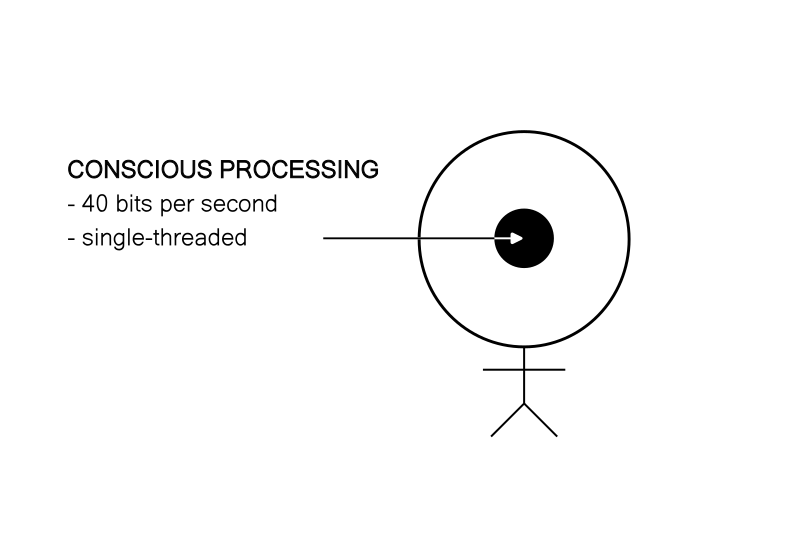
The conscious mind is the one through which you are currently perceiving these words. It's the ego—the one you use to reason with. It's the voice in your head that says, "I'm never drinking again." It handles basic arithmetic tasks, such as 2+2. If you think to yourself "scratch my nose," your body gets to work and makes it happen. The conscious mind is profoundly useful, but it doesn't encompass your entire being. Rather, you should view it as a tool for specific functions and tasks, not the go-to for solving long-term behavioural patterns. In reality, it influences only about 5% of behaviour. That’s not a lot considering how many people identify solely with their conscious mind.
As the rational component of the two minds, it recognizes (rationally) that your behaviour is out of control. But the conscious mind operates solely on what it has encountered in the past and present. It can only make decisions based on what it knows and has experienced. This is a crucial point because when you're trying to stop drinking, and you aren’t using a holistic strategy, you're basically asking your conscious mind to do something totally new, something it's never done before nor knows anything about.
Let’s take a look at each of these and see what role they play.
THE BODY
The simplest to describe is the body. Essentially, it's just a passive instrument—a dumb terminal. It acts as a vessel, carrying out the commands of the two minds. In the context of addictive behaviour, it's like the minion of the two minds, running errands such as fetching another bottle of wine before the store shuts; the same drive to head to the gym at the start of the day is mysteriously absent. From the body's perspective, one of these choices leads to a dreadful hangover, regret, an empty wallet, and a shell of a person. The other promises a rush of endorphins and a healthier, stronger version of itself. This is not to say that the body doesn’t have huge importance in recovery, just that working with the body is generally downstream of the two minds. Improving the health of the body does, however, feed back into the health of the minds.
CONSCIOUS MIND
The conscious mind is the one through which you are currently perceiving these words. It's the ego—the one you use to reason with. It's the voice in your head that says, "I'm never drinking again." It handles basic arithmetic tasks, such as 2+2. If you think to yourself "scratch my nose," your body gets to work and makes it happen. The conscious mind is profoundly useful, but it doesn't encompass your entire being. Rather, you should view it as a tool for specific functions and tasks, not the go-to for solving long-term behavioural patterns. In reality, it influences only about 5% of behaviour. That’s not a lot considering how many people identify solely with their conscious mind.
As the rational component of the two minds, it recognizes (rationally) that your behaviour is out of control. But the conscious mind operates solely on what it has encountered in the past and present. It can only make decisions based on what it knows and has experienced. This is a crucial point because when you're trying to stop drinking, and you aren’t using a holistic strategy, you're basically asking your conscious mind to do something totally new, something it's never done before nor knows anything about.
 SUBCONSCIOUS MIND
The subconscious mind is a fundamentally distinct entity. And it’s a big one. It’s the majority shareholder in your decisions and behaviour. It's responsible for involuntary actions like regulating your heartbeat, blinking, breathing, and generally keeping you alive and safe from danger. Continuously active, it operates beyond the conscious mind's awareness and drives approximately 95% of your behaviour. It likes to operate in the familiar, favouring what it knows to be safe and comfortable. Unfortunately, for you, what it knows to be safe and comfortable is alcohol dependency and its accompanying experiences.
So how did it come to the conclusion that this addictive behaviour is a smart thing to do? In one word: environment. Because the subconscious is inherently fixated on safety, whilst also being deeply social in nature, it perceives safety as alignment with the larger social group or herd. The subconscious constantly scans its environment with a bandwidth much, much wider than that of the conscious mind. It then tallies the most repetitive, familiar content in its surroundings and then aligns with it.
SUBCONSCIOUS MIND
The subconscious mind is a fundamentally distinct entity. And it’s a big one. It’s the majority shareholder in your decisions and behaviour. It's responsible for involuntary actions like regulating your heartbeat, blinking, breathing, and generally keeping you alive and safe from danger. Continuously active, it operates beyond the conscious mind's awareness and drives approximately 95% of your behaviour. It likes to operate in the familiar, favouring what it knows to be safe and comfortable. Unfortunately, for you, what it knows to be safe and comfortable is alcohol dependency and its accompanying experiences.
So how did it come to the conclusion that this addictive behaviour is a smart thing to do? In one word: environment. Because the subconscious is inherently fixated on safety, whilst also being deeply social in nature, it perceives safety as alignment with the larger social group or herd. The subconscious constantly scans its environment with a bandwidth much, much wider than that of the conscious mind. It then tallies the most repetitive, familiar content in its surroundings and then aligns with it.
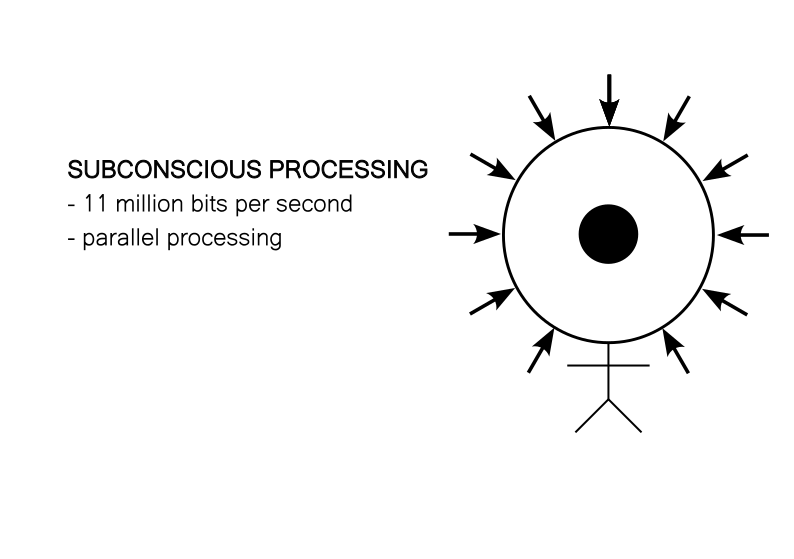 Utilizing the vast amount of information it consumes, the subconscious mind functions as a scale, weighing all environmental content and steering you towards the most repetitive patterns. Consider all the nights out, visits to pubs, weddings, parties, festive occasions like Christmas, Friday nights, weekends, drinks at sporting events, concerts, and more. Collectively, these experiences carry a huge amount of weight, all of which strengthen the subconscious mind's resolve to perpetuate the very same behaviours. Trying to override such deeply ingrained programming with only conscious intention is futile in the long run. Eventually, the subconscious mind exerts its influence and floats a thought into the conscious mind, such as "just one won't hurt." The conscious mind perceives and rationalises it as its own idea, and then the body acts it out as a behaviour.
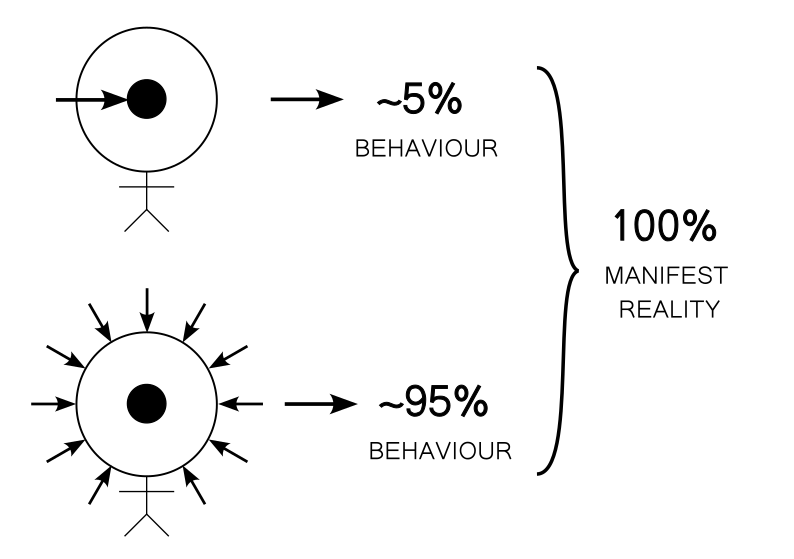 What we need to do to change all of this is not just for the conscious mind to make the decision to stop; we need to use the conscious mind to grasp these dynamics and then collaborate with the subconscious. By capitalizing on the strengths of each, and working around their shortcomings, we can develop a more effective strategy for altering behaviour.
So, that's basically you in a nutshell. And for now that's all...
But before I go, remember: working on sobriety is an iterative process. We never fail, only learn. Be kind to yourself and never give up.
Marky
#sobriety #sober #getsober #sobercoach #sobercoaching #sobrietycoach #sobrietycoaching #quitbooze #quitdrinking #stopdrinking #alcohol #alcoholfree #getsober07 #dopamine
What we need to do to change all of this is not just for the conscious mind to make the decision to stop; we need to use the conscious mind to grasp these dynamics and then collaborate with the subconscious. By capitalizing on the strengths of each, and working around their shortcomings, we can develop a more effective strategy for altering behaviour.
So, that's basically you in a nutshell. And for now that's all...
But before I go, remember: working on sobriety is an iterative process. We never fail, only learn. Be kind to yourself and never give up.
Marky
#sobriety #sober #getsober #sobercoach #sobercoaching #sobrietycoach #sobrietycoaching #quitbooze #quitdrinking #stopdrinking #alcohol #alcoholfree #getsober07 #dopamine
Let’s take a look at each of these and see what role they play.
THE BODY
The simplest to describe is the body. Essentially, it's just a passive instrument—a dumb terminal. It acts as a vessel, carrying out the commands of the two minds. In the context of addictive behaviour, it's like the minion of the two minds, running errands such as fetching another bottle of wine before the store shuts; the same drive to head to the gym at the start of the day is mysteriously absent. From the body's perspective, one of these choices leads to a dreadful hangover, regret, an empty wallet, and a shell of a person. The other promises a rush of endorphins and a healthier, stronger version of itself. This is not to say that the body doesn’t have huge importance in recovery, just that working with the body is generally downstream of the two minds. Improving the health of the body does, however, feed back into the health of the minds.
CONSCIOUS MIND
The conscious mind is the one through which you are currently perceiving these words. It's the ego—the one you use to reason with. It's the voice in your head that says, "I'm never drinking again." It handles basic arithmetic tasks, such as 2+2. If you think to yourself "scratch my nose," your body gets to work and makes it happen. The conscious mind is profoundly useful, but it doesn't encompass your entire being. Rather, you should view it as a tool for specific functions and tasks, not the go-to for solving long-term behavioural patterns. In reality, it influences only about 5% of behaviour. That’s not a lot considering how many people identify solely with their conscious mind.
As the rational component of the two minds, it recognizes (rationally) that your behaviour is out of control. But the conscious mind operates solely on what it has encountered in the past and present. It can only make decisions based on what it knows and has experienced. This is a crucial point because when you're trying to stop drinking, and you aren’t using a holistic strategy, you're basically asking your conscious mind to do something totally new, something it's never done before nor knows anything about.
SUBCONSCIOUS MIND
The subconscious mind is a fundamentally distinct entity. And it’s a big one. It’s the majority shareholder in your decisions and behaviour. It's responsible for involuntary actions like regulating your heartbeat, blinking, breathing, and generally keeping you alive and safe from danger. Continuously active, it operates beyond the conscious mind's awareness and drives approximately 95% of your behaviour. It likes to operate in the familiar, favouring what it knows to be safe and comfortable. Unfortunately, for you, what it knows to be safe and comfortable is alcohol dependency and its accompanying experiences.
So how did it come to the conclusion that this addictive behaviour is a smart thing to do? In one word: environment. Because the subconscious is inherently fixated on safety, whilst also being deeply social in nature, it perceives safety as alignment with the larger social group or herd. The subconscious constantly scans its environment with a bandwidth much, much wider than that of the conscious mind. It then tallies the most repetitive, familiar content in its surroundings and then aligns with it.
Utilizing the vast amount of information it consumes, the subconscious mind functions as a scale, weighing all environmental content and steering you towards the most repetitive patterns. Consider all the nights out, visits to pubs, weddings, parties, festive occasions like Christmas, Friday nights, weekends, drinks at sporting events, concerts, and more. Collectively, these experiences carry a huge amount of weight, all of which strengthen the subconscious mind's resolve to perpetuate the very same behaviours. Trying to override such deeply ingrained programming with only conscious intention is futile in the long run. Eventually, the subconscious mind exerts its influence and floats a thought into the conscious mind, such as "just one won't hurt." The conscious mind perceives and rationalises it as its own idea, and then the body acts it out as a behaviour.
What we need to do to change all of this is not just for the conscious mind to make the decision to stop; we need to use the conscious mind to grasp these dynamics and then collaborate with the subconscious. By capitalizing on the strengths of each, and working around their shortcomings, we can develop a more effective strategy for altering behaviour.
So, that's basically you in a nutshell. And for now that's all...
But before I go, remember: working on sobriety is an iterative process. We never fail, only learn. Be kind to yourself and never give up.
Marky
#sobriety #sober #getsober #sobercoach #sobercoaching #sobrietycoach #sobrietycoaching #quitbooze #quitdrinking #stopdrinking #alcohol #alcoholfree #getsober07 #dopamineWORKSHOP (SHORT-TERM): START YOUR CLOCK
If you you have nothing to show for what you've done, you're less likely to do more.
Let's change that.
One of the first things that you can do is download and start a sobriety clock. Obviously, sobriety clocks track the amount of time that has passed since you last drank. Simple. It seems like quite an insignificant thing to do given the scale of the problem, but it is a very powerful action, and it becomes increasingly powerful as the number gets larger. This minor action on day one has major, major impact when you start knocking down the months. And then years. One day you’ll look at that thing and defend it with your life.
The clock works for several reasons, but put simply, whatever gets tracked is far more likely to get done. It’s like writing a to-do list: if you write it down, the chance of doing whatever is on it is much higher. You are essentially taking your abstract thoughts and intentions and externalising them. Once they exist in both the abstract and physical, they are closer to becoming the actual. But more than that, it’s clarity of direction and responsibility, it’s a tool of accountability, and it’s positive reinforcement. The milestones start out as small victories but quickly become the difference when temptation shows its face. Throw in a money-saved feature and it’s pure fire.
If you have tried AA, you’ll know that the years of sobriety become known as birthdays. I always found this to be an emotionally powerful practice; as the number of years increases, it is an increasingly powerful symbol of pride, progress, hard work and achievement. Every time it goes up, it cements in place the new life that you have. The term “birthday” is very fitting. Start the clock.
And for now that's all...
But before I go, remember: working on sobriety is an iterative process. We never fail, only learn. Be kind to yourself and never give up.
Marky
#sobriety #sober #getsober #sobercoach #sobercoaching #sobrietycoach #sobrietycoaching #quitbooze #quitdrinking #stopdrinking #alcohol #alcoholfree #getsober #workshop
GET SOBER 06: DOPAMINE VS DOPAMINE
Dopamine is two faced.
It has no allegiances other than to whatever it wants the most....
This is good news, because you can and do want different things. If you are reading this, then you clearly don’t want to be drinking. But also, you do want to drink because you do. So we have an interesting conflict arise where the dopamine circuits appear to be in direct competition with one another. Essentially, the winner is determined by whichever one is stronger, although what exactly defines strength in terms of dopaminergic desires is complex. Time, place, energy levels, environment, people… it’s difficult to know exhaustively the factors in play. Observation of yourself, your behaviour, and the machinations of these competing desires will help you to understand how they operate. Awareness is the first step toward change, and just like a muscle, you can exercise and strengthen the desires that are healthy, and leave the undesirable ones to atrophy.
The part of your “want” mode that wants to stop is already on the ascendancy. You really want to stop, and the dopamine is what’s compelling you to keep reading. And it will continue to propel you forward because you want it. From here, you just need to accumulate enough knowledge and experience to overcome the other desire.
-THE TWO CIRCUITS
Before we move on to look at the conscious and subconscious minds, it’s crucial to understand that the dopamine circuit comprises two sequential, but different circuits. Each of these circuits performs a different role in the act of getting something. Understanding this structure helps us to weaponise the dopamine system against itself and puts us in a position of strength moving forward.
The first of the two circuits is called the dopamine desire circuit. The desire circuit is the portion of the dopamine system that involuntarily fires in response to some kind of stimuli. (We will consider this circuit a subset of involuntary behaviour the subconscious mind.) When the desire circuit activates, the associated dopamine draws your attention, focuses the mind, and produces desire for a particular object or outcome. It has no plan about how to get whatever it has set its eyes on: it just stimulates pure desire for whatever it is.
In terms of competing desires, a weighing process takes place. The relative weight of conflicting desires at any one point depends on the wider context and a variety of factors as discussed previously.
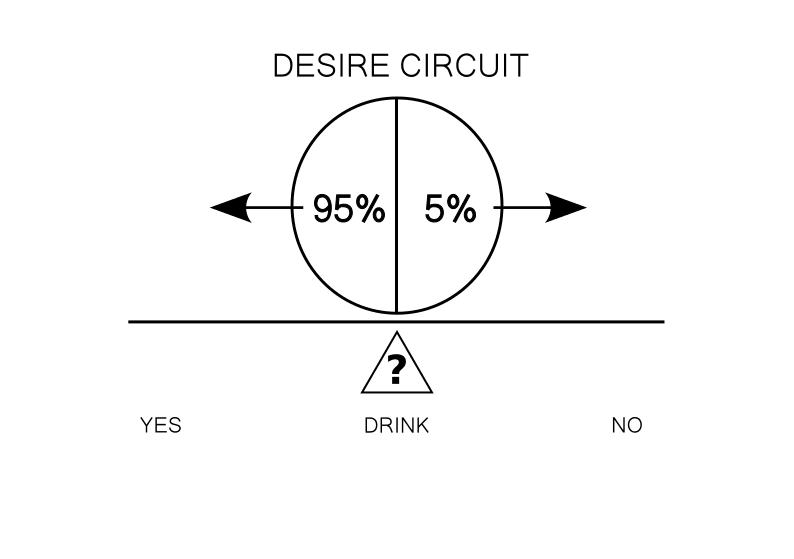 One of the two desires out competes the other, and the scales tip in favour of that particular desire. The winning desire is then fed to the second circuit.
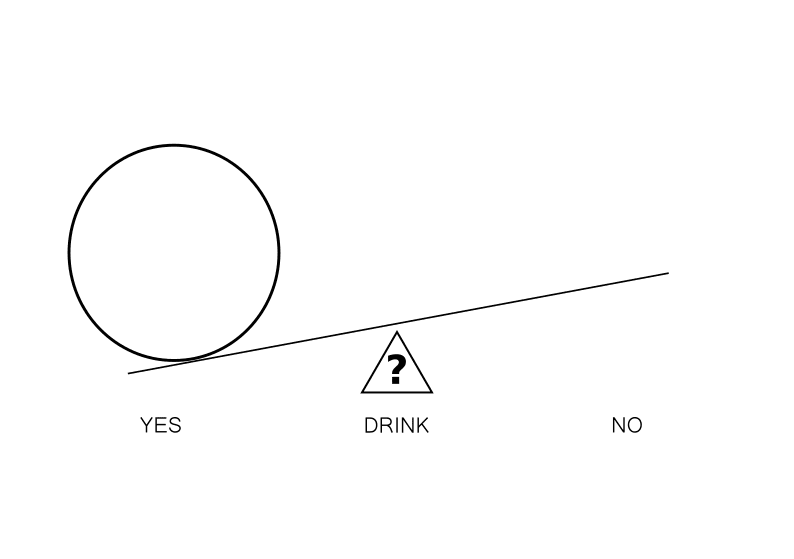 The second circuit is known as the dopamine control circuit. Once the desire has been stimulated, the job of the control circuit—again powered by dopamine—is to work out how to get results, how to maximise those results, whether it’s worth it in the first place, and if so, what is it worth to get there. It thinks, identifies obstacles and accomplices, strategises, plans, and implements whatever it deems to be the best course of action. (We will consider this circuit a subset of voluntary behaviour or the conscious mind.)
The following image illustrates this process: the dominant desire circuit decides what it wants and instructs the subservient control circuit to go and do its bidding.
The second circuit is known as the dopamine control circuit. Once the desire has been stimulated, the job of the control circuit—again powered by dopamine—is to work out how to get results, how to maximise those results, whether it’s worth it in the first place, and if so, what is it worth to get there. It thinks, identifies obstacles and accomplices, strategises, plans, and implements whatever it deems to be the best course of action. (We will consider this circuit a subset of voluntary behaviour or the conscious mind.)
The following image illustrates this process: the dominant desire circuit decides what it wants and instructs the subservient control circuit to go and do its bidding.
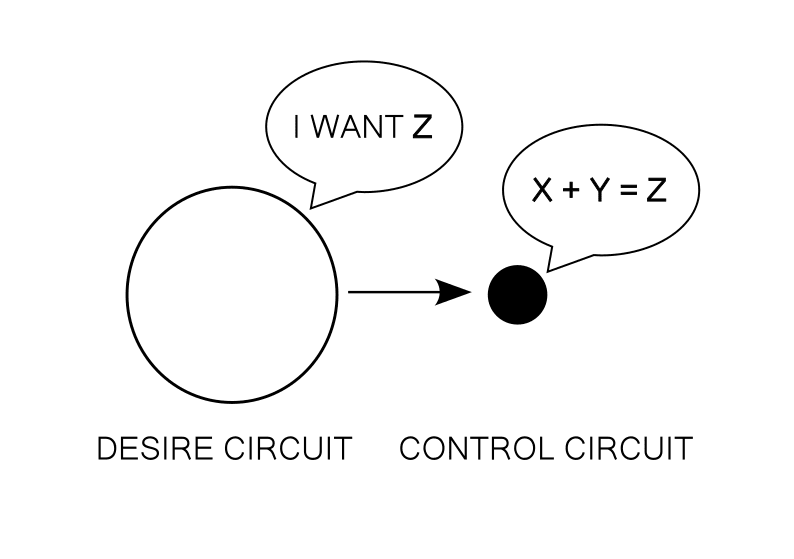 You can think of the desire circuit like a child who sees a new toy advertised on TV. They identify it as something they simply must have, even though it costs a fortune. They are going to keep pestering their parents relentlessly to try and get what they want. The parents (the control circuit) not wanting to upset the child because they have been well behaved recently, will look into whether they can afford it, where they can get it cheapest, whether there are any discount codes available, and so on. If they can make it happen then they’ll execute and get the toy. If the cost is too high, or the sacrifice elsewhere is too great, they’ll back out and deal with the child nagging. A nagging child is easier to deal with than Child Protection Services knocking at your door to find out why you are sending your child to school with no shoes.
If the desire circuit decides that it wants to drink more than not, the control circuit goes to work to make it happen: Where can I buy alcohol? Do I need money? How can I get there? And so on. If the desire circuit decides it doesn’t want to drink more than it does, it goes to work to make that happen instead: Where can I get help? What excuse can I give not to go to my best friend’s birthday party? How do I get to sleep without a drink? And so on.
So, that's basically what's happening. And for now that's all...
But before I go, remember: working on sobriety is an iterative process. We never fail, only learn. Be kind to yourself and never give up.
Marky
#sobriety #sober #getsober #sobercoach #sobercoaching #sobrietycoach #sobrietycoaching #quitbooze #quitdrinking #stopdrinking #alcohol #alcoholfree #getsober06 #dopamine
You can think of the desire circuit like a child who sees a new toy advertised on TV. They identify it as something they simply must have, even though it costs a fortune. They are going to keep pestering their parents relentlessly to try and get what they want. The parents (the control circuit) not wanting to upset the child because they have been well behaved recently, will look into whether they can afford it, where they can get it cheapest, whether there are any discount codes available, and so on. If they can make it happen then they’ll execute and get the toy. If the cost is too high, or the sacrifice elsewhere is too great, they’ll back out and deal with the child nagging. A nagging child is easier to deal with than Child Protection Services knocking at your door to find out why you are sending your child to school with no shoes.
If the desire circuit decides that it wants to drink more than not, the control circuit goes to work to make it happen: Where can I buy alcohol? Do I need money? How can I get there? And so on. If the desire circuit decides it doesn’t want to drink more than it does, it goes to work to make that happen instead: Where can I get help? What excuse can I give not to go to my best friend’s birthday party? How do I get to sleep without a drink? And so on.
So, that's basically what's happening. And for now that's all...
But before I go, remember: working on sobriety is an iterative process. We never fail, only learn. Be kind to yourself and never give up.
Marky
#sobriety #sober #getsober #sobercoach #sobercoaching #sobrietycoach #sobrietycoaching #quitbooze #quitdrinking #stopdrinking #alcohol #alcoholfree #getsober06 #dopamine
One of the two desires out competes the other, and the scales tip in favour of that particular desire. The winning desire is then fed to the second circuit.
The second circuit is known as the dopamine control circuit. Once the desire has been stimulated, the job of the control circuit—again powered by dopamine—is to work out how to get results, how to maximise those results, whether it’s worth it in the first place, and if so, what is it worth to get there. It thinks, identifies obstacles and accomplices, strategises, plans, and implements whatever it deems to be the best course of action. (We will consider this circuit a subset of voluntary behaviour or the conscious mind.)
The following image illustrates this process: the dominant desire circuit decides what it wants and instructs the subservient control circuit to go and do its bidding.
You can think of the desire circuit like a child who sees a new toy advertised on TV. They identify it as something they simply must have, even though it costs a fortune. They are going to keep pestering their parents relentlessly to try and get what they want. The parents (the control circuit) not wanting to upset the child because they have been well behaved recently, will look into whether they can afford it, where they can get it cheapest, whether there are any discount codes available, and so on. If they can make it happen then they’ll execute and get the toy. If the cost is too high, or the sacrifice elsewhere is too great, they’ll back out and deal with the child nagging. A nagging child is easier to deal with than Child Protection Services knocking at your door to find out why you are sending your child to school with no shoes.
If the desire circuit decides that it wants to drink more than not, the control circuit goes to work to make it happen: Where can I buy alcohol? Do I need money? How can I get there? And so on. If the desire circuit decides it doesn’t want to drink more than it does, it goes to work to make that happen instead: Where can I get help? What excuse can I give not to go to my best friend’s birthday party? How do I get to sleep without a drink? And so on.
So, that's basically what's happening. And for now that's all...
But before I go, remember: working on sobriety is an iterative process. We never fail, only learn. Be kind to yourself and never give up.
Marky
#sobriety #sober #getsober #sobercoach #sobercoaching #sobrietycoach #sobrietycoaching #quitbooze #quitdrinking #stopdrinking #alcohol #alcoholfree #getsober06 #dopamine