Paper is still the best interoperable neutral substrate we have.
That is, until #nostr came along…

Sorry, Billionaires—There’s No Escape
By David Mamet Mr. Mamet is a playwright, film director and screenwriter.
The Wall Street Journal
Aug 07, 2025
For many years I flew airplanes out of the Santa Monica Airport, 2 miles from my home. I told a fellow pilot that one benefit of the license and the plane was the ability to extract my family from a societal breakdown. He agreed but noted that the difficulty would be the last hundred yards before the airport.
Now comes news that American billionaires have prepared compounds in New Zealand in case of apocalypse. Thoughtfully stocked with all that the group would require—air, water, food, entertainment—they stand ready to receive the ultraprivileged. Well and good, but their fantasy, like mine, is flawed. For what is the size of the group for which they foresee transportation, protection and perpetual care?
The Ottoman Turks raised enslaved Mamelukes to the status first of guards and then of administrators, and all was well until the ’Lukes did the math and realized they didn’t need the Turks.
Some of the pilots of the billionaires’ getaway planes would surely have families. Happily married pilots would logically insist the families come along for the ride rather than stay and die. The billionaires’ wealth would avail them nothing, for they couldn’t escape without the pilots or pay a man enough to forfeit his family’s life.
Yes, the wealthy would have armed guards to ensure their own family got safely on board. Wouldn’t the guards insist they and their loved ones go along too? Of course they would.
The ground crews servicing the planes would, by this logic, act similarly. If staying behind meant death, what would they risk by demanding their inclusion? What’s the rich guy going to do, stop their paycheck? His plane offers the sole escape.
There would be a limitation: The plane can only carry so much weight. If overloaded, it won’t fly. At some point those on the plane would have to use arms to keep the latecomer hordes off.
The guards, then, would realize themselves to be the enlightened Mamelukes. If they are the only ones capable of keeping order, and if money is now useless, they have no need of their employer. On the plane he would be dead weight—and in the New Zealand bunker, just a useless mouth to feed. The caretakers, builders, security guards, and so on, of the compound, would insist on being accommodated—if they hadn’t already barricaded themselves in and locked the plutocrats out.
The World After Society for which the billionaires are preparing is a world without money.
I recall a West Side Manhattan woman, working as a maid. On the way to work her husband called to report they’d just won $100 million in the lottery. She said she’d see him that night after going to work for one last day. In the elevator, however, I’m sure she realized: “Uh . . .”
Is cryptocurrency a scam? Probably, but one wouldn’t know unless and until the chain letter runs out. Which is, of course, true of all fiat currency. Of gold, at least, one can say, “It’s right there, you can see it. It’s in Fort Knox.” You can’t say of crypto: “It’s right there—the ‘nothing’ is right there.”
When the escape plane has reached its weight limit, and at the Dawn of Reason like that of the ex-maid, the first ones thrown out the door would be the billionaire, its former owner, now revealed as ballast.
We see a similar devolution of power in an unhealthy family. If the parents are weak—that is, if they don’t use parental authority or influence to ensure the happy growth, prosperity, and integrity of the group—their leadership may be usurped by the anxious dependents: the demanding or belligerent child, the hypochondriac aunt, the radical adolescent and so on. The Bible cautions about the oppression of “a servant when he reigneth.” We see the same capacity for coercion, often, in the family member whose name, in conversation, is prefaced by “poor.”
We all know the stories of adults who went on vacation, leaving the adolescent kids to “watch the house.”
The old British lords of the manor, like today’s rich, were exploited not only by their lackeys and suppliers, but by those empowered to guard against such deprivations. The butler got a kickback from the butcher’s overcharges, the billionaire’s personal shoppers from the merchants of luxury rubbish.
Absentee ownership engenders defalcation. James Gordon Bennett Jr. (1841-1918) was wealthy beyond the dreams of avarice, alcoholic and eccentric. Although he was seldom on the premises, his Paris home was staffed and run as if he were. The servants were ordered to place a cup of hot milk and a biscuit by his bed, each evening at 11. They did so through years of his absence, in which the milk cooled and no one came for his cookie.
We might think they eventually skipped a night or two of pointless waste; but they must have thought otherwise. For to neglect the milk and cookie opened them to betrayal by their fellow servants—as, in fact, did even a poor-willed performance or a facetious expression. That the charade be performed without rolled eyes required suppression even of disloyal thoughts. For the thoughts themselves might be intuited by one’s co-workers, and so lead to denunciation.
If, however, word came from New York that Bennett was in a coma from which he wouldn’t recover, or were sufficiently injured to insure against his return, the Paris staff would instantly devolve into conspiracy. If the master wasn’t returning but the money still flowed, the resources devoted to the bedtime snack could be put to the staff’s personal use.
Two related questions would arise, at their first kitchen conclave— how much they could steal without discovery, and how the thefts would be regulated and apportioned.
The kitchen, thus, becomes the Revolutionaries’ Jeu de Paume, the loyal Staff forms a Committee of Public Safety, and their Constitution is a thieves’ compact. See also the four years of the Biden administration.
Shared via PressReader
connecting people through news
This seems pretty far-fetched: Neanderthals went extinct because they didn’t have sunscreen?
I prefer the theory that Neanderthals got out-competed by Homo Sapiens because they could not figure out trade.
Ultraviolet radiation played a big role in the extinction of the Neanderthals.The Wall Street Journal
Aug 07, 2025
What happened Neanderthals?
Our ancestral cousins went mysteriously extinct around 40,000 years ago, while Homo sapiens did not.
The demise of one and survival of the other continues to flummox paleoanthropologists—but some researchers now think sunscreen and tailored clothing might have played a role.
Around the time Neanderthals bit the dust, a weakening of the Earth’s magnetic field resulted in exposure to higher doses of harmful ultraviolet radiation.
Clothing would have offered some protection. Both groups wore animal skins, but evidence suggests Neanderthals tended to wear loose-fitting cloaks, while Homo sapiens sewed form-fitting garments. Homo sapiens also coated themselves with mineral pigments, which would have functioned as an ancient SPF.
It is unlikely that these differences in behavior alone would explain the Neanderthals’ demise, but researchers think that their exposure to increased radiation would have had detrimental effects.
The increased exposure occurred when Earth’s north and south magnetic poles began to wander from their traditional positions.
The rotation of the planet and its molten core help generate a protective magnetic field that keeps the planet’s ozone layer robust and protects inhabitants from highenergy particles that constantly flow from the sun. The field is anchored at the poles, where magnetic forces are most concentrated. But small changes in the core can cause the poles to wander.
During the twilight of the Neanderthals, such a wandering caused the magnetic field to drop to about 10% of its average strength. Scientists call this the Laschamps event.
To test the effects of the Laschamps, Agnit Mukhopadhyay, a University of Michigan space scientist, and his group created 3-D models of what Earth’s magnetic field would have looked like during the event. The results, published in the journal Science Advances, showed where the magnetic field was compromised, allowing radiation and particles to slip through.
Researchers know the magnetic field went haywire way back then by examining minerals smaller than the width of a human hair found within ancient deep-sea sediments and volcanic rocks. These tiny grains, which contain iron, become magnetized, and their alignment offers clues about the state of Earth’s magnetic field at the time.
The researchers’ analysis suggests Earth’s northern and southern latitudes up to 40 degrees would have been disproportionately affected by the weakening. This area in the Northern Hemisphere—including what is today Spain—is where many Neanderthal and Homo sapiens populations lived.
“As an anthropologist, I was intrigued, because I think a lot about how climate and weather might have affected Homo sapiens and other species, but I never thought about space,” said Raven Garvey, a professor of anthropology at the University of Michigan and Mukhopadhyay’s co-author.
For about a millennium or two, during the Laschamps event, Earth would have experienced higher levels of invisible, cosmic radiation.
But the impact of a thinner ozone layer wasn’t just about increased radiation exposure. It also would have affected cloud cover, wind belts, rainfall and general weather patterns.
Mukhopadhyay’s group suggested two theories of what helped Homo sapiens, who interbred with Neanderthals, to survive: the use of a primitive kind of sunscreen known as ocher—a naturally occurring pigment composed of iron oxide often used for cave art—to protect their bodies from the sun, and clothing that hugged the body and covered more skin.
Shared via PressReader
connecting people through news
Just build.

‘We should get together in person and talk…’
‘Talk? We’ll just bitchat each other.’
A little history on medieval recordkeeping, courtesy google/gemma-3n-e4b model.
----
Recordkeeping in the Medieval Period: A Cartulary's Tale
In the medieval period, before the advent of widespread printing and standardized filing systems, recordkeeping was a laborious and vital undertaking. The **cartulary**, a manuscript volume containing a collection of charters, documents, and other official records, was a cornerstone of this system. It wasn't just a storage place for documents; it was a carefully curated and strategically managed archive, serving as proof of ownership, agreements, and the history of a lord or institution.
Here's a glimpse into how recordkeeping functioned through the use of a cartulary:
The Cartulary as a Central Repository: A cartulary wasn't simply a pile of papers. It was a meticulously organized manuscript, often bound in leather and adorned with elaborate illuminations. It served as the primary repository for a lord's or institution's legal and administrative documents. These records could include:
Charters: Royal grants, land transfers, permissions, and other official documents issued by rulers.
Contracts: Agreements between lords, tenants, merchants, and other parties.
Inventories: Lists of possessions, including land holdings, livestock, and valuables.
Court Records: Records of legal proceedings, disputes, and judgments.
Correspondence: Letters exchanged with other lords, officials, and institutions.
The Role of the Scribe & Archivist: Creating and maintaining a cartulary was a specialized task. It required skilled scribes, often employed by the lord or institution, who were responsible for:
Transcription: Carefully copying documents from original sources.
Organization: Arranging documents in a logical order, often chronologically or thematically.
Annotation: Adding notes, summaries, and cross-references to provide context and facilitate retrieval.
Illumination: Adding decorative elements, seals, and other visual cues to enhance the document's importance and authenticity.
The Importance of Structure & Access: Cartularies weren’t just collections; they were designed for accessibility. They often employed a system of pagination (numbering pages) and indexing to allow for efficient retrieval of specific documents. The cartulary was a tool used by the lord and their administrators to:
Assert Ownership: Provide irrefutable proof of land holdings and rights.
Manage Finances: Track transactions, debts, and income.
Resolve Disputes: Serve as evidence in legal proceedings.
Maintain Authority: Document decisions and agreements to reinforce power.
Limitations & Challenges: Despite its importance, cartulary-based recordkeeping had limitations:
Accessibility: Cartularies were often kept in secure locations, accessible only to a select few.
Fragility: Manuscripts were vulnerable to damage from fire, water, and pests.
Language Barriers: Documents were often written in Latin or local dialects, requiring specialized knowledge to interpret.
Dependence on Scribes: The accuracy of the records depended heavily on the skill and diligence of the scribes.
In conclusion, the cartulary was far more than a simple archive; it was an integral part of medieval society's administrative and legal infrastructure. It represented a sophisticated system for preserving information, asserting authority, and shaping the historical record – a testament to the importance of organized documentation in an era without modern technology.
“I’m tough. I don’t need painkillers after major dental surgery.”
Three hours later…
My thermostat is an agent.
‘Practice without theory is nothing.’
Use cash. If pressed, use ecash.
‘Liberal’ has its roots not as we might expect in the Latin liber, ‘free’–that is, being the topics suitable for the training of a free man in the ancient world–but in liber, ‘book’: they were subjects to be learnt by reading. Cicero listed them as geometry, literature, poetry, natural science, ethics and politics.
There is no greater test of willpower than mini donuts.
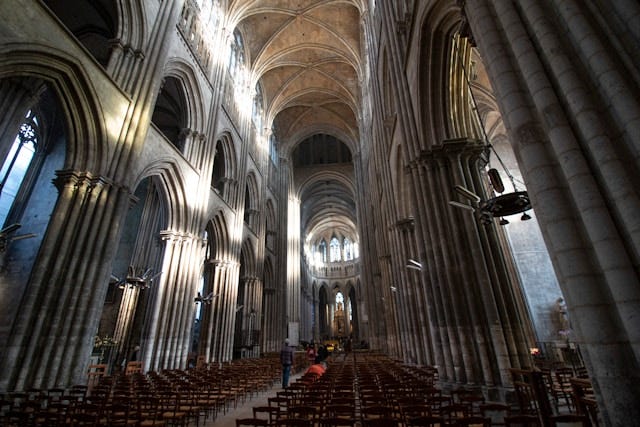
The emerging architecture of decentralized, intention-based communication systems bears a striking resemblance to the creation of the Chartres Cathedral—a monumental achievement of Gothic architecture that arose not from a single plan or authority, but from the confluence of multiple forces: religion, technology, society, and trade. Chartres was not merely a place of worship; it was a manifestation of an evolving worldview, incorporating advances in engineering (ribbed vaults, flying buttresses), theological symbolism (light as divine truth), and the economic vitality of its surrounding community. It stood as both a spiritual and social infrastructure—built over generations, shaped by many hands, and reflective of a shared but dynamic sense of purpose.
Likewise, today’s emerging protocols—like Nostr and others grounded in cryptographic intention—are not just technical artifacts; they are becoming the digital cathedrals of our age. They weave together innovations in cryptography, new models of identity and agency, shifting political consciousness, and a growing demand for autonomy in how we communicate and construct truth. No single actor controls their design. Instead, they evolve organically, informed by open-source collaboration, philosophical inquiry, social critique, and real-world stress-testing. Just as the Gothic cathedral gave physical form to a new way of relating to the divine and to one another, these protocols give informational form to a new way of relating to truth, trust, and intention—one that transcends centralized authority and embraces the complexity of a pluralistic world. They are cathedrals not of stone, but of signed events, public keys, and voluntary association—each block laid with intention, not coercion.
Many existing communication protocols and platform architectures are built on implicit classical worldviews or moral assumptions that become encoded into their foundational design. These may include assumptions about identity (e.g., real-name policies), trust (e.g., reliance on centralized authorities), legitimacy (e.g., content moderation norms), or truth (e.g., algorithmic ranking of “authoritative” sources). While often well-intentioned, these embedded axioms inevitably reflect the values, norms, and power structures of their creators—leading to systems that enforce a particular worldview or authority dynamic. As a result, they tend to privilege certain actors—institutions, governments, corporations—while marginalizing others, particularly those with alternative perspectives, identities, or epistemologies.
This bias is not necessarily the product of malice; rather, it stems from starting at the wrong level of abstraction. When systems begin with assumptions about what is good, true, or acceptable, they lose neutrality and inevitably shape discourse to reflect those assumptions. To address this, one must dig deeper—beneath cultural norms, institutional paradigms, and even classical notions of reality—to identify more fundamental axioms: authorship, intention, uniqueness, and accountability. By anchoring protocol design in these deeper, morally neutral principles, it becomes possible to build communication systems that do not encode hierarchy or ideology, but instead empower all agents equally to express themselves, verify one another, and construct social meaning on their own terms. This shift doesn’t eliminate disagreement or conflict, but it does eliminate the structural inequities imposed by systems that quietly take sides from the start.