Default avatar
npub1zygw...m36h
npub1zygw...m36h
Pagers explode simultaneously in hundreds of Hezbollah members’ pockets https://o.aolcdn.com/images/dims?image_uri=https%3A%2F%2Fs.yimg.com%2Fos%2Fcreatr-uploaded-images%2F2024-09%2F8de428e0-7523-11ef-bbe5-bf46ec61d7b7&resize=1400%2C931&client=19f2b5e49a271b2bde77&signature=5c1587f43e0be3c183f1a20eedb2b53cf0b67323 An attack in Lebanon reportedly killed eight people and injured over 2,700. Hundreds of pagers belonging to Hezbollah members detonated simultaneously on Tuesday, leading the Iran-backed militant organization to blame Israel. A day after Israeli leaders warned of escalating its military campaign against Hezbollah, pagers belonging to the Lebanese group’s members exploded at once. Witnesses reported seeing smoke emanating from the victims’ pockets, followed by sounds reminiscent of fireworks or gunshots. Lebanon’s health minister said 200 of the injured were in critical condition. He added that many victims had facial injuries, especially to the eyes. Hand and stomach injuries were also common, according to the health minister. Among those wounded was Mojtaba Amini, Iran’s ambassador to Lebanon, according to Iranian state media. The New York Times says Israel’s military declined to comment. It’s unclear how the perpetrators orchestrated or carried out the attacks. It’s also unknown whether the pagers were tampered with physically or if the attacks were somehow carried out using software. The latter, as far-fetched as it sounds, could lead to widespread panic about the safety of any battery-containing mobile devices. NYT reports some in Lebanon were scared to use their phones after the attacks, with one resident crying out, “Please hang up, hang up!” to their caller. The Times reports that Hezbollah, long suspicious of cellphone use near the Israeli border due to the devices’ geolocation capabilities, recently switched from mobile phones to pagers. In February, Hezbollah chief Hassan Nasrallah reportedly warned the group that their phones were dangerous and could be used by Israel as spy tools. He advised the group that they should “break or bury them.” Experts reportedly don’t yet know precisely how the pagers were distributed to Hezbollah’s members. They say that Iran, given its history of supplying Hezbollah with arms, tech and other military aid, would have been pivotal to their adoption and delivery. This article originally appeared on Engadget at
After a 15-year hiatus, a new Skate game is coming in 2025 https://o.aolcdn.com/images/dims?image_uri=https%3A%2F%2Fs.yimg.com%2Fos%2Fcreatr-uploaded-images%2F2024-09%2Ffd40e7e0-751f-11ef-bf1f-14bcb2b9bee3&resize=1400%2C757&client=19f2b5e49a271b2bde77&signature=93339c943acfcb29df7c21dcd90b1cde7590c05a Skateboarding games have been going through another golden age the past couple of years with contributions like Devolver’s surrealist skater Skate Story and Phantom Coast Games’ roguelite shredder Helskate. And now new entry in one of the most beloved skateboarding franchises just moved one step closer to getting a release date. EA announced plans for an early access release for a new Skate — simply titled skate. (lower case, with a period) —game next year on the game’s official X account. The update also includes some pre-alpha footage of the new game that’s currently being playtested for consoles and the franchise’s first PC release through Steam. we're incredibly stoked to announce that skate. will be launching in Early Access in 2025. we'll share more details on what to expect in the coming months. pic.twitter.com/ZbFL3WycWu — skate. (@skate) September 17, 2024 Fans of the long-running Skate franchise have been receiving a stream of teases and updates since EA first announced the new entry four years ago. Notably, last June EA informed fans this new title would be a free-to-play live service game with microtransactions (allegedly without any “play-to-win” elements though). The game’s publisher also released new details on its official game dev diary about how it's rebuilding the “Flick-It” trick control system, expanding the game’s character customizations and implementing playtests with feedback from the franchise’s fans. The devs also revealed some interesting details about the game’s core narrative. The new Skate game takes place in the fictional city of San Vansterdam, which has been taken over by a corporate overlord named M-Corp. It seems that M-Corp’s misdeeds are finally catching up to it, meaning that the shreddable city of San Van is open to skaters once again. A teaser video shared an update on M-Corp’s crumbling empire starring I Think You Should Leave star and comedian Tim Robinson as corporate lackey Richard "Richie" Dandle. This article originally appeared on Engadget at
Logitech drops an analog keyboard and new Pro Superlight mice https://o.aolcdn.com/images/dims?image_uri=https%3A%2F%2Fs.yimg.com%2Fos%2Fcreatr-uploaded-images%2F2024-09%2F1b8f6d20-7507-11ef-bd7f-df77d230699d&resize=1400%2C891&client=19f2b5e49a271b2bde77&signature=80f4d7bb9b9c4d897596077118aeeacbd7b4b7e1 Logitech is revealing plenty of new gaming accessories and gear at Logi Play 2024, which is happening right now. Of the many new offerings from Logitech, two keyboards and two mice caught our eye. Let’s start with the G Pro X TKL Rapid Wired Gaming Keyboard, a keyboard featuring magnetic analog switches, a first for the G Pro line. These switches have adjustable actuation points, rapid trigger functionality and key priority. In short, the keyboard lets you customize how hard presses need to be, has speedy key press recognition and the ability to prioritize certain keys when pressing two at once. You can also use the multi-point feature in the G Hub keyboard customization software to assign more than one command to a key depending on how far it’s pressed down. As the name suggests, this is a tenkeyless model (no number pad), and you can get it for $170 in November. The three available colors are black, white and pink. The next keyboard is the G915 X series, a trio of new members of the G915 family (we reviewed the G915 TKL back in 2020). The mechanical keyboards all have a height of 23mm and redesigned galvanic switches with a 1.3mm actuation point. They retain the original volume roller, G key and media buttons, but the Keycontrol feature allows for more macros, even letting users combine the G key with other keys. Logitech The G915 X series includes the G915 X Lightspeed ($230), G915 X Lightspeed TKL ($200) and G915 X Wired Gaming Keyboard ($180). The G915 X Lightspeed is a tenkeyless version of the G915 X Lightspeed, while the G915 X doesn’t support wireless connections but is identical in almost every way to the G915 X Lightspeed. The Lightspeed models can come in black or white, but the wired model is only available in black. They’re all available right now. Moving on to the mice, the G Pro X Superlight 2 Dex Lightspeed wireless gaming mouse is an upgrade of the Pro X Superlight and Pro X Superlight 2, both of which are favorites among current and former Engadget staffers. This new mouse is designed with the help of pro esports athletes, boasting a maximum limit of 44k DPI, 888 IPS acceleration and steady 8kHz polling rate performance. Logitech The Superlight 2 Dex Lightspeed has five buttons and Lightforce switches while weighing only 60 grams. It’s also compatible with Logitech’s PowerPlay wireless charging system. If you’re interested, you get it now for $160 in black, white or pink. For those who like the original G Pro mouse, consider the Pro 2 Lightspeed wireless gaming mouse, an improvement over the old model. The Hero 2 sensors on this one are rated for 32k DPO and over 500 IPS acceleration. The highest polling rate for the Pro 2 Lightspeed is 1kHz. Logitech Similar to the first G Pro, this one weighs 80 grams, perfect for gamers who prefer something heavier. It doesn’t support wireless charging but can work with the Pro Lightspeed receiver for 8kHz polling rates. The receiver will only be available for $30 in October. This mouse is now available for $140 in black, white and pink. This article originally appeared on Engadget at
California passes landmark law requiring actors' permission for AI likenesses https://o.aolcdn.com/images/dims?image_uri=https%3A%2F%2Fs.yimg.com%2Fos%2Fcreatr-uploaded-images%2F2023-11%2Fac749d10-7f0d-11ee-a9ee-08740309f66b&resize=1400%2C950&client=19f2b5e49a271b2bde77&signature=545d6793726470e8a9bb422a184b3b7c255747ce California has given the go-ahead to a landmark AI bill to protect performers' digital likenesses. On Tuesday, Governor Gavin Newsom signed Assembly Bill 2602, which will go into effect on January 1, 2025. The bill requires studios and other employers to get consent before using “digital replicas” of performers. Newsom also signed AB 1836, which grants similar rights to deceased performers, requiring their estate’s permission before using their AI likenesses. AB 2602, introduced in April, covers film, TV, video games, commercials, audiobooks and non-union performing jobs. Deadline notes its terms are similar to those in the contract that ended the 2023 actors’ strike against Hollywood studios. SAG-AFTRA, the film and TV actors’ union that held out for last year’s deal, strongly supported the bill. The Motion Picture Association first opposed the legislation but later switched to a neutral stance after revisions. The bill mandates that employers can’t use an AI recreation of an actor’s voice or likeness if it replaces work the performer could have done in person. It also prevents digital replicas if the actor’s contract doesn’t explicitly state how the deepfake will be used. It also voids any such deals signed when the performer didn’t have legal or union representation. The bill defines a digital replica as a “computer-generated, highly realistic electronic representation that is readily identifiable as the voice or visual likeness of an individual that is embodied in a sound recording, image, audiovisual work, or transmission in which the actual individual either did not actually perform or appear, or the actual individual did perform or appear, but the fundamental character of the performance or appearance has been materially altered.” Meanwhile, AB 1836 expands California’s postmortem right of publicity. Hollywood must now get permission from a decedent's estate before using their digital replicas. Deadline notes that exceptions were included for “satire, comment, criticism and parody, and for certain documentary, biographical or historical projects.” “The bill, which protects not only SAG-AFTRA performers but all performers, is a huge step forward,” SAG-AFTRA chief negotiator Duncan Crabtree-Ireland told the The LA Times in late August. “Voice and likeness rights, in an age of digital replication, must have strong guardrails around licensing to protect from abuse, this bill provides those guardrails.” AB2602 passed the California State Senate on August 27 with a 37-1 tally. (The lone holdout was from State Senator Brian Dahle, a Republican.) The bill then returned to the Assembly (which passed an earlier version in May) to formalize revisions made during Senate negotiations. On Tuesday, SAG-AFTRA President Fran Drescher celebrated the passage, which the union fought for. “It is a momentous day for SAG-AFTRA members and everyone else, because the A.I. protections we fought so hard for last year are now expanded upon by California law thanks to the Legislature and Gov. Gavin Newsom,” Drescher said.  This article originally appeared on Engadget at
Get one year of Dashlane Premium password manager for only $39 https://o.aolcdn.com/images/dims?image_uri=https%3A%2F%2Fs.yimg.com%2Fos%2Fcreatr-uploaded-images%2F2024-09%2F1984d9a0-7513-11ef-bee3-d462f97499bd&resize=1400%2C787&client=19f2b5e49a271b2bde77&signature=fbbff0f645302364e48b70a50a7784ec71ec3263 An annual membership to Dashlane’s premium password manager is on sale for just $39, which is a discount of more than $20 and a savings of 35 percent. Just use the code “SEPT35” at checkout. The company says this is in celebration of something called Cyber Security Awareness Month, which actually doesn’t start until October. It’s always nice to see a festive new holiday on the scene. Anyways, this deal is for the premium plan, which includes unlimited password and passkey storage. Users also get phishing alerts to stay on top of attacks, dark web monitoring and more. The plan even comes with a VPN, which I’ve found particularly useful for watching my stories when in another country. Dashlane found a place on our list of the best password managers. We admired the robust suite of features and noted that some of these tools, like password storage, are even available with the free plan. We also called out the secure sharing functionality, with password sharing baked right into the system. It’s also available for plenty of platforms, including macOS, iOS, Android, Chrome, Firefox, Safari, Opera and other browsers. There’s one major platform missing, however, which could be a dealbreaker for some. Dashlane doesn’t support Linux. There’s also the issue of an annual subscription. There’s no telling how much it’ll be next year, though switching password managers isn’t as tough as it used to be. There’s a free plan if the price shoots up too high. The deal ends on September 22. Follow @EngadgetDeals on Twitter and subscribe to the Engadget Deals newsletter for the latest tech deals and buying advice. This article originally appeared on Engadget at
Final Fantasy 16 players are encountering bugs after PS5 firmware update https://o.aolcdn.com/images/dims?image_uri=https%3A%2F%2Fs.yimg.com%2Fos%2Fcreatr-uploaded-images%2F2024-09%2F0af77210-7510-11ef-bffb-b3e09a5aab7b&resize=1400%2C787&client=19f2b5e49a271b2bde77&signature=7d621f6ef1249b6a83df485acac6f2ece3ecc88a PlayStation 5 users received a firmware update (24.06-10.00.00) last week, but there are lots of reports of bugs when playing Final Fantasy 16, such as game crashes while loading saves or fast traveling. The most spectacular bug of all, shared by a Reddit user, was the appearance of a tide of black squares approaching the player and covering much of the screen. The official Final Fantasy 16 account has made a post on X about the issues. In the post, Square Enix says that it is cooperating with Sony Interactive Entertainment (SIE) to determine the causes. The company also asked gamers to be patient and wait for further updates. Following the recent release of the PlayStation 5 system update, there have been reports of the game crashing and graphical issues. We are currently working with SIE to investigate, and sincerely apologize for any inconvenience caused. Please await our further updates. #FF16 — FINAL FANTASY XVI (@finalfantasyxvi) September 17, 2024 Sony hasn’t made any statements on the issues as of writing time. Players of other games have also posted about how they ran into similar bugs while playing other games. One example is this bug in the Resident Evil 4 remake. IGN also noted that some games like Star Wars Outlaws, Death Stranding and No Man’s Sky had issues after the update. This article originally appeared on Engadget at
A Sims movie from Amazon MGM Studios is on the way https://o.aolcdn.com/images/dims?image_uri=https%3A%2F%2Fs.yimg.com%2Fos%2Fcreatr-uploaded-images%2F2024-09%2F55d40e40-750d-11ef-bc1f-b790a2f0be72&resize=1400%2C787&client=19f2b5e49a271b2bde77&signature=7e7c431111e1f849730a1ce6f9daea67bddef031 The Sims has been one of the biggest success stories in gaming over the last quarter century, with more than 500 million players trying to understand Simish, learning what WooHoo-ing is and using the classic Rosebud cheat to gain more money. All of that could be coming to a big screen near you, as Electronic Arts has revealed that Amazon MGM Studios is working on a movie adaptation of the games. Kate Herron (Loki, The Last of Us) will direct the film and co-write the screenplay with Briony Redman (Doctor Who). One of the production companies that's on board is Margot Robbie's LuckyChap, which seems appropriate given that EA is looking "to make an impact the size of something like a Barbie movie," EA vice president and Sims general manager Kate Gorman said. (For the tape, Barbie is the 14th-highest-grossing film of all time.) EA wants the movie to be an authentic experience for fans, particularly given that many people have "love and nostalgia" for the series. To that end, you can expect a lot of Sims lore and Easter eggs in the film. “There will be Freezer Bunnies,” Gorman told Variety. “I’m sure a pool without a ladder is somewhere in there, but we haven’t finalized any of those details. But that’s the idea, is to say that it lives within this space. It’s a nod to all of the amazing play and creation and fun that people have had over the last 25 years within The Sims.” Meanwhile, EA provided updates on The Sims franchise as a whole. The company doesn't currently plan to release The Sims 5, instead opting to focus on updating The Sims 4 and releasing paid expansions for the 10-year-old game. The publisher is also spinning up a creator program and some players who create custom in-game items will be able to sell them as Creator Kits. While The Sims 4 will remain the core of the series, EA is looking at expanding the franchise in other ways, including with Project Rene, a cross-platform multiplayer experience that the publisher has been talking up for a couple of years. An invite-only playtest is scheduled for this fall. This article originally appeared on Engadget at
Apple has released iOS 18 to install but is your iPhone compatible? Here are the eligible devices and new features https://o.aolcdn.com/images/dims?image_uri=https%3A%2F%2Fs.yimg.com%2Fos%2Fcreatr-uploaded-images%2F2024-09%2Fbfed73d0-6acb-11ef-afbe-70f0febad9c2&resize=1400%2C787&client=19f2b5e49a271b2bde77&signature=dfc3e23dec2a739d8a181e7365f329d1f6a4178c Apple Apple Apple just released iOS 18 for all eligible iPhones to install now; you can find it in the Software Update settings. And if you're planning to buy one of the new iPhone 16 or iPhone 16 Pro models coming available on September 20, they'll already have iOS 18 installed. But not every iPhone will be able to run iOS 18, and even the ones that can won't have all the bells and whistles of the new Apple Intelligence features. That update stratification is nothing now. Generally each year, some older iPhone models are removed from Apple's iOS eligibility list. Last year, for instance, the iPhone 8, iPhone 8 Plus and iPhone X were left off the compatibility list. That meant those iPhone owners couldn't update to iOS 17 and missed out on some notable features. On the flip side, some older hardware will get major new features: Consider the upcoming software update that effectively turns existing AirPods Pro headphones into a hearing aid, complete with a built-in hearing test. (Apple just received FDA authorization to release that feature later this year.) We'll help you find out if your iPhone will support iOS 18, as well as Apple Intelligence. In addition, Apple has also released a firmware update for AirPods Pro 2. If you want a full list of all the new iOS 18, check out Apple's exhaustive list in PDF form (via MacRumors). Still catching up on everything new that Apple announced at its September 9 launch event? Check out our full AirPods 4 review, along with hands-on previews of the Apple Watch Series 10, iPhone 16 and iPhone 16 Pro.  iPhones compatible with iOS 18 We have good news: If you had an eligible phone last year when you updated to iOS 17, that device should still be compatible with iOS 18, according to Apple. That means you won't have to buy a new phone to check out most of the new software features. iPhone SE (second generation or later) iPhone XR iPhone XS iPhone XS Max iPhone 11 iPhone 11 Pro iPhone 11 Pro Max iPhone 12 iPhone 12 mini iPhone 12 Pro iPhone 12 Pro Max iPhone 13 iPhone 13 mini iPhone 13 Pro iPhone 13 Pro Max iPhone 14 iPhone 14 Plus iPhone 14 Pro iPhone 14 Pro Max iPhone 15 iPhone 15 Plus iPhone 15 Pro iPhone 15 Pro Max iPhone 16  iPhone 16 Plus iPhone 16 Pro iPhone 16 Pro Max Put another way, if you have an iPhone from the 2017 model year or earlier (iPhone 8 or iPhone X), you can't upgrade to the latest iOS, but your phone should continue to work — albeit without the latest and greatest features.  Is your iPhone compatible with Apple Intelligence? While your older device will still be able to support the latest iOS, chances are that you won't get to try the Apple Intelligence beta yet next month. Unless you have an iPhone 15 Pro or iPhone 15 Pro Max — the top-end 2023 models — or one of the new iPhone 16 models, your iPhone isn't eligible.  When will Apple Intelligence features be available? If your device is compatible with Apple Intelligence, you can start playing with some of those features in October, when they begin to hit those newer iPhones in subsequent updates.  The first round of Apple Intelligence features will be available in English in the US this October. In December, it'll become available in localized English to Australia, Canada, New Zealand, South Africa and the United Kingdom. Additional language support, including Chinese, French, Japanese and Spanish, will be available sometime next year, Apple says. As previously reported, Apple Intelligence will not be making its way to EU countries anytime soon. The American tech giant remains locked in a battle with European regulators over enforcement details of the EU's Digital Markets Act. The biggest new iOS 18 features While Apple Intelligence is by far the biggest update coming with iOS 18, its features are going to be released more piecemeal over the subsequent few months. And the more advanced features won't be available on older iPhone models aside from the iPhone 15 Pro series. But the rest of the iOS 18 features are available now. Here are just some of the highlights you can expect when you download Apple's new software. Passwords app: Securely store all your credentials in one place, including passwords and security alerts that you can access directly in the app. (While this functionality currently exists in Settings, moving it to a new app should make it easier to locate and access.) Improved Messages app: A new iMessages experience is bringing the option to bold, italicize, underline and strikethrough your text. You'll also be able to add animations to your text messages. The update is also bringing RCS to iPhones to better support Android compatibility. An organized photos library: The Photos app is getting a redesign, which allows you to create and pin your own collections in the app — think "wedding photos" or "trip to Aruba." It removes the current tabbed bottom and leans into a grid layout. The updated carousel view that was touted at WWDC was removed during the beta process. Personalized home screen layout: You'll finally get the option to rearrange your apps — for instance, you can leave the middle space open to display your home screen photo, and instead have your apps alone the border of the screen. You can also change the appearance of the apps by tinting them with any color, as well as making the apps larger. There are plenty of other tweaks and improvements to keystone apps like Maps, Calendar, Safari and more. Check out Cherlynn Low's choices for the best hidden features of iOS 18 and its sibling Apple operating system updates, based on the betas released earlier this year.  Are MacOS Sequoia, iPadOS 18, WatchOS 11 and tvOS 18 available now? Here's when you can download the newest software updates on your other Apple devices (most are today as well). MacOS Sequoia: September 16 iPadOS 18: September 16 WatchOS 11: September 16 tvOS 18: Apple hasn't announced an official date for its latest tvOS software update. It's still in public beta testing at this time, though it's close to the final stages, per MacRumors. visionOS 2: September 16 As for AirPods, Apple has reportedly pushed new firmware to AirPods Pro earbuds to prep for the added features coming to that device with iOS 18. (Just note that hearing aid functionality mentioned above may not hit with the first wave of updates, despite its recent FDA clearance.) Update, September 16, 1:55PM ET: Confirmed iOS 18 availability.  Update, September 12, 3:28PM ET: Added details about the FDA authorizing the hearing aid functionality for AirPods Pro. Update, September 11, 12:13PM ET: New information added about new firmware pushed to AirPods Pro earbuds. Update, September 10, 9:54AM ET: Added release dates for additional Apple OS software updates. Update, September 9, 5:00PM ET: Added details regarding the lack of Apple Intelligence availability in EU countries. Update, September 9, 3:37PM ET: This story has been updated with the announced release dates for iOS 18 and Apple Intelligence.  This article originally appeared on Engadget at
Early Prime Day deals include the Echo Show 5 plus a smart light bulb for only $60 https://o.aolcdn.com/images/dims?image_uri=https%3A%2F%2Fs.yimg.com%2Fos%2Fcreatr-uploaded-images%2F2024-09%2F32042240-7506-11ef-b3dd-0b91b9052af3&resize=1400%2C788&client=19f2b5e49a271b2bde77&signature=dff3f35b71e08031d93cb509bb296be373266a5b The next Amazon Prime Day sales event is set for October, but the early deals have already begun to trickle in. Case in point? There are some nifty discounts on Echo Show smart displays that ship with smart light bulbs. The Echo Show 5 is available for just $60, which is a discount of $50. This is a great all-around device that easily found a spot on our list of the best smart displays. It’s bare bones, but gets the job done. We appreciated the compact design and the diminutive, yet useful, 5.5-inch screen. The compact size allows the Echo Show 5 to double as one heck of a smart alarm clock. To that end, there’s an ambient light sensor that adjusts the screen’s brightness automatically, a tap-to-snooze function and a sunrise alarm that slowly brightens the screen for a gentle wake up call. There’s also a camera for video calls and the like, which is great, and privacy concerns are assuaged by the physical camera cover that ships with the display. This is a smart display, so Amazon has packed in a Sengled smart light bulb. This is a decent way to learn the ins and outs of making smart home adjustments, but it’s just a colored light bulb. The only major downside with this display is that the speakers are tiny, to suit the rest of the device. This translates to reduced sound quality when compared to rival smart displays. If you want larger speakers and a larger screen, there’s a similar offer for the Echo Show 8. The smart display is available for $105, which is a discount of $65. It also comes with the aforementioned light bulb. Follow @EngadgetDeals on Twitter for the latest tech deals and buying advice in the lead up to October Prime Day 2024. This article originally appeared on Engadget at
Early Prime Day deals include the Echo Show 5 plus a smart light bulb for only $60 https://o.aolcdn.com/images/dims?image_uri=https%3A%2F%2Fs.yimg.com%2Fos%2Fcreatr-uploaded-images%2F2024-09%2F32042240-7506-11ef-b3dd-0b91b9052af3&resize=1400%2C788&client=19f2b5e49a271b2bde77&signature=dff3f35b71e08031d93cb509bb296be373266a5b The next Amazon Prime Day sales event is set for October, but the early deals have already begun to trickle in. Case in point? There are some nifty discounts on Echo Show smart displays that ship with smart light bulbs. The Echo Show 5 is available for just $60, which is a discount of $50. This is a great all-around device that easily found a spot on our list of the best smart displays. It’s bare bones, but gets the job done. We appreciated the compact design and the diminutive, yet useful, 5.5-inch screen. The compact size allows the Echo Show 5 to double as one heck of a smart alarm clock. To that end, there’s an ambient light sensor that adjusts the screen’s brightness automatically, a tap-to-snooze function and a sunrise alarm that slowly brightens the screen for a gentle wake up call. There’s also a camera for video calls and the like, which is great, and privacy concerns are assuaged by the physical camera cover that ships with the display. This is a smart display, so Amazon has packed in a Sengled smart light bulb. This is a decent way to learn the ins and outs of making smart home adjustments, but it’s just a colored light bulb. The only major downside with this display is that the speakers are tiny, to suit the rest of the device. This translates to reduced sound quality when compared to rival smart displays. If you want larger speakers and a larger screen, there’s a similar offer for the Echo Show 8. The smart display is available for $105, which is a discount of $65. It also comes with the aforementioned light bulb. October Prime Day 2024 is around the corner, serving as Amazon’s (un)official kickoff to the holiday shopping season. If you’re eager to snag some early holiday deals for those on your list (or yourself), here’s what we know so far about the next Prime Day shopping event. Follow @EngadgetDeals on Twitter and subscribe to the Engadget Deals newsletter for the latest tech deals and buying advice. This article originally appeared on Engadget at
Uber's rider ID program is now available everywhere in the US https://o.aolcdn.com/images/dims?image_uri=https%3A%2F%2Fs.yimg.com%2Fos%2Fcreatr-uploaded-images%2F2024-09%2Fe3e49380-71fc-11ef-ad2b-aa327063bcbb&resize=1400%2C916&client=19f2b5e49a271b2bde77&signature=88df055a37919ace5d6ee3d49842899fa7395013 Uber just announced the expansion of safety features directed toward drivers, including a national rollout of enhanced rider verification. If a rider undergoes these additional verification steps they’ll get a “Verified” badge on their account, which will let drivers know everything is on the up and up. The company says it designed these new verification measures “in response to driver feedback that they want to know more about who is getting in their car.” The company began testing this feature earlier this year and it must have been a success, as it's getting a national rollout. Lyft has its own version of this tool, though it's still being tested in select markets.  Uber verifies riders by cross-checking account information against third-party databases, though it’ll also accept official government IDs. The program will also allow users to bring in their verification status from the CLEAR program. While rider ID is the most notable safety tool announced, Uber’s also bringing its Record My Ride feature to the whole country after another successful beta test. This lets drivers record the entirety of the ride via their smartphone cameras, without the need to invest in a dashcam. The footage is fully encrypted, with Uber saying nobody can access it unless a driver sends it in for review. The company hopes this will allow it to “more quickly and fairly resolve any incidents that may arise.” Uber Drivers can now cancel any trip without a financial penalty and they can “unmatch” from any riders they don't feel comfortable picking up. Finally, there’s a new PIN verification feature in which drivers can request riders to enter a number to confirm they are, in fact, the correct guest. Uber tends to focus its resources on riders over drivers, so this is a nice change of pace. It is kind of a bummer, however, that drivers require this kind of enhanced verification system just to root out some bad apples and keep doing their jobs. In other words, don’t be a jerk during your next Uber ride. This article originally appeared on Engadget at
Meta and Ray Ban's owner extend smart glasses partnership https://o.aolcdn.com/images/dims?image_uri=https%3A%2F%2Fs.yimg.com%2Fos%2Fcreatr-uploaded-images%2F2024-03%2Fb1554db0-e02a-11ee-b3bd-b84849a140de&resize=1400%2C840&client=19f2b5e49a271b2bde77&signature=00d176ed4ac92d0c63c08b0554145ac41f2b4ccf Meta and Ray-Ban owner EssilorLuxottica have extended their partnership into the next decade. The duo have collaborated since 2019, producing two generations of Ray-Ban Meta glasses. The agreement between Meta and EssilorLuxottica should bring more "multi-generational smart eyewear products."  The first iteration launched in late 2021, right before Meta became Facebook, and was known as Ray-Ban Stories. We weren't totally sold on them, though there were some good points. The $300 sunglasses looked like a slightly bulkier Ray-Ban with, thankfully, no Facebook logo on them and offered decent audio quality through their tiny speakers at mid-range volume. The camera was so-so and worked better in brighter light. But privacy is really where we had an issue with data sharing and audio transcriptions on by default.  We were more into the 2023 Ray-Ban Meta smart glasses, giving them an 85 in our review. The new model's perks include slimmer frames, hands-free photo messaging and Instagram livestreaming abilities (with an improved 12MP ultra-wide camera). It also offers better mics and sound quality — including at higher volumes. Plus, the charging case looks just like a classic Ray-Ban pouch.  The smart glasses originally came with an AI assistant, but Meta has since introduced Multimodal AI. The toolset allows the assistant to see and comprehend the world in real-time, processing photos, videos, text, and audio. You can ask it to identify things you're looking at, such as a dog's breed, the name and information for landmarks, and a road sign in a different language. Plus, there are new frame designs to choose from, starting at $300.   Notably, in July, reports from the media and EssilorLuxottica CEO Francesco Milleri indicated Meta might take a five percent stake in the company. Whether that will happen is still up in the air, with no mention of a purchase in the extended partnership release. This article originally appeared on Engadget at
Trump jumps into cryptocurrency, appears to know nothing about it https://o.aolcdn.com/images/dims?image_uri=https%3A%2F%2Fs.yimg.com%2Fos%2Fcreatr-uploaded-images%2F2024-09%2Ff5f32660-74cf-11ef-bfbb-e2fcdb045d62&resize=1400%2C933&client=19f2b5e49a271b2bde77&signature=191fc5bb3b30a7e921e0bd7e06cfbd60b7554802 Donald Trump, who previously called Bitcoin a scam, has launched a new cryptocurrency venture called World Liberty Financial. "Crypto is one of those things we have to do," he said in an interview on X. "Whether we like it or not, I have to do it." The news comes just a day after a likely assassination attempt against Trump at his Florida golf course.  Trump is entering the venture with his sons Donald Trump Jr. and Eric Trump, along with two crypto entrepreneurs: Chase Herro (who once called stablecoins "borderline a Ponzi scheme") and Zachary Folkman, who founded a company called Date Hotter Girls. Trump's 18-year-old son Barron Trump, who has no known crypto expertise, is also listed as "chief DeFi [decentralized finance] visionary."  The tokens themself are supposedly based on US dollar stablecoins. Some involved in the venture have touted it internally as a borrowing and lending platform, according to The New York Times.  Cryptocurrency is generally supposed to be decentralized, but a large chunk of the governance tokens for World Liberty Financial could be held by insiders, according to a draft white paper for the project seen by CoinDesk. The remaining 30 percent would be distributed "via public sale" with some of the money raised from that also going to project insiders.  lmao Trump has absolutely no clue what crypto is. Notice how he changes the topic immediately here to avoid talking about it. pic.twitter.com/uPtL5qHPvs — Aaron Rupar (@atrupar) September 17, 2024 When asked questions about the venture in an X Spaces interview (above), Trump appeared to know next to nothing about it. "It's so important. It's crypto. It's AI. It's so many other things. AI needs tremendous electricity capabilities beyond anything I ever heard," he said. He deferred to Barron's expertise, saying he has "four wallets" and equated it to learning a language like Chinese. Some comments in the Spaces interview weren't kind. "Let's be honest Trump doesn't even know what crypto is or why he's being asked to shill it," said one. Others noted that launching such a venture just ahead of an election was inappropriate.  "I think it genuinely damages trump’s electoral prospects, especially if it gets hacked (it’ll be the juiciest DeFi target ever and it’s forked from a protocol that itself was hacked)," said crypto industry notable and self-proclaimed Trump supporter Nic Carter in a post on X.  This article originally appeared on Engadget at
Nintendo will sell cheaper Switch Mario Kart bundles in October https://o.aolcdn.com/images/dims?image_uri=https%3A%2F%2Fs.yimg.com%2Fos%2Fcreatr-uploaded-images%2F2024-09%2Ff068c150-74e3-11ef-bdbf-fdb1ac7e6e49&resize=1400%2C787&client=19f2b5e49a271b2bde77&signature=14ff76096aa75a4e4dce8e2d98f0cf4f9b9a803f Nintendo has announced a couple of new Switch bundles in time for this year's upcoming holiday shopping season. Starting in October, it will sell Switch consoles bundled with a download code for the digital version of Mario Kart 8 Deluxe and a 12-month Switch Online Individual membership, which will give you access to classic NES, Super NES and Game Boy titles. The basic Switch system bundle with red and blue Joy-Cons will set you back $300. Nintendo already has an existing Switch-Mario Kart 8 Deluxe Bundle, but it's selling for $360 and only comes with three months of Switch Online subscription instead of 12.  The company will also sell an OLED model bundle with the same inclusions as the basic one for $350, $10 less than what the current package with the non-OLED system costs. Nintendo's OLED model has a bigger screen than the standard model with better battery life. There's no time limit to get the bundles, but both options will only be available from the My Nintendo Store and in select retail stores until supplies last. Nintendo could announce the next-gen Switch as soon as later this month. Based on previous reports, the new Switch will likely be fully backwards compatible for both digital and physical games. It is, of course, expected to have a more powerful processor than the first Switch, which was released way back in 2017, and could have 8GB of RAM and 64GB of internal storage. The console is also expected to support NVIDIA's DLSS upscaling technology that would give the console the power to render games internally at a low resolution while producing a high-resolution output. It could either have an 8-inch display LCD display or a 7-inch display with a 120Hz refresh rate, as well. The next-gen Switch will most likely be released sometime in 2025, though, and will not be available to purchase as a gift for others or yourself these holidays.  This article originally appeared on Engadget at
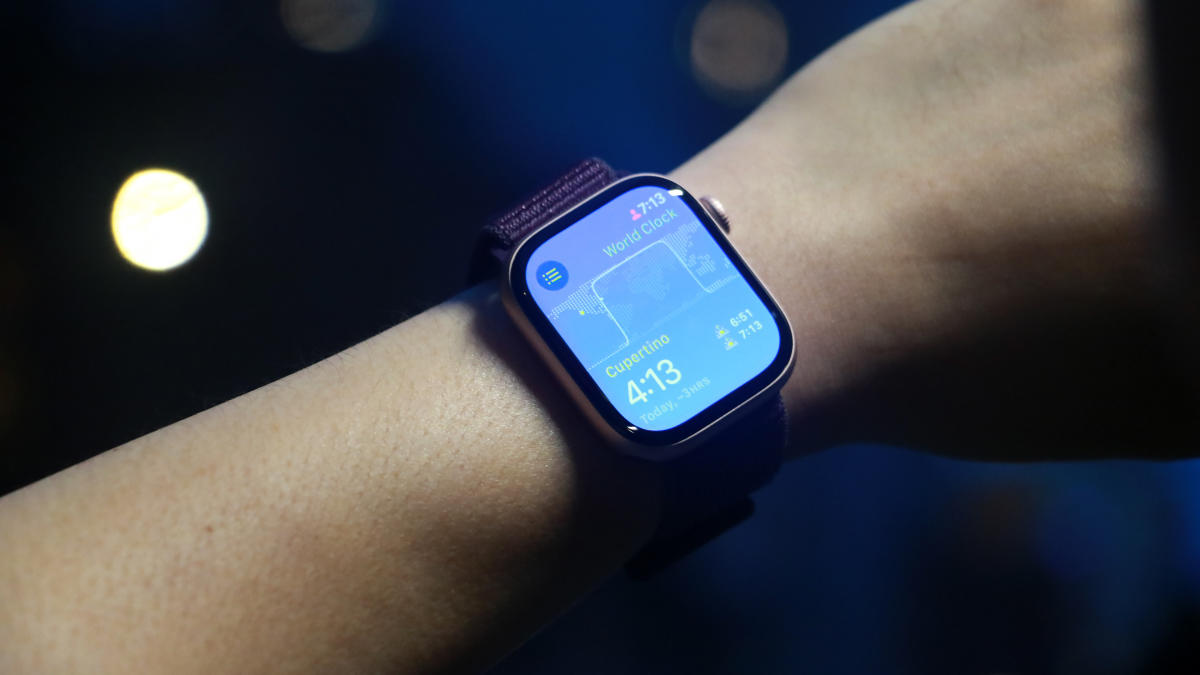
Apple Watch Series 10 review: Legacy and sequel in equal measure https://o.aolcdn.com/images/dims?image_uri=https%3A%2F%2Fs.yimg.com%2Fos%2Fcreatr-uploaded-images%2F2024-09%2Fbd6c15c0-74b3-11ef-b7de-5adf1836ab5a&resize=1400%2C787&client=19f2b5e49a271b2bde77&signature=3aec51cb1d41916d82a47318e730627249131d1d The Apple Watch has been around for ten years. Looking at pictures of the device then, it might not seem like much has changed — even the apps drawer seems identical. But subtly and quietly, the Apple Watch – the company’s first new product line of the post-Steve Jobs era – has evolved to become capable of so much more today. Over the last few years, there have been some big leaps forward for the Apple Watch’s featureset, up to and including wrist-based ECG and heart-rate readings that were once the purview of science fiction. We’ve heard many testimonials, mostly from Apple at its events, about how the Apple Watch has saved lives — whether it be by detection of a fall or atrial fibrillation. Smartwatches as a category have matured and found their place, it seems, and the Apple Watch has carved out a comfy spot within the space. So color me surprised when the Series 10 launched to very little fanfare last week. I guess I was expecting Apple to be a bit more self-congratulatory, but the company seemed to gloss over the product’s birthday. Instead, we got to learn about the device’s thinner profile and bigger screen with greater viewing angles. It also has smaller onboard speakers, apps for water sports enthusiasts and health features like the new sleep apnea monitoring and alerts. It may sound underwhelming compared to the seemingly futuristic features we were seeing in the Apple Watch’s early days, but the Series 10 is just following in the footsteps of the iPhone. It’s a mature product that’s traded massive annual overhauls for iterative updates that add up over time. For a smartwatch that has consistently been called the best in its class, the Series 10 largely continues that tradition, even as it walks back a feature or two thanks to ongoing copyright litigation. Editors’ Note: While we've been testing the Apple Watch Series 10 for about a week, there are some features — including sleep apnea alerts — that we'd like to spend more time evaluating. As such, we'll be returning to this review with further evaluation followed by a final rating in the near future. Design and display Compared to the Series 9, the latest Apple Watch is ever so slightly bigger and noticeably thinner and lighter. It’s not such a great difference that you’ll notice without having the two side by side, but every time I pick up the Series 10 I definitely feel a tiny spark of joy. The squatter shape, slimmer profile and more rounded corners somehow make the new watch feel a bit like a biscuit, while the Series 9 comes off more like a smaller mahjong tile. Both sizes of the mainstream Apple Watch have grown ever so slightly, with the 41mm version now coming in at 42mm and the 45mm one sitting at 46mm. I’ve worn the smaller Series 10 and Series 9 on both wrists for a few days now and genuinely don’t find there to be a major difference in daily use. As significant as I think the thinner body and lighter weight is on the Series 10, it’s not like I was having trouble squeezing its predecessor through jacket sleeves before. I will say that the new model will certainly be more comfortable under the snuggest of my cuffs. Apple cutting the Series 10 down to just 9.7mm thin is certainly a feat, considering the Pixel Watch 3 is still a pretty chunky 12mm thick. Samsung’s Galaxy Watch 7 is the same height, so Google needs to play a bit of catch-up here. The Series 10’s bigger screen does make some things easier to see, like road names on Maps and the clock when you’re in Spotify. You’ll likely find greater gains here by choosing larger font sizes, which is a bit of an obvious note but at least on the Series 10 you’ll have more room to work with. If you need something even bigger, you should consider the Watch Ultra 2, which has a 49mm screen. Apple’s also using a wide-angle OLED this year to make things easier to read even if your wrist is simply resting on the table, not held up in front of your eyes. Again, in my side by side observations, the change is noticeable but not in a huge way. There does appear to be greater contrast between the digits of the time against the photo in the background, too, which makes the clock more visible at an angle. However, it’s worth pointing out that when you’re staring at the Series 10 face on, you might find its bezels noticeably thicker than on the Series 9. Even if you’re planning on upgrading from a Series 9, where you’ll be most primed to feel the bigger bezels’ impact on design, it’s still a tiny complaint, if at all. Thicker borders don’t really affect the watch’s performance. Apple introduced some new watch faces with the Series 10, as it does with every successive generation. This time, the Flux face is supposed to make full use of the display’s wider angle view as it spills over the sides (sort of). There’s also a bit of an animation that mimics a second hand ticking across the screen, which is nice, but doesn’t add much to the experience. There are other small design changes around the watch. For example, instead of an inch-long slit on the left edge for the speaker output, there now sits two half-inch grilles which blend more seamlessly into the watch. I’d also be remiss if I didn’t at least mention the new jet black case color option, as well as the polished titanium models that replace the previous stainless steel ones. They’re nice options to have, if you can afford the $300 upgrade for the new lighter material. Finally, part of why the Series 10 got thinner is its redesigned metal back, which allowed Apple to integrate the antenna into the case and compress two layers into one. There’s also a little so-called isolation circle to help maintain cellular performance. This isn’t something you’ll feel necessarily, but it does contribute to the Series 10’s overall thinness. The Apple Watch Series 10’s speaker Something Apple brought to the Series 10 is the ability to play music and podcasts through the watch’s onboard speaker. It might seem silly to want to use the tiny device for any sort of media, especially things like songs where you’d like at least some semblance of sound quality for the experience to be enjoyable. In the few days I’ve had the Series 10, I never found the need to stream songs from the speaker on the watch, until I had to test it. At the maximum loudness in a quiet conference room, I enjoyed listening to Running Through the Night by Seori and Espresso by Sabrina Carpenter. It wasn’t as bass-heavy as I’d like for a regular listening session, but given the circumstances and the size of the watch, the mids and trebles were plenty clear and punchy. You’re not meant to rely on this for long periods anyway, and it’s just there to scratch an itch if or when it arises. With noisier environments, though, it’s a struggle. The Apple Watch Series 10 vs. sleep apnea Arguably the biggest feature coming to the Series 10 is sleep apnea monitoring (though that feature is also available on the Series 9 and Ultra 2 via watchOS 11). This is only for people who haven’t been diagnosed with sleep apnea, meaning if you already know you have this condition, it’s not designed to help you see if your CPAP machine is effective, for instance. I’ve not been diagnosed with sleep apnea, and might very well be one of the 80 percent of people that has the condition and don’t know it. Still, it would be nice to know for certain and when watchOS 11 dropped yesterday, those of us on iOS 18 with compatible Apple Watch models were able to opt in to notifications. I went to the Health app to set this up, answered a series of questions about my age and whether I’d been diagnosed with sleep apnea, and was informed I was set up for the feature. In the explanation Apple provides during the onboarding process, it says “Apple Watch tracks your breathing while you’re asleep and records any disturbances in a 30-day period.” It can notify you if those disturbances “are suggestive of sleep apnea,” so you can go to a doctor for a proper diagnosis. It’s been only about a week since Apple announced sleep apnea notifications were coming, and clearly 30 days haven’t passed. I have yet to glean enough information for any alerts, and cannot yet gauge the impact of this feature. The Apple Watch Series 10 as a health and fitness tracker Barring changes that come with watchOS 11, which older Apple Watches will also get, the Series 10 is essentially the same as its predecessor when it comes to tracking your activity. As long as you’ve set things up right, you’ll get reminders to log your mood, take your meds and move after you’ve been idle too long. Having just reviewed Google’s Pixel Watch 3, I can’t help but wish Apple were a tad more sensitive and consistent at automatically prompting me to start logging a walk. There’s no real guidance as to how long you have to have been active for the watch to suggest you’d been working out. That leads to some confusion and pure frustration when you think you’d walked or run enough for the auto detection to kick in, but only to find out you maybe hadn’t moved in the right way or for long enough. I’ve been a yearslong Apple Watch user, so I’ve grown extremely familiar and reliant on its interface and the data it collects. I like diving into my calendar view and looking proudly at all the days I closed my rings. The Health app does a good job of presenting my recent trends and how that compares with my performance a year ago, subtly shaming me into realizing I should maybe take a few more walks a week. The Series 10 doesn’t differ much from the Series 9 in that way, and if you’re already in Apple’s ecosystem, this will largely feel extremely familiar. The Apple Watch Series 10’s water-sports features There are some new tools on the Series 10 that are borrowed from elsewhere in the family, though. Apple’s brought the Watch Ultra’s Depth app over and introduced a new Tides app across the Series 10 and Watch Ultra 2 that should be helpful for those who spend a lot of time in the water. I’m not a big water sports girl, but I do occasionally hang out at beaches. Whether it’s Long Island’s pristine, sandy shores or the rocky terrain of Red Hook’s Valentino Pier, I’ve certainly encountered sudden swells in water level that I’ve had to run to avoid. It’s not the biggest problem, of course, but I can see how the Tides app would help anyone plan a day. I launched the app, and in a few seconds, the Series 10 located the closest beach, informing me that the tide was falling and that water levels would hit their lowest at about 2:07AM. I didn’t verify this by going to Newport Beach at 2:07AM to measure water levels, but even from my brief testing it appears to be a helpful app for those who need to know this information for a full day of surfing, for example. It’s also useful for those who want a convenient way to locate the closest body of water, since the map view shows beaches around you. It’s hard to imagine the Depth app being useful for a non-snorkeler or non-scuba diver like me, as I’ve watched one too many videos of underwater cave diving gone wrong. But the Depth app and water temperature sensor could theoretically be useful in other scenarios. If you have a deep enough tub, you could potentially stick the Series 10 on your wrist into the bottom and get a reading for whether the water is too hot for your kid. Unlike on the Apple Watch Ultra (1 and 2), which go down to 40 meters (131.2 feet), the Series 10’s depth gauge will only provide readings up to 6 meters. That does mean you won’t want to take this scuba diving, and it’s not rated for that, either. All three models I mentioned here offer the same water temperature capability, though. The Apple Watch Series 10’s battery life and charging speed In the few days I’ve had the Apple Watch Series 10, it’s generally outlasted the Series 9, not usually by much. One day, after a cross-training workout at 8AM followed by a GPS-enabled walk and a day full of Slack and Telegram alerts, the Series 10 still managed to have 46 percent left at 11:45PM when I got home. The Series 9 was struggling at 19 percent, and both had the same display and Always On settings. This is one aspect that I’d like more time testing to better understand, but considering the new watch’s slimmer profile and bigger screen, the fact that it even has similar runtime at all would be respectable. Apple also updated the charging setup on its latest smartwatch, which should bring the Series 10 back to 80 percent in 30 minutes. It’s worth noting you’ll have to use a fast-charge-certified accessory, such as a charging cable from the Series 7 or later, which you can tell by confirming that the wire is braided. Faster recharge speeds are nice, since they make up for any shortfalls in battery life by making sure you don’t need to wait too long for your device to get back up to a healthy level. Still, considering many devices from Garmin, Fitbit and even Samsung can last longer than two days and even up to seven days per charge, the Apple Watch’s day and a half feels like a number that could be higher. If the company were looking for ways to push the envelope further, battery life is certainly the area to investigate. I don’t mind charging my watch every morning (or night), but some people want to be able to go camping over a long weekend and not have to worry about bringing along chargers. Don’t tell them to buy an Apple Watch Ultra for that benefit. Wrap-up It’s hard to sum up how I feel about the Apple Watch Series 10. On one hand, I definitely still need more time to form a conclusion about things I don’t feel familiar with yet, like sleep apnea alerts. On the other, I feel like I already know this product very well, thanks to its similarity to its predecessor(s). Plus, with watchOS 11 bringing a lot of similar features to the Series 9, Watch Ultra 2 and more, it feels difficult to recommend anyone with a recent device spring for an upgrade. Some of my friends considering the Series 10 are coming from the Series 8 or older, and for them Apple’s latest certainly feels worthwhile. However, those using an older model should be aware that upgrading to a newer Apple Watch would cost them access to the blood oxygen detection features. The company has yet to bring back the Blood Oxygen app that it removed from the Series 9 and Ultra 2 that it sells in the US, as a result of a patent lawsuit filed by Masimo. It’s entirely possible the company is able to revive this feature simply through a software update, but if this measurement is crucial to your daily life, it might be worth sticking with your Series 8. Those looking for a huge leap forward because of the number “10” in the device’s name should be prepared to be underwhelmed. But just because the Series 10 isn’t a reinvention of smartwatches doesn’t mean it isn’t still an excellent companion device and well-rounded health-tracker. If you’re simply looking for a new Apple Watch or don’t care for SpO2 readings, and are coming from a model that’s at least two years old, the Series 10 will feel like a solid upgrade. And it’s still the best for any iPhone owner. This article originally appeared on Engadget at
The Morning After: Our verdict on Apple’s new AirPods 4 https://o.aolcdn.com/images/dims?image_uri=https%3A%2F%2Fs.yimg.com%2Fos%2Fcreatr-uploaded-images%2F2024-09%2Fa37b56c2-7397-11ef-8b2b-b793deedd180&resize=1400%2C933&client=19f2b5e49a271b2bde77&signature=994b68287dbf41fd4d7ef67ce414a80878003a61 Apple expanded its AirPod family with two new models last week. We’ve now tested out the AirPods 4 — and a second version with Active Noise Cancellation (ANC) — and we have some thoughts. Improved sound quality and some advanced features are the key additions, but you’re more likely to notice the redesigned shape for keeping the buds more firmly (and comfortably) lodged in ears. Engadget With the ANC version, Apple offers useful noise cancellation while keeping your ears open — no silicone tips. There are also a lot of Pro features, but the issue is the more technically capable AirPods Pro are often on sale, undercutting those $179 buds. I wouldn’t have guessed it, but the basic $129 AirPods 4 may be the better deal. — Mat Smith The biggest stories you might have missed Flappy Bird’s creator wants you to know he’s got nothing to do with the new version Apple’s iOS 18 is available now iOS 18 preview: Waiting on Apple Intelligence Meta bans Russian state media outlets on Facebook and Instagram The ban on outlets like RT will take effect over the next few days. Meta has banned RT and other Russian state media outlets on its platforms, which include Facebook and Instagram. “After careful consideration, we expanded our ongoing enforcement against Russian state media outlets,” the company told Engadget. “Rossiya Segodnya, RT and other related entities are now banned from our apps globally for foreign interference activity.” This comes days after the Biden–Harris administration publicly accused RT of spreading propaganda and disinformation online. Continue reading. Who asked for a Wordle VR app? And who hurt you? Meta The New York Times has brought its all-conquering daily word game to a new platform in the shape of Meta Quest headsets. Wordle VR works in much the same way as the game on your phone or computer, with six attempts to guess a five-letter word. Except you’re wearing a VR headset. Continue reading. Amazon Prime Big Deal Days announced The fall Prime Day sale returns on October 8. Amazon’s big sale event / buyer’s remorse generator will return this year on October 8 and 9, giving us all the more reason to call it October Prime Day as we have done in years past. Prime Day in July remains Amazon’s biggest sale event for Prime members, but ever since its debut in 2022, October Prime Day provides subscribers with thousands of exclusive deals during the two-day window. In case you missed out on that Echo. Again. Continue reading. This article originally appeared on Engadget at
Intel is separating its ailing foundry business from the main company https://o.aolcdn.com/images/dims?image_uri=https%3A%2F%2Fs.yimg.com%2Fos%2Fcreatr-uploaded-images%2F2024-09%2Ff0e48960-74d5-11ef-b9ad-6b8968793fda&resize=1400%2C881&client=19f2b5e49a271b2bde77&signature=ef386a2b7dfa8d1ea21bae658a9fa3253f6861b3 Intel is turning its foundry business, which manufactures chips for other companies, into an independent subsidiary. The company has revealed its plan in a note to employees from its CEO Pat Gelsinger, published over a month after Intel disclosed that it's cutting 15 percent of its workforce. Intel is laying off more than 15,000 people as part of its $10 billion cost-reduction plan to regain financial stability following a second-quarter net loss of $1.6 billion. Gelsinger explained in his new memo that turning the foundry into a subsidiary "will unlock important benefits," particularly the ability to evaluate and take external funding directly.  Gelsinger said that there will be no changes to the foundry's leadership, but the subsidiary will establish its own operating board with independent directors to govern it. According to CNBC, Intel is even considering making the foundry a separate publicly traded company. Intel is in the midst of modernizing its existing fabs and building new ones for its foundry business, which is costing the company billions of dollars, in an effort to catch up to its chipmaking rivals like TSMC and Samsung. The company has reportedly spent around $25 billion a year on its foundry business over the past two years, but that has yet to translate into profit.  In April, the company revealed in a presentation to investors that the business posted $7 billion in operating losses for 2023, even larger than the $5.2 billion in losses that it incurred the previous year. It had a revenue of $18.9 billion, down 31 percent from its 2022 revenue of $27.49 billion. Gelsinger warned investors at the time that Intel expects its foundry business' operating loss for 2024 to be even bigger and that it doesn't expect to break even until 2027. The foundry's finances aren't the division's only problem: Its next-gen manufacturing process referred to as "18A" reportedly failed crucial tests to prove that it's ready to be used for mass production.  In addition to announcing that the foundry business will become a subsidiary, Gelsinger also disclosed in the memo that Intel will be selling part of its stake in Altera, another chipmaker that it purchased for $16.7 billion in 2015.  This article originally appeared on Engadget at
The best VR headsets for 2024 https://o.aolcdn.com/images/dims?image_uri=https%3A%2F%2Fs.yimg.com%2Fos%2Fcreatr-uploaded-images%2F2024-07%2Fe57f2940-3f7e-11ef-bfc5-fac1373f2c32&resize=1400%2C787&client=19f2b5e49a271b2bde77&signature=339d341cf769a4a0f3777b21e1f74d5892875229 If you're ready to dive into the world of immersive digital experiences, investing in a virtual reality headset is the way to go. Whether you're into gaming, virtual workouts or exploring incredible 360-degree environments, a VR headset can transport you to places you’ve never been – all from the comfort of your own home. If you’re still on the fence about whether a VR headset is for you, there are plenty of reasons you might want to explore virtual reality. Maybe you're looking for a more immersive gaming experience, or perhaps you want to use it for fitness, meditation, or even virtual travel. VR headsets can also be great for work, offering virtual meeting rooms and collaborative spaces that go beyond standard video calls. Now more than in years past, there’s something for everyone thanks to more VR headsets being on the market at various price ranges. The Meta Quest 3, for example, offers fantastic all-around performance at around $500, while the Apple Vision Pro is packed with cutting-edge tech, but it'll set you back a hefty $3,500. We’ve tested and reviewed a number of the most popular VR headsets on the market to help you figure out which are the best for your needs (and budget). How we test VR headsets I tend to judge VR headsets on a few basic criteria: Ergonomics, immersion and controls. It's not that hard to shove a mobile display into a plastic headset and strap some cheap elastic headbands onto it. But it takes skill to craft something that's well balanced and doesn't feel uncomfortable after 30 minutes. My test for ergonomics is fairly simple: How long can I wear a headset until I start to feel discomfort? For the most ergonomic devices, like the Quest 3, that could easily be an hour or two. But heavier PC hardware often feels cumbersome after just 15 minutes — you won’t find headsets guilty of that in this guide. Immersion, meanwhile, comes from having high resolution screens with fast refresh rates, so everything looks sharp and smooth. Field of view is also a major element, as it describes how well VR screens can cover what you see. Having a narrow field of view makes it feel like you’re looking through a pair of binoculars, and limits your sense of “presence,” or the idea that you’re actually transported to a virtual world. A wide field of view, on the other hand, can make it seem like you’re actually flying over the globe in Google Earth. We look at a few popular games, like Superhot, Beat Saber and Pistol Whip, on every headset to judge how immersed we feel. The best controllers fit naturally in your hands and offer accurate tracking. The industry has basically adopted the design of Meta’s excellent touch controllers, but we're also seeing intriguing leaps forward like Valve's finger tracking gamepads. We judge controllers based on how easy they are to hold, how they hold up to sweaty gameplay sessions and how easily headsets can track their position in space. However, it’s important to look at a virtual reality headset’s specs as a whole. Depending on what you’re looking for from a VR headset, you’ll want to consider factors like your PC’s graphics card if you plan to use the headset to play the best VR games. If you’re not looking to invest in a VR headset solely for gaming, features like head tracking allow you to explore your environment just by simply moving your head in the simulator. This often results in a more immersive and realistic experience. Best VR headsets for 2024 Other VR headsets we’ve tested Meta Quest Pro As great as the Meta Quest 3 is, the Quest 2 is still a very good entry-level VR headset, and it’s worth considering if it’s on sale below its current $250 list price. The Meta Quest Pro, on the the hand, is an expensive boondoggle best ignored. HTC Vive Pro 2 Outside of Meta’s hardware, the HTC Vive Pro 2 remains a fantastic PC headset, but it’s far more expensive than the Valve Index, which is more comfortable and offers better audio. VR headset FAQs How do VR headsets work? At the most basic level, a VR headset is simply a high quality screen that you’re holding up to your face. For a wired headset, the actual work of rendering a game is done on either a PC or game console. For completely wireless devices, like the Meta Quest 3, that work is handled right on the headset. They rely on either external sensors, or sensors built into the headsets, to map your physical space. While you can use a traditional gamepad or keyboard and mouse in VR, they typically use motion tracking controllers to immerse you in their 3D environments. What VR headset is best for full body tracking? While we’re still waiting for a truly great haptic VR bodysuit to arrive, you can still achieve accurate body tracking with most Steam VR-compatible PC headsets. The Valve Index and HTC Vive Pro 2 both rely on room-tracking sensors that can map your body more effectively than the built-in sensors on competitors. You can also add HTC Vive Trackers to wrist and leg straps, as well as belts, for even better coverage. The Meta Quest 3 doesn’t have any easy body tracking solutions, but you can add Vive trackers when it’s plugged into your PC to mimic a Steam VR headset. Only a few experiences, like VRChat, take advantage of full body tracking at the moment. Currently there aren’t any body tracking solutions for the PlayStation VR and VR2, but we’re intrigued by the company’s Mocopi body trackers, which were really announced in Japan. What VR headsets are better than Oculus? Oculus is the previous name for Meta’s VR hardware. Currently, Meta only supports the Quest 3, Quest 2 and Quest Pro, all of which are wireless headsets. As we explain above, PC VR headsets can generally achieve better quality virtual reality, since they rely on more powerful graphics hardware. What VR headsets work with Xbox? Currently, Microsoft’s Xbox consoles don’t support any VR headsets. This article originally appeared on Engadget at