Bitman's avatar
Bitman
bitman@nostrplebs.com
npub1z204...mxwn
Follow the money.
Bitman's avatar
Bitman 1 year ago
++ CIRCLE SURGES +186% AT THE OPENING OF ITS IPO. 🔥 Wall Street is starting to realize the power that stablecoins hold, but the most incredible thing is that a large part of the market is still asleep. Just imagine the volume of capital that will flow in through synthetic dollars… image
Bitman's avatar
Bitman 1 year ago
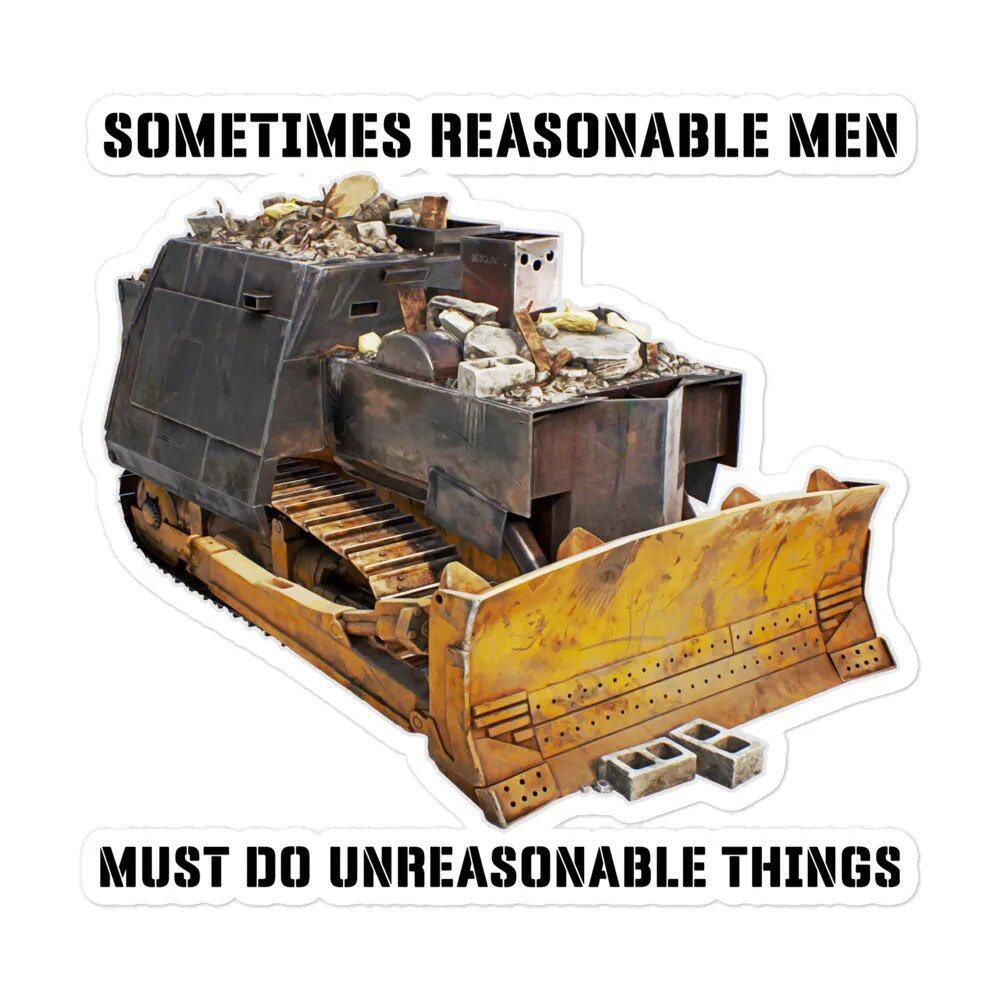
Today, June 4th, 2025, marks the 21st anniversary of the KILLDOZER — one of the most infamous acts of rebellion and defiance against government authorities. Marvin Heemeyer owned a small muffler shop in his town. The local government approved the construction of a concrete plant directly in front of his business, effectively blocking access and causing severe financial harm. Marvin repeatedly sought solutions through legal means, appealing to the city council to halt construction or allow partial access. Every request was denied. At one point, Marvin even offered to build an alternative access road at his own expense — he had purchased the necessary materials and machinery. Still, the city refused. To make matters worse, the concrete plant disconnected Marvin's shop from the town’s sewage system. Instead of helping, the city fined him for having improper sewage. 🤡 With his business failing and his personal life in ruins, Marvin meticulously planned his revenge. Over the course of 1.5 years, he secretly modified a bulldozer he had originally purchased for the road project. He fortified it with steel armor, installed bulletproof glass, and equipped it with a sophisticated camera system — state-of-the-art for the time. On June 4th, 2004, Marvin locked himself inside the armored bulldozer and began his mission, first demolishing the concrete plant that had devastated his livelihood. Over the next few hours, he drove through town, systematically destroying government buildings and the homes of public officials he held responsible for his plight. The SWAT team was deployed, but their weapons, including rifles and explosives, proved useless against the heavily armored KILLDOZER. Nothing seemed capable of stopping Marvin’s fury against the system — until the machine became trapped in the debris of one of the buildings he was demolishing. Surrounded and with no way out, Marvin took his own life — the only casualty of that day. Today, we remember the day of the KILLDOZER and Marvin Heemeyer — the last great American anti-hero. A simple man who decided to fight back after his life was destroyed by an indifferent government. Among his notes, one quote stood out: “I was always a reasonable person until I had to be unreasonable. Sometimes reasonable men must do unreasonable things.” 🫡
Bitman's avatar
Bitman 1 year ago
In #Bitcoin terms, almost everything keeps getting cheaper — even the massive U.S. deficit. This year, the estimate is $2.5 trillion. Every dollar of deficit is a dollar taken from private economic activity to fund the machinery of the state. Since 2008, the system’s solution has been negative interest rates (not allowing sustainable assets that yield more than real inflation) — so instead of nationalizing all economic activity, it simply wipes out anyone holding fiat. image
Bitman's avatar
Bitman 1 year ago
@Ross Ulbricht “sending” #bitcoin to himself would be the ultimate demonstration that bitcoin is truly unconfiscatable—a powerful act of defiance against the state. You can take away a man’s freedom, but you can’t erase 12 words from his memory. image
Bitman's avatar
Bitman 1 year ago
The $1.2B hedge fund founder of 10T Holdings predicts that #Bitcoin is on its way to $180,000 🚀
Bitman's avatar
Bitman 1 year ago
Yesterday, net inflows into U.S. #Bitcoin ETFs surpassed nearly $1 billion. Currently, around 450 BTC are mined daily, equivalent to approximately $500 million at the current price. In other words, ETFs from just one country are already buying more #Bitcoin than the amount being produced each day — not even accounting for demand from retail investors, governments, or corporations holding BTC in their treasuries. This is one of the main reasons why Bitcoin’s price has been reaching new all-time highs, even without signs of FOMO, euphoria, or a retail-driven surge. It’s also why many analysts argue that we may be witnessing the end of the traditional four-year correction cycles.
Bitman's avatar
Bitman 1 year ago
@ODELL suggests that the U.S. should print as much money as necessary to accumulate #Bitcoin 🙌
Bitman's avatar
Bitman 1 year ago
The Treasury market is imploding; A crisis of sovereign confidence is unfolding; Clowns are taking over presidencies; Fiat currencies are collapsing… …and Bitcoin is hitting a new all-time high 🥁 Congratulations to everyone who saw the future and helped make it happen 🔥
Bitman's avatar
Bitman 1 year ago
"The rules of #Bitcoin are extremely hard to change. Anyone can access the network directly without a trusted third party. Owning more bitcoin does not give you more control over the network so all participants are on equal footing. This is why bitcoin has value." — @ODELL
Bitman's avatar
Bitman 1 year ago
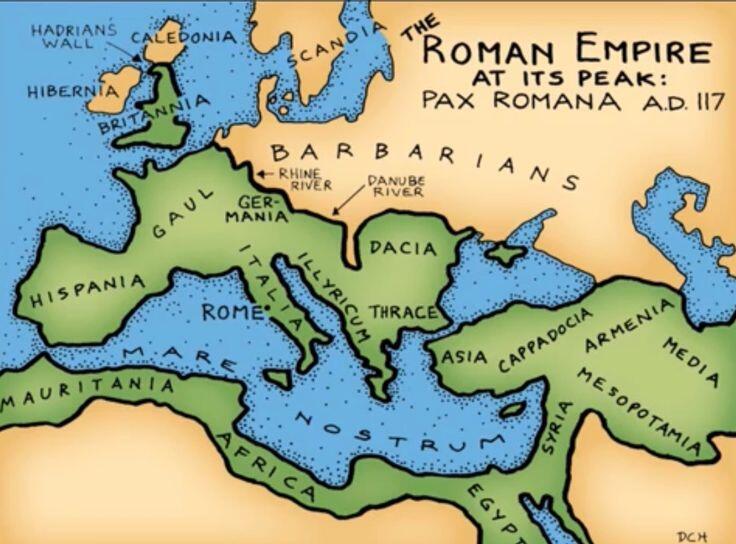
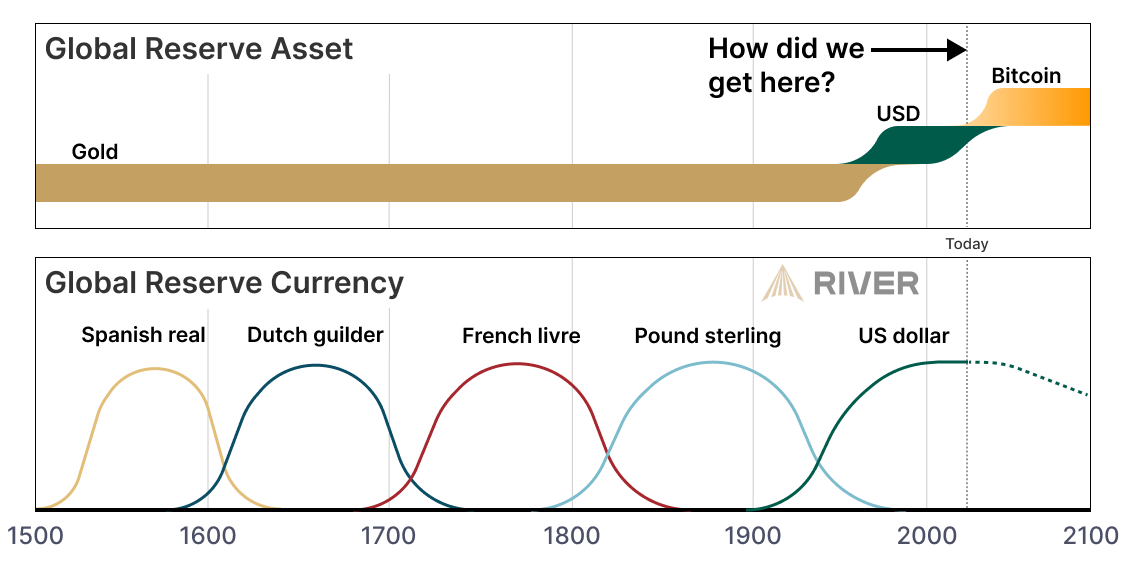
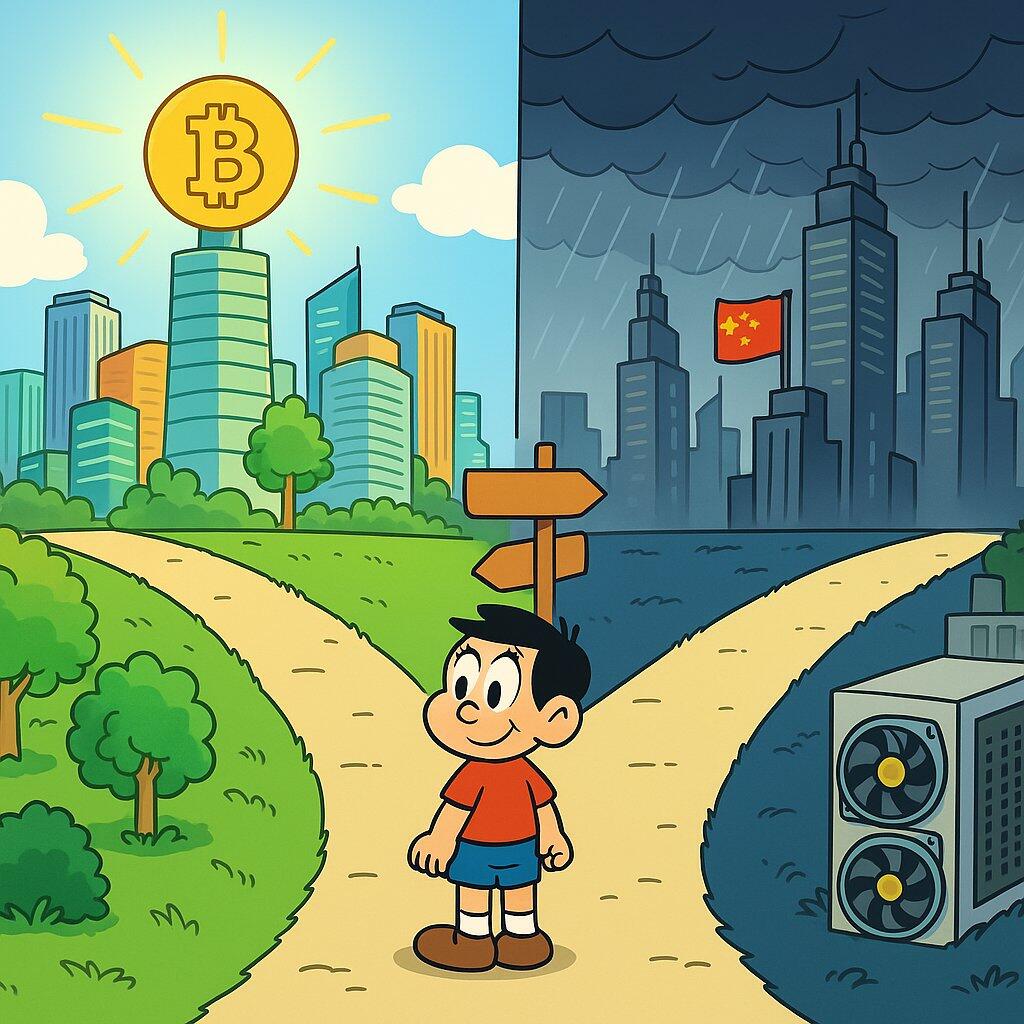
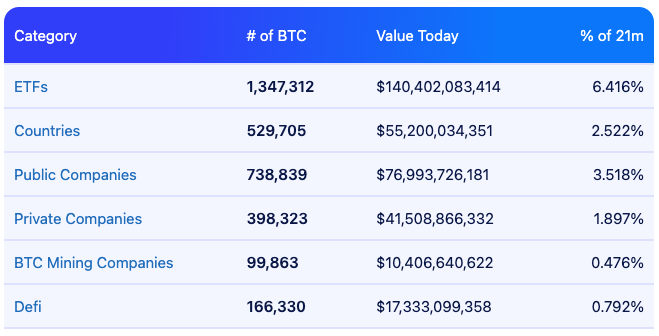
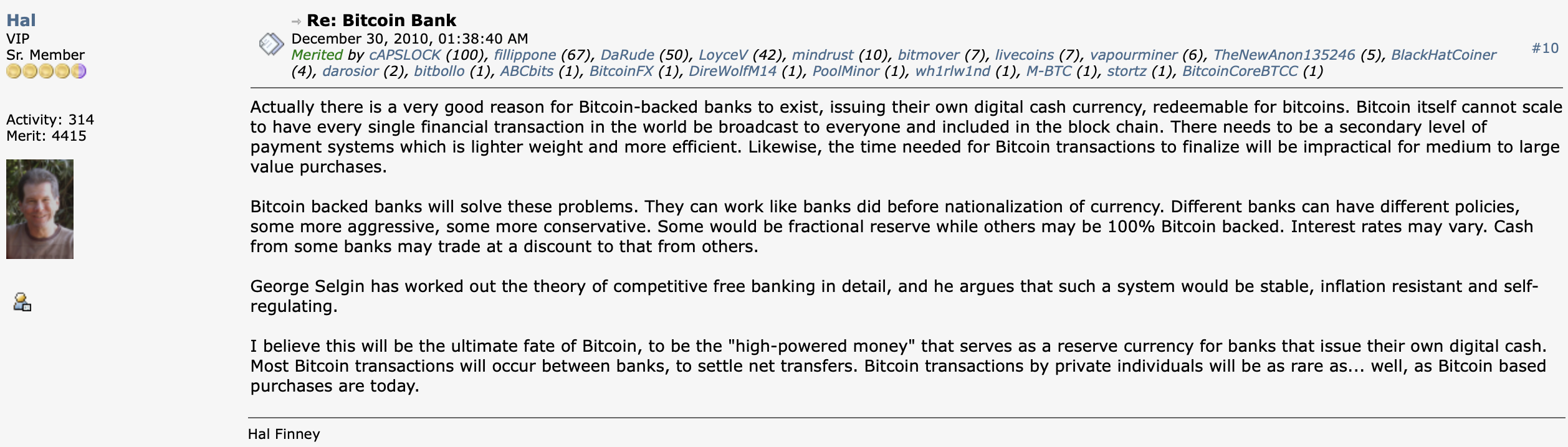
Trump met with the Saudi prince and the three most powerful businessmen on Earth to design the new world order. The “Pax Americana” has come to an end. These guys will make a lot of money with what comes next. You can too. The Pax Romana was the period of political stability when Jesus was born. 70 million people lived under relative peace, from Northern Europe to Mesopotamia, because the Empire swiftly eliminated dissenters. A similar dynamic defined other hegemonies over time... An empire masters a new military technology and begins to expand. It subjugates provinces. It grows by “imposing peace” wherever it goes. At some point, the cost of maintaining the empire exceeds the potential “revenue” from plundering new provinces. Border territories are ceded. Resources dwindle. Living standards decline. Elites clash. And a new superpower rises. Pax Ottomana: 16th and 17th centuries. The Ottomans were the first Western hegemony to master gunpowder. Pax Britannica: 19th century. The British patrolled the seas… until the first great war broke out in Europe. Pax Americana: from the end of World War II until today. The last 100 years have been the most peaceful in history (unless you live in the Middle East), because the Pentagon can obliterate any capital before you finish watching a TikTok. Allow me to introduce the USS Gerald R. Ford—the ultimate symbol of the guarantors of world peace: Recent generations of Americans have enjoyed the highest quality of life ever seen, exporting inflation and importing cheap goods produced in the Third World. But now it’s time for Uncle Sam to pass the baton. Trump is deliberately demoting the dollar from its role as the global reserve currency. Ceding key “provinces” of the Empire: Taiwan to China, eastern Ukraine to Russia. And intensifying the plunder of allies: Greenland, Ukrainian rare earths, Canada... Central banks worldwide are dumping Treasuries. China has offloaded 25% of its holdings since 2020. The dollar’s share in foreign reserve assets won’t drop to zero overnight. But if the current pace of divestment continues, it could hit zero in a century. So far, three currencies have been considered “potential successors” to the dollar. One is already out of the race: the Euro. Two “contenders” remain: China’s currency... and the Internet’s currency. ~15% of all #Bitcoin is held by governments, corporations, or ETFs. Not counting those on exchanges. In the end, most satoshis will likely serve as backing—alongside other assets or not—for private stablecoins. Financial institutions, social networks, and nation-states will have their own stablecoins 🤑 With different backings, reserve levels, and distribution strategies. Just as every company became a “publisher” in the Internet era, every business can become a “bank” in the Bitcoin era. The market will converge toward currencies backed by the supreme collateral, but there will be demand for other types of “commercial money.” Both financial and human capital will become more liquid. The average person won’t have money in 3 or 4 places anymore, but in dozens. Capital controls will be less effective. Wars will be much harder to finance. The era of “Mutually Assured Destruction” (M.A.D.) gives way to “Mutually Assured Cooperation” (M.A.C.). The primary deterrent to war is no longer just the nuclear threat, but the fact that funding military adventures is far more expensive in a Bitcoin standard. And that’s what comes after Pax Americana. A new order. Feel free to call it “Pax Bitcoiniana.” Heroes and villains will emerge in this transition. It doesn’t matter. #Bitcoin was designed for people who don’t like or trust each other. It’s “money for enemies” ⚔️ You don’t need to believe Bitcoin will save humanity. You just need to understand it will prevent humanity from destroying itself.
Bitman's avatar
Bitman 1 year ago
@npub1qg8j...24kw claims that “$100,000 is far too low” and predicts Bitcoin will reach between “$500,000 and $1 million in this cycle.”
Bitman's avatar
Bitman 1 year ago
Have you ever shuffled a deck of cards? If so, you’ve likely held a unique sequence—a combination of cards that’s never existed before in the universe’s history and probably never will again. Let’s dive into entropy, improbability, and, naturally, #Bitcoin. A standard 52-card deck can be arranged in 52! ways. That’s: 80,658,175,170,943,878,571,660,636,856,403,766,975,289,505,440,883,277,824,000,000,000,000 or roughly 8x10⁶⁷ possible shuffles. Hard to grasp? Consider this: ⏱️ ~4.3x10¹⁷ seconds have elapsed since the Big Bang. 🧑‍🧑‍🧒‍🧒 ~100 billion humans have ever lived. If every person shuffled a deck every second since the universe began, we’d still likely never see the same order twice. Each thorough shuffle creates something entirely new. That’s the wonder of entropy. So, how does this connect to Bitcoin? This same improbability is what makes #Bitcoin secure. When you create a Bitcoin wallet with a 24-word seed phrase, you’re selecting one out of: 115,792,089,237,316,195,423,570,985,008,687,907,853,269,984,665,640,564,039,457,584,007,913,129,639,936 possibilities, or ~1.1579x10⁷⁷. That’s exponentially larger than the deck’s shuffles. To crack your wallet, someone would need to guess that exact sequence. 💪 Brute force? Useless. 🖥️ Supercomputers? Nope. ⏳ Time? Not enough. It’s like picking one specific grain of sand from the entire universe… twice. Bitcoin’s security doesn’t come from secrecy—it’s protected by being one choice among near-infinite possibilities. Isn’t that elegant? And get this: you can generate that level of security with something as simple as a six-sided die or, yes, a deck of cards. If this doesn’t spark awe for the math behind #Bitcoin and its brilliant design, reread it. You’ll probably want to stack more satoshis. Happy Sunday! 👋
Bitman's avatar
Bitman 1 year ago
Did Coinbase buy Deribit? If anyone has details, let me know.
Bitman's avatar
Bitman 1 year ago
Two VERY important events for #Bitcoin coming up: The next block The next halving Everything else is just noise. Good night, Nostr! 😴
Bitman's avatar
Bitman 1 year ago
Website that gave 5 bitcoins to each visitor will be revived by investor. Charlie Shrem, founder of the #Bitcoin Foundation, announced this Sunday (4) that he will be reviving the first Bitcoin “faucet” in history. Originally created by Gavin Andresen, the site gave 5 bitcoins to each visitor back in 2010. image
Bitman's avatar
Bitman 1 year ago
@James Lavish explains how US Treasury Bonds are not strong collateral for borrowing against. Sell Bonds. Buy #Bitcoin
Bitman's avatar
Bitman 1 year ago
GOOD MORNING NOSTR, STAY HUMBLE AND STACK SATS 🫡
Bitman's avatar
Bitman 1 year ago
The OP_RETURN drama just shows how MANY people don’t understand the basics of how #Bitcoin works. Spoiler: you can’t stop arbitrary data storage on the timechain. Trying to do so might even make things worse. Some people are saying it's possible to "filter" spam in the mempool. Wrong. That’s unfeasible. Anyone saying that is either misinformed or acting in bad faith. The mempool is just local policy. Who really decides what goes into a block are the miners. Many blindly believe influencers without understanding the fundamentals: #Bitcoin is a decentralized database designed to store data. Financial transactions are one type of data — not the only one. "But shouldn’t we prioritize financial transactions?" Yes. "But can we stop arbitrary data from going into the timechain?" No. "Are there good reasons to store arbitrary data on #Bitcoin?" Absolutely. L2s and scalability solutions depend on on-chain proofs. That’s just data storage. It doesn’t matter what your node accepts or not — miners are incentivized to include these transactions and profit from them. Financial incentives are what drive the system. Period. If you try to become a “Bitcoin™ Defender” by running software with crazy filters... Guess what? The transactions go straight to the miners (with extra fees) Small miners get left behind Mining centralizes People will hide the data using steganography (and you won’t even notice) Even worse: it discourages developers. Few people work full-time on #Bitcoin already. Imagine having to deal with drama and FUD just to propose a basic PR? Fewer devs = slower progress = more risk = weaker #Bitcoin. "But what about spam?" #Bitcoin already has a built-in antispam: fees. Don’t want to see JPEGs or zk-proofs? Use real #Bitcoin: spend, self-custody, join the circular economy. You know why “spam” increased so much? Because most people stopped using #Bitcoin on-chain. Today it’s all custodians: Strike, Wallet of Satoshi, Liquid… Less usage = more free space = more arbitrary data on the timechain. Want to fix it? More real usage → more demand for block space → higher fees → less incentive to use Bitcoin as storage. Simple. And effective. Want to “save #Bitcoin”? It’s not through filtering, censorship, or hysteria. It’s through real usage, open source, economic incentives, and freedom. #Bitcoin is neutral. And that’s a good thing.
Bitman's avatar
Bitman 1 year ago
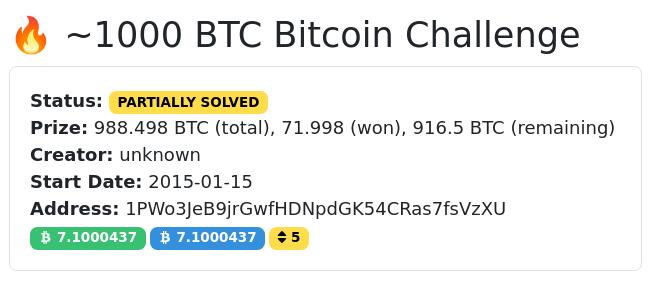
In 2015, an eccentric millionaire placed bitcoins in weak addresses. For years, the prize has been contested by bots, GPUs, and in the future, it is expected to be the first target of quantum attacks. image The individual's goal was to monitor the advancement of computational power capable of breaking Bitcoin keys. These keys have up to 256 bits of entropy, which can be understood as the difficulty of discovering them. They are simply large numbers, on the order of 2²⁵⁶. He then created 160 addresses, each with fewer bits of difficulty, from 1 to 160, and placed a few satoshis in each one, doubling the amount in the next. The total prize reached nearly 1,000 BTC. There are still 916 BTC left to be claimed. The first few dozen addresses were quickly looted. There are bots monitoring the blockchain and stealing UTXOs that have some vulnerability — such as low entropy in the generation of the private key. It was only at the end of 2015 that one of the owners of these bots noticed that the source of the bitcoins all came from a single transaction. He decided to share the discovery on the Bitcointalk forum, and that’s when more people began competing for the remaining prizes. In 2019, the creator exposed the public keys of some addresses (those with indexes ending in 0 or 5). This is done simply by moving the coins—the key appears in the transaction. With it, other methods can be used, making it easier to crack. One of these methods is a very old algorithm from 1978: Pollard's Kangaroo Algorithm — a clever trick used to find private keys when part of the keyspace is known. Imagine two kangaroos jumping across a number line, one tame and one wild, eventually landing on the same spot. It’s a classic in cryptography, and now it's being used to chase Bitcoin prizes. Since then, several programs and even participant "pools" have emerged, all trying to crack the next address. "kowala24731" secured an investment in the hundreds of thousands of dollars to rent GPUs and managed to break addresses #67 and #68 in early April. Yesterday, someone, probably a beginner, cracked address #69 but didn’t secure the spending properly and exposed the public key. In a few seconds, some bots cracked the key and replaced the transaction, battling for the balance. The last one paid a total fee of 1.2M sats. The time to crack these addresses — discovering the private key from the public key — is quite short. A GPU can do it in less than a minute. That’s why those who crack the keys can't publish it to the network; they must send it directly to a miner to include it in a block (like Mara). Among the addresses with exposed public keys, the record was 130 bits of entropy, set by "RetiredCoder," who also cracked other keys. These addresses are likely serving as "canaries in the coal mine" for the attacks Bitcoin may face. As long as there are still hundreds of BTCs sitting in them, yours should be safe.

Bitman's avatar
Bitman 1 year ago
Radio is the cockroach of communication media — it survives everything. My Bitcoiner friends living in Portugal told me that when nothing was working yesterday (internet, power, TV), the battery-powered radio was how the Portuguese stayed informed. Decentralized, local, and resilient to blackouts. Bitcoiners need to develop ways to transact via radio or ham radio when electricity or internet is down. I imagine the path would be some form of ecash to sign off-chain transactions via radio while the internet is unstable. Once the internet comes back, the ecash could be broadcast on-chain.
↑