Global M2 has been declining since October.
If all these nations are serious about acquiring Bitcoin is it possible they’re draining liquidity to starve their competition (the general population)?
Move those sats folks.
If you’re a merchant or small business owner then accept sats like you’d accept cash.
If you go out with friends and someone pays the bill then pay them back with your corn.
Someone’s birthday or a big holiday? Send them bitcoin. Normalize the flow of sats.
View quoted note →
What does it mean for #bitcoin to “succeed”? What metrics can we use to know how successful it is?
Most diverse ecosystem? Reserve asset for the most people? Facilitates the most trade? Survives the longest? First currency used on the moon?
Everett’s interpretation of quantum mechanics [1] is a more compelling and in my opinion a framework more faithful to the principles of physics than Copenhagen.
The Copenhagen interpretation introduces a wave function collapse which, aside from placing an unnatural emphasis on the observer, also introduces an arrow of time where the Schrödinger equation is symmetric in time. It’s a weird and unintuitive crutch bolted on.
Oddly enough, Everett’s interpretation implies the past is as uncertain as the future. At a “fixed moment” there’s a branching where the system continues forward in time as concurrent “worlds” but also the same is true in reverse. Going backwards there were many branches that merged at that point and then branched again.
What does that imply for us? On the macroscopic scale we don’t know, but one possibility is the idea of confluence. Basically at the smallest scales of the universe we have these parallel quantum systems but for every branching there’s a corresponding merging eventually and at the larger scales all we are capable of observing are the states that are consistent between each of the parallel systems.
1.
The average block reward and the energy cost to produce that block sets a floor for the price of bitcoin.
Bitcoin gives the most accurate insight into the true cost of compute. The biggest input cost for AI is just the cost of compute.
Over time we’ll see metrics like hashprice [1] become a good proxy for the cost of training and running a frontier model.
1.
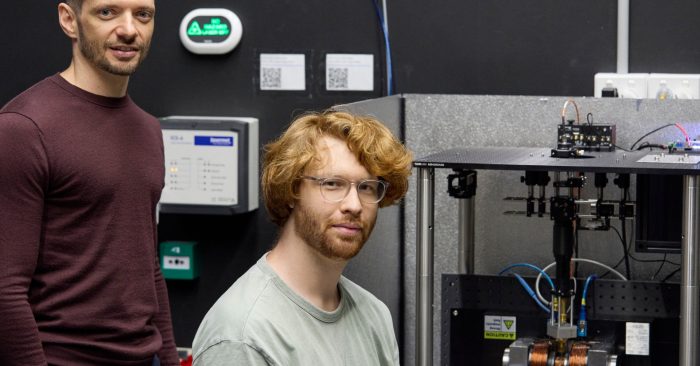
Researchers find a way to boost (microwave) signals by up to 1,000x at room temperature [1].
One day we’ll get that tech into pleb devices like #meshtastic for more robust decentralized telecommunications networks.
1.
It's amazing what choosing the right first step can do for solving a problem. It can mean the difference between finding a solution step-by-step naturally and having no hope of doing it.
Example: let's create a database for all of humanity to pass along for generations. A singular, never-ending story written by many authors over many centuries.
First we need to make it resistant to loss, so we make it easy for anyone to store. Let's limit the amount of data anyone can add in a fixed amount of time. We'll create fixed blocks of data that can be stored in a window before moving on to the next one.
Next we need to detect corruption and tampering so we use a Merkle tree.
We want to prevent vandalism so we make it unsustainable to put low value content in there. We'll do that by requiring credits in order to write to the database.
In order to fairly distribute the credits and give everyone a chance to get some we'll release them only if you can provably trade something of value, say, energy. We do this via proof of work.
Next we need to account for technology improvements over time so we'll make the credit issuance rate dependent on how fast we're adding data. We'll add a supply cap so we don't dilute holders over time. Without this, some subset of credit holders will eventually get crowded out indefinitely.
We need to enforce ownership rights of credit holders so we use public key cryptography. ECDSA will do for now. However, we need to account for cryptographic security changing over time so let's hide the public key behind a one-way function to give us time to upgrade when the time comes. Better yet, make it 2 layers of hashes: SHA256 and RIPEMD160 will do.
We'll transfer the data peer-to-peer to prevent any one group of people from locking out others.
We now have something very much like #bitcoin.
I’m not in the “ossification by choice” camp.
Not convinced of any changes aside from the great #consensus cleanup either.
#Bitcoin does everything I need it to now but I can imagine how it can be better; just not confident I can evaluate the risk properly. Most people are in the same boat.
One path forward might be to train adversarial agents to attack a testnet with various changes made to it to see possibilities. If we can get #AI researchers to train such a model and open source their model training code, simulator, etc we might be able to increase confidence over time.
TL;DR - CBDCs NGMI
Digital #fiat currencies are scary for more than just surveillance and expiration policies.
Even if you’re a big fan of them you have to understand they run on a network secured by what? Every government agency in the world has had their networks compromised many times. If the 3 letter agencies can’t secure their own networks good luck securing your #CBDC.
Imagine an advanced persistent threat actor who holds a lot of bitcoin wants to take down your digital fiat. They slowly compromise all of the ledgers and backups because after all those are centralized and then leak fiat to themselves to buy more bitcoin and eventually destroy all the ledgers. The longer they can trickle out the fiat the more bitcoin they stack and the more worthless that currency becomes.
What kind of retaliation could the fiat issuer do? It’s an asymmetric situation.
I think about this sometimes. Suppose in the extreme case we end up with “western bitcoin” and “eastern bitcoin” where each fork censors some set of transactions.
Today there are so many people with bitcoin around the world so each fork would have funds belonging to both sides of the globe. The incentives to spend on either chain go up over time and hashrate would be incentivized to oscillate between the two which is unstable.
The rift shouldn’t last long unless we end up with a single global government capable of enforcing rules on hashrate. How long could it last though if it did happen? Time will tell.
View quoted note →
Fiat currency is deprecated. Governments realize that now.
At this point they can either manage an orderly transition to a Bitcoin economy or they double down on authoritarian policies and destroy their economy altogether.
@0xchat great job on the app!
On iOS when I first created an account it showed an npub for public key but then displayed another npub as my “private key”. When checking my keys afterwards I see the proper nsec. Just wanted to make you aware.
It would be nice to have a #lightning node tightly integrated with a mobile OS. Messages sent via lightning are more secure and private than sending on any other popular network.
Phones are almost always on so in theory they should be able to route payments, accept payments, run a #mint, etc.
And if the cell towers and WiFi gateways are #Cashu mints they can accept and rate limit anonymous users. You shouldn’t need a monthly plan anymore.
This would have the pleasant side effect of nearly eliminating spam calls and text messages.
I just read part 1 of Dhruv Bansal’s “Bitcoin Astronomy” series “The Law of Hash Horizons” [1] and really appreciate his deep dive into what bitcoin can do to space travel.
What’s interesting about the Law of Hash Horizons is that it’s scale invariant: by tweaking parameters like block times, difficulty adjustments, etc you can make a blockchain accommodate either a single planet or several planets BUT you can also go the other direction. You can make them scale down to a city, a neighborhood, or even a house.
Why would you scale down? You’ve created a network with an impenetrable firewall.
What happens when the block subsidy becomes negligible? Maybe hashrate localizes to defend smaller networks of pooled bitcoin and only a fraction of the global hashrate works on the global blockchain.
1.