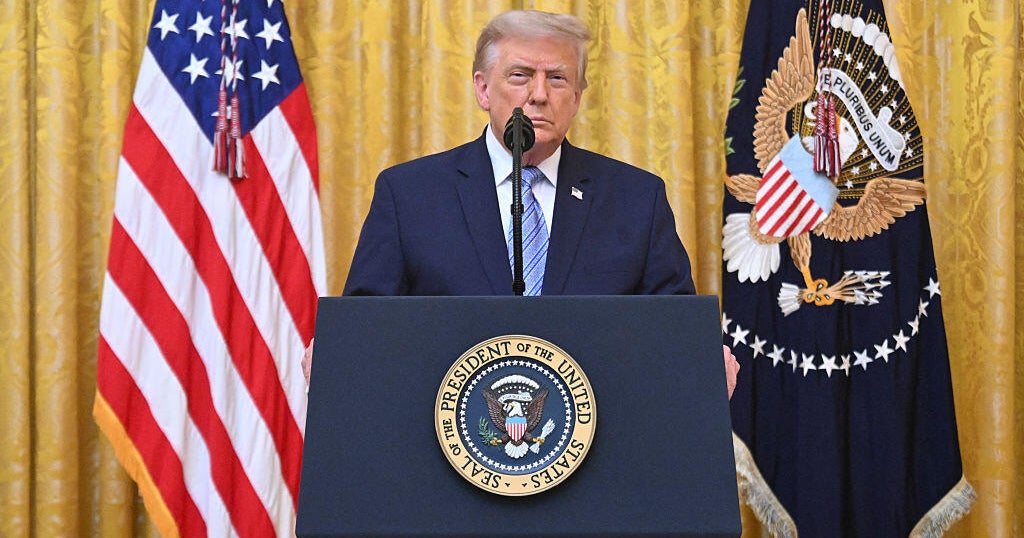
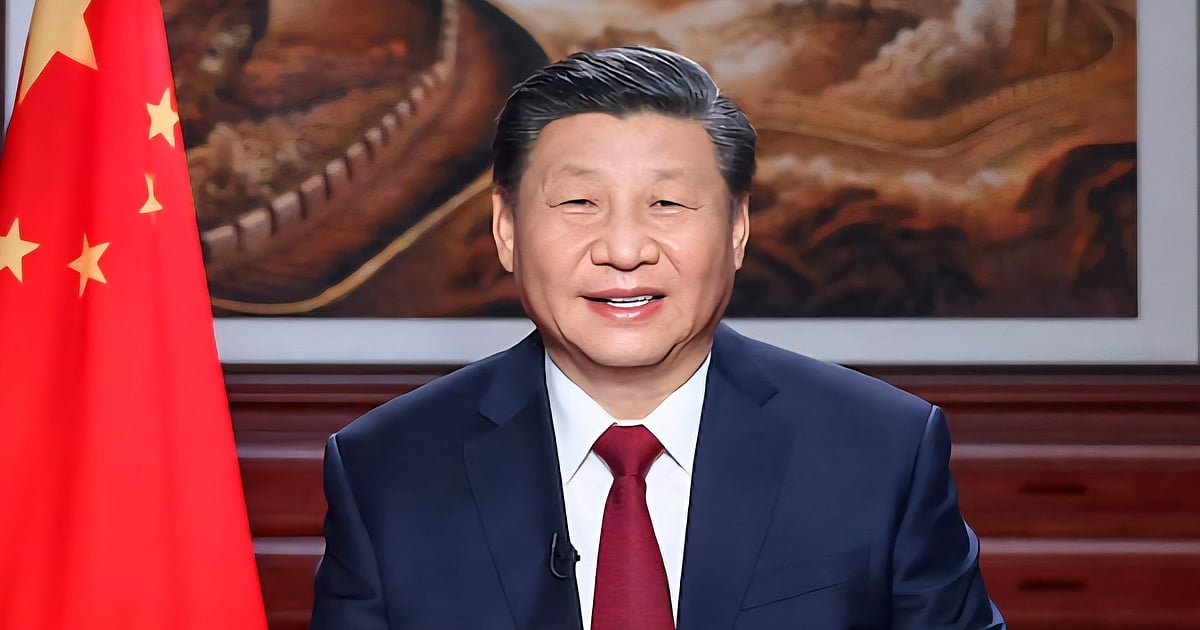
A sign of times to come. While not all that popular in the US, I’d still expect RedNote to get the “under national security concerns” approach and with it be banned.
Even more likely, if not an outright certainty, once the TikTok deal is finally concluded. Whenever that might be.
Taiwan bans Chinese social media app RedNote for one year on fraud risks https://www.cnbc.com/2025/12/05/taiwan-bans-chinese-social-media-app-xiaohongshu-for-one-year-on-fraud-risks.html?__source=iosappshare%7Ccom.apple.UIKit.activity.CopyToPasteboard
Peter Alexander
npub1yy3u...kawc
China 30 year veteran / https://www.linkedin.com/in/peter-alexander-97630910
Joined Nostr at block 777177
Notes (20)
They all bend the knee eventually.
Interesting timing too.
BRB. Need to grab some tinfoil.
https://www.bloomberg.com/news/articles/2025-12-01/vanguard-relents-on-crypto-etfs-will-allow-them-on-its-platform
China Morning Missive
With the announcement of the “Genisis Mission”, the Trump administration has made dominating the AI ecosystem a national priority. While there have certainly been a host of differing opinions on possible ulterior motives, from a geopolitical standpoint the decision makes perfect sense. So too, however, could this move end up directly impacting – inadvertently – a diaspora of Silicon Valley companies.
Over the past month there’s been increased media coverage of how American startups are fully leveraging the Chinese open-sourced AI models. After all, that is sort of the point of having access to open-source software. Take what’s already available and then iterate and improve upon that original source code.
The issue is the point of origination of that that source code; China.
Any time a competing Chinese software solution, or hardware offering for that matter, gains ground on all available American alternatives, Washington policy wonks step in on the grounds of “national security”. Not to say that such concerns aren’t warranted, rather that the issue here is the wide spread in usage (and, now, dependency) on Chinese AI models.
Rhetorically speaking, is there anyone who thinks the American government will permit home grown platforms build on Chinese source code?
Much as the NBC article highlights, “while models from American companies continue to set the pace of progress at the frontier of AI capabilities, many Chinese systems are cheaper to access, more customizable and have become sufficiently capable for many uses over the past year.”
It is the use of the word “customizable” which should stand out to all readers. It goes to the primary – I would say existential – issue facing the entire American AI theater. The dogmatic pursuit of closed source architecture, the building of silos (competitive moats), remains the greatest threat to America’s position.
Basically, you have five large dogs all chasing after a single bone. The likelihood is that the dogs will attack each other viciously long before catching the bone. You see this in the perversion of all incentives, mainly in the rapid acceleration of CAPX spending.
What this then leaves is the Chinese AI scalers to just continue moving forward building better software and directing all efforts to addressing the issue of compute.
https://www.nbcnews.com/news/amp/rcna242430
China Morning Missive
My new obsession is the concept of myopia. The more I continue to compare and contrast the bilateral rivalry between America and China the more you’ll see the pure definition of myopia come into play; “a lack of foresight or discernment; a narrow view of something.”
Not all that dissimilar to the contrast in how each country goes about building and executing overall geopolitical policy, one having a low time preference and the other having a high time preference.
The perfect example of this was put on display yesterday with all the headlines discussing how Google “leap frogged” OpenAI in the LLM race. In all the media coverage, there wasn’t any attempt to even introduce the role of China into the competitive theater.
Just consider that it hasn’t even been a year since Deepseek first burst into the spotlight. Since then, the likes of QWEN, Kimi K2 , GLM and a host of others have entered the competitive field, iterated quickly and have continued to produce increasingly improved platforms.
The fact that a growing number of Silicon Valley players are openly admitting to using Chinese AI models at the base layer for development should tell you everything.
Again, Deepseek first came to market in January of this year.
What is presented here is but a single example of China’s continued dominance across the entire “future tech” space. The drive is relentless. To think of where China will be in a year’s time, especially when compared to American competitors, should frighten all American commercial interest. For now, however, myopia reigns. The entirety of focus is domestic.
It is as though the entire American strategy is to simply ignore the problem and wish for it to go away.
https://www.axios.com/2025/11/25/google-gemini-openai-chatgpt-anthropic-claude
For those interested, jumped on CNBC Asia last week. Video (unfortunately it’s linked) is provided below.
https://www.cnbc.com/video/2025/11/17/chinas-supply-chain-control-is-an-existential-threat-for-the-us.html
China Morning Missive (Part II)
Couldn’t let this one go as it hits directly on a host of issues I’ve been attempting to raise albeit with very little success.
Mentioned in a note yesterday that China had already won the robotics race no matter the urgency stressed by Marc Andressen for American policy to prioritize resources. Well, now we have just out a very detailed piece from the Wall Street Journal which aligns with many of the points made in various Notes here over the past several months.
Reducing the dynamic to its most simply form, the American AI titans want to create “God in a box”. The Chinese AI titans want to build deeper/wider economic moats. The latter has already achieved a massive lead on the former.
Here are some choice outtakes from the article.
“At one of China’s biggest ports, shipping containers whiz about on self-driving trucks with virtually no workers in sight, while the port’s scheduling is run by AI.”
I’ve been to the world’s largest port, Yangshan, here in Shanghai. The entire operation is automated. The crane, the trucks, all of it.
“It could further enable the spread of “dark factories,” with operations so automated that work happens around the clock with the lights dimmed.”
The concept of “dark factories” is rapidly expanding. No workers, 24-hour a day operations and facilities where there is no need for lighting.
“China installed 295,000 industrial robots last year, nearly nine times as many as the U.S. and more than the rest of the world combined, according to the International Federation of Robotics.”
The ability to scale remains a top comparative advantage throughout China. No need for any additional commentary here. The quote above speaks for itself.
“One risk is that AI could destroy more factory jobs than China expects, leaving it with too many unemployed workers.”
This one made me laugh. So much for all the Peter Zeihan and the others claiming that China posed no long-term geopolitical threat given the demographic timebomb.
So it is rather clear that the industrial robotics industry is now dominated by China. Now the focus turns to humanoid robotics. The evidence here, however, strongly suggests that there is no race. The only outstanding variable is timing. How quickly will we all see China rolling out these sorts or robots at scale? Based on my experience, I’d say before the end of 2027.
https://www.wsj.com/tech/ai/ai-robots-china-manufacturing-89ae1b42?st=anYykK&reflink=article_copyURL_share
China Morning Missive
For those of you keeping score at home, the TikTok deal is still outstanding. I would also make mention that the latest enforcement delay made by Trump expires on December 16th. It’s been nearly a full year since the Supreme Court ruled on the issue forcing either a ban or a divestiture.
The reason for raising this point is due to the headlines reporting on a call between Xi and Trump yesterday and, pending on the readout, a top priority was Taiwan. You may also recall my hammering of the point that the quid pro quo is TikTok for Taiwan. For all of the (numerous) claims by the Trump team that a deal to acquire the social media platform has been agreed to, it remains outstanding. Trump will be under increased pressure come mid-December. Any further delay will come with a political cost.
Taiwan has increasingly become a focus in the macro-tourist circles. No surprise given that there’s been a weeklong diplomatic flareup over Taiwan between Japan and China. The rhetoric has been pretty heated, but I’ve seen this movie many times before. China will just continue to be verbally belligerent and wait until there’s a new government in Tokyo. Considering recent political events, that would probably arrive in less than a year.
Still, the longer the Trump team chooses to remain silent on the issue of Taiwan the more difficult the entire situation will become. The idea, in my opinion, was for the two sides to play for time. That was the objective of the meeting last month in Busan. Japan’s Prime Minister just threw a spanner in the works and, in doing so, has Trump catching strays.
In the end though, it remains a very simple calculus. TikTok will receive final “approval” from Beijing the minute Trump publicly addresses the Taiwan issue.
https://www.cnbc.com/amp/2025/11/24/trump-xi-call-trade-taiwan-ukraine.html
Watching all the Bitcoin hate surface this past week, and the names of those individuals included in the dog pile, has been so very telling.
There was a deep down level of Schadenfreude that had been percolating just below the surface ….. and then burst out in menacing glee.
Aren’t we all supposed to be rooting for one another regardless of one’s asset class of choice? Such an unnecessary scarcity mindset.
China Morning Missive
There was a bit of cope out of Silicon Valley last week. Uber tech titan, Mark Andressen, went on an autistic tirade over the future of robots and the urgent need for American policy makers to redirect resources and “reinvent manufacturing for the AI age”. When I stumbled across his comments, my mind immediately went to “it’s already too late”.
Much as I’ve shared in these Notes before, what China has done with EVs will be repeated in the race for dominance in robotics. It is simply an issue of vertical integration. China just has the individual processes already in place not to mention the availability to all critical components.
China is working with the benefit of having already moved into forms of power generation and the ability to convert that power into actual useful, commercial applications. The United States remains mired in knowing there’s a problem and only looking to find where to place blame. There are countless committee hearings and podcast soliloquies discussing the issue at hand. There’s, as of yet, been no meaningful action taken.
Time is quickly running out and there is no better evidence of this than the soon-to-be public offering of Unitree Robotics. Haven’t heard of the company? You’re not alone. Think of it this way. Are you familiar with a company called DJI Technologies? Well, what that company is to the global drone market, Unitree is now positioned to be for the humanoid robotics market.
Granted, in the example of Unitree, the company remains in the early stages of building – at scale – production. Once the company completes its IPO it will still only be valued at $7.0billion. For reference, Apple spent $25.0billion in share buybacks in just the second quarter alone. As an aside, that comparison does make you wonder what Apple could have achieved if it reinvested cashflow rather than buy back shares to support the stock price. That is a story for another day.
What I find to be the critical point here though isn’t the IPO or its size, rather it is the direction of travel. The Chinese are executing on policy directives and rapidly building out a host of future industries. Again, I will stress, it all comes down to vertical integration. None of this infrastructure is even close to being built in America.
https://amp.scmp.com/business/banking-finance/article/3333047/chinas-unitree-robotics-completes-pre-ipo-tutoring-onshore-listing
China Morning Missive
The Chinese Ministry of Finance has been on a tear over the past two weeks issuing bonds and raising billions in the process from global investors. What has been the most interesting aspect of this exercise, however, has been the sheer demand for Chinese paper.
There was the USD4.0billion issuance divided evenly between a 3 and 5-year tranche. Demand came in at USD118.0billion.
Then this week there was a EUR4.0billion deal this time evening split between a 4 and 7-year tranche. Here, demand came in at EUR100billion.
Demand for the Chinese bonds was so significant that the securities ended up being priced at just two basis points above US treasury bonds of a similar tenor.
It would seem as though China is one again “investable” considering that sovereign issuance had been scant and, at times, nonexistent over the past four years.
There is a greater game at play here beyond a government looking to tap investor demand. China is returning to the global sovereign debt market with the expressed purpose of resuming the campaign of deepening the offshore yield curve so as to provide pricing benchmarks for Chinese corporates. Expect to see a host of large Chinese enterprises test the global markets throughout 2026. Demand for sovereign risk is one thing. Demand for Chinese corporate risk remains a distinct unknown.
https://finance.yahoo.com/news/china-smashes-bond-sale-records-093818568.html
China Morning Missive
Once again, we have an event which takes place all with the intended purpose of containing China. And once again, we have a failed attempt.
Honestly, I’m somewhat surprised at the speed of the outcome. It was just a month back when the Dutch government announced that it had taken effective control over the Chinese owned technology group Nexperia. Yesterday, that decision was fully overturned.
The rationale for seizing the company was deemed “highly exceptional” and was done given “valid reasons to doubt sound management at Nexperia under the leadership of former CEO Zhang Xuezheng.” What does that even mean? Doesn’t matter. Everyone knew that the move was made in conjunction with the US government to apply pressure on China’s ambitions to build advanced chips.
I’m sure that, on paper, the move would have made considerable sense. On paper. What clearly wasn’t taken into account though were the second and third order effects of making such a move.
While Nexperia does have a sizable operational footprint within the EU, the actual end product (chips) is manufactured in Dongguan, China. In response, Chinese authorities placed a full export ban on all Nexperia chips.
Almost immediately, the global auto industry, the largest end customer for these chips, reacted. From BMW to Honda, the industry warned that production would go offline without access to the Nexperia chips.
Pressure then mounted and, in the end, the Dutch government was left with no other choice but to rescind its previous “highly exceptional” decision.
This is but a single example of the unforced errors being constantly made by the Americans and Europeans. Decisions are made all with the aim of containing China, but at each and every turn there’s never any forethought into how China can respond. There just continues to be a belief that unilateral action can be taken without running the risk of repercussions.
It has been years now that this way of thinking has permeated Western strategic thinking and, yet, there has been ample evidence that – when provoked – China doesn’t just retaliate, it does so in a way that is truly impactful.
What this example also demonstrates is the depth and breadth of China’s institutional bandwidth. Over the past 18 months there have been a host of geopolitical flare-ups all requiring the attention of China’s leadership. At every turn, there’s not only been an immediate response, but a very well-crafted response as well. Each situation was then adroitly navigated with outcomes heavily favoring the Chinese.
I’ll just once again make the following statement. It is well past time that the Americans and Europeans refrain from underestimating China’s capabilities. The leverage is now firmly in the hands of Beijing. There just isn’t anymore debate on this subject.
https://www.reuters.com/business/retail-consumer/dutch-government-suspends-state-intervention-chipmaker-nexperia-statement-2025-11-19/
Everyday there is a new development in the Chinese AI space. Can’t hardly keep track.
Now it’s a Chatbot from Alibaba and from just a bit of use it is impressive. Already up on the App Store.


China Morning Missive
Nothing like coming into the office first thing on a Monday morning to find news of SecTres Bessent saying that the rare earth issue “should hopefully be completed by Thanksgiving.” Wasn’t the entire idea of the Trump-Xi meeting to finalize the issue? And on that note, what is going on with TikTok? There’s another item which hasn’t been fully finalized.
Even though the current headlines a dominated by a growing conflict between China and Japan over comments made on Taiwan and there’s also the reporting of the Chinese economy under continued pressure, the main event remains the Battle of Two Titans, China v. America.
Honestly, someone in Washington needs to hire me to teach a class in China Negotiations 101. All of what is transpiring is a known quantity if you understand how it is the Chinese operate. When they have leverage (and they very much do), they press their advantage up until the real point of conflict.
I would also add that rare earths, while important, is a symptom of a far larger problem facing America. A problem known by the Beijing leadership and a problem which will continue to be leveraged.
The real issue is an acute dependency throughout America on the supply of all sorts of intermediate goods. No one in the States is talking about it and it is the same dynamic at play as with rare earths but goes to just about every single corner of American industry.
Intermediate goods are the critical inputs required across all industries to manufacture finished goods. So long as you are missing one or two small parts that go into a manufacturing process then you are unable to complete that process. This, again, is the primary issue with rare earths. They are a component, and intermediate good, required in a much larger manufacturing process. Without access then the process itself has zero value.
Again, this very dynamic carries across just about every industry. American manufactures remain dependent on a host of inputs, intermediate goods, sourced from China.
One perfect example of this would be drones. In fact, I would expect this to be one of the next major issues to arise between China and America. You’ll see all sorts of reporting on companies likes Anduril or Skydio. Both are tasked with building out America’s capacity to manufacture drones. Both, however, would have at least some degree of dependency on China for the sourcing of needed inputs. China, however, placed a global export control on critical parts for the entire drone industry. This move was made explicitly in response to the American government banning all domestic sale of DJI Technology products.
I must stress; this is just one example. There are hundreds of other American companies still at critical risk to China’s supply chain. Mitigating the risk will take years and Beijing negotiators are fully aware of the issue.
https://www.reuters.com/world/china/china-rare-earths-deal-will-hopefully-be-done-by-thanksgiving-bessent-says-2025-11-16/
China Morning Missive
You know China is succeeding to some degree whenever Washington sends in its attack dogs.
You only see a public statement such as this from the IMF when an action taken by a third party is an action deemed to counter to the USD/SWIFT “rules based international order.”
It is also for this very reason why calls by China’s to reform the voting system of the IMF are ignored. The last time the system was amended was in 2010 and even then the change wasn’t ratified until 2015 once the American Congress voted to approve the ratification.
Yes, if you didn’t know that already, any changes to the voting systems at the IMF require Congressional approval. It was for this very reason why China decided to move to build outside institutions beginning with the Asian Infrastructure Investment Bank (AIIB) followed by the New Development Bank. Even though China did attempt to work within the system, it became very clear that the so called “rules” wouldn’t be amended to align with China’s rise in economic stature. Zero sum game.
Expect more moves such as these from other global institutions moving forward.
https://www.bloomberg.com/news/articles/2025-11-11/imf-flags-currency-risks-as-nations-swap-dollar-loans-into-yuan
For context, this is an example of how China talking points are positioned and then disseminated within the United States.
Find individuals whose positions mirrors that of the Beltway consensus and also provides for a useful foil to those looking for an external party to blame.
It need not matter if that individual has been completely wrong for two full decades. So long as his message remains intact - even if wrong - he/she will always have access to a mic.
This exhibit below, Mr Gordon Chang is but one of many examples.


China Morning Missive
Keeping with the AI theme, and the competitive landscape, the linked article from Bloomberg provides some fantastic context.
I was aware that Chamath Palihapitiya noted on the All In podcast that he and his team had migrated to Kimi K2 given its better performance and cost. Well, it now seems as though an increasing number of Silicon Valley shops are building models via the aggressive usage of Chinese open sourced/open weight models
That's kind of the entire point isn't it?
Billions in valuations are being built on Chinese models and, of course, there's been no actual commentary by these very same groups as to just how critical these Chinese AI models are for development.
Perhaps the one quote to include here from the article would be the following.
"Data from Hugging Face’s platform compiled by the ATOM Project, a US coalition in support of open-source AI, confirmed that. Chinese models have overtaken the US in terms of cumulative downloads by developers."
Once again, the Chinese models are open source and, once again, this is the entire point.
The secret is now out and you should expect the rumblings of a blow back in very short order. The threat of these Chinese models reaching escape velocity is very real. There will be a "on the grounds of national secruity" campaign forthcoming without question. Regulatory capture will demand it!! Besides, the national security threat rationale is pretty much the only play in the American playbook these days.
But here's the main point that I wish to make this morning. Consider how all the shifts in American AI developed occured in the post-Deepseek world. Now recall that Deepseek only hit the zeitgiet back in February, just nine months ago.
No wonder why Sam Altman is showing signs of becoming unhinged.
https://www.bloomberg.com/opinion/articles/2025-11-09/how-much-of-silicon-valley-is-built-on-chinese-ai
China Morning Missive
You’ve all probably seen at least a bit of the “Alex Carp” show over the past week. The Palantir CEO has been doing the rounds hyping up his company. This article linked below is a decent read as it provides a rather solid overview of just how detached Carp is on a host of issues.
The reason for making mention of this is how Carp’s comments dovetails with the ongoing AI competition between American and China. It is this quote, below, that had me howling with laughter, albeit not for the reasons you might think.
“We are going to be the dominant player, or China is going to be the dominant player, and there will just be very different rules depending on who wins,” he said. “So when people are worried about surveillance, of course, there are huge dangers there, but you know, you will have far fewer rights if America’s not in the lead.”
Once again, we find an example of the duality that defines what seems to be all American thought. Good versus Evil. With us or against us. If China wins, then American looses.
What Carp is doing here is clear. He is projecting. I’ve seen this on more China related issues than I can recall. Projecting has been one of the more critical factors in why it is so many just don’t understanding China. That’s a topic for another day.
Addressing Carp’s quote directly, China has already put in place a vast surveillance system. The advent of AI will certainly provide the Beijing authorities new tools, but that isn’t the motivational force behind China’s AI ambitions.
There was a great quote I read recently. Something along the lines of “America’s AI ambitions are to create God in a box. China’s AI ambitions are meant to be deployed commercially.” Basically, China is looking to us AI to support its manufacturing ecosystem. Become an even more efficient builder of all things.
Carp is showing his hand along with the entire premise behind the American drive for AI. By making it all an issue of surveillance, Carp is letting the American people know – very openly – the actual goals he and his ilk are working towards.
https://gizmodo.com/palantir-ceo-says-a-surveillance-state-is-preferable-to-china-winning-the-ai-race-2000683144
China Morning Missive
The enunciation of truth. That is the best possible way to describe Jensen Huang twisting himself into a knot over comments made on China’s AI competitiveness. What this single event has demonstrated is that no matter the objective realties given facts on the ground, never – at any time – even suggest that China is prevailing over America.
I would argue that this sort of commentary is critically important, even desperately needed. Moreover, Jensen Huang should even be commended for the statements made irrespective of the various thinly veiled ulterior motives. When it comes to the ongoing China v. American rivalry, those having real insight and relevant industry knowledge of the competitive landscape should be encouraged to speak publicly. Their perspectives should be taken with the weightiness they deserve.
The far more dangerous path is the one where a very obvious problem isn’t just ignored, it is shamed and ridiculed. Pity those poor souls that understand the threat facing America’s leading industries and seek to make the issues known to a broader audience. From my own experience I can personally attest that publicly highlighting the errors in American policy is received with disproportionate levels of antagonism.
It is here that the Law of Holes applies. Stop digging. The American Beltway consensus needs to wholly recognize the harsh realities of the theater in which they are operating. Those at the levers of power need to remove themselves from the bubble in which they inhabit. Time, I’m afraid, is no longer a luxury they can afford.
https://www.cnbc.com/amp/2025/11/06/jensen-huang-says-china-will-win-the-ai-race-before-clarifying-in-a-statement-nvidia-trump-xi.html
Ok, this isn’t normal especially coming from Bob Diamond.
nostr:nprofile1qqsqfjg4mth7uwp307nng3z2em3ep2pxnljczzezg8j7dhf58ha7ejgpr9mhxue69uhhxetwv35hgtnwdaekvmrpwfjjucm0d5q3samnwvaz7tmswfjk66t4d5h8qunfd4skctnwv46qu7vtcc nostr:nprofile1qqsywt6ypu57lxtwj2scdwxnyrl3sry9typcstje65x7rw9a2e5nq8spramhxue69uhky6t5vdhkjmndv9uxjmtpd35hxarn9ehkumrfdejszrthwden5te0dehhxtnvdakq86en32
“With the support of the Treasury and the SEC in terms of approvals of these — and the OCC — we think that there’s going to be consolidation that takes that number of 4,500 to something closer to 1,000 or 1,500 literally over the next two to three years,” said Diamond, who ran Barclays Plc until 2012 before founding his investment firm.
https://www.bloomberg.com/news/articles/2025-11-04/bob-diamond-sees-m-a-taking-out-3-000-us-banks-in-trump-era
China Morning Missive (a bit of a long one)
The China Starbuck’s saga has come to an end. After 25 years operating throughout the Mainland, with more than a decade of that a wholly owned business of the Seattle parent, the coffee chain is selling 60% of the entire local business to a Chinese PE group.
This makes for a fantastic case study in (1) the speed of change in Chinese consumer preferences and (2) how failure is all but assured if corporate is unwilling or unable to delegate decision making to local management.
Just as a bit of background, Starbucks entered China in 1999 via three sperate joint ventures. One in the north, one in the south and one in the Yangtze delta (aka Shanghai).
The local partners bought to the table expertise in logistics and dealing will all sorts of uniquely domestic issues. Starbucks brought IP via training and how best to build a store layout for the greatest efficiency.
It was a massively successful structure for all involved, but by 2011 the Starbuck leadership team decided to exercise its option to buy out the three JV partners for multiple billions of dollars. The China business was now wholly owned by the America parent.
It was at around that time when China’s coffee culture not only witnessed rapid growth, but there also came a dramatic shift as well towards the boutique coffee experience.
Chinese consumer preferences no longer wanted a large venue where you could sit for hours. Starbucks had also become blasé. Each location was the exact same as all others.
Moreover, there was now competition in the convenience factor. Starbucks might have been everywhere, but so too was Manner or Luckin’ and these local rivals offered coffee at half the price of Starbucks.
But what has proven to be the death kneel is Chinese consumers demands for a unique coffee experience. The number of small coffee shops has exploded throughout the major cities all offering different flavors of coffee and experiences.
Starbucks either didn’t see the shift happening or – more likely – was too slow to react. As a wholly owned business, all decision making resided in the hands of layers upon layers of Seattle-based management teams. “We are here from corporate, and we are here to help”.
By the time management recognized the shift in consumer preferences it was too late. The only solution was a return to the previous successful strategy of a local partnership. Selling 60% of the entire business though, no longer providing Starbucks with outright decision making, is a steep price to pay.
My final point of this very long Note is that all of this is not an isolated case study. There have been numerous examples of (primarily) American corporations snatching defeat from the jaws of victory in China. The outcome has nothing to do with China and has everything to do with the speed of change in China and – for me most critically – limiting to authority of local management teams. Still, when these groups do end up “failing”, they will almost always place the blame on the China market.
https://www.cnn.com/2025/11/03/business/starbucks-to-sell-control-of-china-business