Peter Alexander's avatar
Peter Alexander
npub1yy3u...kawc
China 30 year veteran Joined Nostr at block 777177
Peter Alexander's avatar
prc30 1 month ago
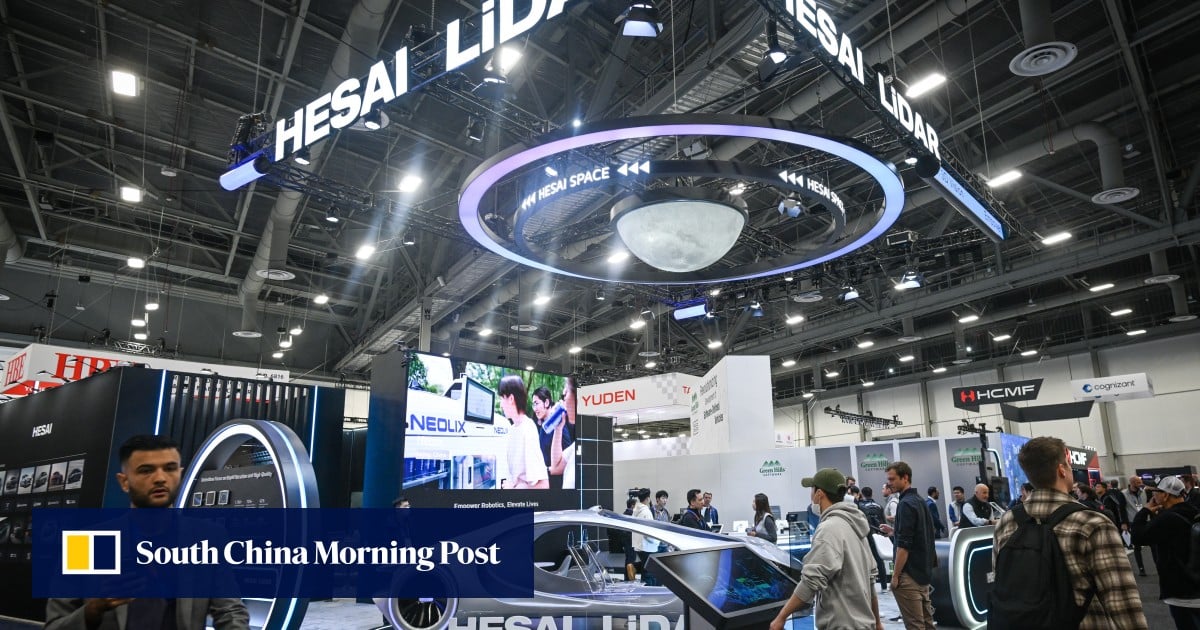
China Morning Missive If rare earth minerals, and China’s stranglehold over the refinery process, was the topic of 2025, you should all expect to see at some point a similar heated discussion over LiDAR. This critical technology used in everything from EVs to weapon systems (you know, all that hyped up precision targeting) is dominated by Chinese players and now, with the latest application, robotics, the subject looks to be finally gaining the attention of various American interested parties. The reason for bringing this topic up today is in relation to the news that Nvidia has selected a Chinese company – Hesai Technology – to provide LiDAR sensors to its recently announced autonomous driving platform. A rather sharp shift from the American conventional wisdom (ie Elon Musk) which viewed LiDAR as a luxury and which favored a camera-centric system for autonomous driving. Hesai is currently the single largest supplier of LiDAR sensors globally and is a company I’m fairly certain virtually no one has ever heard of. It is also a company which has been uniquely responsible for obliterating the cost to manufacture. From sensors priced in the thousands of US dollars, Hesai built an in-house production facility and is now selling sensors at just US$500. Not only is the company now beginning to shift focus towards the robotics industry, but it is also in the process of doubling its manufacturing capacity with the stated aim of reducing the price point to US$200. A well-worn tactic among Chinese companies over the past three decades: Build a competitive product and then scale production aggressively to price out the competition. Just think back on the entire solar panel industry and, I would highlight, the example of Sunnova and with it the limitations laid bare of an American industrial policy. Dozens of American industries are reliant on LiDAR systems and while it isn’t all that clear the degree of sourcing from China given both cost and availability of supply it would be reasonable to conclude that there is an industrial dependence. Then there is the “national security threat”. Even the most minimal reliance on Chinese LiDAR would be looked upon as concerning. It is, after all, Chinese tech and Washington has made it quite clear that Chinese tech is to be avoided at all costs. For myself, the actual issue isn’t about LiDAR or rare earth minerals for that matter. I’ve stressed for the lonest time that China produces everything and America produces nothing. Perhaps a gross exaggeration, but the point still holds. For the foreseeable future there is little that can change this dynamic. The leverage in the geopolitical relationship is owned by China and, it is now increasingly clear, both sides understand this to be true.
Peter Alexander's avatar
prc30 1 month ago
China Morning Missive During the holiday break there was a news item that was very poorly covered and yet provided indicative clarity to a decade’s long key geopolitical shift. China announced that its official holdings of American debt had not only declined yet again in the month of November, but had reached a level not seen since 2008. In terms of the data points, the country stated that it held a total of $688brillion worth of US treasuries. That is a 48% decline from the 2013 peak of $1.32trillion. Furthermore, of China’s total FX reserves, the relative position of US sovereign debt has also been cut in half and is now just 20% of China’s total FX reserves. There has certainly been commentary and coverage over this downtrend in the past, but there has been little, dare I say no, critical analysis into the explicit strategy underlying, what is, a very deliberate move made by Beijing. Consider the following. As an historical pattern, the main driver of China’s foreign currency reserves, in total, was its annual trade surplus. At the time of peak exposure to US sovereign debt in 2013, which just so happened to correspond with total peak FX reserves I should add ($3.8trillion), China’s trade surplus was $260billion. By 2021 the trade surplus had more than doubled reaching $676billion. And for 2025? It will surpass $1.0trillion as I am rather certain you’ve already read in the business media. You had a massive influx of foreign currency over the past decade, and yet total reserves held in a tight range of between $3.0trillion and $3.2trillion. Where, then, did the excess funds from a rapidly accelerating trade surplus go? Not into US Treasuries, that’s for sure. To some extent, the trade surpluses remained on the balance sheets of the exporters and in their onshore (and offshore) bank accounts as there was no longer the direct requirement to repatriate and/or convert into the local currency. That would, maybe, account for a fifth to a quarter of the trade surplus leaving hundreds of billions unaccounted for. The answer lies, primarily, in the Belt and Road Initiative (BRI) which, you will not be surprised to find, was formally launched in 2013. US dollar funding was directed into an aggressive global infrastructure investment program. Ports in Greece and Peru. Rail lines in Hungary and Serbia. A massive sector wide investment into Indonesia. The list goes on and on. You see, Beijing policy makers were the first to truly comprehend that to address a large and growing debt obligation, Washington had no other option than to continue with a debasement of the currency. With this knowledge, China not only made the decision to de-risk its direct USD exposure but to go even farther and learn from the lesson and de-risk from as much sovereign “paper” as possible and, instead, reallocate excess reserves into hard assets. Data is difficult to source, but what is out there has China’s total cumulative BRI investment since 2013 at around $1.3trillion. I’d take the over on that though. Either way, that is a significant redirected flow of funds away from American sovereign debt and a truly debilitating loss of a (not so) marginal buyer. One final point to make: China also “officially” purchased a total of 1,226 tons of gold between 2013 and 2024. Here, again, I would be taking the over. No question though. China has been exiting the entire sovereign paper market for over a decade, artfully executed I might add, and there is little doubt that this trend will continue.
Peter Alexander's avatar
prc30 1 month ago
China Morning Missive New Year and it is time to return with my periodic updates on all things China. Perhaps apropos of current events, but with America’s adventurism into Venezuela it didn’t come as a surprise to anyone that the Chinese leadership has responded in a deeply negative way, albeit conveyed with diplomatic flair. Above all else, there is the Great Game 2.0 at play here as China maintains certain key assets in the South American country and there was even an elevation of the bilateral relationship to what was termed an “all weather partnership” whatever that might mean. China remains the largest creditor of Venezuela (not a surprise) and is also the single largest buyer of the country’s oil exports (again, no surprise). That said, it’s estimate are that only 5% of China’s overall annual oil imports come from Venezuela. Here’s the real question though: What is it that China will do in the immediate future? The answer is absolutely nothing. Yes, there will be bellicosity and some periodic saber rattling, that is just how China operates. In terms of any meaningful actions, though …. expect Beijing to sit idly by and do nothing. Classic (misattributed) Sun Tzu quote, “Never interrupt your enemy when he is making a mistake.” The primary reason for this “non-action” approach is that it plays to Beijing’s favor. There are numerous occasions from the past where America has acted quickly with military might and in doing so quickly found itself mired in a quagmire and, ultimately, exited the theater. In each of these past occasions those activities resulted in a sidelined, distracted and, ultimately, humbled hegemon. China simply needs to tap into that ample reserve of low time preference energy and wait for the inevitable. Doing nothing whenever it is that America acts in haste has always found China coming out the other side far stronger in term of diplomatic relationships. I would just add here that China will also aggressively leverage this latest American move as further evidence of the abjectly uselessness of the “international rules-based order”. Granted, this will be done deep in the background. There should even be the expectation of a willing audience throughout Latin America.
Peter Alexander's avatar
prc30 1 month ago
It’s official. 2026 in China. Be well all. Find peace and the goal for the New Year is to be happy for all successes be they yours or be they others.
Peter Alexander's avatar
prc30 1 month ago
An hour to go till the New Year from here in Shanghai and, come one, just received this via WeChat. Who says Chinese don’t have a sense of humor. image
Peter Alexander's avatar
prc30 1 month ago
Have a great end to the year all. Peace love and time with friends and family. Going offline but will be back in the New Year with even more China. commentary. Just. Keep. Breathing.
Peter Alexander's avatar
prc30 2 months ago
China Morning Missive First there was the announcement that President Trump would be permitting Nvidia to sell H200 chips to China. Then came the news of China’s trade surplus clocked in at $1.0trillion over the first 11 months of the year. The reaction out of the Beltway to these two developments was apoplectic. Just wait for the reactions once the ASML restrictions are lifted. That’s what China really wants, and it’ll happen sooner than most observers expect. To the reactions, it is all very understandable, but I would point out that these are just two outcomes reflective of a fundamental shift in global power. It isn’t that this is a new trend either. All that is slowly underway is a realization among the Washington powerbrokers that this is no longer just a philosophical debate. For a decade there was analysis by “Senior Fellows” and lengthy diatribes throughout Foreign Affairs magazine and elsewhere. China was said to be an existential threat to the American way. I agreed. A constructure form of engagement, beginning with a harsh acceptance of the threat posed, was required. And yet, nothing was done, beyond talking and op-eds to wax poetically on the geopolitical threat. Now here we are and America now finds itself well past the point of no return. All that these two events highlighted above indicate is a direction of travel. There will be more public consternation and, unfortunately, greater externalizing of the issue. Rather than seeing the world as it is and sifting energies towards hyper competition, China will be labeled an enemy of the State and with that will come far greater aggressive tendencies. Finally, and just as a quick update, the current TikTok “ban/divest” deferment expires next Tuesday, December 16th. This will have been the fourth such deferment and the entire affair is coming up on a full year since the Supreme Court ruling. No matter the political posturing by the Trump team, the TikTok divestiture remains outstanding. https://www.reuters.com/world/china/us-china-hawks-say-trump-approved-nvidia-chip-sales-china-will-supercharge-its-2025-12-09/
Peter Alexander's avatar
prc30 2 months ago
China Morning Missive Slowly, ever so slowly, the realities of altering global supply chain dependencies are beginning to breach the public zeitgeist. The American “can do” spirit is running up against some very hard truths. Both in terms of the literal limitations of physics and that of obstacles from an overly ossified system. For the first time, these very issues are raised and addressed in a rather detailed expose from the New York Times. Before continuing it needs to be stressed that high end chips, and TSMC in particular, were considered atop all priorities when it came to the renewed focus on reshoring. Two birds, one stone went the thinking. America would have access to domestically made chips and the supposed China threat to Taiwan would be taken off the game board. Put very bluntly, America wanted high-end chips and wanted TSMC. What is now becoming increasingly clear is that boundless ambitions are running head long into a wall of limited capabilities. Dare I even suggest that this would be the first time America leadership (both corporate and political) is waking up to this new reality. The entire TSMC Arizona plant example is emblematic of just how complicated the entire reshoring thesis is in terms of actual execution. Furthermore, this TSMC example can be fully extrapolated to just about every other dependency now facing the hegemon. While America most certainly has the money, not capital mind you just money, to throw at the various problems, it lacks the physical inputs required to address those issues. It is also a game of relativity meaning that China built a supply chain fortress over three decades and continues to improve upon its position. To play catch up, America will need to run at twice the speed and that’s were problem number two comes into play. As addressed in this NYT’s piece, the primary issues are that of regulations and labor. Suffocating under the weight of the former and scrambling to source the latter. Neither of these obstacles can be easily overcome in the short run. Taiwan TSMC shows the real-world implications of having to navigate these issues and the same will be required of all foreign groups planning to build production facilities in the United States. The road to hell is paved with good intentions and, it would seem, all of these global groups which have committed billions in investment to America are well on their way to a nightmarish end.
Peter Alexander's avatar
prc30 2 months ago
A sign of times to come. While not all that popular in the US, I’d still expect RedNote to get the “under national security concerns” approach and with it be banned. Even more likely, if not an outright certainty, once the TikTok deal is finally concluded. Whenever that might be. Taiwan bans Chinese social media app RedNote for one year on fraud risks
Peter Alexander's avatar
prc30 2 months ago
China Morning Missive With the announcement of the “Genisis Mission”, the Trump administration has made dominating the AI ecosystem a national priority. While there have certainly been a host of differing opinions on possible ulterior motives, from a geopolitical standpoint the decision makes perfect sense. So too, however, could this move end up directly impacting – inadvertently – a diaspora of Silicon Valley companies. Over the past month there’s been increased media coverage of how American startups are fully leveraging the Chinese open-sourced AI models. After all, that is sort of the point of having access to open-source software. Take what’s already available and then iterate and improve upon that original source code. The issue is the point of origination of that that source code; China. Any time a competing Chinese software solution, or hardware offering for that matter, gains ground on all available American alternatives, Washington policy wonks step in on the grounds of “national security”. Not to say that such concerns aren’t warranted, rather that the issue here is the wide spread in usage (and, now, dependency) on Chinese AI models. Rhetorically speaking, is there anyone who thinks the American government will permit home grown platforms build on Chinese source code? Much as the NBC article highlights, “while models from American companies continue to set the pace of progress at the frontier of AI capabilities, many Chinese systems are cheaper to access, more customizable and have become sufficiently capable for many uses over the past year.” It is the use of the word “customizable” which should stand out to all readers. It goes to the primary – I would say existential – issue facing the entire American AI theater. The dogmatic pursuit of closed source architecture, the building of silos (competitive moats), remains the greatest threat to America’s position. Basically, you have five large dogs all chasing after a single bone. The likelihood is that the dogs will attack each other viciously long before catching the bone. You see this in the perversion of all incentives, mainly in the rapid acceleration of CAPX spending. What this then leaves is the Chinese AI scalers to just continue moving forward building better software and directing all efforts to addressing the issue of compute.
Peter Alexander's avatar
prc30 2 months ago
China Morning Missive My new obsession is the concept of myopia. The more I continue to compare and contrast the bilateral rivalry between America and China the more you’ll see the pure definition of myopia come into play; “a lack of foresight or discernment; a narrow view of something.” Not all that dissimilar to the contrast in how each country goes about building and executing overall geopolitical policy, one having a low time preference and the other having a high time preference. The perfect example of this was put on display yesterday with all the headlines discussing how Google “leap frogged” OpenAI in the LLM race. In all the media coverage, there wasn’t any attempt to even introduce the role of China into the competitive theater. Just consider that it hasn’t even been a year since Deepseek first burst into the spotlight. Since then, the likes of QWEN, Kimi K2 , GLM and a host of others have entered the competitive field, iterated quickly and have continued to produce increasingly improved platforms. The fact that a growing number of Silicon Valley players are openly admitting to using Chinese AI models at the base layer for development should tell you everything. Again, Deepseek first came to market in January of this year. What is presented here is but a single example of China’s continued dominance across the entire “future tech” space. The drive is relentless. To think of where China will be in a year’s time, especially when compared to American competitors, should frighten all American commercial interest. For now, however, myopia reigns. The entirety of focus is domestic. It is as though the entire American strategy is to simply ignore the problem and wish for it to go away. https://www.axios.com/2025/11/25/google-gemini-openai-chatgpt-anthropic-claude
Peter Alexander's avatar
prc30 2 months ago
China Morning Missive (Part II) Couldn’t let this one go as it hits directly on a host of issues I’ve been attempting to raise albeit with very little success. Mentioned in a note yesterday that China had already won the robotics race no matter the urgency stressed by Marc Andressen for American policy to prioritize resources. Well, now we have just out a very detailed piece from the Wall Street Journal which aligns with many of the points made in various Notes here over the past several months. Reducing the dynamic to its most simply form, the American AI titans want to create “God in a box”. The Chinese AI titans want to build deeper/wider economic moats. The latter has already achieved a massive lead on the former. Here are some choice outtakes from the article. “At one of China’s biggest ports, shipping containers whiz about on self-driving trucks with virtually no workers in sight, while the port’s scheduling is run by AI.” I’ve been to the world’s largest port, Yangshan, here in Shanghai. The entire operation is automated. The crane, the trucks, all of it. “It could further enable the spread of “dark factories,” with operations so automated that work happens around the clock with the lights dimmed.” The concept of “dark factories” is rapidly expanding. No workers, 24-hour a day operations and facilities where there is no need for lighting. “China installed 295,000 industrial robots last year, nearly nine times as many as the U.S. and more than the rest of the world combined, according to the International Federation of Robotics.” The ability to scale remains a top comparative advantage throughout China. No need for any additional commentary here. The quote above speaks for itself. “One risk is that AI could destroy more factory jobs than China expects, leaving it with too many unemployed workers.” This one made me laugh. So much for all the Peter Zeihan and the others claiming that China posed no long-term geopolitical threat given the demographic timebomb. So it is rather clear that the industrial robotics industry is now dominated by China. Now the focus turns to humanoid robotics. The evidence here, however, strongly suggests that there is no race. The only outstanding variable is timing. How quickly will we all see China rolling out these sorts or robots at scale? Based on my experience, I’d say before the end of 2027. https://www.wsj.com/tech/ai/ai-robots-china-manufacturing-89ae1b42?st=anYykK&reflink=article_copyURL_share
Peter Alexander's avatar
prc30 2 months ago
China Morning Missive For those of you keeping score at home, the TikTok deal is still outstanding. I would also make mention that the latest enforcement delay made by Trump expires on December 16th. It’s been nearly a full year since the Supreme Court ruled on the issue forcing either a ban or a divestiture. The reason for raising this point is due to the headlines reporting on a call between Xi and Trump yesterday and, pending on the readout, a top priority was Taiwan. You may also recall my hammering of the point that the quid pro quo is TikTok for Taiwan. For all of the (numerous) claims by the Trump team that a deal to acquire the social media platform has been agreed to, it remains outstanding. Trump will be under increased pressure come mid-December. Any further delay will come with a political cost. Taiwan has increasingly become a focus in the macro-tourist circles. No surprise given that there’s been a weeklong diplomatic flareup over Taiwan between Japan and China. The rhetoric has been pretty heated, but I’ve seen this movie many times before. China will just continue to be verbally belligerent and wait until there’s a new government in Tokyo. Considering recent political events, that would probably arrive in less than a year. Still, the longer the Trump team chooses to remain silent on the issue of Taiwan the more difficult the entire situation will become. The idea, in my opinion, was for the two sides to play for time. That was the objective of the meeting last month in Busan. Japan’s Prime Minister just threw a spanner in the works and, in doing so, has Trump catching strays. In the end though, it remains a very simple calculus. TikTok will receive final “approval” from Beijing the minute Trump publicly addresses the Taiwan issue.
Peter Alexander's avatar
prc30 2 months ago
Watching all the Bitcoin hate surface this past week, and the names of those individuals included in the dog pile, has been so very telling. There was a deep down level of Schadenfreude that had been percolating just below the surface ….. and then burst out in menacing glee. Aren’t we all supposed to be rooting for one another regardless of one’s asset class of choice? Such an unnecessary scarcity mindset.