
Yet another example of just how poorly the decision makers in Washington understand their primary opponent.
Seems as though I can’t go a single day when some new edict is produced that will generate the opposite outcome.
Hormuz is certainly important to China, but it is nowhere near as critical as it is being made out to be.
China has a massive spoke network of energy access points from Alegria to Indonesia and all point in-between.
Then there are the multiple pipelines into both Russia and Central Asia.
Yes, from a cost analysis it would be far better for Beijing to buy cheap oil from the Iranians. Being cut off from Qatar natgas will also have an impact. It’s the long game that matters.
Near term solutions to China’s energy needs are readily available. Keeping the US bogged down in the Gulf is an accelerant worthy of any near term pain.

CNBC
China talks up oil sufficiency as Trump seeks Beijing's help on securing Hormuz energy route
The statistics bureau said that China's energy supply is "relatively strong," while announcing an uptick in domestic production.
Is there some rule that if you are interviewed by the media remotely that you are REQUIRED to have several hundred books behind you?
Always comes across to me that the individual in question is trying way too hard to telegraph their bond fides.
Recall, the original quote has been expanded upon and, in doing so, makes it all the more impactful.
“The only way out is through.”
Robert Frost
“And the only way through is together”
John Green
People calling this a “plot twist”.
More just a natural extension of how China has been operating on the margins for a decade now.
Systems are in place (CIPS offering an alternative to SWIFT) and final settlement in gold.
Current events have simply accelerated the process.
INVC
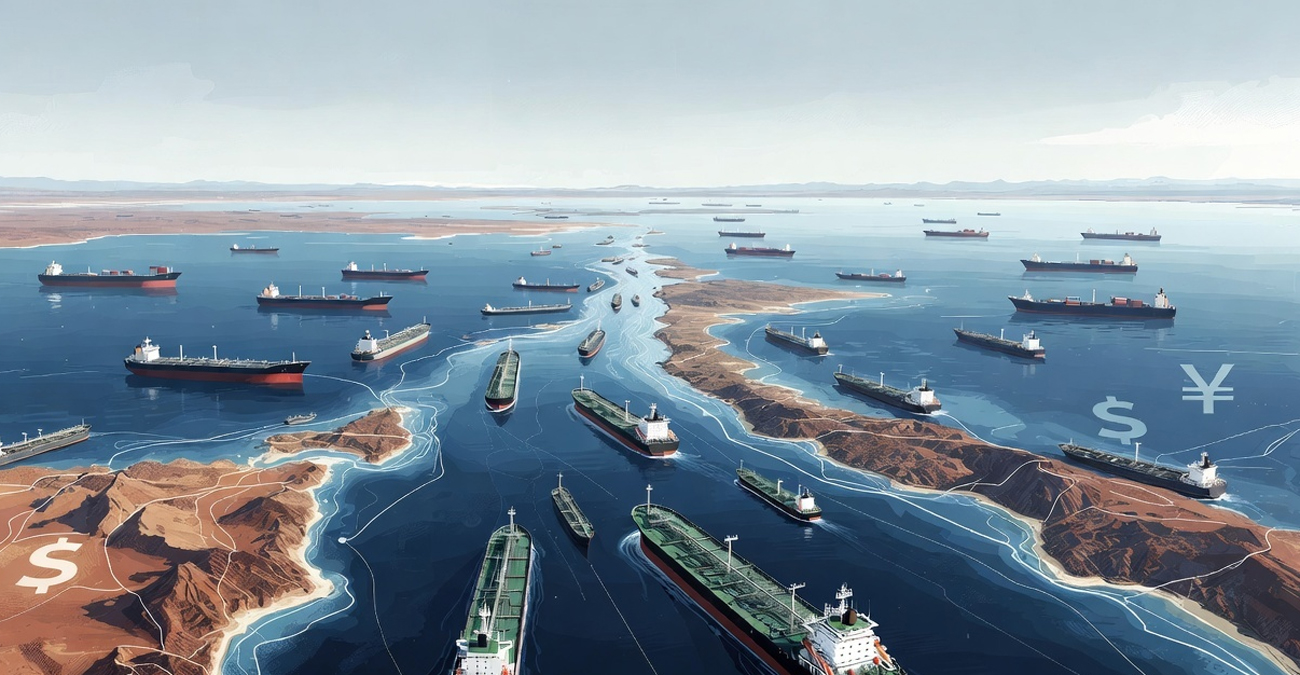
Iran Considers Yuan-Based Oil Trade for Tankers Passing Through Strait of Hormuz: Report
Iran may allow limited oil tankers through the Strait of Hormuz if trade is conducted in Chinese yuan, according to reports amid rising Middle East...
It is a beautiful Saturday morning here in Shanghai.
Have a great weekend all.
Primal isn’t showing Notes that I’m posting in my own feed?? Odd
Damus is now the option of choice I guess.
Something going wonky with my Nostr.
China Morning Missive
Wuwei (无为) and the Cultural Chasm
Over the past several days I’ve been overwhelmed with client emails asking whether American activities in the Gulf are indirectly targeting China. It appears that the zeitgeist, including many Washington policy makers, is operating under the impression that China has been irreparably harmed and the Beijing leadership is at a loss for how to respond. My responses to those emails are short and to the point. “Ignore the noise. We’ve seen similar instances in the past (last year’s tariff episode?). Operate under the principal that China has prepared for this eventuality.”
It continues to escape the rationale mind of many that China operates at the lowest possible time preference. I make this point often and do so because it represents the singular first principal to be applied whenever any assessment of China is being made. Not only is the application critical to understand how Beijing goes about structuring policies, both domestic and foreign, it is central to the very process of decision making itself. More specifically, the importance lies in a recognition that, for Beijing, action is far more often found in demonstrable restraint.
There are genuine cultural anomalies present. They need to be considered and yet are always absent. Honestly, you’d think this would have been recognized by now given thirty years of observable Chinese behavior. It hasn’t. There isn’t just a cultural gap in America’s expert class when it comes to the topic of China, there is a cultural chasm.
Be it the Taoist concept of Wuwei or the teachings of Lao Tzu, Chinese society is grounded in a willingness to take the path of forbearance. An outward projection of stillness. Consider the character for patience, Ren (忍). It is comprised of two characters, blade (刃) and heart (心). What this means to the Chinese is that patience is a concept that requires a willingness to endure adversity.
Be mindful though. Non-action shouldn’t always be taken literally. It is a highly layered construct and quite malleable. Yes, the Chinese default setting is a static state, but every single event is viewed through its own unique lens. If there were to be an extreme event, then the Beijing leadership would most certainly resort to an immediate response. To the Chinese, however, there is rarely ever an occurrence that is truly extreme (ie unexpected) in nature.
Restraint is the consequence of ongoing preparedness present across China. At all levels of society, anxiety is born from uncertainty and the greater the uncertainty the greater the anxiety. And to counter uncertainty means a greater effort to prepare. Again, we only need to look back to last year. Contrary to all American expectations, the Chinese successfully countered the Trump administration’s escalatory tariff regime. This was achieved through advanced preparation. It was a widely held view in China that tariffs would be deployed and parties across the country simply planned well in advance for that eventuality. Exports were frontloaded and cash hoards were amassed. This provided time and flexibility to negotiate and do so from a position of relative strength.
So too is it the case with events now playing out in the Middle East. Beijing has well understood, and for decades, America’s motivations and objectives across the Gulf and preparations have been underway for quite some time. Beijing made overtures to create a separate series of regional relationships and did so with success. At the same time, there were various steps taken to mitigate all identified risks from future conflict. There was the aggressive campaign to build three significant rail lines (and pipelines) traversing the entirety of the Heartland. Alternative sources of energy (ex-Gulf partners) were established, from Russia to Indonesia to Africa. Even the domestic agenda of shifting to renewables and EVs can now be seen as having a geopolitical angle. China isn’t at a loss. China is, once again, very well placed.
If there is to be a focus, it needs to be on a fundamental realignment in how the American foreign policy and business community goes about assessing China. This must begin by taking China seriously and literally. Stop miscalculating China’s capabilities. Secretary Bessent famously claimed last year that China was negotiating “with a pair of twos”. He was wrong. Today, Secretary Wright is stating that “China is about to lose the second of three gas station suppliers”. Again, the Secretary will come to learn that he, too, is wrong. The script must be flipped and, moving forward, it is highly advisable that the expectation shift towards China gaining from hegemonic actions taken by America.
China Morning Missive
Wuwei (无为) and the Cultural Chasm
Over the past several days I’ve been overwhelmed with client emails asking whether American activities in the Gulf are indirectly targeting China. It appears that the zeitgeist, including many Washington policy makers, is operating under the impression that China has been irreparably harmed and the Beijing leadership is at a loss for how to respond. My responses to those emails are short and to the point. “Ignore the noise. We’ve seen similar instances in the past (last year’s tariff episode?). Operate under the principal that China has prepared for this eventuality.”
It continues to escape the rationale mind of many that China operates at the lowest possible time preference. I make this point often and do so because it represents the singular first principal to be applied whenever any assessment of China is being made. Not only is the application critical to understand how Beijing goes about structuring policies, both domestic and foreign, it is central to the very process of decision making itself. More specifically, the importance lies in a recognition that, for Beijing, action is far more often found in demonstrable restraint.
There are genuine cultural anomalies present. They need to be considered and yet are always absent. Honestly, you’d think this would have been recognized by now given thirty years of observable Chinese behavior. It hasn’t. There isn’t just a cultural gap in America’s expert class when it comes to the topic of China, there is a cultural chasm.
Be it the Taoist concept of Wuwei or the teachings of Lao Tzu, Chinese society is grounded in a willingness to take the path of forbearance. An outward projection of stillness. Consider the character for patience, Ren (忍). It is comprised of two characters, blade (刃) and heart (心). What this means to the Chinese is that patience is a concept that requires a willingness to endure adversity.
Be mindful though. Non-action shouldn’t always be taken literally. It is a highly layered construct and quite malleable. Yes, the Chinese default setting is a static state, but every single event is viewed through its own unique lens. If there were to be an extreme event, then the Beijing leadership would most certainly resort to an immediate response. To the Chinese, however, there is rarely ever an occurrence that is truly extreme (ie unexpected) in nature.
Restraint is the consequence of ongoing preparedness present across China. At all levels of society, anxiety is born from uncertainty and the greater the uncertainty the greater the anxiety. And to counter uncertainty means a greater effort to prepare. Again, we only need to look back to last year. Contrary to all American expectations, the Chinese successfully countered the Trump administration’s escalatory tariff regime. This was achieved through advanced preparation. It was a widely held view in China that tariffs would be deployed and parties across the country simply planned well in advance for that eventuality. Exports were frontloaded and cash hoards were amassed. This provided time and flexibility to negotiate and do so from a position of relative strength.
So too is it the case with events now playing out in the Middle East. Beijing has well understood, and for decades, America’s motivations and objectives across the Gulf and preparations have been underway for quite some time. Beijing made overtures to create a separate series of regional relationships and did so with success. At the same time, there were various steps taken to mitigate all identified risks from future conflict. There was the aggressive campaign to build three significant rail lines (and pipelines) traversing the entirety of the Heartland. Alternative sources of energy (ex-Gulf partners) were established, from Russia to Indonesia to Africa. Even the domestic agenda of shifting to renewables and EVs can now be seen as having a geopolitical angle. China isn’t at a loss. China is, once again, very well placed.
If there is to be a focus, it needs to be on a fundamental realignment in how the American foreign policy and business community goes about assessing China. This must begin by taking China seriously and literally. Stop miscalculating China’s capabilities. Secretary Bessent famously claimed last year that China was negotiating “with a pair of twos”. He was wrong. Today, Secretary Wright is stating that “China is about to lose the second of three gas station suppliers”. Again, the Secretary will come to learn that he, too, is wrong. The script must be flipped and, moving forward, it is highly advisable that the expectation shift towards China gaining from hegemonic actions taken by America.
Once again, it is just another Monday morning here in Shanghai. Everyone just going about their day.
China Morning Missive
Wuwei (无为) and the Cultural Chasm
Over the past several days I’ve been overwhelmed with client emails asking whether American activities in the Gulf are indirectly targeting China. It appears that the zeitgeist, including many Washington policy makers, is operating under the impression that China has been irreparably harmed and the Beijing leadership is at a loss for how to respond. My responses to those emails are short and to the point. “Ignore the noise. We’ve seen similar instances in the past (last year’s tariff episode?). Operate under the principal that China has prepared for this eventuality.”
It continues to escape the rationale mind of many that China operates at the lowest possible time preference. I make this point often and do so because it represents the singular first principal to be applied whenever any assessment of China is being made. Not only is the application critical to understand how Beijing goes about structuring policies, both domestic and foreign, it is central to the very process of decision making itself. More specifically, the importance lies in a recognition that, for Beijing, action is far more often found in demonstrable restraint.
There are genuine cultural anomalies present. They need to be considered and yet are always absent. Honestly, you’d think this would have been recognized by now given thirty years of observable Chinese behavior. It hasn’t. There isn’t just a cultural gap in America’s expert class when it comes to the topic of China, there is a cultural chasm.
Be it the Taoist concept of Wuwei or the teachings of Lao Tzu, Chinese society is grounded in a willingness to take the path of forbearance. An outward projection of stillness. Consider the character for patience, Ren (忍). It is comprised of two characters, blade (刃) and heart (心). What this means to the Chinese is that patience is a concept that requires a willingness to endure adversity.
Be mindful though. Non-action shouldn’t always be taken literally. It is a highly layered construct and quite malleable. Yes, the Chinese default setting is a static state, but every single event is viewed through its own unique lens. If there were to be an extreme event, then the Beijing leadership would most certainly resort to an immediate response. To the Chinese, however, there is rarely ever an occurrence that is truly extreme (ie unexpected) in nature.
Restraint is the consequence of ongoing preparedness present across China. At all levels of society, anxiety is born from uncertainty and the greater the uncertainty the greater the anxiety. And to counter uncertainty means a greater effort to prepare. Again, we only need to look back to last year. Contrary to all American expectations, the Chinese successfully countered the Trump administration’s escalatory tariff regime. This was achieved through advanced preparation. It was a widely held view in China that tariffs would be deployed and parties across the country simply planned well in advance for that eventuality. Exports were frontloaded and cash hoards were amassed. This provided time and flexibility to negotiate and do so from a position of relative strength.
So too is it the case with events now playing out in the Middle East. Beijing has well understood, and for decades, America’s motivations and objectives across the Gulf and preparations have been underway for quite some time. Beijing made overtures to create a separate series of regional relationships and did so with success. At the same time, there were various steps taken to mitigate all identified risks from future conflict. There was the aggressive campaign to build three significant rail lines (and pipelines) traversing the entirety of the Heartland. Alternative sources of energy (ex-Gulf partners) were established, from Russia to Indonesia to Africa. Even the domestic agenda of shifting to renewables and EVs can now be seen as having a geopolitical angle. China isn’t at a loss. China is, once again, very well placed.
If there is to be a focus, it needs to be on a fundamental realignment in how the American foreign policy and business community goes about assessing China. This must begin by taking China seriously and literally. Stop miscalculating China’s capabilities. Secretary Bessent famously claimed last year that China was negotiating “with a pair of twos”. He was wrong. Today, Secretary Wright is stating that “China is about to lose the second of three gas station suppliers”. Again, the Secretary will come to learn that he, too, is wrong. The script must be flipped and, moving forward, it is highly advisable that the expectation shift towards China gaining from hegemonic actions taken by America.
Everyone who is saying “this war is really about China” hasn’t a single idea of just how prepared Beijing became for this eventuality.
Not a single lesson was learned from last years trade war. Bessent and pretty much every geopolitical cosplayer said China had no leverage. “China was playing with a pair of twos”.
They were wrong. They are wrong this time as well. China has seen this coming for decades.
Here is a perfect example of why you need to tread carefully anytime there’s a flurry of commentary discussing China.
Be it Beijing’s motivations, or the supposed fact that – somehow – action taken by the United States in the Middle East has provided for escalatory leverage. It may sound like a cliche, but you must know that the Chinese are playing multiple steps ahead of Washington.
Perhaps some unsolicited advice. The next time you stumble across an individual weighing in on the China debate, simply ask that individual when was the last time they were in country. It’s all noise when it comes to the arm chair macro tourists and armchair geopolitical theorists.
https://www.bloomberg.com/news/articles/2026-03-05/china-tells-top-refiners-to-suspend-diesel-and-gasoline-exports
China Morning Missive
More of the Same, as Expected
That time of year again, the China “Two Sessions” where Beijing leadership lays out its economic plans for the coming year. Much as expected, the path forward is essentially the very same path from 2025.
Where I’m focused is on the continued deleveraging especially at the local government level. Basically, it is a “left pocket, right pocket” strategy where Beijing is issuing so called ultra-long special sovereign bonds and will use those proceeds to retire local government debt.
There’s been no fiscal bazooka and there will be no fiscal bazooka. There will be no direct support provided to households. Once again, I will state emphatically that Keynes is well and truly dead in China. The lessons of 2008 were learned and policy was thusly adjusted.
What this will also mean is continued deflationary pressure.
My ongoing thesis remains intact as well. Beginning in 2017, but in earnest staring in 2020, Beijing shifted to an entirely new economic model. Property and infrastructure, the historic drivers of growth, were to be phased out and replaced by manufacturing, or more specifically what’s referred to as the fourth industrial revolution.
There’s no question that what Beijing is seeking to achieve is a very big ask. There is no guarantee that the strategy will ultimately work. The economic structural issues were, however, recognized and a path forward was created to address those issues. That’s far more than can be said of any G7 nation-state. If, and this is a very big if, China does prove successful in the transition it’ll be game over.
https://www.bloomberg.com/news/articles/2026-03-05/china-s-steady-debt-plan-calms-bond-market-on-ample-liquidityIt is hard to fathom that non-action by the Beijing leadership is somehow being viewed as a net geopolitical gain for the United States.
The cultural divide is truly a chasm.

On the off chance some of you missed it, Chancellor Merz lost it after his trip to China last week.
China Morning Missive
“A Single Flower does not Make a Spring”
There seems to be a rather weak theory going around that America has deployed some grand plan to systematically cut China off from key strategic partners. While there are certainly more than a few dots which can be connected to reach such a conclusion, it remains an errant conclusion and, if anything, only goes to demonstrate just how poorly China’s 30 years of foreign policy strategies are understood throughout the Beltway.
To begin, the theory being promulgated is an act of pure projection. How American policy has been conducted over the past 30 years must, obviously, be the very same course of action under consideration by the leadership in Beijing. Not even close and it is rather obvious, at least to me, that few have read BGen Samuel Griffith’s book on Sun Tzu.
To the Americans, the world is built upon alliances and a Judeo-Christian ethos that delineates between good actors and bad actors. It is all a very black and white mindset and extremely rigid. It is also an approach which is highly antithetical to how Beijing operates. What continues to evade much of Washington, the Beltway consensus and the entire Thing Tank Senior Fellow ecosystem is a foreign policy construct which has been built around a web of counterparties, not formal alliances. Counterparties which are centered on commercial interests and, critically, are meant to achieve the specific strategic aim of optionality through the redundancies of critical inputs.
In the case of the Middle East, even the most tertiary assessment will find that China isn’t even close to being hemmed in strategically by a single relationship. In fact, and as a quick aside, the entire “Axis of Autocracies” is incongruent not only with China’s actual ambitions but also in terms of how Beijing has pursued foreign policy. The taxonomy applied is, well, just another reflection of an America hardwired to a 20th Century mindset. For the sake of argument though, if it is true that the underlying aim of the Trump administration is to leverage actions in one theater to destabilize China in the East Asia theater all that will be achieved is the equivalent of pushing on a string.
The glaring omission of this theory is any consideration of China’s current expansive set of relationships across the Gulf region both in terms of scope and scale.
Here are but a few examples. To start, there’s Qatar which is reported to be the second largest supplier of LNG (3million tons/year) to China. There’s Kuwait which was the first country in the region to sign on, formally, to China’s Belt and Road Initiative in 2014. Even Iraq. Here the two countries have a deep commercial relationship, including a 20-year “oil-for-construction” agreement. China imports as much oil from Iraq as it does from Russia. Finally, there’s Saudi Arabia, by far the single most significant relationship China has built in the region and a partnership that is far broader and deeper than that of any other Gulf nation.
Here is the critical point to be made; what is highlighted above is a foreign policy that has been executed upon globally from Eastern Europe to South East Asia and all points between. Be it the Port of Piraeus in Greece or the linkage to the Belgrade-Budapest rail line. The massive energy investments in Indonesia or, not to be forgotten, the 950km newly operational rail line in Algeria. China has built redundancies across the globe and isn’t anywhere near at risk if it were to lose a single bilateral relationship.
Ah, but what of China’s ability to protect those interests? The Beltway commentariat is also stressing that Beijing doesn’t have the necessary hard power (military assets) to fortify any of those relationships. This is most certainly true, but only to a point. The real question to be asked is how far can America extend its reach in seeking to counter/contain China? For me, the answer is found in history and with the British Empire. For all the galivanting around the globe during the latter half of the 19th Century, all the Gunboat diplomacy, it ultimately became impossible for the Empire to be in all places at all times. The same would hold for America today albeit with a key difference. China isn’t just a geopolitical rival; it is a deep pocketed rival and one which has built bilateral relationships that are commercial centric. It is also a position built over the course of three decades. There’s a degree of entrenchment that has yet to be properly appreciated in Washington.
God speed!
https://www.chathamhouse.org/2026/02/china-playing-long-game-over-iranChina’s market closed higher on the day.

Feel the need to share the following.
"Never interrupt your enemy when he is making a mistake."
This is a quote from Napoleon Bonaparte and NOT Sun Tzu.