The Sandglass of Trust: A Tale of Peer to Peer Innovation in the Crimson Citadel
 In the bustling marketplace of Crimson Citadel, camels laden with exotic spices jostled for space with merchants hawking vibrant silks. Here, amidst the cacophony of bartering and haggling, lived two friends, Amara and Samir.
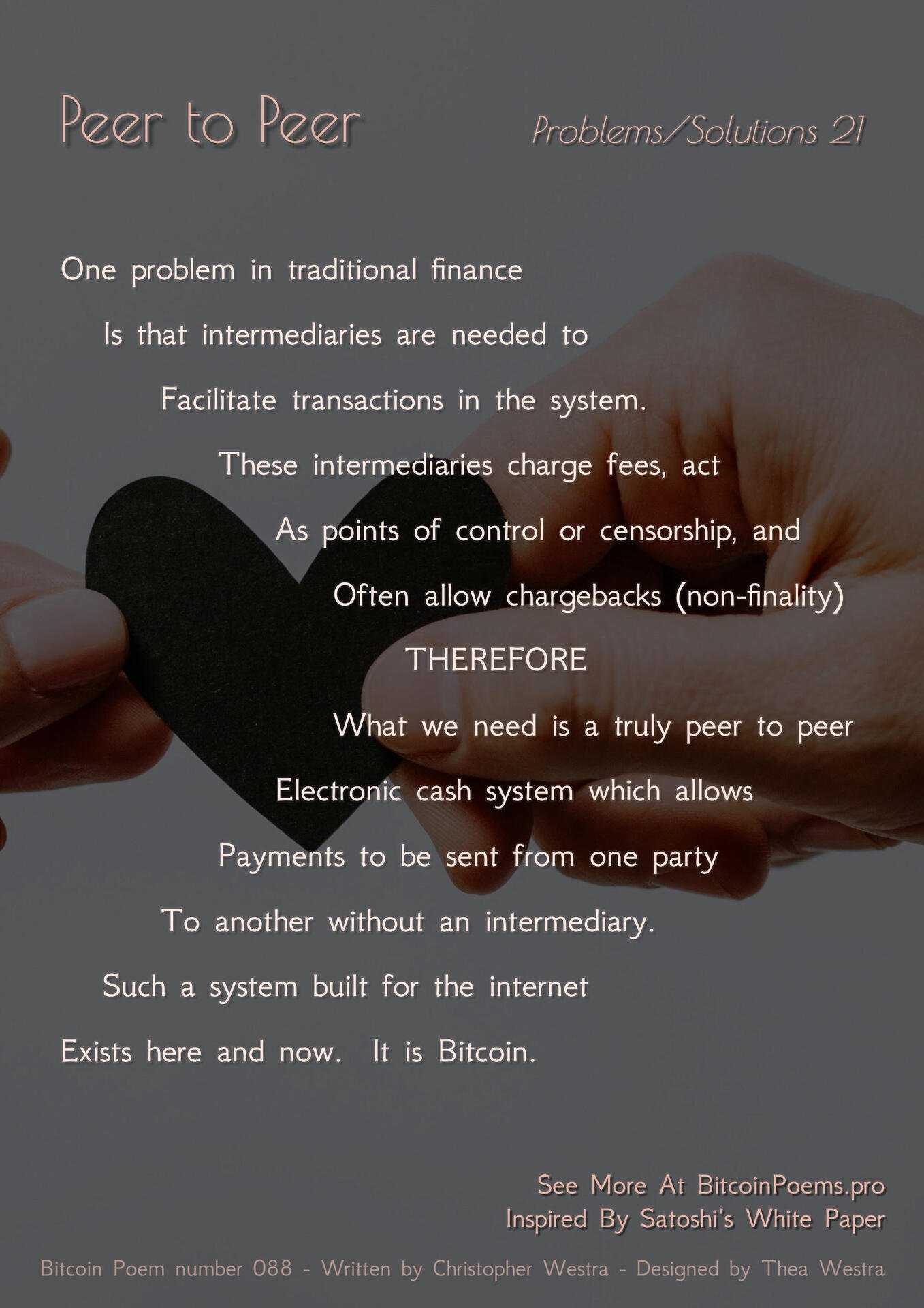
Amara, a weaver of exquisite tapestries, wished to purchase a rare jar of sapphire dust from Samir, a spice merchant. However, their options were limited. They could exchange goods directly, which was risky and inconvenient. Or, they could rely on Hakim the Moneychanger.
Hakim, a portly man with a perpetually calculating gaze, operated a money booth. He accepted goods in exchange for his special coins, which Amara and Samir could then use to purchase items. But Hakim's services weren't free. He charged a hefty fee for every exchange, and whispers swirled about his tendency to manipulate the exchange rates.
One stifling afternoon, Amara approached Samir, frustration etched on her face. “The price of sapphire dust keeps rising with Hakim taking his cut,” she lamented. “Wouldn't it be wonderful if we could trade directly, without relying on his greed?”
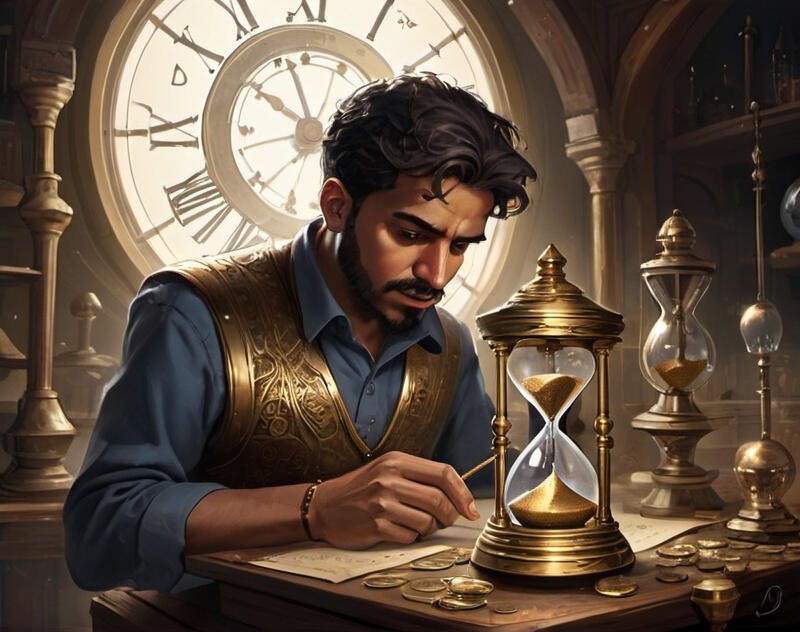
Samir, a tinkerer with a knack for inventions, tapped his chin thoughtfully. “There has to be a better way,” he mused. Days turned into weeks as Samir hunched over his workbench, gears whirring and metal clinking in a symphony of creation. Finally, he unveiled his invention – a marvel of brass and crystal he called the “Sandglass of Trust.”
The Sandglass, powered by intricate clockwork, allowed Amara and Samir to directly record their trades. Each transaction was etched onto a permanent record, visible to everyone. This eliminated the need for Hakim's coins and his manipulations.
News of the Sandglass spread like wildfire. Soon, other merchants began using it, bypassing Hakim altogether. The marketplace buzzed with newfound efficiency and trust. Hakim, his business dwindling, grumbled about the “unruly contraption.”
The Sandglass of Trust, though simple, became a symbol of a new era in Crimson Citadel – an era of peer-to-peer exchange, free from the constraints and fees of a middleman. It proved that trust and transparency, not a moneychanger's greed, were the cornerstones of a thriving marketplace.
In the bustling marketplace of Crimson Citadel, camels laden with exotic spices jostled for space with merchants hawking vibrant silks. Here, amidst the cacophony of bartering and haggling, lived two friends, Amara and Samir.
Amara, a weaver of exquisite tapestries, wished to purchase a rare jar of sapphire dust from Samir, a spice merchant. However, their options were limited. They could exchange goods directly, which was risky and inconvenient. Or, they could rely on Hakim the Moneychanger.
Hakim, a portly man with a perpetually calculating gaze, operated a money booth. He accepted goods in exchange for his special coins, which Amara and Samir could then use to purchase items. But Hakim's services weren't free. He charged a hefty fee for every exchange, and whispers swirled about his tendency to manipulate the exchange rates.
One stifling afternoon, Amara approached Samir, frustration etched on her face. “The price of sapphire dust keeps rising with Hakim taking his cut,” she lamented. “Wouldn't it be wonderful if we could trade directly, without relying on his greed?”
Samir, a tinkerer with a knack for inventions, tapped his chin thoughtfully. “There has to be a better way,” he mused. Days turned into weeks as Samir hunched over his workbench, gears whirring and metal clinking in a symphony of creation. Finally, he unveiled his invention – a marvel of brass and crystal he called the “Sandglass of Trust.”
The Sandglass, powered by intricate clockwork, allowed Amara and Samir to directly record their trades. Each transaction was etched onto a permanent record, visible to everyone. This eliminated the need for Hakim's coins and his manipulations.
News of the Sandglass spread like wildfire. Soon, other merchants began using it, bypassing Hakim altogether. The marketplace buzzed with newfound efficiency and trust. Hakim, his business dwindling, grumbled about the “unruly contraption.”
The Sandglass of Trust, though simple, became a symbol of a new era in Crimson Citadel – an era of peer-to-peer exchange, free from the constraints and fees of a middleman. It proved that trust and transparency, not a moneychanger's greed, were the cornerstones of a thriving marketplace.
In the bustling marketplace of Crimson Citadel, camels laden with exotic spices jostled for space with merchants hawking vibrant silks. Here, amidst the cacophony of bartering and haggling, lived two friends, Amara and Samir.
Amara, a weaver of exquisite tapestries, wished to purchase a rare jar of sapphire dust from Samir, a spice merchant. However, their options were limited. They could exchange goods directly, which was risky and inconvenient. Or, they could rely on Hakim the Moneychanger.
Hakim, a portly man with a perpetually calculating gaze, operated a money booth. He accepted goods in exchange for his special coins, which Amara and Samir could then use to purchase items. But Hakim's services weren't free. He charged a hefty fee for every exchange, and whispers swirled about his tendency to manipulate the exchange rates.
One stifling afternoon, Amara approached Samir, frustration etched on her face. “The price of sapphire dust keeps rising with Hakim taking his cut,” she lamented. “Wouldn't it be wonderful if we could trade directly, without relying on his greed?”
Samir, a tinkerer with a knack for inventions, tapped his chin thoughtfully. “There has to be a better way,” he mused. Days turned into weeks as Samir hunched over his workbench, gears whirring and metal clinking in a symphony of creation. Finally, he unveiled his invention – a marvel of brass and crystal he called the “Sandglass of Trust.”
The Sandglass, powered by intricate clockwork, allowed Amara and Samir to directly record their trades. Each transaction was etched onto a permanent record, visible to everyone. This eliminated the need for Hakim's coins and his manipulations.
News of the Sandglass spread like wildfire. Soon, other merchants began using it, bypassing Hakim altogether. The marketplace buzzed with newfound efficiency and trust. Hakim, his business dwindling, grumbled about the “unruly contraption.”
The Sandglass of Trust, though simple, became a symbol of a new era in Crimson Citadel – an era of peer-to-peer exchange, free from the constraints and fees of a middleman. It proved that trust and transparency, not a moneychanger's greed, were the cornerstones of a thriving marketplace. On a sunny afternoon, a group of friends gathered in the park for their favorite game – “Barterville.” The rules were simple: they traded imaginary items using colorful pebbles as currency.
One friend, Max, was the “Banker.” He kept a small pouch of pebbles, ensuring there were just enough for everyone to play comfortably. Every trade felt fair because the pebbles held their value.
But then, a new kid named Alex joined in. Alex, full of ideas, wanted to build a giant sandcastle, but he lacked pebbles. Impatient, he declared, “I'll just make more!” He grabbed a handful of dirt and pretended to transform it into shiny pebbles.
The other kids were skeptical. “But where did those come from?” Sarah asked. Max explained, “We can't just create more pebbles. Their value comes from having just the right amount for everyone.”
Unconvinced, Alex kept creating his own “dirt-money.” Soon, there were piles of it everywhere. The initial excitement of having more faded as the “dirt-money” lost its value. Nobody wanted it anymore.
Meanwhile, Max's pebbles, representing limited resources earned through honest work, remained valuable. Sarah used hers to buy a stick for her flag, and Ben traded his for a beautiful leaf crown.
Frustrated, Alex realized his shortcut had ruined the game. He apologized and asked Max, “How can we fix this?”
Max smiled. “Let's restart with the original pebbles. Remember, the fun comes from trading what we have, not just having more.”
From then on, they played with a newfound appreciation for limited resources. The experience mirrored the real world. Governments printing too much money, like Alex with his dirt-money, could lead to inflation, where the money loses its value.
Bitcoin, however, functioned more like Max's pebbles, limited in quantity and earned through a process called mining. This limited supply prevents governments from simply creating more money to fund their projects.
As they continued playing, the friends understood that a currency based on work and limited resources, like Bitcoin, could offer a more balanced system, encouraging responsible spending and fair exchange. Just like in Barterville, true value came from honest effort, not shortcuts.
On a sunny afternoon, a group of friends gathered in the park for their favorite game – “Barterville.” The rules were simple: they traded imaginary items using colorful pebbles as currency.
One friend, Max, was the “Banker.” He kept a small pouch of pebbles, ensuring there were just enough for everyone to play comfortably. Every trade felt fair because the pebbles held their value.
But then, a new kid named Alex joined in. Alex, full of ideas, wanted to build a giant sandcastle, but he lacked pebbles. Impatient, he declared, “I'll just make more!” He grabbed a handful of dirt and pretended to transform it into shiny pebbles.
The other kids were skeptical. “But where did those come from?” Sarah asked. Max explained, “We can't just create more pebbles. Their value comes from having just the right amount for everyone.”
Unconvinced, Alex kept creating his own “dirt-money.” Soon, there were piles of it everywhere. The initial excitement of having more faded as the “dirt-money” lost its value. Nobody wanted it anymore.
Meanwhile, Max's pebbles, representing limited resources earned through honest work, remained valuable. Sarah used hers to buy a stick for her flag, and Ben traded his for a beautiful leaf crown.
Frustrated, Alex realized his shortcut had ruined the game. He apologized and asked Max, “How can we fix this?”
Max smiled. “Let's restart with the original pebbles. Remember, the fun comes from trading what we have, not just having more.”
From then on, they played with a newfound appreciation for limited resources. The experience mirrored the real world. Governments printing too much money, like Alex with his dirt-money, could lead to inflation, where the money loses its value.
Bitcoin, however, functioned more like Max's pebbles, limited in quantity and earned through a process called mining. This limited supply prevents governments from simply creating more money to fund their projects.
As they continued playing, the friends understood that a currency based on work and limited resources, like Bitcoin, could offer a more balanced system, encouraging responsible spending and fair exchange. Just like in Barterville, true value came from honest effort, not shortcuts. On a sunny afternoon, a group of friends gathered in the park for their favorite game – “Barterville.” The rules were simple: they traded imaginary items using colorful pebbles as currency.
One friend, Max, was the “Banker.” He kept a small pouch of pebbles, ensuring there were just enough for everyone to play comfortably. Every trade felt fair because the pebbles held their value.
But then, a new kid named Alex joined in. Alex, full of ideas, wanted to build a giant sandcastle, but he lacked pebbles. Impatient, he declared, “I'll just make more!” He grabbed a handful of dirt and pretended to transform it into shiny pebbles.
The other kids were skeptical. “But where did those come from?” Sarah asked. Max explained, “We can't just create more pebbles. Their value comes from having just the right amount for everyone.”
Unconvinced, Alex kept creating his own “dirt-money.” Soon, there were piles of it everywhere. The initial excitement of having more faded as the “dirt-money” lost its value. Nobody wanted it anymore.
Meanwhile, Max's pebbles, representing limited resources earned through honest work, remained valuable. Sarah used hers to buy a stick for her flag, and Ben traded his for a beautiful leaf crown.
Frustrated, Alex realized his shortcut had ruined the game. He apologized and asked Max, “How can we fix this?”
Max smiled. “Let's restart with the original pebbles. Remember, the fun comes from trading what we have, not just having more.”
From then on, they played with a newfound appreciation for limited resources. The experience mirrored the real world. Governments printing too much money, like Alex with his dirt-money, could lead to inflation, where the money loses its value.
Bitcoin, however, functioned more like Max's pebbles, limited in quantity and earned through a process called mining. This limited supply prevents governments from simply creating more money to fund their projects.
As they continued playing, the friends understood that a currency based on work and limited resources, like Bitcoin, could offer a more balanced system, encouraging responsible spending and fair exchange. Just like in Barterville, true value came from honest effort, not shortcuts.
On a sunny afternoon, a group of friends gathered in the park for their favorite game – “Barterville.” The rules were simple: they traded imaginary items using colorful pebbles as currency.
One friend, Max, was the “Banker.” He kept a small pouch of pebbles, ensuring there were just enough for everyone to play comfortably. Every trade felt fair because the pebbles held their value.
But then, a new kid named Alex joined in. Alex, full of ideas, wanted to build a giant sandcastle, but he lacked pebbles. Impatient, he declared, “I'll just make more!” He grabbed a handful of dirt and pretended to transform it into shiny pebbles.
The other kids were skeptical. “But where did those come from?” Sarah asked. Max explained, “We can't just create more pebbles. Their value comes from having just the right amount for everyone.”
Unconvinced, Alex kept creating his own “dirt-money.” Soon, there were piles of it everywhere. The initial excitement of having more faded as the “dirt-money” lost its value. Nobody wanted it anymore.
Meanwhile, Max's pebbles, representing limited resources earned through honest work, remained valuable. Sarah used hers to buy a stick for her flag, and Ben traded his for a beautiful leaf crown.
Frustrated, Alex realized his shortcut had ruined the game. He apologized and asked Max, “How can we fix this?”
Max smiled. “Let's restart with the original pebbles. Remember, the fun comes from trading what we have, not just having more.”
From then on, they played with a newfound appreciation for limited resources. The experience mirrored the real world. Governments printing too much money, like Alex with his dirt-money, could lead to inflation, where the money loses its value.
Bitcoin, however, functioned more like Max's pebbles, limited in quantity and earned through a process called mining. This limited supply prevents governments from simply creating more money to fund their projects.
As they continued playing, the friends understood that a currency based on work and limited resources, like Bitcoin, could offer a more balanced system, encouraging responsible spending and fair exchange. Just like in Barterville, true value came from honest effort, not shortcuts.