
Have you heard of the Japanese real estate bubble in the late 1980s? It was an unprecedented speculative frenzy. Prices soared, fueled by easy credit and rampant investor speculation. Japan seemed unstoppable, but little did they know what awaited them👇
In the early 1990s, disaster struck. The bubble burst, causing a devastating collapse in real estate and stock prices. The trigger was monetary tightening policies implemented by the Bank of Japan to curb inflation. The effects were far-reaching.
Property values plummeted, leaving investors and financial institutions with enormous losses. The country entered a prolonged period of economic contraction known as the "Lost Decade." Low growth, high unemployment, and stagnant wages became the new normal.
The bursting bubble exposed the vulnerabilities of Japanese banks. They had heavily invested in speculative real estate loans and faced insolvency as asset values tanked. Government intervention was required to stabilize the banking sector.
Now, let's shift our focus to Canada. While it's a different country and time, there are notable parallels. Canada currently faces a private debt situation that bears some resemblance to Japan's bubble era.
Canadian households have accumulated significant debt, driven by low interest rates and easy access to credit. This debt is primarily concentrated in mortgages, similar to how Japanese investors flocked to real estate investments during their bubble.
If there's a sudden shock to the Canadian economy, such as a sharp rise in interest rates or a housing market correction, the private debt burden could become a ticking time bomb. Just as in Japan, the bursting of the bubble could have severe consequences.
Fast forward to today, and we're witnessing interest rates rise at an unprecedented pace. The Bank of Canada recently raised rates by 25 basis points, despite Canada's private debt-to-GDP ratio surpassing 230%. This is even higher than Japan's peak during their bubble.
What does this all mean? While the exact consequences are uncertain, it's crucial to note the eerie similarities between Canada now and Japan during their bubble's peak in the 1990s. Both countries exhibit high levels of private debt and face tightening monetary policies.
If the Canadian housing market corrects due to interest rates surging rapidly, it could potentially trigger a similar chain of events as Japan experienced. High private debt burdens become unsustainable, asset values decline, and the economy faces significant headwinds.
What do you think happens next?
Everytime I get zapped I'm reminded of how much better nostr is than twitter.
Just finished writing a midterm exam for econ.
Imagine my surprise when I flipped the page and encountered a question asking me to make the case for #Bitcoin as money.
That's ~60 econ students who had to ask themselves today, IS bitcoin money? Bound to get some people thinking.
$305 trillion in global debt, but what have we truly gained?
📚 Have we increased access to quality education for all?
⚖️ Is there a fair and just global economic system?
🍽️ Does everyone have access to food and water?
☮️ Is global peace a reality?
🌍 What about the state of our environment?
💰 Are wealth disparities narrowing?
👩⚕️ Has healthcare become more accessible and affordable?
🌐 Is internet access widespread and affordable?
👥 Are human rights respected and protected?
🛣️ Are our roads in better condition?
💡 Has innovation thrived?
🚀 How far have we advanced in interplanetary travel?
In my latest article, I delve into the crucial subject of federal debt, exploring its nature and the factors contributing to its significant growth over the past few decades. By establishing a connection between debt and inflation, I aim to highlight the inherent inflationary nature and long-term unsustainability of an economic system reliant on perpetual debt accumulation.
I invite you to read the article below to gain a comprehensive understanding of this complex issue👇
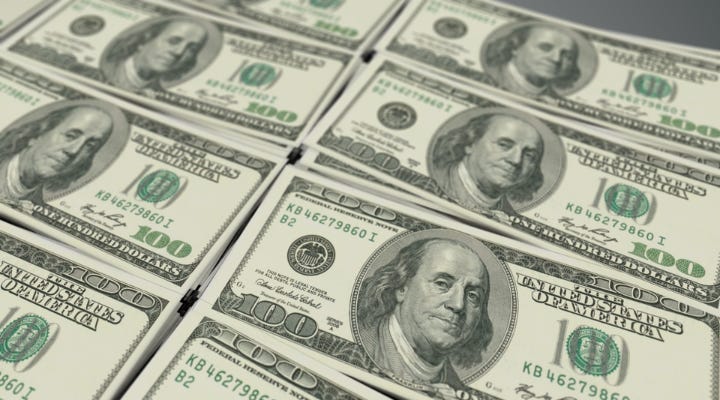
Decoding the Trifecta: Debt, Money Printing and Inflation
A simple guide to how these concepts interplay in our economy.
Excited to share my recent interview with PlebUnderground and DNComply where I discuss my experience as president of a university #Bitcoin club and the role university clubs play in promoting Bitcoin education and awareness.
I first discovered Bitcoin during the pandemic. As an economics major I was instantly fascinated by the idea of a decentralized, peer to peer currency with a fixed supply. I became convinced that Bitcoin is one of the most important innovations of our time. This inspired me to become president of the club.
Our clubs main goal is to offer an open space for discussion and education about Bitcoin. We want to provide the necessary tools to help people better understand and study Bitcoin, and to start as many conversations surrounding Bitcoin as we can.
By bringing together students, academics, and industry experts Bitcoin clubs can deepen our collective understanding of Bitcoin and speed us towards hyperbitcoinization.
If you're currently enrolled in university and are interested in starting a Bitcoin club, make sure to gain a strong understanding of the topic, host regular events and collaborate with other clubs. I highly encourage anyone in university to consider starting a Bitcoin club. Together we can make the world a better place!
Check out the full interview below to learn more about my journey with Bitcoin, my role as president and the importance of university clubs in promoting Bitcoin education and awareness.👇
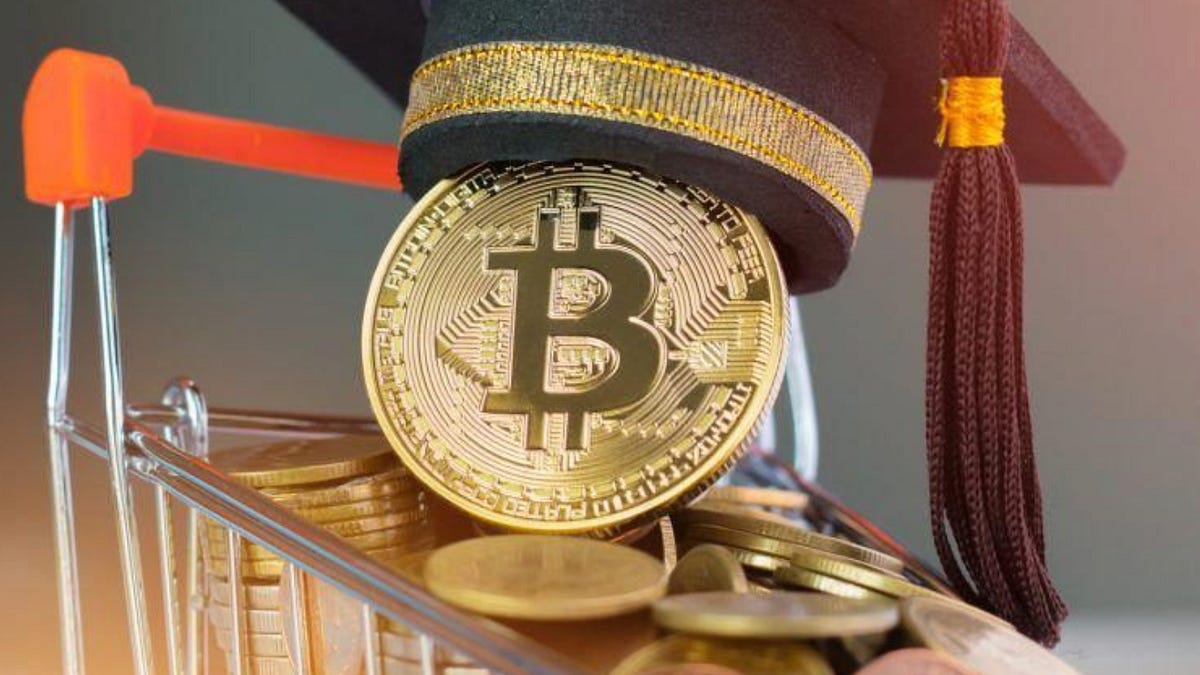
How and Why to Start a University Bitcoin Club
By @DNcomply - DNcomply.com
3 things I've learned as president of a university #Bitcoin club👇
1️⃣ Bitcoin is still crypto in the minds of the masses. We have yet to reach an inflection point where it's widely understood that bitcoin is fundamentally different from the array of "cryptocurrencies" that have come after it. Education will play a key role here.
2️⃣ Increased Bitcoin education is critical for mass adoption. We are currently in a stage where everyone has heard of bitcoin but very few actually understand it. This has led to bitcoin being widely misunderstood.
The good news is people are hungry for information. Therefore, bitcoin education could not be more important than it is today. If you're on the fence about starting some form of btc education, whether a website, writing, or speaking, just do it! Your work will be appreciated.
3️⃣ We are fighting an information war with mainstream media. Most people are still rife with misconceptions about scalability, environmental implications, etc. This is an uphill battle. If bitcoin is to succeed, each of us will need to do our part to make that future a reality.
What is the broken window fallacy?
First coined by French economist Frédéric Bastiat in 1850, this is one of the most common fallacies in economics and is still incredibly relevant today as most policy decisions are made with no regard to opportunity costs👇
Suppose you are the owner of a bakery, one day someone throws a rock through your front window and it shatters.
The broken window fallacy mistakenly believes that this damage to property will result in positive economic effects by creating jobs and stimulating economic growth.
This assumption is flawed because it ignores the opportunity cost of repairing the broken window. The money you must now spend to repair your window is exactly how much less money you now have to spend on anything else such as buying other goods or investing in new technologies.
As such, the economic activity generated by fixing the broken window is completely offset by the economic activity that could have been generated had the window not been broken in the first place.
The net effect is that the economy is just as well off as it was before.
This fallacy highlights the importance of understanding and considering the opportunity cost of all actions, especially when involving policy, business, and environmental decisions.
I am very excited to announce that I am starting a newsletter where I will be publishing articles on Bitcoin and Economics!
My first article "Why Bitcoin?" is now available and focuses on the importance of Bitcoin in the 21st century👇

Why Bitcoin?
What it is and why it's essential in today's economy.
It's simple really,
Your savings account shouldn't be someone else's liability.
Opt out with Bitcoin.
5 Key Pillars of Austrian Economics
👇🧵
1️⃣Subjectivism: All value is subjective, determined by individual preferences and perceptions.
2️⃣Free Markets: Guided by interactions of individuals making decisions in their areas of expertise reinforced by prices, profits and losses acting as signals to guide resource allocation and coordination of economic activities.
3️⃣Sound Money: A monetary system based on sound money would provide unprecedented economic stability and predictability.
4️⃣Time and Uncertainty: Focus is given to individual time preference and how this affects economic decisions. Uncertainty must be recognized as it plays a key role in constantly changing and unpredictable economic environments.
5️⃣Marginalism: Behavior and production decisions are analyzed at the margin on the basis of costs and benefits from incremental changes.
Austrian economics and Bitcoin align well,
free markets, sound money, decentralized, deflationary, scarce. Together they create a financial powerhouse.
If you want to learn more about Austrian Economics I highly recommend reading the likes of Carl Menger, Ludwig von Mises, Friedrich Hayek, Murray Rothbard and Henry Hazlitt whose works are widely distributed and available.
Okay I just got zapped for the first time... Now I understand what you guys were talking about.
This. Feels. AMAZING.
I'm not one for price predictions, but since we're on nostr now...
∞/21M
The real question now is how to decide which platform to post about Bitcoin on... Nostr or Twitter🤔
Am I doing this right?
