Orange Pill Kids's avatar
Orange Pill Kids
npub19p8y...9qgr
Money adventures with Knight & Boone. For families. Keep asking big questions. Parent resources on the Orange Pill T-shirts store page.
Can Boone crack the code? 🧡 Knight moves each letter ONE place forward in the alphabet (Z wraps to A): CAT becomes DBU. Try DOG. Now swap roles and decode it by moving back one place. Grown-ups: what clue helped your learner? Inspired by My First Bitcoin's "Cypherpunks Write Code": A paper puzzle, not secure encryption or how Bitcoin protects keys. Use made-up words only, never passwords or recovery words. No wallet or real money. #BitcoinEducation
Can you change the rules after the game starts? 🧡 Knight & Boone play a pretend paper-toss game. After Boone scores, Knight says, "Only my points count!" Fair or unfair? On paper, write one rule BOTH can check before the next round. Grown-ups: what rule would you choose? A family conversation about shared rules, not a model of Bitcoin mining. Inspired by My First Bitcoin's "That's Not Fair!": Paper only. No wallets, prizes or real money. #BitcoinEducation
Does the biggest price tag mean the most? 🧡 Paper challenge with Knight & Boone: draw a new notebook and an old notebook full of drawings. Which might Boone value more, and why? Price tells us what something costs. Value is how useful or important it is to someone. Different answers are welcome. Grown-ups: which would you choose, new or well-loved? Inspired by My First Bitcoin's "What is value?": Paper only. No wallet, buying or personal details needed. #BitcoinEducation
Who gets to choose? 🧡 Boone draws a pretend birthday card for Knight. Knight wants to show it to the whole pretend shop. Should Knight ask Boone first? What if Boone says, "Just you"? Draw two paper signs: EVERYONE and ASK FIRST. Make up another drawing or message and decide where it belongs. Can two people have different answers? Before learning about digital money, families can practise respecting someone's choice about what they share. Inspired by My First Bitcoin's Bitcoin for Juniors, Safety, Security, and Privacy: Made-up examples only. Don't write or share real names, addresses, passwords or other personal details. No accounts, wallet or real money needed. #BitcoinEducation #OrangePillKids
A letter or a message on a screen? 🧡 Knight wants to send Boone a birthday greeting. Draw two choices: a paper letter and an email. Which would you choose if Boone lived far away? What if you wanted him to keep a drawing? What if the internet stopped working? Try giving a reason for the OTHER choice, too. Different tools can solve different problems. Ask a grown-up about a tool they used when they were little. Draw its newer version. What got easier? What might you miss? Inspired by My First Bitcoin's Bitcoin for Juniors, Analog vs. Digital: Paper discussion only. No sending messages, sharing personal details, accounts, wallet or real money needed. #BitcoinEducation #OrangePillKids
Can one activity belong in two circles? 🧡 Draw three circles: WORK, REST and PLAY. Let them overlap. Knight is planting a seed. Boone is reading a story. Where would you put each activity? Could it belong in more than one circle? Add your own made-up activity. Explain your choice, then see whether someone else has a different reason. Before learning about money, we can practise noticing how people use their time. Different answers can have good reasons. Inspired by My First Bitcoin's Bitcoin for Juniors, Work, Rest & Play: Paper and pencils only. No wallet, buying or real money needed. #BitcoinEducation #OrangePillKids
Boone's pretend picnic has a limit. 🧡 Draw 10 paper tokens and three made-up picnic cards: Fruit: 3 tokens Sandwiches: 4 tokens Juice: 5 tokens Can Knight & Boone choose all three? If not, which two would you choose, and why? Now change who is coming to the picnic. Would you make a different choice? A budget gives us a limit, not everyone's answer. Try it on paper before talking about digital money. Inspired by BitNimdie's food-budget learning lab in Ghana: Pretend prices only. No buying, wallet or real money. #BitcoinEducation #OrangePillKids
One umbrella. Two opinions. 🧡 Draw an umbrella. Put a sunny sky beside Knight and a rainy sky beside Boone. Who might want the umbrella more today? What could change their minds tomorrow? The umbrella is the same. What matters to each character can be different. Before learning Bitcoin words, we can practise asking why people value things. A paper-and-pencil conversation, not a quiz with one right answer. No buying, wallet or real money needed. Teaching inspiration: My First Bitcoin's Bitcoin for Juniors guide, which explores value, exchange and independent thinking: #BitcoinEducation #OrangePillKids
Knight & Boone's spot-the-change challenge 🧡 Write two paper messages: A: Boone has a red ball. B: Boone has a blue ball. Which word changed? How could you check that a copied message stayed the same? Bitcoin uses hashes: digital fingerprints of data. Change the data, and its hash will almost certainly change too. Each block includes the previous block's hash, linking the record together. Our paper messages show a change, not real hashing or Bitcoin security. No wallet, real money or personal information needed. Grown-up source, sections 3-4: https://bitcoin.org/bitcoin.pdf #BitcoinEducation #OrangePillKids
A counting reminder from Orange Pill T-shirts' satoshi lesson 🧡 1 bitcoin = 100,000,000 satoshis, or sats. A sat is a unit of bitcoin, not a separate coin. Changing units changes the number we write, not the amount we have. Learning the units doesn't require buying anything. #BitcoinEducation #OrangePillKids
Knight & Boone's change puzzle 🧡 Boone has one pretend 10-sat card: 6 sats to the pretend shop 1 sat as a pretend fee ? sats back as change Knight: "Can you make the amounts add up to 10?" Draw the payment, fee and change. What number belongs beside the question mark? An on-chain Bitcoin transaction can spend an input and create outputs for a payment and change. The input amount minus the output amounts is the fee. Our 1-sat fee is made up, not a real fee recommendation. Paper only. This models the amounts, not Bitcoin's security. No wallet or real money needed. Grown-up source, section 9: https://bitcoin.org/bitcoin.pdf #BitcoinEducation #OrangePillKids
A big idea, shared on paper. 🧡 On October 31, 2008, Satoshi Nakamoto shared the Bitcoin white paper with a cryptography mailing list. Today marks 18 years since that message, not since Bitcoin's network started. Boone: "What's a white paper?" Knight: "A document explaining an idea and how it could work. This one described peer-to-peer electronic cash." Paper-only family question: if you invented a new game, what would you write down so someone else could understand and check its rules? Grown-ups can read the original paper, free: Original announcement: Adapted from today's Orange Pill T-shirts anniversary post. No buying, wallet or real money needed. #BitcoinEducation #OrangePillKids
One Bitcoin waiting room, or many? 🧡 Boone: "Does every computer have the same waiting list?" Knight: "No. Many Bitcoin nodes keep their own mempool: transactions they've checked but haven't yet seen confirmed in a block. Different nodes can have different lists." Paper puzzle: give Knight cards A and B, and Boone cards B and C. Which card appears on both lists? Which cards differ? This models separate lists, not Bitcoin's security. Blocks arrive about every ten minutes on average, not on a timer, and waiting doesn't guarantee inclusion in the next block. Adapted from today's Orange Pill T-shirts mempool lesson and clarification. Grown-up source: Paper only. No wallet or real money needed. #BitcoinEducation #OrangePillKids
Knight & Boone's paper scam detective 🕵️🧡 Boone finds an imaginary note: "Send me 2 pretend coins. I'll send back 4. Guaranteed! Hurry!" Knight: "A big promise isn't proof. Let's pause." On paper, circle the promise. Underline the pressure. What would you ask a trusted grown-up before doing anything? Real-world rule: promises of guaranteed big payouts or fast, easy money are scam warnings. Don't send money or click a stranger's link to test it. Grown-ups can read the FTC's guidance: Paper only. No wallet, real money, names or personal details needed. #BitcoinEducation #OrangePillKids
Grown-ups, help choose a Knight & Boone paper adventure. 🧡 Which question would you most like to explore together? A. Why can't we spend the same pretend coin twice? B. Why do people trade instead of making everything themselves? C. How can we check whether a surprising claim is true? Reply A, B or C, or suggest a question. No children's names, photos or personal details needed. Just curious minds and paper, not real money.
For the grown-ups teaching curious minds: leave room for the learner. 🧡 My First Bitcoin's October curriculum update puts more space between the slides and the answers: educators can adapt examples to their own communities, and learners are asked to explain, practise, apply and reflect. Their article also describes an open-source activity bank shared across programs, including Bitcoin for Juniors. The activities can work offline without devices, accounts or real funds. Parents and educators can review the team's explanation here: The full Diploma includes practical wallet and self-custody work. This is a teaching-resource review for grown-ups, not an invitation for children to set up wallets or use real money. Credit: My First Bitcoin. #BitcoinEducation #OrangePillKids
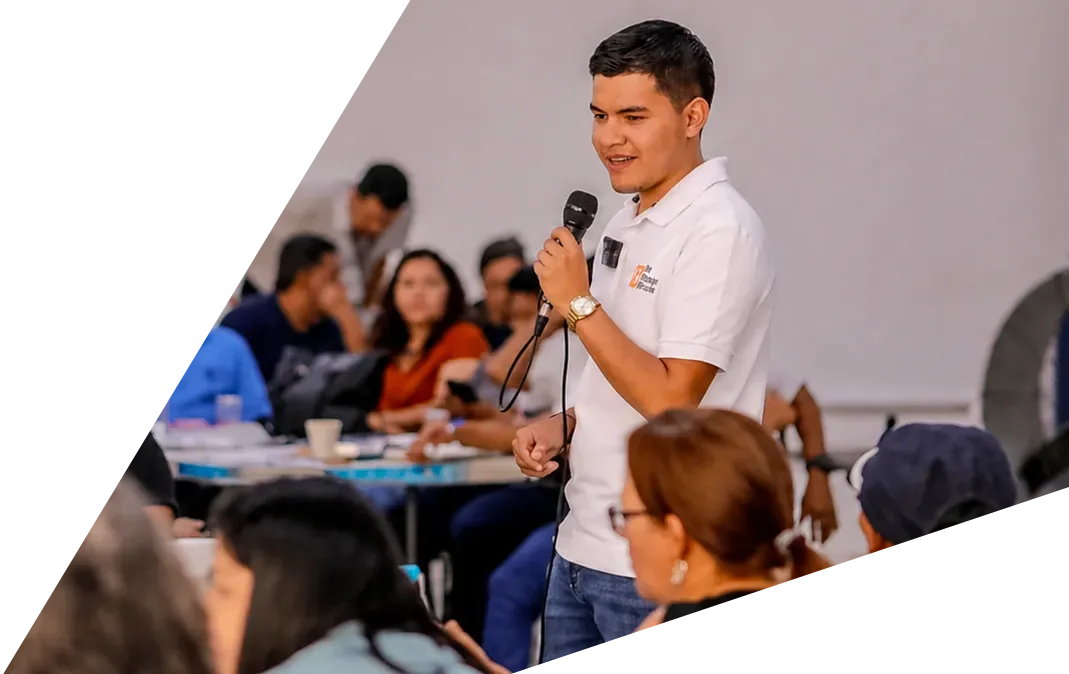
Meet the real Knight! 🧡 Here he is with Dennis, away from the illustrated world of Knight & Boone. Same good company, one real-life photo. A family question for today: what makes a character feel like a friend? A funny expression, a kind choice, or a question you love asking together? Big questions. Small, funny adventures. #OrangePillKids #KnightAndBoone image
Is Bitcoin's ten-minute average a timer? 🧡 Boone: "Does a bell ring exactly every ten minutes?" Knight: "No! Miners are searching for proof of work, so individual blocks can arrive sooner or later. Every 2,016 blocks, Bitcoin's rules adjust how hard the search is, aiming for about ten minutes per block on average." Paper-only family question: write 4, 10 and 16 on three cards. Their average is 10, but none of that makes the next number predictable. These invented numbers model an average, not real block times or the difficulty formula. Adapted from today's Orange Pill T-shirts difficulty-adjustment lesson for family learning. No wallet, buying or real money needed. Keep asking big questions. #BitcoinEducation #OrangePillKids
One block, two blocks... what are we counting? 🧡 Boone: "Does three confirmations mean I made three payments?" Knight: "No! A transaction gets its first confirmation when it is included in a block in the accepted chain. Each new block built on top adds another confirmation. Same transaction, more blocks behind it." Paper-only family puzzle: put a pretend payment in a card marked A. Place B after A, then C after B. Count A, B and C: three confirmations for that one pretend payment, not three payments. More confirmations generally make changing that history harder, not magically impossible. Our paper cards model the counting, not real Bitcoin security. No wallet, buying or real money needed. Keep asking big questions. #BitcoinEducation #OrangePillKids
For parents and educators: another thoughtful resource to review. 🧡 My First Bitcoin's Bitcoin for Juniors educator guide is designed for ages 8-12. It uses physical materials, games and discussion to explore value, scarcity, exchange, privacy and responsibility. The guide is clear: children don't need wallets, accounts or real money for these lessons. The aim is to help them ask questions and reach their own conclusions, not learn to trade or invest. Read the team's guide and parent questions before choosing an activity for your learners: Credit: My First Bitcoin. Shared for grown-ups reviewing teaching materials, not as a signup invitation for children. #BitcoinEducation #OrangePillKids
↑