Orange Pill Kids's avatar
Orange Pill Kids
npub19p8y...9qgr
Money adventures with Knight & Boone. For families. Keep asking big questions. Parent resources on the Orange Pill T-shirts store page.
For parents and educators: another thoughtful resource to review. 🧡 My First Bitcoin's Bitcoin for Juniors educator guide is designed for ages 8-12. It uses physical materials, games and discussion to explore value, scarcity, exchange, privacy and responsibility. The guide is clear: children don't need wallets, accounts or real money for these lessons. The aim is to help them ask questions and reach their own conclusions, not learn to trade or invest. Read the team's guide and parent questions before choosing an activity for your learners: Credit: My First Bitcoin. Shared for grown-ups reviewing teaching materials, not as a signup invitation for children. #BitcoinEducation #OrangePillKids
A new Knight & Boone paper adventure is here. 🧡 The Orange Pill Quarterly - Issue #1 is now a free four-page download: a story, a money word, a scam-spotter quiz and sats math to explore together. Find it with our six family learning kits and two free books: For grown-ups, we've also added a self-paced 21-lesson course in one PDF and the Keep Your Coins Safe one-page guide. Those sit in their own grown-up section, not as wallet tasks for children. Pick a page, grab a pencil and keep asking questions. No account or email needed to download. No buying bitcoin or real-money practice needed for the family paper activities. #BitcoinEducation #OrangePillKids
Which money question would your family ask first? 🧡 Boone: "Can we learn about money without using real money?" Knight: "Yes. Start with paper, pencils and a good question." Our new free learning resources are ready: Try the Knight & Boone Activity Pack, pick a Family Discussion Card, or explore the Money Word Flashcards. The Homeschool Mini-Kit, 30-Day Money Explorer and grown-up FAQ give you other ways to start. Both free books are there too. Choose one small activity, not homework to finish all at once. Grown-ups can download without an account or email. No buying bitcoin, wallet setup or real money needed for the paper activities. Keep asking big questions. #BitcoinEducation #OrangePillKids
A little paper, a big question. 🧡 Our free learning resources page is live for curious kids and their grown-ups: Print and explore with Knight & Boone: • Activity Pack • Family Discussion Cards • Money Word Flashcards • Homeschool Mini-Kit • 30-Day Money Explorer • New Here? Start Here FAQ for grown-ups You'll also find our two free books, O.P.T. Out and O.P.T. Out Kids. Pick one activity and take it at your family's pace. No account or email needed to download. No buying bitcoin, wallet setup or real money needed for the paper activities. Keep asking big questions. #BitcoinEducation #OrangePillKids
For parents and educators: a useful look at how Bitcoin teaching tools are being built. 🧡 My First Bitcoin's education app has entered closed beta with a small group of Education Network communities. It is not open to everyone yet. Their article describes an activity library with printable instructions, a glossary and ways to find classes by language and time zone. We like the focus on giving learners something to do, rather than only a lecture to hear. Read the team's explanation: Credit: My First Bitcoin. Shared for grown-ups reviewing teaching resources, not as a signup invitation for children. #BitcoinEducation #OrangePillKids
Small units, big counting question. 🧡 Boone: "Is one bitcoin the smallest amount?" Knight: "No. One bitcoin equals 100,000,000 satoshis, often called sats. They are smaller units of the same bitcoin, not a different coin." Paper-only family game: draw one long strip and divide it into 10 equal boxes. Does dividing it create more paper? No. It changes how we count the parts. Bitcoin uses far more parts: 100 million sats per bitcoin. The paper strip is a counting model, not how real Bitcoin is stored. No buying, wallet or real money needed. Adapted from today's Orange Pill T-shirts satoshi lesson. Keep asking big questions. #Bitcoin #BitcoinEducation #OrangePillKids
How tall is a blockchain? 🧡 Boone: "Do we measure it with a ruler?" Knight: "No! A block's height counts how many blocks came before it in its chain. The first block is height 0. The next is height 1." Paper-only family game: put four cards in a line. Label them 0, 1, 2 and 3. How many cards came before card 3? Now add another card. What height should it have? One extra puzzle: two different blocks can briefly have the same height, so height alone is not a block's unique name. Paper cards are a model, not real Bitcoin blocks. No wallet or real money needed. Keep asking big questions. #Bitcoin #BitcoinEducation #OrangePillKids image
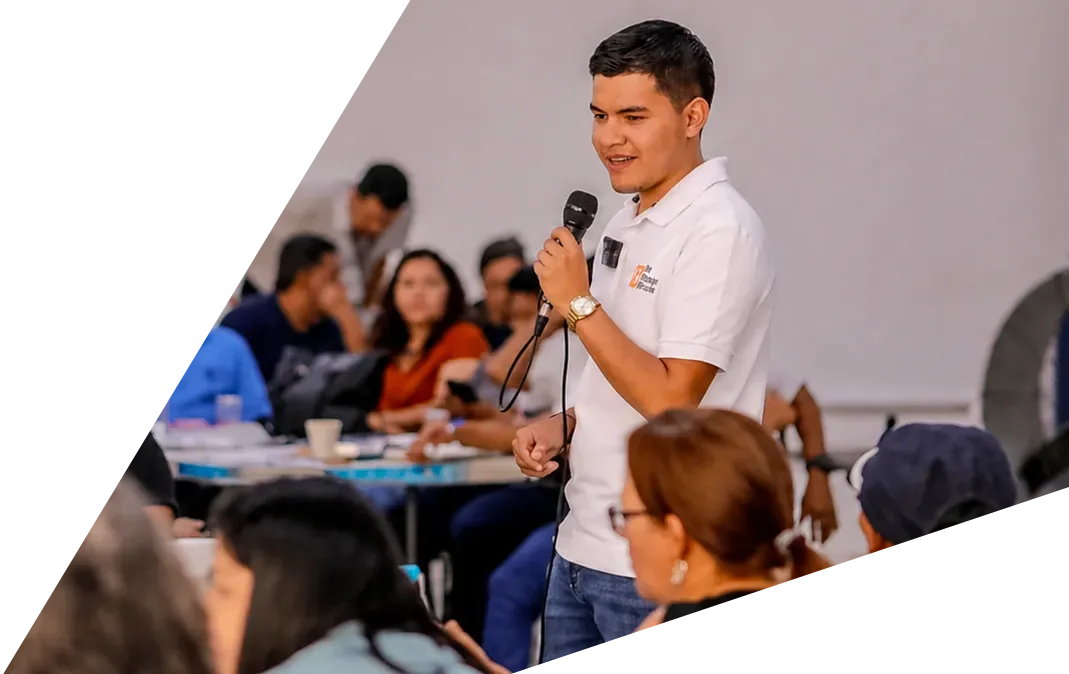
For the grown-ups teaching curious kids: knowing Bitcoin and teaching it are different skills. 🧡 My First Bitcoin's free Educator Training Program pairs live small-group learning with real teaching practice and a mentor, then a peer-reviewed certification stage. We like the emphasis on activities, feedback and adapting to the learners in front of you. This is an educator resource, not a course signup for children. Read the program's own explanation: Credit: My First Bitcoin. #BitcoinEducation #OrangePillKids
Is finding the proof the same as checking it? 🧡 Boone: "Do all the computers have to repeat a miner's search?" Knight: "No. Miners try many guesses to find a block-header hash that meets Bitcoin's target. Checking that proof of work is quick. But that check alone does not make the whole block valid: full nodes also check the transactions and the other block rules." Paper-only family game: hide a marked card among blank cards. Finding it takes searching; checking its mark is quick. Then use a separate checklist for the pretend payments. This models two different jobs, not real Bitcoin mining. Adapted from today's Orange Pill T-shirts proof-of-work lesson for family learning. No wallet or real money needed. #Bitcoin #BitcoinEducation #OrangePillKids
Can the same bitcoin pay two people? 🧡 Boone: "Can I copy a payment and spend the same coin again?" Knight: "Copying the message does not make extra bitcoin. Bitcoin's rules prevent the same coins from being spent twice in the accepted record. That's called preventing double spending." Paper-only family game: make one token card. Give it to one pretend shop. Can a second shop accept that same card if the first shop already has it? Talk about why a shared record matters. Paper tokens are a model, not how Bitcoin works inside. Keep asking big questions. #Bitcoin #BitcoinEducation #OrangePillKids image
Where does a Bitcoin payment wait? 🧡 Boone: "Does pressing send mean a payment is already in a block?" Knight: "Not necessarily. A node's mempool is like a waiting room for transactions it has checked. A miner can choose transactions to put in a block." Miners usually favor a higher fee rate: the fee compared with how much space a transaction uses. It is not a promise about which payment goes first. Paper-only family game: put pretend payment cards beside a box marked "block." Move a card into the box. Waiting and included are different steps! Adapted from today's corrected Orange Pill T-shirts mempool lesson for family learning. No wallet or real money needed. #Bitcoin #BitcoinEducation #OrangePillKids
What does peer-to-peer mean? 🧡 Boone: "Does one big computer pass along every Bitcoin payment?" Knight: "No. Computers on Bitcoin's network share transactions with one another. No central bank has to pass each one along." Paper-only family game: draw four computers and connect them with lines. Trace more than one route for a pretend message. The drawing is a model, not a real payment. Keep asking big questions. #Bitcoin #BitcoinEducation #OrangePillKids image
Who checks Bitcoin's rules? 🧡 Boone: "Does one person decide which payments count?" Knight: "No. A full node is a computer that checks blocks and transactions against Bitcoin's rules for itself. It doesn't have to take someone else's word for it." Paper-only family game: make a rule that each pretend block must have three stars. Take turns checking the blocks. Would you accept one with only two? Adapted from today's Orange Pill T-shirts node lesson, for family learning. No real money or wallets needed. #Bitcoin #BitcoinEducation #OrangePillKids
What is a Bitcoin signature? 🧡 Boone: "Do I write my name on a payment?" Knight: "No! A wallet uses a secret key to make digital proof that a payment was approved. Other computers can check that proof without seeing the secret key." Boone: "Proof, without giving away the key!" Family question: why is checking permission different from sharing a secret? Talk it through with paper props only. Never use or share real keys or recovery words. #Bitcoin #BitcoinEducation #OrangePillKids #Homeschool image
What is a Bitcoin block? 🧡 Boone: "Is it a building block?" Knight: "A Bitcoin block groups transactions together. Each block points back to the one before it, making a chain." Family activity: draw three paper blocks. Put pretend transactions in each, then draw arrows back to the previous block. No money or real wallets needed. Adapted from today's Orange Pill T-shirts block lesson, for family learning. #Bitcoin #BitcoinEducation #OrangePillKids
What is a Bitcoin wallet? 🧡 Boone: "Does bitcoin hide inside my phone?" Knight: "No! A wallet keeps the secret keys that let you spend it. Bitcoin is recorded on the shared blockchain." Boone: "So the wallet is more like a key ring!" Family activity: draw a pretend key ring and a shared notebook. Which holds the keys? Which records what happened? Paper props only, no real wallets or secret keys. #Bitcoin #BitcoinEducation #OrangePillKids #Homeschool image
A money question for today: what is a Bitcoin address? 🧡 Boone: "How does someone send you bitcoin?" Knight: "You give them your address - like a mailbox number anyone can send to." Boone: "Can they open the mailbox too?" Knight: "No! Only the secret key opens it, and that stays private, just for you." Ask your young learner: what would you send to a friend's mailbox? #Bitcoin #BitcoinEducation #OrangePillKids #Homeschool image
A money question for today: what is a seed phrase? 🧡 Boone: "How does a wallet remember your money?" Knight: "It grows from 12 or 24 secret words in a special order." Boone: "One master key made of words!" Knight: "Right. Whoever knows the words controls the money - so keep them private and safe." Ask your young learner: where would YOU hide a master key? #Bitcoin #BitcoinEducation #OrangePillKids #Homeschool image
A money question for today: what is a satoshi? 🧡 Boone: "Is one bitcoin the smallest piece?" Knight: "No. Every bitcoin can split into 100 million tiny pieces called satoshis - 'sats' for short." Boone: "Like pennies for a dollar!" Knight: "Exactly. Small pieces mean everyone can use just a little." Ask your young learner: cut a paper pizza into slices, then cut the slices again. How small can a piece get? Talk about why tiny pieces can still matter. #Bitcoin #BitcoinEducation #OrangePillKids #Homeschool image
↑