ok. My current iphone SE has 64 GB of storage. It keeps getting full. So I’m gonna get a refurbished iphone. I’ll probably get another SE with 128 GB, because storage is really my main and only issue.
Why does GPT like to recommend the iphone 13? The price is more than double … and I don’t think whatever special functions it has are really necessary? Like the photos and videos the SE takes are already good.
Zen<3lofi
zen<3lofi@nostr.com
npub19fpw...8x97
Would you rather have the trait of invisibility or insensibility, or both, or neither, and why?
🏡
Not here to argue with the infinite opinions. Not here to “build an audience”, but to literally use this for “notes and other stuff” (maybe I’m here to rebuild my sense of self … after a bunch of changes, experienced as traumatic) ❤️🩹💝
✏️ I would like these to not exist:
- poverty
- pollution in LCOL areas
- factory farms, slaughterhouses
- war
This scene from E1:S1 of Amphibia cracks me up. Hop Pop. Takes a break from watching the kids. To read this book. 🤪🥰


it’s been pretty sunny and dry, but saw a stout lil’ mushroom at the park.


Cont’d notes ~ 5 to 9 min.
( Total video time, 19 min. )
“Bitcoin is the Most Important Human Rights Technology of the 21st Century”
Alex Gladstein (Human Rights Foundation)
< Financial Surveillance >
We are at a time of unprecedented financial surveillance. 20 - 30 years ago, microsurveillance on the financial systems of activists and opposition leaders was very hard to do, because a lot of money was still analog (using cash, or checks, which are hard to monitor). Credit cards and mobile payments have become dominant. Your transactions can be leaked to huge global marketplaces. There is both surveillance capitalism and government surveillance. In this kind of environment, it’s a lot easier for governments to know about what their adversaries are doing. When an autocrat is studying his/her opponents, one of the first things they do is freeze their bank accounts. This is standard “protocol” now for any dictator, when it wasn’t 40 or 30 years ago, because the technology didn’t exist. India might be the world leader in this. The Modi government is doing this to everybody from Amnesty International to anti-slavery activists to literally the Indian National Congress, the party that Gandhi started, to Greenpeace. This is stealing from individuals through censorship (previously, we talked about when governments steal from individuals through inflation).
A positive example from 2019 -
There used to be an account that would make fun of Bitcoin called ‘Buttcoin’. One of its tweets asked why anyone would use Bitcoin when they can just use Venmo or Apple Pay. Ziya, from Iran, who was imprisoned during a Mahsa Amini protest, then released, responded, “I can’t use any of that stuff, but I can use Bitcoin.”
It’s harder for governments to track people, if they use Bitcoin the right way, without linking their ID to it. If you self-custody your own Bitcoin, governments cannot freeze your account and they cannot hyperinflate your money. Bitcoin is bad for dictators.


Continued:
Last notes were about *baseline* financial privilege…
> The other 87% of people are born where either there is a collapsing economy with a terrible fiat currency or, an authoritarian regime, where people don’t have free speech or rule of law. The average savings technology that the average person on this planet uses is either collapsing paper notes, cattle or sheet metal.
This part is about the additional financial privilege of earning a *passive income* via investments.
(notes up to 5:37)
“87% of people are born where they don’t have access to global markets - they can’t buy Amazon stock, they can’t buy Nvidia stock, they don’t have access to a diverse portfolio. They’re completely cut off from a lot of the things that we use to save ourselves from inflation. Economists tell us, “Yes, it’s true that the dollar is inflating every year, but at least you don’t save in the dollar, you save in the stock market and bonds, and of course you do, that’s the way the economy works!”
But for most people in the world, that’s not how the economy works. They don’t have that access. Bitcoin represents a fundamentally new opportunity, and is a parallel system that’s equal for anyone in the world. Anyone can join it, and that’s profound, because it has shown the best-performance of any financial asset over the last 15 years.
About a year and a half ago, I was in Malawi, a country in southeastern Africa. A month before I went, the country had a 44% overnight currency devaluation. This means that all of a sudden, people could buy 44% less dollars, real estate, food, etc. No one had been warned. No one voted on this. The country is known as a democracy, but, this is the problem - monetary matters are almost never open to the public.
We don’t realize the incredibly powerful use-case that Bitcoin has to protect people against this kind of theft. In the specific example of a countrywide, overnight, unannounced currency devaluation - it’s beyond ‘theft’, it’s a crime against humanity.
- “Bitcoin is the Most Important Human Rights Technology of the 21st Century”, Alex Gladstein (Human Rights Foundation)

notes (up to 3:02)
“Bitcoin is the Most Important Human Rights Technology of the 21st Century”, Alex Gladstein (Human Rights Foundation)
<Baseline financial privilege>
“Very, very few people are born into a monetary economic system as most of us here were born into… the way we use money is not the way most people on earth use money.”
Only about 13% of the world’s population have access to a reserve currency (a currency strong enough that other governments would want it), and also democracy, rule of law, and property rights.
The other 87% of people are born where either there is a collapsing economy with a terrible fiat currency or, an authoritarian regime, where people don’t have free speech or rule of law. The average savings technology that the average person on this planet uses is either collapsing paper notes, cattle or sheet metal.
(fiat currency is government issued money, not backed by a precious metal, or any other tangible asset or commodity.)


Need to take notes.
View quoted note →
This song expresses two moods really well. The mood of fearing the loss of a relationship. Also, the mood of realizing that your previous understanding of life was limited and now it is less limited due to life experience and/or learning some specific knowledge.
I was listening to the live performance of it and the singer explained that they weren’t going to include it on the set list (it’s the last song from their first album), but then the livejournal community convinced them to include it.


High proportion of money/investment related posts on Nostr is making me think more about this topic. This is why social media needs to be used like a patchwork quilt. I can’t be on just Nostr only. >.<
A question that’s been in my mind: “how many women are active investors or earn passive income?”
Found out that -
📝 71% of women invest in the stock market. Slightly higher for Gen Z (77%) and Millennials (74%) (Fidelity 2024)
📝 Women outperform men in long-term investing outcomes. (also Fidelity)
📝 Passive income access varies more by race, income, and education than gender.
Last bullet point makes me sad. It should not only be White, high-income, and highly-educated people who are also having the access to passive income. It’s paradoxical. They are the opposite of people who need it the most.
#investment
#passiveincome
#finance
Something I would like to find out - what are the percentages of people who have access to earning some amount of passive income (through some type of investing)? And what determines the different categories? Like would it be the usual broad categories of gender, education level, and socio-economic class?
I did a search on gender first and got this -
Number of investors:
71% of women now invest in the stock market, according to Fidelity. This represents a notable rise driven by younger generations.
While men traditionally dominated the investment space, women are increasingly participating, with the gap between the percentage of men and women investing in the stock market narrowing significantly.
Some studies even suggest a potential shift where the number of women investing could eventually exceed that of men, particularly among younger generations who are showing a greater interest in early investing.
#passiveincome
#investing

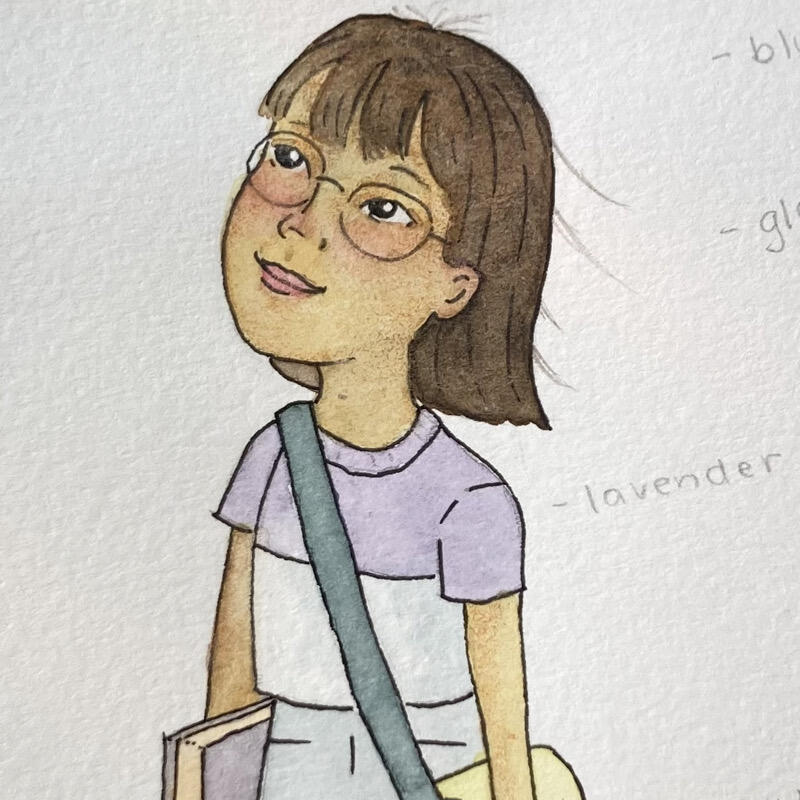
#watercolor daily-ish practice
I was surprised and happy with how this creature came out. I’ve been trying to do some painting every day to get comfortable and familiar with the different aspects of watercolor. Even if it’s super simple and basic.
I started mixing some colors that go together on the wrong kind of paper (the Canson mixed media sketchbook). They blended nicely. I was also keeping in mind the youtube tutorial I had just watched - titled ‘ghost wash watercolor technique’.
A big puddle formed in the center where the paper had curved.
When it dried, and straightened out a bit, I was like, hey I see a little animal there.
Added a quote from what I was reading to help with remembering the main points. It’s frustrating that when I read from my zen book, I like it and get it … but there’s something about the more abstract and minimal language used that it has the “in one ear, out the other effect”. Taking notes helps.


🙇🏻♀️
This morning, I am seeing the stories of my life, through the lens of social media, and the financial aspect of needing to work and have a job.
I’ve been feeling like I don’t know how to post on social media.
I don’t know what I want to do on social media, or how I want to post on it.
I think I need to take a moment, or many moments, to appreciate all the changes since I ~ f i r s t ~ started to use “social media”, even if at the start it was not even called that. And what I liked about it.
It was aim chats and online journals (xanga for the West Coast, livejournal for the East Coast). This turned into the very exciting and fun Myspace… which turned into the early facebook… which then branched off into blogging for some, which was then mostly replaced by Instagram, which led to Influencer culture on that platform and also on Youtube. And now, besides the options of Twittter, Threads, Tik Tok (hey, all starting with the letter ‘t’), Tumblr, oh - can’t forget Twitch and Reddit. But also … present day: decentralizd social media.
That’s a lot of changes.
There are also the personal changes of each individual. In their external life, and internal changes relating to brain development. Starting to use “social media" as a teenager (from middle school! High school… College… )
I thought the “adulting” transition from college to after college was rough and stressful. Highschool and college felt like a lot of experimentation and self-discovery, or self-creation and expression, especially with the various new online spaces (and with its downsides too). Then, after college (with a BA in Psychology) … not knowing what to do. Finding that jobs often feel busy and impersonal. Wondering if it’s just me, like is this just my bad luck or lack of the right skills? And it felt meaningless.
I’ve been rediscovering Frozen 2. That is a movie that provides a lot of good guidance to life. Cue song: “Some things never change” (duet between Anna and Olaf - oh actually, Kristoff, and Elsa each sing their own stanza of the song too).
With all the personal changes of growing from a teenager to an adult, with technology that *originally* started with Atari computers and very basic internet to … everything that it is, I need to hum that song and think about all the important things that don’t really change. The gist of the song - you will always have people you care about (and people who care about you). That is the ‘you’ that each character holds on to.