Sirii's avatar
Sirii
npub1xs5k...f979
₿ healthy. ₿ human. ₿ free.
Sirii's avatar
Sirii 2 weeks ago
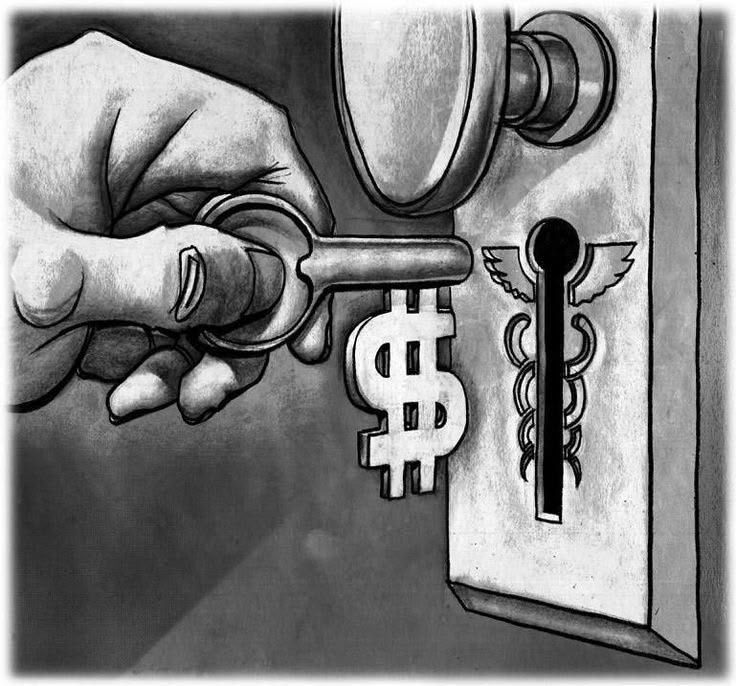
Want to open a clinic? First convince the state there's a "need" then watch your competitors argue there isn't. 35 US states. Since 1964. Healthcare by permission. And it's not just America. Germany, France, Japan, Switzerland, Austria all play the same game. The question isn't if your country rations care. It's how. image
Sirii's avatar
Sirii 3 weeks ago
In a 1994 issue of Focus magazine, Wired founder Louis Rossetto published an article titled “Oh Techno Miracle!” in which he made eleven predictions about the future of the digital revolution. Looking back from 2026, the results are remarkable. 1. Public education will be replaced by digital learning. Partially wrong. Schools still exist, but online learning, YouTube, AI, and digital courses have transformed education. 2. Small communities will replace mass society. Largely correct. The internet enabled people to organize around shared interests rather than geography. Bitcoin and Nostr communities are examples. 3. The era of central government is ending. Partially correct. Technology has weakened some forms of control, but governments remain powerful. Bitcoin continues this trend by reducing reliance on centralized institutions. 4. Direct democracy will replace representative democracy. Mostly wrong. Representative systems remain dominant, although technology has increased public participation and direct communication. 5. The office will disappear. Largely correct. Remote work and digital collaboration became mainstream. 6. Life will increasingly move into the home. Mostly correct. Work, entertainment, shopping, banking, and communication have become increasingly digital. 7. The era of mass media is over. One of his most accurate predictions. Today anyone can publish content, build an audience, and compete with traditional media. 8. Technology will solve environmental problems. Too optimistic. Efficiency improved, but environmental challenges remain and new ones emerged. 9. Privacy will become difficult to protect. A direct hit. Digital surveillance, data collection, and tracking have become defining issues of the internet age. 10. The world will become more peaceful. Only partially correct. Some forms of violence declined, but geopolitical conflicts, cyber warfare, and information warfare continue. 11. The arts will experience a new renaissance. Correct. Technology dramatically lowered the barriers to creating and distributing art, media, and ideas. The most interesting takeaway is not what he got wrong, but what he saw coming. In 1994, Rossetto understood that information would become decentralized, communities would move online, and traditional institutions would lose influence. What he could not foresee was Bitcoin. Many of his predictions describe the transformation of information. Bitcoin extends that transformation to money, property, and sovereignty. Published in Focus Magazine, November 7, 1994. image
Sirii's avatar
Sirii 3 weeks ago
One of the reasons I value Nostr is that it is not a company, a media outlet, or a platform. It is an open protocol. Apps like Primal, Damus, Amethyst, and others are simply different ways of accessing the same network. No single entity owns it, controls it, or decides who gets a voice. Nostr does not guarantee truth, but it protects the freedom to search for it. In a world of increasing censorship, algorithmic manipulation, and centralized narratives, that is incredibly valuable. 📰 In a 1994 issue of Focus magazine, Germany’s public broadcasters ARD and ZDF were praised for offering the best value for money in Europe. At the time, Germans paid about 23.80 DM per month, generating roughly 9 billion DM per year in broadcasting fees. The argument was simple: expensive, but worth it. Fast forward 30+ years. Today, Germans pay €18.36 per month, generating around €9–10 billion per year. Adjusted for inflation, the system is larger than ever, despite living in a world with YouTube, podcasts, streaming platforms, independent media, Nostr, and AI. In 1994, the question was: “Do citizens get enough value for their fees?” In 2026, the question is: “Why should citizens be forced to fund media at all when information is abundant and competition is only a click away?” Bitcoin teaches us that voluntary systems tend to outperform compulsory ones. Technology has made permissionless money possible. It has also made permissionless media possible. 📖 Focus Magazine, November 7, 1994 #Bitcoin #Liberty #Freedom #Nostr #Media #Inflation image
Sirii's avatar
Sirii 3 weeks ago
📰 On November 7, 1994, Focus magazine published an article titled “Empty Threats” about wealthy Germans legally moving capital and even their residence abroad to escape high taxes. The article warned that capital would always seek friendlier jurisdictions and that governments cannot simply tax without consequences. Austria, Belgium and Switzerland were already attracting money and talent with more competitive tax regimes. More than 30 years later, the debate remains the same. The difference? Today, capital is no longer limited by borders. Bitcoin allows savings to move globally without permission, paperwork, or intermediaries. The lesson from 1994 still holds: If a country wants to keep talent, capital, and innovation, it must compete for them. And in a Bitcoin world, that competition becomes even more important. 📖 Focus Magazine, November 7, 1994 #Bitcoin #Freedom #Economics #Nostr
Sirii's avatar
Sirii 6 months ago
Argentina: private sessions +300% in 2 years, public hospitals collapsing South Korea: almost all telemedicine still illegal USA: 5th straight Medicare cut, telehealth rolled back again Switzerland: $1,988 out-of-pocket per person (world #1)
Sirii's avatar
Sirii 7 months ago
People keep trying to “beat the market” with leverage, but the market keeps beating them faster. Meanwhile Bitcoin just keeps producing blocks. Every liquidation event proves the same point: The quickest way to lose Bitcoin is by gambling with it. HODLers don’t get margin-called. They don’t wake up liquidated. They don’t donate their stack to exchanges pretending to be innovation hubs. They simply buy, hold, and spend Bitcoin peer-to-peer no drama, no forced exits, no casino chips disguised as financial products. If you want long-term freedom instead of short-term adrenaline, the answer is still the same: Stack sats. Use Bitcoin. Skip the casino. The bank always wins. Bitcoiners don’t have to play.
Sirii's avatar
Sirii 7 months ago
The healthcare system is slowly losing sight of what truly heals. Machines are trusted without question. Humans are doubted at every step. Insurance systems reward what can be measured not what actually helps. But healing has never come from a machine. Healing happens between people. TheraMatch is built for that reality: A space where trust matters more than codes, and where human work finally gets the value it deserves. Decentralized. Human-first. Free. This is the future of care.
Sirii's avatar
Sirii 7 months ago
The authority bias is why people obey economists who crash economies, doctors who once prescribed cigarettes, and politicians who promise freedom through control. Bitcoin breaks that cycle. No leader. No face. No trust only verification. Don’t bow to authority. Think for yourself. n 2008, bankers said: Everything’s under control. In 2020, politicians said: Trust the system. In 2009, one anonymous person said: “Don’t trust. Verify.” Bitcoin isn’t just money. It’s a masterclass in independent thinking.
Sirii's avatar
Sirii 7 months ago
The value of any state is measured only by whether it serves its people. Real freedom, democracy, and stability come from decentralization and consent, not from power or territory. The State in the Third Millennium Hans-Adam II The Reigning Prince of Liechtenstein
Sirii's avatar
Sirii 8 months ago
Technology itself is not the enemy. The danger lies in who writes the rules, and whose interests the algorithms serve. E-IDs promise convenience, but they also create a digital twin. A programmable reflection of who we are. The question isn’t whether technology will define identity, but who controls it. Freedom by design or control by default. The choice is ours.
Sirii's avatar
Sirii 8 months ago
Bitcoin isn’t magic internet money. It’s math, incentive, and pure freedom engineered into code. Hard money for a soft world. “The nature of Bitcoin is such that once version 0.1 was released, the core design was set in stone for the rest of its lifetime.” —Satoshi Nakamoto, 6/17/2010
Sirii's avatar
Sirii 8 months ago
We turned healthcare into a machine — measurable, efficient, lifeless. But life isn’t a machine. It breathes, adapts, creates. Decentralization isn’t just about money. It’s about restoring humanity, trust, and freedom — in medicine and beyond. From Artificial Care to Living Health.