The independent Android Workgroup has announced the launch of the Swift SDK for Android, so now Apple's Swift programming language can be used to develop for Android, and share code with iOS apps.
https://appleinsider.com/articles/25/10/27/android-developers-can-now-make-apps-using-apples-swift
TechHelpK₿ 💜
techhelpkb@getalby.com
npub18yp6...4sp5
Technical help knowledgebase, tech news, how-to articles & video tutorials for common issues.
Notes (20)
Apple is widening Safari’s privacy shield. Starting with iOS 26 and macOS Tahoe 26, advanced fingerprinting protection is enabled by default in every tab, not just in Private Browsing.
https://www.macobserver.com/news/apple-is-turning-on-a-powerful-safari-anti-tracking-tool-for-everyone/
Cloudflare has mitigated a DDoS attack that peaked at a record-breaking 22.2 Tbps and 10.6 Bpps. The attack lasted just 40 seconds and is by far the largest ever mitigated.
https://www.bleepingcomputer.com/news/security/cloudflare-mitigates-new-record-breaking-222-tbps-ddos-attack/
Google will implement a new safety feature that would require developers to verify their identity if they want Android users to be able to sideload their apps.
https://www.engadget.com/apps/google-will-block-sideloading-of-unverified-android-apps-124521174.html
Researchers in Italy have developed a system called ‘WhoFi,’ which can generate a unique biometric identifier based on how a person’s body interacts with surrounding Wi-Fi signals without needing them to carry any device at all.
https://interestingengineering.com/innovation/wifi-fingerprint-ai-tracking-without-device
Perplexity is in discussions with mobile device makers to pre-install its new Comet browser on smartphones.
https://www.reuters.com/business/perplexity-talks-with-phone-makers-pre-install-comet-ai-mobile-browser-devices-2025-07-18/
New data reveals Linux has achieved a new milestone in the United States, breaking the 5% barrier for desktop operating system market share for the first time.
https://www.techspot.com/news/108701-linux-surpasses-5-market-share-us-desktops-first.html
Let's Encrypt began issuing free TLS certificates in 2015, and it now provides TLS certificates to over 600 million websites. They recently expanded their offerings to include IP addresses as well.
https://www.techspot.com/news/108565-encrypt-now-issuing-free-tls-certificates-ip-addresses.html
In an announcement this week, Swift has opened up an “Android Working Group” which will “establish and maintain Android as an officially supported platform for Swift.”
https://9to5google.com/2025/06/26/swift-coding-language-android-support/
A new report from data removal service Incogni looks at the best and the worst of AI when it comes to respecting your personal data and privacy.
https://www.zdnet.com/article/does-your-generative-ai-protect-your-privacy-new-study-ranks-them-best-to-worst/
Psylo, a new kind of private web browser, refers to tabs as "silos." It applies unique anti-fingerprinting measures per silo, such as canvas randomization, so a visit to the same site in two Psylo tabs appears like it comes from two different devices .
https://www.theregister.com/2025/06/24/psylo_browser_privacy_tab_silos/
Unencrypted DNS queries can expose your browsing activity, but you can use Private DNS Mode on Android to keep them safe from prying eyes.
https://www.zdnet.com/article/how-to-turn-on-androids-private-dns-mode-and-why-its-an-absolute-must-for-security/
The biggest recorded distributed denial-of-service (DDoS) attack in history was recorded on Friday. Cloudflare says it stopped a 45-second-long DDoS attack that peaked at 7.3 terabits per second, translating to a total of roughly 37.4 terabytes of data.
https://www.pcmag.com/news/cloudflare-world-record-73tbps-ddos-attack-hits-mystery-target
Google says its Chrome browser will stop trusting certificates from two certificate authorities after “patterns of concerning behavior observed over the past year” diminished trust in their reliability.
https://arstechnica.com/security/2025/06/chrome-boots-2-certificate-authorities-citing-a-lack-of-trust-and-confidence/
The last beacon standing against Chrome's absolute dominance is Firefox, which has its own engine completely independent from Google's development efforts. There are a few other browsers based on the foundation offered by Firefox.
https://www.xda-developers.com/firefox-based-browsers-that-smoke-chrome/
Security researchers uncovered a series of phishing campaigns that use a rarely exploited method to steal login credentials, even when protected by encryption. The method relies on blob URIs, a browser feature designed to display temporary local content.
https://www.techradar.com/pro/cybercriminals-have-found-a-sneaky-way-of-stealing-tax-accounts-and-even-encrypted-messages-heres-what-you-need-to-know
A subtle psychological trick in your browser's address bar called salience bias has protected users from phishing attacks for over a decade. Salience bias is a cognitive behavior that causes one to notice things that stand out more.
https://9to5mac.com/2025/05/02/security-bite-your-browser-uses-a-psychological-trick-to-stop-phishing-and-you-probably-never-noticed/
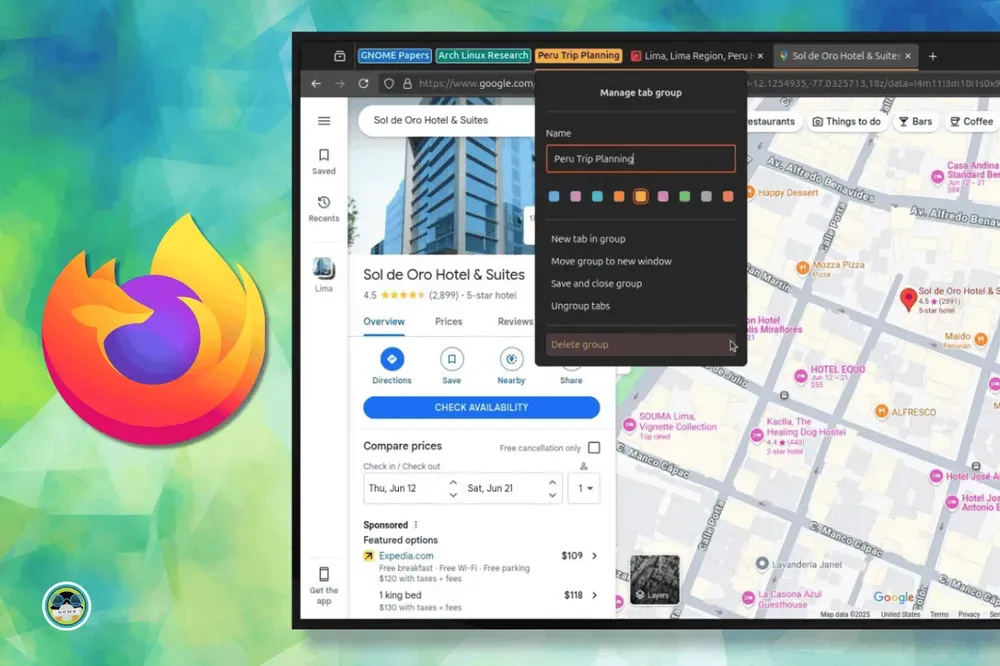
Privacy-focused Firefox is one of the few web browsers around that is not based on Chromium. Many have asked for improvements to its core functionality, and Firefox has finally delivered a long-requested Tab Groups feature.
https://itsfoss.com/firefox-tab-groups/
In response to Mozilla's recent privacy changes, Zorin OS 17.3 replaces Firefox -- its previous default browser -- with Brave, albeit a customized version that hides features like Brave Rewards, Wallet, Leo AI, and more.
https://www.theregister.com/2025/04/03/zorin_os_173/
Rumors of the ongoing death of software development — that it’s being slain by AI — are greatly exaggerated. The work of a software developer is much more than just writing lines of code.
https://www.technologyreview.com/2025/04/02/1114134/the-machines-are-rising-but-developers-still-hold-the-keys/