Martin Enlund's avatar
Martin Enlund
martin@enlund.org
npub1gg6z...jzdu
Apophenia enjoyer. Bitcoin | Mesh networks | Sensemaking | Renaissance 2.0 | LFG!
Martin Enlund's avatar
enlund 1 year ago
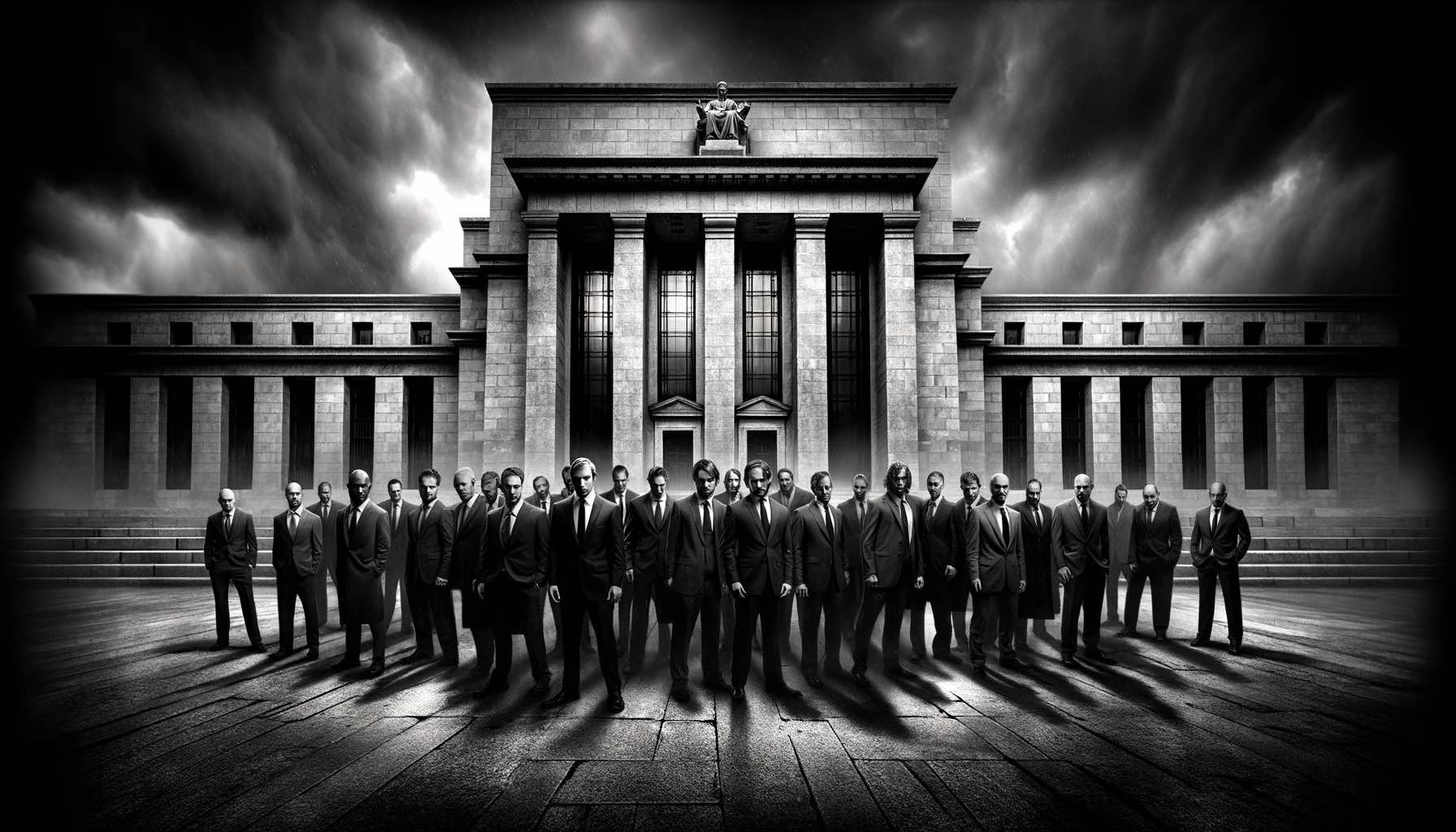
Should money be made "real" again? Why is counterfeiting problematic? Most respondents to such a question would likely come up with the following answers: 1) it could undermine trust in the financial system, 2) counterfeit money could fund criminal activities, 3) counterfeit money could cause inflation. (Historically, inflation referred to an increase in the money supply, unlike today when economists and lexicographers have re-defined it to mean rising prices). However, these answers may overlook the bigger picture. The real problem of counterfeiting Our money holds value because we can exchange it for tangible goods, either presently or in the future. (This is why Elon Musk pointed out that "money is a database"). Money thus represents claims on the real world. Successful counterfeiting allows for the creation of new claims without anything necessarily happening in the real world. Counterfeiters can use these fake claims to purchase actual goods (such as guns, ammunition or potatoes) with something essentially worthless. Those who receive such counterfeit money will believe they have gained something real. They will also believe their wealth has increased. However, the money will eventually not stretch as far as they expect, either because the fake bills will be discovered by some forensic expert or because they will not be able to buy as much as anticipated due to future inflation. What happens to our conclusions if our assumptions are wrong? In the philosophy of science, the concept of deduction plays a pivotal role. It involves deriving conclusions from premises, ensuring that if the premises are accurate, the conclusion necessarily follows. For example, if all birds have wings, and penguins are birds, then we can infer that penguins have wings. However, if someone has sold something real - like a sack of potatoes - to a counterfeiter, the seller may assume that their real wealth has increased and act accordingly. But that’s not necessary the case! Counterfeiting can thus cause individuals to base decisions on false premises. Decisions made under such flawed assumptions are unlikely to lead to prosperity. Instead, they may result in economic stagnation or more severe adverse outcomes. The Soviet Union had Trofim Lysenko. His theories claimed that traits acquired during an individual’s lifetime could be inherited by offspring, contradicting the (more accurate) Mendelian genetics that emphasized the heritability of traits. Lysenko’s ideas influenced Soviet biology and led to erroneous assumptions and failed experiments, hindering the Soviet Union’s economic progress. During China’s “Great Leap Forward” under Mao Zedong, one intention was to increase agricultural production. However, (incorrectly) advocating for the extermination of sparrows and other pests resulted in severe ecological consequences. False assumptions then led to mass famine and diseases, culminating in one of the deadliest periods in China’s modern history. Counterfeiting will lead to mistaken assumptions Money acts as a technology facilitating human coordination and decision-making. Counterfeiting disrupts this by introducing false premises into decisions regarding consumption, investment, and other economic activities. Thus, it’s critical to address counterfeiting not just for its immediate effects but also to consider its broader implications on economic coordination. However, perhaps we should broaden our analysis even further. The central bank, as well as large corporations and billionaires (or is that Cantillionaires?) who receive favorable terms from commercial banks, will also be able to exchange newly created money for real goods (such as potatoes) in return for something that may not be worth anything. (The extent of the problem depends on how the newly created money will be used.) Karl Marx used the concept of “false consciousness” to describe how social classes can internalize beliefs that do not serve their own interests. While the term itself was never used by Marx, but by Engels , it may be applicable to our current monetary system. Marx argued that by maintaining such false consciousness, the ruling class could retain their power and control over society. Most of us now swim happily - like fish in water - amid the fiat currencies effortlessly created by central banks and commercial banks. But doesn’t this mean that we too risk drawing conclusions from erroneous assumptions, reminiscent of Marx’s idea of “false consciousness”? And if so, what does this imply for our countries’ economic prospects? The end of the Bretton Woods system accelerated legal counterfeiting Many, including Peter Thiel in his book “Zero to One” , have pondered what actually transpired around the beginning of the 1970s . Asset prices began to soar, real wage growth stagnated, technological progress slowed down (at least compared to the hopes of that time). Simultaneously, a towering income and wealth inequality started to emerge. Coincidentally, it was also around that time when the United States unilaterally and “temporarily” stopped tying the dollar to something real (i.e., gold). The end of the Bretton Woods system thus allowed legal counterfeiting to take off in earnest, arguably leading to a plethora of decisions based on invisible yet sometimes faulty premises. Without these mistaken assumptions, perhaps we could have witnessed an economic renaissance of unprecedented magnitude. “We have been naive,” is a common sentiment express in Sweden’s public discourse when something has gone awfully wrong. Could this also apply to our money? Perhaps we should consider making money “real” again? image #bitcoin #fiat #banking
Martin Enlund's avatar
enlund 1 year ago
"So... we can lead but if people aren't following we're not going to get to where we want to go." When the commoners and plebs start to resist, the authorities start to brandish their whips. #chatcontrol
Martin Enlund's avatar
enlund 1 year ago
Many have pondered what actually transpired around the beginning of the 1970s. Asset prices began to soar, real wage growth stagnated and technological progress slowed. Could the surge in legal counterfeiting after the Bretton Woods collapse in 1971 be the culprit? If so, perhaps it's time to make money "real" again! #bitcoin #money #inequality #marx #counterfeiting View article →
Martin Enlund's avatar
enlund 1 year ago
Qubes OS! If you haven't tried it, then you should, because it's fun, and fun is good! #bitcoin #qubesos
Martin Enlund's avatar
enlund 1 year ago
🇸🇪🤔 Varför är falskmynteri problematiskt? Huvudanledningen är att de som förfalskar pengar kan använda dessa för att köpa riktiga saker (båtar, massage eller potatis) för något som egentligen inte är värt någonting. Om försäljarna då tror att de fått något riktigt, vilket inte stämmer, riskerar de att ta beslut grundade på felaktiga antaganden... Fast borde inte detta gälla även när centralbanker eller affärsbanker genom sina babyloniska trolleritricks framställer pengar utan egentlig ansträngning? Många har frågat sig vad det egentligen var som hände 1971, kanske var det då våra samhällen började ta stora mängder beslut grundade felaktiga premisser... Läs mer hos Affärsvärlden. #Sverige #Bitcoin
Martin Enlund's avatar
enlund 2 years ago
Not even #Bitcoin fixes #Moloch note1enm8gth2rzlxxhdpy3863sh6uyyd74knt5sr4nz48hmnrwj7rdwsfsf8sz
Martin Enlund's avatar
enlund 2 years ago
🤔 When the sophist Yuval Harari speaks about Bitcoin, he speaks with a forked tongue. - He claims that Bitcoin is about a lack of trust. But #Bitcoin is about trustlessness - i.e., not requiring trust. This is a significant difference. - He claims that the "whole" purpose of money is to create trust between strangers. That is also not true. (Banks can, however, convert dubious promises into less dubious promises). - He further claims that the money printing by banks and central banks "builds trust" (through their legal counterfeiting). It is more than a little audacious. - Trust is actually earned; it is not something that can be built, established, or proclaimed - regardless of what these people may prattle on about.
Martin Enlund's avatar
enlund 2 years ago
The belief that fiat money is real money is an important form of false consciousness. #bitcoin #marx
Martin Enlund's avatar
enlund 2 years ago
In the difference between building trust and earning trust, lies the line that separates the charlatan from the honourable. What should we make of the fact that policy makers and bureaucrats - in the face of completely shattered trust - pretend as if nothing has happened? For instance, in Canada, nearly four out of five people do not believe the central bank will care about people's opinions. (they are 💯 right). Trust is the currency of leadership. Without it, there is no leadership. - John C. Maxwell By definition then, these people are not real leaders. What are they then? They are fiat leaders. You can find more trust numbers in the link #bitcoin #harari #trust #wef
Martin Enlund's avatar
enlund 2 years ago
It’s perplexing that those who claim to fear a rise of fascism (Trump, etc) show no concern at all about CBDCs and CBDC-style systems, which would make implementation of technological fascism much simpler. Why is that? #cbdc #bitcoin
Martin Enlund's avatar
enlund 2 years ago
The difference between a bad electronic cash system and well-developed digital cash will determine whether we will have a dictatorship or a real democracy – David Chaum
Martin Enlund's avatar
enlund 2 years ago
Some heroes come in small sizes. How are YOU fighting inflation? image #bitcoin #heroes
Martin Enlund's avatar
enlund 2 years ago
A democracy’s legitimacy stems from the electorate’s participation in choosing their government, reflecting governance with the governed’s approval. But if We the People are denied the ability to freely express our opinions – and influence others, the mechanism for providing (or denying) this consent becomes fundamentally flawed. What does that say about the system’s legitimacy? #bitcoin #politics #globalism #elites #democracy
Martin Enlund's avatar
enlund 2 years ago
What do fiat bankers want most of all? It's simple, really. Two stupid dogs figured it out many years ago. 😎 #Bitcoin #time #vampirism #twostupiddogs
Martin Enlund's avatar
enlund 2 years ago
The Fed's Kashkari recently compared Bitcoin to Beanie Babies - much like JP Morgan's CEO called Bitcoin a useless "pet rock" earlier this year. A majority of bankers and central bankers, including the Riksbank's Thedéen, exhibit comparable dislike. Bankers and bureaucrats evidently compensate for their lack of imagination with an abundance of hubris. But what if we think about Bitcoin based on concepts such as the "adjacent possible" (& complexity science). Then it gets much more exciting, and we end up wiser than most if not all central bank officials. In an era of declining trust, perhaps it could be beneficial for societies to explore "trustless" systems such as Bitcoin. When China's Zhou Enlai in the 1970s was asked about the effects of the French Revolution, he responded that it was "too early to say " - a far wiser answer than the categorical response of the soggy soothsayers at the central banks. #btc #kashkari #fed #trust #politics #bitcoin #complexity #money You can read the full piece at Yakihonne or Habla https://habla.news/u/enlund@nostrplebs.com/1qaf2EUr9DIYnYmXFZWZO