Danie's avatar
Danie
danie@nostr.fan
npub1g2jp...yjj6
Testing out new the noStrudel web client
Danie's avatar
Danie 1 month ago
Warning about guards scanning driving licences at estates and offices in South Africa “Guards at the gates of estates, complexes, office parks, or gated communities should not make digital copies of your driving licence, as it could infringe on the Protection of Personal Information Act (POPIA). This is according to the Information Regulator of South Africa’s latest draft Code of Conduct for the processing of personal information at gated accesses.” The takeaway being they can scan your car license but not your personal ID. For visitors to complexes they can record:– Name– Purpose of visit– Vehicle registration (only if driving in)– Time of entry/exit It is considered excessive and unnecessary (in other words not compliant with the POPI Act) to record:– ID copy or photo– Home address– Email address– Personal phone number– Employer details See #privacy #southafrica image
Danie's avatar
Danie 1 month ago
Firefox’s free VPN lifts data limit, offers 28 server locations “You can now use1 Firefox’s free built-in VPN without a monthly data limit – but only until August 31, 2026. Mozilla is also temporarily expanding the list of VPN server locations available to proxy your browsing traffic via, up from the current set of 5 locations to a more generous 28 (including South Africa). On September 1, the Firefox VPN will drop back to a 50 GB monthly data limit and a reduced set of server locations for free accounts.” Even 50 GB per month is a pretty good amount of data, unless you're streaming movies or using Steam Games. Still it is worth testing in case you are paying elsewhere for a VPN service. See #privacy #technology #vpn image
Danie's avatar
Danie 1 month ago
Google Earth’s flight simulator is now available in your browser “On Friday Google announced it was making a relatively unknown feature of Google Earth available to a wider audience. The desktop version of Google Earth has had a hidden flight simulator mode since 2007, but it’s now easily accessible through a web browser without having to download or install any apps.” Yes it's not exactly new, but is a lot more obvious now. The site has a lot more too, such as data analysis tools, historical imagery, explore building and solar designs, a measurement tool, and a detect changes over period tool. See #flightsim #gaming #technology image
Danie's avatar
Danie 1 month ago
How one GPL lawsuit accidentally created the homelab router that changed networking forever “No company sets out to make a product that exceeds its purpose and becomes a legend. In some cases when it happens, the company might even regret it. I recall a few NVIDIA GPUs, like the 8800GT and 1080 Ti that were so good for the money that people didn't upgrade their cards for a decade. That's great for PR, but not so great for shareholders. Well, among network routers, the Linksys WRT54G was a cheap, unassuming Wi-Fi router that ended up becoming a cult classic for a very weird reason, that had little if anything to do with the actual hardware.” I still have my WRT54G, and actually the reason I originally bought it, was because I could reflash it with Tomato. So, in actual fact, the sale of the hardware was made because I could open source firmware on it. That is surely a win for a hardware company. It was interesting to read this linked article to get the backstory on how it actually came to be. See #opensource #technology image
Danie's avatar
Danie 1 month ago
Over 150 Mathematicians Warn Governments Not to “Believe the Hype” About AI “There is currently a strong commercial incentive on the part of the technology industry to overstate the capabilities of their products,” the declaration reads, advising policymakers to “consult with experts, including mathematicians, in forming policy decisions rather than relying on press releases or popular reporting of mathematical results.” When it comes to AI I believe mathematicians know more about the accuracy of AI than governments do. As the article also points out, there is a trend amongst AI companies, who need to make a profit, to overestimate the abilities of their AI. AI is NOT ready to decide the fates of citizens, or government policy, or making war, or anything like that. I have used AI quite a bit over the last few months, mostly to solve server issues, various configurations in YAML, and sometimes research for purchase decisions. It always sounds confident and plausible, until I catch it out guessing (hallucinating). Despite its profuse apologies it still continues to make the same mistake. Luckily I now see quite quickly when I think it is going astray, and when I ask it if it is guess, it says yes I caught it out. In a recent case, it instructed me to change a config label, and then took 2 hours plus trying to solve the problem. When I eventually drove it into a corner, it admitted it made a guess about that label. As soon as I restored the label, my application was working again. The point is, it is just not ready for real responsibility at all. Those who want to just “believe” it, are going to make serious mistakes. To use AI effectively, you need to tweak its default prompts, you need to be highly cynical about AI, and you need to double-check what it suggests. Most importantly, you also need some general awareness about the topic you are working on. In other words, YOU need to be the contextual awareness for AI. Governments must not yet think that AI is some magic bullet to solving all productivity or diplomatic problems. It does need some savvy to use AI, and for that you do still need skilled workers. What we do need, is more training about how to use AI effectively, and what guardrails to have in place when using it. I've seen my own government swallowing the hype from Big Tech many years ago. Some great digital sovereignty projects were abandoned back in the late 2000s because Big Tech convinced government to decide on buying their products instead. It has cost my government billions since then, and worst is, today they own none of what they have paid for. See #ai #government #technology image
Danie's avatar
Danie 1 month ago
Meta Quietly Added Facial Recognition to Its Smart Glasses “According to a report from Wired, Meta has been quietly installing facial recognition in its Ray-Ban Meta and Oakley Meta smart glasses for the last few months. Internally called “NameTag”, the feature, if activated, will use AI to identify people captured by Ray-Ban Meta's camera, alert the wearer when it recognizes someone, and store faceprints on users' phones.” Such technology could of course assist the sight impaired positively, but the bigger problem is two-fold. Firstly, Meta is probably the Big Tech company I least trust out of all of them. I cancelled my WhatsApp account after they shifted their terms and conditions for the “Information We Share with Others” section which allowed sharing of metadata with (phone number, how you interact with others, mobile device information, IP address, location, etc) with third-party service providers. They have been repeatedly skirting over the edges of abuse of privacy and have been fined for it by the FTC, have appeared before the US Congress about it, and I've made numerous posts about their behaviour relating to user data. Secondly they are in a country where it is quite legal for data brokers to buy private data and then resell it to anyone. Up to now that has mainly affected your own data that you choose to share, or not share, with Meta services. The not share refers to when they used the Facebook Pixel and other means to spy way deeper than just on actual Meta sites. The big problem with AI glasses is that it can capture everyone everywhere without their knowledge, and the data is being processed by a company who cannot be trusted with private data, in a country that does not have any safeguards enforced over the privacy of personal data. What could possibly go wrong. And if we don't yet get what this is about because of some form of patriotism for Western countries, think of the same technology being rolled out by ByteDance from China or VK in Russia. Would you trust it? Meta's track record has proven that it really cannot be trusted when it comes to handling metadata. It is not about the technology, but rather about what a company, and its governing country's record around privacy looks like. What comes to mind is a saying often used, when something good just gets abuse, and ruins it for everyone else, and then the service/product gets banned: This is why we can't have nice things, because people break them. Technology can be a force for great good, but it can also cause great harm. See #ai #meta #privacy #technology image
Danie's avatar
Danie 1 month ago
I tried using Google NotebookLM to generate an overview podcast of my YouTube channel Whilst exploring Google's NotebookLM product I decided to try pointing it to my GadgeteerZA YouTube Channel, and I did the one-click generate an audio podcast about this source. The result was the audio channel you'll hear on this video. This gave me the idea to actually use this as a Channel About video, so I've done an intro and added a lot of relevant graphics from my channel videos, as well as some Gemini images that go with the topic being discussed. Given the audio is restricted to the videos I pointed it to, it is very on-topic as an intro to the channel. Of course, the audio does take some liberties with the conclusions they reach about me, but nevertheless, it is entertaining to listen to, and touches on many of the focus areas of my channel. Yes I know their example of IP addresses like 192.168.1.100 does not identify you on the Internet as those are in the private address range, but the concept is correct. Watch See #opensource #privacy #selfhosting #technology image
Danie's avatar
Danie 1 month ago
Woman Alarmed When Her Trusted Therapist Starts Recording Her With AI — Where Is Her Voice Going? Don't get me wrong, I think AI has very many useful things it can be used for. It can also be cloud based or self-hosted. But medical records, personal discussions, and most especially therapy sessions, really do require proper consent and understanding for recordings. The reason being, anything that goes into the cloud, especially if it goes to an AI service, is just not going to stop there and stay dead private. That's a fact! We've already heard of secret keys getting recycled and bits of code that get re-used for other outputs. A person's voice can be matched and profiled, and personal sessions like a therapy session need explicit permission for recordings. Most therapists are not very technically clued-up, and I doubt they have much idea about where the data is actually stored, what all the T&Cs are, and what the data could be used for. It is perfectly true that if just session notes are needed, a self-hosted OpenWhispr service will that for free, and completely in private and locally. Even Google's NotebookLM service (cloud) that can transcribe an audio recording into text notes, does not get used to train AI models, but you'd be relying on the terms and conditions stated for NotebookLM. The OpenWhispr service is pretty guaranteed to stay private. So apart from declaring and requesting permission first, a therapist also needs to be fully aware of what the permission entails. We read too often about investor-backed startups in the USA being profit driven and there seems to be very little privacy protection granted in that country (it's where Facebook declares in writing it shares user data with upstream providers). Too many jump on the AI bandwagon without realising all the consequences, whether that be to privacy or company data. AI is just not mature enough yet around privacy, unless you use it strictly offline, and do not give it direct access to any of your files. See #ai #privacy #technology image
Danie's avatar
Danie 2 months ago
MeshCore SAR – The final hurdle has been reached for MeshCore I did a post about a week back when I started investigating a possible migration from Meshtastic radio to MeshCore radio network. I won't repeat that post here, but I'll mention two issues that often came up about MeshCore, and why this is just no longer true. Myth 1: MeshCore is not open source – since about January 2026 there is an excellent fully open source mobile app called MeshCore Open. It was so impressive for me, that I've actually made it my daily driver, even though I'd paid for the official MeshCore app and the MeshOS app. Myth 2: Because it does not flood fill locations you can't use MeshCore for search and rescue (SAR), hiking, EMCOMM, etc. Well the open source MeshCore SAR app blows that out of the water now. MeshCore SAR has: Rapid mesh chat for both 1:1 and group coordination On-demand voice (Codec2) and image (AVIF) transfer tuned for low-bandwidth links Offline-first mapping with tactical overlays and SAR incident markers Live team location, movement trails, and shareable tactical drawings It goes as far as low-res image sending as well as short voice clips too It is not intended for daily use though, as it could be easy to abuse the limited duty cycle requirements in the license-free bands that MeshCore uses. I did some wardriving today using the Meshmapper app, and managed to get a line of site ping from a repeater 111 km North of Cape Town. So our testing of MashCore so far has just been green ticks all the way. See #emcomm #meshcore #opensource #sar #technology image
Danie's avatar
Danie 2 months ago
MeshCore radio network in Cape Town for off-grid communications Many may be familiar with the Meshtastic network which uses cheap LoRa radios (usually linked to a mobile phone app) to send direct text messages or post text messages to a public or private group. This type of network is very useful for direct commucations with neighbours across your city. It becomes even more useful if the cellular or Internet links go down, as this works independently of them. MeshCore is a newer type of such a peer-to-peer radio network. It works in the same license-free bands, is also text based chat to friends, or to public and private channels. The same radios can be utilised that Mestastic uses, so no need to buy new hardware. MeshCore's differences come in with its more efficient network routing protocol (direct messaging follows more efficient routing paths so less traffic), it has more solid read receipt confirmations, and has up to 64 network hops (versus 7 hops for Meshtastic). By default MeshCore also does not switch on telemetry for everything, so overall there is more bandwidth for actual messaging. Meshtastic has been going for a while in Cape town and in May 2026 there are just over 216 unique Meshtastic nodes that my own radio has picked up. But since we started testing MeshCore in Cape Town this week, it has grown from 7 or so nodes to 16. We are still attrracting new users and planning a few repeater high sites so that new users will be able to connect to others across the city. If the Meshtastic high site repeater on Du Toit's Kloof mountains is switched over to MeshCore, we'll also have Worcester linked to Cape Town. I've not been on MeshCore for even a week yet, but I have switched my rooftop node over to MeshCore, and flashed it as a room server. That node now not only performs a repeater function, but also runs a small text based bulletin board where anyone can leave messages for others to read later. What we really need in Cape Town now, is a few users on higher lying ground, that can run a repeater node, to help with the coverage. One user has a spare solar powered radio node that can be used for this purpose, and is willing to lend it out for that purpose. MeshCore is not only useful for making local contact with your neighbours and fellow citizens, but it can also perform a vital role during extended communications blackouts, where these solar powered nodes will still keep communications working across the city. Cape Town's communications are generally very reliable, but just between 2025 and 2026 we've had some more rural towns that have had weather related communications blackouts of up to a week at a time (that means zero cellphones and no WhatsApp). Networks like Meshtastic and MeshCore are disaster proof as they do not rely on any central service that can go offline, nor can they be censored by government. More info about it at #technology #radio #capetown #meshcore image
Danie's avatar
Danie 2 months ago
Large Study Finds That Replacing Workers With AI Is Backfiring Badly “A new study from Gartner immediately caught our eye. As Fortune reports, the research and advisory firm surveyed 350 global business executives whose companies are pulling in at least $1 billion annually to investigate whether all these AI layoffs are paying off in the real world.” The bottom line right now seems to be that replacing workers with AI gives no real benefit (let's not go into those businesses that lost data by letting AI actually manage their data), and in fact a business loses a lot of experienced workers. Where AI has actually been beneficial from a business perspective, is where it was used by workers themselves to enhance their work capability. See #technology #AI #workplace image
Danie's avatar
Danie 2 months ago
With KOReader My ancient Kobo eReader is now better than a new Kindle The linked article inspired me to install KOReader on my old Kobo eReader. It was just a question of copying two files to the Kobo's root directory, and running the install.sh script there. I then also ran an update for KOReader itself once it had restarted. It was as simple as that, and the Kobo software is still on the device. I can even exit KOReader and just go back to the Kobo software as normal if I wish. It is true that the KOReader does feel very responsive, and seems better than the Kobo software. What I liked was the mass of customisation options around not only appearance and behaviour, but also all the plugins. Most surprising was the wealth of reading statistics shown from calendar view, to activity, to time per book, and a lot more. If you have a Kobo this is really well worth installing. And yes, it does beat the socks off the software that comes on any Kindle! See #technology #ereader #reading #Kobo image
Danie's avatar
Danie 2 months ago
South African universities developing their own ChatGPTs that better understand local languages “From Cape Town to the Free State, local educational institutions recently announced work on language-focused AI models that better understand local languages compared to international giants like ChatGPT. On Monday, researchers from the University of Cape Town (UCT) announced that they had developed a new AI language model specifically trained on South Africa’s 11 official written languages.” I'm really glad to see this for two reasons: We should not just be blindly adopting a dependence on foreign owned AI tools, and secondly, we need to develop our own LLMs that can better understand the local cultures and nuances of our country. This is a practice that should be more widely adopted throughout local industry, and not just for LLMs. It enhances the innovation we have and encourages local skill building. Of course, it will also bring a lot of meaning and involve non-English language groups too. See https://mybroadband.co.za/news/ai/645787-south-african-universities-developing-their-own-chatgpts.html #technology #AI #SouthAfrica image
Danie's avatar
Danie 2 months ago
I cut $800 in subscriptions by running free tools on hardware I already owned “Subscription costs have a way of feeling invisible. You might have a cloud storage here, an AI tool there, a transcription service you barely use anymore. All of this can add up to something substantial. But if you own a mid-range GPU, there’s a good chance you’re paying for things your hardware could handle for free. I have an NVIDIA RTX 3060 (currently around $250), and last year it saved me $819.96 by allowing me to cut or downgrade four subscriptions. It wasn't by doing anything exotic, but by running free, open-source tools locally that do the same job.” I started to realise this myself, just this week, as I was experimenting with AI tools and AI image generation. I made the mistake when I upgraded my video card a few months ago, from a 6 GB VRAM card, to a 12 GB VRAM card. This was because I had a game that really wanted about 8 GB of VRAM and I reckoned that the 12 GB would give it a bit of headroom. DaVinci Resolve Studio also wanted 8 GB of VRAM for its new AI functions. Yep, I know the prices get expensive as you go higher up, but I was thinking in a gaming mode, and not what else I could use that card for. Thinking now with this other mindset I realise I should have pushed higher on my new card. Still that said, you can work efficiently with a 12 GB card, or even a bit smaller, if you don't run too many GPU intensive apps together, and you can get away with smaller more efficient AI models too. See #technology #opensource #subscriptions #GPU image
Danie's avatar
Danie 2 months ago
My First Meanderings With My Own Locally Hosted AI Tools This is by no means any form of detailed tutorial, but I did pick up a few things about locally hosted AI while I’ve been testing the last few days, so I thought I’d share some of what I’ve picked up. I did upgrade my GPU card recently to 12 GB VRAM, mainly to better accommodate a game I sometimes play and to run AI functions on DaVinci Resolve Studio, which was struggling on my previous 6 GB VRAM card. But I realised my GPU is mostly idle, and seeing my home server has no decent GPU in it, I could maybe put my GPU to some better and more useful purpose. I also realised that many AI models could fit in even 8 GB or less of VRAM. I had recently upped my Google One subscription to the AI Plus option, and wanted to see how locally hosted AI compares with that. Not only that, but I’ve been testing out that Gemini option to see if it will replace my paid Canva subscription service. TL;DR for all of this is the locally hosted AI is not quite up to the standard of Gemini AI Plus. Probably a 24 GB VRAM card would do a lot better as you can fit way bigger AI Models into it and even run more than one AI app at a time, but those cards are super pricey. As someone said recently, you either pay for the AI subscription service, or you pay for your own hardware! The full post is too long to put here, so best to read at my blog as there are various photos also inserted into the text. See #technology #selfhosting #AI image
Danie's avatar
Danie 2 months ago
Google quietly fixed AirPods compatibility with Android, and the LibrePod app is all you need “It’s long been a poorly kept secret that AirPods technically work with Android phones. However, certain features have always been broken due to Apple’s disregard for Bluetooth standards. That’s finally been fixed, and an app called LibrePods unlocks the possibilities.” The actual fault though does lie with Apple as they just do not follow the Bluetooth standards. Did I ever mention I have a real hatred for Big Tech companies which try to lock out any competition? The same goes for Facebook taking open communications to get users on board, and then shutting down that access. But I digress. LibrePod is now in the Play Store and good news is it does not require root. The article also notes that all functions are available for free if you download the app from GitHub directly. See or #technology #opensource #airpods image
Danie's avatar
Danie 2 months ago
Stop using Cloudflare's default 1.1.1.1 DNS (changing one digit blocks malware at the router level) “Cloudflare's 1.1.1.1 DNS server is popular for its speed, reliability, and support DNS over HTTPs (DOH), which gives you some added privacy. However, 1.1.1.1 doesn't do much besides lookup IP addresses for you. If you want something that offers additional security, you should try 1.1.1.2 instead.” Many folks do use Cloudflare for their DNS and using 1.1.1.1 is the usual default (it is often better than using your own ISPs DNS) but if you do, you can notch up your security a bit by rather using 1.1.1.2. It could help prevent you from visiting a phishing link or being infected by some malware. It is a small quick change that you can make, and typically is just one small change on the home router. See #technology #malware #security #DNS image
Danie's avatar
Danie 3 months ago
Stop Guessing if Your Servers are Up: Free VPS Monitoring Guide In this video, I explore how to set up Uptime Kuma on a Free VPS using Docker Compose to create a robust, 24/7 monitoring solution for your home lab or AI applications. I dive into the practical logic of utilising free-tier cloud resources to ensure your services stay online without adding to your monthly overhead. The discussion covers the end-to-end deployment of a modern monitoring stack. I walk through my docker-compose.yaml configuration, which integrates Uptime Kuma for service availability alerts, Caddy for automatic SSL encryption, and the Beszel Agent for lightweight host metrics. Practical Tips: Best practices for managing your monitoring environment via the terminal and keeping your containers up to date. Whether you're looking to monitor a complex AI workflow or just want a reliable status page for your personal projects, this setup provides a professional-grade solution at zero cost, and that includes running from a free VPS server. Watch #technology #opensource #selfhosting #freeVPS #uptimerobot
Danie's avatar
Danie 3 months ago
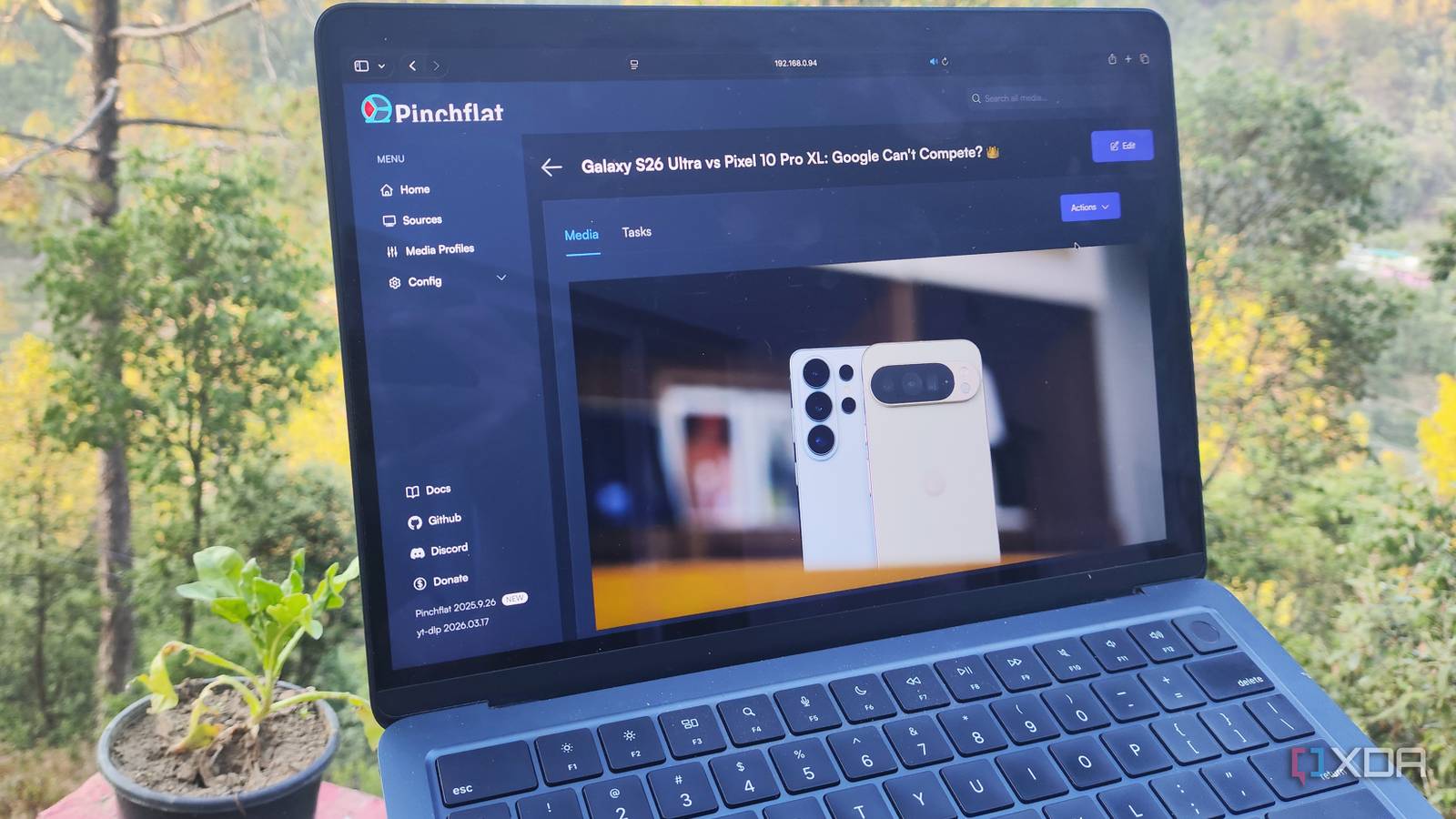
Self-hosted Pinchflat will download YouTube videos or playlists into Jellyfin “Pinchflat can technically download individual videos, but its strength lies in archiving entire channels and playlists at a time. For starters, Pinchflat lets me add channel and playlist URLs as sources, and I can modify the indexing frequency, download cutoff days, and retention settings. On conventional YouTube downloaders, I’d have to pull new videos manually every so often, while Pinchflat can archive fresh uploads after detecting them with its indexing algorithms.” Personally I have been using TubeArchivist for this, but there are some key differences between the two: * Pinchflat acts like a “Sonarr for YouTube.” Once you set up a source (channel or playlist), it downloads the videos, names them according to your template, and saves the NFO and poster images. It uses low resources. * You install the TubeArchivist Jellyfin Plugin. This plugin talks to the TubeArchivist API to pull in metadata, thumbnails, and watches progress. TubeArchivist has its own dedicated web UI to browse your YouTube collection and is a bit heavier on resources (Requires Redis, Elasticsearch, and the App container). See or #technology #opensource #Jellyfin image
Danie's avatar
Danie 3 months ago
25 years later, is it time for a new iPod? “After being essentially flat for five years, Google searches for MP3 Player tripled since last fall. A Reddit group for fans of digital audio players is now attracting 90,000 visitors per week on average. And this spring, The New York Times published a trend piece on how iPods are suddenly in fashion with teenagers.” I can imagine many today want a device that plays music without distractions, and where you can buy and install your own music with it being yanked back by some streaming service. My original Apple iPod still powers up and works just fine today, and the music I had back then, is all still there. The Sleevenote integrates with online services (for purchasing music and downloading) such as bandcamp, qobuz, amazon music, beatport, bleep, and quite a few more. See or #technology #music image