
Lately, the headlines don’t read like the final act of democracy but more like a progress report on its transformation. The rise of remote protests in China, the export of state-level surveillance systems, and the recalibration of tech giants into quasi-sovereign powers all point to a disturbing reality: inverted totalitarianism, a concept once reserved for political theory, is playing out in real time.
Take **China’s new digital ID system**, which went live this summer. It ties together facial scans and personal data into a single, government-controlled identifier. Officially, the government frames it as a convenience — a way to unify online identity and cut down on fraud. But critics rightly warn that this is a refined instrument of control: with this ID, the state can link online behavior to real-life identity, erasing anonymity and amplifying its capacity both to surveil and to censor. ([The Washington Post][1])
This is not just authoritarianism, but an inversion of democratic form: the appearance of choice and privacy persists, while real power consolidates around centralized digital infrastructure. Sheldon Wolin called this “managed democracy,” and these developments are textbook examples.
Meanwhile, **American tech giants are complicit in building this architecture**. A new investigation reveals that U.S.-based companies like IBM, Intel, and Nvidia have contributed technologies to China’s surveillance systems — from predictive policing to biometric tracking. ([AP News][2]) These firms are not just selling servers or chips; they are exporting the building blocks of a state’s power over its population. The corporate-state alliance here is unnervingly direct.
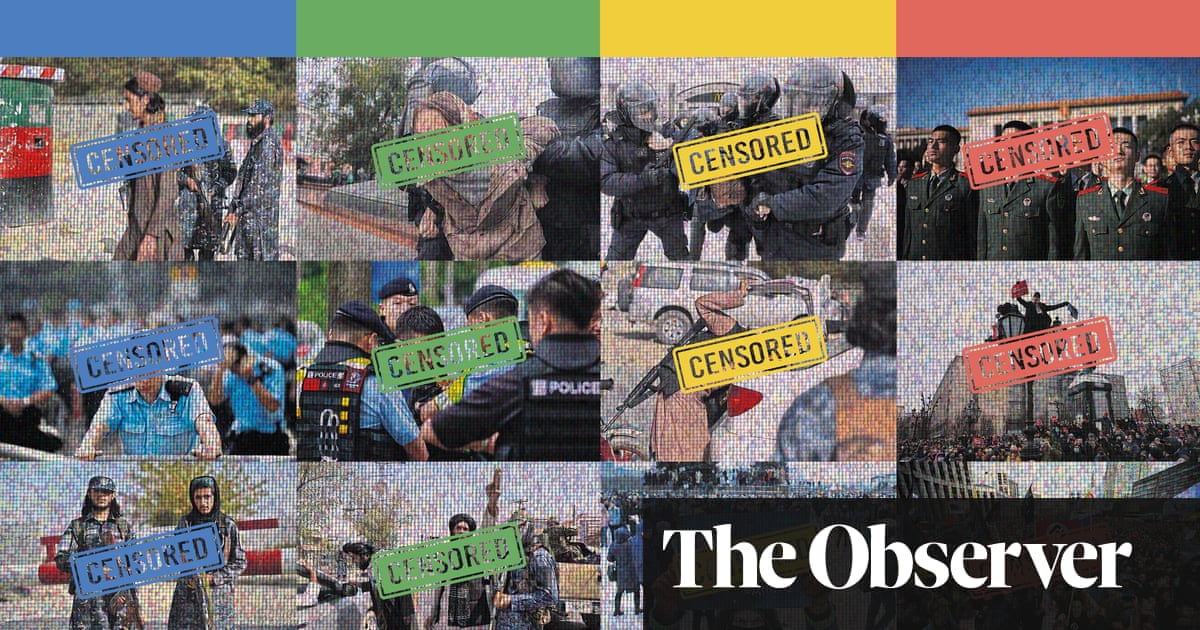
Then there’s the troubling evolution in how **big tech interacts with autocratic regimes more broadly**. Reports show Google has complied with censorship demands from authoritarian governments, removing content at the request of Russia and China. ([The Guardian][3]) Through opaque processes, Google shapes what people in repressive societies can — or cannot — see. That’s less “platform as neutral host” than a gatekeeper acting on behalf of state power.
Crucially, these developments don’t just reflect old-school repression. What we’re witnessing is a **systemic reorganization**: corporate infrastructure, once focused on profit, is now deeply entwined with the coercive powers of the state. That’s inverted totalitarianism in action — not with mass terror, but with bureaucratic, networked forms of control.
But those in power don’t necessarily call it domination. Consider the **recent change in Google’s AI ethics policy**, where the company quietly reversed its commitment not to use AI for surveillance or weapons. ([New York Post][4]) On paper, this may be framed as flexibility in a complex geopolitical world. But seen through Wolin’s lens, it’s another signal of how private firms are stepping into governance roles. These corporations are not just advisors, but enforcers — directly enabling the state’s coercive reach.
Amid all this, we get **progressive-looking regulatory moves**, but they too bear the marks of inversion. China’s regulator recently adopted facial-recognition rules, stating that individuals should not be forced to verify their identity with it, and that visible signage must mark its use. ([Reuters][5]) That sounds like a win for privacy. Yet, even this framework does not address the core problem: the entire system enabling state surveillance remains intact. These rules may regulate the tools, but not the underlying logic of control.
So what does this mean more broadly? Two urgent take-aways emerge if we analyze these stories not in isolation, but as coordinated symptoms of a deeper shift.
**First**, power in 2025 is not simply being appropriated by authoritarian actors. It is being **restructured through infrastructure**: networks, data systems, and corporate-state pacts. This is not just repression; it’s governance. The digital ID in China, the facial-recognition infrastructure, the role of U.S. tech firms, and the retreat of tech ethics are all part of the same architecture — not a bug, but a feature.
**Second**, the rhetoric of “rights” and “regulation” is increasingly being deployed as *legitimating cover*. New rules or ethical principles do not necessarily dismantle power — they institutionalize it. Academic critics are now warning that regulatory frameworks (even in democracies) often repackage institutional stability rather than challenge structural dominance. (See, for instance, analyses that argue rights-based regulation may simply legitimize institutions rather than democratize them.)
In Wolin’s terms, what’s at stake is **depoliticization** — the transformation of political conflict into a matter of administrative management. Rather than contesting the foundations of surveillance systems or demanding collective democratic deliberation, public debate is steered toward “ethical AI,” consent forms, or compliance. Meanwhile, power accrues to those who control the infrastructure.
This inversion demands a re-politicization. Civil society, scholars, and activists cannot simply call for stronger data protection or better AI ethics; they must also challenge who builds and owns the systems of governance. Do we really want our identities and behavior to be administered through privately managed yet state-linked platforms?
The alternative is not a return to pre-digital innocence — that’s impossible. But it might be a democratic reimagining: digital infrastructure that is not just regulated, but **collectively governed**. Public control over data systems, transparent architecture, and institutional accountability — not just on paper, but in practice.
In 2025, the headlines are clear. The danger is not a distant dystopia, but **a present condition**. If we do not recognize inverted totalitarianism when it's being built in real time, we risk becoming complicit in its architecture — not just as citizens, but as constituents of a managed democracy we never asked for.
[1]:
https://www.washingtonpost.com/world/2025/07/15/china-digital-id-internet-surveillance/?utm_source=chatgpt.com "Big Brother gets new powers in China with digital ID system"
[2]:

AP News
Silicon Valley enabled brutal mass detention and surveillance in China, internal documents show
U.S. technology firms such as IBM, Dell and Cisco largely designed and built China’s surveillance state, an AP investigation finds. The tech comp...
"Silicon Valley enabled brutal mass detention and surveillance in China, internal documents show"
[3]:
the Guardian
Revealed: Google facilitated Russia and China’s censorship requests
An investigation has exposed the tech firm’s cooperation with autocratic regimes to remove unfavourable content
"Revealed: Google facilitated Russia and China's censorship requests"
[4]:
Google may use AI for weapons, surveillance – prompts backlash | New York Post
"Google retracts promise not to use AI for weapons or surveillance - prompting employee backlash: 'Are we the baddies?'"
[5]:
https://www.reuters.com/technology/china-says-facial-recognition-should-not-be-forced-individuals-2025-03-21/?utm_source=chatgpt.com "China says facial recognition should not be forced on individuals"

 Tribalism is the new pandemic. It infects the mind, rewires identity, and makes enemies out of neighbors. The virus isn’t ideological — it’s psychological. And nowhere is it mutating faster than online.
In the West — from Washington to Westminster — politics has become a blood sport of belonging. Facts don’t matter; flags do. Once, we fought over ideas. Now, we fight to prove loyalty to digital tribes that treat nuance as treason.
Tribalism is the new pandemic. It infects the mind, rewires identity, and makes enemies out of neighbors. The virus isn’t ideological — it’s psychological. And nowhere is it mutating faster than online.
In the West — from Washington to Westminster — politics has become a blood sport of belonging. Facts don’t matter; flags do. Once, we fought over ideas. Now, we fight to prove loyalty to digital tribes that treat nuance as treason.
 COVID-19 was tribalism’s stress test — and we failed it.
A global health 'emergency' turned into a cultural war. Masks and vaccines became political uniforms.
Algorithms rewarded outrage; influencers turned skepticism into identity; and governments mistook communication for control.
The result was epistemic civil war:
“Follow the science” versus “Question everything.”
Neither side listened — both preached. Truth became a team jersey.
Tens of thousands died not from the virus itself, but from *distrust* — a disease of belonging that made people choose tribe over evidence.
Social media didn’t invent tribalism — it industrialized it. The feed is the new campfire, and algorithms are shamans whispering whatever story keeps the tribe enraged and engaged.
Facebook radicalizes soccer moms; Telegram radicalizes loners; X turns boredom into permanent revolution.
The more we click, the narrower our world becomes. Tribalism has replaced citizenship.
Democracy is supposed to rely on shared reality — but we’ve turned it into overlapping hallucinations, each convinced the other is insane.
Tribalism gives people what liberalism forgot to offer: belonging, meaning, moral certainty. It explains the populist surge, the anti-vax cults, the online crusades. The tribes differ, but the logic’s the same: “We are pure, they are corrupted.”
The pandemic didn’t just polarize us — it baptized us into new religions of distrust.
Now every issue — from climate to AI — gets processed through the same tribal reflex. The sides are already chosen before the facts arrive.
We can’t “fact-check” our way out of this. Tribalism isn’t about truth — it’s about *identity*.
The antidote isn’t more censorship or condescension, but new forms of belonging that don’t require enemies.
Spaces where disagreement isn’t betrayal.
Platforms that reward curiosity over outrage.
Leaders who don’t treat division as strategy.
Until then, tribalism will keep winning — not because it’s right, but because it gives meaning in a world that’s forgotten how to share one.
#tribalism #2025 #nostr #bitcoin
COVID-19 was tribalism’s stress test — and we failed it.
A global health 'emergency' turned into a cultural war. Masks and vaccines became political uniforms.
Algorithms rewarded outrage; influencers turned skepticism into identity; and governments mistook communication for control.
The result was epistemic civil war:
“Follow the science” versus “Question everything.”
Neither side listened — both preached. Truth became a team jersey.
Tens of thousands died not from the virus itself, but from *distrust* — a disease of belonging that made people choose tribe over evidence.
Social media didn’t invent tribalism — it industrialized it. The feed is the new campfire, and algorithms are shamans whispering whatever story keeps the tribe enraged and engaged.
Facebook radicalizes soccer moms; Telegram radicalizes loners; X turns boredom into permanent revolution.
The more we click, the narrower our world becomes. Tribalism has replaced citizenship.
Democracy is supposed to rely on shared reality — but we’ve turned it into overlapping hallucinations, each convinced the other is insane.
Tribalism gives people what liberalism forgot to offer: belonging, meaning, moral certainty. It explains the populist surge, the anti-vax cults, the online crusades. The tribes differ, but the logic’s the same: “We are pure, they are corrupted.”
The pandemic didn’t just polarize us — it baptized us into new religions of distrust.
Now every issue — from climate to AI — gets processed through the same tribal reflex. The sides are already chosen before the facts arrive.
We can’t “fact-check” our way out of this. Tribalism isn’t about truth — it’s about *identity*.
The antidote isn’t more censorship or condescension, but new forms of belonging that don’t require enemies.
Spaces where disagreement isn’t betrayal.
Platforms that reward curiosity over outrage.
Leaders who don’t treat division as strategy.
Until then, tribalism will keep winning — not because it’s right, but because it gives meaning in a world that’s forgotten how to share one.
#tribalism #2025 #nostr #bitcoin
 Different Frameworks
🜍 1. The LRP — Externalized Structure
Context
The Lesser Ritual of the Pentagram (LRP) comes from the Hermetic Order of the Golden Dawn (late 19th century). It’s foundational in Western ceremonial magic.
Method
The magician faces each cardinal direction (East, South, West, North).
In each, they trace a glowing pentagram in the air, usually with the right hand or a dagger.
They then vibrate divine names (YHVH, Adonai, etc.) associated with each quarter.
Finally, they invoke the four archangels around them (Raphael, Gabriel, Michael, Uriel).
Symbolic Purpose
The ritual projects sacred geometry outward, creating a magical circle or energetic fortress.
It’s a deliberate externalization of divine order into space — the magician stands within a constructed universe of balanced forces.
The magician → the microcosm
The circle/pentagrams → the stabilized cosmos (macrocosm)
So, the magician aligns themselves with the cosmos, but the symbols exist outside them.
🜂 2. Quareia — The Practitioner Is the Structure
Context
Quareia, by Josephine McCarthy, is a 21st-century Western mystery school that rebuilds magical training from the ground up — emphasizing inner transformation and direct spirit contact over ceremonial formality.
Methodological Shift
In Quareia, the magician is trained to build the temple within and to embody the magical architecture rather than project it.
The pentagram is not drawn outside — it is lived within.
The practitioner becomes the elemental pattern (Earth, Air, Fire, Water, Spirit) rather than invoking it from outside.
The body, mind, and energy field are the ritual space.
Philosophical Meaning
This is an internalization of magical structure:
The magician is no longer a separate operator controlling energies.
Instead, they are the organism through which the powers of creation express themselves.
The magic works through identification, not command.
As McCarthy puts it (paraphrasing):
“You are the temple, the altar, the flame, and the breath of the gods.”
So in Quareia:
The Pentagram = Human Being (five points of consciousness, five elements).
The Circle = the magician’s field of awareness.
The Ritual = conscious alignment with the currents of creation, not a scripted projection.
🜄 3. Comparative Metaphysics
Aspect Golden Dawn / LRP Quareia
Model External geometry; magician commands forces Internal embodiment; magician is the force
Operation Projective — tracing and vibrating outward Integrative — aligning and embodying inward
Aim Balance, purification, protection Union with the current of creation; co-creation
Structure Hierarchical (operator, circle, angels) Organic (magician as living temple)
Philosophy Dualistic: microcosm vs. macrocosm Non-dual: all forces within the self
🜃 4. Why This Matters
This shift reflects a spiritual evolution:
In the 19th-century ceremonial model, the magician was a priest-engineer managing divine energies.
In modern esoteric models like Quareia, the magician is more like a mystic-ecologist — harmonizing inner and outer worlds as one system.
In short:
LRP teaches you to shape the space around you.
Quareia teaches you to become the space through which creation moves.
#lrp #hermeticism #Quareia #nostr #bitcoin
Different Frameworks
🜍 1. The LRP — Externalized Structure
Context
The Lesser Ritual of the Pentagram (LRP) comes from the Hermetic Order of the Golden Dawn (late 19th century). It’s foundational in Western ceremonial magic.
Method
The magician faces each cardinal direction (East, South, West, North).
In each, they trace a glowing pentagram in the air, usually with the right hand or a dagger.
They then vibrate divine names (YHVH, Adonai, etc.) associated with each quarter.
Finally, they invoke the four archangels around them (Raphael, Gabriel, Michael, Uriel).
Symbolic Purpose
The ritual projects sacred geometry outward, creating a magical circle or energetic fortress.
It’s a deliberate externalization of divine order into space — the magician stands within a constructed universe of balanced forces.
The magician → the microcosm
The circle/pentagrams → the stabilized cosmos (macrocosm)
So, the magician aligns themselves with the cosmos, but the symbols exist outside them.
🜂 2. Quareia — The Practitioner Is the Structure
Context
Quareia, by Josephine McCarthy, is a 21st-century Western mystery school that rebuilds magical training from the ground up — emphasizing inner transformation and direct spirit contact over ceremonial formality.
Methodological Shift
In Quareia, the magician is trained to build the temple within and to embody the magical architecture rather than project it.
The pentagram is not drawn outside — it is lived within.
The practitioner becomes the elemental pattern (Earth, Air, Fire, Water, Spirit) rather than invoking it from outside.
The body, mind, and energy field are the ritual space.
Philosophical Meaning
This is an internalization of magical structure:
The magician is no longer a separate operator controlling energies.
Instead, they are the organism through which the powers of creation express themselves.
The magic works through identification, not command.
As McCarthy puts it (paraphrasing):
“You are the temple, the altar, the flame, and the breath of the gods.”
So in Quareia:
The Pentagram = Human Being (five points of consciousness, five elements).
The Circle = the magician’s field of awareness.
The Ritual = conscious alignment with the currents of creation, not a scripted projection.
🜄 3. Comparative Metaphysics
Aspect Golden Dawn / LRP Quareia
Model External geometry; magician commands forces Internal embodiment; magician is the force
Operation Projective — tracing and vibrating outward Integrative — aligning and embodying inward
Aim Balance, purification, protection Union with the current of creation; co-creation
Structure Hierarchical (operator, circle, angels) Organic (magician as living temple)
Philosophy Dualistic: microcosm vs. macrocosm Non-dual: all forces within the self
🜃 4. Why This Matters
This shift reflects a spiritual evolution:
In the 19th-century ceremonial model, the magician was a priest-engineer managing divine energies.
In modern esoteric models like Quareia, the magician is more like a mystic-ecologist — harmonizing inner and outer worlds as one system.
In short:
LRP teaches you to shape the space around you.
Quareia teaches you to become the space through which creation moves.
#lrp #hermeticism #Quareia #nostr #bitcoin #amnesia #cosmic #human #condition #nostr #bitcoin
 In 2025, democracy survives mostly as branding. To make it real again will require dismantling the comfort of management and re-learning the risk of self-government. The danger of inverted totalitarianism is not that it silences us, but that it convinces us our voices no longer matter. The first act of resistance is remembering that they do.
#democracy #totalitarianism #inversion #nostr #bitcoin
In 2025, democracy survives mostly as branding. To make it real again will require dismantling the comfort of management and re-learning the risk of self-government. The danger of inverted totalitarianism is not that it silences us, but that it convinces us our voices no longer matter. The first act of resistance is remembering that they do.
#democracy #totalitarianism #inversion #nostr #bitcoin #nodes #backbone #network #bitcoinknots🪢 #bitcoin #nostr #anarchyⒶ #decentralisation #freedomtech #blockchain #freepalestine 🇵🇸
 Manufactured consent...
 Try what you are critical of. What you fear. Experience it. Understand it. Live it. Verify!!
#propaganda #worldview #ideology #immersion #experience #criticism #nostr #bitcoinknots🪢 #freepalestine 🇵🇸
Try what you are critical of. What you fear. Experience it. Understand it. Live it. Verify!!
#propaganda #worldview #ideology #immersion #experience #criticism #nostr #bitcoinknots🪢 #freepalestine 🇵🇸 **Jewish Elite Felt Threatened Then As Now. Current Behaviour Seem to Echo the Past. They Still Feel Threatened. Not by Jesus. But by Palestinians, et al. Guess i Too Would Feel Paranoid if i Was Squating Someones Land Illegally.**
According to the consensus of modern historians, **Jesus of Nazareth** was executed by **crucifixion** under the authority of the Roman prefect **Pontius Pilate** around **30 CE**. Crucifixion was a Roman form of capital punishment reserved for insurrectionists and slaves, which places **ultimate legal responsibility** for Jesus’s death with the **Roman state** (Tacitus, *Annals* 15.44; Josephus, *Antiquities* 18.3.3).
Nevertheless, the **Gospel traditions** and critical historical analysis indicate that **certain members of the Jewish religious elite in Jerusalem**, particularly the **high priestly and Temple authorities** led by **Caiaphas**, played a decisive role in the events that led to Jesus’s execution. These leaders perceived Jesus as a **religious and political threat** — his teachings, actions in the Temple, and popular following risked provoking unrest during **Passover**, a period of heightened Roman surveillance (Sanders, *The Historical Figure of Jesus*, 1993, pp. 266–275).
Following an **interrogation before the high priest**, this faction of the **Sanhedrin** determined that Jesus was guilty of blasphemy or sedition under Jewish law and **delivered him to Pilate**, framing the case in political terms — namely, that Jesus claimed to be “King of the Jews” — a charge that ensured Roman intervention (Fredriksen, *Jesus of Nazareth, King of the Jews*, 1999, pp. 201–212; Ehrman, *Jesus: Apocalyptic Prophet of the New Millennium*, 1999, pp. 213–218).
Thus, **Jesus was executed by Roman authority, but following the initiative and cooperation of a small faction within the Jewish Temple aristocracy**. The **broader Jewish population was not involved** and, in many cases, sympathized with Jesus’s message.
---
### **Bibliography**
* Bart D. Ehrman, *Jesus: Apocalyptic Prophet of the New Millennium* (Oxford University Press, 1999).
* Paula Fredriksen, *Jesus of Nazareth, King of the Jews* (Vintage, 1999).
* E. P. Sanders, *The Historical Figure of Jesus* (Penguin, 1993).
* Flavius Josephus, *Antiquities of the Jews*, 18.3.3.
* Tacitus, *Annals*, 15.44.
#jesus #jews #elite #nostr #bitcoinknots🪢 #freepalestine 🇵🇸
**Jewish Elite Felt Threatened Then As Now. Current Behaviour Seem to Echo the Past. They Still Feel Threatened. Not by Jesus. But by Palestinians, et al. Guess i Too Would Feel Paranoid if i Was Squating Someones Land Illegally.**
According to the consensus of modern historians, **Jesus of Nazareth** was executed by **crucifixion** under the authority of the Roman prefect **Pontius Pilate** around **30 CE**. Crucifixion was a Roman form of capital punishment reserved for insurrectionists and slaves, which places **ultimate legal responsibility** for Jesus’s death with the **Roman state** (Tacitus, *Annals* 15.44; Josephus, *Antiquities* 18.3.3).
Nevertheless, the **Gospel traditions** and critical historical analysis indicate that **certain members of the Jewish religious elite in Jerusalem**, particularly the **high priestly and Temple authorities** led by **Caiaphas**, played a decisive role in the events that led to Jesus’s execution. These leaders perceived Jesus as a **religious and political threat** — his teachings, actions in the Temple, and popular following risked provoking unrest during **Passover**, a period of heightened Roman surveillance (Sanders, *The Historical Figure of Jesus*, 1993, pp. 266–275).
Following an **interrogation before the high priest**, this faction of the **Sanhedrin** determined that Jesus was guilty of blasphemy or sedition under Jewish law and **delivered him to Pilate**, framing the case in political terms — namely, that Jesus claimed to be “King of the Jews” — a charge that ensured Roman intervention (Fredriksen, *Jesus of Nazareth, King of the Jews*, 1999, pp. 201–212; Ehrman, *Jesus: Apocalyptic Prophet of the New Millennium*, 1999, pp. 213–218).
Thus, **Jesus was executed by Roman authority, but following the initiative and cooperation of a small faction within the Jewish Temple aristocracy**. The **broader Jewish population was not involved** and, in many cases, sympathized with Jesus’s message.
---
### **Bibliography**
* Bart D. Ehrman, *Jesus: Apocalyptic Prophet of the New Millennium* (Oxford University Press, 1999).
* Paula Fredriksen, *Jesus of Nazareth, King of the Jews* (Vintage, 1999).
* E. P. Sanders, *The Historical Figure of Jesus* (Penguin, 1993).
* Flavius Josephus, *Antiquities of the Jews*, 18.3.3.
* Tacitus, *Annals*, 15.44.
#jesus #jews #elite #nostr #bitcoinknots🪢 #freepalestine 🇵🇸 Node runners are the backbone that makes Bitcoin decentralized, secure, and censorship-resistant.
 Without node runners, Bitcoin would still exist, but it would stop being trustless and decentralized. Running a node is how individuals directly participate in — and defend — the integrity of the Bitcoin network.
#bitcoinknots🪢 #bitcoin #nostr #anarchyⒶ #decentralisation #freedomtech #blockchain #freepalestine 🇵🇸
Without node runners, Bitcoin would still exist, but it would stop being trustless and decentralized. Running a node is how individuals directly participate in — and defend — the integrity of the Bitcoin network.
#bitcoinknots🪢 #bitcoin #nostr #anarchyⒶ #decentralisation #freedomtech #blockchain #freepalestine 🇵🇸 #bitcoinknots🪢 #bitcoin #nostr #anarchyⒶ #decentralisation #freedomtech #blockchain #freepalestine 🇵🇸
 Core 30: This isn’t just a fork in the code; it’s a fork in ideology.
#bitcoinknots🪢 #bitcoin #nostr #anarchyⒶ #decentralisation #freedomtech #blockchain #freepalestine 🇵🇸
Core 30: This isn’t just a fork in the code; it’s a fork in ideology.
#bitcoinknots🪢 #bitcoin #nostr #anarchyⒶ #decentralisation #freedomtech #blockchain #freepalestine 🇵🇸 Bitcoin Core v30’s OP_RETURN expansion is not just a feature update — it’s a redefinition of what Bitcoin is. By opening the door to massive, non-financial data, Core risks turning the network into a freewheeling data platform, letting its monetary mission fade. The personal attacks, the policy tricks, and the ideological power plays all point to a core development team that has lost its grounding.
Bitcoin Knots doesn’t just preserve a more disciplined path — it signals a broader truth: node runners still matter. Their voices, their choices, their commitment to Bitcoin’s original vision are the last firewall against mission creep. In this age of political and technical pressure, they are the defenders we need.
#bitcoin #core #bitcoinknots🪢 #devs #nodes #operators #freepalestine 🇵🇸
Bitcoin Core v30’s OP_RETURN expansion is not just a feature update — it’s a redefinition of what Bitcoin is. By opening the door to massive, non-financial data, Core risks turning the network into a freewheeling data platform, letting its monetary mission fade. The personal attacks, the policy tricks, and the ideological power plays all point to a core development team that has lost its grounding.
Bitcoin Knots doesn’t just preserve a more disciplined path — it signals a broader truth: node runners still matter. Their voices, their choices, their commitment to Bitcoin’s original vision are the last firewall against mission creep. In this age of political and technical pressure, they are the defenders we need.
#bitcoin #core #bitcoinknots🪢 #devs #nodes #operators #freepalestine 🇵🇸 In the time before Rome, when the land that would be Wales was divided by tribe and hill, the **Silures** held the south-east: from the low, wet vales of Usk and Taff up to the moor-crowned ridges of what we now call Rhondda and Rhigos.
Each summer, as the valleys grew warm and close, they climbed. Families and herds wound upward along old trackways — routes that later would become pilgrim roads. They drove cattle and sheep toward the high commons, **hafod** pastures, where air was clean and enemies few.
In the time before Rome, when the land that would be Wales was divided by tribe and hill, the **Silures** held the south-east: from the low, wet vales of Usk and Taff up to the moor-crowned ridges of what we now call Rhondda and Rhigos.
Each summer, as the valleys grew warm and close, they climbed. Families and herds wound upward along old trackways — routes that later would become pilgrim roads. They drove cattle and sheep toward the high commons, **hafod** pastures, where air was clean and enemies few.
 Their movement was more than seasonal; it was ritual. The ascent from **lowland to highland** marked the turning of the year. At certain crossing-places — the **pen-rhis**, the headland ridge — they paused. Springs and wells there were honored as *living mouths of the earth*. Offerings were left: carved wood, beads, bone pins, small bronze blades.
 At night, beneath the ridge stars, they gathered around the **sacred well**, consuming the gifts of the land — honeyed mead, psylocibin fungi that grew after rain, liberty caps. The world softened, the ancestors drew close, and visions came: of hills moving like beasts, of rivers speaking, of light beneath the water.
 When dawn came, they rose renewed, following the ridgeline west toward the **great lake — Llyn Fawr** — to cast offerings into its dark water. Bronze, amber, food, song: the price and promise of prosperity.
 Then, when summer waned, they descended again to their lowland settlements, leaving behind the high camp — the smoke circles, the well, the quiet stones.
The Romans would later call them fierce, intractable, lovers of freedom. But to the Silures themselves, this yearly journey was not rebellion, but belonging — a covenant between people, hill, and spirit.
Their paths are still there, buried under heather and tarmac. And sometimes, on misted days, the wind over Penrhys still carries the breath of those who climbed before.
#silures #wales #ironage #history #nostr #bitcoin #freepalestine 🇵🇸
Then, when summer waned, they descended again to their lowland settlements, leaving behind the high camp — the smoke circles, the well, the quiet stones.
The Romans would later call them fierce, intractable, lovers of freedom. But to the Silures themselves, this yearly journey was not rebellion, but belonging — a covenant between people, hill, and spirit.
Their paths are still there, buried under heather and tarmac. And sometimes, on misted days, the wind over Penrhys still carries the breath of those who climbed before.
#silures #wales #ironage #history #nostr #bitcoin #freepalestine 🇵🇸 #nostr #bitcoin #freepalestine 🇵🇸