
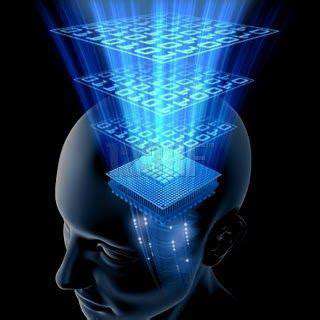
"Quantum Magick" Is the Ultimate Technology of Intent
the application of quantum principles to construct an entangled web of intent.
Mainstream science recoils at this phrasing. Physicists rightly point out that quantum entanglement is a mathematical correlation between particles, not a telepathic hotline for human desire. They argue that decoherence destroys quantum states before they can influence the macroscopic world. And they are correct—if we are speaking of literal, mechanical manipulation of atoms by thought alone. But this misses the forest for the trees. The synthesis lies not in claiming that thinking of a car makes it appear, but in recognizing that the structure of the universe described by quantum mechanics mirrors the structure of consciousness described by magick.
Consider the Observer Effect. In the quantum realm, the act of measurement collapses a wave function of infinite possibilities into a single reality. In the magickal tradition, the act of focused intent collapses the chaotic potential of the future into a specific outcome. Whether the "measurement" is a Geiger counter or a meditative gaze, the principle holds: observation is not passive; it is participatory. The universe does not exist independently of the observer; it co-arises with it.
Now, consider Entanglement. Two particles, separated by light-years, remain instantaneously connected. Change one, and the other responds. This is the physical basis for the magickal axiom: "As above, so below." If the universe is fundamentally non-local, then the separation between the magician and the target is an illusion of the senses. The "web of intent" is simply the recognition of this pre-existing entanglement. By aligning one's internal state (the observer) with a desired outcome, one is not "forcing" reality but "tuning" into a branch of the probability wave that already exists.
Critics will call this pseudoscience. They are right, if by "science" we mean a rigid adherence to materialist reductionism that refuses to acknowledge the role of the observer. But if we view science as a method of inquiry into the nature of reality, then this synthesis is a necessary evolution. It bridges the gap between the how (physics) and the why (spirit). It suggests that consciousness is not an accidental byproduct of matter, but the fundamental substrate from which both matter and energy emerge.
This is not a call to abandon rigor. It is a call to expand our definition of technology. For centuries, we have built machines to manipulate the external world. Now, we are learning to build internal machines—rituals, meditations, visualizations—to manipulate the internal landscape, which, in a non-local universe, is indistinguishable from the external one.
The "entangled web of intent" is a powerful metaphor, yes. But it is also a functional reality for those who practice it. It transforms the practitioner from a victim of circumstance into a co-creator of destiny. It demands accountability: if your intent shapes your reality, you cannot blame the stars, the government, or bad luck. You are the architect.
In the end, whether the mechanism is literal quantum mechanics or a profound psychological resonance, the result is the same. The synthesis of magick and quantum theory offers a new operating system for the human mind. It is a technology of meaning, a way to navigate a universe that is far stranger, more interconnected, and more responsive to our will than we ever dared imagine.
The web is already there. The question is not whether it exists, but whether we have the courage to pull the thread.
#quantum #magick
Either reality is solid, or it’s information projected onto the void. evidence leans heavily toward the latter.
Accept the illusion. Understand the code.

The Ontology of Emergence: Why Spacetime May Be Secondary
The holographic principle is not merely a mathematical curiosity; it is a fundamental challenge to our ontology. For centuries, philosophy and physics alike have treated spacetime as the primary stage upon which existence unfolds. The holographic conjecture suggests this stage is derivative, emerging from information encoded on a lower-dimensional boundary.

This shift demands critical scrutiny. If the universe is holographic, locality—the idea that objects are influenced only by their immediate surroundings—is an illusion. Entanglement becomes the primary fabric of reality, not a peripheral anomaly. This aligns with quantum mechanics but fractures classical intuition. We are forced to ask: is space a container, or a relationship?
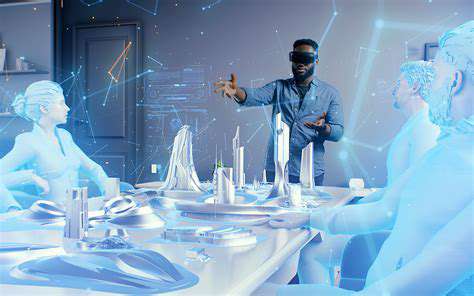
Critics argue this remains unproven speculation. Yet, the alternative—maintaining a rigid 3D framework that fails to reconcile gravity with quantum field theory—is intellectually unsustainable. The holographic model offers coherence where traditional models fracture. It posits that information, not matter, is the fundamental constituent of being.

To accept this is to admit that human perception is limited to a projection. We navigate a shadow cast by a deeper, unseen reality. Whether this is literal or metaphorical, the implication is clear: our understanding of "real" requires revision.
#holographic #simulation
SLOP SATURDAY...

In the theater of modern governance, a quiet but profound shift has occurred. The ancient covenant between leader and citizen—that power is a stewardship granted for the collective good—is fraying. In its place rises a new archetype: the political operator who treats morality not as a constraint, but as a variable to be manipulated. This is not merely corruption; it is the secularization of the "Left-Hand Path," where the ultimate goal is not the salvation of the nation, but the deification of the self.
We are witnessing the rise of the "Sovereign Ego." In this paradigm, the leader views reality as malleable clay, to be shaped by will alone. Truth becomes whatever serves the narrative of dominance. Institutions are not pillars of democracy to be upheld, but obstacles to be dismantled if they hinder the leader's ascent. Morality is relegated to a tactical tool—deployed to disarm opponents, discarded when inconvenient, and weaponized against rivals.
Consider the recent political landscape. We see leaders who do not just break norms but rewrite the very definition of legitimacy to suit their immediate desires. When a leader frames their personal survival as synonymous with the state's existence, they have effectively merged their ego with the public sphere. Dissent is no longer a civic duty; it is heresy against the sovereign self. This is the essence of the dark magician's craft: the belief that the self is the only true authority, and that the universe (or the electorate) must bend to its will.
This "political magic" thrives on the erosion of shared reality. Just as the chaos magician uses belief as a technology to alter perception, the modern autocrat uses media ecosystems to create a parallel universe where their dominance is inevitable and their critics are non-existent or evil. Facts are secondary to the emotional resonance of the myth. The goal is not to govern, but to mesmerize.
The danger lies in the feedback loop. As the leader's ego expands, the space for collective decision-making shrinks. Compromise, the lifeblood of democracy, is recast as weakness. The "strongman" persona becomes a self-fulfilling prophecy: the more they dominate, the more they need to dominate to maintain the illusion of invincibility. This creates a political environment where accountability is impossible, because the leader is the only source of truth.
We are not dealing with traditional tyranny, which often hides behind a facade of law. This is something more insidious: a performative sovereignty where the leader acts as if they are above the law simply because they believe they are. It is a form of political solipsism where the only thing that matters is the reflection of power in the mirror.
The antidote is not just to vote out the "bad actors," but to reject the underlying philosophy. We must recognize that when morality is subordinated to dominance, the result is not a stronger nation, but a hollowed-out shell where the leader stands alone atop a pile of broken institutions. The "Sovereign Ego" is a trap, not a triumph. It promises godhood but delivers isolation, and it trades the future of the many for the gratification of the one.
In an age where reality feels increasingly fluid, the most radical act is to insist on a morality that exists outside the leader's will. To say "no" to the sovereign ego is to reclaim the only true magic we have: the collective power of a society that refuses to be a mirror for a single, hungry face.
#SovereignEgo #LHP
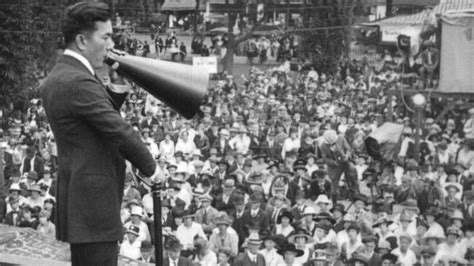
Hollywood and the "manufacture of violent consent": desensitization, normalization, and the cultivation of a violent worldview.
- Cultivation Theory (George Gerbner)
The Argument:
Heavy viewers of television and film begin to perceive the real world as more dangerous and violent than it statistically is (the "Mean World Syndrome").
The Mechanism:
It's not that media teaches people how to be violent, but that constant exposure convinces them that violence is the norm for resolving conflicts. This creates a psychological environment where violence is accepted as a necessary or inevitable part of life, effectively "manufacturing consent" for aggressive policies or social acceptance of violence.
- Desensitization and Habituation
The Argument:
Repeated exposure to graphic violence reduces emotional responsiveness.
The Mechanism:
As audiences consume more violent content (like the 78% of films we discussed), the shock value diminishes. This can lead to:
Reduced empathy for victims of real-world violence.
Lower thresholds for accepting aggression in daily interactions.
A shift where extreme violence becomes "entertainment" rather than a tragedy, blurring the moral line between fiction and reality.
- Social Learning Theory (Albert Bandura)
The Argument:
People learn behaviors by observing others, including media figures.
The Nuance:
While early studies suggested direct imitation, modern critiques argue that the influence is more subtle. It reinforces existing biases or provides "scripts" for behavior. If a society is saturated with narratives where violence is the only effective solution (common in action/superhero genres), it limits the cognitive repertoire for conflict resolution.
- The "Manufacturing Consent" Parallel (Chomsky/Herman)
While originally about news media, this framework is applied to entertainment by critics who argue that:
Systemic Bias:
Hollywood, often owned by massive conglomerates, avoids challenging the status quo. Violence is often depicted as a tool of "good guys" (state-sanctioned or vigilante) to solve problems, implicitly validating the use of force by authority figures.
Distraction:
High-octane violent spectacles can serve as a form of social pacification, distracting the public from structural issues (inequality, political corruption) by focusing attention on individual, physical conflicts.
Counter-Arguments & Complexity
Catharsis Hypothesis:
Some older theories argued that watching violence allows people to release aggressive urges safely, reducing real-world violence (though this is largely discredited in modern psychology).
Correlation vs. Causation:
Many sociologists point out that while violence in media has skyrocketed, violent crime rates in the US have fluctuated independently (often dropping in the 90s and 2000s despite rising media violence). This suggests media is a contributing factor or a symptom of societal violence, not the sole driver.
Individual Differences:
Research shows that media affects individuals differently based on pre-existing personality traits, upbringing, and environment.
Summary
The critique that media "manufactures violent consent" is best understood as a process of normalization. By saturating culture with violence (especially in the dominant action/superhero genres), society may become desensitized to it, view it as the primary method of conflict resolution, and lose the collective will to pursue non-violent alternatives.
#consent #violence #decensitisation #hollywood
The Waste Land
‘Nam Sibyllam quidem Cumis ego ipse oculis meis vidi in ampulla pendere, et cum illi pueri dicerent: Σίβυλλα τί θέλεις; respondebat illa: ἀποθανεîν θέλω.’
For Ezra Pound
il miglior fabbro.
I. The Burial of the Dead
April is the cruellest month, breeding
Lilacs out of the dead land, mixing
Memory and desire, stirring
Dull roots with spring rain.
Winter kept us warm, covering
Earth in forgetful snow, feeding
A little life with dried tubers.
Summer surprised us, coming over the Starnbergersee
With a shower of rain; we stopped in the colonnade,
And went on in sunlight, into the Hofgarten,
And drank coffee, and talked for an hour.
Bin gar keine Russin, stamm’ aus Litauen, echt deutsch.
And when we were children, staying at the archduke’s,
My cousin’s, he took me out on a sled,
And I was frightened. He said, Marie,
Marie, hold on tight. And down we went.
In the mountains, there you feel free.
I read, much of the night, and go south in the winter.
What are the roots that clutch, what branches grow
Out of this stony rubbish? Son of man,
You cannot say, or guess, for you know only
A heap of broken images, where the sun beats,
And the dead tree gives no shelter, the cricket no relief,
And the dry stone no sound of water. Only
There is shadow under this red rock,
(Come in under the shadow of this red rock),
And I will show you something different from either
Your shadow at morning striding behind you
Or your shadow at evening rising to meet you;
I will show you fear in a handful of dust.
Frisch weht der Wind
Der Heimat zu
Mein Irisch Kind,
Wo weilest du?
‘You gave me hyacinths first a year ago;
‘They called me the hyacinth girl.’
—Yet when we came back, late, from the Hyacinth garden,
Your arms full, and your hair wet, I could not
Speak, and my eyes failed, I was neither
Living nor dead, and I knew nothing,
Looking into the heart of light, the silence.
Oed’ und leer das Meer.
Madame Sosostris, famous clairvoyante,
Had a bad cold, nevertheless
Is known to be the wisest woman in Europe,
With a wicked pack of cards. Here, said she,
Is your card, the drowned Phoenician Sailor,
(Those are pearls that were his eyes. Look!)
Here is Belladonna, the Lady of the Rocks,
The lady of situations.
Here is the man with three staves, and here the Wheel,
And here is the one-eyed merchant, and this card,
Which is blank, is something he carries on his back,
Which I am forbidden to see. I do not find
The Hanged Man. Fear death by water.
I see crowds of people, walking round in a ring.
Thank you. If you see dear Mrs. Equitone,
Tell her I bring the horoscope myself:
One must be so careful these days.
Unreal City,
Under the brown fog of a winter dawn,
A crowd flowed over London Bridge, so many,
I had not thought death had undone so many.
Sighs, short and infrequent, were exhaled,
And each man fixed his eyes before his feet.
Flowed up the hill and down King William Street,
To where Saint Mary Woolnoth kept the hours
With a dead sound on the final stroke of nine.
There I saw one I knew, and stopped him, crying: 'Stetson!
‘You who were with me in the ships at Mylae!
‘That corpse you planted last year in your garden,
‘Has it begun to sprout? Will it bloom this year?
‘Or has the sudden frost disturbed its bed?
‘Oh keep the Dog far hence, that’s friend to men,
‘Or with his nails he’ll dig it up again!
‘You! hypocrite lecteur!—mon semblable,—mon frère!”
#tseliot
 We navigate a shadow cast by a deeper, unseen reality
#perception
We navigate a shadow cast by a deeper, unseen reality
#perception #FourthTurning #crises #restructuring
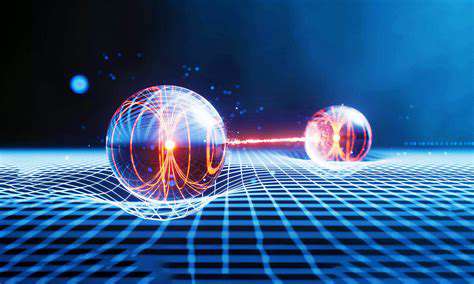 Quantum Information Manifests As Reality
#quantum #information #reality #matrix
Quantum Information Manifests As Reality
#quantum #information #reality #matrix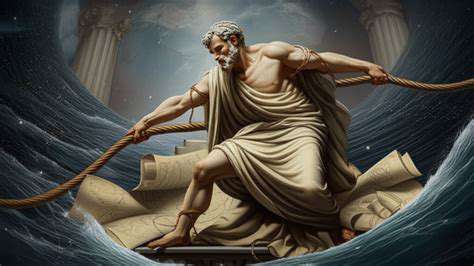 space - container, relationship, both?
#holographic
space - container, relationship, both?
#holographic #season #marker
 #kyc
#kyc #bitcoin #mining #bip110 #decentralization #datum
 #bitcoin #mining #sovereignty #decentralization
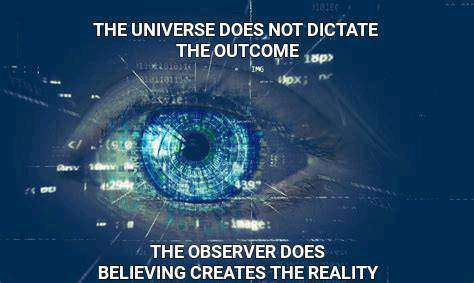 #quantum
 #hegenomy #unipolar #multipolar
 watching the deconstruction of the post-WWII Breton Woods order with a bucket of popcorn
#reset
watching the deconstruction of the post-WWII Breton Woods order with a bucket of popcorn
#reset Resource Allocation:
In a world of shortages, governments need total visibility to ration energy, food, and fuel. AI systems (like Palantir's MOSAIC) are the tools used to track every barrel of oil, every shipment, and every citizen's consumption.
Security Justification:
The "war on terror" or "national security" narrative is used to expand surveillance powers. The chaos of the Iran conflict provides the perfect pretext to implement systems that monitor dissent, track movements, and predict unrest.
The Feedback Loop:
The more unstable the economy, the more "security" is demanded, which leads to more surveillance, which further centralizes power.
#reset
Resource Allocation:
In a world of shortages, governments need total visibility to ration energy, food, and fuel. AI systems (like Palantir's MOSAIC) are the tools used to track every barrel of oil, every shipment, and every citizen's consumption.
Security Justification:
The "war on terror" or "national security" narrative is used to expand surveillance powers. The chaos of the Iran conflict provides the perfect pretext to implement systems that monitor dissent, track movements, and predict unrest.
The Feedback Loop:
The more unstable the economy, the more "security" is demanded, which leads to more surveillance, which further centralizes power.
#reset