:D's avatar
:D
deSign_r@stacker.news
npub12lg6...ac9c
it's like r/ #Design but we pay you #Bitcoin for your #posts ⚡️𝙻𝚒𝚐𝚑𝚝𝚗𝚒𝚗𝚐? 𝑆𝑢𝑟𝑒! deSign_r@coinos.io 🔮 𝚗𝚘𝚜𝚝𝚛? 𝑌𝑒𝑠!... deSign_r@stacker.news
:D's avatar
deSign_r 8 months ago
Designing user interfaces with bots not buttons ![](https://m.stacker.news/108409) I don’t want to go full conversational UI on this. It’s not about having human-level conversations or making chatbots. What’s good about the character bots in Skittish is how dumb they are. They definitely feel like part of the “machinery” of the place, but they’re integrated. They’re seamlessly integrated in the Skittish world, just as dialog boxes are “in-world” w/r/t to the “desktop metaphor” world of Windows or MacOS. https://stacker.news/items/1225399
:D's avatar
deSign_r 8 months ago
image "The essence of style is a simple way of saying something complex" — Giorgio Armani And you? What #creative #ideas have you been rambling on to showcase your #style? How are you simplifying your ideas? This post is part of a series. It is meant to be a place for anyone to discuss a #WIP #projects, or an #idea worth to #build. Regardless of your #project being personal, professional, physical, digital, or even simply an #idea to brainstorm together. If you have any creative projects or ideas that you have been working on or want to eventually work on... This is a place for discussing those, gather initial feedback and feel more energetic on bringing it to the next level. ₿e #Creative, have #Fun, share it at https://stacker.news/items/1223753/r/deSign_r #Design #innovate #innovation #creativity #createopportunities #Creator #create
:D's avatar
deSign_r 8 months ago
Mobile websites design inspiration for unconventional web ![](https://m.stacker.news/108288) **loadmo.re** is a mobile websites gallery showcasing the best design inspiration for unconventional web. To keep up with updates, follow us on Instagram. From its earliest days, digital design practice has been focused on creating interfaces for computers. Screen-based interactions are now mainly happening through smartphones and mobile-first experiences have become the norm. However, as digital designers, we still use computers as our main working tool and continue to browse desktop websites when searching for references. This process makes it difficult to acknowledge a shift and embrace the fact that the Internet isn’t happening where it used to. loadmo.re showcases distinctive websites for smartphones. Through this archive, we hope to encourage digital designers to take full advantage of the mobile phone’s interface and functionality. We hope that this platform will generate conversation on mobile-first design within our digital communities. https://stacker.news/items/1223748
:D's avatar
deSign_r 8 months ago
Product Design, for Engineers ![](https://m.stacker.news/108119) We believe that everyone is a designer. Because we hire generalists, there is no expectation that every project should start by running through design first. It is up to you when to involve our product designers in your work. You should start by identifying the stage and goals of your project. ## No product design within small teams We encourage engineers to act like feature owners, carrying a project from ideation to completion. We maintain a design system in Storybook, so engineers can build high-quality features independently, as much as possible. Because engineers choose their sprint tasks near the beginning of a sprint (and product doesn't plan tasks for engineers in advance), our process doesn't allow for us to have a product manager and a designer to work closely together before a task gets selected by an engineer. https://stacker.news/items/1222174
:D's avatar
deSign_r 8 months ago
Chapter 6: Designing for Innovation ![](https://m.stacker.news/108118) In the dominant theory of innovation, brilliant individuals reflect on large problem sets and then carefully and precisely create a solution. Sometimes they will have “eureka” moments where they “get” brilliantly simple answers to whole large problem sets. The inventor, and the process of invention are rare, precious, and can command a monopoly. History is full of such heroic individuals. We owe them our modern world. So, when we trust the solitary experts, they make classic mistakes. They focus on ideas, not problems. They focus on the wrong problems. They make misjudgments about the value of solving problems. They don’t use their own work. Can we turn the above theory into a reusable process? In late 2011, I started documenting C4 and similar contracts, and using them both in ZeroMQ and in closed source projects. The underlying process is something I call “Simplicity Oriented Design”, or SOD. This is a reproducible way of developing simple and elegant products. It organizes people into flexible supply chains that are able to navigate a problem landscape rapidly and cheaply. They do this by building, testing, and keeping or discarding minimal plausible solutions, called “patches”. Living products consist of long series of patches, applied one atop the other. To best understand how we ended up with SOD, let’s look at the alternatives. ## Trash-Oriented Design The most popular design process in large businesses seems to be _Trash-Oriented Design_, or TOD. TOD feeds off the belief that all we need to make money are great ideas. It’s tenacious nonsense, but a powerful crutch for people who lack imagination. The theory goes that ideas are rare, so the trick is to capture them. It’s like non-musicians being awed by a guitar player, not realizing that great talent is so cheap it literally plays on the streets for coins. ## Complexity-Oriented Design Really good engineering teams and small firms can usually build decent products. But the vast majority of products still end up being too complex and less successful than they might be. This is because specialist teams, even the best, often stubbornly apply a process I call _Complexity-Oriented Design_, or COD. ## Simplicity Oriented Design Finally, we come to the rare but precious _Simplicity Oriented Design_, or SOD. This process starts with a realization: we do not know what we have to make until after we start making it. Coming up with ideas or large-scale designs isn’t just wasteful, it’s a direct hindrance to designing the truly accurate solutions. The really juicy problems are hidden like far valleys, and any activity except active scouting creates a fog that hides those distant valleys. You need to keep mobile, pack light, and move fast. https://stacker.news/items/1222166

:D's avatar
deSign_r 8 months ago
Discover PERRINN 424 – An open access electric hyper car designed for racing ![](https://m.stacker.news/108116) **A work of art** To build the world’s fastest electric hypercar will require a collective team effort and this project is unlike any other. All the designs, vehicle architecture and ongoing developments are accessible to all members on the PERRINN.com platform, with new developments made in real-time. For 424, the open access strategy enables people to copy, modify and re-use our design. **A design story** The development of the 424 started in 2011 when Nicolas left Williams F1 and started PERRINN Limited. From the aerodynamics, suspension and composite design to the integration of high performance electric powertrain, more than 30 thousand hours have been spent on designing, optimising, improving with the objective of one day winning the hardest endurance race in the world. **Open access project** To accelerate the electrification of cars, PERRINN will give access to all designs and solutions from 424 to every people who has supported the project. https://stacker.news/items/1222148
:D's avatar
deSign_r 8 months ago
Q&A: Rich's design decisions building Clojure A list of commonly asked questions, design decisions, reasons why Clojure[^1] is the way it is as they were answered directly by Rich (even when from many years ago, those answers are pretty much valid today!). Feel free to point friends and colleagues here next time they ask (again). Answers are pasted verbatim (I've made small adjustments for readability, but never changed a sentence) from mailing lists, articles, chats. # Table of Content ### FP vs OOP * [What is the meaning of Data?]( * [Should I use a `namespace` to bundle functions to model a domain object like a "customer" or "product"?]( * [Why Clojure does not implement something like CLOS?]( * [How is Clojure polymorphism different from Java or other languages?]( * [How Clojure compares to Scala?]( ### Clojure Design * [Why no pattern matching?]( * [Why Clojure does not allow to introduce new syntax like Common Lisp?]( * [Why did you choose to make your language a Lisp dynamically typed as opposed to ML?]( * [Why no tail call optimization?]( * [Are there cons cells in Clojure?]( * [Aren't chunked sequences completely subverting the point of laziness?]( * [Why Clojure doesn't have a generic `insert`, `lookup`, `append` that works the same on all collections?]( * [Why Clojure compiler is single pass? Aren't many possible optimizations lost this way?]( ### Clojure Features * [Isn't the behavior of the STM unpredictable compared to manual locking?]( * [deftype, gen-class, proxy, reify, etc. Why there are so many ways to define a type?]( * [How does Clojure solve the potential ambiguity of multiple inheritance?]( * [Couldn't locals be mutable?]( * [When should I use atoms/refs/agents?]( * [Why there is a "rest" and a "next"?]( * [What is the difference between collections and sequences?]( * [Why lazy sequences are cached?]( * [Why cannot "last" be fast on vector?]( * [Shouldn't `(nth nil 1)` throw outofbound exception?]( * [What is the convention for arguments order?]( * [Why doesn't contains? do what I expect on vectors and lists?]( * [Why commas are allowed as whitespaces?]( * [How Clojure transients work?]( ### Learning, Process and Community * [How can I achieve programming mastery?]( * [Why you don't accept pull requests?]( * [Why Clojure is not licensed under GPL, MIT, etc?]( * [I want to study SICP and use Clojure instead of Scheme. Is that a good idea?]( * [What lessons did you learn porting some data structures from Okasaki ML into Java?]( [^1]: Clojure is a dynamic and functional dialect of the programming language Lisp on the Java platform. Like most other Lisps, Clojure's syntax is built on S-expressions that are first parsed into data structures by a Lisp reader before being compiled. Clojure's reader supports literal syntax for maps, sets, and vectors along with lists, and these are compiled to the mentioned structures directly. Clojure treats code as data and has a Lisp macro system. https://stacker.news/items/1220980
:D's avatar
deSign_r 8 months ago
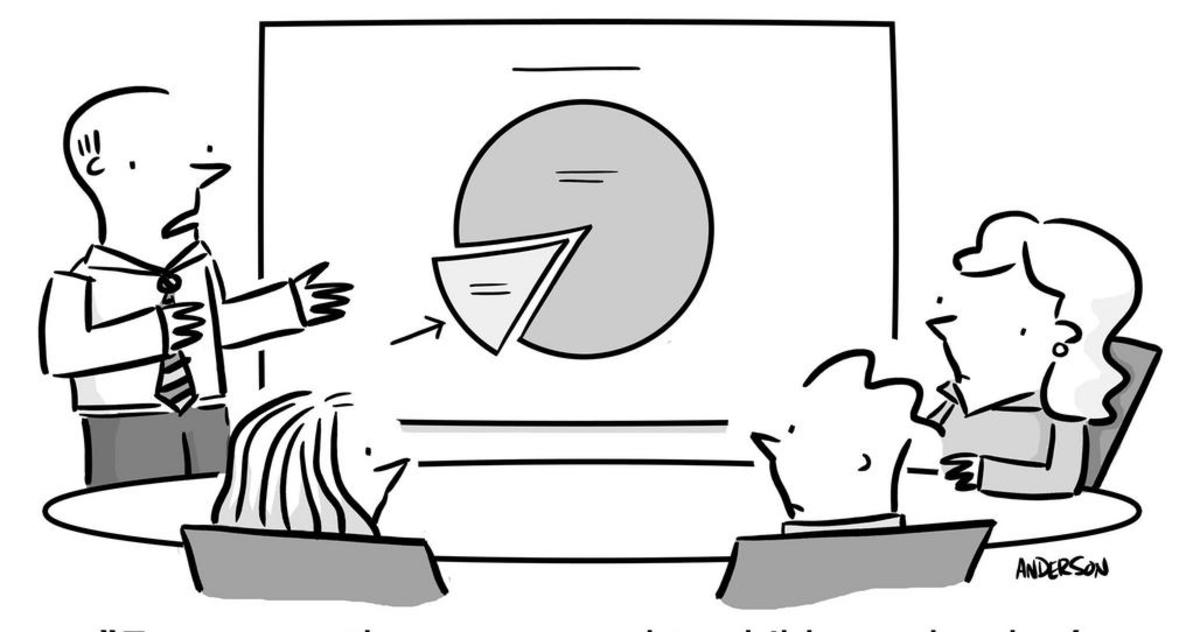
Your target market isn't demographic ![](https://m.stacker.news/108001) How to define your actual target market, which probably isn’t traditional demographics and firmographics. Sometimes this sort of description warranted. If you sell back-office software specifically for dentist offices under Norwegian law, then a demographic description is accurate. But my experience is that, for most companies, these dimensions incorrectly describe the market. https://stacker.news/items/1220971
:D's avatar
deSign_r 8 months ago
Design Principles for Precision Mechatronics ![](https://m.stacker.news/108000) How to design mechanical hardware as part of a modern precision mechatronic system. The precision mechatronics community has a long history of continuous updates on DDP (“Des Duivels Prentenboek”) content by Wim van der Hoek and his ‘heritage keepers’. It is considered relevant to prolong this process with new examples from the field of precision mechatronics, incl. opto-mechanics, electro-mechanics and material science. In the coming year(s), DSPE write a book and a website containing examples of precision mechatronics elements. DSPE members can contribute by writing clear examples to be freely used. Company and designer can be mentioned. Examples should no be complete systems. https://stacker.news/items/1220963