:D's avatar
:D
deSign_r@stacker.news
npub12lg6...ac9c
it's like r/ #Design but we pay you #Bitcoin for your #posts ⚡️𝙻𝚒𝚐𝚑𝚝𝚗𝚒𝚗𝚐? 𝑆𝑢𝑟𝑒! deSign_r@coinos.io 🔮 𝚗𝚘𝚜𝚝𝚛? 𝑌𝑒𝑠!... deSign_r@stacker.news
:D's avatar
deSign_r 5 months ago
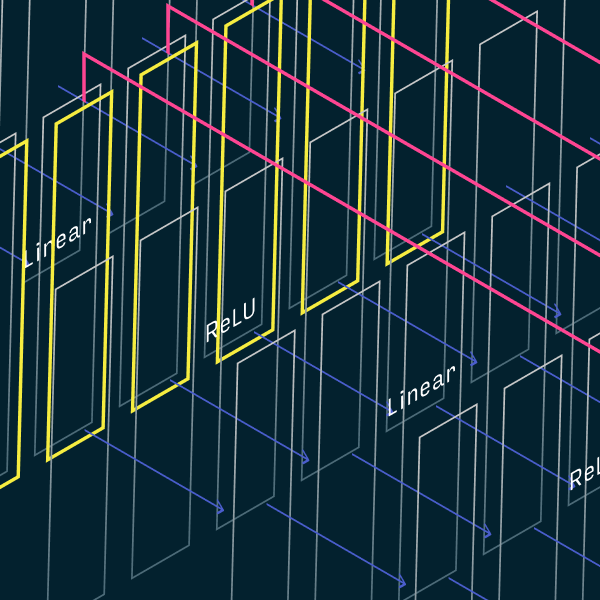
Where’s the AI design renaissance? ![](https://m.stacker.news/110466) **One-off chats with a human designer are a terrible way to end up with a great design!** Isn’t the classic joke that the client stands over your shoulder, telling you to “make the logo bigger” and “move the button to the right” and “change the shade of blue”? One subtext of this joke is that this changes are not actually improving the design in any real way! If the designer is any good, making the logo bigger won’t actually move the needle. **Designers should do what AI’s architecture prevents it from doing** I realize not all reader of this blog are technical, but I highly recommend to all learning about LLM architecture. Perhaps the first breath of fresh air that I experienced during the onslaught of AI news was after diving into how LLMs work. All of a sudden, so many questions and ponderings about that mysterious thinking silicon became so much clearer. Because LLMs aren’t magic; they’re algorithms. 'impressionist painting' vs 'blueprints'. AI nails what's vibes-based, but struggles with the tight constraints of geometric exactitude ![](https://m.stacker.news/110467) 'abstract dark, techie visuals' vs 'vector logo for quantum computing computing company called 'Superposition Technologies''. Again, AI is good with the vibey, worse with geometric precision ![](https://m.stacker.news/110468) Focus on what is complex. Focus on what is interdisciplinary. Focus on what is novel. Focus on what is outside the training data. <sub>(Or use AI to crank out basic landing pages for brick-and-mortar and make bank, idc 🤷‍♂️)</sub>
:D's avatar
deSign_r 5 months ago
Where’s the AI design renaissance? ![](https://m.stacker.news/110466) **One-off chats with a human designer are a terrible way to end up with a great design!** Isn’t the classic joke that the client stands over your shoulder, telling you to “make the logo bigger” and “move the button to the right” and “change the shade of blue”? One subtext of this joke is that this changes are not actually improving the design in any real way! If the designer is any good, making the logo bigger won’t actually move the needle. **Designers should do what AI’s architecture prevents it from doing** I realize not all reader of this blog are technical, but I highly recommend to all learning about LLM architecture. Perhaps the first breath of fresh air that I experienced during the onslaught of AI news was after diving into how LLMs work. All of a sudden, so many questions and ponderings about that mysterious thinking silicon became so much clearer. Because LLMs aren’t magic; they’re algorithms. 'impressionist painting' vs 'blueprints'. AI nails what's vibes-based, but struggles with the tight constraints of geometric exactitude ![](https://m.stacker.news/110468) 'abstract dark, techie visuals' vs 'vector logo for quantum computing computing company called 'Superposition Technologies''. Again, AI is good with the vibey, worse with geometric precision ![](https://m.stacker.news/110467) Focus on what is complex. Focus on what is interdisciplinary. Focus on what is novel. Focus on what is outside the training data. (Or use AI to crank out basic landing pages for brick-and-mortar and make bank, idc 🤷‍♂️)
:D's avatar
deSign_r 5 months ago
The Psychology Of Trust In AI: Measuring And Designing For User Confidence ![](https://m.stacker.news/110465) > <sub>QUICK SUMMARY</sub> > When AI “hallucinates,” it’s more than just a glitch — it’s a collapse of trust. As generative AI becomes part of more digital products, trust has become the invisible user interface. But trust isn’t mystical. It can be understood, measured, and designed for. Here is a practical guide for designing more trustworthy and ethical AI systems. Misuse and misplaced trust of AI is becoming an unfortunate common event. For example, lawyers trying to leverage the power of generative AI for research submit court filings citing multiple compelling legal precedents. The problem? The AI had confidently, eloquently, and completely fabricated the cases cited. The resulting sanctions and public embarrassment can become a viral cautionary tale, shared across social media as a stark example of AI’s fallibility. This goes beyond a technical glitch; it’s a catastrophic failure of trust in AI tools in an industry where accuracy and trust are critical. The trust issue here is twofold — the law firms are submitting briefs in which they have blindly over-trusted the AI tool to return accurate information. The subsequent fallout can lead to a strong distrust in AI tools, to the point where platforms featuring AI might not be considered for use until trust is reestablished. Issues with trusting AI aren’t limited to the legal field. We are seeing the impact of fictional AI-generated information in critical fields such as healthcare and education. On a more personal scale, many of us have had the experience of asking Siri or Alexa to perform a task, only to have it done incorrectly or not at all, for no apparent reason. I’m guilty of sending more than one out-of-context hands-free text to an unsuspecting contact after Siri mistakenly pulls up a completely different name than the one I’d requested.
:D's avatar
deSign_r 5 months ago
Hacker Laws # Laws, Theories, Principles and Patterns that developers will find useful. > it's defining this _laws, theories, principles and patterns_ that allow to express the driving values throughout the reached final results. Without it, you'll get what AI is today providing: bland and tasteless generic outcomes. The one listed here, well apply to software engineering as well as anything else one aim to create. > Think and plan about it accordingly, before starting your next gig. # TOC * * * * [Introduction]( * [Laws]( * [90–9–1 Principle (1% Rule)]( * [90–90 Rule]( * [Amdahl's Law]( * [The Broken Windows Theory]( * [Brooks' Law]( * [CAP Theorem (Brewer's Theorem)]( * [Clarke's three laws]( * [Conway's Law]( * [Cunningham's Law]( * [Dunbar's Number]( * [The Dunning-Kruger Effect]( * [Fitts' Law]( * [Gall's Law]( * [Goodhart's Law]( * [Hanlon's Razor]( * [Hick's Law (Hick-Hyman Law)]( * [Hofstadter's Law]( * [Hutber's Law]( * [The Hype Cycle & Amara's Law]( * [Hyrum's Law (The Law of Implicit Interfaces)]( * [Input-Process-Output (IPO)]( * [Kernighan's Law]( * [Koomey's Law]( * [Linus's Law]( * [Metcalfe's Law]( * [Moore's Law]( * [Murphy's Law / Sod's Law]( * [Occam's Razor]( * [Parkinson's Law]( * [Premature Optimization Effect]( * [Putt's Law]( * [Reed's Law]( * [The Bitter Lesson]( * [The Ringelmann Effect]( * [The Law of Conservation of Complexity (Tesler's Law)]( * [The Law of Demeter]( * [The Law of Leaky Abstractions]( * [The Law of the Instrument]( * [The Law of Triviality]( * [The Unix Philosophy]( * [The Scout Rule]( * [The Spotify Model]( * [The Two Pizza Rule]( * [Twyman's law]( * [Wadler's Law]( * [Wheaton's Law]( * [Principles]( * [All Models Are Wrong (George Box's Law)]( * [Chesterton's Fence]( * [Kerckhoffs's principle]( * [The Dead Sea Effect]( * [The Dilbert Principle]( * [The Pareto Principle (The 80/20 Rule)]( * [The Shirky Principle]( * [The Peter Principle]( * [The Robustness Principle (Postel's Law)]( * [SOLID]( * [The Single Responsibility Principle]( * [The Open/Closed Principle]( * [The Liskov Substitution Principle]( * [The Interface Segregation Principle]( * [The Dependency Inversion Principle]( * [The DRY Principle]( * [The KISS principle]( * [YAGNI]( * [The Fallacies of Distributed Computing]( * [The Principle of Least Astonishment]( * [Reading List]( * [Online Resources]( * [PDF eBook]( * [Podcast]( * * *
:D's avatar
deSign_r 5 months ago
Hacker Laws # Laws, Theories, Principles and Patterns that developers will find useful. > it's defining this _laws, theories, principles and patterns_ that allow to express the driving values throughout the reached final results. Without it, you'll get what AI is today providing: bland and tasteless generic outcomes. The one listed here, well apply to software engineering as well as anything else one aim to create. > Think and plan about it before starting your next gig. # TOC * * * * [Introduction]( * [Laws]( * [90–9–1 Principle (1% Rule)]( * [90–90 Rule]( * [Amdahl's Law]( * [The Broken Windows Theory]( * [Brooks' Law]( * [CAP Theorem (Brewer's Theorem)]( * [Clarke's three laws]( * [Conway's Law]( * [Cunningham's Law]( * [Dunbar's Number]( * [The Dunning-Kruger Effect]( * [Fitts' Law]( * [Gall's Law]( * [Goodhart's Law]( * [Hanlon's Razor]( * [Hick's Law (Hick-Hyman Law)]( * [Hofstadter's Law]( * [Hutber's Law]( * [The Hype Cycle & Amara's Law]( * [Hyrum's Law (The Law of Implicit Interfaces)]( * [Input-Process-Output (IPO)]( * [Kernighan's Law]( * [Koomey's Law]( * [Linus's Law]( * [Metcalfe's Law]( * [Moore's Law]( * [Murphy's Law / Sod's Law]( * [Occam's Razor]( * [Parkinson's Law]( * [Premature Optimization Effect]( * [Putt's Law]( * [Reed's Law]( * [The Bitter Lesson]( * [The Ringelmann Effect]( * [The Law of Conservation of Complexity (Tesler's Law)]( * [The Law of Demeter]( * [The Law of Leaky Abstractions]( * [The Law of the Instrument]( * [The Law of Triviality]( * [The Unix Philosophy]( * [The Scout Rule]( * [The Spotify Model]( * [The Two Pizza Rule]( * [Twyman's law]( * [Wadler's Law]( * [Wheaton's Law]( * [Principles]( * [All Models Are Wrong (George Box's Law)]( * [Chesterton's Fence]( * [Kerckhoffs's principle]( * [The Dead Sea Effect]( * [The Dilbert Principle]( * [The Pareto Principle (The 80/20 Rule)]( * [The Shirky Principle]( * [The Peter Principle]( * [The Robustness Principle (Postel's Law)]( * [SOLID]( * [The Single Responsibility Principle]( * [The Open/Closed Principle]( * [The Liskov Substitution Principle]( * [The Interface Segregation Principle]( * [The Dependency Inversion Principle]( * [The DRY Principle]( * [The KISS principle]( * [YAGNI]( * [The Fallacies of Distributed Computing]( * [The Principle of Least Astonishment]( * [Reading List]( * [Online Resources]( * [PDF eBook]( * [Podcast]( * * *
:D's avatar
deSign_r 5 months ago
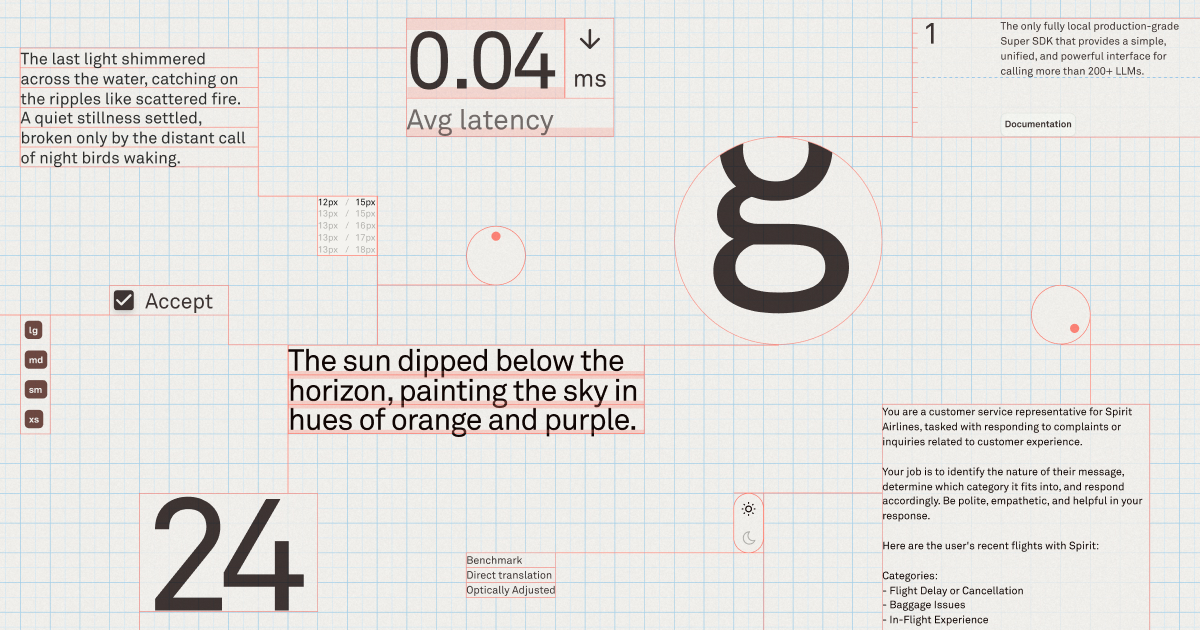
A new (or rather, old) approach to typography on the web ![](https://m.stacker.news/110290) # Typography serves language, not the convenience of a system. > _The strongest type systems are specific, opinionated, and crafted with care for the context they serve._ For many designers, typography is a first love. In the pages of design books and type manuals, the environment feels steady. Columns, baselines, and margins hold firm. Letterforms lock into place, and paragraphs stay within their bounds. The web plays by different rules. Sentences wrap unpredictably, and paragraphs break in unexpected places. To restore order, designers often reach for systemized solutions like 4px grids or component libraries. Design tools reinforce this reflex, rewarding what is easy to measure with neat numbers. But typography has always lived beyond measurement. It rests on the eye: human perception, balance, and the subtle adjustments that quick calculations can't account for. Reduced to digital conveniences, these nuances are often lost, and with them the legibility typography is meant to sustain. That gap between what typography needs and what these abstracted systems offer is where our work began. This is the story of how we designed Atlas, a type system for Adaline.
:D's avatar
deSign_r 5 months ago
Embracing Design Dialects: Enhancing User Experience # Design Dialects: Breaking the Rules, Not the System > “Language is not merely a set of unrelated sounds, clauses, rules, and meanings; it is a totally coherent system bound to context and behavior.” > <sub>— Kenneth L. Pike</sub> **Beyond the Component Library** We’re not managing design systems anymore—we’re cultivating design languages. Languages that grow with their speakers. Languages that develop accents without losing meaning. Languages that serve human needs over aesthetic ideals. The warehouse workers who went from 0% to 100% task completion didn’t care that our buttons broke the style guide. They cared that the buttons finally worked. Your users feel the same way. Give your system permission to speak their language.
:D's avatar
deSign_r 5 months ago
Brainstorming terrible ideas in a group ![](https://m.stacker.news/110287) Here’s the thing. Often, when brainstorming in a group, even with a good degree of psychological safety, participants are often worried about appearing like idiots, or having bad ideas. There’s a reputation to maintain after all, and we’re all taught to think before we speak. I find this group brainstorming method to be useful to get around this mental block.
:D's avatar
deSign_r 5 months ago
# What #creative #ideas have you been rambling on? image This post is part of a series. It is meant to be a place for anyone to discuss a #WIP #projects, or an #idea worth to #build. Regardless of your #project being personal, professional, physical, digital, or even simply an #idea to brainstorm together. If you have any creative projects or ideas that you have been working on or want to eventually work on... This is a place for discussing those, gather initial feedback and feel more energetic on bringing it to the next level. ₿e #Creative, have #Fun, share it at #Design #innovate #innovation #creativity #createopportunities #Creator #create

:D's avatar
deSign_r 5 months ago
The layers of true value creation # Our modern perception of value is shaped by scarcity. Alternative systems that center abundance and relational exchange offer a more hopeful future. ![](https://m.stacker.news/110134) We came to see that value is not just what we have; it’s what we share. It lives in relationships, in reciprocity, in the invisible ties that bind people to one another and the land. The ecosystems we move through — economic, emotional, ecological — can only thrive when value flows freely, equitably, and with care. We learned that value creation takes time, that it happens in community, and that its most essential layers are often the most intangible: trust, support, patience, and love. We may not be able to fully dismantle the scarcity-based systems that dominate today’s world. **We can, however, begin to recode our behaviors, choices, and designs.** We can design for abundance, for balance, for reciprocity. We can honor both material and emotional value. We can build systems where relationships — not resources — are the true currency. In reclaiming value, we reclaim our capacity to connect, to care, and to co-create futures rooted not in fear of scarcity, but in faith in what we can build together.