:D's avatar
:D
deSign_r@stacker.news
npub12lg6...ac9c
it's like r/ #Design but we pay you #Bitcoin for your #posts ⚡️𝙻𝚒𝚐𝚑𝚝𝚗𝚒𝚗𝚐? 𝑆𝑢𝑟𝑒! deSign_r@coinos.io 🔮 𝚗𝚘𝚜𝚝𝚛? 𝑌𝑒𝑠!... deSign_r@stacker.news
:D's avatar
deSign_r 4 months ago
The Inclusive Design Principles ![](https://m.stacker.news/112439) These Inclusive Design Principles are about putting people first. It's about designing for the needs of people with permanent, temporary, situational, or changing disabilities — all of us really. They are intended to give anyone involved in the design and development of websites and applications - designers, user experience professionals, developers, product owners, idea makers, innovators, artists and thinkers - a broad approach to inclusive design. The principles are also available to hang on your wall as a set of illustrated posters (2MB) by Barclays Access team. ![](https://m.stacker.news/112440)
:D's avatar
deSign_r 4 months ago
The “£532,000” dot job: Why small design changes cost big? https://uxdesign.cc/the-532-000-dot-job-why-small-design-changes-cost-big-2fbd2b44fd89 ![](https://m.stacker.news/112435) # Why did a tiny logo change cost GOV.UK so much? Under the microscope, the Tudor Crown and logotype remain. The critical difference is a light blue dot delicately placed between “GOV” and “UK,” all set on a bright blue background. > Some might call it subtle brilliance; others may consider it a waste of taxpayers’ money. Paying half a million pounds for what looks like a dot moved in Figma seems outrageous. But there’s a lot more on that balance sheet than meets the eye. When viewing the brand guidelines, it becomes clear that “moving the dot” wasn’t just aesthetic tinkering. Rather, it represents a complete redesign for how the brand communicates across an expanding ecosystem of touchpoints. ![](https://m.stacker.news/112436) The guidelines describe the dot as “the bridge between government and the UK, by the side of users to help make information and services easier and more useful.” It also presents the dot as a “companion” that “takes on different roles, guiding users through content, journeys, and experiences across GOV.UK channels” ![](https://m.stacker.news/112437) Behind that tiny change lies a far bigger system update, including: - Redrawn wordmark and crown for visual balance and accessibility. - Expanded colour palette for clarity across web, app, and print. - Motion rules for defining animations and transitions. - Typography and data standards to meet accessibility needs. - A brand hierarchy system linking the logo across all services. Ultimately, the tiny dot became a design system, not just a nudge. But £532,000 still sounds steep, right?
:D's avatar
deSign_r 4 months ago
ParaNetics: Magnetic Motors for Airplane, Drones and Submersibles https://www.paranetics.com ![](https://m.stacker.news/112432) # A Magnetic Field Orientation that Changes the Fundamental Design of Electric motors. ​ ParaNetic magnet produces magnetic field distinctly different from traditional permanent or electromagnets. Unlike conventional magnets, which have a single north and south pole, a ParaNetic magnet features a unique polarity configuration: it can generate two north poles with a south pole sandwiched between them, or two south poles with a north pole in between. This is described as a "virtual" or "projected" magnet, meaning it’s not a physical object in the traditional sense but rather a magnetic field effect created by a specific arrangement of electromagnets or permanent magnets..​ ![](https://m.stacker.news/112433) ​​​​​​​​​​​​​​​​​​​​​​​ This unusual three-pole structure allows the ParaNetic magnet to interact with magnetic fields in ways standard magnets cannot. For example, objects can pass completely through its magnetic field, including the transition points where the poles switch, which isn’t possible with typical magnets where these boundaries are internal. This property, along with the ability to link multiple ParaNetic magnets in linear or circular layouts, forms the basis for advanced applications like the ParaNetic electric motor. ![](https://m.stacker.news/112434) ​​​​​​​​​​​​​​​​​​​​​​​​ParaNetic motors leverages both sides of the rotor and stator magnetic fields simultaneously, boosting efficiency, torque, and performance while reducing heat compared to conventional designs. The ParaNetic magnet’s design also enables unique functionalities, such as suspending permanent magnets at the polarity switch points with high precision, which has potential uses in valves, transducers, and even ion propulsion systems.​​​​​​​​​​​​​​
:D's avatar
deSign_r 4 months ago
ParaNetics: Magnetic Motors for Airplane, Drones and Submersibles https://www.paranetics.com/copy-of-home ![](https://m.stacker.news/112432) # A Magnetic Field Orientation that Changes the Fundamental Design of Electric motors. ​ ParaNetic magnet produces magnetic field distinctly different from traditional permanent or electromagnets. Unlike conventional magnets, which have a single north and south pole, a ParaNetic magnet features a unique polarity configuration: it can generate two north poles with a south pole sandwiched between them, or two south poles with a north pole in between. This is described as a "virtual" or "projected" magnet, meaning it’s not a physical object in the traditional sense but rather a magnetic field effect created by a specific arrangement of electromagnets or permanent magnets..​ ![](https://m.stacker.news/112433) ​​​​​​​​​​​​​​​​​​​​​​​ This unusual three-pole structure allows the ParaNetic magnet to interact with magnetic fields in ways standard magnets cannot. For example, objects can pass completely through its magnetic field, including the transition points where the poles switch, which isn’t possible with typical magnets where these boundaries are internal. This property, along with the ability to link multiple ParaNetic magnets in linear or circular layouts, forms the basis for advanced applications like the ParaNetic electric motor. ![](https://m.stacker.news/112434) ​​​​​​​​​​​​​​​​​​​​​​​​ParaNetic motors leverages both sides of the rotor and stator magnetic fields simultaneously, boosting efficiency, torque, and performance while reducing heat compared to conventional designs. The ParaNetic magnet’s design also enables unique functionalities, such as suspending permanent magnets at the polarity switch points with high precision, which has potential uses in valves, transducers, and even ion propulsion systems.​​​​​​​​​​​​​​
:D's avatar
deSign_r 4 months ago
Default Isn’t Design https://eisenbergeffect.medium.com/default-isnt-design-24df33272abb ![](https://m.stacker.news/112252) Framework monoculture is a psychology problem as much as a tech problem. When one approach becomes “how things are done,” we unconsciously defend it even when standards would give us a healthier, more interoperable ecosystem. Psychologists call this reflex System Justification. Naming it helps us steer toward a standards-first future without turning the discussion into a framework war.
:D's avatar
deSign_r 4 months ago
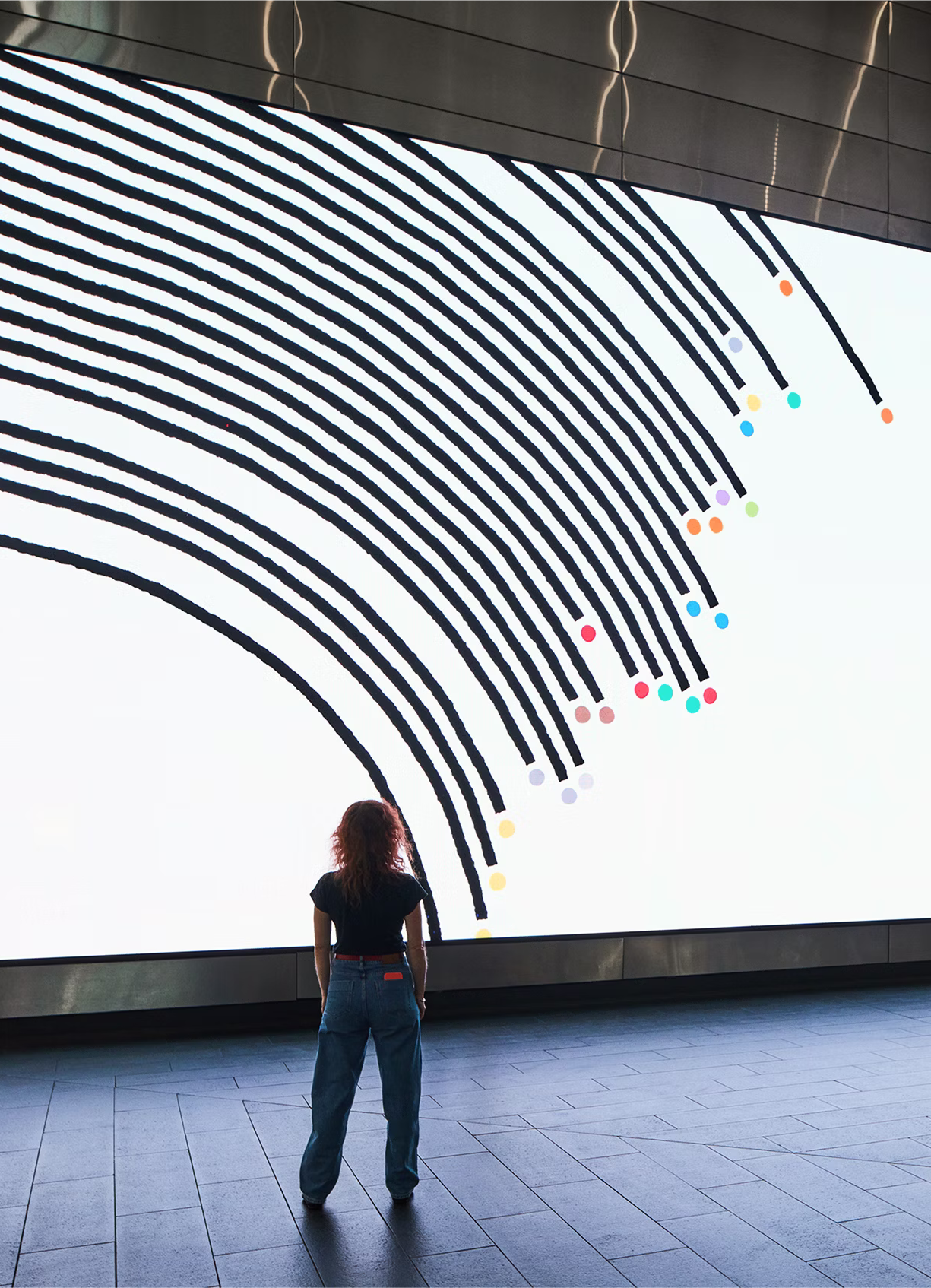
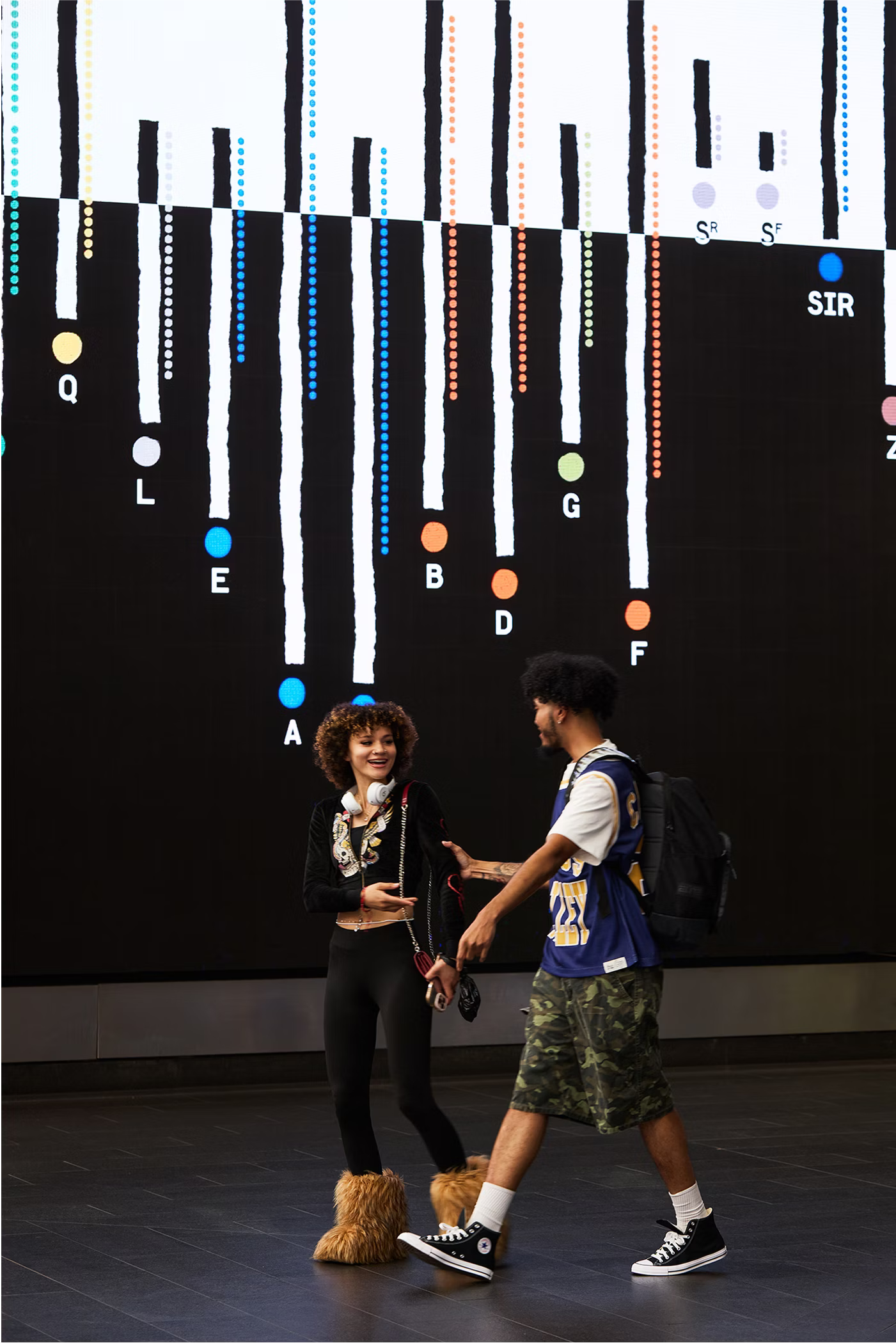
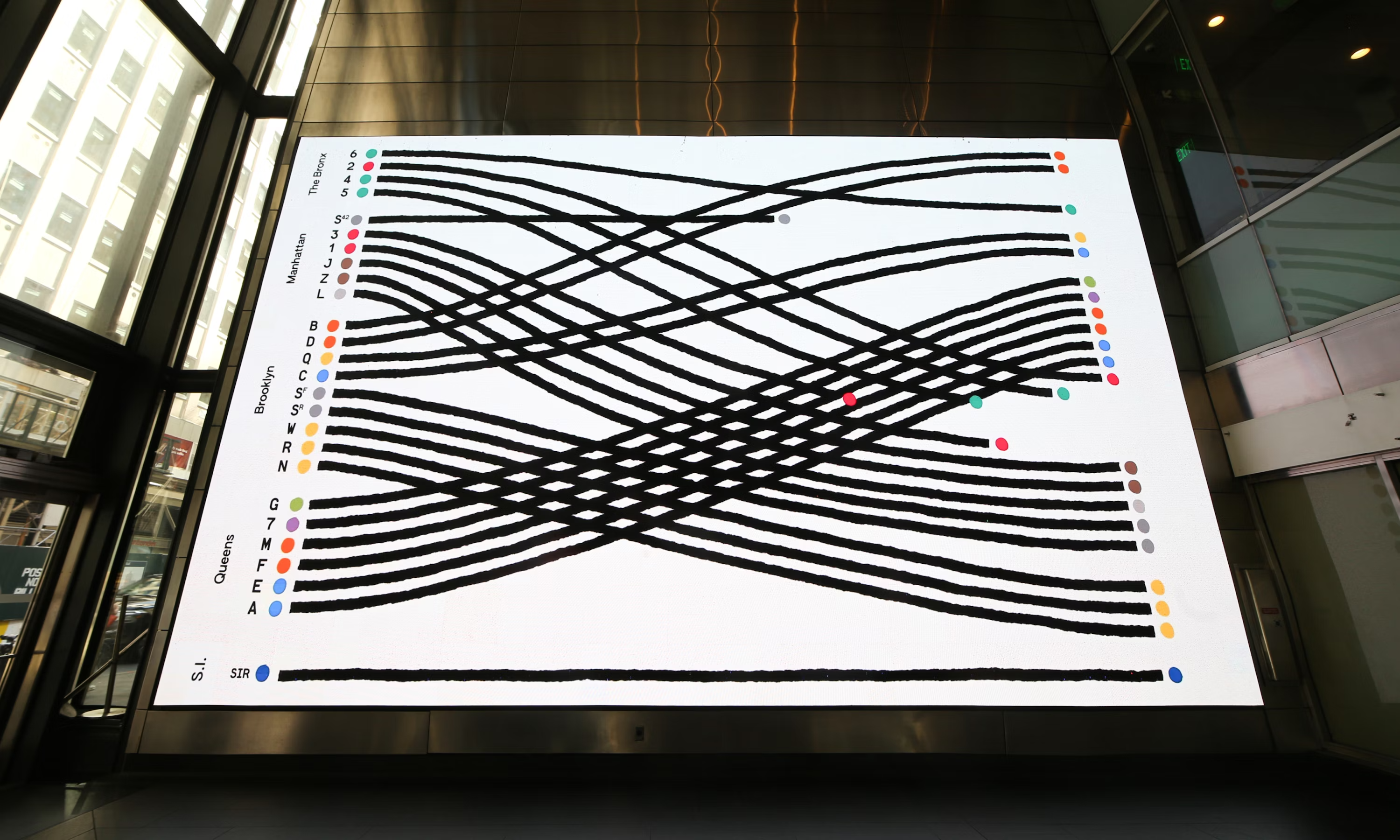
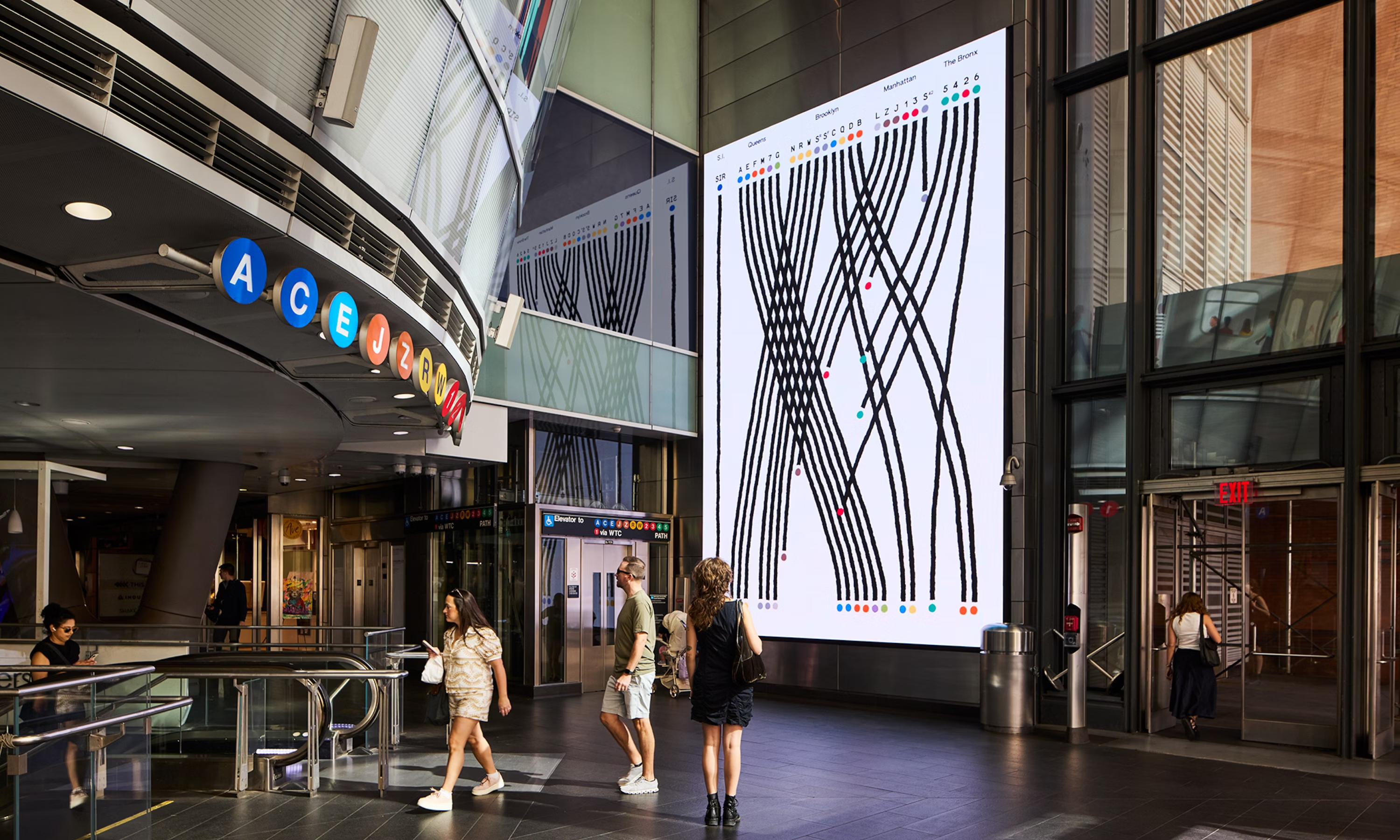
A Data Love Letter to the Subway A data-driven animation for Fulton Center commissioned by MTA Arts & Design for its 40th anniversary. ![](https://m.stacker.news/112244) # The animated installation visualizes each train line as a character whose unique qualities are extracted from MTA data. Commissioned by MTA Arts & Design for its 40th anniversary, Pentagram partner Giorgia Lupi has designed a data-driven animation for Fulton Center, with the synchronized artwork spanning all 52 screens across the FIDI transit hub. The animated installation, A Data Love Letter to the Subway, visualizes each train line as a character whose unique qualities are extracted from MTA data. Imaginatively unpacking and animating each line’s age, length, and path, Lupi writes a poetic story that explores the trains’ interwoven encounters with commuters and one another. By turning the overfamiliar into a dreamy narrative, Lupi’s Love Letter reveals the connections that hum in the background of our shared urban life. ![](https://m.stacker.news/112254) ![](https://m.stacker.news/112245) This commission was a chance to envision the subway system beyond a static informational map. Drawn to the beauty of the trains’ intersections, movements, and idiosyncrasies, Lupi and her team sought to unveil the visual poetry of this infrastructure: abstracting the trains’ data provides a rich view of their interactions, roles, differences, connections, and missed opportunities. Riding the subway is a collective experience, and a plurality of stories emerge when we rub shoulders with other commuting New Yorkers. Within these stories, the trains play an integral role — their doors close as we lock eyes with someone on the platform, or a skipped stop leads us to a conversation with a stranger. Lupi’s Love Letter prompts us to think about the subway as the backdrop and architect of these interactions. Transforming what is often a source of frustration and complaint for commuters, Lupi and her team reveal the poetry in the subway’s collective network of stories. ![](https://m.stacker.news/112246) ![](https://m.stacker.news/112253) Lupi and her team began the project by poring over subway records like MTA Open Data and missed connections boards. They extracted and arranged the data, asking how these numbers could be seen from different perspectives – but mainly they wrote a story, transforming their findings from the data repository into a narrative and script. The animation is intentionally black and white, with painterly features — both a nod to the whimsical and elemental nature of picture books and a site-specific effort to counter the visual noise at Fulton Center. The train’s lines are rendered with a hand-drawn quality, integrating the feeling of the initial sketches and maps. As we interact with each other and the world around us, we create data that often lingers in our subconscious. A Data Love Letter to the Subway reveals the subway ecosystem through the lens of this data, describing the hidden patterns in our everyday lives. Following the characteristics of different lines through the subway system, Lupi’s Love Letter celebrates the MTA’s data as a representation of the real world, and reminds us that data is an abstraction that can bring new perspectives to familiar structures and patterns. This data snapshot captures all New Yorkers — the trains are characters in our stories that take us places every day, relating us to the city and one another. A Data Love Letter to the Subway is on view at Fulton Center, New York, NY. The two minute animation will play at the top of every hour through January 5, 2026. ![](https://m.stacker.news/112249) ![](https://m.stacker.news/112250) ![](https://m.stacker.news/112251)
:D's avatar
deSign_r 4 months ago
A Data Love Letter to the Subway A data-driven animation for Fulton Center commissioned by MTA Arts & Design for its 40th anniversary. ![](https://m.stacker.news/112244) # The animated installation visualizes each train line as a character whose unique qualities are extracted from MTA data. Commissioned by MTA Arts & Design for its 40th anniversary, Pentagram partner Giorgia Lupi has designed a data-driven animation for Fulton Center, with the synchronized artwork spanning all 52 screens across the FIDI transit hub. The animated installation, A Data Love Letter to the Subway, visualizes each train line as a character whose unique qualities are extracted from MTA data. Imaginatively unpacking and animating each line’s age, length, and path, Lupi writes a poetic story that explores the trains’ interwoven encounters with commuters and one another. By turning the overfamiliar into a dreamy narrative, Lupi’s Love Letter reveals the connections that hum in the background of our shared urban life. ![](https://m.stacker.news/112245) ![](https://m.stacker.news/112247) This commission was a chance to envision the subway system beyond a static informational map. Drawn to the beauty of the trains’ intersections, movements, and idiosyncrasies, Lupi and her team sought to unveil the visual poetry of this infrastructure: abstracting the trains’ data provides a rich view of their interactions, roles, differences, connections, and missed opportunities. Riding the subway is a collective experience, and a plurality of stories emerge when we rub shoulders with other commuting New Yorkers. Within these stories, the trains play an integral role — their doors close as we lock eyes with someone on the platform, or a skipped stop leads us to a conversation with a stranger. Lupi’s Love Letter prompts us to think about the subway as the backdrop and architect of these interactions. Transforming what is often a source of frustration and complaint for commuters, Lupi and her team reveal the poetry in the subway’s collective network of stories. ![](https://m.stacker.news/112246) ![](https://m.stacker.news/112248) Lupi and her team began the project by poring over subway records like MTA Open Data and missed connections boards. They extracted and arranged the data, asking how these numbers could be seen from different perspectives – but mainly they wrote a story, transforming their findings from the data repository into a narrative and script. The animation is intentionally black and white, with painterly features — both a nod to the whimsical and elemental nature of picture books and a site-specific effort to counter the visual noise at Fulton Center. The train’s lines are rendered with a hand-drawn quality, integrating the feeling of the initial sketches and maps. As we interact with each other and the world around us, we create data that often lingers in our subconscious. A Data Love Letter to the Subway reveals the subway ecosystem through the lens of this data, describing the hidden patterns in our everyday lives. Following the characteristics of different lines through the subway system, Lupi’s Love Letter celebrates the MTA’s data as a representation of the real world, and reminds us that data is an abstraction that can bring new perspectives to familiar structures and patterns. This data snapshot captures all New Yorkers — the trains are characters in our stories that take us places every day, relating us to the city and one another. A Data Love Letter to the Subway is on view at Fulton Center, New York, NY. The two minute animation will play at the top of every hour through January 5, 2026. ![](https://m.stacker.news/112249) ![](https://m.stacker.news/112250) ![](https://m.stacker.news/112251)
:D's avatar
deSign_r 4 months ago
Craft, not fame, makes your story worth telling ![](https://m.stacker.news/112243) If you have a story to tell, the infrastructure is all there for you to write and publish it independently. All you need to do is decide your story is worth telling, write it from the heart, and then spend time crafting it. It’s not easy. It is pretty simple though.
:D's avatar
deSign_r 4 months ago
image # What #creative #ideas have you been rambling on? This post is part of a series. It is meant to be a place for anyone to discuss a #WIP #projects, or an #idea worth to #build. Regardless of your #project being personal, professional, physical, digital, or even simply an #idea to brainstorm together. If you have any creative projects or ideas that you have been working on or want to eventually work on... This is a place for discussing those, gather initial feedback and feel more energetic on bringing it to the next level. ₿e #Creative, have #Fun, share it at #Design #innovate #innovation #creativity #createopportunities #Creator #create
:D's avatar
deSign_r 4 months ago
A guide to creating accessible PDFs using free tools ![](https://m.stacker.news/112126) Anyone familiar with Microsoft Word or similar word processing programs should have no problem quickly finding their way around LibreOffice. It is also a small step toward digital sovereignty, moving away from the products of US tech giants. This example with a resume may not be very complex, but it should contain enough examples for everyday use to quickly and easily create an accessible PDF. Thanks to axes4, we can test our PDFs without ever having to think about the words “Adobe Acrobat Reader Pro”. If you wan’t to make extra sure, you now know how to check the document with different screen readers too.
:D's avatar
deSign_r 4 months ago
Space Exploration Logo Archive ![](https://m.stacker.news/112118) S.E.L.A. is an archive of logos related to the world of Space Exploration. The collection spans more than 80 years of works and includes the most iconic and noteworthy logos distributed in seven chapters, starting with the best known up to the raw & rare ones. The purpose of this collection is to celebrate and honor all the designers who have contributed to making space exploration such a fascinating topic. All symbols have been carefully redrawn in vector graphics respecting the original works. This online platform offers free access to over 450 logos, each accompanied by an iconic image and a brief description. Whether you’re a designer seeking inspiration, a space enthusiast, or a history buff, the website serves as a comprehensive and easily navigable resource. Project by Davide Mascioli ![](https://m.stacker.news/112119) ![](https://m.stacker.news/112120) ![](https://m.stacker.news/112121) ![](https://m.stacker.news/112122)
:D's avatar
deSign_r 4 months ago
The Myth of Rational Design ![](https://m.stacker.news/112117) The biggest myth about engineering design is that it is somehow a ‘rational’ process. David Parnas and Paul Clements begin their now-classic paper ‘A Rational Design Process: How and Why to Fake It’ by claiming that ‘A perfectly rational person is one who always has a good reason for what he does’.[^1] That already calls into question the utility of the term, given that there is already a word in ‘rational design process’ that means always doing things for a good reason: ‘design’. Tautology aside, this definition is most notable for what it fails to tell us about the design process. What if there is also a good reason in favour of an alternate—maybe even the opposite—course of action? What if there are good reasons against every available option? How is a ‘rational’ designer to resolve these contradictions? [^1]: David Lorge Parnas & Paul C. Clements, ‘[A Rational Design Process: How and Why to Fake It](https://stacker.news/items/1254165/r/deSign_r)’, IEEE Transactions on Software Engineering Vol. 12, No. 2 (1986), pp. 251–256.