deSign_r's avatar
deSign_r
deSign_r@stacker.news
npub12lg6...ac9c
it's like r/ #Design but we pay you #Bitcoin for your #posts ⚡️𝙻𝚒𝚐𝚑𝚝𝚗𝚒𝚗𝚐? 𝑆𝑢𝑟𝑒! deSign_r@coinos.io 🔮 𝚗𝚘𝚜𝚝𝚛? 𝑌𝑒𝑠!... deSign_r@iris.to
deSign_r's avatar
deSign_r 1 month ago
The WHY always comes first. ![](https://m.stacker.news/118118) What makes working on mymind so fulfilling is that everything starts with the WHY, which also happens to be my personal design philosophy. All of our values & principles come all the way at the beginning. Then they trickle down into product decisions, the HOW and WHAT. ... There are many more smaller principles, but all of them rest on our core pillars of our philosophy. The WHY drives it all. Funny enough, that used to just be called product design. Now they call it “opinionated product design,” when having a clear point of view back then was simply the norm.

deSign_r's avatar
deSign_r 1 month ago
Figma bets on India to expand beyond design | TechCrunch ![](https://m.stacker.news/118074) Figma is expanding its presence in India by setting up a local office and hiring Indian talent as it seeks to deepen ties with one of its largest user communities and make a broader push to better win over developers alongside the designers who already rely on the platform. Founded in 2012 by Dylan Field and Evan Wallace, Figma broke through by offering a browser-based interface at a time when most designers were still tied to desktop software. The approach was initially met with skepticism, but the platform eventually became a go-to collaboration tool for UX and product teams. Now, the company is looking to replicate that trajectory with developers — and sees India as a key market to accelerate that evolution. India has one of the world’s largest developer communities — an advantage already recognized by tech giants such as Microsoft, which counts nearly 22 million Indian developers on GitHub. As much as 33% of Figma’s users globally are developers, and the company has been rolling out features aimed at bridging design and engineering workflows. However, Figma still faces a perception challenge: Many Indian developers continue to see Figma primarily as a design tool rather than a platform for end-to-end product creation.
deSign_r's avatar
deSign_r 1 month ago
Ledger’s new hardware wallet now comes with enviable Susan Kare icons ![](https://m.stacker.news/117965) The new Ledger Nano 5 brings a new user experience to the popular digital wallet, but its aluminum pixel art tags steal the show. I have never had any interest in getting a hardware wallet like the new Ledger Nano Gen 5. But talking with Susan Kare—the designer of the original Apple Macintosh icons and an endless torrent wonderful pixel art—made me realize I need one. “The idea that an individual can really control their own assets without a government or anything political coming between you and your assets. I like that,” she tells me. ![](https://m.stacker.news/117966)![](https://m.stacker.news/117967) Full article [FastCompany.com](https://www.fastcompany.com/91426049/ledgers-new-hardware-wallet-now-comes-with-enviable-susan-kare-icons), archived here https://archive.is/JKyZ4
deSign_r's avatar
deSign_r 1 month ago
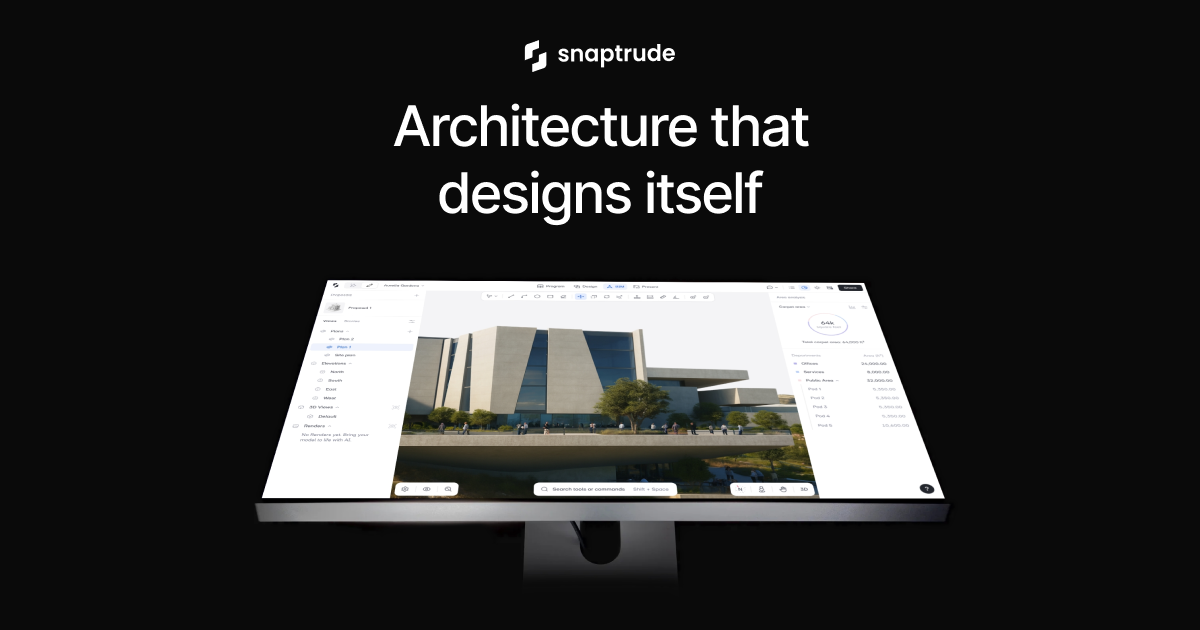
Snaptrude | Architecture that designs itself ![](https://m.stacker.news/117964) #The AI-Powered Concept Design Platform American technology company Snaptrude is making its flagship building design tool free for architecture students across the world, so that they can "build the kind of portfolios that get them hired". Snaptrude started with a bold idea: to revolutionize design technology by moving to a cloud-first world. Our goal is to connect an industry built on collaboration, enabling seamless cooperation among people, their tools, and the data they create and use. Today is the leading cloud-based design platform for architects and interior designers who want to accelerate their concept design workflows and unlock a new era of creative collaboration. Its vision is to help design teams create more efficient and sustainable buildings faster by enabling a platform that does so seamlessly. We are committed to leading this transformation, making the design process more transparent, collaborative, and responsive to the needs of all stakeholders. The Snaptrude Student Plan gives aspiring architects access to the same digital platform used by many established practitioners to rapidly turn their ideas into usable, presentable models.
deSign_r's avatar
deSign_r 1 month ago
Symbols of the Sovereign: The Visual Language of Bitcoin w/ Pat Riley Pat Riley, Design Director at BTC Inc., delivers a keynote in “Symbols of the Sovereign: The Visual Language of Bitcoin,” unveiling how Bitcoin’s iconic orange ₿, laser-eyed memes, HODL mantras, and mythic animals—bull, rabbit, frog, and honey badger—emerged from cypherpunk code to forge a global cultural revolution that now commands billions in institutional capital. Tracing the journey from Satoshi’s hooded anonymity and the Genesis Block’s raw hex to the MIT-licensed logo that outlasted fork wars through memetic thermodynamics, Riley reveals design as the unstoppable interface between Bitcoin’s antifragile protocol and mass adoption. As Bitcoin eclipses traditional stores of value and powers network-state visions, these sovereign symbols encode rebellion, resilience, and generational wealth—propelling the world’s hardest money toward total cultural and financial dominance. Chapters: 00:00 Intro & Design as Bitcoin’s Cultural Interface 00:25 Cypherpunk Roots: Code Over Aesthetics 02:00 Early Symbols – Satoshi, Guy Fawkes, Genesis Block 04:13 The Orange ₿ Logo: Engineering Meets Perception 05:59 Media Chaos & the Need for Coherent Identity 06:46 Decentralized Branding & the Blocksize Wars 07:53 Memetic Thermodynamics of the Orange B 08:27 Cultural Pillars: Animals, Memes, Mythology 09:18 Bull, Rabbit, Frog, Honey Badger 10:36 Language Layer – HODL, Not Your Keys, Verify 12:00 Collective Unconscious & Survival Codes 13:10 Bitcoin as Mirror: Identity, Sovereignty, Rewiring 13:54 Insurrection, Institutionalization, Reinvention 15:08 Network States & Fixing the World 15:55 Call to Builders: Symbols in Architecture & Institutions 16:19 Bitcoin Conference – Foundation 2.0 16:41 Closing: Stewards of the Next Epoch
deSign_r's avatar
deSign_r 1 month ago
Refringence ![Master Hardware Design through AI-guided, Hands-on Projects - Build Real Circuits, Debug actual problems, and Learn from instant AI feedback, not just theory from textbooks.](https://m.stacker.news/117809) Refringence empowers developers to master Empowering developers to master RTL, ASIC design, FPGA, signal processing, quantum and more through interactive learning, real-world projects, and collaborative challenges. Since 2023, we’ve helped thousands of learners and teams upskill in hardware, software, and computer engineering. Our platform features hands-on projects, a vibrant community, and personalized analytics to help you grow. It was designed and built by engineers and educators who believe in practical, project-based learning. Our flagship learning programs run year-round, offering seed support, mentorship, and a collaborative environment for all skill levels. We’re committed to supporting the next generation of technology leaders and innovators. Whether you’re just starting out or looking to deepen your expertise, Refringence is here to help you succeed.
deSign_r's avatar
deSign_r 1 month ago
Minimalissimo - Minimalism in art and design ![](https://m.stacker.news/117808) Minimalissimo is an independent print and digital magazine founded in 2009 and is dedicated to minimalism. Principally led by Carl Barenbrug for over 10 years and latterly by Manu Moreale, it showcase a curated selection of the finest examples of art, architecture, interiors, furniture, lighting, and product design. Minimalissimo continue to exist as a digital archive with over 15 years of material to browse. **Manifesto** We curate to reflect who we are and want to be. We are guided by the principles of minimalism and simplicity. We often admire brutalism and utilitarianism. Our vision is uncompromising and future-focused but with a respect for the past. We find beauty in the soft and the raw. This is our taste. This is our creative platform. A platform that showcases our interpretation and appreciation of minimalism in art and design. **Principles** 1. aesthetic: design for love, not only understanding 2. collaborative: create beyond your own ability 3. experimental: think three-dimensionally 4. geometric: use pure forms to emphasise precision 5. honest: build with integrity 6. modular: reuse building blocks for flexibility 7. sustainable: design for people and the planet (and write clean code) 8. translucent: build in public, by appointment only 9. understated: be practical rather than pretty 10. unified: design for continual and consistent expression
deSign_r's avatar
deSign_r 1 month ago
Language Design Notes https://cs.lmu.edu/~ray/notes/languagedesignnotes ![](https://m.stacker.news/117801) ![](https://m.stacker.news/117807) ![](https://m.stacker.news/117802) ![](https://m.stacker.news/117803) ![](https://m.stacker.news/117804) ![](https://m.stacker.news/117805) ![](https://m.stacker.news/117806) So, you want to design your own language? Of course you do. Or perhaps you are taking a class and are being forced to create a programming language under penalty of a bad grade. What kinds of things do you need to know? CONTENTS • Designing a Language • Prerequisites • Getting Ready • Getting Started • Choosing a Starter Set of Features • From Features To Abstract Syntax • From Abstract Syntax to Concrete Syntax • Defining Your Language • Prototyping • Examples • More Examples • Recall Practice • Summary Designing a Language Of course you want to design (and implement!) your own programming language! It’s fun. It’s creative. It’s empowering. How do we do it? In a nutshell, the process is iterative, cycling between four phases: ![](https://m.stacker.news/117800)
deSign_r's avatar
deSign_r 1 month ago
A Typographic Shop Signs Time-Splice of Holborn https://www.nomadstudio.com/work/f37-holborn ![](https://m.stacker.news/117661) Nomad studio partnered with F37 to launch their latest typeface, F37 Holborn. Inspired by advertising and shop signs found in 1970’s Holborn, the specimen is a celebration of one of London’s oldest commercial districts known for its eclectic mix of businesses from diamond dealers to West End theatres and family law firms. To tell the story behind the typeface, we created a walking tour of modern Holborn told through the vernacular of 100 signs set entirely in F37 Holborn. Readers are invited to explore Holborn’s eight historic districts in-person with a printed typology and walker’s playlist, or to simply enjoy the throw-back from the comfort of their very own arm chair. ![](https://m.stacker.news/117662) ![](https://m.stacker.news/117660) ![](https://m.stacker.news/117663) ![](https://m.stacker.news/117664) ![](https://m.stacker.news/117665) ![](https://m.stacker.news/117666) ![](https://m.stacker.news/117667) ![](https://m.stacker.news/117668)
deSign_r's avatar
deSign_r 1 month ago
Six Key Components of UX Business Strategy ![](https://m.stacker.news/117650) > Let’s dive into the building blocks of UX strategy and see how it speaks the language of product and business strategy to create user value while achieving company goals. For years, “UX strategy” felt like a confusing, ambiguous, and overloaded term to me. To me, it was some sort of a roadmap or a “grand vision”, with a few business decisions attached to it. And looking back now, I realize that I was wrong all along. UX Strategy isn’t a goal; it’s a journey towards that goal. A journey connecting where UX is today with a desired future state of UX. And as such, it guides our actions and decisions, things we do and don’t do. And its goal is very simple: to maximize our chances of success while considering risks, bottlenecks and anything that might endanger the project. A good strategy ties UX improvements to measurable business outcomes. It doesn’t speak about design patterns, consistency, or neatly organized components. Instead, it speaks the language of product and business strategy: OKRs, costs, revenue, business metrics, and objectives. Design can succeed without a strategy. In the wise words of Sun Tzu, strategy without tactics is the slowest route to victory. And tactics without strategy are the noise before defeat.
deSign_r's avatar
deSign_r 1 month ago
Auld English fonts: A Sea-Change in the Look of Language by Nick Shinn ![](https://m.stacker.news/117649) # Fonts that simulate the experience of reading in olden days, by diverse means. Quite abruptly, the experience of reading English changed profoundly, around the year 1800: the long‑s character was abandoned, spelling became standardized, and tech innovation produced a new clarity of typography. This essay examines those three transformations and describes how the Auld English font project addresses them, straddling the divide and transporting the reader back before that time.
deSign_r's avatar
deSign_r 1 month ago
Pamphlet #design for #merchants and #businesses using ▣ @jack's #Square to accept 🟠#bitcoin A simple handout to give when onboarding/educating a local merchant onto #btc. Join the conversation Download, print and distribute.
deSign_r's avatar
deSign_r 1 month ago
Improving Claude frontend design through Skills ![](https://m.stacker.news/117482) You might notice that when you ask an LLM to build a landing page without guidance, it will almost always conform to Inter fonts, purple gradients on white backgrounds, and minimal animations. The issue? Distributional convergence. During sampling, models predict tokens based on statistical patterns in training data. Safe design choices–those that work universally and offend no one–dominate web training data. Without direction, Claude samples from this high-probability center. For developers building customer-facing products, this generic aesthetic undermines brand identity and makes AI-generated interfaces immediately recognizable—and dismissible.
deSign_r's avatar
deSign_r 1 month ago
Don Norman, Forgive Us! Machine-Centered Design is Here. https://medium.com/design-bootcamp/don-norman-forgive-us-machine-centered-design-is-here-b37944e232ab ![](https://m.stacker.news/117472) We humans have spent decades designing interfaces for ourselves, the beautiful, clumsy species that clicks the wrong button, forgets the password, and leaves browser tabs open as “reminders” for weeks. Now something strange is happening. For the first time, we’re not the only “users” on the web. AI has joined the party and it doesn’t care about our buttons, scroll bars, or fancy icons. So maybe it’s time to ask: **what if AI is not a tool, but a persona?**
deSign_r's avatar
deSign_r 1 month ago
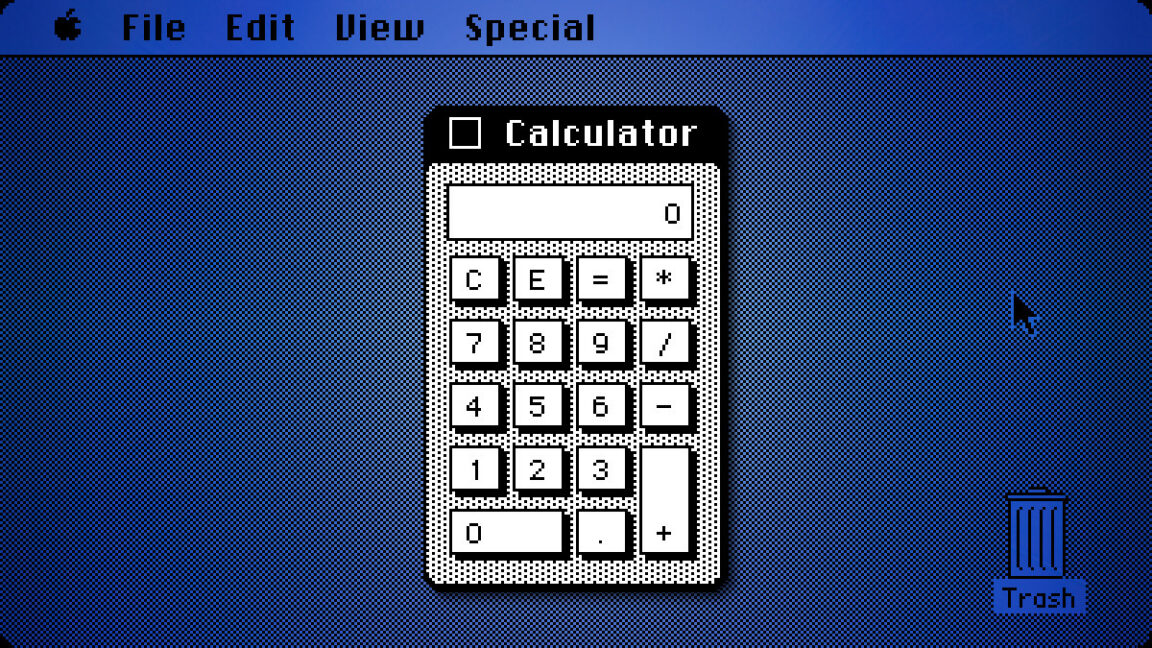
How Original Mac Calculator Design came from letting Steve Jobs play with Menus ![](https://m.stacker.news/117471) ### In 1982, a young Mac developer turned Jobs into a UI designer—and accidentally invented a new technique. In February 1982, Apple employee #8 Chris Espinosa faced a problem that would feel familiar to anyone who has ever had a micromanaging boss: Steve Jobs wouldn’t stop critiquing his calculator design for the Mac. After days of revision cycles, the 21-year-old programmer found an elegant solution: He built what he called the “Steve Jobs Roll Your Own Calculator Construction Set” and let Jobs design it himself. This delightful true story comes from Andy Hertzfeld’s Folklore.org, a legendary tech history site that chronicles the development of the original Macintosh, which was released in January 1984. I ran across the story again recently and thought it was worth sharing as a fun anecdote in an age where influential software designs often come by committee. # Design by Menu ...
deSign_r's avatar
deSign_r 1 month ago
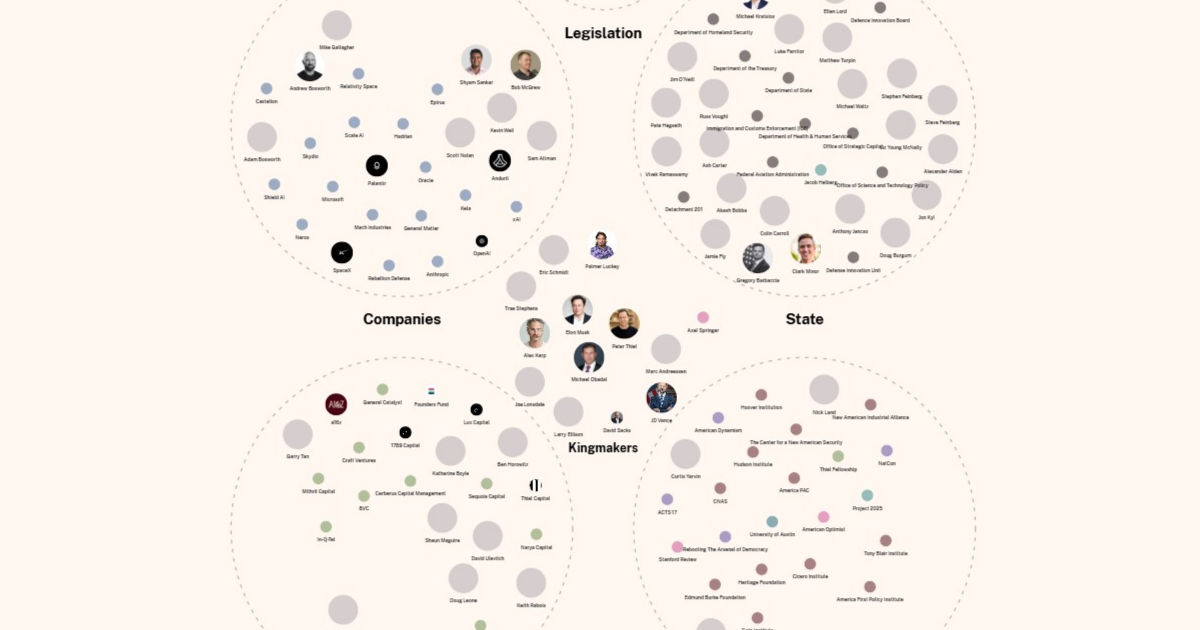
The Authoritarian Stack ![](https://m.stacker.news/117255) # How Tech Billionaires Are Building a Post-Democratic America — And Why Europe Is Next In late July 2025, deep within the Pentagon’s bureaucratic machinery, the U.S. Army quietly signed away a piece of its sovereignty. A ten-billion-dollar contract with Palantir Technologies—one of the largest in the Department of Defense’s history—was framed as a move toward “efficiency.” It consolidated seventy-five procurement agreements into a single contract. ``` A strategic handover of core military functions to a private company whose founder, Peter Thiel, has declared that “freedom and democracy are no longer compatible.” ``` This sounds fitting the Proof-of-Weapons idea described in the [Hidden Masters of Money and War](https://stacker.news/items/1280494/r/deSign_r)
deSign_r's avatar
deSign_r 1 month ago
The Authoritarian Stack ![](https://m.stacker.news/117255) # How Tech Billionaires Are Building a Post-Democratic America — And Why Europe Is Next In late July 2025, deep within the Pentagon’s bureaucratic machinery, the U.S. Army quietly signed away a piece of its sovereignty. A ten-billion-dollar contract with Palantir Technologies—one of the largest in the Department of Defense’s history—was framed as a move toward “efficiency.” It consolidated seventy-five procurement agreements into a single contract. ``` A strategic handover of core military functions to a private company whose founder, Peter Thiel, has declared that “freedom and democracy are no longer compatible.” ``` This sounds fitting the Proof-of-Weapons idea described in the [Hidden Masters of Money and War](https://stacker.news/items/1280494/r/deSign_r) > $$True$$ $$happiness$$ $$is$$ $$not$$ $$attained$$ $$through$$ $$self-gratification,$$ $$but$$ $$through$$ $$fidelity$$ $$to$$ $$a$$ $$worthy$$ $$purpose.$$ > `—Helen Keller`
deSign_r's avatar
deSign_r 1 month ago
Mission, Vision, poTAYto, poTAHto ![](https://m.stacker.news/117254) # Mission, vision, purpose, BHAG, North Star. Are they useful, or academic nonsense? For many of us, these are highfalutin’ terms that have no role in early stage startups, because we’re too busy making stuff and realizing that customers actually wanted something else. By the time the company is large, there are teams of people⁠—probably in marketing⁠—carefully sculpting these things as sentence fragments in large serif fonts on “About Us” pages that no one reads and no one believes. And by no one, I mean not employees, not customers, and not investors. Phrases that sound grand but are just grandiose. How can these terms matter, when pundits can’t even agree on their definition? Take “mission.” One interpretation is like “missionary”⁠—our higher purpose, something bigger than ourselves, which we are helping to bring about. So Patagonia’s mission is “to save our home planet,” though what it does is sell outdoor clothing. Or Tesla’s mission is “to accelerate the world’s transition to sustainable energy,” though what it does is sell cars, followed by selling batteries and solar panels. Or Coca-Cola’s mission is “to refresh the world in mind, body, and spirit,” but what it does is sell barely-potable chemicals and containers of said chemicals embedded in carbonated water. Well, two of those three companies are at least fulfilling their mission.
deSign_r's avatar
deSign_r 1 month ago
How Did I Get Here? ![](https://m.stacker.news/117059) To reach this website, your computer sent some packets across the Internet. If we’re curious what that path was, we can run a tool to generate a traceroute — a rough list of every server your packets touched to reach their destination. To build this website (source code on GitHub), I wrote my own traceroute program called ktr (also open source) that can stream results in real time while concurrently looking up interesting information about each hop. How does ktr work? Let’s start with a simplified explanation of Internet routing. Starting with the source device, each computer that handles a packet has to choose the best device to forward it to — I will explain how these routing decisions are made in a bit. Assuming everything works correctly, the packet will eventually reach a router that knows how to send it directly to its destination.
deSign_r's avatar
deSign_r 1 month ago
Byte - a visual archive ![](https://m.stacker.news/117058) # Bite? Before Hackernews, before Twitter, before blogs, before the web had been spun, when the internet was just four universities in a trenchcoat, there was *BYTE*. A monthly mainline of the entire personal computing universe, delivered on dead trees for a generation of hackers. Running from September 1975 to July 1998, its 277 issues chronicled the Cambrian explosion of the microcomputer, from bare-metal kits to the dawn of the commercial internet. Forget repackaged corporate press releases—*BYTE* was for the builders. Inside, you'd find Steve Ciarcia teaching you to build a speech synthesizer from scratch, the inner details of a RISC pipeline, deep dives into the guts of Smalltalk, and Jerry Pournelle’s legendary columns from Chaos Manor. This wasn't just about what a computer could do, but *how* it did it. The source code of a revolution that continues to this day. # What? This zoomable map shows every page of every issue of BYTE starting from the front cover of the first issue (top left) to the last page of the final edition (bottom right). The search bar runs RE2 regex over the full text of all 100k pages. The archive itself is not new, scans of BYTE have long existed on the Internet Archive and elsewhere on the net – but I hope seeing everything in single, searchable place offers a unique perspective. # Why? > _"[...] pop culture holds a disdain for history. Pop culture is all about identity and feeling like you’re participating. It has nothing to do with cooperation, the past or the future—it’s living in the present. I think the same is true of most people who write code for money. They have no idea where [their culture came from]—and the Internet was done so well that most people think of it as a natural resource like the Pacific Ocean, rather than something that was man-made._ > `—Alan Kay, on Computing, Dr. Dobb’s Interview with Alan Kay` The relationship between Computing and its history is that of a willful amnesiac. We discard the past as fast as possible, convinced it cannot possibly contain anything of value. This is a mistake. The classic homilies are accurate: Failing to remember the past we are condemned to repeat it – as often as tragedy as farce.