MikeDunnAuthor's avatar
MikeDunnAuthor
MikeDunnAuthor@kolektiva-social.mostr.pub
npub1t0vd...ycmr
Working Class Historical Fiction from the not so gilded age. Labor History. Social justice. An injury to one is an injury to all! https://michaeldunnauthor.com @michaeldunnauthor.bsky.social https://www.historiumpress.com/michael-dunn Pronouns: He/him #Solidarity #Sabotage #GeneralStrike #HistoricalFiction #WorkingClass #LaborHistory #WomensRights #antifascism #AntiImperialism #LGBTQIA+ #EndAbleism #TransRightsAreHumanRights #SelfDetermination #ClimateChange
MikeDunnAuthor's avatar
MikeDunnAuthor 9 months ago
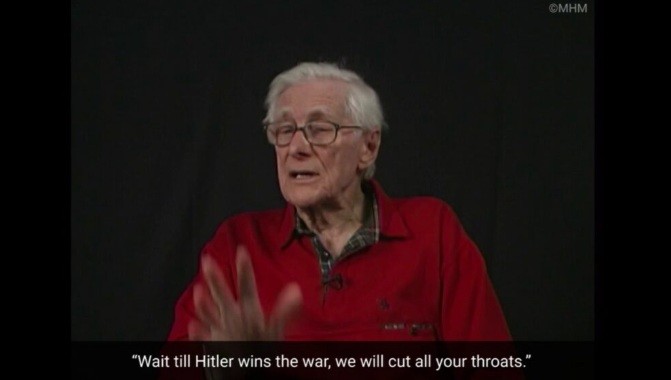
Today in Labor History May 12, 1940: Edgar Lion, a 20-year-old Austrian Jewish student at the University of Edinburgh, was arrested by British police and shipped off to the Isle of Man with thousands of other Jewish detainees. The British government locked them all up in hotels surrounded by barbed wire. He was later deported to Canada, where he was interned with 2,300 other Jewish refugees in camps alongside German Nazis and forced to perform brutal physical labor for virtually no pay. “There were real Nazis interned with us! They were Nazis who happened to be caught by the war in Great Britain. They were bragging, and they kept telling us, ‘wait till Hitler wins the war, we’ll cut all your throats!’” As appalling as the Trump administration is, with its arrests, deportations, and use of brutal concentration camps for innocent immigrants, as well as many legal residents and citizens, it is a misrepresentation of history to suggest that this sort of behavior is similar only to that of the Nazis, and is somehow extraordinary for modern democracies like the U.S., Britain and Canada. Concentration Camps, with forced labor, brutal living conditions, and sometimes torture and violence against inmates were operated by numerous so-called democratic Western nations throughout the 19th and 20th centuries, and even today. Australia used them during both World Wars, and currently runs some for refugees on Nauru and Manus Islands. During both World Wars, Canada imprisoned 8,579 male "aliens of enemy nationality" in concentration camps with forced labor, including thousands of Jews. They also interned Japanese residents. Denmark, Sweden and Finland also had concentration camps. French concentration camps, along with the torture and starvation inflicted on their inmates, and the casualties from its war of conquest in Algeria, resulted in up to 1 million deaths. And then there were thousands of Jews who were imprisoned in concentration camps under the Vichy government, most ultimately deported to Germany, where they were executed. Even Germany’s legacy of concentration camps predates Hitler, with deadly camps utilized during the Herero and Namaqua genocide they committed in Africa (1904-1908). In addition to their internment of Jews during World War II, Britain also ran offshore and land-based gulags in Ireland in the 1920s, which housed over 500 men, under brutal conditions, without charge or trial. They also ran concentration camps on the Isle of Man during both world wars. The U.S., in particular, has a long, sordid history of using concentration camps that precede the ones they used during World War II to imprison Japanese-Americans. The first document U.S. concentration camps used for a specific ethnic group occurred in 1838, when President Van Buren imprisoned Cherokee in camps at Ross's Landing (Chattanooga, Tennessee), Fort Payne, Alabama, and Fort Cass (Charleston, Tennessee). Many died in these camps from disease and hunger. In 1962, Minnesota executed 38 Dakota warriors in the largest single-day mass execution in U.S. history. President Lincoln pardoned another 361, but placed them in a concentration camp. And in the following winter, another 1600 Dakota men, women and children were forced into other concentration camps. Up to 300 died from disease in these camps. Thousands of other indigenous people were forced into U.S. concentration camps throughout the 1800s and early 1900s. The U.S. also operated brutal concentration camps for prisoners and civilians during its war on the Philippines in 1901. During the 1950s-1960s, the U.S. maintained concentration camps for political dissidents, primarily communists, but officially never used them. More recently, there are the examples of Abu Ghraib, in Iraq, and Guantanamo Bay, Cub. Under Reagan, there were plans to imprison thousands of Central American Solidarity activists in concentration camps. And today, Trump continues to talk about sending “homegrowns” to offshore gulags in El Salvador, Guantanamo Bay, and Africa. #workingclass #LaborHistory #fascism #nazis #prison #concentrationcamps #humanrights #antisemitism #colonialism #imperialism #worldwar #trump #hitler #reagan #guantanao #elsalvador #cecot #abughraib #indigenous #japanese #philippines image
MikeDunnAuthor's avatar
MikeDunnAuthor 9 months ago
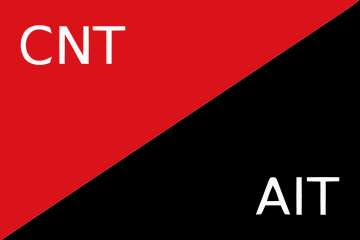
Today in Labor History May 3, 1937: The May Days began in Catalonia. This was a counterrevolution by the Spanish Republican government against radical workers and anarchists. Prior to this, the communists, socialists and anarchists had been allied against Franco’s nationalists. However, anarchist workers and their militias controlled most industries, which they had collectivized, while the communists controlled the central government and finances. As a result, this brought the various groups into conflict. To make matters worse, the Communist Party of Spain was taking orders from Moscow. And they wanted to separate the two struggles: revolution against the ruling class versus war against the nationalists. In contrast, the POUM and the anarchists saw the two struggles as one and the same. The anarchist faction included the Friends of Durruti Group and the CNT (a confederation of anarcho-syndicalist labor unions). #workingclass #LaborHisotry #anarchism #civilwar #spain #fascism #antifascism #durruti #communism #Revolution #trotsky #franco #moscow image
MikeDunnAuthor's avatar
MikeDunnAuthor 9 months ago
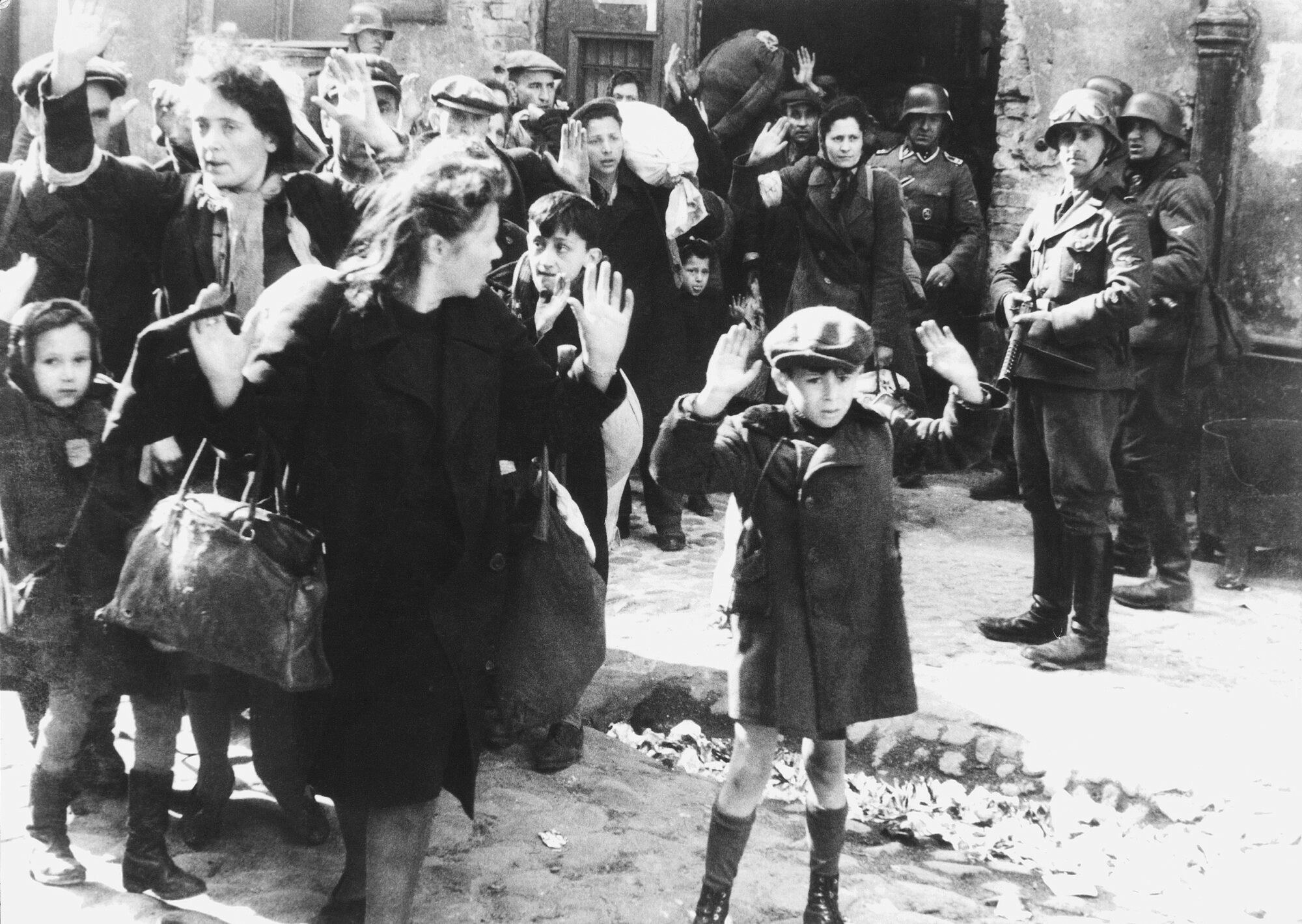
Today in Labor History April 19, 1943: The 50,000 Jews remaining in Warsaw began a desperate and heroic attempt to resist Nazi deportation to extermination camps. Their armed insurgency became known as the Warsaw Ghetto Uprising. There had been over 3 million Jews living in Poland prior to the Nazi occupation. The Nazis rounded them up and forced them into crowded ghettos. The Warsaw ghetto had 250,000-300,000 Jews living in abominable conditions. Roughly this same number of Jews were slaughtered at the Treblinka concentration camp within the two months the Nazis started deporting them. The Jews managed to stockpile Molotov cocktails, hand grenades, military uniforms, and even a few pistols and some explosives. However, the resistance was crushed by the Nazis on May 16. #workingclass #LaborHistory #holocaust #antisemitism #WarsawGhettoUprising #jews #poland #warsaw #WorldWarII #nazis #genocide #resistance #uprising #insurrection #fascism #antifa #antifascism image
MikeDunnAuthor's avatar
MikeDunnAuthor 10 months ago
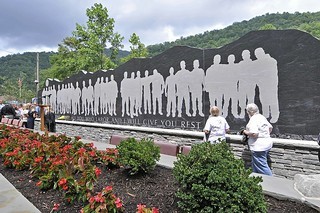
Today in Labor History April 5, 2010: Twenty-nine coal miners were killed in an explosion at the Upper Big Branch Mine in West Virginia. In 2015, Former Massey Energy CEO Don Blankenship was convicted of a misdemeanor for conspiring to willfully violate safety standards and was sentenced to one year in prison. He was found not guilty of charges of securities fraud and making false statements. Investigators also found that the U.S. Department of Labor and its Mine Safety and Health Administration were guilty of failing to act decisively, even after Massey was issued 515 citations for safety violations at the Upper Big Branch mine in 2009, prior to the deadly explosion. So, the U.S. Dept of Labor, back when the U.S. staffed and funded its regulatory agencies, allowed a murderous boss to get away with 515 safety violations, resulting in the deaths of 29 miners, without any consequences for its bosses. And the courts gave the murderous CEO of Massey Energy a year in a Country Club prison for those same 29 worker deaths. But they’re gonna try Luigi Mangione for first-degree murder and seek the death penalty because he supposedly killed a murderous white-collar crook? As they say, there is no Justice for the working-class; but there’s plenty of “Just Us” for the wealthy, as in court rulings just for them; subsidies and tax right-offs just for them; elite clubs and resorts just for them; and the right, just for them, to kill their workers and consumers in the pursuit of profits. #workingclass #LaborHistory #mining #explosion #workplacedeaths #coal #westvirginia #workplacesafety #profits #workersafety image
MikeDunnAuthor's avatar
MikeDunnAuthor 10 months ago
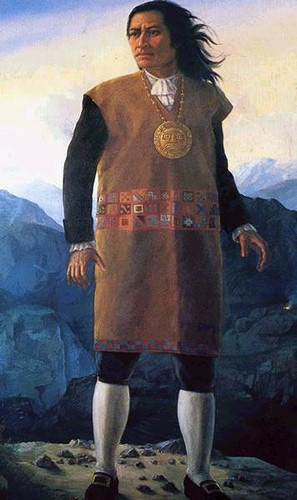
Today in Labor History March 19, 1742: Tupac Amaru was born. Tupac Amaru II had led a large Andean uprising against the Spanish. As a result, he became a mythical figure in the Peruvian struggle for independence and in the indigenous rights movement. The Tupamaros revolutionary movement in Uruguay (1960s-1970s) took their name from him. As did the Túpac Amaru Revolutionary guerrilla group, in Peru, and the Venezuelan Marxist political party Tupamaro. American rapper, Tupac Amaru Shakur, was also named after him. Chilean poet, Pablo Neruda, wrote a poem called “Tupac Amaru (1781).” And Clive Cussler’s book, “Inca Gold,” has a villain who claims to be descended from the revolutionary leader. #workingclass #LaborHistory #indigenous #inca #tupac #conquest #colonialism #uprising #Revolutionary #PabloNeruda #poetry #novel #tupacamaru #peru #fiction #books #author #writer #poetry @npub1qv0v...rtf3 image
MikeDunnAuthor's avatar
MikeDunnAuthor 11 months ago
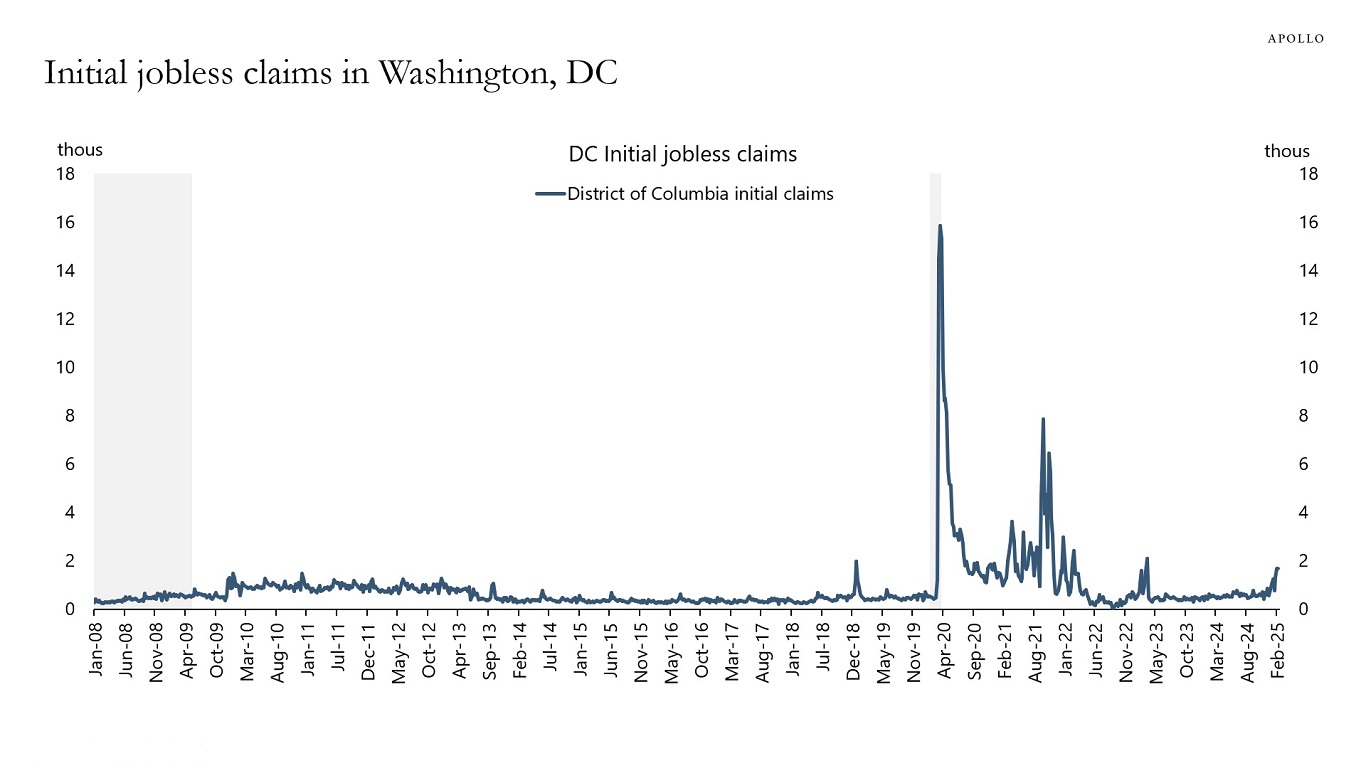
The Trump/Musk DOGE firings of federal workers could leave 1 million people jobless due to the ripple effects in industries that rely on those workers. (See link below). But the freeze on federal grants, especially in health and science, could kill many more jobs than that, including even in the private sector. Consider that Stanford, a private university, yesterday declared a hiring freeze due to uncertainty over funding resulting from the Trump policies. #unemployment #trump #musk #doge #publichealth #science #hhs #nih #cdc
MikeDunnAuthor's avatar
MikeDunnAuthor 11 months ago
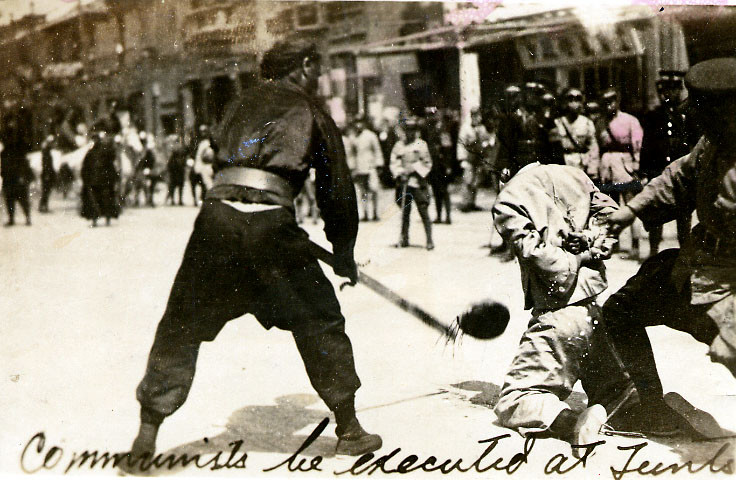
Today in Labor History February 19, 1927: A General Strike occurred in Shanghai. In March, Communist union workers launched an uprising in Shanghai. However, the Kuomintang quashed the rebellion, slaughtering 5,000-10,000 in the Shanghai Massacre. In the 1940s, the Kuomintang were driven out of mainland China by the Communists, retreating to Taiwan, where they maintained a brutal dictatorship until the 1980s. By many accounts, the Kuomintang rule in Taiwan was even more corrupt and brutal than the Japanese dictatorship that preceded it. In 1947, they slaughtered tens of thousands in the February 28 Incident. #workingclass #LaborHistory #china #taiwan #communist #communism #kuomintang #CivilWar #massacre #CivilianDeaths #union #shanghai #GeneralStrike #uprising #rebellion image
MikeDunnAuthor's avatar
MikeDunnAuthor 11 months ago
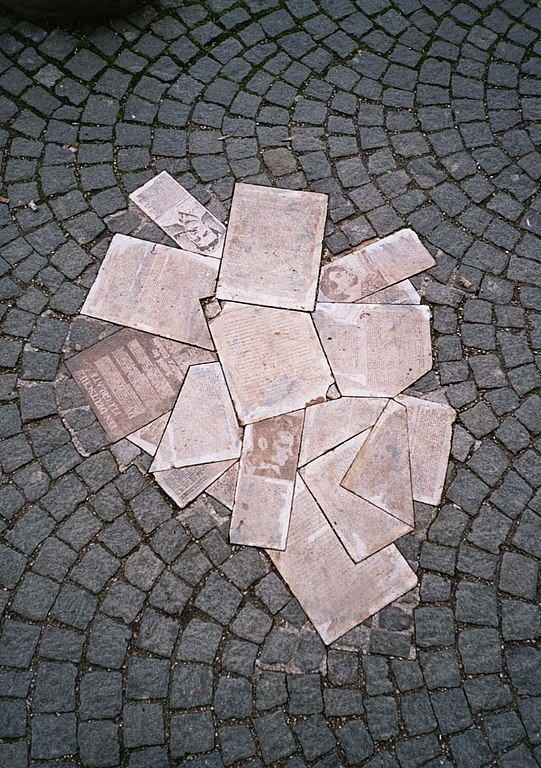
Today in Labor History February 18, 1943: The Nazis arrested the members of the White Rose movement. The activist group called for opposition to the Nazi regime through an anonymous leaflet and graffiti campaign. The Nazis put on a show trial in which none of the defendants were allowed to speak. They executed Hans and Sophie Schol, and Christoph Probst on February 22, 1943. White Rose leaflets openly denounced the persecution and mass murder of the Jews. They might have taken their name from the poem "Cultivo una rosa blanca," by Cuban revolutionary and poet, Jose Marti. Alternatively, they may have gotten it from the B. Traven novel, “Die Weiße Rose” (The White Rose).” Traven served on the Central Council of the short-lived Bavarian Soviet Republic. He escaped the terror that followed the crushing of the Republic and fled to Mexico, where he wrote numerous novels, including “Death Ship” and “The Treasure of the Sierra Madre.” #LaborHistory #workingclass #WhiteRose #nazis #execution #holocaust #antisemitism #fascism #antifa #antifascism #JoseMarti #cuba #btraven #books #poetry #fiction #novel #writer #author @npub1qv0v...rtf3 image
MikeDunnAuthor's avatar
MikeDunnAuthor 11 months ago
If the MAGAs truly cared about government efficiency, they'd go after the military budget, by far the largest portion of governmental spending. And easily the one with the greatest amount of waste and corruption. But it is the one part of the budget that Trump has made off-limits to DOGE. Why? Because without it, the U.S. oligarchs wouldn't be able to control markets and resources across the planet, or maintain their hegemony. The rest of the government's expenditures are considered unnecessary by the oligarchs. Wasteful. Money that supports workers, poor people, the environment, rather than them. By slashing and gutting these programs, they can give themselves even larger tax cuts than ever, while eliminating any vestiges of oversight and accountability for their polluting, murdering, abusive, thieving businesses. #trump #musk #doge #corruption #military #oligarch #classwar #workingclass #MAGA image
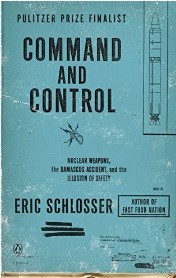
Today in Labor History January 24, 1961: A B-52 bomber, carrying three 4-megaton Mark 39 nuclear bombs, broke up in mid-air, dropping its nuclear payload over North Carolina. Five crewmen successfully bailed out of the aircraft and landed safely. Another ejected, but did not survive the landing. Two others died in the crash. Each of the bombs had more than 250 times the destructive power of the Hiroshima bomb. Each one was large enough to create a 100% kill zone within an 8.5 miles radius. A supervisor of nuclear safety at Sandia National Laboratories said that "one simple, dynamo-technology, low voltage switch stood between the United States and a major catastrophe." However, there is evidence that the switch of at least one of the bombs was set to ARM. No one knows why none of them exploded. And while the authorities were able to recover the uranium core from two of the bombs, one of them is still lost somewhere in North Carolina. For a truly terrifying look at just how many times we were just a hair trigger away from a major nuclear accident, read Eric Schlosser’s “Command and Control.” Also consider that we are currently in a massive resurgence of the nuclear arms race, with potential flashpoints in Ukraine, Israel, China, and Iran. #nuclear #atomic #bomb #NorthCarolina #missile #coldwar #hiroshima #EricSchlosser #nonfiction #books #author #writer #russia #ukraine #china #israel #iran #palestine @npub1qv0v...rtf3 image
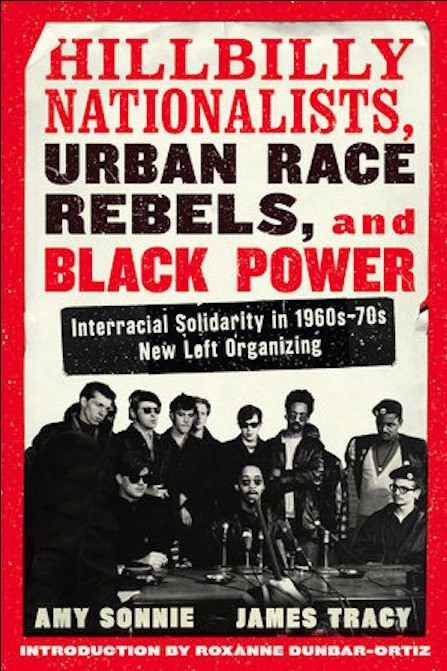
Here is my long overdue review of “Hillbilly Nationalists, Urban Race Rebels, and Black Power: Community Organizing in Radical Times,” by Amy Sonnie and James Tracy (Melville House Publishing, 2021). Long overdue, but particular timely, with the recent passing of José "Cha Cha" Jiménez (August 8, 1948 - January 10, 2025), activist and founder of the Young Lords Organization, one of the key figures in the book. Particularly timely and, quite possibly, even more relevant and urgent today than when it first came out, thirteen years ago, as it provides an antidote for the fear, anger, dismay, and disillusionment so many are feeling with the re-election of Donald Trump and the rise of white supremacy and fascism in the United States. “Hillbilly Nationalists” is a well-researched and superbly written history of radical, poor white social movements of the 1960s and ‘70s, and their interracial solidarity with the Black Panthers, Young Lords and other groups of the era. This fascinating and largely forgotten piece of history debunks the myth that poor whites, hillbillies, and rednecks, the “deplorables” as Hilary Clinton derisively referred to them, are incurably racist and incapable of organizing beyond their immediate needs. Rather, Sonnie and Tracy not only provide numerous historical examples of revolutionary and anti-fascist working-class white organizations (e.g., Chicago’s JOIN, Young Patriots and Rising Up Angry; Philadelphia’s October 4th Organization; and White Lightning, from the Bronx), but also describe how these organizations were built through community organizing, providing insight as to how activists can accomplish the same today. Perhaps the most well-known, or best remembered, of the radical, multiracial alliances was the Rainbow Coalition, an anti-racist, working-class movement founded in Chicago, in 1969, by Fred Hampton and Bob Lee, of the Black Panthers, William “Preacherman” Fesperman of the Young Patriots Organization, and Jose Cha Cha Jimenez of the Young Lords. The coalition engaged in protests, demonstrations, and direct actions to fight poverty, corruption, racism, police brutality, and in support of tenants’ rights and other causes. The coalition’s first alliance was between the Black Panther Party and the Young Patriots Organization (YPO), putting into action the famous Fred Hampton quote: “You don’t fight racism with racism. We’re gonna fight racism with solidarity.” While most readers are probably quite familiar with the Black Panthers, and possibly the Young Lords, the YPO, or Young Patriots, were a less well-known part of the radical left of the late 1960s and early 70s. They were composed primarily of poor southern whites, Appalachian refugees from the Great Depression, who had migrated north and settled in in Uptown, Chicago, a neighborhood with so many Appalachian residents that it became known as Hillbilly Harlem. Young Patriots were proud of their Southern roots. They wore their hair greased back, sometimes covered with a cowboy hat. Some even wore Confederate flag patches on their jackets. Yet, they also wore buttons that read “Free Huey” and “Resurrect John Brown.” In a 1970 issue of “The Patriot,” they called for solidarity with Black Panther Bobby Seale (who was in prison for the Democratic National Convention protests and on trial for murder) and wrote, “Guns in the hands of the police represent capitalism and racism…. Guns in the hands of the people represent socialism and solidarity.” It might seem shocking to many readers that the Panthers, known for their militancy and their opposition to racism, would embrace a group of hillbillies sporting Confederate flag patches. And initially, many did not. It was really through the vision, and hard work, of Fred Hampton and Bob Lee, that they were able to convince their comrades that all poor people, including poor whites, had far more in common with each other, than they did with rich people, even of their own ethnicity. That they were subjected to similar police violence, crooked slumlords, and abusive bosses, and therefore had far more to gain by working together, in solidarity with other poor and working-class people, then they did in accepting the bogus claims of the fascists and white supremacists that their problems were caused by other marginalized and oppressed people. The challenge, of course, is how do you get people to make these connections and start working together in solidarity? The method Sonnie and Tracy so eloquently describe in “Hillbilly Nationalists” is community organizing, the most effective form of which occurring when organizers focused on building relationships, and really listening to the people, hearing their concerns, the things that mattered most to them, and turning them into actionable items that they could actually fight for and win, rather than coming in on their high horses and trying to impose their own agenda, as some of the early efforts by Students For a Democratic Society tried to do. Activists found that this relational organizing was much more successful at building trust, solidarity, and a feeling among their constituents that their organizations mattered, and were making a difference in their lives. “Hillbilly Nationalists” begins with the story of Peggy Terry who, by the end of the 1960s, had become one of the leading voices speaking out for the rights of poor whites. She even ran for Vice President of the U.S., on the 1968 Peace and Freedom ticket, as the running mate of Eldrige Cleaver, from the Black Panthers. But Terry did not start out as a radical hillbilly. Quite the contrary. She grew up in Kentucky, in a segregated community where she rarely came into contact with any people of color. Her grandfather was a Klansman, who took her to a KKK rally when she was only three. Her father was a racist, too. As a young woman, she worked as an agricultural laborer, alongside black and Mexican workers, but without much interaction. It was not until she was 35, when she witnessed Martin Luther King Jr. getting savagely beaten by white vigilantes during the 1956 Montgomery Bus Boycott, that her path toward racial justice really started to change. After emigrating to Uptown, Chicago she became active in the Congress of Racial Equality (CORE). Her first day with CORE, in 1962, she was arrested for blocking an intersection in protest of segregation in the Chicago schools. A couple of years after joining CORE, her friend and comrade Monroe Sharpe encouraged her to start organizing among poor whites. “You have to really know who you are before you ever know who we are.” Initially, she resisted. On the one hand, she felt she could do far more good if she continued her work with CORE, fighting for racial justice. On the other hand, she knew her own people, and had doubts (just like many on the left do today) about whether she could have any success organizing them to support the rights of people of color. What she did know from her experience with CORE was that the dilapidated and overcrowded classrooms that black kids in Chicago attended looked very similar to the dilapidated and overcrowded classrooms her children attended, and that the disdainful treatment that poor black residents experienced at the hands of caseworkers and bosses was similar to her own experiences. Even the police abuse of white residents looked similar, particularly when her own son was almost shot to death by the cops. Ultimately, it became very clear that there was common ground for interracial solidarity, and joint organizing, particularly around issues like economic justice, education, and police violence. Terry began working with JOIN (Jobs or Income Now), a project of Students for a Democratic Society (SDS). Some of their early efforts involved organizing tenants, encouraging them to withhold rent, and engage in building takeovers, when landlords failed to make repairs. In 1966, they won a collective bargaining agreement with one notorious landlord, the first such contract in the city. Victories such as these taught participants that organizing worked, that they could win small battles, and helped attract new members to the movement. The growth of the movement was not without conflict. As early as 1964, women were starting to speak out against the sexism at meetings and in JOIN’s power structure. And tensions also developed early on between the local Uptown residents and the middle-class college kids from SDS who seemed to dominate the decision-making. At the 1967 SDS national convention, Terry told SDS student leaders that “We believe that the time has come for us to turn to our own people, poor and working-class whites, for direction, support and inspiration, to organize around our own identity, our own interests.” You can read the complete review here: #workingclass #LaborHistory #racism #hillbillynationalists #blackpanthers #younglords #youngpatriots #whitesupremacy #fascism #antifascism #rainbowcoalition #organizing #chicago #apalachia #police #policebrutality #poverty #radical #revolutionary #books #nonfiction #author #writer @npub1qv0v...rtf3 image
Solidarity with Video Voice Actors, now on strike. #union #strike #ai #SAGAFTRA #solidarity image
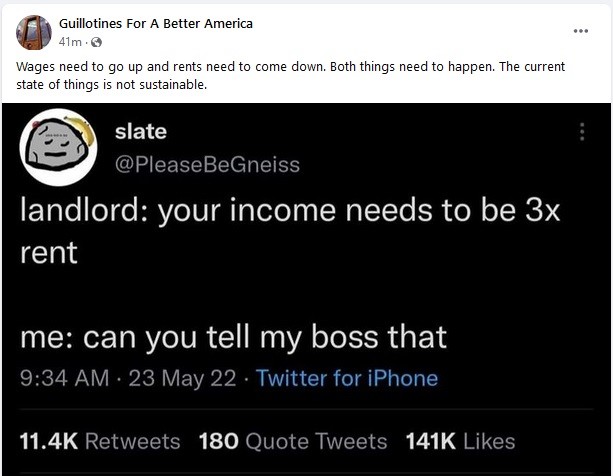
A good start.... even better would be a world without landlords, bosses, priests or kings! #organize #Unionize #generalstrike #directaction #sabotage #workerownership #HOUSINGISARIGHT image