
Company: we use advanced fraud detection to prevent you from using disposable addresses & VPNs to protect your privacy.
Also company: we got breached because we treat your privacy as disposable.
 2- Audiences move from incumbent platforms following influential voices that they follow. Focus on onboarding these influential voices. This is more impactful than just trying to bring the whole audience first.
 This dynamic can build contagion. Find ways to more publicly highlight when influential accounts join.
And make it super easy for Nostr users to use clients to reconstruct followees & social graphs from incumbent platform. Trick will be to do this in a privacy respecting way.
(sidenote: that's way the follow packs were such a good idea. But we need much more of this)
(note: influential voices may experience a period of 'where's my audience?' So it's key to find ways to get the transitioning user from that to the reconstruction of their network. )
3- Multiple peers transitioning is key. Having local clusters develop is important (& probably helps with the dry period before an audience is rebuilt.)
Interesting nuance: transition rates to #bluesky were 25-30% in fields like arts/social sciences, but about half that in medical / physical sciences / engineering. Possible predictors include baseline political engagement & political values expressed.
This dynamic can build contagion. Find ways to more publicly highlight when influential accounts join.
And make it super easy for Nostr users to use clients to reconstruct followees & social graphs from incumbent platform. Trick will be to do this in a privacy respecting way.
(sidenote: that's way the follow packs were such a good idea. But we need much more of this)
(note: influential voices may experience a period of 'where's my audience?' So it's key to find ways to get the transitioning user from that to the reconstruction of their network. )
3- Multiple peers transitioning is key. Having local clusters develop is important (& probably helps with the dry period before an audience is rebuilt.)
Interesting nuance: transition rates to #bluesky were 25-30% in fields like arts/social sciences, but about half that in medical / physical sciences / engineering. Possible predictors include baseline political engagement & political values expressed.
 This has an implication for Nostr: focus messaging on Nostr features that may align with people in incumbent platforms. There has to be desire.
Paper "Why Academics Are Leaving Twitter for Bluesky" https://arxiv.org/pdf/2505.24801
This has an implication for Nostr: focus messaging on Nostr features that may align with people in incumbent platforms. There has to be desire.
Paper "Why Academics Are Leaving Twitter for Bluesky" https://arxiv.org/pdf/2505.24801
 But Wyden didn't stop there.
  He highlighted troubling evidence that when government-ordered surveillance of Senators took place, companies failed to notify Senators.
 This is a bad, scary look for these companies. And it drives home the fact that Americans are often running blind when it comes to potential surveillance overreach.
Sources:
Wyden Letter to colleagues: https://www.wyden.senate.gov/imo/media/doc/wyden_dear_colleague_on_senate_cyber_and_surveillance_surveillancepdf.pdf
Wyden press release:
This is a bad, scary look for these companies. And it drives home the fact that Americans are often running blind when it comes to potential surveillance overreach.
Sources:
Wyden Letter to colleagues: https://www.wyden.senate.gov/imo/media/doc/wyden_dear_colleague_on_senate_cyber_and_surveillance_surveillancepdf.pdf
Wyden press release: 
 It's the kind of 'turn this one thing on if you face elevated risk' that we've been asking for from Google.
And likely reflects some learning after Google watched #Apple's Lockdown Mode play out.
Here are some thoughts:
SOME FEATURES IM EXCITED FOR:
The Intrusion Logging feature is interesting & is going to impose substantial cost on attackers trying to hide evidence of exploitation. Logs get e2ee encrypted into the cloud. This one is spicy.
The Offline Lock, Inactivity Reboot & USB protection will frustrate non-consensual attempts to physically grab device data.
Memory Tagging Extension is going to make a lot of attack & exploitation categories harder.
2G Network Protection & disabling Auto-connect to insecure networks are going to address categories of threat from things like IMSI catchers & hostile WiFi.
FEATURES IM ..MORE CAUTIOUSLY CURIOUS ABOUT
Spam & Scam detection: Google messages feature that suggests message content awareness and some kind of scanning.
It's the kind of 'turn this one thing on if you face elevated risk' that we've been asking for from Google.
And likely reflects some learning after Google watched #Apple's Lockdown Mode play out.
Here are some thoughts:
SOME FEATURES IM EXCITED FOR:
The Intrusion Logging feature is interesting & is going to impose substantial cost on attackers trying to hide evidence of exploitation. Logs get e2ee encrypted into the cloud. This one is spicy.
The Offline Lock, Inactivity Reboot & USB protection will frustrate non-consensual attempts to physically grab device data.
Memory Tagging Extension is going to make a lot of attack & exploitation categories harder.
2G Network Protection & disabling Auto-connect to insecure networks are going to address categories of threat from things like IMSI catchers & hostile WiFi.
FEATURES IM ..MORE CAUTIOUSLY CURIOUS ABOUT
Spam & Scam detection: Google messages feature that suggests message content awareness and some kind of scanning.
 Scam detection for Phone by Google is interesting & coming later. The way it is described suggests phone conversation awareness. This also addresses a different category of threat than the stuff above. I can see it addressing a whole category of bad things that regular users (& high risk ones too!) face. Will be curious how privacy is addressed or if this done purely locally.
FRICTION POINTS?
I see Google thinking some of thisC through, but I'm going to add a potential concern: what will users do when they encounter friction? Will they turn this off & forget to re-enable?
We've seen users turn off iOS Lockdown Mode when they run into friction for specific websites or, say, legacy WiFi.
They then forget to turn it back on. And stay vulnerable.
Bottom line: users disabling Apple's Lockdown Mode for a temporary thing & leaving it off because they forget to turn it on happens a lot. This is a serious % of users in my experience... And should be factored into design decisions for similar modes.
GIVE US A SNOOZE BUTTON
I feel like a good balance is a 'snooze button' or equivalent so that users can disable all/some features for a brief few minute period to do something they need to do, and then auto re-enable.
Yes, during that brief period there is vulnerability (and a potential social engineering target), but if the trade off is that the user likely just turns the whole thing off and forgets it..that is worse.
HIGH SECURITY & HIGH PARANOIA USERS
Some users, esp. those that migrated to security & privacy-focused Android distros because of because of the absence of such a feature are clear candidates for it...
But they may also voice privacy concerns around some of the screening features. And about the fact that the phone would need to be re-googled (think:Graphene which confers a lot of privacy by stripping out most google features)
Clear communication from the Google Security / Android team will be key here.
TAKEAWAYS
I'm excited to see how #Android Advanced Protection plays with high risk users' experiences.
I'm also super curious whether the spam/scam detection features may also be helpful to more vulnerable users (think: aging seniors)...
Google's blog:
Scam detection for Phone by Google is interesting & coming later. The way it is described suggests phone conversation awareness. This also addresses a different category of threat than the stuff above. I can see it addressing a whole category of bad things that regular users (& high risk ones too!) face. Will be curious how privacy is addressed or if this done purely locally.
FRICTION POINTS?
I see Google thinking some of thisC through, but I'm going to add a potential concern: what will users do when they encounter friction? Will they turn this off & forget to re-enable?
We've seen users turn off iOS Lockdown Mode when they run into friction for specific websites or, say, legacy WiFi.
They then forget to turn it back on. And stay vulnerable.
Bottom line: users disabling Apple's Lockdown Mode for a temporary thing & leaving it off because they forget to turn it on happens a lot. This is a serious % of users in my experience... And should be factored into design decisions for similar modes.
GIVE US A SNOOZE BUTTON
I feel like a good balance is a 'snooze button' or equivalent so that users can disable all/some features for a brief few minute period to do something they need to do, and then auto re-enable.
Yes, during that brief period there is vulnerability (and a potential social engineering target), but if the trade off is that the user likely just turns the whole thing off and forgets it..that is worse.
HIGH SECURITY & HIGH PARANOIA USERS
Some users, esp. those that migrated to security & privacy-focused Android distros because of because of the absence of such a feature are clear candidates for it...
But they may also voice privacy concerns around some of the screening features. And about the fact that the phone would need to be re-googled (think:Graphene which confers a lot of privacy by stripping out most google features)
Clear communication from the Google Security / Android team will be key here.
TAKEAWAYS
I'm excited to see how #Android Advanced Protection plays with high risk users' experiences.
I'm also super curious whether the spam/scam detection features may also be helpful to more vulnerable users (think: aging seniors)...
Google's blog: 


 It turns out that the regular people on a jury think it is evil when you help dictators hack dissidents.
After years of every trick & delay tactic it only took a California jury ONE DAY of deliberation to get this Monsanto-scale verdict. Precedent-setting win against notorious #Pegasus spyware maker.
BACKSTORY:
Rewind to 2019. About this time (April-May) #WhatsApp catches NSO Group hacking its users with #Pegasus.
They investigated.
It turns out that the regular people on a jury think it is evil when you help dictators hack dissidents.
After years of every trick & delay tactic it only took a California jury ONE DAY of deliberation to get this Monsanto-scale verdict. Precedent-setting win against notorious #Pegasus spyware maker.
BACKSTORY:
Rewind to 2019. About this time (April-May) #WhatsApp catches NSO Group hacking its users with #Pegasus.
They investigated.
 We at Citizen Lab helped to investigate the targets & get in touch with the activists journalists & civil society members that were targeted
 We identified at least 100. And got in touch. It was a tremendous push of sleepless days. But it made it so clear just how much harm was being done.
Then, In October 2019 WhatsApp sued.
Prior to the lawsuit, NSO had acted the playground bully.
Targeting victims that dared speak up & researchers like us.
Suddenly, the bully wasn't so surefooted. Like the scene in a high school movie where the cousin shows up in the beat up car & collars the bully.
You might not remember, but in 2019 no country had sanctioned NSO Group... No parliamentary hearings, no hearings in congress, no serious investigations.
For years, WhatsApp's lawsuit helped carry momentum & showed governments that their tech sectors were in the crosshairs from mercenary spyware too...
Credit due to Meta & WhatsApp leadership on this one, they stuck the fight out & carried it across the finish line.
NOTIFICATIONS MATTER
WhatsApp's choice to notify targets was also hugely consequential.
A lot of cases were first surfaced from these notifications.
With dissidents around the world suddenly learning that dictators were snooping in their phones...with NSO Group's help.
A SIDEBAR: HARASSING RESEARCHERS
One of NSO's many tactics was to leverage the case to badger me & us Citizen Lab researchers to try and extract information.
We identified at least 100. And got in touch. It was a tremendous push of sleepless days. But it made it so clear just how much harm was being done.
Then, In October 2019 WhatsApp sued.
Prior to the lawsuit, NSO had acted the playground bully.
Targeting victims that dared speak up & researchers like us.
Suddenly, the bully wasn't so surefooted. Like the scene in a high school movie where the cousin shows up in the beat up car & collars the bully.
You might not remember, but in 2019 no country had sanctioned NSO Group... No parliamentary hearings, no hearings in congress, no serious investigations.
For years, WhatsApp's lawsuit helped carry momentum & showed governments that their tech sectors were in the crosshairs from mercenary spyware too...
Credit due to Meta & WhatsApp leadership on this one, they stuck the fight out & carried it across the finish line.
NOTIFICATIONS MATTER
WhatsApp's choice to notify targets was also hugely consequential.
A lot of cases were first surfaced from these notifications.
With dissidents around the world suddenly learning that dictators were snooping in their phones...with NSO Group's help.
A SIDEBAR: HARASSING RESEARCHERS
One of NSO's many tactics was to leverage the case to badger me & us Citizen Lab researchers to try and extract information.
 It never worked, but it laid bare the tactics that these firms prefer...instead of coming clean.
ROLE OF CIVIL SOCIETY
Ultimately, we wouldn't be here without civil society investigations of mercenary spyware... and alarm raising.
And victims choosing to come forwads.
Thankfully today there's a whole accountability ecosystem growing around this work.
Dozens of orgs engaging.
Numbers are growing.
IS THERE GONNA BE IMPACT? YES
NSO Group emerges from the trial severely damaged.
The damages ($167,254,000 punitive, $440K+ compensatory) is big enough to make your eyes water.
NSO'S BUSINESS IS NOW ALL OVER THE NET
The case is also a blow to NSO's secrecy, with their business splashed all over a courtroom.
It never worked, but it laid bare the tactics that these firms prefer...instead of coming clean.
ROLE OF CIVIL SOCIETY
Ultimately, we wouldn't be here without civil society investigations of mercenary spyware... and alarm raising.
And victims choosing to come forwads.
Thankfully today there's a whole accountability ecosystem growing around this work.
Dozens of orgs engaging.
Numbers are growing.
IS THERE GONNA BE IMPACT? YES
NSO Group emerges from the trial severely damaged.
The damages ($167,254,000 punitive, $440K+ compensatory) is big enough to make your eyes water.
NSO'S BUSINESS IS NOW ALL OVER THE NET
The case is also a blow to NSO's secrecy, with their business splashed all over a courtroom.
 WhatsApp just published NSO's depositions, exposing an unprecedented amount of info on a spyware company's operations:
✅https://about.fb.com/wp-content/uploads/2025/05/WhatsApp-v-NSO-Eshkar-Transcrips_Case-4-19-cv-07123-PJH.pdf
✅https://about.fb.com/wp-content/uploads/2025/05/WhatsApp-v-NSO-Gil-Transcrips_Case-4-19-cv-07123-PJH.pdf
✅https://about.fb.com/wp-content/uploads/2025/05/WhatsApp-v-NSO-Shohat-Transcrips_Case-4-19-cv-07123-PJH.pdf
✅https://about.fb.com/wp-content/uploads/2025/05/WhatsApp-v-NSO-Gazneli-Transcrips_Case-4-19-cv-07123-PJH.pdf
This will scare customers. And investors. And other companies that do the same thing. Good.
MY VIEW:
Watching a jury of regular citizens see right through NSO's mendacity & hypocrisy...and to the need to protect privacy is amazing.
Gives me hope.
Despite all the fancy lawyering & lobbying, people know that this kind of privacy invasion is wrong.
Read more:
They Exposed an Israeli Spyware Firm. Now the Company Is Badgering Them in Court.
WhatsApp just published NSO's depositions, exposing an unprecedented amount of info on a spyware company's operations:
✅https://about.fb.com/wp-content/uploads/2025/05/WhatsApp-v-NSO-Eshkar-Transcrips_Case-4-19-cv-07123-PJH.pdf
✅https://about.fb.com/wp-content/uploads/2025/05/WhatsApp-v-NSO-Gil-Transcrips_Case-4-19-cv-07123-PJH.pdf
✅https://about.fb.com/wp-content/uploads/2025/05/WhatsApp-v-NSO-Shohat-Transcrips_Case-4-19-cv-07123-PJH.pdf
✅https://about.fb.com/wp-content/uploads/2025/05/WhatsApp-v-NSO-Gazneli-Transcrips_Case-4-19-cv-07123-PJH.pdf
This will scare customers. And investors. And other companies that do the same thing. Good.
MY VIEW:
Watching a jury of regular citizens see right through NSO's mendacity & hypocrisy...and to the need to protect privacy is amazing.
Gives me hope.
Despite all the fancy lawyering & lobbying, people know that this kind of privacy invasion is wrong.
Read more:
They Exposed an Israeli Spyware Firm. Now the Company Is Badgering Them in Court. 


 Connoisseurs of the AI-will-end-humanity marketing hype train of a few years ago should find plenty to appreciate in an eyeball scanner framed as as a 'helpful' tool to distinguish between AI agents & humans.
Or is it for that? Or maybe point of sale? Or nebulous 'verification?'
The only clear thing? This device starts from a point of biometric #privacy invasion.
Connoisseurs of the AI-will-end-humanity marketing hype train of a few years ago should find plenty to appreciate in an eyeball scanner framed as as a 'helpful' tool to distinguish between AI agents & humans.
Or is it for that? Or maybe point of sale? Or nebulous 'verification?'
The only clear thing? This device starts from a point of biometric #privacy invasion.
 It sure looks to me like another effort by the company Sam Altman founded to make a global data-grab.
 Just say no.

 (btw if you get one of these, take it very seriously & get in touch with an expert)
CONTEXT
It's time for transparency from the Italian government. This scandal has been going on since the end of January.
Unlike the first revelations earlier this year & their initial denials...Italy is now an admitted Paragon user.
(btw if you get one of these, take it very seriously & get in touch with an expert)
CONTEXT
It's time for transparency from the Italian government. This scandal has been going on since the end of January.
Unlike the first revelations earlier this year & their initial denials...Italy is now an admitted Paragon user.
 And everything we know about Paragon indicates that government deployments keep immutable logs that should give a quick answer: was it the Italian government?
 Story [IT] https://www.fanpage.it/politica/il-governo-puo-chiarire-subito-se-ciro-pellegrino-e-stato-spiato-con-paragon-il-commento-di-citizen-lab/
 TECHNICAL SOPHISTICATION? NAH.
Technical sophistication of this attack was...meh.
TECHNICAL SOPHISTICATION? NAH.
Technical sophistication of this attack was...meh.
 But that's not where the attackers focused.
INTELLIGENCE-DRIVEN? YAH.
They spent their effort carefully crafting credible bait that matched what they knew about their targets:
Trojanizing a legit Uyghur language app was a clever, cynical move.👇
Many marginalized communities struggle with getting fonts & dictionaries to capture their language.
But that's not where the attackers focused.
INTELLIGENCE-DRIVEN? YAH.
They spent their effort carefully crafting credible bait that matched what they knew about their targets:
Trojanizing a legit Uyghur language app was a clever, cynical move.👇
Many marginalized communities struggle with getting fonts & dictionaries to capture their language.
 And developer talent is very welcome.
With a lure that credible you don't need to burn your most sophisticated exploits.
Good news in this case: Gmail spotted & blunted the attacks which were only found whey my colleagues worked with vigilant targets to screen for them.
But the theme of China-nexus hacking groups being economical about exposing technical methods (just using minimum necessary stuff) while drawing from (presumably) vast amounts of intelligence and understanding of their targets to craft effective social engineering is something we at the Citizen Lab have tracked for decades.
READ THE FULL REPORT:
By my talented colleagues:
And developer talent is very welcome.
With a lure that credible you don't need to burn your most sophisticated exploits.
Good news in this case: Gmail spotted & blunted the attacks which were only found whey my colleagues worked with vigilant targets to screen for them.
But the theme of China-nexus hacking groups being economical about exposing technical methods (just using minimum necessary stuff) while drawing from (presumably) vast amounts of intelligence and understanding of their targets to craft effective social engineering is something we at the Citizen Lab have tracked for decades.
READ THE FULL REPORT:
By my talented colleagues: 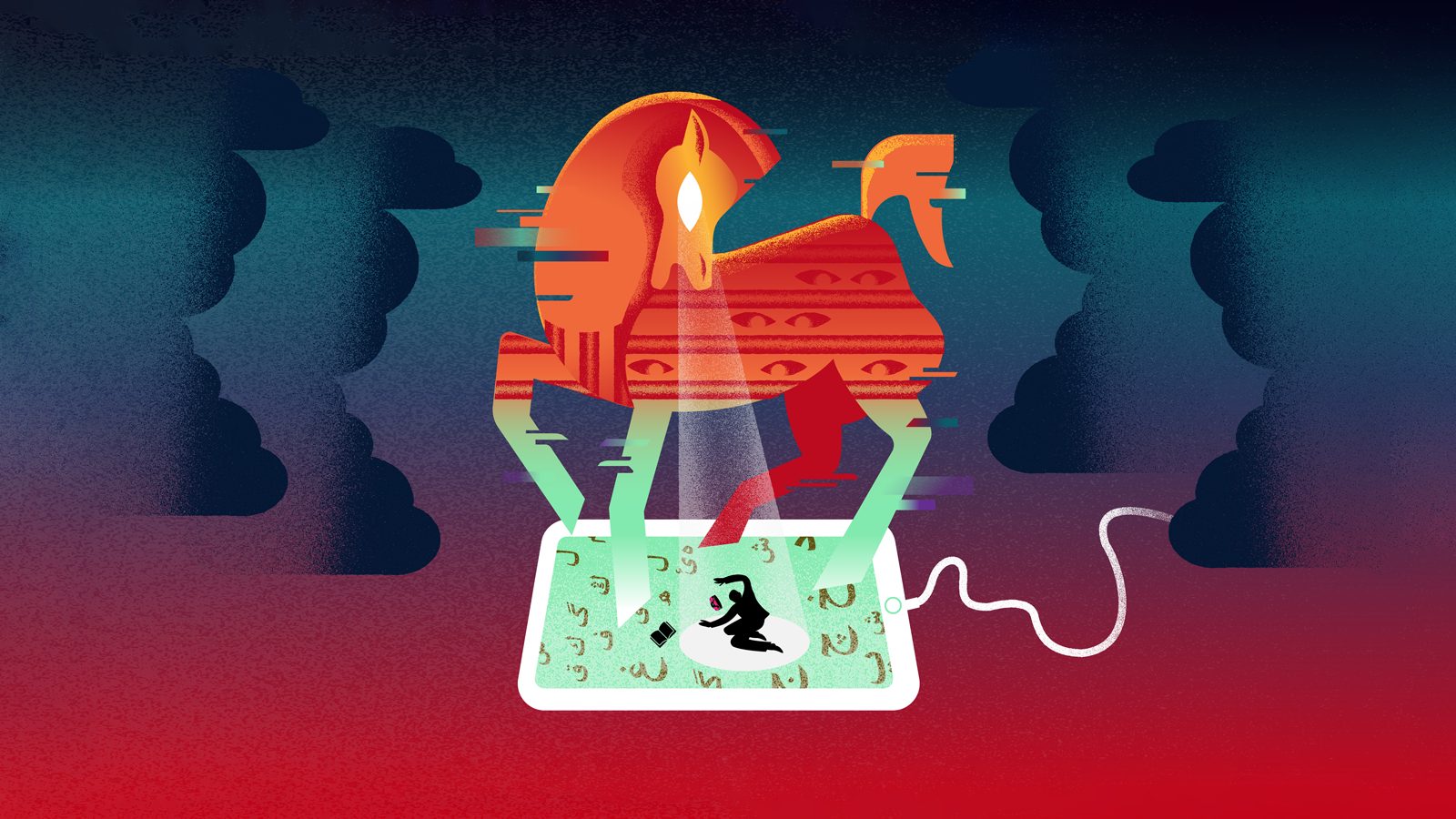
 Image source:

 LATEST:
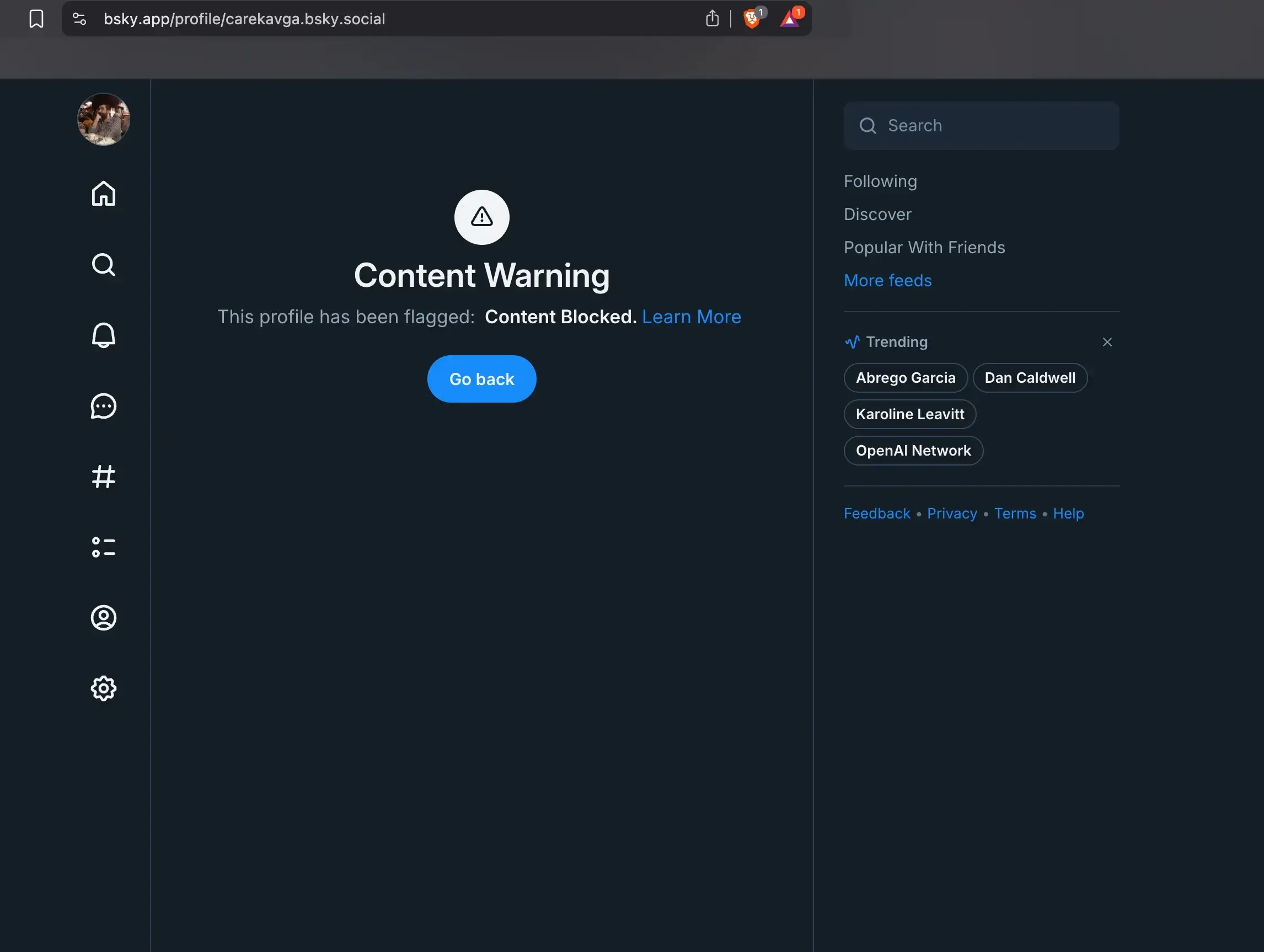
On demands from the Turkish government, Bluesky restricted access to 72 accounts per a report from a Turkish NGO.
LATEST:
On demands from the Turkish government, Bluesky restricted access to 72 accounts per a report from a Turkish NGO.
 DETAIL:
Accounts are restricted for users in Turkey.
Accounts aren't banned from Bluesky's AT Protocol relays etc, but access is moderated at the official client level through geography-specific labels.
DETAIL:
Accounts are restricted for users in Turkey.
Accounts aren't banned from Bluesky's AT Protocol relays etc, but access is moderated at the official client level through geography-specific labels.
 WORKAROUNDS?
Realistically impacted accounts are no longer visible to the majority of Bluesky users (most aren't on 3rd party clients) in Turkey.
However, since 3rd party client apps for the AT Protocol aren't forced to use geography-specific labels, they an still be used to view the content.
In theory, official client + VPN would also result in seeing the accounts.
LOOKING AT SOME DATA:
Bluesky has been publishing transparency reporting about legal & government requests. The most recent report covers 2024 and shows a relatively modest number of takedown requests, but about 50% response by Bluesky.
WORKAROUNDS?
Realistically impacted accounts are no longer visible to the majority of Bluesky users (most aren't on 3rd party clients) in Turkey.
However, since 3rd party client apps for the AT Protocol aren't forced to use geography-specific labels, they an still be used to view the content.
In theory, official client + VPN would also result in seeing the accounts.
LOOKING AT SOME DATA:
Bluesky has been publishing transparency reporting about legal & government requests. The most recent report covers 2024 and shows a relatively modest number of takedown requests, but about 50% response by Bluesky.
 Unfortunately, the company doesn't differentiate between legal demands in civil litigation and *government* demands. This makes it hard to get a clear picture.
 I hope Bluesky segments out these very different kinds of pressure in 2025 reporting so we can get a better sense of what's happening.
BIG PICTURE:
Looking ahead, governments are probing for new ways to enforce content restrictions. These are early days for Bluesky and it is likely that a lot more requests like this will be inbound as users head there to try and avoid the well-greased censorship machinery on legacy platforms like X.
Recommended reading & Sources:
Super-helpful-to-me TechCrunch article:
I hope Bluesky segments out these very different kinds of pressure in 2025 reporting so we can get a better sense of what's happening.
BIG PICTURE:
Looking ahead, governments are probing for new ways to enforce content restrictions. These are early days for Bluesky and it is likely that a lot more requests like this will be inbound as users head there to try and avoid the well-greased censorship machinery on legacy platforms like X.
Recommended reading & Sources:
Super-helpful-to-me TechCrunch article: 
 Graphs from this story are stark.
 Link:
Link: 