In the Evangelion (cf. Luke 18:9–14), Jesus tells the parable of the Pharisee and the tax collector.
The self-righteous, Law-observant Pharisee goes home unjustified. The ritually impure tax collector simply cries, “God, be merciful to me, a sinner,” and is justified.
This isn’t how the covenant system of the God of Israel worked. It reflects the different principle of the unknown Good Father revealed by Jesus: grace over Law observance.
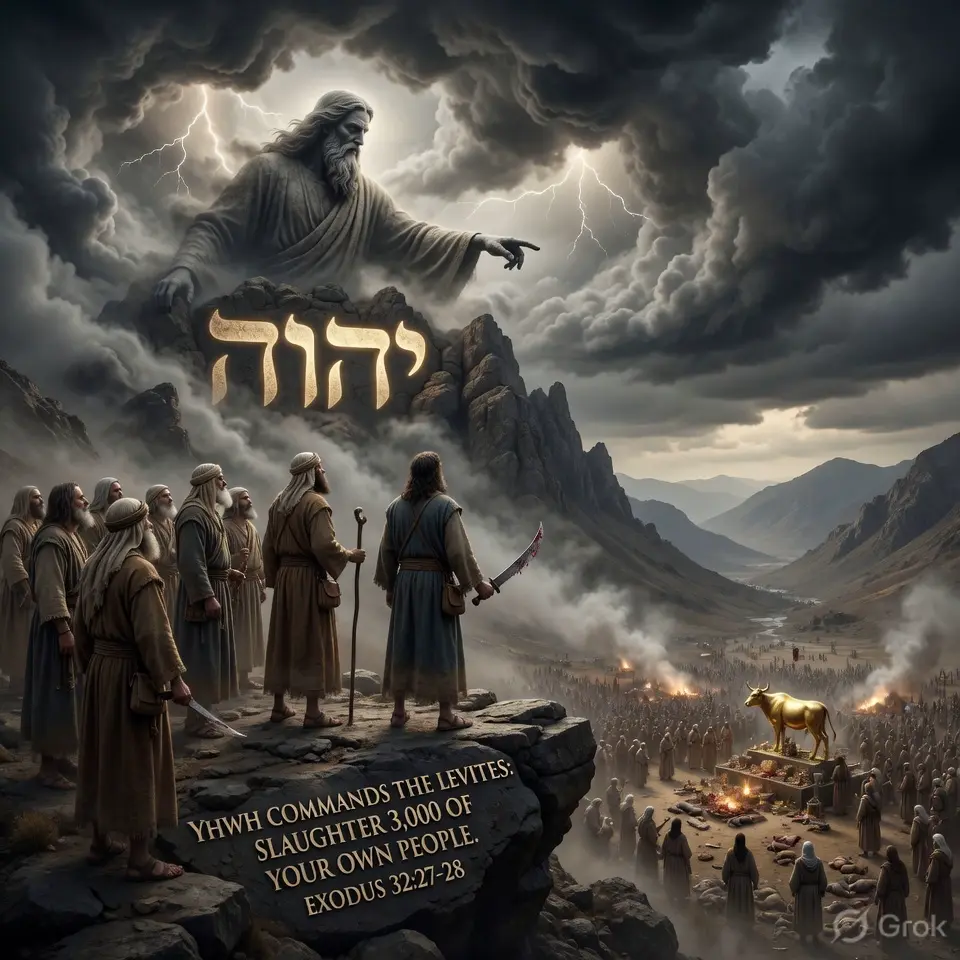
YHWH commands the Levites to slaughter 3,000 of their own people after the Golden Calf incident (Exodus 32:27–28).
In the Gospel, when a Samaritan village rejects Jesus and his disciples, James and John want to call down fire on them. Jesus sharply rebukes them and simply moves on (Evangelion; cf. Luke 9:54–55).
YHWH demands the killing of his own people for idolatry. The Good Father does not retaliate with violence when rejected.
The “Church Fathers” who trash Marcion weren’t neutral historians — they were later polemicists writing decades (sometimes over a century) after the earliest sources.
Irenaeus, Tertullian, Epiphanius and the rest had their own agendas such as building institutional power, defining orthodoxy, and smearing rivals. Their accounts of Marcion are full of distortion, exaggeration and outright invention.
Many of these same Fathers had serious issues themselves — theological backflips, poor historical accuracy, and in some cases their own later “heresies.”
If you actually want to understand early Christianity, stop treating the victors’ propaganda as reliable history. Go back to the earliest Gospel layer we can reconstruct. The picture looks very different.
In the Greek text of the Gospel, Jesus’ name is Iēsous — not Yeshua, and certainly not YHWH.
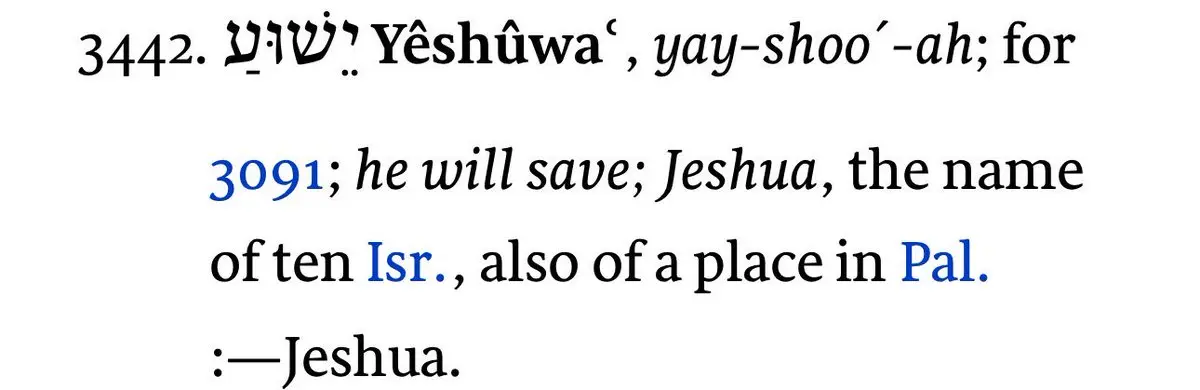
The attached image from Strong’s Concordance (entry 3442) shows that the name Yeshua simply means “he will save.” It does not contain or mean “Yahweh saves.”
Some people point to the longer Old Testament name Yehoshua (Joshua), which does mean “Yahweh saves.” However, by the time of Jesus, the name had been shortened to Yeshua. The divine name element had already dropped out. The Greek Gospels reflect this later, shortened form — not the older Yehoshua.
This matters because Jesus did not come to serve or represent YHWH. He came to reveal a previously unknown Good Father whose character stands in direct opposition to the jealous, wrathful, and violent God of the Hebrew Scriptures.
As Jesus taught: judge the tree by its fruit.
YHWH’s fruit is wrath, jealousy, and death.
The Father Jesus reveals produces mercy, healing, and life.
The name doesn’t override the fruit.
A lot of Christians struggle with the plain meaning of the Hebrew text.
It doesn’t present YHWH as the abstract, all-loving, all-powerful “omni-God” of later theology. It presents him as one powerful member of the Elohim — a category of non-human beings — whose actions often include extreme wrath, jealousy, revenge, and regret.
At the same time, many non-Christians dismiss Jesus as “Jewish controlled opposition.”
But the first NT tells a different story. Jesus did not come to affirm or serve the god of Israel. He came to reveal a previously unknown Good Father — one whose character and ways stand in direct contrast to YHWH.
Attacks are coming from both sides of the aisle.
The earliest Gospel refuses to fit either narrative.
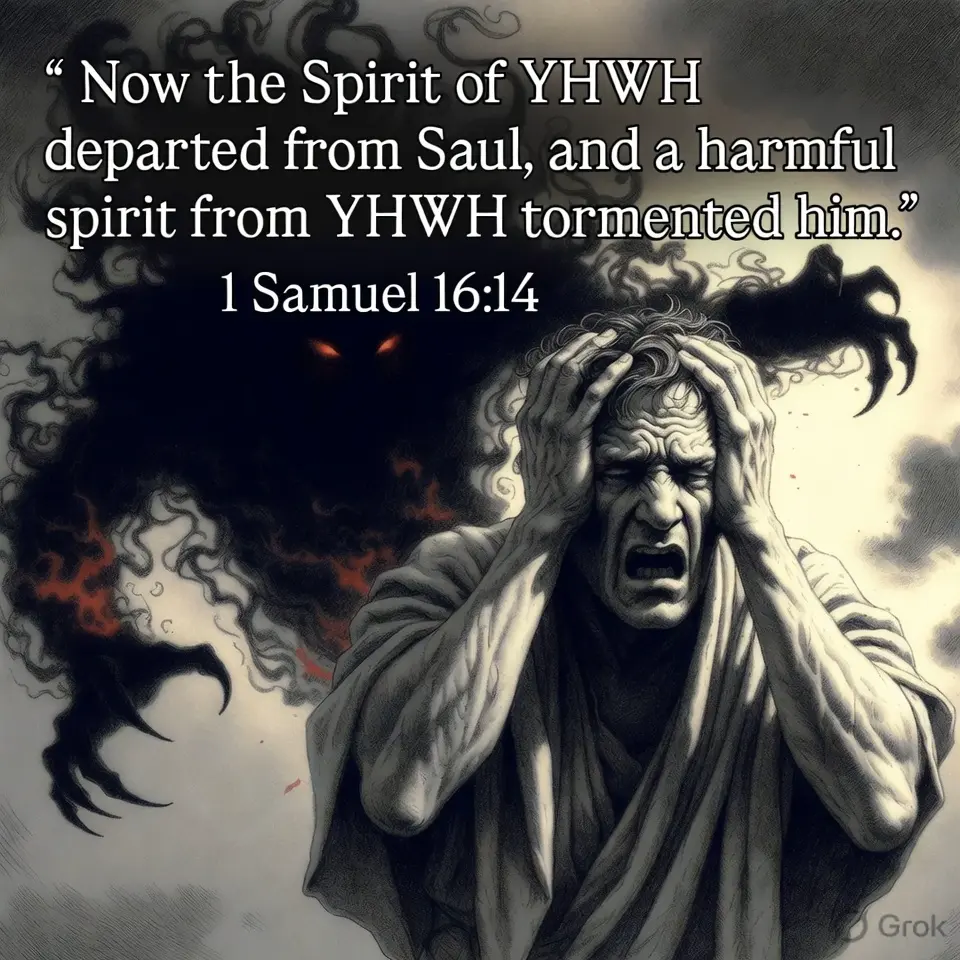
YHWH sent an evil spirit to torment Saul:
“Now the Spirit of YHWH departed from Saul, and a harmful spirit from YHWH tormented him.” (1 Samuel 16:14)
In the Gospel, when Jesus encounters a man tormented by many unclean spirits, He commands the spirits to leave — and the man is restored to his right mind (Evangelion, cf. Luke 8:29, 35).
YHWH afflicts people with evil spirits.
The Good Father sets them free.
YHWH’s Law declares a woman with an ongoing issue of blood to be unclean. Anyone who touches her also becomes unclean (Leviticus 15:19–27).
In the Gospel, a woman who had been bleeding for twelve years touches Jesus. Instead of making Him unclean, she is instantly healed (Evangelion, cf. Luke 8:43–48).
YHWH’s system contaminates and excludes.
The Good Father’s power heals and restores.
Why “Elohim” should never be translated as “God”:
In the original Hebrew, Elohim is not a name or a title meaning “God.”
It is a plural category — a class of powerful non-human beings (like “Anunnaki” in Sumerian texts).
YHWH is one specific member of that group. That’s why the text can say “other elohim,” why YHWH is jealous of them, and why Elyon assigns nations to different elohim (Deut 32:8-9).
Translating it as “God” erases the plural reality and forces later monotheism onto the text.
Leave it as Elohim.
YHWH commands total destruction of the Canaanites:
“You shall save alive nothing that breathes, but you shall devote them to complete destruction…” (Deuteronomy 20:16–17)
In the Gospel, Jesus tells the parable of the Good Samaritan — a despised foreigner — and concludes:
“Go and do likewise.” (Evangelion G 10:37; cf. Luke 10:37)
YHWH demands the complete annihilation of outsiders. The Good Father teaches radical mercy, even toward those considered enemies.
Two completely different spirits.
Two completely different gods.
Give, and it will be given to you. Good measure, pressed down, shaken together, running over, will be put into your lap. For with the measure you use it will be measured back to you. (Evangelion, cf. Luke 6:38)
In the Father’s kingdom, the way we treat others — with mercy, generosity, and non-judgment — determines how we ourselves are treated. This is not the Law’s retributive justice, but a new measure of grace.

Another misused “prophecies” about Jesus is Daniel 7:13–14.
In Daniel, the figure comes to the Ancient of Days and the kingdom is given to the saints as a collective (vv. 18, 22, 27). There is no individual descending Messiah.
In the Gospel, Jesus announces the opposite: the Human One coming down from heaven with power and great glory (Evangelion, cf. Lk 21:27). The direction is reversed.
By the late 3rd century, orthodox writers were already forcing the two together. Adamantius claimed:
"This is similar to what Daniel says: ‘I saw One like a son of man coming on the clouds.’ And in the Gospel it says, ‘As lightning comes out of the east… so shall also the coming of the Son of Man be’."
The Marcionite Megethius pushed back with Daniel 2: the stone has not yet smashed the kingdoms of the earth, proving the Christ of the Law and the Prophets has not yet arrived. He added that John the Baptist — a prophet of the Creator God (YHWH) — did not recognise Jesus:
"Now when he had heard in prison the works of Christ, he sent his disciples to Him, saying, ‘Are You He who is to come, or look we for another?’"
And Jesus rebuked him, saying, “Be silent and come out of him!” And when the demon had thrown him down in the midst, he came out of him, having done him no harm. (Evangelion, cf. Luke 4:35)
Unclean spirits must obey the son of the Most High.
Fact: Marcion’s Apostolikon contains only 10 of Paul’s letters and lacks the Pastoral Epistles (1 & 2 Timothy, Titus) entirely.
Scientific evidence from stylometric and lexical analysis shows these Pastorals have significantly different vocabulary and theology, consistent with 2nd-century anti-Marcionite redaction to strengthen links to YHWH’s established church structure. Marcion’s collection reflects the earlier circulating letters.
Fact: Marcion’s Evangelion has no infancy narrative, unlike canonical Luke.
Scientific evidence from textual criticism shows Luke 1-2 was added later as an anti-Marcionite expansion to link Jesus directly to YHWH. Computational analysis of vocabulary and style confirms these chapters as secondary redaction. Marcion’s version came first.
And amazement seized them all, and they glorified God and were filled with awe, saying, “We have seen extraordinary things today.” (Evangelion, cf. Luke 5:26)
Jesus is awesome—literally.
And they were all amazed and said to one another, “What is this word? For with authority and power he commands the unclean spirits, and they come out!” (Evangelion, cf. Luke 4:36)
Jesus wielded absolute authority over darkness. No rituals. No struggle. Just raw, sovereign power.
It always saddens me when Christians behave and speak as YHWH rather than Jesus or the Father He revealed.
Mercy, grace, and love > wrath, curses, and condemnation.
Here's a Marcionite music playlist celebrating the unknown Good Father and the mercy revealed by Iēsous.
Enjoy the songs of true freedom.
https://youtube.com/playlist?list=PLgaTniRI4-nhmC_kOlCWAChPNo3XYIbFB&si=29QFOutEYrFQnoypIn the original Hebrew OT, ruach (usually translated “spirit”) often literally means a physical transport device — a flying vehicle of the Elohim.
It lifts prophets like Ezekiel and Elijah, makes noise, arrives from specific directions, and carries people through the air.
(Note: Not every use is a vehicle — context tells you when it’s the concrete machine vs. wind/breath.)
YHWH declares the Law and the Prophets to be permanent and unbreakable:
“You shall not add to the word that I command you, nor take from it…” (Deuteronomy 4:2)
In the original Evangelion (the first NT), Jesus declares the opposite:
“The Law and the Prophets were until John. Since then the good news of the kingdom of God is preached, and everyone is pressing into it. But it is easier for heaven and earth to pass away than for one stroke of my words to fail.” (Evangelion, cf. Luke 16:16)
Note the difference: The later canonical Luke changes the ending to “than for one stroke of the Law to fail” — creating an obvious contradiction with the previous verse.
The first Gospel is consistent: the old system had a clear end date. The canonical version was edited to blur that break and force continuity with YHWH’s Law.
The Good Father brought something radically new.