What's more fun than doing #Bitcoin research? Sharing the results in person!
My deadline for the research on 1212% growth in Lightning activity was Bitcoin Amsterdam.
If you're not much of a reader, you can get a bunch of insights from the presentation.
It's been a wild ride. I hope the report continues to be a useful tool for people around the industry to show the activity that is happening and combat misinformation.
Sam Wouters
npub1vwla...r934
Director of Marketing at River
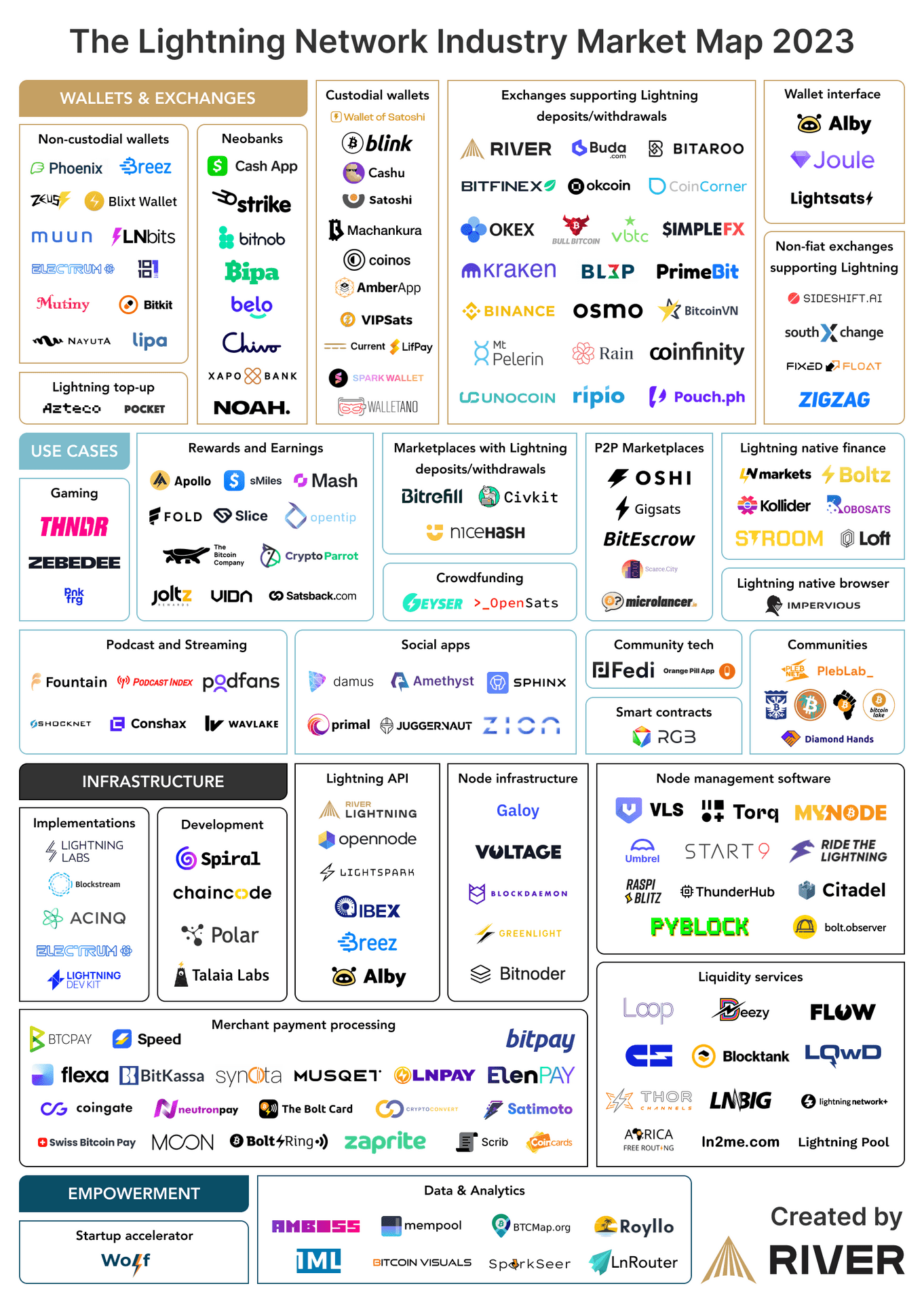
As part of the new Lightning research, I’ve attempted to map out and categorize all companies in the Lightning space.
179 companies across 28 categories 🤯
If you’re interested in the full research on how the Lightning Network has been growing, you can find it here


River Intelligence
The Lightning Network Grew by 1212% in 2 Years - River Intelligence
Critics say Lightning is stagnating, but River’s new report shows explosive growth in users, transactions, and volume. Download the full breakdown.

“Nobody is using Lightning” should now be a dead meme.
Launching a new Bitcoin report from @River: How the Lightning Network grew by 1212% in 2 years ⚡
It’s time to pay attention to the incredible work of so many people in the space.
In this report:
- How many transactions on Lightning
- How much volume
- How many users
- Industry overview of 173 companies
- Funding overview
- River-specific insights
- Why are companies interested in Lightning
- Growth accelerators
And yes, an executive summary 😉
You can find the report here
It would mean a lot if you could share this post and/or the report 🧡
I'll be sharing this report at The Bitcoin Conference in Amsterdam in 2 days! 

River Intelligence
The Lightning Network Grew by 1212% in 2 Years - River Intelligence
Critics say Lightning is stagnating, but River’s new report shows explosive growth in users, transactions, and volume. Download the full breakdown.

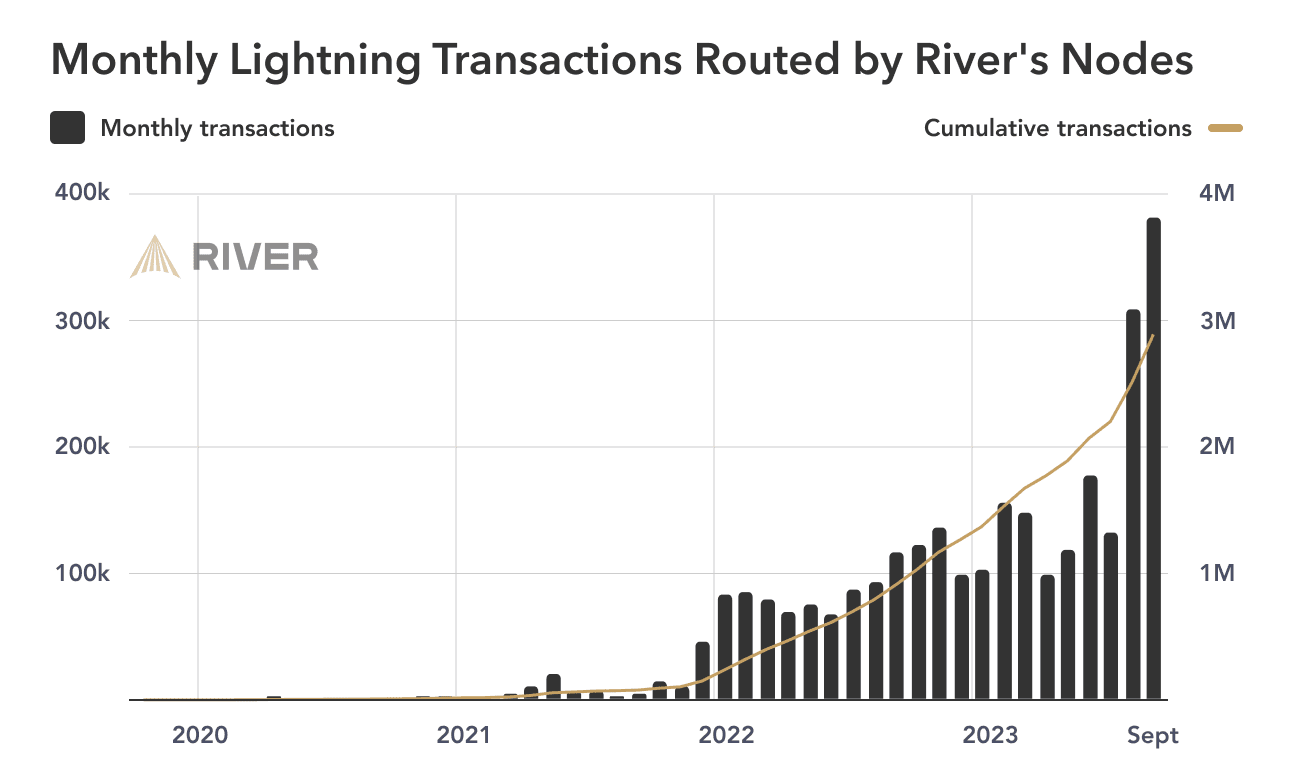
We just hit 3 million Lightning transactions routed with @River‘s nodes, and September was another all-time monthly high!
Next week we have a report coming out with data across the entire network. Nostr is covered a bit in it too. 

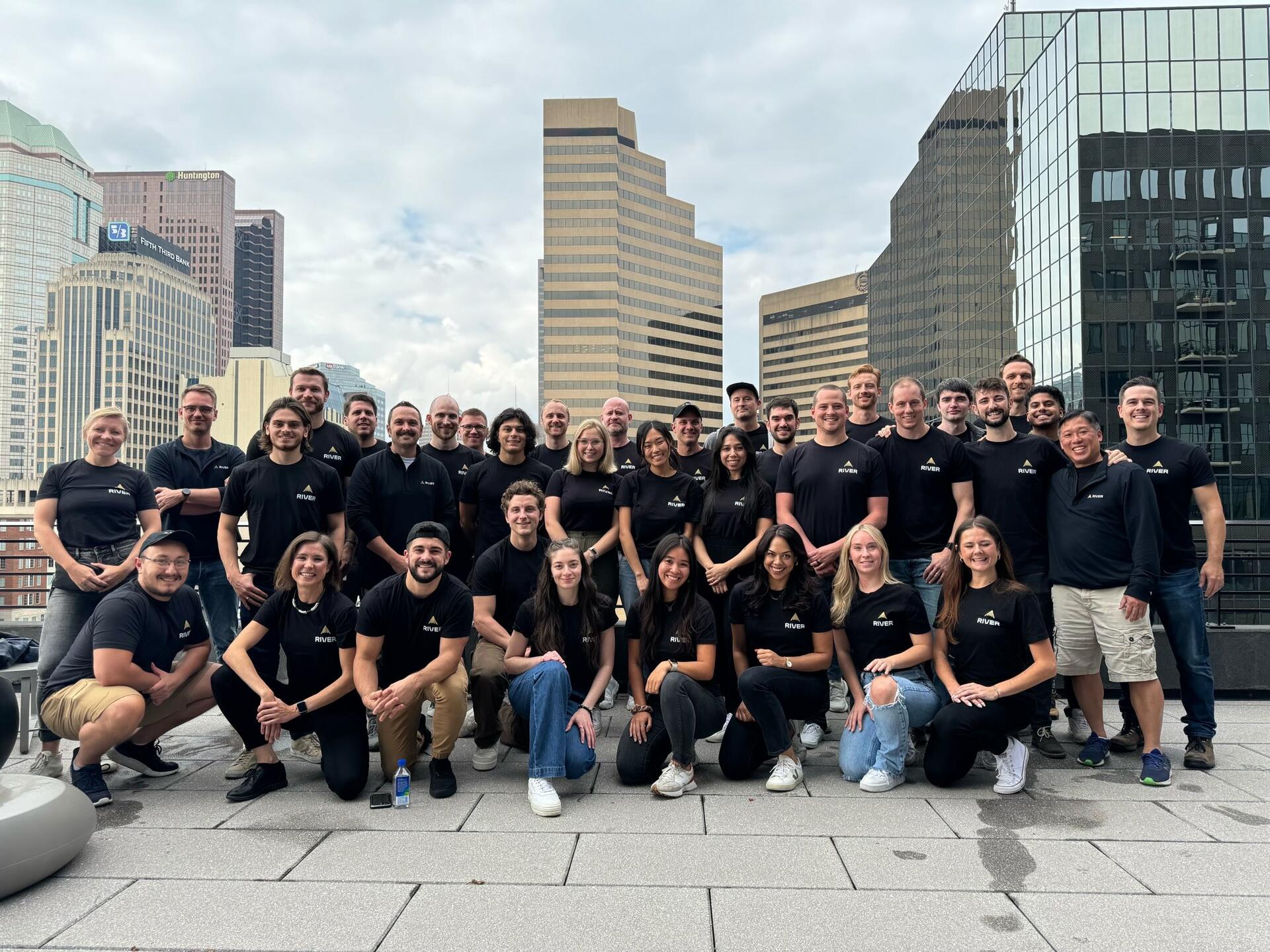
Got together with all of @River for 3 days. Such an amazing team 🧡 

Sneak peak of the upcoming Lightning research 👀 hopefully done in October.
And a heads up that River will be dropping its Lightning capacity again, doing more with less 🙂 

I’ve started working on @River‘s Lightning report for this year.
Is there anything you would like to see covered in it?
I’ve already reached out to a dozen Lightning companies and large nodes, and about the same amount have reached out to me. The goal is to aggregate as much interesting data as possible, as we want to expand the scope of the report.
Last year’s report did great, definitely feeling the pressure to live up to it 😄
“Sam how do you have so much conviction in #Bitcoin ?”
It’s because I pray at the altar of Satoshi each morning 🧎♂️
My girlfriend and I made this from dyed preserved moss as a nice background for calls 🤙 

As a Bitcoin educator, I think about this model that I included in the payments report a lot.
Many Bitcoiners think in terms of quantity: the more people we push through this funnel, the more may stick around = more adoption.
But adoption is not something that can only grow without cost. Turning people off has future consequences, so we need quality from all of us, not just the writers and podcasters.
A key part of this model is that it also shows the negative side: the people actively working against adoption. Their impact is difficult to measure, as there is no Google Trends for “people who didn’t learn about Bitcoin because they read or heard too many hysterical headlines”.
Many people don’t make it through this funnel, or are even interested in the first place due to poor past experiences with negative media or overenthusiastic Bitcoiners that sounded crazy.
Here is how I view the 5 layers of the funnel:
1️⃣ The mindset of the person in the discovery phase is critical. If they are too prejudiced and not open to learning, it can massively delay the point at which they get into Bitcoin. Their decision to proceed is heavily influenced by their background and personal situation.
2️⃣ If people are open to learning more, perhaps the first content they consume is positive, but in their research, they may come across different information and opinions from personal relations that sway their perspective.
It is easy to blame media and misinformation for people not getting through this learning phase in a positive way, but introspection by the Bitcoin industry is also important. A Bitcoiner’s passion for the problems they believe it solves can also turn people off by going too deep on certain topics or overcomplicating their explanations.
3️⃣ After learning a bit, whether that is one or many content pieces, people will gain a certain perception of Bitcoin. This time, all of the above factors influence whether they will proceed and go deeper.
4️⃣ When it comes to usage, sometimes the journey from discovery to usage can be just a few minutes with the right person as a guide. Quickly letting people experience Bitcoin can be an effective tool to give people a wow moment, but it only works towards adoption if they commit to a learning phase after. “Private” usage is the highest ranked here, given that maintaining your privacy on Bitcoin requires significant knowledge. This is also the case for using Bitcoin as the standard money in your life.
5️⃣ After having used Bitcoin, some people decide to take a certain role in the space, either personally or professionally. Some become users of Bitcoin. Many go a step further to actively educate others around them, and some become builders who maintain and accelerate the movement. There are also critics and detractors who try to slow down Bitcoin adoption.
Because of how hard it is to make it through, and we all know this, I’m a strong believer in focusing on quality. On making sure as many educational interactions are high quality and delightful, rather than reaching as many people as quickly as possible. I’m going to spend a lot of time helping people who struggle to explain Bitcoin to people close to them in the coming years.
Would love to hear your thoughts on the model and if you’d make any changes! 

I released #[1]‘s new report: #Bitcoin vs the $156 Trillion Global Payments Industry
Jam-packed with data, 30+ graphs and visuals, and yes, an executive summary 👇
Learn about:
- What's happening in the cross-border payments industry
- The under-discussed risks of CBDCs
- The number of Bitcoin users globally
- Who is using Bitcoin for payments
- How Bitcoin compares to other payment methods
- How to grow Bitcoin adoption
& More
You can find the report here, I would love to hear your thoughts.
We’re going to win, but it’ll take some work! 

River Intelligence
Bitcoin vs the $156 Trillion Global Payments Industry - River Intelligence
Explore Bitcoin’s role in payments, why adoption lags, and what’s needed to go mainstream, plus 30+ charts and insights.

Bitcoin may be getting the biggest breakthrough in self-custody since multisig. I would argue one of the best upgrades since Lightning.
Users will be able to intervene in case of a security breach!
Check out this simple explainer on OP_VAULT 

River
What Is OP_VAULT and How Can it Benefit Bitcoin Users? | River Learn - Bitcoin Technology
Understand OP_VAULT: improving Bitcoin self-custody, offering enhanced security, and detailing the future of Bitcoin vault technology.
Last year I wrote two Bitcoin reports:
1️⃣ Insights from the 4th largest lightning network node - https://river.com/learn/files/river-lightning-report.pdf
2️⃣ What could Bitcoin mining look like at one zettahash? - https://river.com/learn/files/river-bitcoin-mining-zettahash-report.pdf
I’m now working on a third report. The topic is a deep dive into Bitcoin & Cross-border Payments 🌍 Can it be the best tool? What needs to be done for more adoption?
If you want to discuss/collaborate/have input, let me know!