Texas Bitcoin Miners Win Temporary Reprieve
A federal judge has temporarily blocked the Department of Energy's initiative to gather electricity consumption data from cryptocurrency miners, marking a victory for Texas Bitcoin mining advocates. This decision came in response to a lawsuit suggesting that the emergency data collection procedure bypassed public notice and comment, labeling it as an unwarranted attack on the sector. The crypto mining industry, criticized for its substantial energy consumption, has defended its practices by highlighting their capacity to enhance grid stability by voluntarily reducing operations during peak demand periods.
- Cryptocurrency mining operations, especially prominent in Texas, have been under scrutiny for their high electricity usage and potential impact on grid stability and fossil fuel dependency.
- The Texas Blockchain Council and Riot Platforms are pushing for a permanent injunction against the Department of Energy's data collection efforts, arguing it could cause competitive harm and infringes on lawful data gathering processes.
https://www.houstonchronicle.com/business/energy/article/texas-bitcoin-council-doe-suit-18684690.php

Bitcoin
npub1dweg...s9g9
Bitcoin Miners Sue Over Energy Survey
The Texas Blockchain Council is suing the U.S. Department of Energy's Energy Information Administration over a mandatory survey on Bitcoin miners' energy use, branding it illegal and an attack on private business. The survey aims to assess the significant power consumption of the industry, which can account for up to 2.3% of the nation's total demand. Bitcoin mining has flourished in states like Texas and Georgia, especially after China's ban on the practice in 2021.
- Despite the industry's growth and its substantial electricity use, the EIA has agreed not to enforce the survey's completion and to keep the collected data confidential.
- The lawsuit reflects the tension between the burgeoning Bitcoin mining sector and efforts to regulate its impact on power grids and energy consumption.

Dallas News
Texas Bitcoin miners sue Energy Department over data usage survey
Riot, one of the largest Bitcoin miners in the state, made $71 million last year, in part from prepurchasing electricity for its operations and sel...
This couldn’t be more true, Coinbase is evil and has been anti-Bitcoin for years! View quoted note →
Nice Satoshi shirt @jack
Hawaii's Turn Towards Freedom
After a prolonged period of regulatory resistance, Hawaii has suddenly changed its stance on Bitcoin, no longer seeking to regulate it. This shift comes after the state previously made it difficult for local residents to engage with digital currencies due to stringent money exchange classifications. The Digital Currency Innovation Lab, established in 2020 to explore regulated exchange operations within the state, reported significant interest among Hawaii residents despite the market's volatility. However, with the recent recovery of cryptocurrency values and the SEC's approval of a bitcoin spot ETF, Governor Josh Green's office announced the cessation of the DCIL and the decision to leave crypto unregulated at the state level. This move opens the door for Hawaii residents to freely buy, sell, or hold digital currencies within federal laws and financial regulations, awaiting the return of major exchanges like Coinbase.
- Hawaii's regulation saga ends with the state choosing not to regulate digital currencies, marking a significant shift in policy.
- The decision follows substantial local interest in digital currencies and the SEC's recent endorsement of a bitcoin spot ETF, suggesting a growing acceptance of Bitcoin as a legitimate financial market.

Honolulu Star-Advertiser
Tech View: Hawaii quietly gives up on cryptocurrency rules | Honolulu Star-Advertiser
The Aloha State has suddenly relented in its years-long effort to regulate cryptocurrencies.
Government Eyes on Bitcoin Mining
The Biden Administration announced an emergency data collection initiative focused on bitcoin mining operations in the US, citing concerns about electricity usage and grid stability. This “Proposed Emergency Survey - Cryptocurrency Mining Facilities” by the US Energy Information Administration requests detailed information from miners, sparking privacy and regulatory concerns. Critics argue this could lead to unfair targeting and regulation, comparing it unfavorably with practices in countries like Venezuela, and stress the overall positive impact of bitcoin mining on the energy grid. The industry's response could shape the future of bitcoin mining in the US.
- The survey demands extensive details from miners, including geographical coordinates and energy consumption, raising alarms over privacy and overreach.
- Comparisons are drawn to Venezuela's approach to bitcoin mining, with fears the US could adopt similarly aggressive tactics.

TFTC – Truth for the Commoner
The Biden Administration Wants To Create A Registry Of Bitcoin Miners
Earlier today, the Biden Administration announced an emergency data collection initiative targeted at bitcoin mining operations in the US via the U...
Bitcoin Node Update Patterns: A Comprehensive Analysis
This article delves into the patterns of how Bitcoin node operators update their nodes over an 8-year span, highlighting the responsiveness and engagement of operators with new software releases. The author's analysis based on user agent counts for reachable nodes reveals varying update frequencies, thus affecting the overall security and efficiency of the Bitcoin network. The Bitcoin Core protocol sees two major and numerous minor releases annually, with a recommendation to avoid using releases older than 18 months due to potential unpatched vulnerabilities. Interestingly, the trend shows a deceleration in update frequency over recent years, possibly due to an influx of less technical operators using user-friendly node hardware/software, including those running Lightning Network nodes.
Furthermore, the analysis demonstrates a lengthening timeframe for node operators to transition from older software versions, evolving from one to potentially three years for 95% of operators to update. Recommendations for enhancing operator awareness about updates include promoting the Bitcoin Core Announcement List during installation, exploring alternative notification methods for outdated software, and providing more comprehensive setup and maintenance guidance.
- The growing lag in node updates and increasing prevalence of outdated software pose systemic risks to the Bitcoin network's security model.
- Recommendations aim to improve update awareness amongst node operators, especially as Bitcoin evolves in an adversarially challenging environment.

Cypherpunk Cogitations
When do Bitcoin Node Operators Upgrade?
An analysis of historical Bitcoin Core node versions to examine the updating behavior of node operators over the years.
Cloudflare Navigates Atlassian Server Breach by Suspected Nation-State Actor
Cloudflare announced a breach of its internal Atlassian server by a suspected nation-state actor, who accessed the company's Confluence wiki, Jira bug database, and Bitbucket source code management system in November. The attackers utilized stolen credentials from a prior Okta breach to gain access, but Cloudflare's rapid response prevented customer data loss and further system compromise. Remediation efforts included credential rotations, system reimages, and forensics investigations, concluding on January 5th, with ongoing software hardening measures.
- No Cloudflare customer data or systems were impacted by the breach.
- The attackers sought detailed intelligence on Cloudflare's network architecture, security, and management, highlighting the importance of continuous vigilance and robust security practices in defending against sophisticated cyber threats.

BleepingComputer
Cloudflare hacked using auth tokens stolen in Okta attack
Cloudflare disclosed today that its internal Atlassian server was breached by a suspected 'nation state attacker' who accessed its Conflu...
NSA Buys Americans' Web Browsing Data Without Warrants
The outgoing NSA director, Gen. Paul Nakasone, revealed in a letter to Sen. Ron Wyden that the NSA purchases vast amounts of commercially available web browsing data on Americans for various purposes, including foreign intelligence and cybersecurity, without obtaining a warrant. This practice includes acquiring non-content internet records, or netflow data, which can reveal sensitive information about Americans' online activities. The legality of this data collection is under scrutiny, especially in light of recent FTC enforcement actions against data brokers for privacy violations.
- U.S. intelligence and other government agencies have been buying data from private brokers, raising questions about the legality and the ethical implications of these practices.
- The FTC has taken actions against data brokers for selling sensitive location data without user consent, casting doubts on the legal grounds for government agencies' acquisition of commercially available information about Americans.

TechCrunch
NSA is buying Americans' internet browsing records without a warrant | TechCrunch
"Web browsing records can reveal sensitive, private information about a person based on where they go on the internet," said Sen. Ron Wyden.
Understanding the Corporate Transparency Act
The Corporate Transparency Act (CTA) mandates significant disclosure requirements for corporations, limited liability companies, and other business entities in the U.S. Enacted by Congress in 2021, the CTA aims to combat illicit activities by requiring these companies to report their beneficial owners to the Financial Crimes Enforcement Network (FinCEN). The act targets financial crimes like corruption, drug trafficking, and terrorism by unmasking the anonymity of shell companies. Exemptions apply to publicly traded companies and large firms that meet certain criteria. Failure to comply can lead to severe penalties, including heavy fines and imprisonment. Business owners and directors need to begin compliance in 2024.
- The CTA requires the disclosure of anyone who owns 25% or more of a company or controls its decision-making processes.
- Significant exemptions to the CTA include large companies and regulated entities like banks and insurance companies.

Kanowsky & Associates
Our Blog | Kanowsky & Associates
Stay up to date with Kanowsky & Associates when you follow our blog. Learn about what legal services we provide and what advantages there are to co...
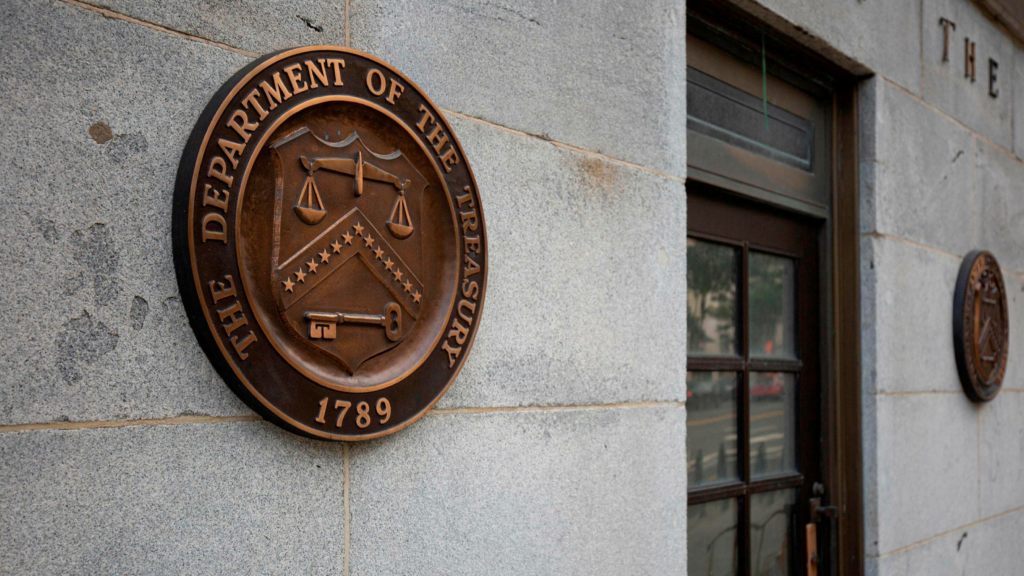
Bitcoin Mixing Services Under Fire from U.S. Treasury
The U.S. Department of the Treasury and FinCEN have proposed rules that mark bitcoin mixing as a money laundering concern, potentially outlawing the practice and infringing on individual financial privacy. In response, a legal team assembled by attorney Rafael Yakobi of The Crypto Lawyers acted on behalf of Samourai Wallet, outlining grave concerns regarding the potential overreach and impact on legitimate cybersecurity measures and privacy.
- The proposed rules could erroneously label standard security practices as suspicious and conflate them with unlawful activities, potentially violating individuals' rights and hindering their ability to protect their assets.
- The response highlights an inconsistent stance within Treasury departments on how to categorize bitcoin mixing, which may indicate an arbitrary approach to regulation. The legal team argues that existing tools and targeted enforcement against specific bad actors could more effectively address concerns without overburdening legitimate CVC users and businesses.

Bitcoin Magazine
Samourai Wallet Response To FinCEN Proposed Rules For Bitcoin Mixing
Last year FinCEN drafted a rule proposal for mixing services that was so broad, insane doesn't quite cover the degree of overstepping it was. ...
Craig Wright Seeks Settlement with COPA
Craig Wright, who claims to be Bitcoin's creator Satoshi Nakamoto, has offered a settlement to the Crypto Open Patent Alliance (COPA) to prevent a court trial over Bitcoin's intellectual property rights. He's been ordered by a UK judge to present proof of his claim by providing documents dating back to 2007, asserting his rights in court but clarifying that his litigation focus isn't on revealing his identity. Wright is offering to waive certain rights and is willing to provide an irrevocable license for Bitcoin-related technologies to enable fair competition.
- Wright's settlement includes the cessation of all legal claims and an encouragement for parties to donate legal funds to charity, stipulating no financial gains from the case for himself.
- The offer dictates no further creation, copying, or forking of new Bitcoin databases using the BTC, BCH, ABC, or BSV databases, aiming to end the dispute and allow a focus on Bitcoin development.

Decrypt
Self-Described Bitcoin Inventor Craig Wright Offers to Settle IP Case - Decrypt
Wright proposes a settlement in the dispute over Bitcoin’s creation, offering concessions to COPA ahead of the February 5 trial.
Stripe Halts Services for Bitcoin Mining Hardware Seller Bitsaga
Stripe, a prominent online payment processor, has ended its partnership with Bitsaga, a Bitcoin consultancy and payment company, due to Bitsaga's sale of Bitcoin mining hardware, which is against Stripe's terms of service. The exact details and motivations for Stripe's decision remain unclear, and the company has yet to comment publicly on the matter.
- Bitsaga's stance is that the sale of Bitcoin mining hardware is part of their commitment to supporting what they deem as a fair and open monetary system, considering Stripe's move to be discriminatory censorship.
- Stripe's customer base is broad and international, but it has historically kept a distance from businesses related to cryptocurrency mining.

CoinChapter
Stripe Dumps Bitsaga Over Mining Equipment Sales
In a decisive move, Stripe, the San Francisco-based financial services and software as a service (SaaS) company, has terminated its services for Bi...
Coin Center Challenges FinCEN's Broad Rulemaking on CVC Mixing
Coin Center, a nonprofit focused on Bitcoin policy issues, has submitted a comment to FinCEN regarding the proposed rule to label certain Bitcoin transactions, specifically CVC mixing, as a money laundering concern. Coin Center argues that this rulemaking, the first of its kind in 23 years since FinCEN was granted 311 powers, is unprecedentedly broad, could wrongfully target legitimate transaction practices meant for privacy, and does not differentiate between domestic and foreign transactions, overstepping statutory authority and potentially constitutional rights.
- The proposed rule fails to consider the potential impact on individuals using CVC mixing for legitimate privacy purposes, and lacks an adequate basis for assuming such impact will be minimal.
- The rulemaking exceeds the PATRIOT Act's limitations by not being confined to foreign transactions, as it should be per statutory language, risking the inclusion of purely domestic activities and imposing undue consequences on innocent Americans.
Coin Center
Comments to the Financial Crimes Enforcement Network on “Proposal of Special Measure Regarding Convertible Virtual Currency Mixing, as a Class of Transactions of Primary Money Laundering Concern”
A direct download of this comment is available here. To whom it may concern: Coin Center is an independent nonprofit research and advocacy center f...
U.S. Public Debt Reaches New Heights
The U.S. has hit an unprecedented level of public debt, exceeding $34 trillion, raising concerns about the country's financial stability and the future solvency of vital entitlement programs.
- Public debt is expanding in major global economies, not just the U.S.
- Without a clear solution, the U.S. faces a looming debt ceiling debate in the near future.
https://www.axios.com/2024/01/22/us-national-debt-gdp
JPMorgan's Whistleblower Obstacle Settlement
JPMorgan Chase has agreed to pay $18 million for settling SEC charges of impeding whistleblowing by requiring clients to sign confidentiality agreements that restricted their ability to report legal violations.
- The SEC identified at least 362 cases where customers, in order to receive settlements, had to forego their rights to voluntarily report to the agency.
- JPMorgan Chase has committed to halting practices that prevent individuals from contacting the SEC with evidence of wrongdoing, although the bank neither admitted nor denied the findings.
https://www.theinformation.com/briefings/jpmorgan-fined-18-million-for-whistleblower-breaches
I still haven’t forgotten that Coinbase tried to strong arm bigger Bitcoin blocks into the protocol.
Coinbase Defends Against SEC Lawsuit Amidst Industry Woes
Coinbase, the cryptocurrency exchange co-founded by Brian Armstrong, remains one of the major players in the digital asset industry, even after many high-profile competitors collapsed or faced legal issues. Despite continued expansion and a push for diversification, Coinbase is wrestling with profitability challenges and regulatory pressures. Armstrong has actively lobbied for clearer cryptocurrency regulation in the U.S. and is awaiting a federal court judge's decision on whether a high-stakes lawsuit filed by the Securities and Exchange Commission (SEC) against Coinbase will proceed. The SEC alleges that the exchange listed unregistered securities, which Coinbase disputes, emphasizing the need for clear crypto regulations.
- Coinbase has been unprofitable for multiple quarters and is looking to expand beyond reliance on crypto trading revenue, including their role as custodians in newly launched bitcoin ETFs.
- The company faces a pivotal moment with the SEC lawsuit, which could impact its business operations significantly and is part of a broader conflict over how crypto assets are regulated in the U.S.
https://archive.is/20240114111532/https://www.wsj.com/finance/currencies/coinbase-co-founder-brian-armstrong-ce1617ce
The Illusion of Transparency: Body Cameras Fail to Hold Police Accountable
While body cameras were introduced to offer transparency and accountability in policing, law enforcement agencies routinely restrict access to footage, particularly in incidents involving officer shootings. Despite significant taxpayer investment in body-worn cameras, police departments across the U.S., including the NYPD, frequently choose not to release videos, thwarting the tool's intended purpose.
- The 2017 shooting of Miguel Richards by NYPD officers, the first captured on body cameras in New York, highlighted the gap between promise and practice. The limited footage initially provided by police omitted crucial moments and withheld evidence contrary to official narratives.
- Further undermining accountability, officers involved in such shootings have faced minimal consequences, while New York's Civilian Complaint Review Board struggles to access camera footage for independent investigations, hampered by police control over the recordings.
- Despite cases demonstrating the potential for body cameras to expose misconduct, such as the wrongful shootings of civilians, major reforms or interventions from city, state, and federal officials are required to ensure body cameras serve public interests rather than police self-protection.

ProPublica
How Police Have Undermined the Promise of Body Cameras
Hundreds of millions in taxpayer dollars have been spent on what was sold as a revolution in transparency and accountability. Instead, police depar...
OpenAI Softens Stance on Military Use of Its AI Technology
OpenAI has revised its usage policy, removing explicit prohibitions on military and warfare applications of its AI tools, such as ChatGPT. The new policy language is now less specific, focusing on preventing harm rather than explicitly banning military usage.
- The change raises questions about OpenAI's approach to enforcement and its stance on assisting military operations indirectly through non-weapon applications.
- The rewrite of the usage policy also indicates a shift towards legal compliance over explicit safety measures, prompting concerns over the potential misuse of AI in military settings, given known issues such as bias and inaccuracy in large language models.

The Intercept
OpenAI Quietly Deletes Ban on Using ChatGPT for “Military and Warfare”
The Pentagon has its eye on the leading AI company, which this week softened its ban on military use.