Undisclosed UK Order Demands Apple Create Cloud Access Backdoor
Security officials in the UK have issued a secret order requiring Apple to create a backdoor for accessing the content of any user's cloud data worldwide, potentially impacting both user privacy and tech company autonomy.
- This mandate seeks access to fully encrypted material and sets a concerning precedent among major democracies.
- The order reflects ongoing tensions between tech companies and governments over user privacy and surveillance capabilities.
https://www.washingtonpost.com/technology/2025/02/07/apple-encryption-backdoor-uk/

Bitcoin
npub1dweg...s9g9
The “Strategic Bitcoin Reserve” draft feels like a serious threat to Bitcoin as usable money. Defining it as “digital gold” risks ossification, endangers self-custody, and incentivizes seizures. This isn’t policy—it’s the Block Size War 2, and nobody wants a sequel.
Probably nothing… View quoted note →
*Corporate Censorship and the Clash with Decentralized Networks*
The arrest of Telegram's founder Pavel Durov and the takedown of Bitcoin content on YouTube highlight the growing tension between state control and decentralized technologies.
- Corporations often yield to state pressure, leading to censored content and compromised principles, as seen with Google and Apple’s actions in China.
- Decentralized networks like Bitcoin and Nostr offer resistance to state repression, providing anonymity and a means to circumvent corporate and governmental control.
- These events underscore the critical need for self-custody and peer-to-peer networks to uphold privacy and counter state intrusions globally.
https://www.forbes.com/sites/digital-assets/2024/08/26/telegram-and-youtube-censorship-show-bitcoin-and-nostr-are-critical/
Decentralized Future with Nostr
Social media platforms like Facebook, X, Instagram, and TikTok face criticism for centralized control, censorship, and data misuse. In contrast, Nostr offers a decentralized and censorship-resistant alternative, allowing users to control their data and identity independently of major corporations.
- Nostr, championed by key figures like Jack Dorsey, aims to revolutionize digital communication by leveraging an open, community-run protocol similar to Bitcoin, fostering a resilient and censorship-free network.
- Users on Nostr can choose their algorithms, exercise sovereignty over their content, and receive monetary support via Bitcoin, marking a significant departure from traditional social media silos.

Reason.com
Can Nostr make Twitter’s dreams come true?
Twitter's founder says Nostr is “100 percent what we wanted”—an open, ownerless network.
Statement on Inefficiencies in Monitoring Suspicious Financial Activity
The Wolfsberg Group has identified major inefficiencies in current models for monitoring suspicious financial activities, stating that despite increased volumes of Suspicious Activity Reports (SARs) and Suspicious Transaction Reports (STRs), there is no substantial improvement in detecting and reducing financial crime.
- The existing SAR/STR filing methods are deemed inefficient and ineffective, with no uniform framework to measure their effectiveness.
- Europol and other entities have similarly found that current AML/CFT frameworks fail to confiscate most criminal profits, highlighting a need for more effective measures.

The Rage
Banks Find AML "Ineffective", Propose Access To Social Media
The world's biggest banks find monitoring for suspicious activity "ineffective". In a "True Risk-Based Approach", the group now proposes access to ...
Riot Platforms and Bitfarms Engage in High-Stakes Battle Over Bitcoin Mining
Two publicly traded bitcoin mining operators, Riot Platforms and Bitfarms, have been locked in a contentious struggle. After Bitfarms rejected a merger proposal from Riot, Riot launched an activist campaign to influence Bitfarms' corporate governance by proposing new board members and criticizing its leadership issues.
This battle highlights differing strategies post-bitcoin halving, as companies merge, expand, or diversify into AI data centers to maximize shareholder value.
- Riot has amassed a nearly 15% stake in Bitfarms and is campaigning to "fix Bitfarms' broken corporate governance."
- Bitfarms has adopted a poison pill strategy to prevent Riot from taking over.
https://www.axios.com/2024/07/10/riot-platforms-bitfarms-merger-battle
Bitcoin Mining Stocks Outperform Bitcoin Itself
Core Scientific has significantly outperformed Bitcoin itself by capitalizing on its head start post-bankruptcy and making strategic deals.
- Investors see mining stocks as a more advantageous way to gain Bitcoin exposure compared to buying the cryptocurrency directly.
- Core Scientific's deals with CoreWeave and debt restructuring have bolstered its market position, highlighting the dynamic nature of the mining industry.
https://www.axios.com/2024/07/09/core-scientific-bitcoin-miner-performance
Bitcoin's Exponential Growth Outpaces the Internet's Early Years
Bitcoin's adoption rate is surpassing that of the internet during its initial growth phase. As of 2024, the number of Bitcoin users is expected to reach around 200 million, aiming to hit 1 billion within two decades compared to the internet's 500 million users during its first twenty years.
- Bitcoin's market capitalization has skyrocketed from $1 billion in 2013 to over $1 trillion by 2021, achieving this milestone faster than major tech companies like Apple, Google, and Amazon.
- Institutional adoption and technological innovations, such as the Lightning Network, are driving forces behind Bitcoin's rapid growth, enhancing its transaction speed, reducing costs, and increasing its viability for everyday use.
- Bitcoin's decentralized nature and accessibility, particularly in regions with underdeveloped financial systems, enable swift and cost-effective cross-border transactions, further fueling its swift adoption.

Is Bitcoin really growing faster than the internet?
Aug 20, 2024
Federal Jury Convicts Florida Man in Cryptocurrency Kidnapping Scheme
A federal jury has convicted Remy St Felix of leading an international conspiracy to kidnap and rob U.S. citizens for their cryptocurrency, committing a series of violent home invasions across several states.
- The scheme involved forcibly accessing victims' cryptocurrency accounts and laundering stolen funds using anonymity-enhanced cryptocurrencies and decentralized platforms.
- St Felix faces a mandatory minimum of seven years in prison, with a potential maximum of life, following his upcoming sentencing.
Migration 5: Breaking Down the Border Surveillance Network
The Migration 5 alliance, built on post-WWII intelligence-sharing agreements and expanded significantly post-9/11, uses advanced biometrics to track individuals across borders, enabling real-time data sharing of travellers' and migrants' information among member countries: New Zealand, Australia, Canada, the US, and the UK.
- New Zealand began participating in 2011 and has since shared extensive biometric and biographic data, raising concerns about privacy, transparency, and potential misuse, especially as oversight mechanisms remain limited and data-sharing agreements remain obscure and flexible.
https://www.rnz.co.nz/programmes/in-depth-special-projects/story/2018942836/the-truth-about-the-shadowy-migration-5
Financial Privacy Illusion
Despite efforts to secure financial privacy, the government has significantly encroached on personal financial information over the past 50 years. Financial surveillance has evolved through obscure legislative changes, inflation-driven expansions, and confidentiality requirements that keep the public unaware of the true extent of government monitoring.
- Initial legislation like the Bank Secrecy Act began this shift, requiring financial institutions to report significant transactions, with subsequent laws expanding the scope of surveillance.
- Inflation further eroded privacy by not adjusting reporting thresholds, indirectly increasing the number of transactions subject to government scrutiny.
- Confidentiality laws prevent individuals from knowing if their financial activities have been reported to the government, creating a false sense of privacy.
To address these issues, raising public awareness and advocating for stronger privacy protections are essential steps.

Reason.com
The illusion of financial privacy
Think you have financial privacy? Think again. Decades of obscure laws—and inflation—have quietly eroded your rights.
**Coin Center Criticizes FinCEN's Rule on CVC Mixing**
Coin Center argues that FinCEN's proposal to classify convertible virtual currency (CVC) mixing as a primary money laundering concern (PMLC) is overly broad and unprecedented. They assert it could wrongly affect many legitimate transactions, infringing on individuals' constitutional rights without due process.
- Coin Center highlights the lack of clear guidelines, which could lead to erroneous reporting of lawful domestic transactions.
- They urge FinCEN to refine the rule, incorporating clearer definitions and procedural fairness to prevent undue economic and reputational harm to innocent parties.
Coin Center
Comments to the Financial Crimes Enforcement Network on “Proposal of Special Measure Regarding Convertible Virtual Currency Mixing, as a Class of Transactions of Primary Money Laundering Concern”
A direct download of this comment is available here. To whom it may concern: Coin Center is an independent nonprofit research and advocacy center f...
Joseph Cox Unveils FBI’s Encrypted Phone Sting in New Book
Joseph Cox, co-founder of 404 Media and renowned cybersecurity reporter, discussed his upcoming book "Dark Wire: The Incredible True Story of the Largest Sting Operation Ever" on the Decoder podcast. The book narrates how the FBI ran a secure phone company called Anom for three years to spy on criminals globally by infiltrating the encrypted phone market used by drug traffickers.
- The FBI's operation succeeded in providing law enforcement agencies with unparalleled access to criminal communications, highlighting the ongoing tension between privacy and security in technology.
- The rise of apps like Signal has shifted criminal communications away from specialized hardware, presenting new challenges in maintaining both security and privacy.

The Verge
The absolutely wild, true story of Anom, the FBI’s secret phone startup to wire tap criminals
Cybersecurity journalist Joseph Cox joins Decoder to discuss his new book Dark Wire all about the FBI’s secretive secure phone startup.
### Spam Attack on Bluesky Highlights Vulnerabilities in Decentralized Networks
A recent spam attack on Bluesky, facilitated through botnets leveraging "bridges" between decentralized networks Mastodon and Nostr, exemplifies the vulnerabilities inherent in federated social media systems. The attack saw a flood of "vote Trump" messages infiltrate Bluesky, demonstrating the complexities and challenges of maintaining security in interconnected decentralized platforms.
- The bots exploited interoperability bridges, transferring spam from Nostr to Mastodon and finally to Bluesky.
- The incident raises significant questions about the nature of consent and network inclusion within federated social media systems like Bluesky and Mastodon.

TechCrunch
The 'vote Trump' spam that hit Bluesky in May came from decentralized rival Nostr | TechCrunch
The spam reached Bluesky by first crossing over two other decentralized networks: Mastodon and Nostr.
Biden's New Battle on Bitcoin Privacy
The Biden administration has initiated stringent measures on Bitcoin privacy, leading to notable disruptions in the U.S. Bitcoin ecosystem. Recent incidents include the arrests of several Bitcoin privacy tool developers, such as those from Samourai Wallet and Tornado Cash. Actions such as these against key individuals in the Bitcoin community underscore an intensified crackdown on cryptocurrency privacy, fueling concerns over the implications for financial autonomy and privacy.
- Government officials are cautious but acknowledge the potential overreach of such measures, hinting at a complex interplay of political and ideological motives behind the crackdown.
- The dialogue at the Financial Times’ Crypto and Digital Assets Summit revealed a disparity between the harsh governmental actions and the perspectives of individual officials who advocate for clearer and fairer regulations to support Bitcoin's growth and integration into commercial frameworks, emphasizing the need for a balanced approach to regulation.

The Rage
Open Source Arrests: US Officials Sour on Biden’s War on Privacy
Biden is waging war on financial privacy, and not everyone is happy.
The last several weeks have weighed heavily on those in Bitcoin who use pri...
Euthanized by the State
In Canada, the availability of Medical Assistance in Dying (MAiD) has been criticized for potentially leading individuals in socioeconomic distress or those with disabilities to opt for assisted death due to inadequate social welfare and healthcare systems. A report highlights how MAiD, while intended for terminal illnesses, has been chosen by individuals with non-life-threatening conditions, like hearing loss, driven by a lack of adequate care or poverty.
- Amidst rising housing and living costs, those on disability support or welfare in Ontario face severe financial strains, pushing some towards considering MAiD.
- Legal and ethical debates intensify around the extension of MAiD to include mental illnesses, with concerns that it might prematurely end lives of those who could have lived longer with proper support and care.

The Canadian State Is Euthanizing Its Poor and Disabled
Canada boasts one of the world’s highest assisted-death rates, supposedly enabling the terminally ill to die with dignity. However, this suicide ...
Revolutionizing Payments with BOLT12
BOLT12, the new payment protocol on the Lightning Network, offers greater privacy and efficiency without requiring dedicated servers. It introduces reusable offers and invoices that enhance security and privacy through features like onion messages and blinded paths, which obscure transaction details and participant identities effectively.
- BOLT12 simplifies transactions by allowing offers to replace the traditional, cumbersome BOLT11 invoices, thereby enabling smaller QR codes and stateless transactions.
- This protocol ensures increased anonymity with the use of blinded paths and unique keys for each transaction, making it difficult to trace payments back to the participants.

Lightning Dev Kit Documentation
BOLT12 Has Arrived
BOLT12 offers enhanced privacy, reusable payment codes, refunds, and much more, all natively over the Lightning Network.
FTX Settlement Agreement
Investors of the failed cryptocurrency exchange FTX have agreed to drop their claims against the company’s founder Sam Bankman-Fried (SBF) in exchange for his cooperation against celebrities like Tom Brady and Shaquille O’Neal, who endorsed FTX. This settlement, tentatively valued at $1.3 million, is part of a larger strategy to hold accountable the public figures who promoted the platform. SBF, recently sentenced to 25 years for fraud, will assist by providing documents and an affidavit of his negative net worth.
- The focus on celebrities, who allegedly attracted investors to FTX under false pretenses, raises questions about accountability and liability of endorsers in financial promotions.
- This cooperative agreement follows significant testimonies from other FTX executives and highlights the broader implications of the FTX collapse within celebrity and financial landscapes.

Bitget
FTX Bankman-Fried Strikes Deal to Pursue Celeb Promoters for $1.3M | Bitget News
FTX investors dropped claims against SBF for cooperation in pursuing celebrity promoters. SBF will assist in targeting Tom Brady and Shaquille ...
IMF Pressures El Salvador on Bitcoin Law
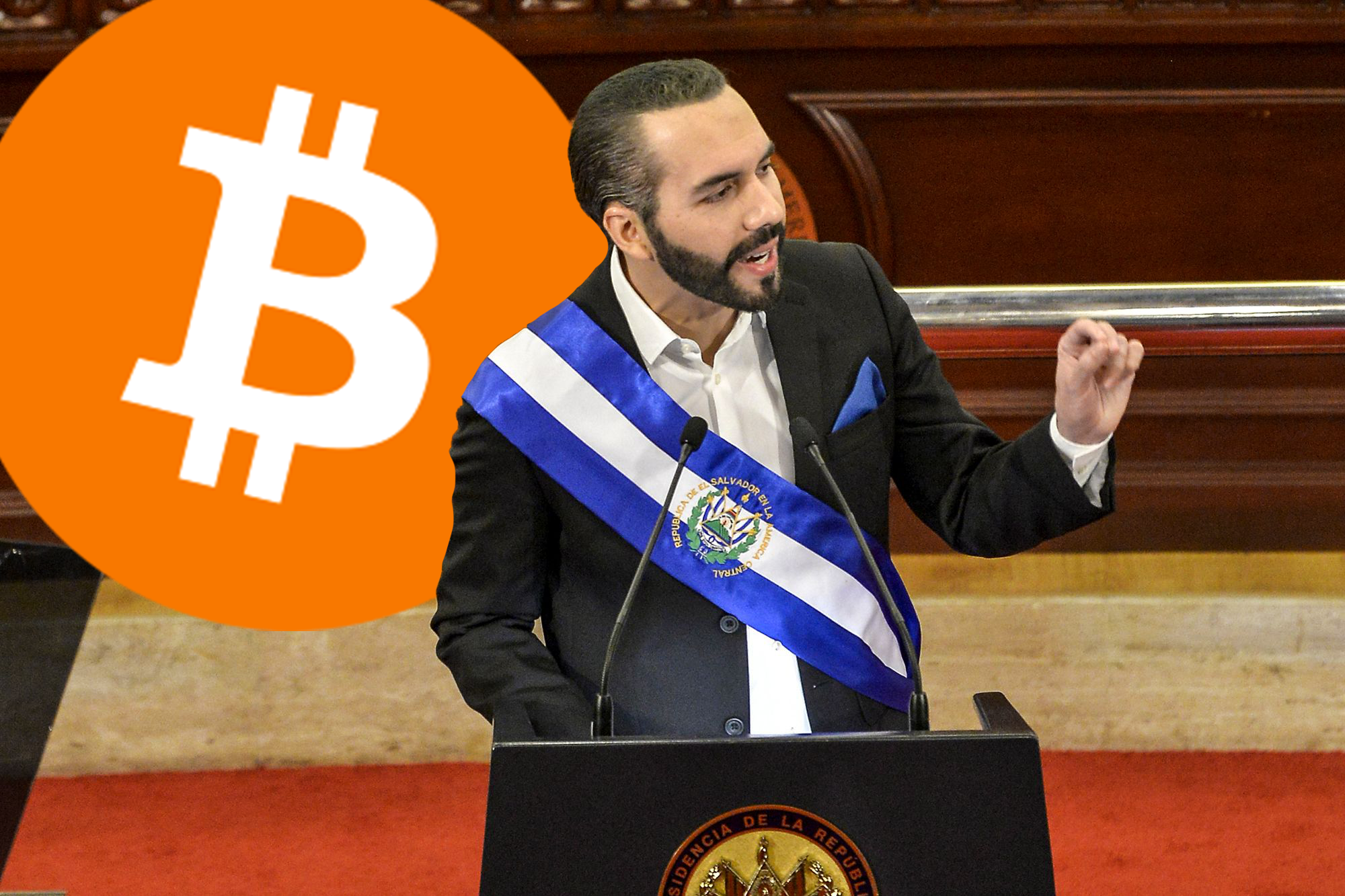
The International Monetary Fund (IMF) is challenging El Salvador's Bitcoin policy, straining negotiations over a needed $1.4 billion credit line. The IMF's concerns with the country's pioneering move to adopt Bitcoin as legal tender include financial stability and integrity risks, putting President Nayib Bukele's vision of financial inclusion and economic innovation at odds with the global financial institution. Despite the IMF's stance, El Salvador remains committed to its Bitcoin strategy, highlighting a broader conflict over monetary sovereignty and the future of decentralized finance.
- El Salvador's adoption of Bitcoin aimed to enhance financial inclusion and reduce reliance on traditional banking systems.
- The disagreement with the IMF underscores a significant ideological and practical rift between global financial institutions and nations exploring cryptocurrency as a legal tender.
Bitcoin Magazine
The IMF Is Still Demanding Changes To El Salvador's Bitcoin Law: Report
The IMF is reportedly demanding changes to El Salvador's pioneering Bitcoin law amid $1.4 billion credit negotiations, underscoring tensions o...