
Samuel Gabriel
SamuelGabrielSG@primal.net
npub1dw6j...eya5
Explorer of Cyberspace
Writing: samuelgabrielsg.substack.com
Art: samuelgabrielsg.redbubble.com
Podcast: open.spotify.com/show/2xiLBXYetJ8rOK5I10kRPb



Quite the headline. 
Why Iran Can’t Get the Bomb Just Because Israel Has It
Non-Proliferation Isn’t Hypocrisy — It’s Survival
 The argument sounds simple: “If Israel has nuclear weapons, why can’t Iran?” But that line of reasoning quickly unravels once you follow it to its logical conclusion. If one country justifies its nuclear ambitions based on another’s possession, then every nation on Earth could make the same claim. The result? A world where 200 countries are armed with weapons capable of ending civilization. That’s not fairness — that’s insanity.
The U.S. Position: Fewer Nukes, Fewer Risks
Washington’s stance against nuclear proliferation isn’t about favoritism; it’s rooted in real-world risk management. The more countries with nuclear weapons, the greater the odds of:
Accidents — technical failures, false alarms, miscommunications
Escalations — regional conflicts turning apocalyptic overnight
Terrorist access — weak states losing control of their arsenals
Fewer nuclear-armed nations mean fewer chances for a world-ending mistake. That’s not ideology — it’s common sense.
The Domino Effect: A Nuclear Middle East
If Iran acquires nuclear weapons, it won’t end there. Saudi Arabia has already stated it will follow suit. Other regional powers — Turkey, Egypt, the UAE — could be next. Instead of stabilizing the region, Iran going nuclear would ignite a chain reaction.
The result wouldn’t be peace through parity — it would be a hair-trigger standoff in one of the world’s most volatile regions.
You Can’t Un-Invent the Bomb
The issue isn’t that Israel has nukes. The issue is that no one gives them up. Nuclear disarmament is voluntary and exceedingly rare. Once a country crosses that threshold, reversing it is almost impossible.
Allowing more nations to go nuclear is like summoning demons into a fragile room — each one controlled by a government with shifting interests and internal pressures. Multiply that by 200 and you’re not talking about justice — you’re talking about annihilation.
This isn’t about hypocrisy. It’s about survival. The world is already dangerous with a handful of nuclear powers. Expanding that club doesn’t make it safer — it makes it terminal.
There are no do-overs in nuclear warfare. The goal of non-proliferation isn’t to preserve unfairness — it’s to prevent the end. And that’s a line worth drawing.
The argument sounds simple: “If Israel has nuclear weapons, why can’t Iran?” But that line of reasoning quickly unravels once you follow it to its logical conclusion. If one country justifies its nuclear ambitions based on another’s possession, then every nation on Earth could make the same claim. The result? A world where 200 countries are armed with weapons capable of ending civilization. That’s not fairness — that’s insanity.
The U.S. Position: Fewer Nukes, Fewer Risks
Washington’s stance against nuclear proliferation isn’t about favoritism; it’s rooted in real-world risk management. The more countries with nuclear weapons, the greater the odds of:
Accidents — technical failures, false alarms, miscommunications
Escalations — regional conflicts turning apocalyptic overnight
Terrorist access — weak states losing control of their arsenals
Fewer nuclear-armed nations mean fewer chances for a world-ending mistake. That’s not ideology — it’s common sense.
The Domino Effect: A Nuclear Middle East
If Iran acquires nuclear weapons, it won’t end there. Saudi Arabia has already stated it will follow suit. Other regional powers — Turkey, Egypt, the UAE — could be next. Instead of stabilizing the region, Iran going nuclear would ignite a chain reaction.
The result wouldn’t be peace through parity — it would be a hair-trigger standoff in one of the world’s most volatile regions.
You Can’t Un-Invent the Bomb
The issue isn’t that Israel has nukes. The issue is that no one gives them up. Nuclear disarmament is voluntary and exceedingly rare. Once a country crosses that threshold, reversing it is almost impossible.
Allowing more nations to go nuclear is like summoning demons into a fragile room — each one controlled by a government with shifting interests and internal pressures. Multiply that by 200 and you’re not talking about justice — you’re talking about annihilation.
This isn’t about hypocrisy. It’s about survival. The world is already dangerous with a handful of nuclear powers. Expanding that club doesn’t make it safer — it makes it terminal.
There are no do-overs in nuclear warfare. The goal of non-proliferation isn’t to preserve unfairness — it’s to prevent the end. And that’s a line worth drawing.
The argument sounds simple: “If Israel has nuclear weapons, why can’t Iran?” But that line of reasoning quickly unravels once you follow it to its logical conclusion. If one country justifies its nuclear ambitions based on another’s possession, then every nation on Earth could make the same claim. The result? A world where 200 countries are armed with weapons capable of ending civilization. That’s not fairness — that’s insanity.
The U.S. Position: Fewer Nukes, Fewer Risks
Washington’s stance against nuclear proliferation isn’t about favoritism; it’s rooted in real-world risk management. The more countries with nuclear weapons, the greater the odds of:
Accidents — technical failures, false alarms, miscommunications
Escalations — regional conflicts turning apocalyptic overnight
Terrorist access — weak states losing control of their arsenals
Fewer nuclear-armed nations mean fewer chances for a world-ending mistake. That’s not ideology — it’s common sense.
The Domino Effect: A Nuclear Middle East
If Iran acquires nuclear weapons, it won’t end there. Saudi Arabia has already stated it will follow suit. Other regional powers — Turkey, Egypt, the UAE — could be next. Instead of stabilizing the region, Iran going nuclear would ignite a chain reaction.
The result wouldn’t be peace through parity — it would be a hair-trigger standoff in one of the world’s most volatile regions.
You Can’t Un-Invent the Bomb
The issue isn’t that Israel has nukes. The issue is that no one gives them up. Nuclear disarmament is voluntary and exceedingly rare. Once a country crosses that threshold, reversing it is almost impossible.
Allowing more nations to go nuclear is like summoning demons into a fragile room — each one controlled by a government with shifting interests and internal pressures. Multiply that by 200 and you’re not talking about justice — you’re talking about annihilation.
This isn’t about hypocrisy. It’s about survival. The world is already dangerous with a handful of nuclear powers. Expanding that club doesn’t make it safer — it makes it terminal.
There are no do-overs in nuclear warfare. The goal of non-proliferation isn’t to preserve unfairness — it’s to prevent the end. And that’s a line worth drawing.


The Future of Social Media: Where Attention, Commerce, and Identity Converge
 As the internet continues to reshape how people communicate, work, and consume, social media is undergoing a transformation. No longer just a place for sharing updates or entertainment, emerging platforms are beginning to combine multiple economic functions—attention, products, and services—within a single digital space.
This shift is laying the groundwork for a new type of platform: the integrated digital economy, or what some call a super app. Unlike traditional social media, these platforms are evolving into multi-economy environments where users can engage, earn, and transact—all without leaving the app.
Attention as a Market
The foundation of this new environment is the attention economy. Users compete for visibility using content designed to capture time, emotion, or clicks. In this model, attention becomes a form of currency. Those who are able to consistently draw interest—whether through entertainment, commentary, or educational content—build followings and influence.
This attention often becomes the gateway to other forms of economic activity. Influencers, creators, journalists, and thought leaders convert views and likes into trust and recognition. From there, new opportunities emerge—such as monetizing content, building communities, or launching products and services.
Products and Services as Embedded Economies
Beyond engagement, users are increasingly expecting platforms to support commerce. This includes selling physical goods, digital products, and services ranging from consulting to education. As these expectations grow, platforms are beginning to integrate direct-to-consumer tools, such as:
Creator storefronts
Tipping and subscriptions
In-app shopping and affiliate links
Calendar-based service bookings
This development enables a fluid transition from content to commerce. A viewer might watch a livestream, tip the host, purchase merchandise, or schedule a session—all within one interface.
Platform Convergence and the Super App Model
The integration of multiple economic layers within a single platform mirrors the functionality of a "super app." Already common in parts of Asia, this model combines social features with payments, product marketplaces, and service access. While no Western platform has fully achieved this status, several are moving in that direction:
YouTube has integrated tipping, memberships, and product links.
Twitter/X supports long-form content, subscriptions, and crypto-based tips.
Instagram and TikTok offer product sales, creator funds, and live shopping.
Substack and Patreon bridge content with paid communities and service-based offerings.
Meta (WhatsApp/Threads) is testing payment systems and business tools in international markets.
The goal across these efforts appears to be the same: create a more complete, self-contained digital environment that fulfills multiple user needs.
Why This Model Is Gaining Traction
Several trends are driving this convergence:
User Demand for Flexibility
Audiences increasingly want to do more with fewer platforms—consuming content, paying creators, buying goods, and accessing services from a single point of entry.
Creator Economy Growth
The global creator economy is growing rapidly, with more people monetizing their work independently. Tools that support multiple income streams—ads, subscriptions, product sales—are in high demand.
Payment Infrastructure Advancements
Innovations in digital wallets, crypto (e.g., Bitcoin Lightning), and API-based payments are making it easier for platforms to integrate direct transactions.
Economic Incentive for Platforms
By embedding trade and services, platforms unlock new revenue sources and strengthen user retention through economic engagement.
What This Means for the Future
Social media platforms are evolving into something more than just communication tools—they are becoming full-fledged digital economies. By hosting attention, products, and services in one place, they begin to function like ecosystems, not just apps.
The result may be platforms that:
Host real-time discourse on politics, science, and culture
Allow creators to earn directly from their audiences
Facilitate peer-to-peer commerce
Support native identity and reputation systems
Operate as hubs for both free expression and economic opportunity
This trend is not yet complete, but the signs are clear. Whether it comes from a tech giant, a decentralized network, or an emerging platform, the convergence of these markets points toward a future where social interaction and economic activity are no longer separate digital spaces—but part of a unified experience.
If you want to support my work, I accept Bitcoin tips.
As the internet continues to reshape how people communicate, work, and consume, social media is undergoing a transformation. No longer just a place for sharing updates or entertainment, emerging platforms are beginning to combine multiple economic functions—attention, products, and services—within a single digital space.
This shift is laying the groundwork for a new type of platform: the integrated digital economy, or what some call a super app. Unlike traditional social media, these platforms are evolving into multi-economy environments where users can engage, earn, and transact—all without leaving the app.
Attention as a Market
The foundation of this new environment is the attention economy. Users compete for visibility using content designed to capture time, emotion, or clicks. In this model, attention becomes a form of currency. Those who are able to consistently draw interest—whether through entertainment, commentary, or educational content—build followings and influence.
This attention often becomes the gateway to other forms of economic activity. Influencers, creators, journalists, and thought leaders convert views and likes into trust and recognition. From there, new opportunities emerge—such as monetizing content, building communities, or launching products and services.
Products and Services as Embedded Economies
Beyond engagement, users are increasingly expecting platforms to support commerce. This includes selling physical goods, digital products, and services ranging from consulting to education. As these expectations grow, platforms are beginning to integrate direct-to-consumer tools, such as:
Creator storefronts
Tipping and subscriptions
In-app shopping and affiliate links
Calendar-based service bookings
This development enables a fluid transition from content to commerce. A viewer might watch a livestream, tip the host, purchase merchandise, or schedule a session—all within one interface.
Platform Convergence and the Super App Model
The integration of multiple economic layers within a single platform mirrors the functionality of a "super app." Already common in parts of Asia, this model combines social features with payments, product marketplaces, and service access. While no Western platform has fully achieved this status, several are moving in that direction:
YouTube has integrated tipping, memberships, and product links.
Twitter/X supports long-form content, subscriptions, and crypto-based tips.
Instagram and TikTok offer product sales, creator funds, and live shopping.
Substack and Patreon bridge content with paid communities and service-based offerings.
Meta (WhatsApp/Threads) is testing payment systems and business tools in international markets.
The goal across these efforts appears to be the same: create a more complete, self-contained digital environment that fulfills multiple user needs.
Why This Model Is Gaining Traction
Several trends are driving this convergence:
User Demand for Flexibility
Audiences increasingly want to do more with fewer platforms—consuming content, paying creators, buying goods, and accessing services from a single point of entry.
Creator Economy Growth
The global creator economy is growing rapidly, with more people monetizing their work independently. Tools that support multiple income streams—ads, subscriptions, product sales—are in high demand.
Payment Infrastructure Advancements
Innovations in digital wallets, crypto (e.g., Bitcoin Lightning), and API-based payments are making it easier for platforms to integrate direct transactions.
Economic Incentive for Platforms
By embedding trade and services, platforms unlock new revenue sources and strengthen user retention through economic engagement.
What This Means for the Future
Social media platforms are evolving into something more than just communication tools—they are becoming full-fledged digital economies. By hosting attention, products, and services in one place, they begin to function like ecosystems, not just apps.
The result may be platforms that:
Host real-time discourse on politics, science, and culture
Allow creators to earn directly from their audiences
Facilitate peer-to-peer commerce
Support native identity and reputation systems
Operate as hubs for both free expression and economic opportunity
This trend is not yet complete, but the signs are clear. Whether it comes from a tech giant, a decentralized network, or an emerging platform, the convergence of these markets points toward a future where social interaction and economic activity are no longer separate digital spaces—but part of a unified experience.
If you want to support my work, I accept Bitcoin tips.

As the internet continues to reshape how people communicate, work, and consume, social media is undergoing a transformation. No longer just a place for sharing updates or entertainment, emerging platforms are beginning to combine multiple economic functions—attention, products, and services—within a single digital space.
This shift is laying the groundwork for a new type of platform: the integrated digital economy, or what some call a super app. Unlike traditional social media, these platforms are evolving into multi-economy environments where users can engage, earn, and transact—all without leaving the app.
Attention as a Market
The foundation of this new environment is the attention economy. Users compete for visibility using content designed to capture time, emotion, or clicks. In this model, attention becomes a form of currency. Those who are able to consistently draw interest—whether through entertainment, commentary, or educational content—build followings and influence.
This attention often becomes the gateway to other forms of economic activity. Influencers, creators, journalists, and thought leaders convert views and likes into trust and recognition. From there, new opportunities emerge—such as monetizing content, building communities, or launching products and services.
Products and Services as Embedded Economies
Beyond engagement, users are increasingly expecting platforms to support commerce. This includes selling physical goods, digital products, and services ranging from consulting to education. As these expectations grow, platforms are beginning to integrate direct-to-consumer tools, such as:
Creator storefronts
Tipping and subscriptions
In-app shopping and affiliate links
Calendar-based service bookings
This development enables a fluid transition from content to commerce. A viewer might watch a livestream, tip the host, purchase merchandise, or schedule a session—all within one interface.
Platform Convergence and the Super App Model
The integration of multiple economic layers within a single platform mirrors the functionality of a "super app." Already common in parts of Asia, this model combines social features with payments, product marketplaces, and service access. While no Western platform has fully achieved this status, several are moving in that direction:
YouTube has integrated tipping, memberships, and product links.
Twitter/X supports long-form content, subscriptions, and crypto-based tips.
Instagram and TikTok offer product sales, creator funds, and live shopping.
Substack and Patreon bridge content with paid communities and service-based offerings.
Meta (WhatsApp/Threads) is testing payment systems and business tools in international markets.
The goal across these efforts appears to be the same: create a more complete, self-contained digital environment that fulfills multiple user needs.
Why This Model Is Gaining Traction
Several trends are driving this convergence:
User Demand for Flexibility
Audiences increasingly want to do more with fewer platforms—consuming content, paying creators, buying goods, and accessing services from a single point of entry.
Creator Economy Growth
The global creator economy is growing rapidly, with more people monetizing their work independently. Tools that support multiple income streams—ads, subscriptions, product sales—are in high demand.
Payment Infrastructure Advancements
Innovations in digital wallets, crypto (e.g., Bitcoin Lightning), and API-based payments are making it easier for platforms to integrate direct transactions.
Economic Incentive for Platforms
By embedding trade and services, platforms unlock new revenue sources and strengthen user retention through economic engagement.
What This Means for the Future
Social media platforms are evolving into something more than just communication tools—they are becoming full-fledged digital economies. By hosting attention, products, and services in one place, they begin to function like ecosystems, not just apps.
The result may be platforms that:
Host real-time discourse on politics, science, and culture
Allow creators to earn directly from their audiences
Facilitate peer-to-peer commerce
Support native identity and reputation systems
Operate as hubs for both free expression and economic opportunity
This trend is not yet complete, but the signs are clear. Whether it comes from a tech giant, a decentralized network, or an emerging platform, the convergence of these markets points toward a future where social interaction and economic activity are no longer separate digital spaces—but part of a unified experience.
If you want to support my work, I accept Bitcoin tips.
Local Tax Tyranny: Why Cities Like NYC Can’t Be Allowed to Shake Down Out-of-State Businesses
 New York City mayoral candidate Zohran Mamdani has proposed a radical policy: require all companies doing business in New York City to pay the city’s corporate tax rate—even if they’re not headquartered in the city.
To some, this sounds fair. After all, if companies profit from New Yorkers, shouldn’t they help pay for city services? But under the surface, this proposal is a constitutional and economic landmine—and if Congress doesn’t act, it could set a dangerous precedent for local corruption and national division.
The Constitutional Guardrail: The Commerce Clause
The U.S. Constitution gives Congress—not cities—the authority to regulate commerce between states. This power was designed to ensure the country remains a unified economic system, not a collection of rival tax kingdoms.
The courts have long interpreted this rule through something called the Dormant Commerce Clause, which blocks state and local governments from:
Discriminating against out-of-state businesses
Creating unfair or excessive burdens for them
Trying to control what happens in other states
Mamdani’s proposal steps directly into that danger zone.
How the Law Actually Works
To be legal under the Dormant Commerce Clause, local tax policies targeting out-of-state businesses must follow four key rules:
1. Substantial Nexus
There must be a real, meaningful business connection to the city.
✅ Example: A food delivery company operating in NYC daily
❌ Example: A candle shop in Ohio that ships three boxes a year to Manhattan
2. Fair Apportionment
Only the portion of income earned in the city can be taxed.
✅ NYC taxes the 5% of revenue a company earns from local sales
❌ NYC taxes a company’s total nationwide profits
3. No Discrimination
Out-of-state and in-state businesses must be treated equally.
✅ Everyone pays the same rate
❌ Out-of-state companies pay higher taxes
4. No Undue Burden
The tax rules must be simple and reasonable to follow.
✅ Companies file a standard online form
❌ A small business in Kansas needs NYC accountants to avoid fines
What Happens If Congress Lets This Slide?
If cities and states are allowed to tax beyond their borders without restraint, it would unleash a wave of corruption, retaliation, and economic instability. Here’s what that could look like:
1. Extortion Disguised as Revenue
San Francisco demands that online companies pay a 15% “infrastructure fee” unless they open a local office and hire 20 employees.
This isn’t tax policy—it’s economic blackmail.
2. Political Favors for Donors
A Chicago mayor exempts a grocery chain that donated to their campaign from a new out-of-state tax, while smaller competitors from Indiana get hit with the full rate.
This turns taxation into legalized bribery.
3. Weaponized Ideology
Los Angeles taxes out-of-state firearm companies. Texas retaliates by taxing LGBTQ+ clothing brands.
Now taxes are no longer about revenue—they’re about punishing political opponents.
4. Slush Funds and Fake Solutions
NYC uses the new tax revenue to fund a “public grocery store” that ends up overstaffed, overpriced, and run by the mayor’s cousin.
This is how you turn public programs into corrupt cash machines.
5. Economic Civil War
NYC taxes Florida businesses. Florida taxes NYC-based finance firms. California hits Midwest farmers. Texas targets California media.
Welcome to a nationwide trade war, where consumers lose and small businesses collapse under the weight of red tape.
6. Coercion and Censorship
A mayor threatens new taxes on companies that don’t adopt a “social justice code of conduct.”
Taxation becomes a tool of forced speech and ideological control.
The Bottom Line: Congress Must Act
The Founders knew what they were doing when they centralized power over interstate commerce in Congress. Letting cities like New York go rogue with tax policy risks unraveling the national economy into a collection of fiefdoms—each one extorting outsiders and rewarding insiders.
What Mamdani is proposing isn’t bold or progressive. It’s a blueprint for systemic abuse, and if it spreads, no business in America will be safe from political retribution disguised as tax reform.
If you want to support my work, I accept Bitcoin tips.
New York City mayoral candidate Zohran Mamdani has proposed a radical policy: require all companies doing business in New York City to pay the city’s corporate tax rate—even if they’re not headquartered in the city.
To some, this sounds fair. After all, if companies profit from New Yorkers, shouldn’t they help pay for city services? But under the surface, this proposal is a constitutional and economic landmine—and if Congress doesn’t act, it could set a dangerous precedent for local corruption and national division.
The Constitutional Guardrail: The Commerce Clause
The U.S. Constitution gives Congress—not cities—the authority to regulate commerce between states. This power was designed to ensure the country remains a unified economic system, not a collection of rival tax kingdoms.
The courts have long interpreted this rule through something called the Dormant Commerce Clause, which blocks state and local governments from:
Discriminating against out-of-state businesses
Creating unfair or excessive burdens for them
Trying to control what happens in other states
Mamdani’s proposal steps directly into that danger zone.
How the Law Actually Works
To be legal under the Dormant Commerce Clause, local tax policies targeting out-of-state businesses must follow four key rules:
1. Substantial Nexus
There must be a real, meaningful business connection to the city.
✅ Example: A food delivery company operating in NYC daily
❌ Example: A candle shop in Ohio that ships three boxes a year to Manhattan
2. Fair Apportionment
Only the portion of income earned in the city can be taxed.
✅ NYC taxes the 5% of revenue a company earns from local sales
❌ NYC taxes a company’s total nationwide profits
3. No Discrimination
Out-of-state and in-state businesses must be treated equally.
✅ Everyone pays the same rate
❌ Out-of-state companies pay higher taxes
4. No Undue Burden
The tax rules must be simple and reasonable to follow.
✅ Companies file a standard online form
❌ A small business in Kansas needs NYC accountants to avoid fines
What Happens If Congress Lets This Slide?
If cities and states are allowed to tax beyond their borders without restraint, it would unleash a wave of corruption, retaliation, and economic instability. Here’s what that could look like:
1. Extortion Disguised as Revenue
San Francisco demands that online companies pay a 15% “infrastructure fee” unless they open a local office and hire 20 employees.
This isn’t tax policy—it’s economic blackmail.
2. Political Favors for Donors
A Chicago mayor exempts a grocery chain that donated to their campaign from a new out-of-state tax, while smaller competitors from Indiana get hit with the full rate.
This turns taxation into legalized bribery.
3. Weaponized Ideology
Los Angeles taxes out-of-state firearm companies. Texas retaliates by taxing LGBTQ+ clothing brands.
Now taxes are no longer about revenue—they’re about punishing political opponents.
4. Slush Funds and Fake Solutions
NYC uses the new tax revenue to fund a “public grocery store” that ends up overstaffed, overpriced, and run by the mayor’s cousin.
This is how you turn public programs into corrupt cash machines.
5. Economic Civil War
NYC taxes Florida businesses. Florida taxes NYC-based finance firms. California hits Midwest farmers. Texas targets California media.
Welcome to a nationwide trade war, where consumers lose and small businesses collapse under the weight of red tape.
6. Coercion and Censorship
A mayor threatens new taxes on companies that don’t adopt a “social justice code of conduct.”
Taxation becomes a tool of forced speech and ideological control.
The Bottom Line: Congress Must Act
The Founders knew what they were doing when they centralized power over interstate commerce in Congress. Letting cities like New York go rogue with tax policy risks unraveling the national economy into a collection of fiefdoms—each one extorting outsiders and rewarding insiders.
What Mamdani is proposing isn’t bold or progressive. It’s a blueprint for systemic abuse, and if it spreads, no business in America will be safe from political retribution disguised as tax reform.
If you want to support my work, I accept Bitcoin tips.

New York City mayoral candidate Zohran Mamdani has proposed a radical policy: require all companies doing business in New York City to pay the city’s corporate tax rate—even if they’re not headquartered in the city.
To some, this sounds fair. After all, if companies profit from New Yorkers, shouldn’t they help pay for city services? But under the surface, this proposal is a constitutional and economic landmine—and if Congress doesn’t act, it could set a dangerous precedent for local corruption and national division.
The Constitutional Guardrail: The Commerce Clause
The U.S. Constitution gives Congress—not cities—the authority to regulate commerce between states. This power was designed to ensure the country remains a unified economic system, not a collection of rival tax kingdoms.
The courts have long interpreted this rule through something called the Dormant Commerce Clause, which blocks state and local governments from:
Discriminating against out-of-state businesses
Creating unfair or excessive burdens for them
Trying to control what happens in other states
Mamdani’s proposal steps directly into that danger zone.
How the Law Actually Works
To be legal under the Dormant Commerce Clause, local tax policies targeting out-of-state businesses must follow four key rules:
1. Substantial Nexus
There must be a real, meaningful business connection to the city.
✅ Example: A food delivery company operating in NYC daily
❌ Example: A candle shop in Ohio that ships three boxes a year to Manhattan
2. Fair Apportionment
Only the portion of income earned in the city can be taxed.
✅ NYC taxes the 5% of revenue a company earns from local sales
❌ NYC taxes a company’s total nationwide profits
3. No Discrimination
Out-of-state and in-state businesses must be treated equally.
✅ Everyone pays the same rate
❌ Out-of-state companies pay higher taxes
4. No Undue Burden
The tax rules must be simple and reasonable to follow.
✅ Companies file a standard online form
❌ A small business in Kansas needs NYC accountants to avoid fines
What Happens If Congress Lets This Slide?
If cities and states are allowed to tax beyond their borders without restraint, it would unleash a wave of corruption, retaliation, and economic instability. Here’s what that could look like:
1. Extortion Disguised as Revenue
San Francisco demands that online companies pay a 15% “infrastructure fee” unless they open a local office and hire 20 employees.
This isn’t tax policy—it’s economic blackmail.
2. Political Favors for Donors
A Chicago mayor exempts a grocery chain that donated to their campaign from a new out-of-state tax, while smaller competitors from Indiana get hit with the full rate.
This turns taxation into legalized bribery.
3. Weaponized Ideology
Los Angeles taxes out-of-state firearm companies. Texas retaliates by taxing LGBTQ+ clothing brands.
Now taxes are no longer about revenue—they’re about punishing political opponents.
4. Slush Funds and Fake Solutions
NYC uses the new tax revenue to fund a “public grocery store” that ends up overstaffed, overpriced, and run by the mayor’s cousin.
This is how you turn public programs into corrupt cash machines.
5. Economic Civil War
NYC taxes Florida businesses. Florida taxes NYC-based finance firms. California hits Midwest farmers. Texas targets California media.
Welcome to a nationwide trade war, where consumers lose and small businesses collapse under the weight of red tape.
6. Coercion and Censorship
A mayor threatens new taxes on companies that don’t adopt a “social justice code of conduct.”
Taxation becomes a tool of forced speech and ideological control.
The Bottom Line: Congress Must Act
The Founders knew what they were doing when they centralized power over interstate commerce in Congress. Letting cities like New York go rogue with tax policy risks unraveling the national economy into a collection of fiefdoms—each one extorting outsiders and rewarding insiders.
What Mamdani is proposing isn’t bold or progressive. It’s a blueprint for systemic abuse, and if it spreads, no business in America will be safe from political retribution disguised as tax reform.
If you want to support my work, I accept Bitcoin tips.
Self-Verification Is Your Best Defense: How Listing Your Official Platforms Protects Against Impersonation
 As impersonation scams explode across social media, messaging apps, and Web3 platforms, creators and public figures face a growing threat: fake accounts claiming to be them, reaching out with scams, or spreading false messages. Most people wait for platforms to hand them a blue check. That’s a mistake. In today’s fractured digital environment, the most reliable defense is one you control: self-verification.
What Is Self-Verification?
Self-verification is the act of publicly listing all your real platforms, contact methods, and public keys in one clear, accessible location. Think of it as your digital fingerprint — a master list that says, “This is where I actually exist online.”
Unlike third-party verification, which depends on algorithms and subjective reviews, self-verification is proactive, fast, and completely under your control. It lets your audience quickly verify if an account claiming to be you is legitimate. If it’s not on the list, it’s not you.
Why It Works
Impersonators thrive in ambiguity. They often create fake versions of people on platforms where that person isn’t visibly active. If your presence isn’t clearly mapped out, scammers fill in the blanks.
A self-verification hub cuts off this tactic. It eliminates guesswork. Your followers — and even platform moderators — can check your official list and instantly spot impostors. It’s one of the simplest yet most powerful identity tools available.
What to Include in a Self-Verification Hub
If you want this to work, your verification list should be:
Publicly visible — post it on your website, bio link, or pinned post.
Kept current — an outdated list creates new vulnerabilities.
Consistently branded — use the same username and profile picture wherever possible.
Clear about boundaries — add a disclaimer like:
“I never DM asking for money, crypto, or giveaways. If you'd like to support my work, the only official links are listed here.”
If you accept donations, include a line like:
“If you want to support my work, I accept Bitcoin donations.”
Just make sure the address or QR code matches what’s on your public list. Transparency is what separates legitimate support from scam tactics.
Reinforce It with Advanced Verification Tools
If you’re operating in crypto, alt-tech, or Web3 spaces, you can add additional layers of verification to your digital identity:
Platform-based verification:
X Premium
Meta Verified
Gab Verified
Minds Verification
Nostr Primal (via cryptographic identity tied to your Nostr public key)
Cryptographic tools:
Post your Bitcoin or Lightning address publicly.
Share your PGP public key for signed emails or documents.
Include your Nostr pubkey for identity verification across decentralized apps.
Proof-of-personhood services:
BrightID
World ID
Proof of Humanity
These tools help establish credibility, particularly in pseudonymous environments or when interacting with unfamiliar audiences.
Common Pitfalls to Avoid
Don’t rely solely on third-party verification badges.
Avoid inconsistency in usernames across different platforms.
Don’t forget to update your official list when accounts change.
Never post donation or payment info without clarifying it’s your only legitimate method.
You Are the Authority on You
Self-verification is not just a precaution — it’s a responsibility. Your audience shouldn't have to guess which accounts are real. They shouldn’t fall victim to impostors using your name because you left a gap unclaimed.
Listing your official platforms, contact methods, and donation addresses builds a wall of clarity that scammers can’t easily breach. It earns trust, deters fraud, and gives you control of your own digital narrative.
Don't wait for someone else to verify you. Verify yourself.
If you would like to support my work, I accept Bitcoin tips.
As impersonation scams explode across social media, messaging apps, and Web3 platforms, creators and public figures face a growing threat: fake accounts claiming to be them, reaching out with scams, or spreading false messages. Most people wait for platforms to hand them a blue check. That’s a mistake. In today’s fractured digital environment, the most reliable defense is one you control: self-verification.
What Is Self-Verification?
Self-verification is the act of publicly listing all your real platforms, contact methods, and public keys in one clear, accessible location. Think of it as your digital fingerprint — a master list that says, “This is where I actually exist online.”
Unlike third-party verification, which depends on algorithms and subjective reviews, self-verification is proactive, fast, and completely under your control. It lets your audience quickly verify if an account claiming to be you is legitimate. If it’s not on the list, it’s not you.
Why It Works
Impersonators thrive in ambiguity. They often create fake versions of people on platforms where that person isn’t visibly active. If your presence isn’t clearly mapped out, scammers fill in the blanks.
A self-verification hub cuts off this tactic. It eliminates guesswork. Your followers — and even platform moderators — can check your official list and instantly spot impostors. It’s one of the simplest yet most powerful identity tools available.
What to Include in a Self-Verification Hub
If you want this to work, your verification list should be:
Publicly visible — post it on your website, bio link, or pinned post.
Kept current — an outdated list creates new vulnerabilities.
Consistently branded — use the same username and profile picture wherever possible.
Clear about boundaries — add a disclaimer like:
“I never DM asking for money, crypto, or giveaways. If you'd like to support my work, the only official links are listed here.”
If you accept donations, include a line like:
“If you want to support my work, I accept Bitcoin donations.”
Just make sure the address or QR code matches what’s on your public list. Transparency is what separates legitimate support from scam tactics.
Reinforce It with Advanced Verification Tools
If you’re operating in crypto, alt-tech, or Web3 spaces, you can add additional layers of verification to your digital identity:
Platform-based verification:
X Premium
Meta Verified
Gab Verified
Minds Verification
Nostr Primal (via cryptographic identity tied to your Nostr public key)
Cryptographic tools:
Post your Bitcoin or Lightning address publicly.
Share your PGP public key for signed emails or documents.
Include your Nostr pubkey for identity verification across decentralized apps.
Proof-of-personhood services:
BrightID
World ID
Proof of Humanity
These tools help establish credibility, particularly in pseudonymous environments or when interacting with unfamiliar audiences.
Common Pitfalls to Avoid
Don’t rely solely on third-party verification badges.
Avoid inconsistency in usernames across different platforms.
Don’t forget to update your official list when accounts change.
Never post donation or payment info without clarifying it’s your only legitimate method.
You Are the Authority on You
Self-verification is not just a precaution — it’s a responsibility. Your audience shouldn't have to guess which accounts are real. They shouldn’t fall victim to impostors using your name because you left a gap unclaimed.
Listing your official platforms, contact methods, and donation addresses builds a wall of clarity that scammers can’t easily breach. It earns trust, deters fraud, and gives you control of your own digital narrative.
Don't wait for someone else to verify you. Verify yourself.
If you would like to support my work, I accept Bitcoin tips.
As impersonation scams explode across social media, messaging apps, and Web3 platforms, creators and public figures face a growing threat: fake accounts claiming to be them, reaching out with scams, or spreading false messages. Most people wait for platforms to hand them a blue check. That’s a mistake. In today’s fractured digital environment, the most reliable defense is one you control: self-verification.
What Is Self-Verification?
Self-verification is the act of publicly listing all your real platforms, contact methods, and public keys in one clear, accessible location. Think of it as your digital fingerprint — a master list that says, “This is where I actually exist online.”
Unlike third-party verification, which depends on algorithms and subjective reviews, self-verification is proactive, fast, and completely under your control. It lets your audience quickly verify if an account claiming to be you is legitimate. If it’s not on the list, it’s not you.
Why It Works
Impersonators thrive in ambiguity. They often create fake versions of people on platforms where that person isn’t visibly active. If your presence isn’t clearly mapped out, scammers fill in the blanks.
A self-verification hub cuts off this tactic. It eliminates guesswork. Your followers — and even platform moderators — can check your official list and instantly spot impostors. It’s one of the simplest yet most powerful identity tools available.
What to Include in a Self-Verification Hub
If you want this to work, your verification list should be:
Publicly visible — post it on your website, bio link, or pinned post.
Kept current — an outdated list creates new vulnerabilities.
Consistently branded — use the same username and profile picture wherever possible.
Clear about boundaries — add a disclaimer like:
“I never DM asking for money, crypto, or giveaways. If you'd like to support my work, the only official links are listed here.”
If you accept donations, include a line like:
“If you want to support my work, I accept Bitcoin donations.”
Just make sure the address or QR code matches what’s on your public list. Transparency is what separates legitimate support from scam tactics.
Reinforce It with Advanced Verification Tools
If you’re operating in crypto, alt-tech, or Web3 spaces, you can add additional layers of verification to your digital identity:
Platform-based verification:
X Premium
Meta Verified
Gab Verified
Minds Verification
Nostr Primal (via cryptographic identity tied to your Nostr public key)
Cryptographic tools:
Post your Bitcoin or Lightning address publicly.
Share your PGP public key for signed emails or documents.
Include your Nostr pubkey for identity verification across decentralized apps.
Proof-of-personhood services:
BrightID
World ID
Proof of Humanity
These tools help establish credibility, particularly in pseudonymous environments or when interacting with unfamiliar audiences.
Common Pitfalls to Avoid
Don’t rely solely on third-party verification badges.
Avoid inconsistency in usernames across different platforms.
Don’t forget to update your official list when accounts change.
Never post donation or payment info without clarifying it’s your only legitimate method.
You Are the Authority on You
Self-verification is not just a precaution — it’s a responsibility. Your audience shouldn't have to guess which accounts are real. They shouldn’t fall victim to impostors using your name because you left a gap unclaimed.
Listing your official platforms, contact methods, and donation addresses builds a wall of clarity that scammers can’t easily breach. It earns trust, deters fraud, and gives you control of your own digital narrative.
Don't wait for someone else to verify you. Verify yourself.
If you would like to support my work, I accept Bitcoin tips.

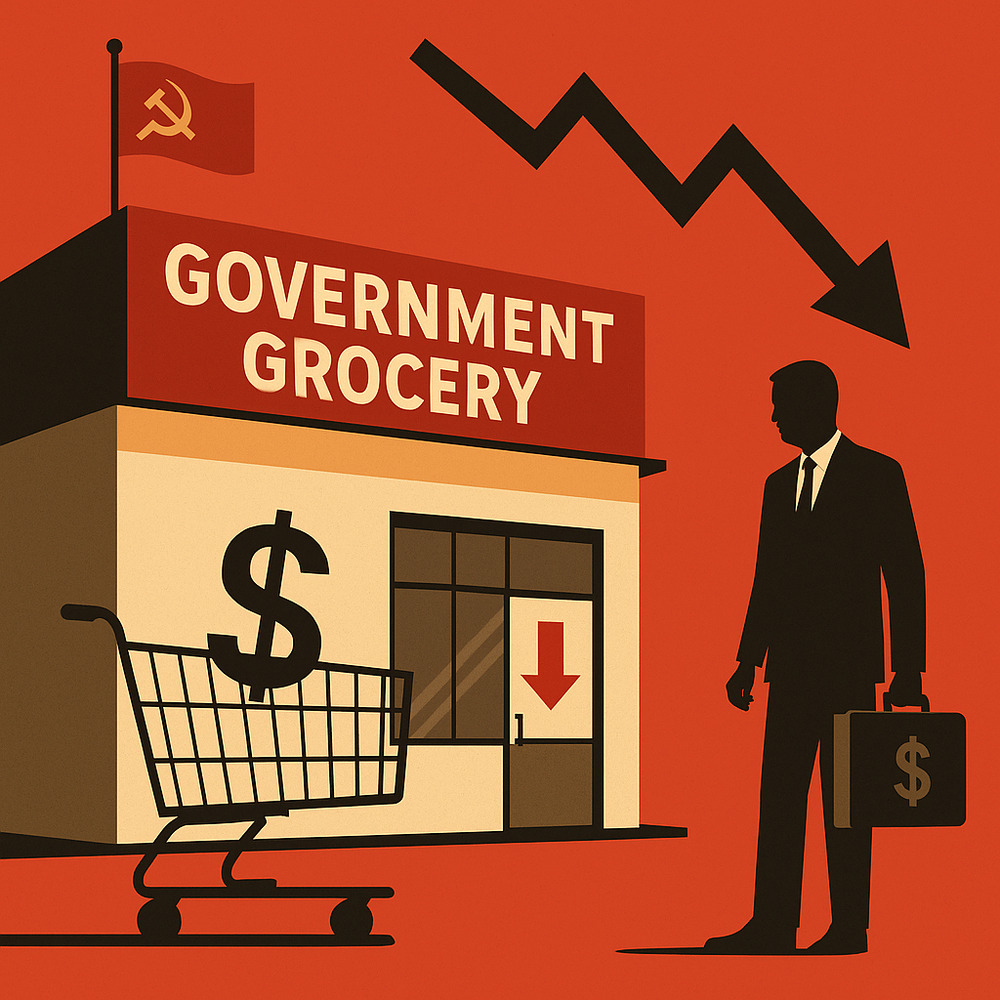
wow my articles aren't going through.
The Real Cost of Government-Run Grocery Stores: Why Mamdani’s Plan Could Backfire
 Progressive Optics, Predictable Failure
Zohran Mamdani’s proposal to establish government-run grocery stores in New York City is being framed as a bold, progressive step toward solving food insecurity. By creating public alternatives to private grocers, Mamdani hopes to reduce food deserts and offer affordable options to low-income neighborhoods. But beneath the surface, there are serious concerns that such a plan could result in massive inefficiencies, waste, and even worsen the very problem it aims to fix.
A Taxpayer-Funded Fantasy
The proposal envisions taxpayer-funded grocery stores operating in underserved areas. Rather than rely on private businesses, the city would run its own network of food outlets. Supporters call it justice; critics see an economic delusion dressed up as compassion—an experiment with other people’s money and no accountability.
When No One Has to Care
Government-run retail ventures are notorious for inefficiency. Without competition or the need to turn a profit, these entities often lack incentives to control costs, improve service, or respond to consumer preferences. Bureaucracies don’t innovate—they expand. The result: ballooning costs, poor service, and the slow decay of whatever problem the program was supposed to fix.
Jobs for Friends, Contracts for Donors
This isn’t just about groceries—it’s about political power. These stores could easily become slush funds, offering jobs to insiders and contracts to loyalists. The public pays the bill, and the political class cashes in. It’s not reform—it’s a racket in plain sight.
Solving Food Deserts by Creating Bigger Ones
Ironically, Mamdani’s plan could drive out the very grocers already serving struggling areas. If government stores undercut private competitors and then collapse under mismanagement, entire communities could be left with even fewer food options. The private sector won’t come back to clean up the mess—because no one wants to compete with a subsidized failure.
We’ve Seen This Movie Before—It Ends Badly
Detroit’s failed public markets. Puerto Rico’s mismanaged utilities. Venezuela’s government-run food programs that turned into corruption pipelines. Every time the government tries to run a store, it ends in waste, debt, or collapse. There’s no reason to expect a different outcome in New York—except blind ideology.
A Trojan Horse for Cronyism
Mamdani’s plan wraps itself in moral language—but behind the curtain is an old story: control the money, reward your friends, and punish your enemies. The public won’t get more groceries—they’ll get more bureaucracy, higher taxes, and another broken promise funded by their own wallets.
Progressive Optics, Predictable Failure
Zohran Mamdani’s proposal to establish government-run grocery stores in New York City is being framed as a bold, progressive step toward solving food insecurity. By creating public alternatives to private grocers, Mamdani hopes to reduce food deserts and offer affordable options to low-income neighborhoods. But beneath the surface, there are serious concerns that such a plan could result in massive inefficiencies, waste, and even worsen the very problem it aims to fix.
A Taxpayer-Funded Fantasy
The proposal envisions taxpayer-funded grocery stores operating in underserved areas. Rather than rely on private businesses, the city would run its own network of food outlets. Supporters call it justice; critics see an economic delusion dressed up as compassion—an experiment with other people’s money and no accountability.
When No One Has to Care
Government-run retail ventures are notorious for inefficiency. Without competition or the need to turn a profit, these entities often lack incentives to control costs, improve service, or respond to consumer preferences. Bureaucracies don’t innovate—they expand. The result: ballooning costs, poor service, and the slow decay of whatever problem the program was supposed to fix.
Jobs for Friends, Contracts for Donors
This isn’t just about groceries—it’s about political power. These stores could easily become slush funds, offering jobs to insiders and contracts to loyalists. The public pays the bill, and the political class cashes in. It’s not reform—it’s a racket in plain sight.
Solving Food Deserts by Creating Bigger Ones
Ironically, Mamdani’s plan could drive out the very grocers already serving struggling areas. If government stores undercut private competitors and then collapse under mismanagement, entire communities could be left with even fewer food options. The private sector won’t come back to clean up the mess—because no one wants to compete with a subsidized failure.
We’ve Seen This Movie Before—It Ends Badly
Detroit’s failed public markets. Puerto Rico’s mismanaged utilities. Venezuela’s government-run food programs that turned into corruption pipelines. Every time the government tries to run a store, it ends in waste, debt, or collapse. There’s no reason to expect a different outcome in New York—except blind ideology.
A Trojan Horse for Cronyism
Mamdani’s plan wraps itself in moral language—but behind the curtain is an old story: control the money, reward your friends, and punish your enemies. The public won’t get more groceries—they’ll get more bureaucracy, higher taxes, and another broken promise funded by their own wallets.
Progressive Optics, Predictable Failure
Zohran Mamdani’s proposal to establish government-run grocery stores in New York City is being framed as a bold, progressive step toward solving food insecurity. By creating public alternatives to private grocers, Mamdani hopes to reduce food deserts and offer affordable options to low-income neighborhoods. But beneath the surface, there are serious concerns that such a plan could result in massive inefficiencies, waste, and even worsen the very problem it aims to fix.
A Taxpayer-Funded Fantasy
The proposal envisions taxpayer-funded grocery stores operating in underserved areas. Rather than rely on private businesses, the city would run its own network of food outlets. Supporters call it justice; critics see an economic delusion dressed up as compassion—an experiment with other people’s money and no accountability.
When No One Has to Care
Government-run retail ventures are notorious for inefficiency. Without competition or the need to turn a profit, these entities often lack incentives to control costs, improve service, or respond to consumer preferences. Bureaucracies don’t innovate—they expand. The result: ballooning costs, poor service, and the slow decay of whatever problem the program was supposed to fix.
Jobs for Friends, Contracts for Donors
This isn’t just about groceries—it’s about political power. These stores could easily become slush funds, offering jobs to insiders and contracts to loyalists. The public pays the bill, and the political class cashes in. It’s not reform—it’s a racket in plain sight.
Solving Food Deserts by Creating Bigger Ones
Ironically, Mamdani’s plan could drive out the very grocers already serving struggling areas. If government stores undercut private competitors and then collapse under mismanagement, entire communities could be left with even fewer food options. The private sector won’t come back to clean up the mess—because no one wants to compete with a subsidized failure.
We’ve Seen This Movie Before—It Ends Badly
Detroit’s failed public markets. Puerto Rico’s mismanaged utilities. Venezuela’s government-run food programs that turned into corruption pipelines. Every time the government tries to run a store, it ends in waste, debt, or collapse. There’s no reason to expect a different outcome in New York—except blind ideology.
A Trojan Horse for Cronyism
Mamdani’s plan wraps itself in moral language—but behind the curtain is an old story: control the money, reward your friends, and punish your enemies. The public won’t get more groceries—they’ll get more bureaucracy, higher taxes, and another broken promise funded by their own wallets.
The Real Cost of Government-Run Grocery Stores: Why Mamdani’s Plan Could Backfire
Progressive Optics, Predictable Failure
Zohran Mamdani’s proposal to establish government-run grocery stores in New York City is being framed as a bold, progressive step toward solving food insecurity. By creating public alternatives to private grocers, Mamdani hopes to reduce food deserts and offer affordable options to low-income neighborhoods. But beneath the surface, there are serious concerns that such a plan could result in massive inefficiencies, waste, and even worsen the very problem it aims to fix.
A Taxpayer-Funded Fantasy
The proposal envisions taxpayer-funded grocery stores operating in underserved areas. Rather than rely on private businesses, the city would run its own network of food outlets. Supporters call it justice; critics see an economic delusion dressed up as compassion—an experiment with other people’s money and no accountability.
When No One Has to Care
Government-run retail ventures are notorious for inefficiency. Without competition or the need to turn a profit, these entities often lack incentives to control costs, improve service, or respond to consumer preferences. Bureaucracies don’t innovate—they expand. The result: ballooning costs, poor service, and the slow decay of whatever problem the program was supposed to fix.
Jobs for Friends, Contracts for Donors
This isn’t just about groceries—it’s about political power. These stores could easily become slush funds, offering jobs to insiders and contracts to loyalists. The public pays the bill, and the political class cashes in. It’s not reform—it’s a racket in plain sight.
Solving Food Deserts by Creating Bigger Ones
Ironically, Mamdani’s plan could drive out the very grocers already serving struggling areas. If government stores undercut private competitors and then collapse under mismanagement, entire communities could be left with even fewer food options. The private sector won’t come back to clean up the mess—because no one wants to compete with a subsidized failure.
We’ve Seen This Movie Before—It Ends Badly
Detroit’s failed public markets. Puerto Rico’s mismanaged utilities. Venezuela’s government-run food programs that turned into corruption pipelines. Every time the government tries to run a store, it ends in waste, debt, or collapse. There’s no reason to expect a different outcome in New York—except blind ideology.
A Trojan Horse for Cronyism
Mamdani’s plan wraps itself in moral language—but behind the curtain is an old story: control the money, reward your friends, and punish your enemies. The public won’t get more groceries—they’ll get more bureaucracy, higher taxes, and another broken promise funded by their own wallets.
Progressive Optics, Predictable Failure
Zohran Mamdani’s proposal to establish government-run grocery stores in New York City is being framed as a bold, progressive step toward solving food insecurity. By creating public alternatives to private grocers, Mamdani hopes to reduce food deserts and offer affordable options to low-income neighborhoods. But beneath the surface, there are serious concerns that such a plan could result in massive inefficiencies, waste, and even worsen the very problem it aims to fix.
A Taxpayer-Funded Fantasy
The proposal envisions taxpayer-funded grocery stores operating in underserved areas. Rather than rely on private businesses, the city would run its own network of food outlets. Supporters call it justice; critics see an economic delusion dressed up as compassion—an experiment with other people’s money and no accountability.
When No One Has to Care
Government-run retail ventures are notorious for inefficiency. Without competition or the need to turn a profit, these entities often lack incentives to control costs, improve service, or respond to consumer preferences. Bureaucracies don’t innovate—they expand. The result: ballooning costs, poor service, and the slow decay of whatever problem the program was supposed to fix.
Jobs for Friends, Contracts for Donors
This isn’t just about groceries—it’s about political power. These stores could easily become slush funds, offering jobs to insiders and contracts to loyalists. The public pays the bill, and the political class cashes in. It’s not reform—it’s a racket in plain sight.
Solving Food Deserts by Creating Bigger Ones
Ironically, Mamdani’s plan could drive out the very grocers already serving struggling areas. If government stores undercut private competitors and then collapse under mismanagement, entire communities could be left with even fewer food options. The private sector won’t come back to clean up the mess—because no one wants to compete with a subsidized failure.
We’ve Seen This Movie Before—It Ends Badly
Detroit’s failed public markets. Puerto Rico’s mismanaged utilities. Venezuela’s government-run food programs that turned into corruption pipelines. Every time the government tries to run a store, it ends in waste, debt, or collapse. There’s no reason to expect a different outcome in New York—except blind ideology.
A Trojan Horse for Cronyism
Mamdani’s plan wraps itself in moral language—but behind the curtain is an old story: control the money, reward your friends, and punish your enemies. The public won’t get more groceries—they’ll get more bureaucracy, higher taxes, and another broken promise funded by their own wallets.
Stranded by Law: The Deportation of a Naturalized U.S. Soldier’s Son
 When Jermaine Thomas was deported to Jamaica in 2025, it raised questions about how someone born on a U.S. Army base in West Germany and raised in Texas could lack U.S. citizenship. The case has drawn public attention due to the assumption that children born to U.S. soldiers abroad are automatically citizens. However, U.S. citizenship law imposes strict criteria, and Thomas was never legally a U.S. citizen.
Under 8 U.S.C. § 1401(g), in effect at the time of Thomas's birth in 1986, a child born abroad to one U.S. citizen parent and one non-citizen parent could only acquire U.S. citizenship at birth if the U.S. citizen parent had been physically present in the United States for at least 10 years prior to the child’s birth, including at least 5 years after the age of 14. These years do not need to be consecutive, but they must be cumulative and lawfully present. Time spent serving abroad, including military service, does not count toward this requirement.
Thomas’s father was born in Jamaica and immigrated to the U.S. in 1977. He joined the U.S. Army in 1979 and became a naturalized U.S. citizen in May 1984. Jermaine Thomas was born in August 1986. Because his father had only been physically present in the U.S. for about seven years prior to Jermaine’s birth, he did not meet the 10-year threshold required to transmit U.S. citizenship.
Had Thomas's father been born in the United States or immigrated earlier and lived in the U.S. for at least 10 cumulative years (with 5 after age 14), Jermaine would have acquired U.S. citizenship at birth. The distinction between native-born and naturalized citizens in this context is significant under the law.
Several hypothetical scenarios clarify this rule:
A U.S.-born parent who lived in the U.S. from birth to age 20 would meet the requirement.
An immigrant who came to the U.S. at age 5 and lived there through age 25 would also qualify.
A naturalized citizen who immigrated at 18 and had a child abroad 8 years later, as in Thomas's case, would not meet the requirement.
Jermaine Thomas entered the U.S. legally in 1989 as a lawful permanent resident. Despite growing up in Texas, he never acquired U.S. citizenship. Following multiple felony convictions, he became deportable under U.S. immigration law. In 2025, courts confirmed he had no legal claim to citizenship, and he was removed to Jamaica, his father's country of origin.
This case highlights a strict interpretation of U.S. nationality law, which applies uniform standards regardless of military service or upbringing. While some may view the outcome as harsh, the legal framework is based on measurable criteria established by statute. Whether or not reforms should be considered to address similar cases remains a matter of policy debate.
When Jermaine Thomas was deported to Jamaica in 2025, it raised questions about how someone born on a U.S. Army base in West Germany and raised in Texas could lack U.S. citizenship. The case has drawn public attention due to the assumption that children born to U.S. soldiers abroad are automatically citizens. However, U.S. citizenship law imposes strict criteria, and Thomas was never legally a U.S. citizen.
Under 8 U.S.C. § 1401(g), in effect at the time of Thomas's birth in 1986, a child born abroad to one U.S. citizen parent and one non-citizen parent could only acquire U.S. citizenship at birth if the U.S. citizen parent had been physically present in the United States for at least 10 years prior to the child’s birth, including at least 5 years after the age of 14. These years do not need to be consecutive, but they must be cumulative and lawfully present. Time spent serving abroad, including military service, does not count toward this requirement.
Thomas’s father was born in Jamaica and immigrated to the U.S. in 1977. He joined the U.S. Army in 1979 and became a naturalized U.S. citizen in May 1984. Jermaine Thomas was born in August 1986. Because his father had only been physically present in the U.S. for about seven years prior to Jermaine’s birth, he did not meet the 10-year threshold required to transmit U.S. citizenship.
Had Thomas's father been born in the United States or immigrated earlier and lived in the U.S. for at least 10 cumulative years (with 5 after age 14), Jermaine would have acquired U.S. citizenship at birth. The distinction between native-born and naturalized citizens in this context is significant under the law.
Several hypothetical scenarios clarify this rule:
A U.S.-born parent who lived in the U.S. from birth to age 20 would meet the requirement.
An immigrant who came to the U.S. at age 5 and lived there through age 25 would also qualify.
A naturalized citizen who immigrated at 18 and had a child abroad 8 years later, as in Thomas's case, would not meet the requirement.
Jermaine Thomas entered the U.S. legally in 1989 as a lawful permanent resident. Despite growing up in Texas, he never acquired U.S. citizenship. Following multiple felony convictions, he became deportable under U.S. immigration law. In 2025, courts confirmed he had no legal claim to citizenship, and he was removed to Jamaica, his father's country of origin.
This case highlights a strict interpretation of U.S. nationality law, which applies uniform standards regardless of military service or upbringing. While some may view the outcome as harsh, the legal framework is based on measurable criteria established by statute. Whether or not reforms should be considered to address similar cases remains a matter of policy debate.
When Jermaine Thomas was deported to Jamaica in 2025, it raised questions about how someone born on a U.S. Army base in West Germany and raised in Texas could lack U.S. citizenship. The case has drawn public attention due to the assumption that children born to U.S. soldiers abroad are automatically citizens. However, U.S. citizenship law imposes strict criteria, and Thomas was never legally a U.S. citizen.
Under 8 U.S.C. § 1401(g), in effect at the time of Thomas's birth in 1986, a child born abroad to one U.S. citizen parent and one non-citizen parent could only acquire U.S. citizenship at birth if the U.S. citizen parent had been physically present in the United States for at least 10 years prior to the child’s birth, including at least 5 years after the age of 14. These years do not need to be consecutive, but they must be cumulative and lawfully present. Time spent serving abroad, including military service, does not count toward this requirement.
Thomas’s father was born in Jamaica and immigrated to the U.S. in 1977. He joined the U.S. Army in 1979 and became a naturalized U.S. citizen in May 1984. Jermaine Thomas was born in August 1986. Because his father had only been physically present in the U.S. for about seven years prior to Jermaine’s birth, he did not meet the 10-year threshold required to transmit U.S. citizenship.
Had Thomas's father been born in the United States or immigrated earlier and lived in the U.S. for at least 10 cumulative years (with 5 after age 14), Jermaine would have acquired U.S. citizenship at birth. The distinction between native-born and naturalized citizens in this context is significant under the law.
Several hypothetical scenarios clarify this rule:
A U.S.-born parent who lived in the U.S. from birth to age 20 would meet the requirement.
An immigrant who came to the U.S. at age 5 and lived there through age 25 would also qualify.
A naturalized citizen who immigrated at 18 and had a child abroad 8 years later, as in Thomas's case, would not meet the requirement.
Jermaine Thomas entered the U.S. legally in 1989 as a lawful permanent resident. Despite growing up in Texas, he never acquired U.S. citizenship. Following multiple felony convictions, he became deportable under U.S. immigration law. In 2025, courts confirmed he had no legal claim to citizenship, and he was removed to Jamaica, his father's country of origin.
This case highlights a strict interpretation of U.S. nationality law, which applies uniform standards regardless of military service or upbringing. While some may view the outcome as harsh, the legal framework is based on measurable criteria established by statute. Whether or not reforms should be considered to address similar cases remains a matter of policy debate.
Fraudulent Naturalization and the Risk of Denaturalization: The Case of Zohran Mamdani
 U.S. citizenship obtained through naturalization is widely considered permanent. But under certain legal circumstances, it can be revoked. That rarely used process—denaturalization—has been thrust into the spotlight following allegations against New York City mayoral candidate Zohran Mamdani.
Mamdani, a Democratic Socialist and current state assemblyman, became a naturalized U.S. citizen in 2018. In June 2025, Representative Andy Ogles publicly accused him of concealing ideological affiliations during the naturalization process—specifically, of expressing past support for the Holy Land Five, a group convicted in 2009 of funneling money to the terrorist organization Hamas. If proven, those omissions could place Mamdani’s citizenship in legal jeopardy.
The controversy raises a key legal question: Can a naturalized American lose their citizenship for lying about past political affiliations or ideological sympathies?
What Is Denaturalization?
Denaturalization is the legal process by which the U.S. government revokes someone’s citizenship. It is governed by 8 U.S.C. § 1451(a) and applies in cases where naturalization was either illegally procured or fraudulently obtained. Though rare, denaturalization has been used in cases involving war crimes, terrorism, and immigration fraud.
There are two primary legal grounds: illegal procurement and willful misrepresentation or concealment of material facts. The former applies when someone was not legally eligible to become a citizen at the time they were naturalized—typically due to criminal history, affiliations with hostile groups, or lack of “good moral character.” The latter applies when the applicant knowingly lied or withheld information that would have likely led to denial of citizenship.
Allegations Against Mamdani
Representative Ogles’s accusation centers on the claim that Mamdani failed to disclose prior ideological support for individuals or groups linked to terrorism. In a post on the social media platform X, Ogles wrote, “Bye bye, little muhammad! If you lied on your N-400 naturalization forms, you’re going home.” The message was accompanied by an illustration featuring Mamdani holding a book emblazoned with a communist symbol and the caption “Deport Zohran.”
The post referenced Mamdani’s alleged ideological support for the Holy Land Five—a group whose members were convicted of providing financial support to Hamas under the guise of charitable donations. Such an affiliation, if proven and if omitted from naturalization paperwork, could undermine the “good moral character” requirement that is central to the citizenship process.
While the rhetoric is politically charged, the legal threshold for denaturalization remains high. The government would need to prove that Mamdani willfully misrepresented or concealed material facts during his application process.
What Would the Process Look Like?
If federal authorities pursue the matter, it would begin with an investigation by agencies such as the Department of Justice, Department of Homeland Security, or Immigration and Customs Enforcement. If sufficient evidence is found, the government could file a civil denaturalization suit in federal court.
To succeed, the government must meet an unusually high standard of proof: “clear, convincing, and unequivocal evidence.” If a judge finds that the naturalization was obtained through fraud or illegality, the court can revoke citizenship and revert the individual to their previous immigration status—opening the door to potential deportation.
Legal Precedent
Historically, denaturalization has been applied in grave cases. Nazi collaborators who lied about their wartime activities were stripped of U.S. citizenship decades after the fact. More recently, individuals who concealed ties to ISIS or other terrorist organizations have faced the same fate.
The use of denaturalization remains rare and politically sensitive, but the legal precedent is well established: If citizenship was obtained through fraud, it can be undone.
What Happens Next?
As of now, the allegations against Mamdani are just that—allegations. No formal investigation or legal action has been announced. But the accusations, especially when amplified by federal lawmakers, could spur an inquiry.
Whether the government chooses to act will likely depend on whether credible evidence emerges that Mamdani knowingly omitted material affiliations or sympathies that would have disqualified him from citizenship.
Regardless of the outcome, the case reflects broader tensions in American politics around immigration, national security, and ideological litmus tests. As scrutiny of the naturalization process intensifies, so too does the debate over what it means to become—and remain—a U.S. citizen.
U.S. citizenship obtained through naturalization is widely considered permanent. But under certain legal circumstances, it can be revoked. That rarely used process—denaturalization—has been thrust into the spotlight following allegations against New York City mayoral candidate Zohran Mamdani.
Mamdani, a Democratic Socialist and current state assemblyman, became a naturalized U.S. citizen in 2018. In June 2025, Representative Andy Ogles publicly accused him of concealing ideological affiliations during the naturalization process—specifically, of expressing past support for the Holy Land Five, a group convicted in 2009 of funneling money to the terrorist organization Hamas. If proven, those omissions could place Mamdani’s citizenship in legal jeopardy.
The controversy raises a key legal question: Can a naturalized American lose their citizenship for lying about past political affiliations or ideological sympathies?
What Is Denaturalization?
Denaturalization is the legal process by which the U.S. government revokes someone’s citizenship. It is governed by 8 U.S.C. § 1451(a) and applies in cases where naturalization was either illegally procured or fraudulently obtained. Though rare, denaturalization has been used in cases involving war crimes, terrorism, and immigration fraud.
There are two primary legal grounds: illegal procurement and willful misrepresentation or concealment of material facts. The former applies when someone was not legally eligible to become a citizen at the time they were naturalized—typically due to criminal history, affiliations with hostile groups, or lack of “good moral character.” The latter applies when the applicant knowingly lied or withheld information that would have likely led to denial of citizenship.
Allegations Against Mamdani
Representative Ogles’s accusation centers on the claim that Mamdani failed to disclose prior ideological support for individuals or groups linked to terrorism. In a post on the social media platform X, Ogles wrote, “Bye bye, little muhammad! If you lied on your N-400 naturalization forms, you’re going home.” The message was accompanied by an illustration featuring Mamdani holding a book emblazoned with a communist symbol and the caption “Deport Zohran.”
The post referenced Mamdani’s alleged ideological support for the Holy Land Five—a group whose members were convicted of providing financial support to Hamas under the guise of charitable donations. Such an affiliation, if proven and if omitted from naturalization paperwork, could undermine the “good moral character” requirement that is central to the citizenship process.
While the rhetoric is politically charged, the legal threshold for denaturalization remains high. The government would need to prove that Mamdani willfully misrepresented or concealed material facts during his application process.
What Would the Process Look Like?
If federal authorities pursue the matter, it would begin with an investigation by agencies such as the Department of Justice, Department of Homeland Security, or Immigration and Customs Enforcement. If sufficient evidence is found, the government could file a civil denaturalization suit in federal court.
To succeed, the government must meet an unusually high standard of proof: “clear, convincing, and unequivocal evidence.” If a judge finds that the naturalization was obtained through fraud or illegality, the court can revoke citizenship and revert the individual to their previous immigration status—opening the door to potential deportation.
Legal Precedent
Historically, denaturalization has been applied in grave cases. Nazi collaborators who lied about their wartime activities were stripped of U.S. citizenship decades after the fact. More recently, individuals who concealed ties to ISIS or other terrorist organizations have faced the same fate.
The use of denaturalization remains rare and politically sensitive, but the legal precedent is well established: If citizenship was obtained through fraud, it can be undone.
What Happens Next?
As of now, the allegations against Mamdani are just that—allegations. No formal investigation or legal action has been announced. But the accusations, especially when amplified by federal lawmakers, could spur an inquiry.
Whether the government chooses to act will likely depend on whether credible evidence emerges that Mamdani knowingly omitted material affiliations or sympathies that would have disqualified him from citizenship.
Regardless of the outcome, the case reflects broader tensions in American politics around immigration, national security, and ideological litmus tests. As scrutiny of the naturalization process intensifies, so too does the debate over what it means to become—and remain—a U.S. citizen.
U.S. citizenship obtained through naturalization is widely considered permanent. But under certain legal circumstances, it can be revoked. That rarely used process—denaturalization—has been thrust into the spotlight following allegations against New York City mayoral candidate Zohran Mamdani.
Mamdani, a Democratic Socialist and current state assemblyman, became a naturalized U.S. citizen in 2018. In June 2025, Representative Andy Ogles publicly accused him of concealing ideological affiliations during the naturalization process—specifically, of expressing past support for the Holy Land Five, a group convicted in 2009 of funneling money to the terrorist organization Hamas. If proven, those omissions could place Mamdani’s citizenship in legal jeopardy.
The controversy raises a key legal question: Can a naturalized American lose their citizenship for lying about past political affiliations or ideological sympathies?
What Is Denaturalization?
Denaturalization is the legal process by which the U.S. government revokes someone’s citizenship. It is governed by 8 U.S.C. § 1451(a) and applies in cases where naturalization was either illegally procured or fraudulently obtained. Though rare, denaturalization has been used in cases involving war crimes, terrorism, and immigration fraud.
There are two primary legal grounds: illegal procurement and willful misrepresentation or concealment of material facts. The former applies when someone was not legally eligible to become a citizen at the time they were naturalized—typically due to criminal history, affiliations with hostile groups, or lack of “good moral character.” The latter applies when the applicant knowingly lied or withheld information that would have likely led to denial of citizenship.
Allegations Against Mamdani
Representative Ogles’s accusation centers on the claim that Mamdani failed to disclose prior ideological support for individuals or groups linked to terrorism. In a post on the social media platform X, Ogles wrote, “Bye bye, little muhammad! If you lied on your N-400 naturalization forms, you’re going home.” The message was accompanied by an illustration featuring Mamdani holding a book emblazoned with a communist symbol and the caption “Deport Zohran.”
The post referenced Mamdani’s alleged ideological support for the Holy Land Five—a group whose members were convicted of providing financial support to Hamas under the guise of charitable donations. Such an affiliation, if proven and if omitted from naturalization paperwork, could undermine the “good moral character” requirement that is central to the citizenship process.
While the rhetoric is politically charged, the legal threshold for denaturalization remains high. The government would need to prove that Mamdani willfully misrepresented or concealed material facts during his application process.
What Would the Process Look Like?
If federal authorities pursue the matter, it would begin with an investigation by agencies such as the Department of Justice, Department of Homeland Security, or Immigration and Customs Enforcement. If sufficient evidence is found, the government could file a civil denaturalization suit in federal court.
To succeed, the government must meet an unusually high standard of proof: “clear, convincing, and unequivocal evidence.” If a judge finds that the naturalization was obtained through fraud or illegality, the court can revoke citizenship and revert the individual to their previous immigration status—opening the door to potential deportation.
Legal Precedent
Historically, denaturalization has been applied in grave cases. Nazi collaborators who lied about their wartime activities were stripped of U.S. citizenship decades after the fact. More recently, individuals who concealed ties to ISIS or other terrorist organizations have faced the same fate.
The use of denaturalization remains rare and politically sensitive, but the legal precedent is well established: If citizenship was obtained through fraud, it can be undone.
What Happens Next?
As of now, the allegations against Mamdani are just that—allegations. No formal investigation or legal action has been announced. But the accusations, especially when amplified by federal lawmakers, could spur an inquiry.
Whether the government chooses to act will likely depend on whether credible evidence emerges that Mamdani knowingly omitted material affiliations or sympathies that would have disqualified him from citizenship.
Regardless of the outcome, the case reflects broader tensions in American politics around immigration, national security, and ideological litmus tests. As scrutiny of the naturalization process intensifies, so too does the debate over what it means to become—and remain—a U.S. citizen.