Zcash: signals and patterns.
Do you have any doubts that there will soon be an event that leaves no doubt that Zcash is a development co-opted by regulators with money from bankers?
Regulators and bankers are always partners.
Of course, I can't guess what the event will be or when it will happen, but all the signals are pointing in that direction, forming a clear pattern.
The Lightning Network Money Trail
The banking network
In this article, I will show you the investments and financing received by the Lightning Network to understand the incentives driving this development.
Why is this important?
Because the money trail shows the destination and the intention.
https://medium.com/@liberlion/the-lightning-network-money-trail-b9594243ee74

I’m only a maximalist about one thing: freedom
Everything else is just tools you pick based on what you need.
Today, #Monero looks like one of the strongest forms of sovereign money, sure.
And I’ll even say #BitcoinCash has its uses, despite the traceability in certain cases.
Privacy means each individual decides what to show and when. That’s sovereignty — not the cult of “all or nothing.”
The problem starts when someone tries to sell you “privacy” and “crypto-anarchism” as a Cypherpunk deluxe package… and what you really get is #Zcash, the establishment’s Trojan horse wrapped in a regulatory bow with auditors included.
In the end, it feels less like a revolution and more like a loyalty program.
What's worse than a corrupt politician?
People who vote for and finance corrupt politicians.
Wow! That's deep!
View quoted note →Mordinals: Turning Sovereign Money into Collectible Stickers
Mordinals were a short-lived attempt to sneak NFTs into Monero via tx extra.
In practice, it turned a sovereign, fungible currency into a stack of traceable stickers.
The use of burned outputs created obvious patterns, weakening ring anonymity and opening room for heuristics that should never exist in Monero.
Meanwhile, Bitcoin Ordinals fit perfectly in their natural habitat: a fully transparent chain where everyone already behaves like curators in a glass-walled museum, proudly tagging UTXOs with digital “art.”
On Bitcoin, Ordinals make sense; on Monero, Mordinals are pure nonsense.
No surprise the experiment died quickly (March–April 2023). Monero is sovereign money, not an NFT art gallery on training wheels.
MoneroPulse: The Emergency Checkpointing Mechanism
MoneroPulse is an optional emergency checkpointing system to prevent chain-splits caused by consensus bugs.
Operators publish which fork they consider valid via a block hash and height.
Nodes only warn users unless `--enforce-dns-checkpointing` is enabled, which rolls back a few blocks and follows the “fixed” fork.
It’s opt-in and recommended for unattended full nodes.
MoneroPulse - Monero Docs

Monero: which traceability heuristics were mitigated — and which weren’t
I will always push for improvement and evolution.
I don't go along with maximalist narratives, but rather with critical thinking.
Don't say this post is FUD, because I document the information here.
I found a paper from last year: "Monero Traceability Heuristics: Wallet Application Bugs and the Mordinal-P2Pool Perspective" by Nada Hammad and Friedhelm Victor.
They classified heuristics aimed at identifying the true spend or filtering out decoys in Monero rings. Using mainnet data, testnet ground truth, and P2Pool payments, they evaluated accuracy, collisions between heuristics, and how their effectiveness evolved over time.
Essentially, a full audit of what works, when, and with what limits.
It is important to understand the concept: a heuristic is not a guaranteed attack or a mathematical break. It’s a rule-of-thumb pattern: a clue in the data that lets an analyst guess which ring member is the real spend—or which ones are just decoys. It exploits human behavior, wallet bugs, timing patterns, or predictable miner habits.
It’s probabilistic: sometimes works, sometimes misfires. That’s why researchers measure precision instead of certainty.
I found that some problems were solved, but others persist.
Mitigated (wallet bugs):
─10-Block Decoy Bug: fixed in 2023.
─Differ-By-One: improved decoy-selection logic.
─Mordinal patterns: short-lived artifact, no longer reproducible.
Partially mitigated (usage patterns):
─Coinbase outputs: still leak signals because miners spend in predictable ways.
─P2Pool merges: depends on miner behavior, not on the protocol itself.
Practical outcome:
Even after applying all known heuristics, the effective ring size remains above ~14/16.
Monero didn’t lose structural privacy — it just had to prune bugs and predictable habits that left crumbs behind.
Sources:
1.
Monero Traceability Heuristics: Wallet Application Bugs and the Mordinal-P2Pool Perspective
2.

getmonero.org, The Monero Project
Blog: Post-Mortem of 10-Block-Old Decoy Selection Bug
Emprical analysis of the high severity vulnerability within the reference wallet. Updating to the latest version is strongly advised.
3.

Monero Traceability Heuristics: Wallet Application Bugs and the Mordinal-P2Pool Perspective
Privacy-focused cryptoassets like Monero are intentionally difficult to trace. Over the years, several traceability heuristics have been proposed, ...
4.
Monero Observer - Monero Dev Activity Report - Week 50 2024: 11 PRs, 15 Issues
This weekly report aims to provide a big picture view of Monero development activity, increase community support for existing devs and, hopefully, ...
5.

GitHub
GUI Re-design improvements. · Issue #2024 · monero-project/monero-gui
I've done some re-designing of the GUI of the past few days of which I would greatly appreciate some feedback on. I have broken down each main aspe...
Central Banking: Because War Needed a Payment Plan
The Bank of England, founded in 1694, is considered the oldest central bank in the world in continuous operation.
The Crown was bankrupt and needed to finance wars, so the Bank of England started as a private company to lend money to the British government during the war against France and, in return, obtained a monopoly on issuing banknotes.
That's it. No inflation targets, no macroprudential subtleties. Just a privileged lender with one real customer who always needed more credit.
Signals of #Technocracy #Agenda2030
I apply my L3 research protocol to this news:
"Czech National Bank adds BTC to its balance sheet—marking a first for central banks. $1M test portfolio includes bitcoin, a USD stablecoin & tokenized deposit."
Layer 1 — Surface: what anyone can see
A central bank adds BTC, a USD stablecoin, and a tokenized deposit to a tiny test portfolio.
From the outside it looks like harmless tech curiosity — a small, symbolic pilot.
And the official framing is predictable: they sell it as “evolution,” modernization, financial innovation, keeping up with the future.
The story is progress, efficiency, nothing alarming.
Layer 2 — Depth: what isn’t visible at first glance
Here it stops being curiosity and becomes institutional assimilation.
A central bank never touches a new asset class unless it thinks it may shape its future mandate: payments, reserves, monetary plumbing.
To learn custody, key management, tokenized deposits, and stablecoin mechanics, they must accept a silent premise: the architecture of finance is moving toward tokenization.
If the central bank is preparing, it’s not a hobby — it’s to govern that terrain once it matures.
And here the bias appears:
Modern policy circles are drifting toward systems that rely on monitoring, real-time accounting, and programmable financial instruments to “manage risk.”
Technical pilots are never neutral; they’re governance rehearsals.
Layer 3 — Hidden Structure: why the surface exists
A central bank testing tokens today is responding to a race it didn’t start:
Private markets already tokenize deposits.
Global banks experiment with real-time digital-asset accounting.
Big tech pushes wallets, instant payments, and stablecoins.
Regulators fear losing control if they don’t integrate this infrastructure.
In that sense, your interpretation holds:
The real signal isn’t “they bought $1M in crypto.”
The real signal is the convergence of state, software, and tokenized finance.
When technical architecture begins shaping political architecture, you move toward technocracy: granular control, algorithmic governance, real-time oversight, and monetary power mediated by digital infrastructure.
A central bank adopting tokens isn’t buying an asset — it’s rehearsing a system.
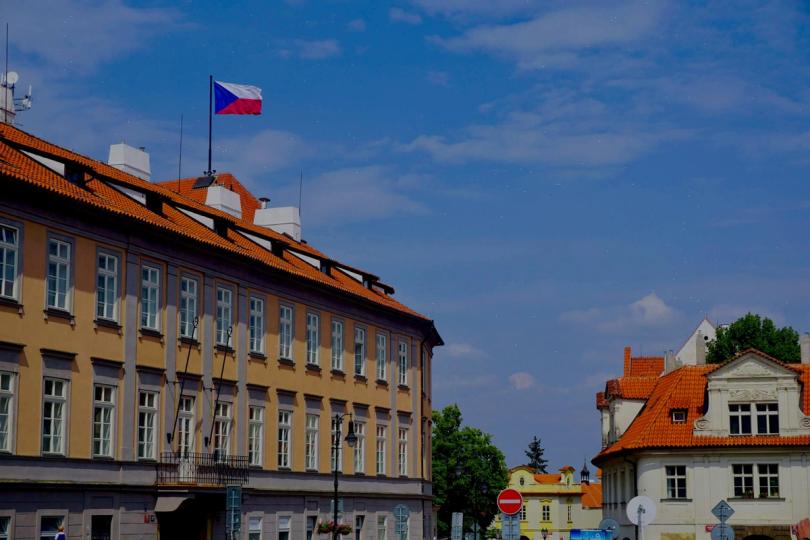
Bitcoin (BTC) Comes to Central Bank Balance Sheet as CNB Buys
The bank said it created a $1 million "test portfolio" of digital assets, mostly made up of bitcoin.
Privacy Is Not A Technical Problem
Many people stare at the surface and mistake the symptom for the cause.
They say something like “the big privacy risks come from ISPs and hardware.” Comfortable, simple… and incomplete.
The real risk doesn’t originate in a router or a provider. It comes from the ecosystem that decides which ISPs are allowed to exist, what hardware gets produced, and what model of society those choices serve.
The surface shows cables and chips. The structure shows incentives, regulations, lobbying, patents, and a political-economic design that turns every layer of infrastructure into a control point.
If you only look at the symptom, you end up arguing about antennas. If you look at the structure, you see why those antennas exist… and who benefits from keeping them that way.
Privacy is not a technical problem; it shows up through the technical.
Privacy is a field of power.
Quality among all the trash.
Sometimes I receive high-quality responses to my posts, with technical or philosophical arguments.
And I can see that they have few followers, because they don't have a lot of posts, although the few they do have are of high quality.
You can find quality among all the trash, if you know what to look for.
It takes effort to learn, but it's worth the time it takes.
It seems that now, brothers Tyler Winklevoss and Cameron Winklevoss are the cypherpunk version of Michael Saylor: they are accumulating Zcash, the “permissioned privacy” Bitcoin that sounds rebellious, but within the confines of Wall Street.
View quoted note →
This is when you realize that the word Cypherpunk is trendy, just like Zcash.
The cypherpunks who dreamed of bringing down banks now sign PowerPoints so that Wall Street will accept their ‘revolutionary cryptocurrency’.
Empty of philosophy, but full of dollars.
😏
👇
Tyler Winklevoss : "[...]That’s why we founded Cypherpunk — a company dedicated to privacy and self-sovereignty. We will execute on our mission by accumulating, building, and supporting privacy-protecting assets and technologies at a time when the world needs them more than ever. [...] To that end, Cypherpunk — Ticker: $LPTX (today), $CYPH (tomorrow) — was launched with a $50 million+ investment from
Winklevoss Capital to begin accumulating Zcash ($ZEC) at what we believe to be a significant discount to Zcash’s true long-term value."

X (formerly Twitter)
Tyler Winklevoss (@tyler) on X
Privacy is the precondition for many of our freedoms. It’s the point at which government and corporate reach end and our individual freedoms and ...
🕵️♂️ Monero nodes aren’t invisible (yet)
Many claim Monero is “untraceable.” Ok, it is true, however, if your node connects directly to the Internet—without a VPN or Tor/I2P—regulators can identify you, as your IP address is exposed on the P2P network.
You must differentiate between transaction traceability and connection traceability.
Tor or I2P reduce that risk, but they’re not magic: syncing the full blockchain still often relies on clearnet connections, and malicious nodes can map network topology.
This is not a minor detail: it’s an operational vulnerability that could be exploited in a future ban or under heavy regulatory pressure—e.g., by demanding ISP logs, compelling providers to hand over metadata, or deploying honeypot nodes to locate operators.
In short: Monero protects your transactions, not necessarily your network connection.
Real privacy depends on how you connect and the operational choices you make; ignoring that turns a powerful tool into an exposure vector.
What was the first hard fork of #Bitcoin BTC?
A simple “/” caused a disaster in Bitcoin.
In August 2010, a critical flaw was discovered in the Bitcoin code: block 74638 contained a transaction that created 184,467,440,737.09551616 BTC out of thin air (more than 9 times the maximum allowed supply of 21 million!).
The bug was in a single line of code: a programmer had used the wrong operator (/ instead of %) when verifying transactions.
This allowed blocks with invalid outputs to be created that the old software accepted.
The bug is known as the “Value Overflow Incident.”
Satoshi Nakamoto released the Bitcoin 0.3.1 patch in less than 5 hours. He then coordinated with the few miners that existed to adopt the corrected version and “delete” the contaminated chain.
Result: A new official chain (hard fork) was created. The 184 billion fake BTC disappeared forever.
It was the only time Satoshi intervened directly to save the network.
A simple division symbol almost destroyed Bitcoin before it was even two years old!
The Size of the Blockchain: a Future Risk
Blockchain is an accounting record system that grows infinitely because it only accumulates records; it does not replace old ones.
And that is correct from an accounting point of view.
But have you thought about what will happen in a few years when most blockchains will be enormous in terms of GB?
What resources are needed to manage a node? There are risks, let's see.
A blockchain, by design, stores the complete transaction history from its genesis. Each new block is stacked on top of the previous ones, and none are deleted. This constant accumulation creates a file (the ledger) that grows in gigabytes without stopping.
For example, the Bitcoin blockchain today weighs between 670 and 700 GB (depending on the source and inclusion of additional indexes) and continues to grow by 10 to 15 GB per month. Monero, Ethereum, and other networks also increase, at different rates.
That said, not all networks store everything the same way:
─In Bitcoin, full nodes store everything, but there are "pruned nodes" that only keep recent blocks (generally ~5–10 GB for the current state).
─In Ethereum, "light clients" download only the minimum necessary to verify their own transactions.
─Other networks explore solutions like sharding (dividing the history into fragments) or off-chain layers (keeping part of the traffic outside the main chain).
Does it become unmanageable?
In theory, it could.
In practice, the limit is set by the storage and bandwidth of those running nodes.
If growth exceeds the average user’s capacity, the network centralizes: only large actors with powerful servers will be able to host it.
That is the real risk: not so much that it "collapses," but that verification power becomes concentrated.
The case of Monero
In #Monero, the issue is addressed from the design, because its blockchain also grows indefinitely, but unlike other networks, it prioritizes privacy and decentralization, which complicates the balance between size, performance, and anonymity.
Here’s how it handles it:
─Dynamic blocks: Monero does not set a rigid block size. If demand rises, the size adjusts automatically within limits (based on the median of the last 100 blocks, up to ~2×), avoiding bottlenecks without unnecessarily inflating the chain.
─Optional pruning: since 2019, a node can run in pruned mode, which stores only about one-third (~33%) of the total size, enough to validate and participate without storing the entire history. Today, the full blockchain is around ~230 GB, and pruned is close to 77–95 GB.
─Data compression and signature optimization: the use of RingCT increased the weight of each transaction significantly, but the community optimized cryptographic schemes (such as Bulletproofs in 2018), which reduced the size (~80%) and verification time.
─Conscious decentralization: the goal is not to have a lightweight chain at any cost, but to ensure that anyone with common hardware (a 256 GB disk and decent connection) can continue running a full node.
In summary, Monero accepts that the history will always grow, but applies technical strategies to keep it accessible and verifiable without relying on corporate servers.
The risk is not that it becomes unmanageable, but that the balance between privacy, efficiency, and decentralization is lost.
Bankers are partners with governments, but...
Did you know bankers once LITERALLY became the State?
ᴬⁿᵃˡʸᶻᵉ ʰⁱˢᵗᵒʳʸ ᵗᵒ ᵘⁿᵈᵉʳˢᵗᵃⁿᵈ ᵗʰᵉ ᵖʳᵉˢᵉⁿᵗ ᵃⁿᵈ ᵃⁿᵗⁱᶜⁱᵖᵃᵗᵉ ᵗʰᵉ ᶠᵘᵗᵘʳᵉ
In 1407, bankrupt Genoa created the Banco di San Giorgio, run by its own creditors.
In exchange for lending to the government, bankers became true partners of the State and got:
-Collect taxes from entire cities
-Rule colonies (Corsica, Cyprus, Crimea)
-Their own army & navy
-Veto power over the Doge
People said Genoa had TWO governments: the official one… and the real one at the bank!
Even Napoleon respected it.
Shut down only in 1805.
Lend enough to the State, and you don’t just influence policy… You BECOME the policy.
Two Ghosts of Cryptography: Why Nicolas van Saberhagen Is Even More Phantom Than Satoshi Nakamoto
➡️Satoshi Nakamoto
Published the Bitcoin whitepaper on October 31, 2008, through the mailing list [cryptography@metzdowd.com]
He(?) remained publicly active for over two years: 500+ posts on Bitcointalk.org under the username “satoshi,” dozens of private emails with developers such as Gavin Andresen, Hal Finney, and Mike Hearn, and direct commits to Bitcoin’s original code repository.
His last known communication was in April 2011—an email to Gavin Andresen. After that, he vanished, leaving behind an enormous technical and historical footprint.
➡️Nicolas van Saberhagen
The anonymous creator of the CryptoNote protocol, which forms the basis for the design of the #Monero blockchain, published two versions of his(?) whitepaper:
* Version 1: December 2012
* Version 2: October 2013
Unlike Satoshi, he showed no public activity whatsoever afterward: no forum posts, no emails, no GitHub commits. His(?) identity and activity remain entirely unknown.
There are rumors of a distorted-voice Skype call in 2015, but no verifiable recording or transcript has ever surfaced.
While Satoshi continued developing Bitcoin for years after releasing his paper, van Saberhagen disappeared immediately after publishing, as if he had dropped his cryptographic scrolls and dissolved into the network.
Bonus / a curious detail: the pseudonym “Nicolas van Saberhagen” may be a cryptic reference—combining Nicolas Flamel (the medieval alchemist) and Fred Saberhagen (author of Dracula novels). It could loosely translate as “the alchemist who knows.” There’s no proof this was intentional, but it fits the legend of someone who clearly never wanted to be found.