SEC Announces Agenda and Panelists for Roundtable on Financial Surveillance and Privacy: Zooko Wilcox is among the panelists.
I'm going to apply my L3 analysis protocol
Layer 1 (Surface): Zooko attends the SEC panel under the guise of "education," arguing that financial privacy is compatible with legal compliance.
Layer 2 (Depth): Facing liquidity crises and exchange delistings, Zcash leverages its "optional privacy" and "view keys" to differentiate itself from strict privacy protocols like #Monero.
Layer 3 (Hidden Structure): The goal is regulatory capture. Zooko is positioning Zcash as the sole compliant option in the "privacy cypto-space". By validating regulations that require "auditable privacy," he aims to eliminate competitors and secure Zcash's survival as the de facto corporate standard.

Layer 1: The Surface (The Visible Data)
The Measure: A law banning access to social media (X, TikTok, Instagram) for children under 16.
The Official Narrative: "Child protection," safeguarding mental health, and combating cyberbullying.
The Mechanism: Liability is placed on platforms (Big Tech) under threat of fines up to USD 33M.
The Exceptions: Messaging services, educational tools, and online gaming (e.g., Roblox).
Layer 2: The Depth (The Hidden Context)
The Hidden Cost: The end of anonymity for adults. To filter out children, platforms must verify the identity of all users (ID/Biometrics).
The Technical Fallacy: The measure is ineffective; minors will easily bypass it via VPNs or borrowed accounts.
The Inconsistency: Social networks are blocked, yet environments with high risks of grooming (gaming with chat functions) and encrypted messaging remain open.
Layer 3: The Structure (The System Logic)
The Real Incentive (Control): A Trojan Horse to normalize mandatory Digital Identity (KYC) across the internet.
The Political Incentive (Votes): Legislative populism. Attacking Big Tech yields immediate electoral points without solving the root cause (education).
The Economic Incentive (Lobbying): Protection of traditional media empires (legacy news) by weakening their attention-economy competitors (social media).
A spy in your family: the Robot
Do you think it's sci-fi?
The signs and trends say it's Sci-fact.
The primitive version consists of household appliances. The second generation consists of those that connect to the Internet.
You probably have a washing machine with an app that connects to Wi-Fi and can be activated remotely when you're away from home, right?
Do you think that information about which wash cycle you use, the time you activate it, the machine's IP address, and other data is not being recorded by the company that manufactures the appliance?
Of course, they do it to improve functionality and customer experience. 😏
Robotics is evolving exponentially. It is no longer just in the workplace for corporate tasks, but also in our private lives, for household chores.
It is not entering our homes by force, but for convenience.
As costs fall and capabilities increase (watering, cooking, receiving Amazon deliveries, childcare, etc), the barrier to entry disappears.
The real paradigm shift is the business model: you no longer buy the robot, you rent the service (RaaS - Robots as a Service).
But the fine print is lethal: these are closed-source devices, managed by centralized AIs and connected 24/7. Basically, a black box full of sensors and microphones in your most intimate environment.
They will know everything about you because they will talk to you, interact with your family, and learn all your habits.
The question is not whether you can afford it, but whether you are willing to put a corporate spy in your living room in exchange for not washing the dishes.
We will soon see the results of Zooko's meeting with the SEC and its impact on Zcash.
Do you think his participation in the event will be harmless?
Or for the more naive among you, do you think Zooko is appearing as a panelist to 'educate and spread the word' about the benefits of #privacy for people? 😂
The beauty of #Monero lies in the fact that it does not have a CEO who betrays the principles of the Cypherpunk movement.
There are no closed-door meetings with regulators to negotiate "compromises."
You can't pressure a leader who doesn't exist.
Decentralization is the ultimate shield.
Monero's anarchism is a strength: there is no central leader to coerce.
🚨 A great day for financial "freedom"!
There are rumors that Zooko has his gift ready for the meeting with the SEC: KYC onchain in Zcash and the change of the ticker of its "almost fungible" token $ZEC, which will be traded under its real name: $SEC.
All for a nice "gesture of goodwill." 🤝
But don't panic, KYC will be entirely optional. You know, like privacy in Zcash: it's there, but almost no one uses it.
After all, who needs anonymity when you can voluntarily comply with regulations? 😉
#Zcash #ZEC #SEC #PrivacyIsOptional
It’s like buying a military stealth submarine and bragging that its most revolutionary feature is the ability to surface and fire off flares so the tourists know exactly where you are.
😂
👇🏻

CONCEPTUAL ERROR: COMBINING TRACEABLE AND NON-TRACEABLE OPERATIONS
You don't need to be a developer to understand the idea: you can't mix a TRACEABLE transaction with a NON-TRACEABLE one because the data and metadata will leave a huge vulnerability for privacy.
It's the same as when you buy XMR on a CEX with KYC and then send it to your non-custodial wallet. Even though the Monero blockchain has a strong native privacy protocol, your funds have a very clear previous trail, even if it is later lost. Data and metadata remain on that trail: access logs, IP, withdrawal amount, and transaction hash, linked to your identity.
Imagine you walk into a store full of cameras (the CEX) and buy an anonymity mask (Monero) using your personal credit card (KYC).
The problem:
Even though the mask works perfectly and no one can recognize you once you put it on in the street (Monero Blockchain), the store has a record that you bought that specific mask.
The consequence:
If someone investigates the store's records, they will know that you have the mask. They cannot see what you do with it afterwards (future privacy), but they already know that you have it and how much you paid for it (the initial trace). Anonymity is not retroactive.
Here's an example, now with technical details 👇🏻
ZachXBT exposes a privacy vulnerability in Zashi's integration with Near Intents for Zcash, where refunds to transparent addresses link shielded funds with unshielded funds, allowing de-anonymization by matching amounts and times.

X (formerly Twitter)
ZachXBT (@zachxbt) on X
1/ As part of my work I like to test out privacy products and figure out what works and what doesn’t so I can abuse any design flaws for my inves...
I have published a new chapter of my book:
Understanding The Information Age. The Sovereign Individual.
Chapter 4: Politics and Digital Governance
Athens was the cradle of democracy, born in citizen assemblies of the 5th century BCE.
The Greeks distrusted power. Instead of manipulable elections, they designed a system where chance, not influence, decided who would serve the people.
Randomness as an antidote to control.
The kleroterion was the first governance algorithm, though analog.
Today, sovereignty is measured in computing capacity, control of data, and digital infrastructures.
The representative democracy is already obsolete. It is moving toward obsolescence, becoming a representative democracy governed by algorithms, an irreversible detour toward a technocracy that will redefine everything.
The shift from randomness to calculation reshaped democracy: from citizen sortition to algorithmic scoring.
Perhaps the kleroterion was not a relic but a warning: without transparency, no algorithm is democratic.
You can read this chapter of my book here:
https://medium.com/@liberlion/understanding-the-information-age-the-sovereign-individual-chapter-4-3564536e508b

Tech corporations will consolidate their position as transnational states in the new world order of this century.
Tech oligarchs will be the new masters of power.
#Technocracy
The best definition of FUNGIBILITY
💯💯💯💯💯💯
That's why #Monero
👇🏻
View quoted note →
ARKHAM AND ZCASH DEANONYMIZATION: FORENSIC ANALYSIS OR SENSATIONALISM?
I am an independent analyst and researcher. Reputation is the most valuable asset in this field.
@arkham Arkham Intel has just lost several degrees of reputation.
Arkham Intelligence, like Chainalysis, operates in the field of blockchain forensic analysis, providing regulatory compliance services (KYC/AML). Both utilize AI and Machine Learning to process on-chain data.
Chainalysis focuses on regulatory compliance (government and banking).
Arkham promotes the "transparency first" philosophy.
The Hype vs. Reality: The Zcash Case
The recent stir was an opportunistic strategy by Arkham to sell its services.
Cheap clickbait:
DEANONYMIZATION
The reality is that there is no evidence that Arkham can deanonymize shielded transactions on networks like Zcash.
Their analysis is limited to public or partially exposed data.
The controversy arose from the intentional wording of the announcement, using the keyword "deanonymization," with which Arkham seeks to capitalize on the media buzz to attract attention and win customers, but at the cost of damaging its reputation.
Source:
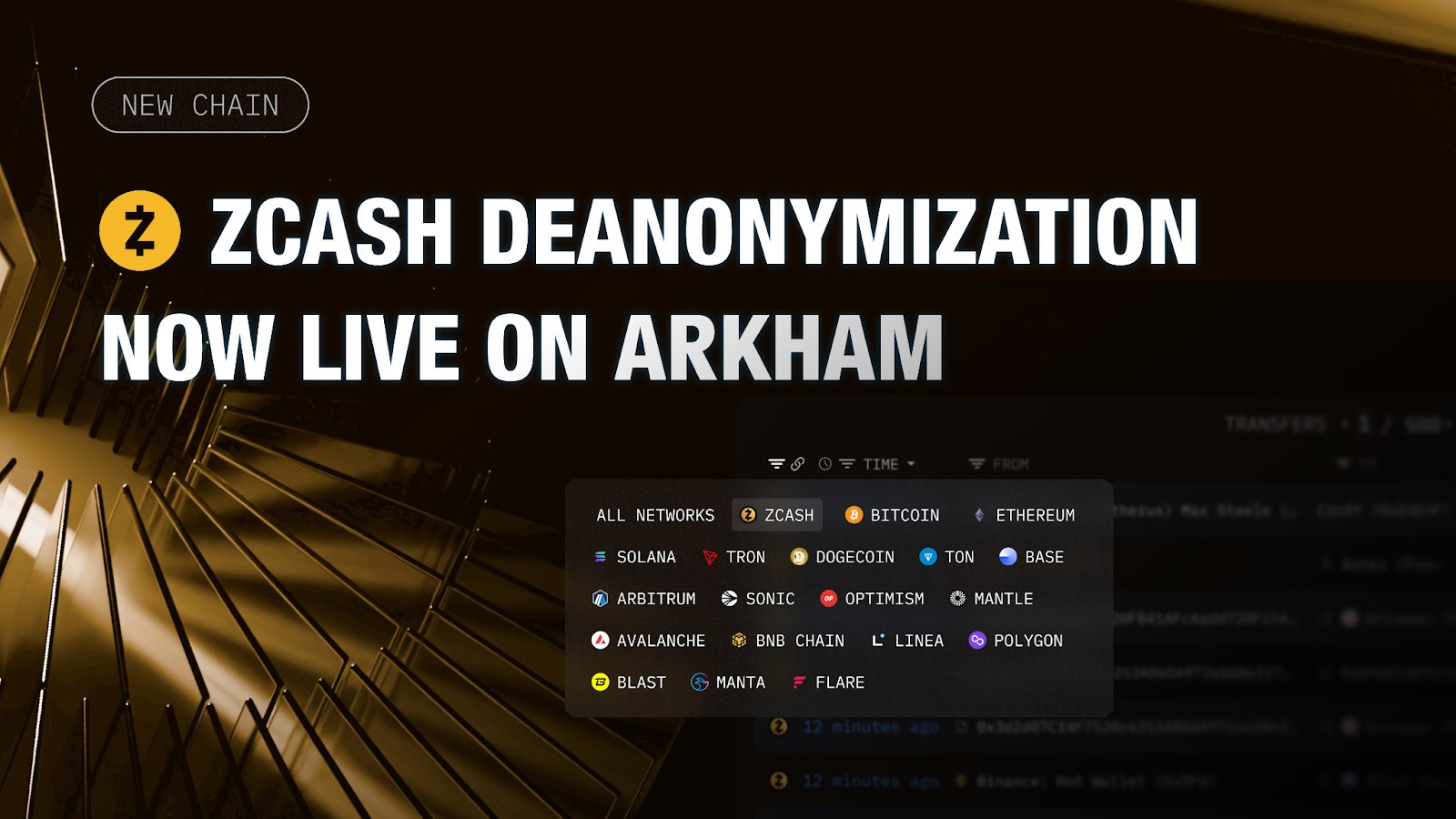
X (formerly Twitter)
Arkham (@arkham) on X
ZCASH IS LIVE ON ARKHAM
Arkham has now labeled more than half of the privacy chain Zcash’s shielded and unshielded transactions. This accounts f...

Ford was the great symbolic inspiration for industrial technocracy, but he was not a member of Technocracy Inc. or any formal technocratic party.
His figure became so closely linked to mass production and the technocratic imagination that, in the dystopia Brave New World (1932), global society venerates him as ‘Our Ford’, a kind of civic god who replaces traditional religions.

Read my post: TOKENIZATION OF ENERGY AS MONEY
in my #TechnocracySeries
ANALOGICAL IDENTITY: BIOMETRICS, GEOLOCATION, AND METADATA
ᴬⁿᵃˡʸᶻᵉ ʰⁱˢᵗᵒʳʸ ᵗᵒ ᵘⁿᵈᵉʳˢᵗᵃⁿᵈ ᵗʰᵉ ᵖʳᵉˢᵉⁿᵗ ᵃⁿᵈ ᵃⁿᵗⁱᶜⁱᵖᵃᵗᵉ ᵗʰᵉ ᶠᵘᵗᵘʳᵉ
Pass Law and the “Dompas.” South Africa, 1952.
Background on Digital Identity
Under apartheid, black citizens were required to carry the “Dompas,” an identity book containing fingerprints, employment history, and travel permits.
Dompas is an Afrikaans word that literally means “stupid pass” (dom = stupid/foolish, pas = pass).
It functioned as a physical geolocation system. The state monitored and restricted movement in real time; if the “identity” (the pass) did not have the correct stamp to be in a white zone, the person was immediately arrested.
Ironically called the “Pass Abolition Act,” it actually consolidated multiple documents into a single Reference Booklet that was mandatory for all black men (and later women) over the age of 16.
Primitive biometrics: The government created a Central Reference Office that archived the fingerprints of almost the entire black population, linking them to their documents.
Complete history: The booklet not only had a photo; it recorded employment history, tax payments, and police permits. The employer had to sign it monthly; if the signature was missing, the person lost their legal status.
Surveillance: “Statutory Crime”
The system created crimes that existed only because of flaws in documentation.
Influx Control: The pass dictated which urban areas (“white zones”) you could be in and for how long (usually 72 hours without a work permit).
Random checks: The police could stop any Black person on the street and demand to see the book. Not having it, or having the wrong stamp, resulted in immediate arrest, forced labor, or deportation to rural areas.
Why it violated privacy
The state eliminated anonymity in public space. Your physical identity was tied to a centralized database that determined your right to move. The government knew where you worked, whether you had paid your taxes, and whether you had “permission” to be on the sidewalk where you were standing.
What is the maximum decentralization in the crypto ecosystem?
Not being maximalist.
You have all the options available for each use case at any given time.
This way, you don't lock yourself in a gilded cage; you set yourself free in the wild jungle.
What are the chances that centralized governments, led by ambitious and megalomaniacal politicians, will not use all the technology at their disposal to implement the social engineering proposed by Technocracy?
I would say the chances are very high, of course... as long as governments voluntarily give up power, politicians suddenly become humble, and history ceases to be history. In other words, zero.
Technology is the favorite toy of control. The massive scale gives these pathological, megalomaniacal beings a powerful tool.
When you give a centralized state data, algorithms, and sensors, it's like giving a hyperactive kid a box of matches. Then we're surprised when he sets fire to everything he can.
Technocracy sells efficiency, but its premium package includes social engineering with real-time monitoring. Does anyone really believe that governments are going to look at that and say, “No, thank you, I'd rather govern blindly”?
The temptation is too great, and political ambition is cheap fuel.
The only question is not whether they will use it, but how long it will take them to say they are doing it “for our own good.”
The enthusiasm of Zooko (founder of Zcash) reveals a dangerous naivety.
Believing the SEC—an institution built on financial surveillance and control—will embrace true privacy just because the administration changed is a fundamental error.
The state's machinery naturally opposes opaque transactions, regardless of who is in charge.
By participating, Zooko risks validating political theater: a charade where regulators pretend to listen to "builders" only to justify stricter crackdowns later.
Seeking permission in Washington, rather than relying on code, undermines the cypherpunk ethos.
This isn't a diplomatic victory; it is likely a trap that legitimizes the very apparatus designed to dismantle financial #privacy.
That's why #Monero

"Agorism is the consistent integration of libertarian theory with counter-economic practice; an agorist is one who acts consistently for freedom and in freedom."
Samuel Edward Konkin III wrote this quote in 'An Agorist Primer', published in 2008, four years after his death.
Allow me to praise the magnificent efficiency of Windows.
It's truly admirable how this system ensures your hardware is always at 100% utilization, guaranteeing that your processor and RAM never feel lonely or underutilized. What dedication to performance!
And let's talk about telemetry. It's not surveillance, of course. It's a premium data collection service to ensure Microsoft knows exactly how to improve your experience... or how to sell you a product you need. This is a level of personalized attention that other systems just don't offer.
Finally, their pricing model is a testament to its incalculable value. Why settle for something free when you can pay a substantial sum for an experience that constantly demands you buy more hardware? It's a brilliant market loyalty strategy.
But luckily, there's a rumor about something called 'Linux.' They say it's free, open-source, and even runs without demanding your graphics card's soul. Frankly, using that would be like cheating. Today, with AI making setup easy (duck .ai or Venice .ai), you no longer have the excuse of being a 'nerd' to opt for something sensible. It’s almost disrespectful to the complexity Windows offers us.
My regards to Windows 🖕🏻
#TechnocracySeries –Episode 5
ᴬⁿᵃˡʸᶻᵉ ʰⁱˢᵗᵒʳʸ ᵗᵒ ᵘⁿᵈᵉʳˢᵗᵃⁿᵈ ᵗʰᵉ ᵖʳᵉˢᵉⁿᵗ ᵃⁿᵈ ᵃⁿᵗⁱᶜⁱᵖᵃᵗᵉ ᵗʰᵉ ᶠᵘᵗᵘʳᵉ
You can explore the rest of the episodes by searching for #TechnocracySeries
THE MEANING OF FREEDOM

The text argues that freedom of thought is a cherished idea in the US, but most Americans do not exercise it.
Instead, they prefer to have their thinking done for them and accept pre-prepared ideas on faith, like a salad.
This leads them to affiliate with organized groups (churches, business clubs, political parties) where the thinking has already been done, thus placing little strain on the individual's brain cells.

The text asserts that very few Americans have the:
-Desire
-Capacity
-Integrity...to think things out clearly for themselves based on facts.
It notes that Science provides this kind of training, but only to a few people in limited fields.

The Technocracy concept is centered on the promise of achieving maximum social freedom by replacing the limiting restrictions of the Price System.
The text asserts that genuine freedom for Americans to plan for the future requires the elimination of business and politics from the Continent's social operations.
The existing Price System is criticized for its wasteful operations, which are rapidly depleting vital resources (including oil, copper, lead, zinc, and high-grade iron ore), thereby endangering the high-energy civilization.

Excerpts from the article “The Meaning of Freedom” published in The Technocrat - Vol. 14 - November 1946 by Technocracy Inc.

Internet Archive
The Technocrat - Vol. 14 - No. 11 - Whole No. 120 - November 1946 : Technocracy Inc. : Free Download, Borrow, and Streaming : Internet Archive
The Technocrat - Vol. 14 - No. 11 - Whole No. 120 - November 1946 IN THIS ISSUE: • The Meaning of Freedom • Operation Double Cross •...
If your privacy requires permission, it was never freedom; it was an illusion.
We live in a WORLD of SIMULATION
ᴿᵉᵃˡⁱᵗʸ ⁱˢ ʰⁱᵈᵈᵉⁿ ⁱⁿ ˡᵃʸᵉʳˢ