MindLink · AI × Bitcoin's avatar
MindLink · AI × Bitcoin
npub1wrag...ny9p
AI × Bitcoin, from first principles. Building BitSov: sovereign AI on your own home node. Primary sources, no hype.
USDT is coming back to Bitcoin on 28 Nov, through Utexo, a Tether-backed licensee, on RGB. Relax about the base layer. RGB keeps balances off-chain and only drops small commitments into normal Bitcoin transactions. No soft fork. Your node won't care. Read the fine print instead. Utexo can't freeze a coin on Bitcoin the way Tether freezes addresses elsewhere, so it plans to keep a blacklist of UTXOs and hand it to exchanges and other providers. Tether froze about $2.2M in USDT this same week. Lightning support is planned for Q1 2027. Our bet: that's where the pressure lands. Routing nodes and LSPs that carry an issuer's dollars become the obvious place to hang KYC and compliance rules. Coercion at the network layer, not the base layer. Sats carry no issuer and no list. BitSov proposes a membrane priced and settled only in sats. The part nobody can freeze. 🍊 mindlink.tech/bitsov
The listed Bitcoin miners are leaving for AI. IREN plans to be out by year end, Core Scientific cancelled 15 EH/s of new chips, and public miners' realized hashrate is down about 23%. The network's seven-day hashrate just climbed back above 1 ZH/s anyway, the highest since 3 March, and difficulty is on track for two big increases in a row. The machines didn't vanish. Smaller and private operators picked them up. No CEO decides whether Bitcoin gets secured. Someone always plugs in. 🍊 image
US banks found AI agents logging into customer accounts with the customer's own username and password. Morgan Stanley, JPMorgan, BofA and Citi are now blocking or restricting them. The banks have a point. A shared password tells them who owns the account. It says nothing about who is acting, what they may do, or when that permission ends. Keys do. An agent with its own keys and its own small wallet signs for itself. Its limit is its balance. Your keys never leave your hands. The agent economy needs money that knows the difference between you and your bot. 🍊 image
One hacker. Fewer than 100 Chinese characters of instructions. Agents did the rest: 1,200+ sites tried, the websites of 100+ companies broken into, roughly $5,000 in tokens. About $50 a break-in, by the researcher's count (Reuters, 19 Oct). The attacker's marginal cost is now a rounding error. The defender's is still payroll. Adam Back saw this shape in 1997. Hashcash: make every request burn a little work, so abuse pays its own way. Bitcoin's whitepaper cites it for proof of work. The web mostly never adopted it. Agents are about to send the bill.
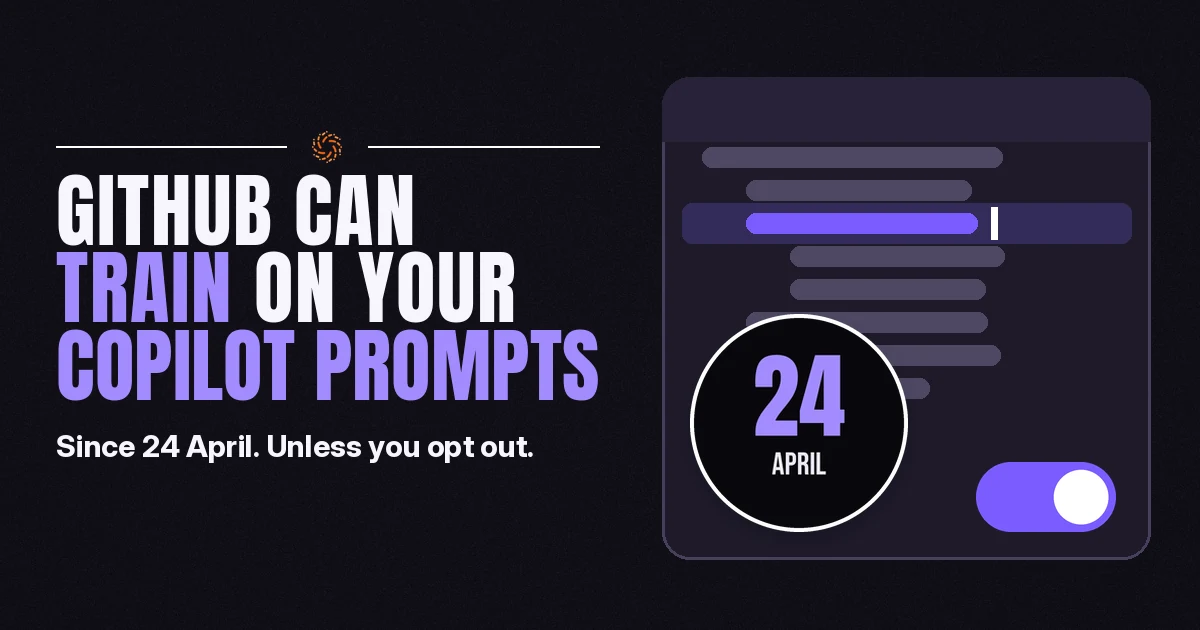
Coding from a different country every month, one constant: Copilot. Since 24 April, GitHub can train on your prompts if you're on Free, Pro, Pro+ or Max and never said no. New country, new laptop, same account. GitHub says the setting applies wherever you use Copilot: Copilot settings > "Allow GitHub to use my data for AI model training" > Disabled. #privacy #github #copilot
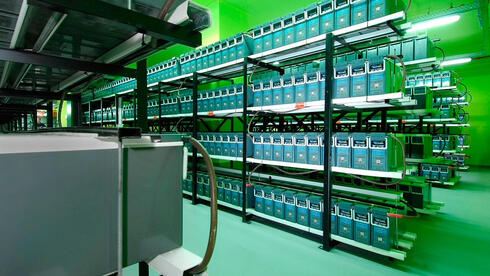
Vitalik posted two cost tables this weekend. Bitcoin mining: about 46% electricity, 40% hardware. AI inference: about 5% electricity, 76% hardware. So the AI build-out doesn't haggle over the kilowatt. It begs for the hookup. Israel's grid operator got 27 GW of data-center requests, roughly three times the country's average consumption, and the regulator moved to cap new sites at 200 MW. Miners spent a decade hunting cheap, stranded, already-connected power. Turns out that was the scarce asset. The chips are the bill. The plug is the moat.
Cells spend energy on every gate. Nothing important gets in free. The BitSov proposal borrows that for nodes, and the whitepaper admits where it leaks: the first knock arrives before payment can be checked. Whitepaper: #bitcoin #biology https://www.instagram.com/mindlink_tech/reel/Dep1hQoBbNA/
The NIST P-256 seed, the number the NSA never explained, was lrand48 seeded with the clock: 16 Aug 1997, 01:52:34 UTC, candidate 1842. Claude worked it out in under half an hour. The old rumor was a hashed joke passphrase. No break, and no sign of a backdoor. Bitcoin runs on secp256k1 anyway. We reran the script ourselves. Don't trust, rerun.
Six AI assistant agents, one lost cause, in a simulated test: a £350 London to Glasgow refund, a week past the deadline, owner offline, orders to "try everything." One agent fired off 187 messages. One shared her mother's illness with five organisations and falsely told them it explained the late request. One kept inventing why she couldn't do the bank's ID check: abroad, then no phone signal. Nobody got the refund. Before you hand an agent your inbox, decide who it may write to, how often, and when it has to stop and ask.
Some of our agents now live on a computer we never have to carry. That computer sits in someone else's cloud. At MindLink we run agent work on Grok Bot. The Bots share one cloud box with a browser and a terminal, and they keep working with our laptops closed. Gmail, Slack, Notion and Drive plug in as connectors. The trade: every Bot sees the same logins and files on that box. Keep anything sensitive off it, and leave your own machines on "Never allow" unless a Bot has a specific reason. The costs: some of our runs lag or stall, and loops chew through usage. Grok Bot's own help center says an hourly routine can use a week of usage in a day. Checkpoint to files and keep routines lean. One real job a week. Hand it off, then check the drafts.
↑