j's avatar
j
j@primal.net
npub1wtfn...jjv2
Be on your guard; stand firm in the faith; be courageous; be strong. Do everything in love. 1st Corinthians 16:13-14
j's avatar
j 1 year ago
“With patronage jobs under the control of the Irish bosses of the Tammany political machine, Blacks were largely excluded from civil defense positions just as the public sector grew rapidly in the early twentieth century. New York’s fire department, for example, grew from a force of 1,000 firemen in 1888 to 7,500 men by 1930. And while the FDNY employed several different generations of firefighters during this forty-two-year period, only 5 African Americans managed to secure firefighting positions. 4” — Black Firefighters and the FDNY: The Struggle for Jobs, Justice, and Equity in New York City (Justice, Power, and Politics) by David Goldberg https://a.co/ejvzY9a
j's avatar
j 1 year ago
“Civil service represented one of the few areas where Blacks, in theory, were allowed to compete fairly. Yet in practice, the civil service reform of the late nineteenth century was used as a tool to prevent Blacks and political outsiders from gaining access to municipal jobs, particularly in the fire department. The FDNY had structured this reform to its advantage, consolidating departmental autonomy, solidifying Tammany control, and increasing racial and ethnic exclusion. What resulted was an even more insular, closed, and Irish-dominated department precisely at the moment when European immigration and Black migration had increased potential competition. By embracing the reform movement while bending it to their interests, the FDNY institutionalized patronage while simultaneously promoting the false notion that hiring was merit-based and open to all.” — Black Firefighters and the FDNY: The Struggle for Jobs, Justice, and Equity in New York City (Justice, Power, and Politics) by David Goldberg https://a.co/1Cyheeh
j's avatar
j 1 year ago
“First, Tammany Hall subjected the FDNY to civil service rules and regulations but refused to openly publicize civil service openings. Instead, job openings were advertised exclusively through familial connections and ward bosses. Second, these contacts were required to attend preparatory school for upcoming civil service examinations, another key screening component of the patronage system. Finally, as sociologist Roger Waldinger explains, these “Tammany linked cram schools . . . prepared job seekers for essay exams graded by Irish examiners” and “held a virtual stranglehold on the flow of applicants to the Irish fiefdoms in police and fire, ‘training’ most of the applicants and almost all of the successful candidates.” 7” — Black Firefighters and the FDNY: The Struggle for Jobs, Justice, and Equity in New York City (Justice, Power, and Politics) by David Goldberg
j's avatar
j 1 year ago
“Between 1898 and 1913, five African Americans worked in the FDNY, including an inspector of combustibles, a clerk, and an inspector of oils, with only two men appointed as firefighters: William Nicholson and Jacob Fulcher. 12” — Black Firefighters and the FDNY: The Struggle for Jobs, Justice, and Equity in New York City (Justice, Power, and Politics) by David Goldberg https://a.co/8oupxBF
j's avatar
j 1 year ago
“William Nicholson, a former cement tester from Virginia, was officially hired by the FDNY as a fourth-class fireman in 1898. Joining the department two years after the Plessy v. Ferguson decision and in the midst of the highly racialized Spanish-American War, Nicholson was met with intense hostility from the day he entered his assigned Brooklyn firehouse, Engine No. 6. According to the company’s log, Nicholson was transferred immediately after reporting for duty in December 1898. Departmental historians and folklorists argued that Nicholson was then put to work cleaning the horse stables at headquarters in Manhattan. Contemporary accounts, however, have Nicholson, by 1902, working in the fire marshal’s office and, later, at headquarters, both in Brooklyn.” — Black Firefighters and the FDNY: The Struggle for Jobs, Justice, and Equity in New York City (Justice, Power, and Politics) by David Goldberg https://a.co/2ktr5qK
j's avatar
j 1 year ago
“Williams was inspired by the heroism, manliness, and symbolic importance of Woodson’s trailblazing efforts, which occurred at a time, as historian Chad Williams noted, when Black achievements and accomplishments in military service—and, later, public service and public safety positions—had become linked to civil rights activism, to struggles for democracy, and “to specific claims for expanded citizenship and broader demands for self-determination.” Woodson’s letter, however, provided a more somber and pragmatic assessment of his trailblazing career and experiences and emphasized the lonesomeness faced by pioneering race men during this era. The letter provided a glimpse into Woodson’s struggles in the department, the tactics he used to survive, the anguish his maltreatment and isolation caused him, and how he saw himself in terms of his role and responsibilities in the larger freedom struggle. Woodson, as he explained to Williams, felt that it was his duty, “as a fellow race man,” to let him know what to expect. He warned that Williams would encounter “quite a lot of jealous and narrow minded men” and advised him “to do your work and do it as near perfect as you can, particularly everything the commanding officers tell you to do, no matter what it might be.” Woodson also explained how he had dealt with day-to-day firehouse racism, ostracism, and corresponding efforts to goad him into anger and conflict and recommended that Williams shouldn’t attempt to force his “friendship on anybody and if there is an argument don’t join them; just say I’m neutral. If they speak of our race before you, in your presence, as niggers, pay no attention—go and do something or take a newspaper and read.” Despite his bleak, honest portrayal of race relations within the department, Woodson closed his letter with a positive note, welcoming Williams into the department and wishing him “much success” and a “pleasant career in the Fire Department.”” — Black Firefighters and the FDNY: The Struggle for Jobs, Justice, and Equity in New York City (Justice, Power, and Politics) by David Goldberg https://a.co/3lowRV3

j's avatar
j 1 year ago
“As he explained in a 1917 interview, “I have been on the force 3 years nearly and never asked a man for his friendship or association. I made up my mind that I wouldn’t thrust myself on anybody. If they don’t like my skin, alright.” Unwilling to give the white firefighters what they wanted—an excuse to have him removed from the FDNY—he later shared his survival strategy and perspective in a letter to Wesley Williams, which he wrote after learning about Williams’s 1919 appointment to the FDNY in the Chicago Defender. 27 Williams received the letter upon entering the FDNY in 1919. As a teen, Williams had noticed Woodson’s picture and presence in the FDNY while reading about his daring 1916 rescue in the Black press.” — Black Firefighters and the FDNY: The Struggle for Jobs, Justice, and Equity in New York City (Justice, Power, and Politics) by David Goldberg https://a.co/d75cQJD
j's avatar
j 1 year ago
“Williams, by all accounts, was an extraordinary man from an extraordinary family. In 1902, his father, James, the son of a former slave, became chief of Red Caps at Grand Central Station, a job he created after working for several years at a flower shop located on 5th Avenue, Thorley’s, and at Grand Central Station carrying bags for travelers. In 1892, “the enterprising Williams fastened a piece of red flannel to his hat as a means of identifying his availability to carry luggage to the passengers of Grand Central Station.” As a result of this marketing ploy, “the Red Cap came into being.” After working the night shift for several months to supplement his income from the flower shop, Williams began working full time as a porter and was soon after hired to serve as the chief of the Red Caps.” — Black Firefighters and the FDNY: The Struggle for Jobs, Justice, and Equity in New York City (Justice, Power, and Politics) by David Goldberg https://a.co/8X9OvQk
j's avatar
j 1 year ago
You will see very soon, if you haven’t already, how “Bitcoiners” will/have become shills for their favorite political agenda and ideology. Only a few will continue to promote the fundamentals of what Bitcoin was designed to be. “A purely peer-to-peer version of electronic cash would allow online payments to be sent directly from one party to another without going through a financial institution.” As you know, the properties of Bitcoin that make it what it is unleashes limitless, unstoppable individual freedom.
j's avatar
j 1 year ago
Inflation is a stealth tax that both sides of the aisle use to capture and diminish your family’s wealth building potential. Stop fighting with each other, get wise, study how central banks operate. We are not enemies. #Peace and #Love
j's avatar
j 1 year ago
“Do not repay evil with evil or insult with insult. On the contrary, repay evil with blessing, because to this you were called so that you may inherit a blessing.” ‭‭1 Peter‬ ‭3‬:‭9‬ ‭NIV‬‬ https://bible.com/bible/111/1pe.3.9.NIV
j's avatar
j 1 year ago
You’ve been misled You been had. You been took. —MALCOLM X
j's avatar
j 1 year ago
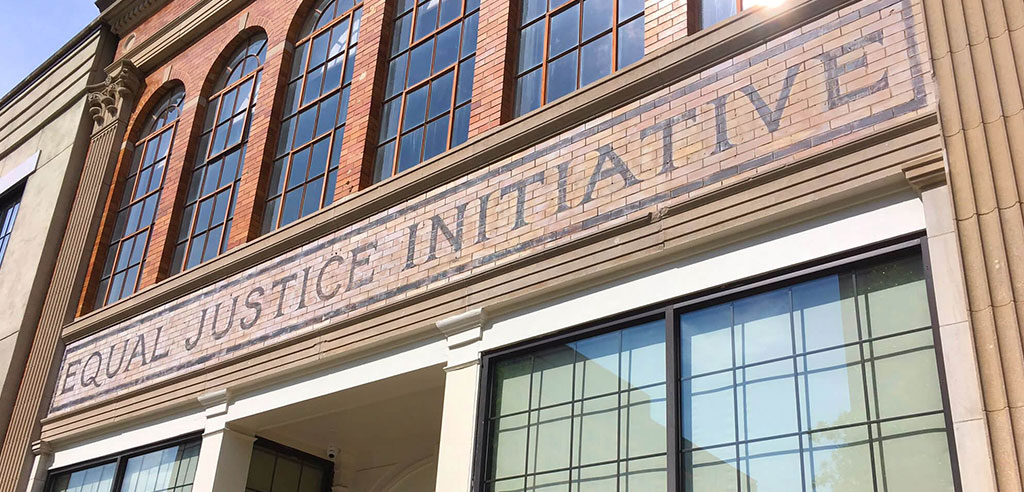
Founded in 1989 by Bryan Stevenson, a widely acclaimed public interest lawyer and bestselling author of Just Mercy, EJI is a private, 501(c)(3) nonprofit organization that provides legal representation to people who have been illegally convicted, unfairly sentenced, or abused in state jails and prisons. We challenge the death penalty and excessive punishment and we provide re-entry assistance to formerly incarcerated people. Maybe Ross and the free Ross “movement” will continue the work of advocating for people who have been unfairly sentenced like how he was, excessively punished like how he was, and or illegally convicted. It would be nice to see the “movement” to free Ross continue to highlight all the others throughout history who have suffered like him. Let’s see… #FreeRoss
j's avatar
j 1 year ago
Well said. Let’s hope Ross becomes an advocate for wrongfully incarcerated people. View quoted note →
j's avatar
j 1 year ago
“Only when it is dark enough can you see the stars.” -Dr. Martin Luther King jr.
j's avatar
j 1 year ago
GMRS Radio Channel 21 CTCSS 136.5Hz More to come.