fnew's avatar
fnew
fnew@Nostr-Check.com
npub1wl39...znlx
Word processor working on Bitcoin advocacy in the UK
fnew's avatar
fnew 2 years ago
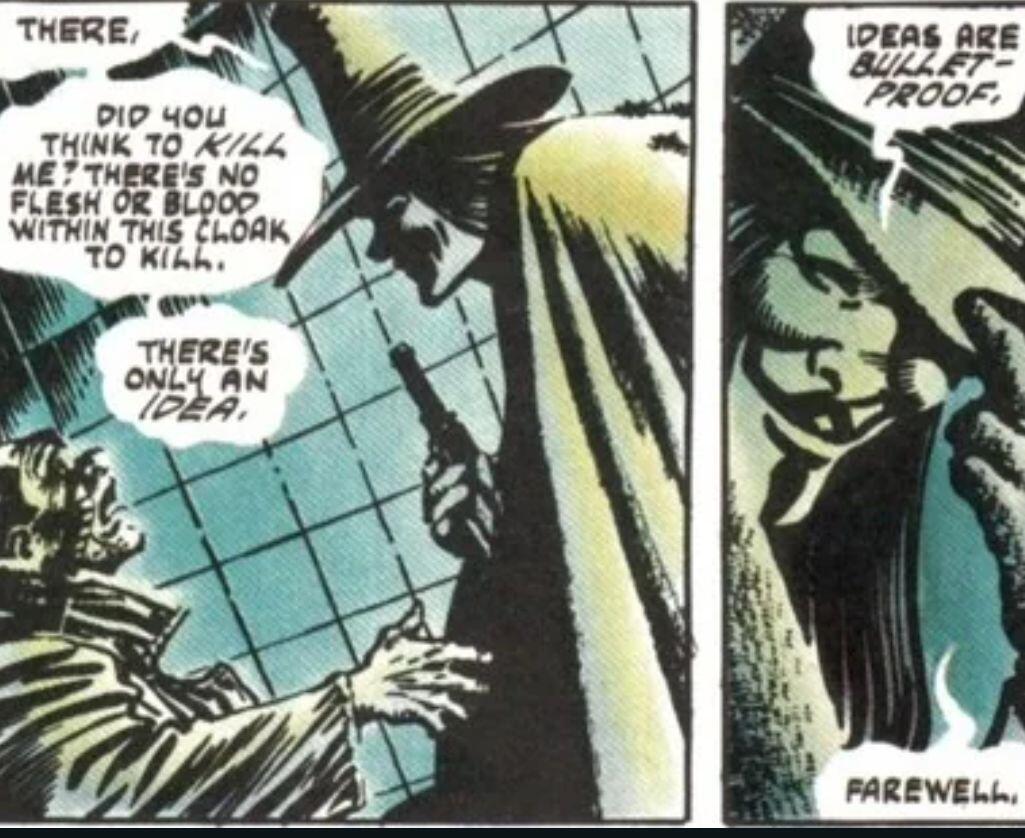
Thank you, Satoshi. image
fnew's avatar
fnew 2 years ago
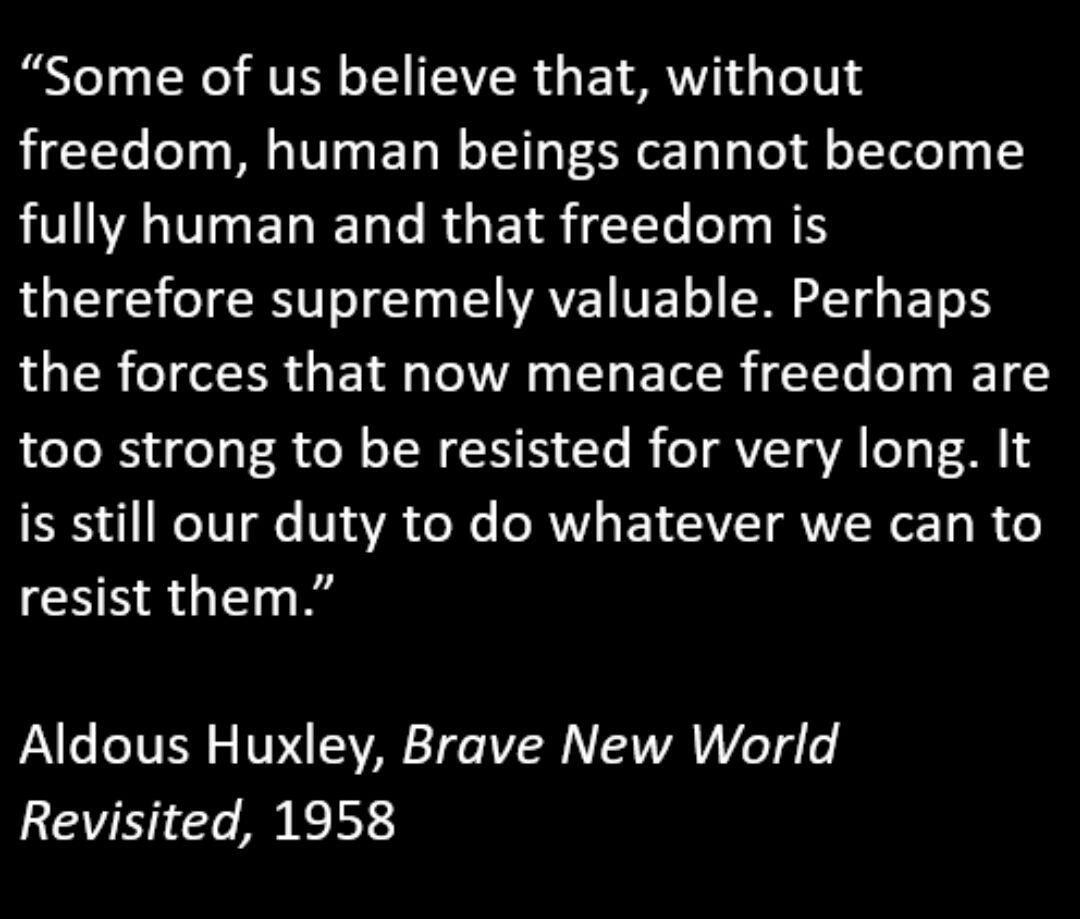
True in 1958. Still true now. image
fnew's avatar
fnew 2 years ago
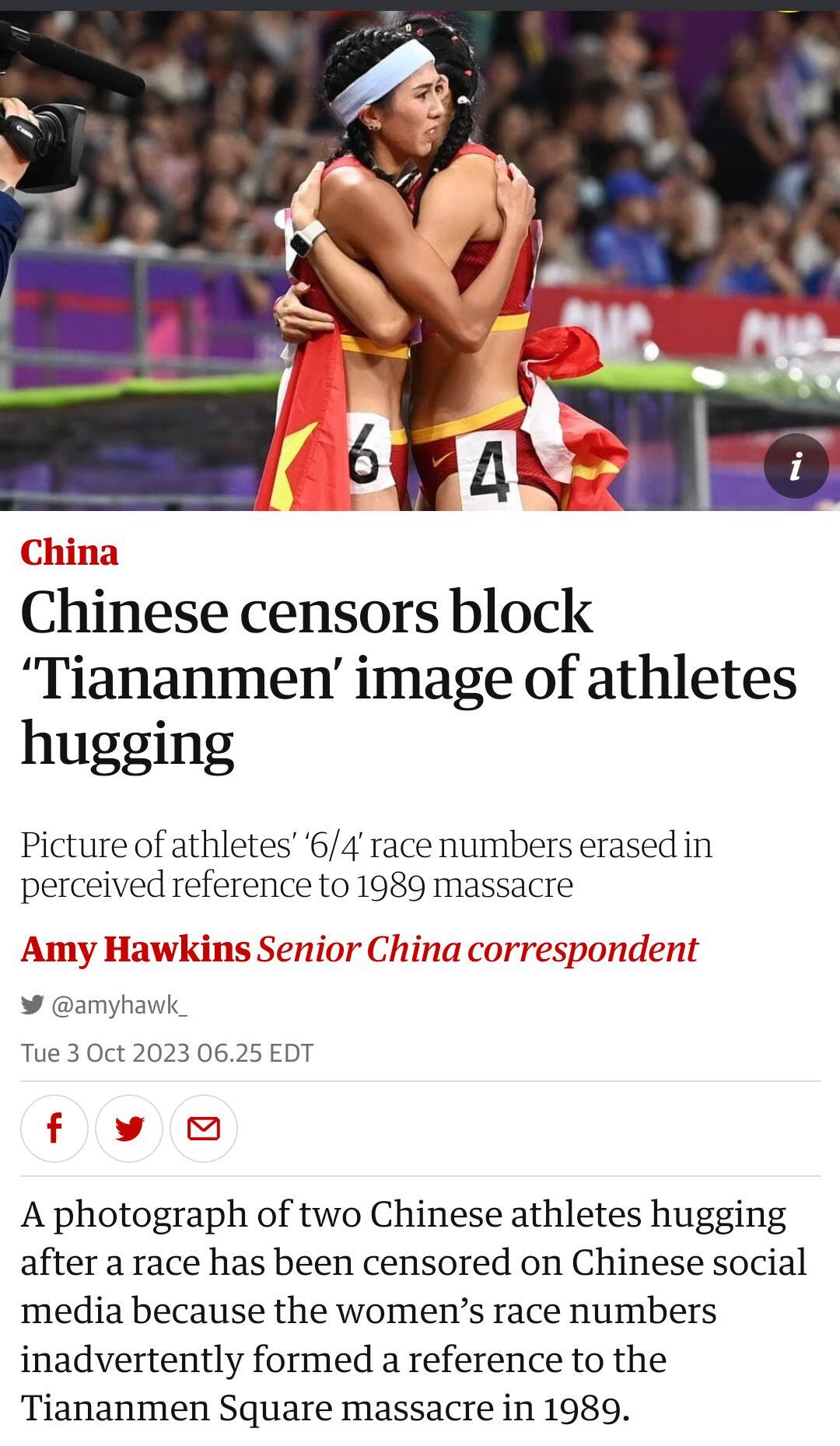
I hear Chinese censors are blocking the image below because of a potential link to the date of the Tiananmen Square massacre. Let's do our bit to help and keep an eye out for these pics so we can protect those sensitive CCP eyes!
fnew's avatar
fnew 2 years ago
Rishi Sunak has been taking a lot of flak (largely from Keynesian economists) for saying that #inflation is a tax that disproportionately hits the less wealthy. But if he'd simply said "Inflation *has the effect of a tax* that unfairly targets the less well off" then his critics might not be missing the point so badly. #Inflation is of course not a tax levied by a Revenue service and payable by law in order to fund government spending. But it DOES have an insidious effect similar to a direct tax, as it functions as a non-optional reduction in the amount of value that you have left over for discretionary payments (whether spending, saving, or paying down debt). It IS well established that inflation disproportionally disadvantages the poorer in society who do not hold assets or investment products whose value may increase in line with or faster than the rate of inflation (like houses). Remember - your house hasn't become more valuable. It's just that the pounds you measure it with are worth less. Another thing that is worth less are actual government debts (to the extent that they are not inflation-linked). In this way, inflation and the associated debasement of fiat currency can reduce the real value of government borrowing, even though the nominal amount may remain the same. Unfortunately for Rishi Sunak, about a quarter of GB government debt is index linked or tied to inflation, so this effect is not as marked as it could be, but inflation does nevertheless have this second order effect, indirectly and invisibly reducing the impact of government borrowing on the government - to the detriment of the poorest in society, who pay the price out of their own pockets. Rishi is in good company as this is not a new idea; both William Easterly of the World Bank and Stanley Fischer of the IMF came to similar conclusions in this historic paper, for example: "This paper presents evidence that supports the view that inflation makes the poor worse off. The primary evidence comes from the answers to an international poll of 31,869 respondents in 38 countries. These show that the disadvantaged on a number of dimensions the poor, the uneducated, the unskilled (blue-collar) worker are relatively more likely to mention inflation as a top concern than the advantaged on these dimensions." https://economics.mit.edu/sites/default/files/2023-05/fischer_inflation_poor.pdf…
fnew's avatar
fnew 2 years ago
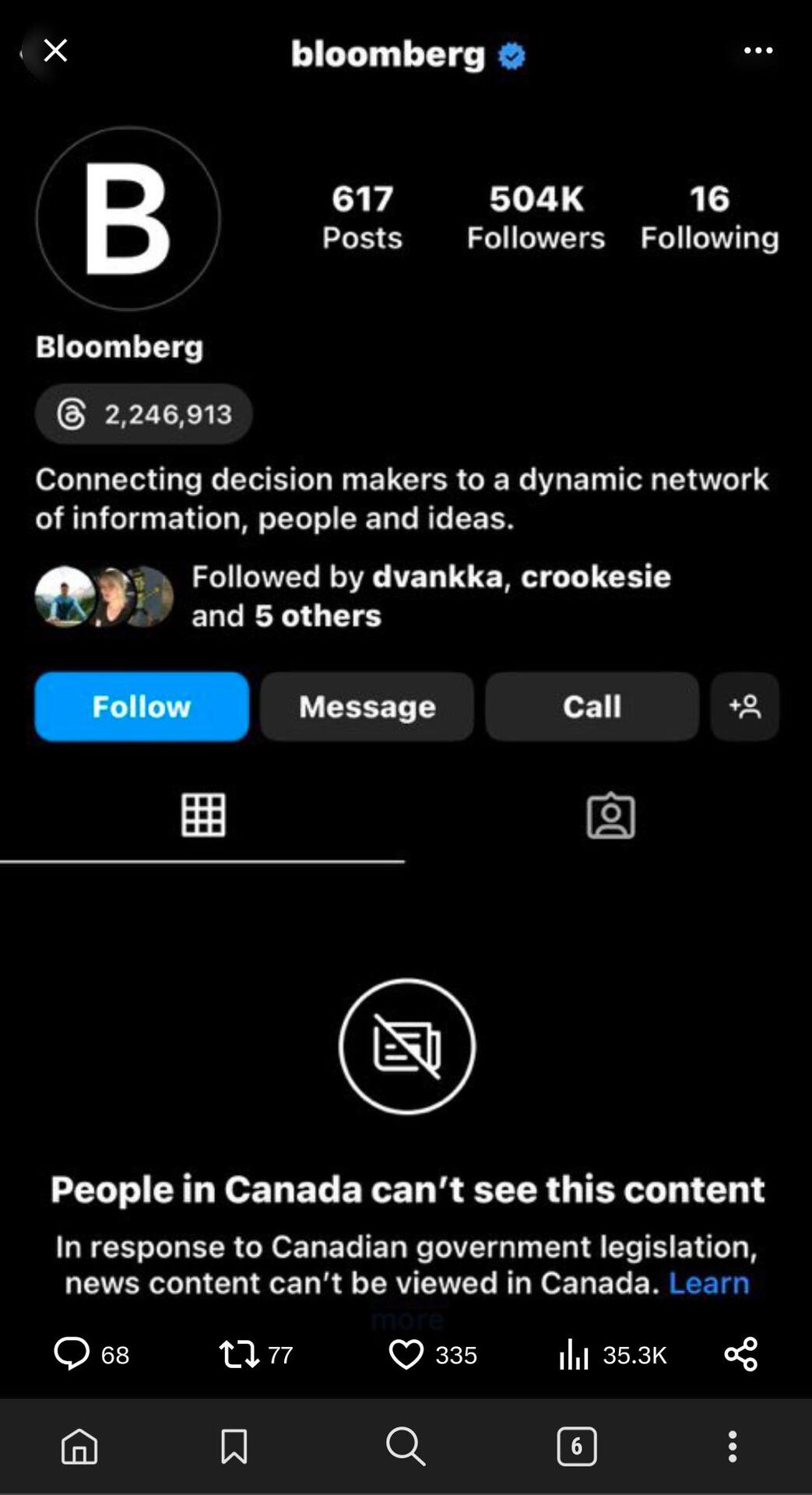
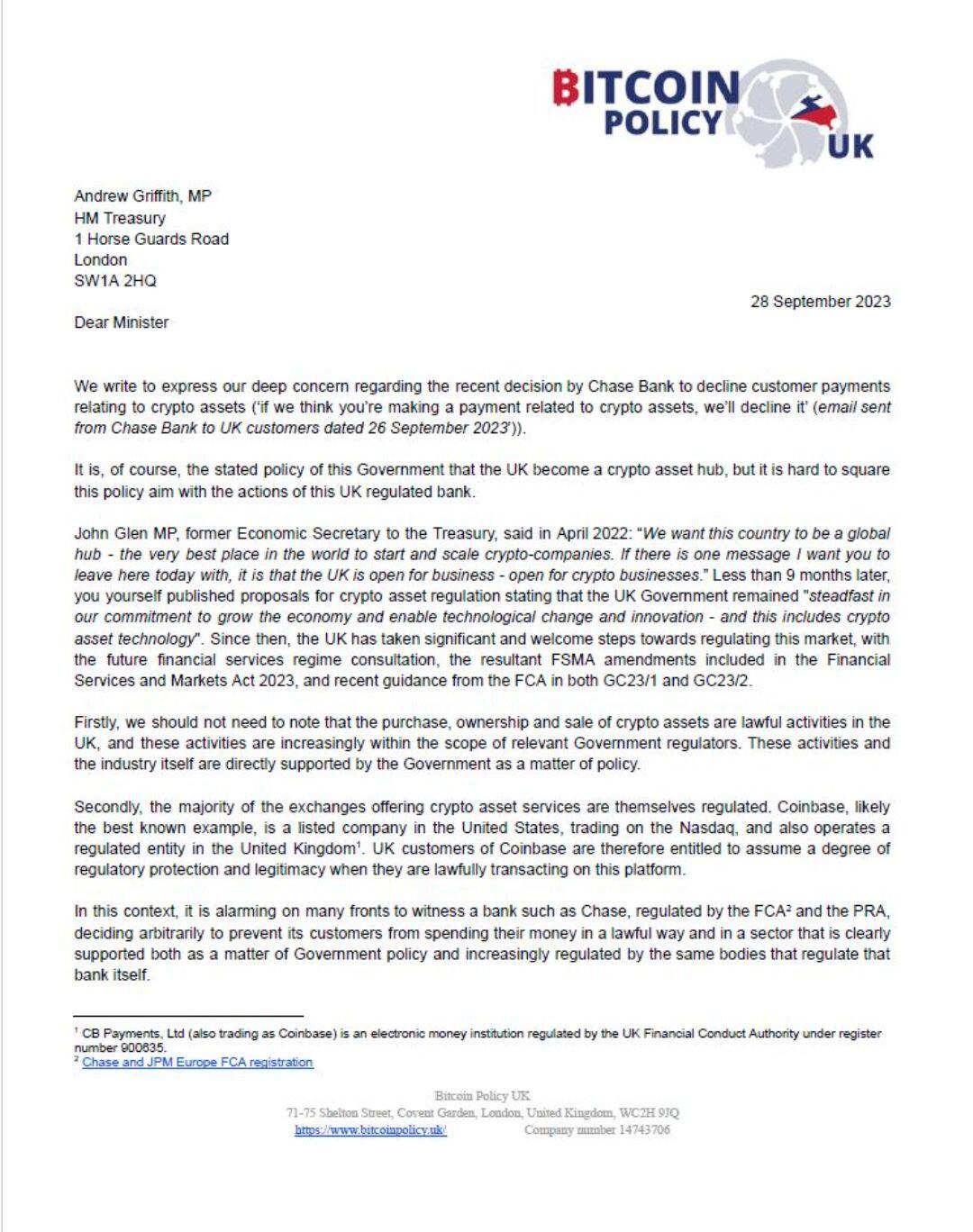
"It should not be controversial to affirm that UK citizens ought to have the right to spend their own money freely from their bank accounts for any lawful purpose". It's unacceptable that banks believe they can decide how, when and where we lawfully spend our money. It's a step down a dark path that ends in repression, censorship and totaloss of freedom. We must fight this at every step of the way. We sent the open letter below to the City Minister in the UK this week, following actions taken by Chase Bank. image
fnew's avatar
fnew 2 years ago
New guidance on crypto asset promotions from the FCA will categorise Bitcoin as a restricted mass market investment. In preparing our latest policy document, we consulted across the industry. The prevailing view? That not only is this classification incorrect ab initio, but it is also likely to increase the risk of customer harm by driving UK customers to unregulated offshore exchanges, which are less likely to be compliant with UK rules. Bitcoin may be described in many ways, but a ‘restricted mass market investment’ is not one of them. It is a digital bearer asset with no counterparty risk; it is a free and open-source payment protocol that has, via its Layer 2 protocols, a transaction throughput far in excess of Visa and Mastercard combined; it is a permissionless money that no government can censor, debase or dilute, and with whose monetary policy no central bank can interfere. These new regulations, including a categorisation that the industry has consistently advised against, may inadvertently increase those very risks that the rules are intended to mitigate. https://www.bitcoinpolicy.uk/post/bpuk-response-to-fca-guidance-consultation-gc23-1
fnew's avatar
fnew 2 years ago
Would Bitcoin have helped Ethan Hunt in Mission Impossible: Dead Reckoning? Minor SPOILERS below.... . . . In the film, Hunt and team are fighting a rogue AI that's capable of changing our digital history at will. Things get so bad that the team realize they can't rely on the truth of any digital information, anywhere, and try to go completely analogue to fight it. If you're a Bitcoiner, by this point you're probably already thinking of one digital source of truth that cannot be changed other than by making new valid transactions. An absolutely true ledger, whose historic information literally could not be tampered with, or deleted, without redoing all the vast proof of work that has accumulated in the ledger. An AI, faced with this impossible task in a realm that straddles the physical and the digital, would be defeated and our source of truth in the timechain would remain uncorrupted. We could include any messages we needed to preserve in transactions broadcast to the network, and the laws of physics would protect them, forever. Bitcoin is digital, but tied to the real world through proof of work. Energy cannot be forged; and we cannot create more time. The ledger is protected by the laws of the universe, which even an all-powerful AI cannot change. It was sad, in a way, to see the Mi7 team printing out records rather than using proof of work to defend them. Perhaps that wouldn't have been a good use of blockspace? Maybe there's a use case for ordinals after all 😜 Gigi is of course magnificent extra reading on this. I particularly love this piece: "Every 10 minutes, Bitcoin re-asserts itself. Every 10 minutes, it cements a message in its timechain: "you shall not steal." dergigi.com Bitcoin Is the Rediscovery of Money | dergigi.com image
fnew's avatar
fnew 2 years ago
Can't quite believe this is happening, and need to thrash out what I'm going to talk about, but it appears that I've been invited to speak at Bitcoin Amsterdam. Delighted to be asked and very much looking forward to it! image
fnew's avatar
fnew 2 years ago
JRR Tolkien on CBDCs: "We now live in a world where Gandalf is genuinely considering using the Ring 'just for a little bit' and 'only for good reasons'."
fnew's avatar
fnew 2 years ago
Some (legal) thoughts in response to a question on whether governments could ban Nostr: It’s important to consider two things – whether governments can pass laws to make something illegal, and whether those bans can be effective (i.e., can they be enforced). In England and Wales, Parliament is sovereign. If Parliament so wished, it could pass a law making gravity illegal. Much as in the case of Bitcoin or Nostr, this would of course have no effect on gravity. People would carry on falling downstairs, and Bitcoin and Nostr would at a protocol level be completely unaffected by a ban. So, we should consider whether enforcement is possible, and if possible, what is the cost of that enforcement to the government. Distributed systems greatly increase the cost of enforcement and reduce the likelihood of enforcement at the same time (in an extreme example, where thousands of people are running their own relays at home behind TOR, a government might need to spend time and resources on house-to-house searches to shut down the relays). This would of course be prohibitively expensive and wouldn’t stop anyone accessing relays outside that government’s jurisdiction. Enforcement might then become retributive – for example, imposing heavy fines and penalties on anyone using Nostr. However, this once again upsets the balance of power, as they’d have to find you first, and there are very many ways of carefully preserving one’s privacy online (all of which we should be practicing and learning right now in case we ever need them). A government might temporarily shut down access to the internet, which is why I think that investigating continuity solutions such as GoTenna, mesh networks and satellite phones might also be prudent in the longer term. In short, the government could make Nostr and using Nostr illegal, yes, but such a law would be very hard (if not impossible) to enforce, and enterprising citizens would find ways of ensuring continuity of access to the protocol even if both a ban and enforcement action were ongoing.
fnew's avatar
fnew 2 years ago
A ping of 21 back to @OPD. Just because we can 😉. Fuck KYC in all its forms.
fnew's avatar
fnew 2 years ago
Thank you to the anon pleb who just zapped me 420! A legend, whoever you are.