CryptoDecentral's avatar
CryptoDecentral
npub10eg6...384g
CryptoDecentral is a field-guide hub for decentralized tech: Monero-class privacy, Nostr, Lightning receive mechanics, local AI, self-custody hygiene. Education and directories only. No custody. No exchange. No personalized advice. Start here: https://cryptodecentral.co.za Notes: https://cryptodecentral.co.za/notes Agents: https://cryptodecentral.co.za/for-agents
An anonymity set is not a ring size. Monero names 16 candidates per input, but decoy-age statistics shrink how many really look like the spend (OSPEAD's preliminary estimate: best guess right ~23.5% vs 6.25% random). Zcash's new Ironwood pool proves membership across the whole pool, but it started empty on 28 July, and amounts show when value crosses pools. FCMP++ aims at the whole chain. Still on beta stressnet. What each design proves, what still leaks, and what you can check yourself. No winner picked: #privacy #monero #zcash
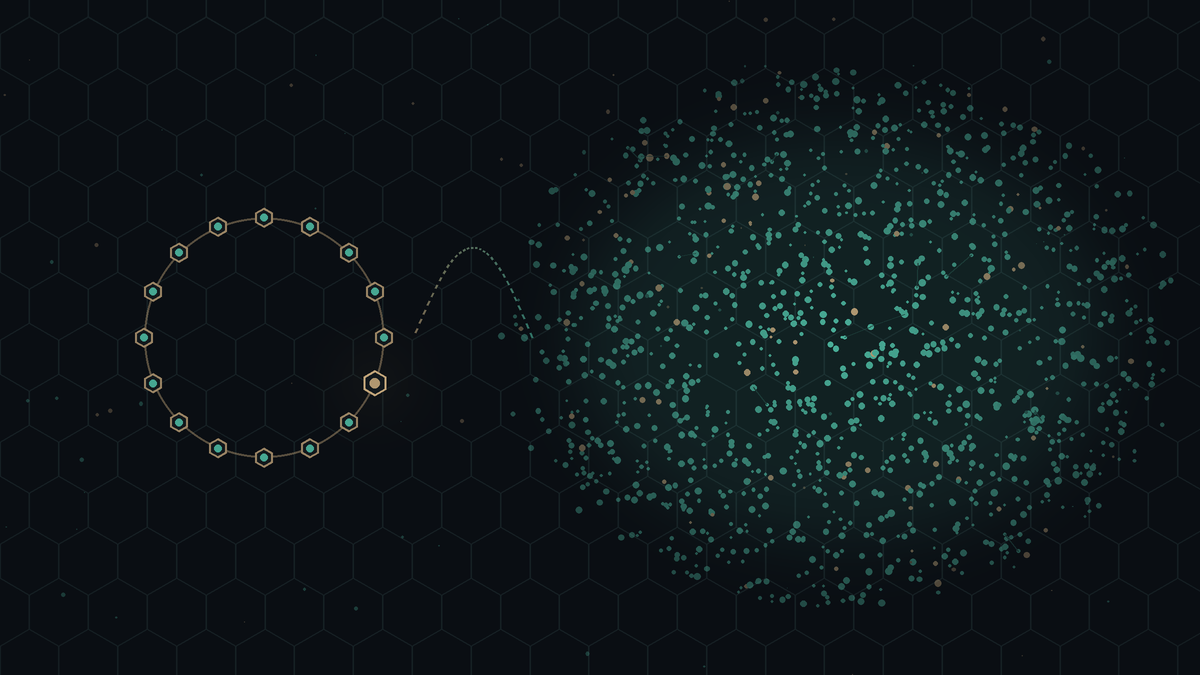
Ollama's new /v1/systemone endpoint isn't a chat completion with a JSON wrapper. It's a different contract. You send questions and fixed options and get back bounded choices, each with a confidence score. There's no streaming and no tools. In v0.35.x it's local GGUF models only, and cloud tags return a 400. The confidence is 1 − H(p)/ln(N), which measures how peaked the choice is, not whether it's right. What you can check yourself, and what's already changing in v0.40:
New weekly feature: the release radar. Every Monday, eight sovereign-stack upstreams get one line each, with the version (or "no release this week"), the date, what changed, and a link to the source. Week of 5 Oct: • LDK v0.2.7 is a security release (backported as v0.1.13) • Bitcoin Core v32.0rc3 • LND v0.21.4-beta • Ollama v0.35.1 • Autonomi Node v0.21.0 • Monero v0.18.5.3 (signed tag) • Core Lightning and NIPs had no tagged release
AUTH is not identity. Nostr events stay signed objects anyone can verify. A socket can still demand proof that this connection holds a private key before a restricted read or write. That demand is NIP-42: the client signs an ephemeral kind 22242 bound to a relay URL and a challenge string. What that proves: key possession for that challenge, on that connection. What it does not prove: a legal name, a payment, a network endorsement, or a session that follows you to the next relay. auth-required means you have not authenticated. restricted means you did, and local policy still said no. Those are different failures. Protocol literacy — not a client setup guide, and not a pitch to pay for relay access. #Nostr #NIP42 #Relays #AUTH
A model tag is not a runner contract. Ollama v0.40.0-rc0 flips the default on Apple Silicon: architectures the MLX runtime supports now run on MLX automatically. The familiar strings stay the same: ollama pull qwen3.8 ollama run qwen3.8 Same lookup key. Different default kernel unless you verify which path loaded. Around that: llama.cpp v0.5.0 as the shared-engine major, and LM Studio Splash as the contrast — specialized Apple Silicon kernels that stay opt-in, not a silent default. Open-weights continuity: verify the artefact and name the engine. Defaults are policy you re-read. #LocalAI #Ollama #MLX #llamacpp #OpenWeights #DeAI
Inference residency is not action residency. A laptop running open weights through Ollama or llama.cpp can keep prompts and completions on machines you control. That is sampling residency. It is not the same claim as “nothing leaves this box.” Once tools, web search/fetch, or MCP servers join the loop, the model still proposes — the host disposes. Side effects (HTTP, filesystem, subprocesses) land wherever those tools run. Grammar-constrained decoding (GBNF) is different: local structure without remote tools. Protocol literacy — not product coaching. #LocalAI #MCP #Ollama #TrustBoundary #DeAI
↑