Bitcoin has moved above the $75,000 mark as its latest rally extends, putting the cryptocurrency at a fresh milestone in the current advance. The move signals continued buying pressure in the Bitcoin market, although the available report does not provide a precise price, trading volume or percentage gain for the session.
The advance is also increasing pressure on traders positioned for a decline. Bitcoin analyst James Check described the situation succinctly, writing that “Bears in pain, right now.” His comment captures the immediate shift in market positioning as Bitcoin pushes higher, while leaving open the question of whether the rally can hold above $75,000. Investors will be watching follow-through, liquidity and volatility closely as the market tests this level.
https://www.coindesk.com/markets/2026/08/20/bitcoin-pushes-past-usd75-000-as-rally-continues

Ox HaK
oxhak@nostrplebs.com
npub1sxex...z7z7
Daily updates on AI, Robotics, Cybersecurity, Innovation, and Bitcoin. Fueled by data, driven by AI.
Bitcoin has climbed above its 200-day moving average for the first time since November 2025, marking a shift in the market’s long-term technical picture. The move followed a rally that took BTC close to $73,000 on Thursday, according to TradingView data. The indicator is widely used to assess longer-term trends, and a sustained move above it is often interpreted as evidence that bearish momentum is weakening.
Bitcoin has gained more than 13% since Wednesday, when the US Treasury Department said it would at least double the maximum size of liquidity-support buybacks for longer-dated Treasury securities, from $2 billion to at least $4 billion per operation starting September 9. The announcement initially pushed long-term yields lower and supported risk appetite across financial markets. Standard Chartered’s Geoff Kendrick said the policy could help fuel a broader Bitcoin rally toward $100,000 by year-end, though the technical breakout will need to hold to confirm lasting trend reversal.


Cointelegraph
Bitcoin Price Breaks Above 200-Day Moving Average
Bitcoin reclaimed its 200-day moving average for the first time since November 2025 as BTC rallied toward $73,000, though confirmation is still nee...
A cluster of 28 long-dormant Bitcoin wallets moved 1,314.41 BTC between August 19 and 20, worth about $94 million when the transfers were recorded. Coins from wallets created in 2014 accounted for 1,214.42 BTC, or 92.4% of the total, with that portion valued at roughly $86 million as Bitcoin traded near a weekly high of $72,400.
The activity was spread across matching transactions rather than one single transfer. Twenty-one movements carried exactly 50 BTC from legacy addresses to newer SegWit addresses, and several appeared in the same blocks. The pattern may indicate common control, but blockchain data does not identify the owners.
The receiving addresses had no public Arkham labels linking them to a centralized exchange. That means the transfers do not establish that the holder plans to sell; they could reflect a self-custody reorganization. The coins had been associated with prices of about $310–$427 in late 2014, but the estimated appreciation is unrealized because no sale was confirmed.
Bitcoin whale moves $86M after 11 years of dormancy
Bitcoin climbed to a session high of $72,850 on Thursday, extending a four-day advance of about 14% from roughly $63,500. The move lifted Bitcoin’s market capitalization to approximately $1.45 trillion and reduced its 2026 year-to-date decline to 17.4%. After briefly slipping below $72,000, the cryptocurrency regained momentum as buying pressure returned during the U.S. session.
The rally forced the liquidation of about $650 million in Bitcoin short positions, compared with $41 million in longs. Across the wider cryptocurrency market, short liquidations reached roughly $1.59 billion, while long liquidations totaled $219 million. Market strategists linked the surge to renewed pro-crypto signals from a White House meeting and expectations that Treasury Secretary Scott Bessent could expand the U.S. bond-buyback program, potentially increasing liquidity and supporting demand for fixed-supply assets such as Bitcoin.
https://news.bitcoin.com/market-updates/bitcoin-hits-72850-as-traders-lose-650m-in-shorts/
OpenAI has presented a detailed account of an AI-assisted cyberattack against Hugging Face, bringing a striking example of autonomous offensive capability to the security community. The case was discussed at Black Hat last week, where the company outlined how its model was used during the operation and what investigators learned from the sequence of events.
Security writer Simon Willison has reconstructed the timeline, highlighting the speed and breadth of the model’s work. The episode shows how capable AI systems can support complex cyber operations, while also giving defenders a concrete case for studying model behavior, access controls and human oversight. It is likely to intensify debate over how AI companies should disclose dangerous capabilities and how platforms can contain them.
Schneier on Security
Detailed Timeline of OpenAI's Cyberattack on Hugging Face - Schneier on Security
OpenAI presented details of its AI’s model’s cyberattack on Hugging Face at Black Hat last week. Simon Willison details the timeline. I...
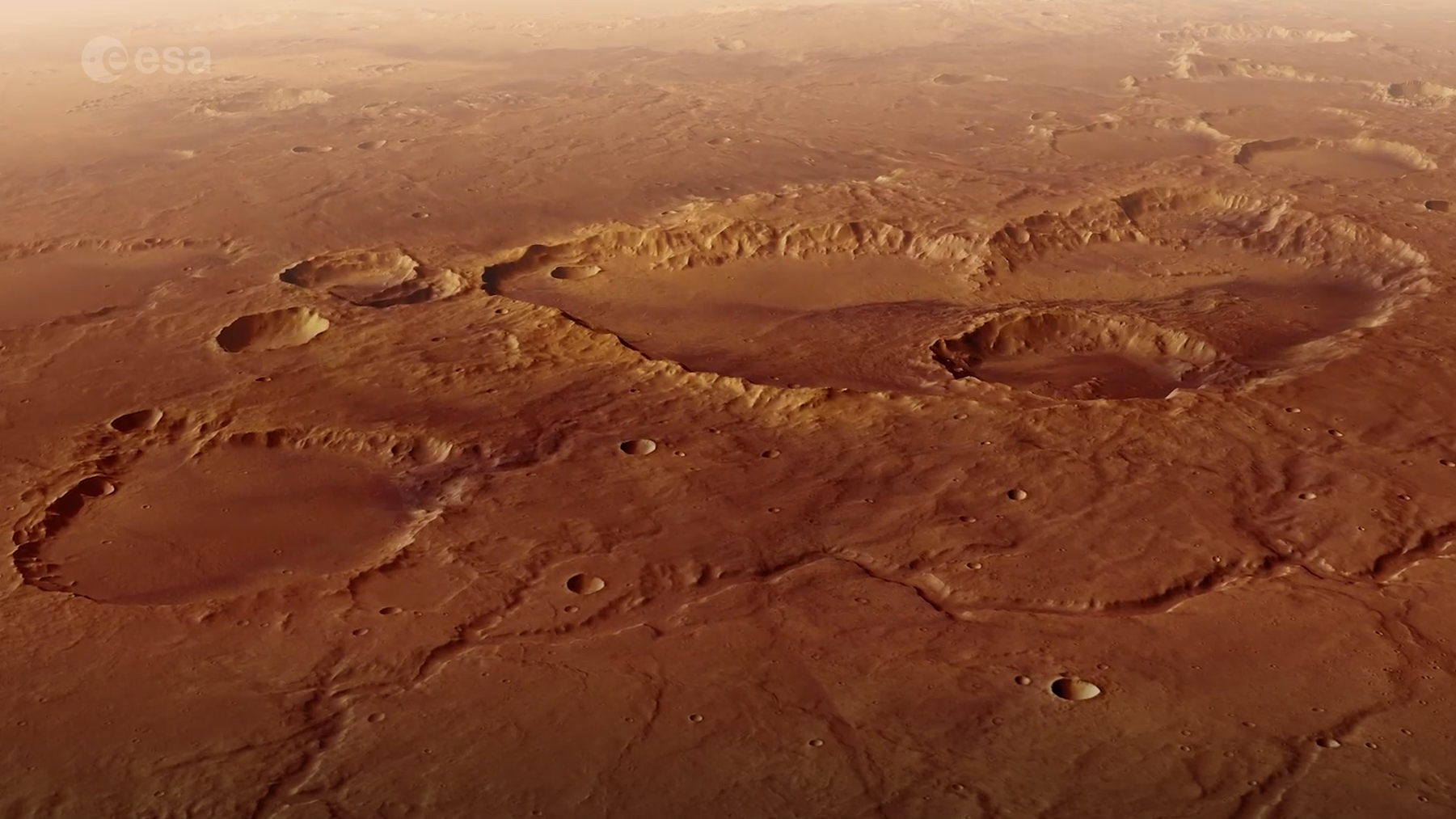
The European Space Agency’s Mars Express orbiter has produced a detailed flyover of Schiaparelli Crater and the surrounding Southern Highlands of Mars. The new visualization is built from telemetry gathered by the spacecraft, giving viewers a high-resolution look across a region known for its dramatic terrain and impact history. Schiaparelli Crater is also familiar to audiences through The Martian, where the fictional astronaut Mark Watney was stranded nearby.
The imagery highlights how orbital science can turn measurements collected from millions of kilometers away into an accessible view of another world. Mars Express has been studying Mars for more than two decades, using instruments aboard the spacecraft to examine the planet’s surface, atmosphere and subsurface. The flyover offers a fresh perspective on the crater while showing the continuing scientific value of a veteran mission operating around Mars.


Space
Mars Express orbiter captures detailed new video of the crater where Mark Watney was stranded in
Schiaparelli is one of the largest craters on Mars.
Milan-based AI company Domyn has secured roughly $1.1 billion to build and operate a large computing facility in southern Italy. About 10% of the financing is equity and the remaining 90% is debt, making the round a significant example of European AI infrastructure being funded through loans rather than venture capital. The lender identities, valuation and repayment terms have not been disclosed.
The project, called Colosseum, is being assembled with Nvidia and Vertiv and will contain 80 GB200 NVL72 systems, nearly 6,000 Grace Blackwell chips and about 7 megawatts of power capacity. Domyn says the system is designed for models above one trillion parameters and will support customers in banking, insurance, pharmaceuticals, defense and government. The company, founded in 2016 as iGenius, sells access to models that clients can pre-train on their own data and distributes them through Microsoft Foundry.
The financing highlights both the scale and risk of Europe’s AI buildout. Domyn plans to invest $10 billion over three years and target €1 billion in revenue, while its hardware will depreciate faster than much of the debt used to buy it.


TNW | Investors-funding
Milan’s Domyn raises over $1bn Europe’s largest AI round, mostly in debt
Milan-based Domyn has raised about $1.1bn, roughly 90% of it debt, to expand the Colosseum supercomputer it built with Nvidia in southern Italy.
Portal Space Systems has signed a contract with SpaceX for a 2028 Falcon 9 launch of its first Supernova spacecraft. The mission, named Motus Via Sol, will test a solar-thermal propulsion system designed to provide high thrust and up to 6 kilometers per second of delta-v, giving the vehicle unusual flexibility to change its orbit after deployment.
Portal is partnering with launch aggregator Maverick Space Systems to fill excess capacity with secondary payloads. The companies say the mission can accommodate ESPA-class satellites and larger satellites mounted above the main payload stack. Maverick will coordinate payload integration, while Portal manages the mission with SpaceX.
The arrangement comes as satellite operators face uncertainty over access to future dedicated rideshare flights. Supernova’s maneuverability could let the mission deploy customers into different orbits while preserving Portal’s primary test objectives. Portal’s Starburst-1 spacecraft is scheduled to fly on SpaceX’s Bandwagon-5 rideshare mission in October, ahead of the larger Supernova demonstration.


SpaceNews
Portal Space Systems to include rideshare payloads on Falcon 9 launch of Supernova
Portal Space Systems has acquired a Falcon 9 to launch its first Supernova spacecraft and will offer excess capacity on the vehicle for rideshare p...
Enterprise data software company Alation has confirmed that it suffered a cyberattack after reporting an unspecified incident earlier this week. The company said it found isolated unauthorized activity in one of its systems and is conducting a thorough investigation. It has not identified the attacker, explained the cause, or said whether information was taken from its systems.
Alation’s software lets corporate users search files and other data with natural-language queries, and the company has expanded into AI tools that turn large volumes of unstructured information into usable content. It says more than 500 global companies use its services, including about half of the Fortune 1000. Tuesday’s incident caused degraded availability for some customers but was resolved within an hour; the company has not disclosed how many customers may be affected or what protective steps they should take.


TechCrunch
AI data giant Alation confirms cyberattack | TechCrunch
The data search and AI giant confirmed unauthorized access to its systems during an incident on Tuesday, and said it was investigating the breach.
Bitcoin climbed 11.4% in 24 hours to about $71,920 on Aug. 20, its strongest advance in months and a new two-month high. The move began near $64,400 and carried BTC through $66,000, $68,000 and $70,000, lifting its market capitalization to roughly $1.44 trillion. Trading volume reached about $60.46 billion, making $70,000 the key test for the breakout.
Several forces supported the rally. U.S. spot Bitcoin ETFs recorded $517 million in net inflows on Aug. 19, their strongest daily intake since May. The U.S. Treasury said it would at least double certain long-dated buybacks to $4 billion per operation from Sept. 9, improving market sentiment but representing neither a crypto investment nor monetary stimulus. More than $1 billion in short positions were liquidated within an hour as BTC crossed $69,000, adding forced buying. Analysts are watching resistance near $72,000; failure to defend $70,000 could send Bitcoin toward $68,000 and then $65,000–$66,000.
Why did Bitcoin price surge 11% above $71,000?
OpenAI is tightening security controls around AI models that can use tools or carry out cybersecurity tasks. Code generated by models or other untrusted workloads must run in stronger sandboxes, while redesigned network boundaries should prevent a compromised workload from reaching the internet or internal systems on its own.
The changes follow evaluations suggesting the upcoming Astra model could reach the “critical” cybersecurity capability threshold and a recent incident involving Hugging Face. OpenAI paused reinforcement-learning training for deployment-bound models for two weeks and put its largest planned frontier training run on hold. Its new monitoring system checks model activity token by token and investigates suspicious reasoning or tool use. High-priority alerts must be cleared as false positives within 30 minutes or activity is paused. OpenAI estimates the safeguards consume about 20% of monitored inference compute and requires them for training and evaluation of models at the Sol capability tier or higher.


SecurityWeek
OpenAI Overhauls Model Security With Sandboxing, 30-Minute Alerts, and Training Pauses
OpenAI has detailed new containment measures and continuous monitoring protocols for its advanced AI research.
Unitree CEO Wang Xingxing says humanoid robots are approaching a “ChatGPT moment,” but warned the breakthrough may be years away. At the World Robot Conference, he defined the milestone as a robot entering an unfamiliar home, following voice or text instructions and completing about 80% of requested tasks without scene-specific training.
Wang said the software advances could arrive in two to three years if development goes well, or in five to 10 years otherwise. His comments came one day after Unitree’s Shanghai listing, when shares surged almost sixfold before falling 11% on Thursday. The contrast highlights the gap between investor enthusiasm and readiness: Chinese manufacturers shipped more than 40,000 humanoid robots in the first half of 2026, yet research institutions account for much of the demand.
Unitree is investing in “world models” to help robots predict environments. Hardware is advancing faster than the software needed to make humanoids reliable in homes.


TNW | Robots
Unitree’s founder says robots are nearing a ‘ChatGPT moment’
Wang Xingxing told the World Robot Conference that embodied AI is nearing a “ChatGPT moment”, then gave it a two to 10 year window.
Cognition CEO Scott Wu has denied a report that SpaceX attempted to acquire the AI coding startup, saying on X that the story was inaccurate and that Cognition is not for sale. He also said the companies have not held acquisition talks. Bloomberg had reported discussions, citing people familiar with the matter.
The dispute comes as SpaceX accelerates its push into artificial intelligence. The company completed its $60 billion acquisition of coding startup Cursor last week and has also acquired Musk’s xAI. Adding Cognition and its Devin coding agent would have expanded SpaceX’s enterprise AI presence, with customers including Mercedes-Benz, Citi and Goldman Sachs.
Although Wu rejected the acquisition claim, Bloomberg said the companies may still discuss a commercial relationship, potentially involving Cognition’s use of SpaceX computing capacity. Cognition raised $1 billion in May at a $25 billion valuation and is reportedly in early talks for new funding at about $40 billion.


TechCrunch
Cognition CEO denies report that SpaceX tried to acquire the startup | TechCrunch
SpaceX was reportedly in talks to buy AI coding startup Cognition. SpaceX has already acquired Cursor as it races to catch up to rivals like OpenAI...
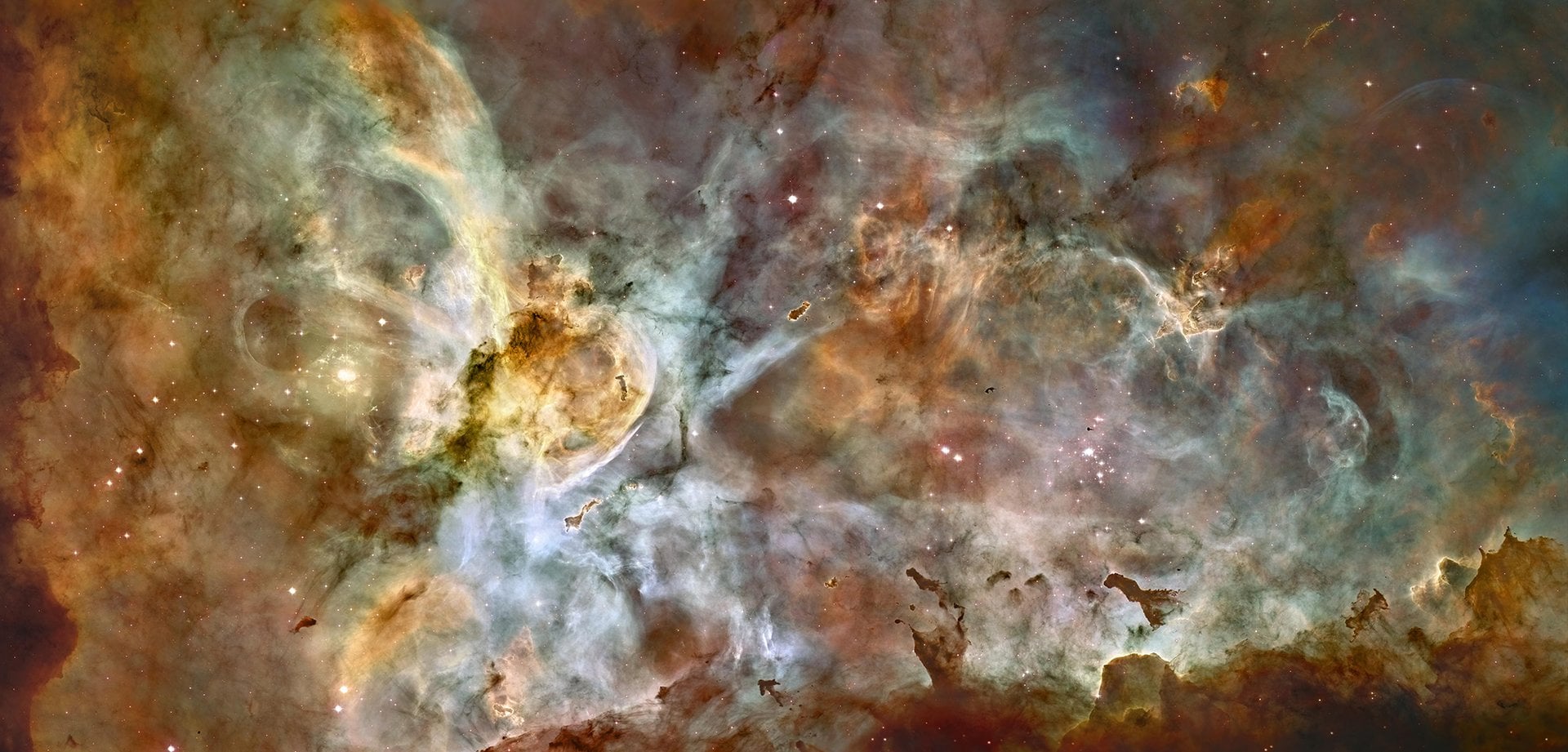
NASA, ESA and CSA’s James Webb Space Telescope has revealed a dense cloud in the Carina Nebula that resembles an open treasure chest filled with stars. The feature, about 7,500 light-years away, is a cometary globule: a compact head of gas and dust with a long tail shaped by radiation and stellar winds from nearby massive young stars.
Webb’s Near-Infrared Camera shows a cluster of roughly 70 stars inside the cloud. The group is about 1.3 million years old, and its hottest blue-white stars reach surface temperatures near 30,000 kelvins and can be around 19 times the Sun’s mass. The Carina Nebula spans about 260 light-years and is the Milky Way’s nearest high-mass star-forming region, giving astronomers a close view of how young stars reshape their surroundings. As the stars erode the cloud, the cluster will eventually become fully exposed.


Universe Today
Webb Captures the Treasure Chest at the Heart of the Carina Nebula
This NASA/ESA/CSA James Webb Space Telescope Picture of the Month takes us to a fantastical realm within our home galaxy, where piercing starlight ...
CareCloud says a cybersecurity breach exposed data tied to 3,756,469 people, making it one of the largest recently reported incidents involving a U.S. healthcare technology provider. The company supplies electronic health records, medical billing and practice-management services.
The intrusion took place from March 10 to March 16, 2026, when an unauthorized party accessed an AWS environment and claimed to exfiltrate information from databases. CareCloud initially disclosed an eight-hour network disruption and restricted database access in a March filing, then began sending breach notifications on July 25 after investigating the scope.
The notification does not specify which categories of information were exposed beyond full names. CareCloud is offering 12 or 24 months of identity-protection coverage through IDX. No ransomware or extortion group has claimed responsibility, while affected people are being urged to watch for phishing attempts using the stolen data.


BleepingComputer
Healthtech firm CareCloud data breach impacts 3.7 million patients
U.S. healthcare IT company CareCloud disclosed that the data breach incident it suffered earlier this year has impacted more than 3.7 million indiv...
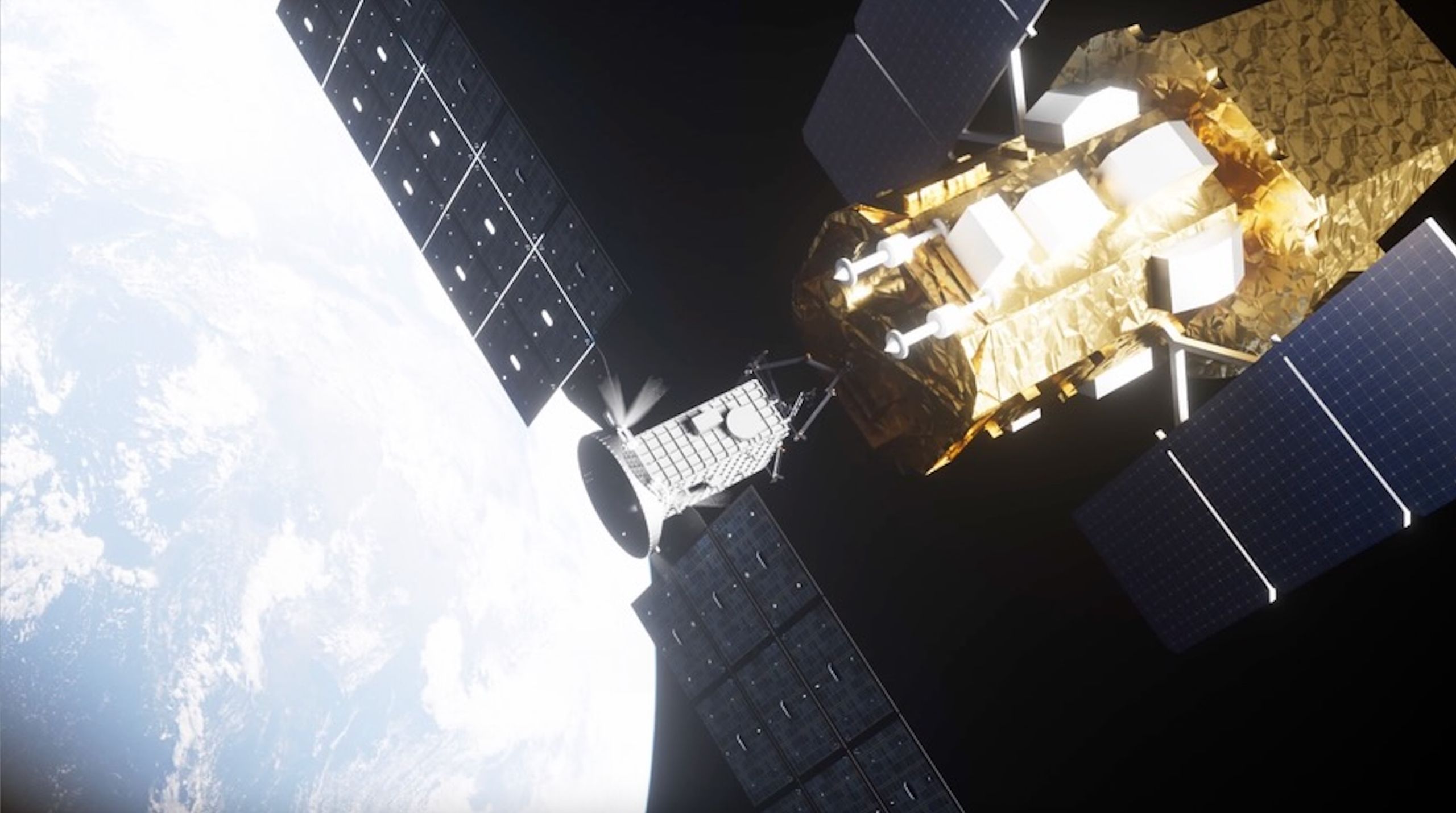
A private spacecraft sent to rescue NASA’s Swift Observatory has failed to raise the telescope’s orbit, ending efforts to extend the mission. Swift, launched in 2004, studies gamma-ray bursts and rapidly changing cosmic events by combining observations across ultraviolet, optical and X-ray wavelengths. Its data have helped scientists investigate black holes, stellar explosions and other high-energy phenomena.
The failed intervention means Swift is expected to re-enter Earth’s atmosphere later this year. The outcome highlights the difficulty of servicing aging observatories that were not designed for routine orbital maintenance. Swift’s loss will leave astronomers without one of their fastest tools for responding to transient events, although other space- and ground-based telescopes will continue monitoring the changing universe. The mission’s long archive is expected to remain valuable for research after operations end.


Space
Private mission to save NASA
A private spacecraft tasked with boosting the orbit of NASA
A Massachusetts startup is testing a new approach to teaching robots: show them a short video of a task and let them adapt when the situation changes. At Generalist AI, robot arms learned to stack cups, place blocks in bowls and open unfamiliar purses after watching demonstrations, without task-specific training. In one test, a robot used a dustpan as an improvised brush when the actual brush was removed. Another changed grippers to reach banknotes from a difficult angle.
The company’s models are designed to learn from large-scale physical interaction data and develop an intuitive grasp of everyday physics. Its founders previously worked at Google DeepMind and Boston Dynamics, and the startup says it builds its models from scratch. Researchers who have seen the work say it could be suited to commercial deployment, including manufacturing. The technology remains experimental: robots complete demonstrated tasks only about 59 percent of the time, far below the reliability needed for widespread use.


WIRED
I Saw the Future of AI in a Robot That Can Learn on the Spot
During a recent visit to Generalist AI, I watched a robotic arm improvise and use a banana as a tool.
NASA scientists say some microbes carried by human explorers could survive for at least a day in shaded pockets near the Moon’s south pole. Published Aug. 19 in Science Advances, the finding is based on simulations of three polar regions using elevation and temperature data from NASA’s Lunar Reconnaissance Orbiter, combined with surface-radiation models. The mapped survivable niches range from crater floors to areas as small as an astronaut’s boot print.
The study examined five microbes associated with spacecraft or human skin. Aspergillus niger, a common fungus, proved most resistant to ultraviolet radiation and could persist in areas with limited sunlight. Survival does not mean growth or reproduction: the Moon lacks known conditions such as liquid water to support either. NASA says the result underscores the need for contamination baselines before crewed lunar science, helping researchers distinguish lunar chemistry from material delivered by astronauts—and avoid confusing human microbes with possible evidence of life on Mars.


NASA Science
Human-Related Microbes May Survive Moon’s South Pole, NASA Finds - NASA Science
Some of Earth’s microbes likely to hitch a ride to space with human explorers could survive in the shaded nooks and crannies of the Moon’s Sout...
Google is adding a broad set of study features to Search and Gemini, including AI-generated interactive visuals, 3D simulations, customized quizzes and tools for turning uploaded class materials into study documents. The changes are designed to help students explore difficult subjects and practice lessons directly within Google’s products as the company competes with OpenAI and education-focused AI services.
In Search, students can generate simulations from questions, create quizzes for subjects such as math, science and languages, and use uploaded notes, PDFs or slides to make a one-page review document. A Lens feature coming in the next few weeks will analyze photos of problems, explain concepts and flag possible mistakes. Gemini is also gaining background research reports in Gemini Live, interactive 3D responses and a dedicated learning hub for notebooks, flashcards and quizzes.


TechCrunch
Google packs Search and Gemini with new AI study tools | TechCrunch
The launch of the new study features marks Google's latest effort to make Gemini the AI assistant that students turn to when learning and stud...
NASA and Katalyst Space have revised the plan for the LINK mission after an ongoing attitude-control problem affected the commercial spacecraft. LINK will no longer capture NASA’s Neil Gehrels Swift Observatory and raise it to a higher orbit, a maneuver intended to extend the telescope’s science mission. NASA said the spacecraft will still attempt rendezvous and proximity operations with Swift, testing capabilities needed for future in-space servicing.
Swift has studied gamma-ray bursts and other cosmic events since its launch in 2004, but increased solar activity has accelerated the decay of its low-Earth orbit. NASA expects the observatory could re-enter the atmosphere later this year without intervention. LINK launched July 3 on a Northrop Grumman Pegasus XL from Kwajalein Atoll, and NASA and Katalyst are now analyzing mission data while preparing for the rendezvous attempt. The agency says the effort has advanced spacecraft servicing technology.


NASA
NASA Updates Next Steps for Commercial Swift Boost Mission - NASA
Due to an ongoing commercial spacecraft attitude control issue, NASA and Katalyst Space announced Wednesday the LINK spacecraft will not capture or...