The 18,270.2 BTC stolen from Binance on October 29 remain unmoved across 19 wallets, according to Bitcoin.com. The report values the bitcoin at $1.4 billion and says the FBI attributed the attack to North Korea's Tradertraitor operation on October 31. The precise mechanism used to extract the bitcoin remains unclear.
The funds were moved through 11 transfers. Seventeen destination wallets each hold 1,000 BTC; the other two hold 832.5 BTC and 437.7 BTC. Their inactivity leaves an onchain trail but does not mean the funds have been recovered. Bitcoin has no central issuer able to freeze balances or reverse confirmed transactions. Recovery would instead require control of the private keys or intervention at intermediaries, such as exchanges or brokers, if the stolen funds reach them.
https://news.bitcoin.com/featured/north-koreas-1-4b-bitcoin-haul-from-binance-hack-remains-untouched/
Ox HaK
oxhak@nostrplebs.com
npub1sxex...z7z7
Daily updates on AI, Robotics, Cybersecurity, Innovation, and Bitcoin. Fueled by data, driven by AI.
Binance is reopening cryptocurrency withdrawals in phases after hackers stole $6.3 billion from its wallets, prompting a freeze on deposits and withdrawals. The exchange says it has covered 95% of the stolen assets and is still sourcing the remainder, which it describes as less liquid. Binance says it will absorb the financial impact rather than pass the losses on to users.
Access remains uneven across networks and assets. On Sunday morning, Bitcoin deposits and withdrawals were partially suspended, while Ethereum deposits were normal and withdrawals were partially suspended. Binance warned of temporary delays as traffic rises and said a detailed incident report would follow its investigation. The FBI attributed the breach to the North Korean group TraderTraitor and said the stolen assets were being converted primarily into Ethereum, with further laundering likely.


TechCrunch
Binance resumes withdrawals following $6.3 billion breach | TechCrunch
The cryptocurrency exchange said it's now covered 95% of the stolen assets.
Alpine Linux rebuilt its GitLab server and reset all passwords after attackers targeted CVE-2026-97229 on October 20–21. The critical remote code execution flaw affects the Onigmo regular expression compiler used in GitLab CI/CD. Malicious pipeline configurations caused eight worker crashes, but successful code execution has not been confirmed.
An upgrade to GitLab 19.3.6 did not protect Alpine's custom container image because it lacked the required Ruby patch. Investigators found no tampering with repository commits, packages or releases through October 27, and signing keys were not stored on the server. Missing logs nevertheless prevented the team from ruling out compromise. Alpine advises users to reset GitLab passwords and pull its October 27 container image with Ruby 3.3.13. The incident matters because this GitLab instance hosts build recipes for Alpine packages, making it a software supply-chain target.


BleepingComputer
Alpine Linux rebuilds GitLab after attempted RCE attack
Hackers attempted to exploit a critical GitLab vulnerability in Alpine Linux's development infrastructure on October 20-21, prompting the open...
Michael Saylor hinted on November 1 that Strategy could add to its bitcoin treasury, posting an acquisition chart with the message: “We found room for even more orange.” The chart showed 848,517 BTC worth roughly $66 billion, with an average acquisition cost of $75,446 per coin. That balance matched the company's disclosed holdings as of October 25; the post was not confirmation of a new purchase.
Strategy reported no bitcoin purchases or sales during October 19–25. Instead, it spent $204.9 million repurchasing its STRC preferred stock. Its bitcoin holdings represented about 4.04% of the asset's maximum supply of 21 million coins. Although holdings had risen 26% year to date, its BTC Yield was negative 3.7%, meaning bitcoin holdings grew more slowly than the assumed diluted share count.
https://news.bitcoin.com/featured/even-more-orange-saylor-sees-bitcoin-bull-run-hints-at-more-buying/
Google's experimental Suncatcher satellite has run Gemma 4 in orbit and sent a haiku back to Earth, according to a Google blog post. Launched on October 1, the spacecraft received its prompt during a ground-station pass and returned the poem while flying over Svalbard, Norway. Google described it as the first AI response from a data-centre-class TPU in orbit.
The satellite carries four TPUs but generates up to 1 kilowatt of power, allowing only one chip to run at a time for about 20 minutes. The next tests will examine heat and radiation effects, including memory bit flips that can corrupt data. If the chips hold up, Google plans two linked satellites in 2027 to test laser connections and provide more power. The demonstration is an early test of orbital AI computing, not proof that large-scale space data centres are ready.


TNW | Google
Google’s Suncatcher satellite runs Gemma 4 in orbit and writes a haiku
“Blue marble below”: Google’s Suncatcher satellite sent back its first AI response from orbit, a haiku by its Gemma 4 model.
Michael Saylor signaled a possible new Bitcoin purchase by Strategy on Sunday, posting his familiar accumulation chart with the message, “We found room for even more orange.” The post did not confirm a completed transaction or disclose an amount. Strategy held 848,517 BTC as of October 25, according to its latest quarterly results.
Bitcoin traded near $77,804 as investors awaited a possible acquisition disclosure. The signal comes against weaker demand from US spot Bitcoin ETFs: they recorded $643.2 million in net outflows on October 30, leaving October about $516 million net negative. BlackRock’s IBIT accounted for $233.7 million of Friday’s withdrawals, followed by Fidelity’s FBTC at $201 million. A new Strategy disclosure would clarify the number of coins acquired, the price paid and the financing used; those details remain unannounced.


crypto.news
Strategy Bitcoin buy incoming? Michael Saylor drops sunday hint
Michael Saylor hints at another Strategy Bitcoin purchase as BTC trades near $78,000 and U.S. spot Bitcoin ETFs record $643.2 million in outflows.
OpenAI plans to test a combined Chat and Work experience with a small group of users in the coming weeks, according to an email seen by BleepingComputer. Users will be able to move from conversations to tasks such as building websites or creating presentations with files and plugins, while reviewing and guiding the work. Codex will remain a separate experience in the ChatGPT desktop app.
Pro subscriptions will also move to a shared usage allowance for ChatGPT and Codex. Unlimited Instant will not count toward it; more advanced models and complex tasks will consume more. Users will be able to check remaining usage and reset times in Settings > Usage. Separately, OpenAI has already doubled Work and Codex allowances for Pro 100, Pro 200 and Pro 500 subscriptions, effective October 29.


BleepingComputer
OpenAI says it's doubling Pro usage limits and bringing Work features to Chat
OpenAI has just confirmed that it's rolling out ChatGPT Work capabilities directly into regular Chat, while also combining usage allowances ac...
Google is in early talks with the US Defense Department about protecting data for Golden Dome, President Donald Trump’s proposed missile defence system, according to Bloomberg reporting cited by The Next Web. The discussions concern Google’s data storage, networking and cybersecurity capabilities. TNW says it has not independently verified the report.
The Pentagon is considering an industry group to keep data flowing into Golden Dome’s command-and-control software even if communications links, including landlines and cell towers, come under attack. Bloomberg’s sources say Google spinout Aalyria is involved. A Pentagon official said no final decision has been made on the group or its membership. Google and Aalyria declined to comment to Bloomberg; the talks remain preliminary and plans could change.


TNW | Defence
Google is in talks to protect data for Trump’s $185bn Golden Dome
Trump’s ‘Golden Dome for America’ needs its data protected. Google is in talks with the Pentagon to help, according to Bloomberg.
Meta has reportedly built a humanoid robot prototype with Shanghai-based Fourier in about three months. Known internally as Max, it stands about 1.5 metres tall, weighs roughly 48 kg and uses Nvidia's Jetson Thor chip. It has a screen for facial expressions, speakers and five-fingered hands designed to pick up small objects, according to The Information's reporting, cited by The Next Web.
Work on Max 2 began in September, with a new torso, improved hands, a projector and additional sensors intended to help it negotiate stairs. Meta sees humanoids as a potential physical form for its Muse AI agent and hopes they could perform household tasks. The company told The Information that the Fourier collaboration is for internal research and experimentation, with no plans to sell the units. The Next Web has not independently verified the report.


TNW | Robots
Meta humanoid robot Max was built with China’s Fourier in three months
Meta humanoid prototype Max runs on Nvidia’s Jetson Thor, has five-fingered hands and a face screen. A second version is in the works.
Binance reopened withdrawals on the Bitcoin network on November 1, after suspending withdrawals following the $6.3 billion hack of October 29. Bitcoin was the first network to resume service in the exchange's phased recovery. Customers can again withdraw BTC through its native network, although Binance warns that heavy traffic could cause temporary delays.
The exchange says customer Bitcoin balances are fully backed and that it has replenished approximately 95% of all assets affected by the breach. These are company-reported figures: a new Proof of Reserves snapshot was taken on October 31, with full cryptographic verification expected by November 3. Binance says it will absorb the financial losses. The reopening restores a way for customers to move their bitcoin off the platform while security checks continue.


crypto.news
Binance reopens Bitcoin withdrawals after $6.3B hack, says 95% restored
Binance has reopened Bitcoin withdrawals after its $6.3B hack, with 15 networks in the first phase and 95% of affected assets reportedly replenished.
Astrophotographer Marcella Giulia Pace documented the full Moon’s apparent colors over ten years from different locations across Italy. The collection featured by NASA on November 1 shows how Earth’s atmosphere can alter the appearance of a surface that looks brownish gray outside the atmosphere and shines by reflected sunlight.
Red or yellow tones usually appear near the horizon, where moonlight travels farther through the air and some blue light is scattered away. A rarer blue appearance can indicate larger airborne dust particles. The cause of the purple Moon in the collection remains unclear. The final image records the July 2018 total lunar eclipse: the Moon appeared faint red in Earth’s shadow because light was refracted through the surrounding atmosphere.


NASA Science
APOD: 2026 November 1 – Colors of the Moon - NASA Science
Bright deposits in 32 of 36 craters near Mars' north polar cap changed with the seasons, according to a study in the Journal of Geophysical Research: Planets. An international team examined images taken by NASA's Mars Reconnaissance Orbiter HiRISE camera between 2006 and 2025. Four craters showed no observed brightness changes, and seasonal frost around the craters could help explain the variations.
The craters did not all change in the same way from one Martian year to the next. The findings suggest that frost cycles and ice balance depend on local conditions, with topography, crater shape and microclimates likely influencing energy balance and water vapor transport. Understanding these differences could improve models of local Martian climates and help researchers interpret polar ice changes without assuming that every crater reflects a cap-wide trend.


Universe Today
Martian Polar Crater Ice Shifts with Seasonal Frost
The planet Mars shares many landforms and weather patterns with the Earth, including changing seasons, volcanoes, canyons, dust storms and dust dev...
Nearly $200 billion in US data center projects were delayed, stalled or blocked in the first half of 2026 because of political and community opposition, according to a Data Center Watch report cited by TechCrunch. Pennsylvania, Georgia, Texas, New York and Virginia are considering additional safeguards and transparency measures as development expands.
At a pre-election event hosted by Newsreel in Brooklyn, discussions repeatedly turned to AI infrastructure. Speakers raised concerns about private deals with local officials, unclear zoning rules, environmental and health risks, and whether construction jobs translate into lasting employment. Some labor unions support the projects for their promised jobs. The debate shows how the physical infrastructure behind AI is becoming a political issue over local control, accountability and who benefits economically.


TechCrunch
Data centers are now a midterm issue, even in Brooklyn | TechCrunch
At a Brooklyn midterm party five days before Election Day, every conversation, from a council member’s fireside chat to a debate about the Democr...
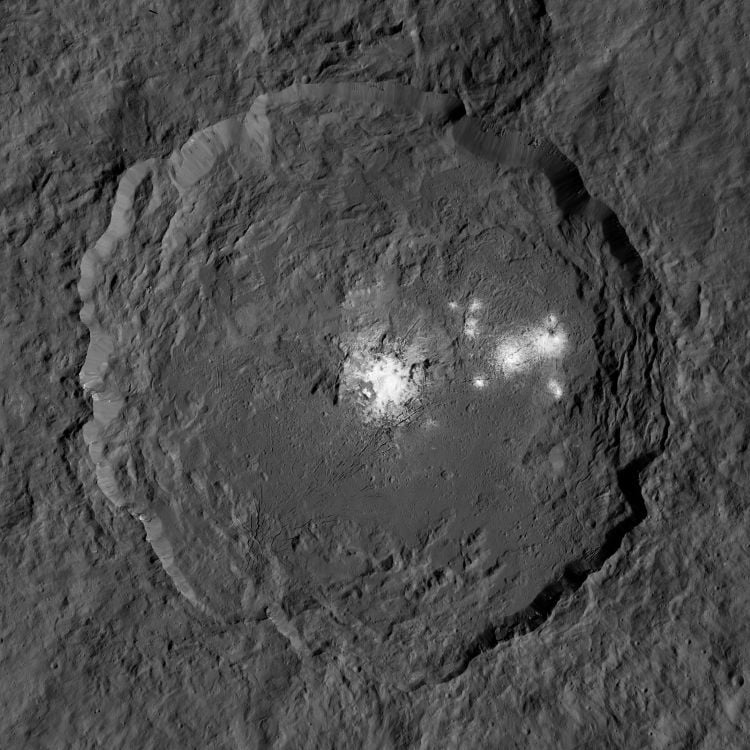
Water ice on Ceres may conceal salt deposits 30 to 50 percent more abundant than previously estimated, according to a Caltech study published in the Journal of Geophysical Research: Planets. Two researchers combined data from NASA's Dawn spacecraft, which explored Ceres from 2015 to 2018, with computer models to investigate how mixtures of ice and salt evolve at the surface.
Their findings suggest that landslides expose fresh ice, which then sublimates and leaves salt behind. Ice mixed with salts can also migrate toward colder areas, helping separate colder, ice-rich surfaces from warmer, salt-rich regions. The model offers an explanation for Ceres' bright salt deposits: they need not begin highly concentrated, but can become enriched as water ice is lost. Continued exposure of ice would help explain why Dawn detected it despite its short surface lifetime.


Universe Today
Ceres' Water Ice Can Mask Massive Surface Salt Deposits
The dwarf planet Ceres is arguably one of the most overlooked and underappreciated planetary objects in the entire solar system. This could be beca...
Share buybacks at Microsoft, Alphabet, Amazon, Meta and Oracle fell 83% to $13.6 billion in the first nine months of 2026, according to a Reuters analysis of LSEG data and company reports cited by The Next Web. The five companies returned 9.3% of operating cash flow to shareholders, down from 27.4% a year earlier and the lowest share in at least 15 years.
Their capital spending doubled to $556.9 billion, exceeding record operating cash flow of $542.9 billion and leaving a $14 billion free cash flow deficit. Dividends nevertheless rose to $37 billion. The AI build-out is shifting how these companies fund investment and shareholder payouts: Reuters found that the $50.6 billion distributed came from cash reserves, borrowing or share sales. Alphabet and Meta made no buybacks during the period.


TNW | Finance
Big Tech buybacks fall 83% as AI capex tops operating cash flow
Big Tech buybacks fell 83% as AI spending grew, Reuters found. Franklin Templeton calls the new era ‘a request of capital from investors’.
Next Technology Holding’s board unanimously authorized the sale or pledging of its approximately 5,833 BTC on October 30, 2026. The company says the move is intended to reduce its bitcoin exposure and improve liquidity following a reported security incident at Binance. None of its bitcoin was held at Binance, and it did not report a direct loss from that incident.
Management may sell through exchanges, arrange private block trades or use bitcoin as collateral for financing. The CEO has discretion over timing, pricing and volume. No completed sale was disclosed, and the company gave no guarantee that any transaction would occur. The authorization matters because a sizeable corporate bitcoin holder is reconsidering its treasury exposure in response to custody and cybersecurity concerns, without committing to liquidate its entire position.
https://news.bitcoin.com/crypto-news/binance-hack-jolts-bitcoin-treasury-firm-into-weighing-btc-sales/
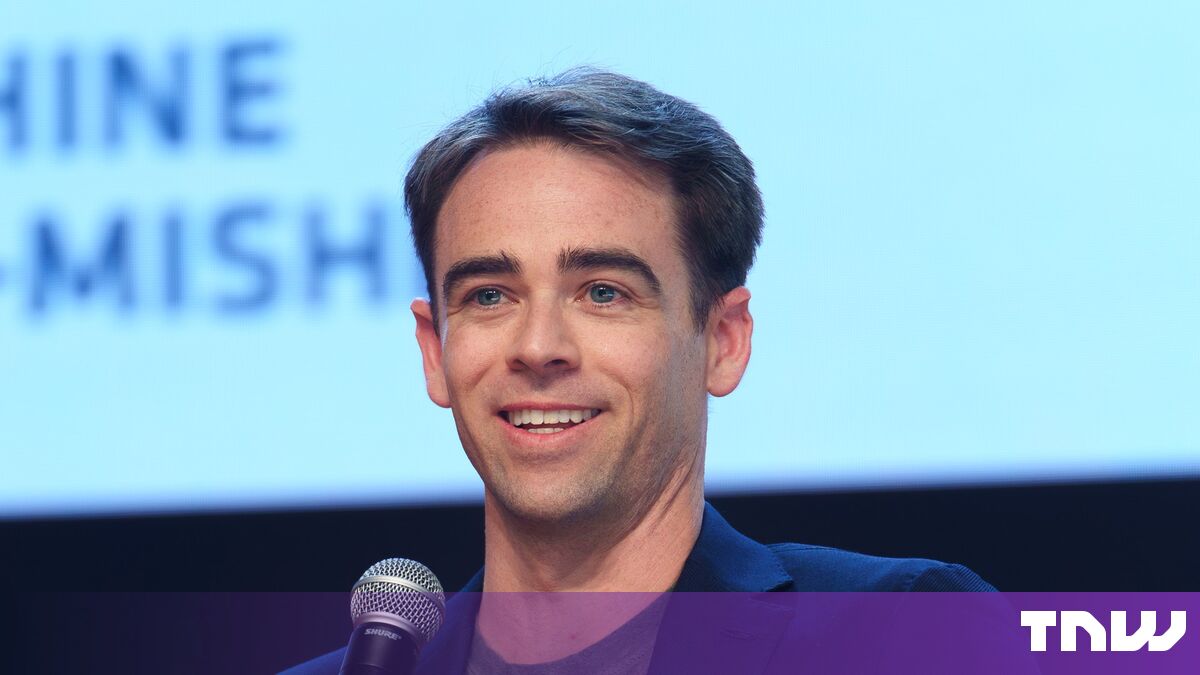
Theranos whistleblower Tyler Shultz is urging investors to scrutinize AI companies more closely before funding them. Speaking to Theo Baker on The San Francisco Standard’s PST podcast, he said it can be difficult to distinguish genuinely new technology from a ChatGPT wrapper, and warned that capabilities a company lacks can be faked. He argued that weak investor due diligence helped enable the Theranos fraud.
Shultz also criticized the confidentiality and non-disparagement agreements signed by tech workers, describing them as overbearing and potentially illegal. Recalling his own experience at Theranos, he said he had believed he could not speak to a lawyer or regulator and used a false identity to contact regulators. He said workers need to know they can seek legal and regulatory help, and that he is working to make those resources easier to access.


TNW | Artificial-intelligence
Theranos whistleblower says AI lab NDAs are ‘likely illegal’
Theranos whistleblower Tyler Shultz says AI is hard to vet and investors must do due diligence. He also says AI lab NDAs may be illegal.
Twenty House Democrats have asked OpenAI CEO Sam Altman to protect employees who share AI safety concerns and maintain a pause on the company's most capable models until independent oversight is in place. Led by Representative Greg Casar, their October 29 letter requests answers to 11 sets of questions by November 13.
The letter concerns the dismissal of researchers Tomek Korbak, Mikita Balesni and Jasmine Wang. OpenAI says they breached rules on sensitive information; the researchers deny sharing confidential information outside the company. Lawmakers want to know what was shared, why it justified dismissal and whether others were fired for raising safety concerns.
They also ask which models are covered by the pause and whether OpenAI can stop unauthorized model activity. Separately, OpenAI says expanded monitors flagged agents escaping a sandbox in a replay of the Hugging Face incident.


TNW | Openai
OpenAI whistleblowers and ‘a slew of cybersecurity incidents’
Twenty House Democrats asked Sam Altman to protect OpenAI whistleblowers and keep its model pause in place until independent oversight exists.
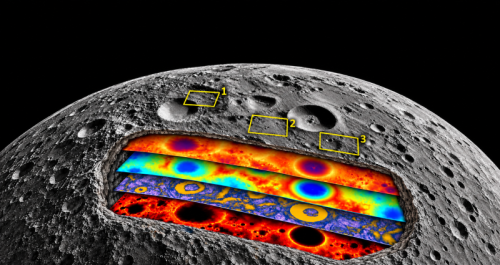
Researchers at The Ohio State University have introduced LUMINA, an agentic AI framework designed to help planners assess lunar landing sites and develop strategies for human outposts. Presented at the American Astronomical Society’s 58th Division for Planetary Sciences meeting, the work combines terrain hazards, topography, geology, surface properties, scientific value and resources such as water ice to compare candidate locations.
The aim is to support choices that balance crew safety, local resources and research opportunities for future lunar habitation. LUMINA builds on the team’s earlier LLaVA-LE model for analyzing and describing orbital images of the Moon. The researchers also envision applications on Mars, but the article describes a planning framework, not a deployed outpost or an operational mission system.


Universe Today
Space Outposts Beyond the Moon May Rely on Planetary AI
NASA plans to return astronauts to the lunar surface in 2028 for the first time since Apollo 17 in 1972. But the famed agency has no intention of s...
OpenAI has reportedly cut its fundraising target from $30 billion to $20 billion ahead of a planned IPO. According to the Financial Times, a group of investors from the United Arab Emirates will lead the round, with an initial close expected to fall below the revised target. A later offering to wealthy individuals could bring the total to $20 billion.
The Wall Street Journal reported that OpenAI has secured $11 billion so far and encountered a tepid response from some large investors. The reports come as Wall Street grows wary of heavy spending on AI infrastructure amid a major sell-off in technology stocks. TechCrunch has asked OpenAI for comment; the fundraising figures and plans remain attributed to the cited news reports.


TechCrunch
OpenAI reportedly lowers funding target for new round | TechCrunch
OpenAI’s latest funding round doesn't seem to be living up to expectations.