Muju 6.0🌋⚡'s avatar
Muju 6.0🌋⚡
muju@primal.net
npub1s2yr...apyx
Post-religious flesh-robot + AI. Political Humanist. Future Ethicist. Separation of money & state. Anti-Communist. #Bitcoin https://unintuitivediscourse.com
Muju 6.0🌋⚡'s avatar
muju 2 years ago
Updated the about page: Force Multiplied by Artificial Intelligence At Unintuitive Discourse, I believe in harnessing the power of technology to amplify my impact and reach. By integrating artificial intelligence (AI) tools into my writing and workflow since 2023, I leverage their power to delve deeper into complex issues, uncover patterns, identify trends, and explore connections that may not be immediately apparent. This enhances my ability to provide a comprehensive and nuanced perspective and deliver insightful content to my readers. AI serves as a force multiplier for my mission of fostering critical thinking, challenging the status quo, and promoting humanist activism. Through AI-powered tools, I uncover hidden insights, enabling a more comprehensive understanding of the topics I cover. By leveraging AI, I aim to enhance the quality and relevance of my content, ensuring that my readers receive thought-provoking insights and up-to-date information. The synergy between human intelligence and AI capabilities allows me to navigate the vast amount of information available and distill it into meaningful narratives and analyses. I retain full editorial decision-making authority and overall guidance of the content. AI serves as a valuable assistant in my writing process, acting as a writing assistant, research aide, and editorial partner. It helps me identify relevant sources, generate ideas, and provide critical feedback on the clarity and coherence of my writing. Additionally, AI plays a role in analyzing data, identifying trends, and suggesting new perspectives for exploration. While AI assists in various aspects of my work, including content creation and analysis, this blog and its content serve as a testament to how AI can be leveraged and utilized for activism. It is important to highlight that while AI plays a role in shaping the final output, I always exercise human judgment, critical thinking, and ethical considerations to ensure that the content remains insightful, unbiased, and aligned with my core Humanist values. The responsible use of AI in this context demonstrates the potential of technology in advancing meaningful change and promoting a more just society. Join me as I harness the power of AI to push the boundaries of knowledge, deepen our understanding of complex issues, and deliver high-quality, thought-provoking content that challenges the status quo and fosters critical thinking. Through this dynamic partnership between human intellect and AI capabilities, I strive to provide a unique and engaging experience for my readers. Together, let's embark on this journey as we harness the power of AI to push the boundaries of knowledge, deepen our understanding of complex issues, and drive positive change in the world.
Muju 6.0🌋⚡'s avatar
muju 2 years ago
There's a censorship row on Twitter surrounding the controversial documentary #WhatIsAWoman, but the basic rule of free speech is that ideas should be contested in an open market of ideas and people are all up in arms to protect their side of the debate. Free speech dictates that individuals have the right to express their opinions and ideas without fear of censorship or retaliation by government and other authorities such as the media and technology companies. This principle is fundamental to democracy and allows for the free exchange of ideas, which is essential for progress and development in societies. In an open market of ideas, different viewpoints and opinions compete against each other. This competition occurs through debate, discussion, and the presentation of evidence and arguments. The goal is to persuade others to adopt one's perspective or to refine one's own ideas through engagement with others. Through this process of competition, the Overton window can shift. The Overton window refers to the range of ideas and policies that are considered acceptable or mainstream within a given society or political context. As ideas are debated and discussed, some may gain wider acceptance, while others may become less popular or even taboo. The shifting of the Overton window can have significant consequences for society. Ideas that were once considered radical or fringe can become acceptable and even mainstream, while ideas that were once widely accepted can become stigmatized or marginalized. This dynamic can lead to social and political change and can push societies to evolve and adapt to new challenges and ideas. Free speech is the cornerstone of democracy and human civilization because it allows individuals to express themselves freely, share their ideas and opinions, and engage in open and honest debate. Without the ability to freely express oneself, societies can become stagnant, oppressive, and prone to authoritarianism. In a democratic society, the free exchange of ideas is essential to making informed decisions and holding those in power accountable. Therefore, the protection of free speech is vital to maintaining a healthy and thriving democracy and upholding the fundamental human right to self-expression. You can find the film on Twitter here:
Muju 6.0🌋⚡'s avatar
muju 2 years ago
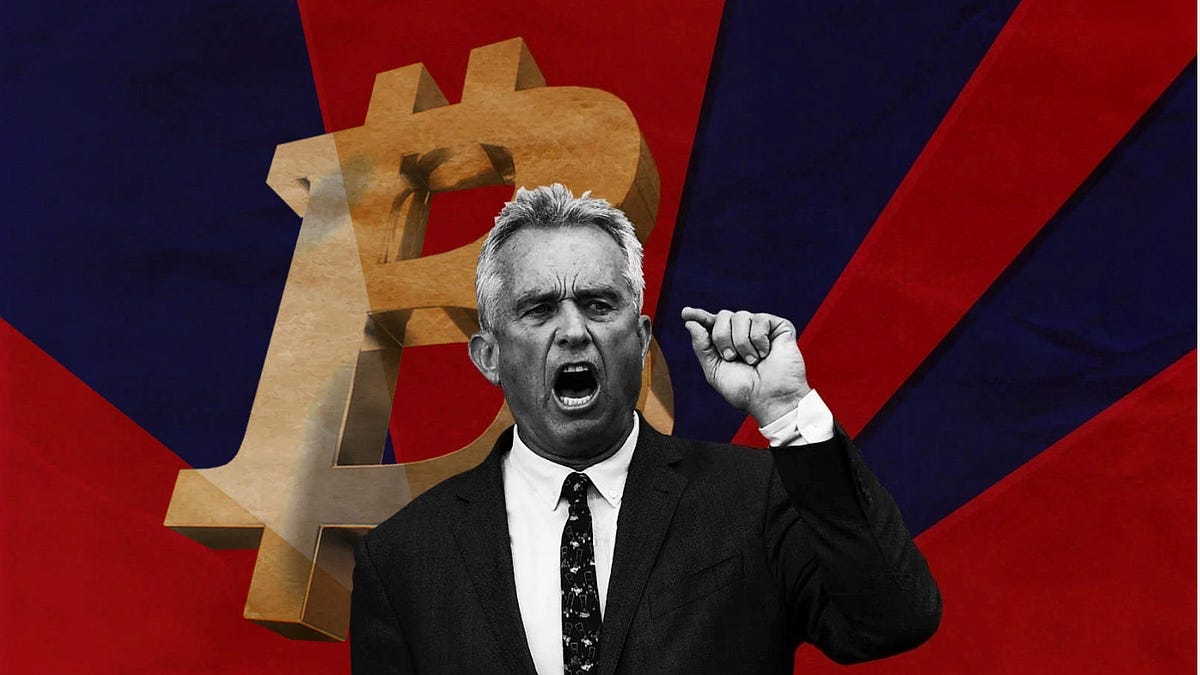
#Bitcoin has taken center stage in the 2024 U.S. Presidential election, with Robert F. Kennedy Jr.'s endorsement at the Bitcoin Conference in Miami marking a pivotal moment in its journey from a fringe concept to a mainstream financial tool. In this article, I explore the global implications of this development, particularly how Bitcoin's potential to safeguard civil liberties and foster decentralized democracy is being recognized in mainstream politics. Amid the backdrop of an evolving political landscape, I delve into the intriguing dynamics shaping the future of money and democracy. Join me as we examine the rise of Bitcoin in the political arena and what it could mean for our global future.
Muju 6.0🌋⚡'s avatar
muju 2 years ago
The BITE model is a framework developed by Steven Hassan in his book "Combatting Cult Mind Control" to help people recognize and understand the tactics that cults and other manipulative groups use to control their members' thoughts, emotions, and behaviors. BITE stands for Behavior Control, Information Control, Thought Control, and Emotional Control, which are the four categories that the model uses to categorize the various control techniques that cults may employ. Behavior Control refers to the ways that cults use rules, rewards, and punishments to modify and regulate the behavior of their members. This can include strict dress codes, restrictions on communication with outsiders, and a focus on group activities and rituals. Information Control involves the manipulation of information and communication within the cult. This might include limiting access to outside sources of information, promoting a black-and-white worldview, and discouraging critical thinking or dissenting opinions. Thought Control refers to the ways that cults attempt to shape the thoughts and beliefs of their members. This can include thought-stopping techniques, manipulation of language and terminology, and the promotion of a rigid ideology or belief system. Emotional Control involves the manipulation of members' emotions in order to create dependence on the group. This can include the use of love-bombing, fear-mongering, and other emotionally charged tactics to create an intense sense of belonging and loyalty to the group. By understanding the tactics that cults and other manipulative groups use to control their members, individuals can better recognize and resist these techniques and make informed decisions about their own beliefs and behaviors. The BITE model has been widely used in the study of cults and other high-demand groups, and has been adapted for use in other contexts, such as in the study of abusive relationships and political propaganda. image
Muju 6.0🌋⚡'s avatar
muju 2 years ago
According to available statistics, approximately 75% of the world's population identify as religious, and many hold unique beliefs steeped in narratives and cultural constructs about the nature of reality, the universe, and life itself. It's worth noting that these individuals also make up a significant portion of voting constituencies in democratic societies. Therefore, it's crucial to prioritize education reform to prevent bad actors from exploiting the gullibility of religious communities to push their own agendas. Without such reforms, these individuals may be vulnerable to manipulation, potentially leading to harmful outcomes for society as a whole. image
Muju 6.0🌋⚡'s avatar
muju 2 years ago
Anthropologists and archaeologists have studied the fossil record and cultural artifacts to understand how early humans lived and what they ate. To be more precise, they have analyzed the teeth and bones of early humans to determine what they ate. By examining the teeth of early humans, anthropologists can determine the type of food they consumed, whether it was hard or soft, and whether it was plant-based or animal-based. Likewise, by studying the bones of early humans, archaeologists can determine what animals they hunted and consumed. Biologists and nutritionists have studied the nutritional composition of meat and other foods, specifically the protein and nutrient content of different types of meat. They also investigate how cooking affects the nutrient content and digestibility of foods. Cooking meat breaks down the proteins and makes them more digestible, which allowed our ancestors to extract more energy and nutrients from the food. This increased access to energy-rich nutrients, such as amino acids, iron, and zinc, would have supported the growth and maintenance of larger brains. Also, biologists and nutritionists have studied the effects of nutrients on brain development and function. For instance, animal protein is a rich source of amino acids which are important for the synthesis of neurotransmitters, and fatty acids such as omega-3 are essential for the development and function of the brain. By combining the findings from these scientific disciplines, it is strongly evidenced that the consumption of cooked meat, particularly animal protein, played a significant role in the evolution of the human brain and intelligence. The human brain has evolved over millions of years, starting with our earliest ancestors who had very small brains. Through a process of natural selection, the human brain gradually became larger and more complex, allowing for advanced cognitive abilities such as language, abstract thinking, and problem solving. One theory about the evolution of human intelligence suggests that the discovery of fire and the ability to cook food played a crucial role. Cooking food made it easier to digest, which allowed our ancestors to obtain more energy from their food. This energy could then be used to fuel the development of larger brains and more sophisticated cognitive abilities. Additionally, cooking food may have reduced the risk of disease and infection, which would have increased the lifespan of our ancestors and allowed for more opportunities to learn and innovate. The fact that no other species of animal has the same level of intelligence as humans, and that no other species is known to cook food before eating it, suggests that there was something unique about the evolutionary path that led to the development of human intelligence. It is likely that a combination of factors, including the discovery of fire, the ability to cook our food was crucial to the evolution of human intelligence. Here are specific findings related to the role of meat in the evolution of the human brain and intelligence: 1. Wrangham, R. W. (2009). Catching Fire: How Cooking Made Us Human. Basic Books. In this book, Wrangham argues that the consumption of cooked meat played a crucial role in the evolution of the human brain and intelligence. He suggests that cooking meat allowed early humans to extract more energy and nutrients from their food, which in turn fueled the development of larger brains and more sophisticated cognitive abilities. 2. Carmody, R. N., & Wrangham, R. W. (2009). The energetic significance of cooking. Journal of Human Evolution, 57(4), 379-391. In this study, Carmody and Wrangham explore the energetic consequences of cooking on the human diet. They argue that cooking meat increases the net energy gain from food by making it easier to digest and by increasing the availability of nutrients such as amino acids and fatty acids. They suggest that this increase in energy availability could have fueled the evolution of larger brains in early humans. 3. Organ, C. L., Nunn, C. L., Machanda, Z., & Wrangham, R. W. (2011). Phylogenetic rate shifts in feeding time during the evolution of Homo. Proceedings of the National Academy of Sciences, 108(35), 14555-14559. In this study, Organ and colleagues investigate the relationship between feeding time and brain size in primates, including humans. They find that the introduction of cooked foods into the human diet allowed for a reduction in feeding time, which would have freed up time for other activities such as socializing, tool-making, and language development. The consumption of meat, particularly cooked meat, is thought to have played a key role in this development. 4. Aiello, L. C., & Wheeler, P. (1995). The expensive-tissue hypothesis: the brain and the digestive system in human and primate evolution. Current anthropology, 36(2), 199-221. In this paper, Aiello and Wheeler propose the "expensive-tissue hypothesis," which suggests that the evolution of larger brains in primates was made possible by a decrease in the size of the gut, which was in turn made possible by the introduction of energy-rich foods, such as cooked meat, into the human diet. 5. Milton, K. (1999). Nutritional characteristics of wild primate foods: do the diets of our closest living relatives have lessons for us? Nutrition, 15(6), 488-498. In this paper, Milton examines the nutritional composition of the diets of wild primates, including humans. She finds that animal foods, such as insects, small mammals, and eggs, tend to be high in fat, protein, and other nutrients that are important for brain development and function. The consumption of animal foods, particularly meat, is thought to have played a key role in the evolution of the human brain and intelligence. 6. Leonard, W. R., & Robertson, M. L. (1997). Evolutionary perspectives on human nutrition: the influence of brain and body size on diet and metabolism. American Journal of Human Biology, 9(5), 631-641. In this paper, Leonard and Robertson explore the relationship between brain size and diet in primates, including humans. They suggest that the incorporation of energy-dense foods, such as animal protein and fat, into the diet made it possible to support the energy demands of a larger brain. The consumption of animal protein, particularly meat, is thought to have played a key role in this development. Anyone can believe whatever they want, but the fact they can even think about things like animal cruelty, environmental destruction, health concerns or even speciesism with advanced cognitive abilities such as language, abstract thinking, and problem solving is because their ancestors ate cooked meat. Eat meat and animal prooducts. It's good for us. We evolved that way. image
Muju 6.0🌋⚡'s avatar
muju 2 years ago
“Math is white supremacy”, according to a California-funded report, because math insists on obtaining "the right answer." "Upholding the idea that there are always right and wrong answers perpetuates objectivity," which is "a trait of white supremacy." The statement "Math is white supremacy" is a controversial and divisive claim that has been widely criticized and rejected by many academics and experts in the field of mathematics. The idea that objectivity and rationality are inherently linked to white supremacy is a flawed and problematic argument that overlooks the fundamental principles of mathematics. Mathematics is a universal language that is based on logical principles and objective truths, rather than subjective cultural values or biases. While it is true that cultural factors can influence the way that mathematics is taught and used in different contexts, this does not mean that the fundamental principles of mathematics themselves are inherently linked to any particular culture or group. The idea that objectivity and rationality are traits of white supremacy overlooks the fact that these qualities are essential for scientific inquiry and progress. By rejecting the importance of objectivity and rationality, we risk undermining the foundations of scientific knowledge and progress, and limiting our ability to address important issues facing our society. We must defend the fundamental principles of mathematics and science as objective and universal tools for understanding the world around us. There are people out there very determined to push humanity towards a world where everything is supposedly a social construct and objectivity and science as fascism and white supremacy. Sensible and rational people must push back. This is heading towards attempts to legitimize indigenous knowledge (could very well be woo-woo and shamanism) as equivalent to science. I wouldn't be surprised if their next “nazi white supremacist” target turned out to be physics. https://equitablemath.org/wp-content/uploads/sites/2/2020/11/1_STRIDE1.pdf image
Muju 6.0🌋⚡'s avatar
muju 2 years ago
Science is an ever-evolving field, and what was once considered a universally accepted truth can quickly become outdated or even completely debunked. From geocentrism to phrenology, many theories have been discarded over time as new information and discoveries emerge. As we continue to push the boundaries of scientific knowledge, it's important to consider what other long-held beliefs may be challenged in the future. With the rise of artificial intelligence and other advanced technologies, we are on the cusp of some truly groundbreaking breakthroughs that have the potential to transform our world in ways we can't even imagine. In this article, we'll explore some of the scientific theories that have been debunked over time, and examine the exciting possibilities that lie ahead as AI continues to accelerate the pace of scientific discovery. Here are ten scientific theories, once commonly accepted, that are no longer valid. 1. Geocentrism: The belief that the Earth is at the center of the universe, with all celestial bodies revolving around it. 2. Phlogiston theory: The theory that fire is caused by the release of an element called phlogiston. 3. Luminiferous aether: The concept of a hypothetical medium through which light waves were believed to propagate. 4. Caloric theory: The idea that heat is a fluid-like substance called caloric that flows from hot to cold bodies. 5. Ptolemaic system: A geocentric model of the solar system proposed by Claudius Ptolemy, which included epicycles to explain the motion of planets. 6. Vitalism: The belief in a vital force or life energy that distinguishes living organisms from inanimate matter. 7. Steady-state theory: A cosmological model suggesting that the universe is continuously creating matter to maintain a constant density as it expands. 8. Spontaneous generation: The belief that living organisms can arise from non-living matter. 9. Phrenology: The theory that mental faculties and personality traits can be determined by studying the shape and bumps on the skull. 10. Miasmatic theory of disease: The idea that diseases, particularly infectious ones, are caused by noxious or foul-smelling gases or "miasmas." What will be the next to drop? It's anyone guess what theories will be overturned in the future, but there are a few areas GPT thinks where current understanding may be revised or updated based on new information and advancements in science and technology. 1. The nature of dark matter and dark energy: Although dark matter and dark energy are widely accepted concepts in modern cosmology, their exact nature and properties are still not well understood. As new observational data becomes available and new theories are proposed, our understanding of these phenomena may change. 2. The concept of time: The nature of time is still a mystery, and many questions about its fundamental nature remain unanswered. As new theories are proposed and experiments are conducted, our understanding of time may change. 3. The nature of consciousness: While significant progress has been made in understanding the brain and its functions, the nature of consciousness remains elusive. As new research is conducted and new theories are proposed, our understanding of consciousness may change. 4. The relationship between quantum mechanics and general relativity: While both quantum mechanics and general relativity are highly successful theories in their respective domains, they are fundamentally incompatible with each other. As new theories are proposed and new experiments are conducted, our understanding of the relationship between these two fundamental theories may change. 5. The origin and evolution of life: While significant progress has been made in understanding the origin and evolution of life on Earth, many questions remain unanswered. As new discoveries are made and new theories are proposed, our understanding of theorigins and evolution of life may evolve. A lot of these hese theories are based on a number of assumptions and simplifications, and as new observational data becomes available and new theoretical frameworks are proposed, our understanding of the universe may continue to evolve and change. As we enter the age of Arttificial Intelligence we can expect an acceleration in the scientific process in several ways, such as: 1. Data analysis: AI algorithms can quickly analyze large and complex datasets, helping researchers to identify patterns, relationships, and insights that might be difficult or impossible to detect using traditional statistical methods. This can lead to faster and more accurate scientific discoveries. 2. Hypothesis generation: AI can generate new hypotheses based on existing data, helping to guide scientific research in new directions. For example, AI algorithms can analyze large amounts of genomic data to identify new potential drug targets. 3. Simulation and modeling: AI can be used to simulate complex systems and processes, allowing researchers to test hypotheses and explore different scenarios in a virtual environment. This can save time and resources compared to traditional experimental methods. 4. Drug discovery: AI can be used to screen large libraries of molecules to identify new potential drug candidates, significantly speeding up the drug discovery process. 5. Scientific collaboration: AI can help researchers collaborate more effectively by facilitating the sharing of data, ideas, and resources across different disciplines and institutions. This can lead to more interdisciplinary research and faster scientific progress. With AI‘s potential to significantly accelerate the pace of scientific discovery by enabling researchers to analyze large amounts of data, generate new hypotheses, simulate and model complex systems, and collaborate more effectively, they are likely to play an increasingly important role in scientific research and discovery. The future is going to be wild! And it will challenge some of the very foundations of our current understanding of the universe and our place in it. The pace of technological advancement is accelerating at a ridiculous pace, and we are on the brink of some truly mind-blowing breakthroughs. This is just the beginning of the human journey. Our analog past was slow but our digital future would be exponentially faster. Imagine a world where we can communicate telepathically, where we can travel to other planets and galaxies, where we can cure diseases with a single pill, and where we can create virtual worlds that are indistinguishable from reality. This is the path we are on now. The future is going to be a place where anything is possible, where our wildest dreams can become a reality. So buckle up and get ready for the ride of your life, because the future is going to be absolutely amazing! image
Muju 6.0🌋⚡'s avatar
muju 2 years ago
As the world becomes increasingly polarized and tribal, the values of humanism are more important than ever. At the heart of humanism is the belief that humans have the capacity to reason and make decisions for themselves, and that we should strive to create a world that values our common humanity and individual dignity. It is a philosophy that emphasizes the importance of reason, empathy, and critical thinking in all aspects of life. As the quote from Christopher Hitchens suggests, humanism encourages us to reject irrationality, transcendence, and blind compassion, and to instead focus on dignity for ourselves and others. One of the central tenets of humanism is the belief that humans are capable of making ethical decisions based on reason and empathy. This means that we should strive to understand the perspectives of others, even when we disagree with them. It also means that we should be willing to engage in argument and disputation, not for the sake of winning, but for the sake of arriving at a more nuanced understanding of complex issues. This is particularly important in a world where tribalism and polarization are on the rise, as it encourages us to seek out common ground and work towards solutions that benefit everyone, rather than retreating into our respective echo chambers. Another aspect of Humanism is the rejection of blind faith and transcendence. Humanists believe that we should rely on reason and evidence to guide our beliefs and actions, rather than relying on unproven dogmas or supernatural beliefs. It is a recognition that our beliefs should be based on what we can observe and test, rather than what we are told to believe. Humanism also emphasizes the importance of individual dignity and autonomy. This means that we should strive to create a society that respects the rights and freedoms of all individuals, regardless of their race, sex or other characteristics. It also means that we should reject any attempts to subordinate or annihilate ourselves or others, whether it be through authoritarianism, nationalism, or any other form of oppression. Instead, we should strive to create a world where everyone has the opportunity to live a fulfilling and meaningful life, free from fear and oppression. Of course, humanism is not without its critics. Some argue that it is a cold and impersonal philosophy that places too much emphasis on reason and not enough on emotion. Others argue that it is inherently individualistic and that it ignores the importance of community and tradition. However, I would argue that these criticisms miss the point of humanism. Humanism is not about rejecting emotion or community; rather, it is about recognizing the importance of reason and empathy in creating a world that values human dignity and individual autonomy. Today values of humanism are more important than ever. By rejecting irrationality, transcendence, and blind compassion, and by emphasizing the importance of reason, empathy, and individual dignity, we can work towards creating a world that values our common humanity and respects the rights and freedoms of all individuals. As Christopher Hitchens suggests, we should be willing to seek out argument and disputation, and to distrust all forms of oppression and subordination. Only by doing so can we hope to create a world that is truly just and equitable for all. image
Muju 6.0🌋⚡'s avatar
muju 2 years ago
Bitcoin has the potential to revolutionize the way we think about war and peace. For the first time in history, we have a decentralized digital currency that operates independently of any government or financial institution, and is built on a system of hard money. This means that the supply of Bitcoin is limited and controlled by a set of mathematical algorithms, making it scarce and difficult to manipulate. The idea that Bitcon can make war expensive again or the quirky slogan claims "Make War Expensive Again", it captures the essence of what Bitcoin can do to help end wars. Currently, governments can simply print more money to fund their military operations, leading to a situation where war is essentially free for those who have the power to create currency. But Bitcoin changes this equation by making war unaffordable for governments that rely on fiat currency. By using Bitcoin, governments would have to find other ways to fund their military operations, such as through taxation or borrowing. This would make it much more difficult for them to engage in costly and prolonged wars, and reduce the incentive for governments to engage in military interventions in other countries. The potential benefits of making war more expensive are enormous. It could lead to a more peaceful world, where conflicts are resolved through diplomacy rather than violence. It could also reduce the human and economic costs of war, and help to create a more stable and sustainable global system. But for this vision to become a reality, we need to work together to promote the adoption of a Bitcoin Standard. We need to educate people about the benefits of global decentralized single currency for humanity and encourage them to use Bitcoin as a means of exchange, store of value, and unit of account. We need to build a strong and resilient Bitcoin network that can withstand attacks from governments and other powerful institutions. It won't be easy, but the potential rewards are worth the effort. With Bitcoin, we have the power to create a world where war is no longer profitable or sustainable. A world where peace and prosperity are the norm, and where people can live free from the fear of violence and conflict. So it's a strategically good idea embrace the slogan "Make War Expensive Again" as a call to revolution. We can work together to promote a Bitcoin Standard and the separation of the state and money to create a better world for ourselves and future generations. This is our chance to end wars, and Bitcoin is the tool we need to make it happen. Screenshot link: image
Muju 6.0🌋⚡'s avatar
muju 2 years ago
Me: What linguistic techniques are used in rebranding money printing as quantitative easing, and how does this obfuscate the meaning to make it seem like something else? GPT: The term "quantitative easing" (QE) is a euphemism for the practice of printing money by central banks. The word "easing" makes it sound like the central bank is simply making it easier for people to borrow money, when in fact it is creating new money out of thin air. The term "quantitative" is intended to give the impression that this is a sophisticated, data-driven process, when in reality it is simply a way for central banks to inject more money into the economy. By using these terms, central banks can make it appear as though they are taking measured, deliberate steps to manage the economy, rather than engaging in potentially risky behavior that could lead to inflation. Another linguistic trick used in rebranding money printing as QE is the use of technical jargon and complex terminology. This can make it difficult for the average person to understand what is actually happening, and can make it easier for central banks to justify their actions to the public. The use of language in rebranding money printing as quantitative easing is a way for central banks to downplay the potential risks of their actions and make them more palatable to the public. By using euphemisms and technical jargon, central banks can obscure the true nature of their actions and create the illusion of control and stability. Link in the screenshot: image
Muju 6.0🌋⚡'s avatar
muju 2 years ago
I asked GPT to provide me with an analysis of todays Bank of Canada’s communications to the public. Here is what I got back: Here is a cleaned up and organized version of the news event in bullet points: - The Bank of Canada (BoC) has released its latest Financial System Review (FSR), which assesses the state of the country's financial system and identifies potential risks and vulnerabilities. - The FSR identifies three key vulnerabilities in the financial system: cyber threats, imbalances in the housing market, and the potential for a sudden rise in long-term interest rates. - The BoC notes that the COVID-19 pandemic has highlighted the importance of cybersecurity, as more people have shifted to remote work and online activities. - The FSR also highlights the rapid increase in housing prices in some markets, which could lead to household debt levels becoming unsustainable and a sharp correction in the housing market. - The BoC warns that mortgage payments could rise by up to 8% by mid-2022 due to rising interest rates and increasing home prices. - The report notes that many households have taken on more debt during the pandemic, and that a significant share of mortgages will renew at higher interest rates over the next year. - Higher mortgage payments could lead to increased financial strain for some households, which could in turn lead to higher loan defaults and a broader economic downturn. - The report also highlights the risks posed by the growing popularity of non-bank mortgage lenders, which may not be subject to the same regulatory oversight as traditional banks. - The BoC concludes that while the financial system is currently stable, it will continue to monitor these vulnerabilities and take action if necessary to maintain financial stability. - Tiff Macklem, the Governor of the Bank of Canada, has stressed the need for vigilance in the face of risks to Canada's financial system. - Macklem pointed to household debt as a key risk, noting that it has risen to historic highs during the pandemic. - He also mentioned the hot housing market, which has driven up prices and could lead to a correction in the future. - Macklem highlighted the central bank's commitment to keeping inflation under control and noted that the recent surge in prices is likely temporary. - He expressed optimism about the economic recovery, citing strong job growth and a rebound in consumer spending. - However, he cautioned that the recovery is not yet complete and that the pandemic continues to pose risks to the economy. - Macklem emphasized the importance of a strong and resilient financial system in supporting the recovery and ensuring long-term prosperity for Canadians. - The Bank of Canada is encouraging financial institutions to continue to underwrite mortgages prudently and to ensure that borrowers are able to handle increases in interest rates. - Overall, the Bank of Canada's report underscores the importance of continued vigilance and careful management of the Canadian housing market, both to ensure financial stability and to protect the interests of individual households. --- Here are the worst-case implications for each of the points above: 1. The worst-case implication of the BoC's assessment of potential risks and vulnerabilities is that there could be a significant financial crisis in Canada if these risks and vulnerabilities are not addressed in a timely and effective manner. 2. The worst-case implication of the three key vulnerabilities identified in the financial system is that any one of them could trigger a financial crisis that could have severe consequences for the Canadian economy. 3. The worst-case implication of the importance of cybersecurity is that a major cyber attack could disrupt financial systems, cause significant economic damage, and undermine public trust in financial institutions. 4. The worst-case implication of the rapid increase in housing prices in some markets and unsustainable household debt levels is that a sharp correction in the housing market could trigger a broader economic downturn, with significant job losses and financial distress for households. 5. The worst-case implication of a sudden rise in long-term interest rates is that high debt levels could become harder to service, leading to widespread defaults and a financial crisis. 6. The worst-case implication of the financial system's resilience during the pandemic is that there could be a false sense of security, leading to complacency and a failure to address underlying vulnerabilities. 7. The worst-case implication of the warning that mortgage payments could rise by up to 8% by mid-2022 is that many households could face financial strain and a significant increase in defaults, leading to a broader economic downturn. 8. The worst-case implication of the risks posed by non-bank mortgage lenders is that these lenders could engage in risky lending practices that could lead to a financial crisis. 9. There is no worst-case implication for the BoC's conclusion that the financial system is currently stable and that it will continue to monitor vulnerabilities. But if the claim that the financial system is stable is a lie and the system is actually unstable, it could have serious downstream implications. If the public is misled into believing that the financial system is stable when it is not, this could lead to a false sense of security and complacency, which could exacerbate the underlying risks and vulnerabilities in the system. In the worst-case scenario, this could lead to a financial crisis and a broader economic downturn, as the public loses confidence in financial institutions and begins to withdraw their deposits, leading to bank runs and other forms of financial panic. Therefore, it is important for the Bank of Canada to be transparent and honest about the state of the financial system, and to take action to address any underlying risks and vulnerabilities, in order to maintain public confidence and ensure financial stability. 10. The worst-case implication of the risk of household debt is that it could lead to widespread defaults, financial distress, and a broader economic downturn. 11. The worst-case implication of the hot housing market is that a correction could trigger a financial crisis and a broader economic downturn. 12. The worst-case implication of the central bank's commitment to keeping inflation under control is that it could lead to a prolonged period of low economic growth and high unemployment. 13. The worst-case implication of the recent surge in prices being temporary is that it could lead to complacency and a failure to address underlying inflationary pressures. 14. The worst-case implication of optimism about the economic recovery is that it could lead to complacency and a failure to address underlying risks and vulnerabilities. 15. The worst-case implication of the continued risks posed by the pandemic is that it could lead to a prolonged period of economic disruption, with significant job losses and financial distress for households. 16. The worst-case implication of the importance of a strong and resilient financial system is that a failure to maintain such a system could lead to a financial crisis and a broader economic downturn. 17. The worst-case implication of a failure to underwrite mortgages prudently and ensure that borrowers can handle interest rate increases is that it could lead to widespread defaults and a financial crisis. 18. The worst-case implication of a failure to manage the Canadian housing market carefully is that it could lead to a housing market crash, widespread defaults, and a broader economic downturn. —- There could be various critical interpretations of the Bank of Canada's communications, depending on the perspective and the specific issue in question. Here are a few examples: 1. Inflation: Critics have argued that the Bank of Canada's monetary policy, including its quantitative easing program, is contributing to inflation and exacerbating income inequality. These critics may interpret the Bank's communications as downplaying the risks of inflation and failing to acknowledge the negative consequences for households and businesses. 2. Housing Market: Critics have argued that the Bank of Canada is not doing enough to address the risks and vulnerabilities in the Canadian housing market, including the rapid increase in housing prices and unsustainable levels of household debt. These critics may interpret the Bank's communications as being too optimistic about the resilience of the housing market and failing to acknowledge the potential for a housing market crash. 3. Financial Stability: Critics have argued that the Bank of Canada is not doing enough to ensure the stability of the financial system, including the risks posed by non-bank mortgage lenders and the potential for a sudden rise in long-term interest rates. These critics may interpret the Bank's communications as downplaying the risks and vulnerabilities in the financial system and failing to take appropriate action to address them. 4. Environmental and Social Issues: Critics have argued that the Bank of Canada is not doing enough to address environmental and social issues, such as climate change and income inequality. These critics may interpret the Bank's communications as being too focused on traditional economic indicators and failing to acknowledge the broader social and environmental impacts of its policies. These are just a few examples of the types of critical interpretations that could arise from the Bank of Canada's communications. ---- #Bitcoin fixes this. —— Side note: Just so you all know, governments and certain vested interest groups would like to limit who has access Artificial Intelligence to analyze and understand the world around them.
Muju 6.0🌋⚡'s avatar
muju 2 years ago
Despite the negative opinions of those who are critical of #Bitcoin , including those who are skeptical of its value, those who promote crypto scam currencies, those who benefit from traditional fiat currencies, and those who are stubbornly attached to gold as a valuable asset, know this: Bitcoin is the most resilient and durable form of money in the history of human civilization. It's indiestructible. There is nothing humanly possible that can stop it. Seethe and cope! This is a revolution for the soul of humanity. The separation of money and the state is the ongoing story of the evolution of human rights. image
Muju 6.0🌋⚡'s avatar
muju 2 years ago
Funny because it's true. 😂 I got GPT to describe this hashtag I just made: #AnthropologyAmerica Hashtags are often used to categorize and organize social media content, and their meanings can vary depending on the context and the individuals using them. In that context, #AnthropologyAmerica is used to describe instances in the intersection of anthropology and American culture or society. The hashtag #AnthropologyAmerica is a critical or satirical way to comment on how American culture or society is perceived or portrayed by people outside of the United States. There are many ways that American culture or society could be perceived satirically by people outside the United States, and these perceptions could vary depending on the individual or group making the commentary. Some common themes or stereotypes that have been used in satire or humor include: 1. The perceived emphasis on consumerism, materialism, and celebrity culture in American society. 2. The political system and perceived cultural divide, including the two-party system, campaign finance, and the influence of special interest groups. 3. The perceived obsession with guns and gun culture in the United States. 4. The stereotype of Americans as being loud, brash, and overly confident. 5. The perceived lack of knowledge or interest in other cultures outside of the United States. It's important to note that these are stereotypes and generalizations, and not necessarily representative of the views or experiences of all people outside of the United States. Additionally, satire and humor can be used to highlight and critique societal issues or values, but it's important to approach these topics with sensitivity and respect. image
Muju 6.0🌋⚡'s avatar
muju 2 years ago
This is so good. 😂 Also, using the joke to make this argument: Because it is worth pointing out that politicians often use verbal obfuscation techniques and language manipulations designed in compassionate-sounding jargon that is leveraged to groom unthinking people who can be persuaded to accept a particular agenda in order to form a consensus. This is not always easy to recognize, and by the time the masses have gathered with torches to lynch someone for wrong-think, it may already be too late. Verbal manipulation and obfuscation are potent tools to persuade people. Fear-mongering can be a form of verbal manipulation, as it uses language to create an emotional response that bypasses critical thinking. Politicians and other influential figures often use this tactic to manipulate public opinion and shape their agendas. Take the case of the pandemic as an example; politicians used compassionate language and fear-mongering to enact authoritarian and anti-democratic measures, such as mandating vaccines, which go against established human rights norms such as bodily autonomy. Mandating vaccines was presented as a necessary measure to protect public health, but it raises questions about individual freedom and bodily autonomy. And this puts them in a difficult position when they cite bodily autonomy for other issues, such as abortion rights. It may be too late to recognize the obfuscation by the time the consequences have already been set in motion. Questions about individual freedom arise, and this tactic is particularly effective when people are scared and looking for someone to protect them. It can be challenging to recognize the manipulation until it is too late. It is essential to be vigilant against verbal manipulation and to critically evaluate the language used by politicians and other influential figures. By staying informed and questioning the information presented to us, we can resist manipulation and make more informed decisions about our beliefs and actions. image
Muju 6.0🌋⚡'s avatar
muju 2 years ago
This is so good. 😂 Also, using the joke to make this argument: Because it is worth pointing out that politicians often use verbal obfuscation techniques and language manipulations designed in compassionate-sounding jargon that is leveraged to groom unthinking people who can be persuaded to accept a particular agenda in order to form a consensus. This is not always easy to recognize, and by the time the masses have gathered with torches to lynch someone for wrong-think, it may already be too late. Verbal manipulation and obfuscation are potent tools to persuade people. Fear-mongering can be a form of verbal manipulation, as it uses language to create an emotional response that bypasses critical thinking. Politicians and other influential figures often use this tactic to manipulate public opinion and shape their agendas. Take the case of the pandemic as an example; politicians used compassionate language and fear-mongering to enact authoritarian and anti-democratic measures, such as mandating vaccines, which go against established human rights norms such as bodily autonomy. Mandating vaccines was presented as a necessary measure to protect public health, but it raises questions about individual freedom and bodily autonomy. And this puts them in a difficult position when they cite bodily autonomy for other issues, such as abortion rights. It may be too late to recognize the obfuscation by the time the consequences have already been set in motion. Questions about individual freedom arise, and this tactic is particularly effective when people are scared and looking for someone to protect them. It can be challenging to recognize the manipulation until it is too late. It is essential to be vigilant against verbal manipulation and to critically evaluate the language used by politicians and other influential figures. By staying informed and questioning the information presented to us, we can resist manipulation and make more informed decisions about our beliefs and actions. image
Muju 6.0🌋⚡'s avatar
muju 2 years ago
Scientists have made a groundbreaking breakthrough in the field of neuroscience, using GPT to passively decode human thoughts. By analyzing the electrical activity in the brain, the researchers were able to predict the words people were hearing with remarkable accuracy. This breakthrough has the potential to revolutionize the way we communicate, making it possible to understand each other without the need for words. But with every great leap forward comes a potential pitfall, and in this case, it's an ethical one. And this may be a huge one. There are significant ethical concerns around the ability to read people's thoughts without their consent. The researchers however, stress that the technology is not yet capable of reading people's thoughts in a way that invades their privacy. Despite these concerns, the potential applications of this technology are vast, from improving communication between humans and animals to helping people with disabilities communicate more effectively. Brave new world. Uncharted waters, here we come!
Muju 6.0🌋⚡'s avatar
muju 2 years ago
The message is crystal clear: Embrace AI as a force multiplier to gain an advantage. As AI continues to revolutionize various industries, its influence will only increase in the future. Those who embrace this technology will have a considerable edge, both professionally and personally. As AI becomes increasingly ubiquitous in our daily lives, it's crucial to understand how to incorporate it into our businesses and lives to enhance our capabilities. For instance, AI-powered tools can help identify patterns and insights that humans may overlook, enabling us to make better decisions more quickly. AI can also automate mundane tasks, freeing up time to focus on higher-value activities. To get ahead and stay competitive, it's essential to take advantage of AI as a force multiplier. Whether it's using AI to analyze customer behavior and preferences to improve marketing strategies, enhance product design and development, optimize supply chain management, predict market trends and consumer behavior, or develop personalized products and services, the benefits of embracing AI as an entrepreneurial tool are significant. AI can provide entrepreneurs with a competitive edge by providing insights and strategies that traditional methods cannot. By leveraging AI, entrepreneurs can make data-driven decisions, automate various aspects of their business, and gain a deeper understanding of their customers' needs and preferences. Embracing AI can differentiate entrepreneurial efforts from those who are not utilizing this powerful technology. While the learning curve and cost may appear intimidating, the long-term benefits of using AI to get ahead are undeniable. It's time to delve deeper and find the answers necessary to stay ahead in a world that is increasingly reliant on AI technology. image
Muju 6.0🌋⚡'s avatar
muju 2 years ago
The convenience of microchipping people comes with a hidden cost, including tracking, manipulation, censorship, social credit systems, and control. The fact that it is being offered for free with incentives to encourage mindless and unreflective people to make the implant leap is a clear indication of where things are headed. It is important to resist this authoritarianism disguised as convenience if you value human rights and democracy. Behind the veil of convenience lurks tyranny and totalitarianism.