Rune Østgård's avatar
Rune Østgård
npub1sv4zk080fvt4f3982u5kffzdkex3nm0kylky29um2xws5h4wsxvswtsrw4
npub1sv4z...srw4
Author of Fraudcoin, UNBAR and Arrow of Truth. undoqo.com
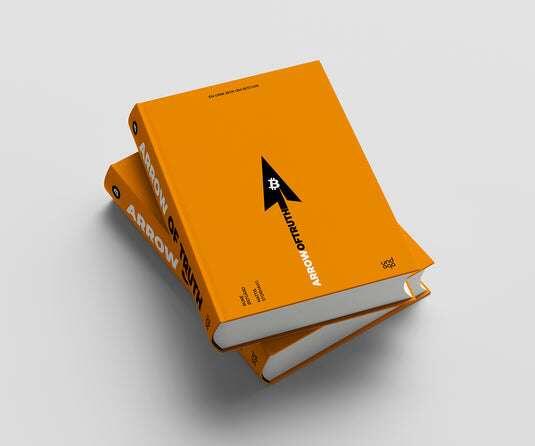
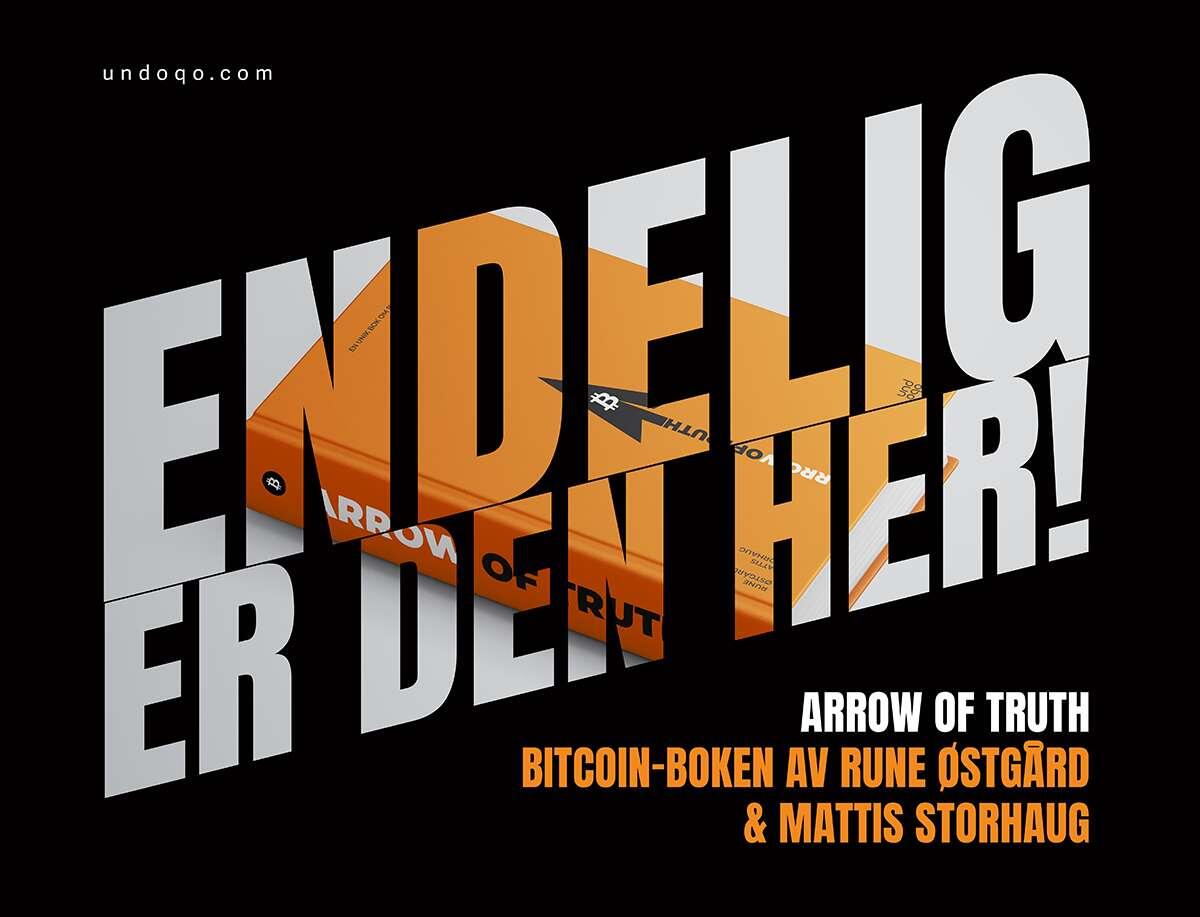
Kjære alle Bitcoin-interesserte og nysgjerrige! Endelig, etter to års arbeid lanserer duoen i UNDOQO boken Arrow of Truth, oppfølgeren til bestselgeren Fraudcoin.  image Boken gir unik innsikt i hvorfor Bitcoin er så viktig, og utforsker hva som kan ha vært Satoshis motivasjon for å skape det som kan bli den viktigste teknologiske og politiske innovasjonen som menneskeheten noen gang har hatt. Spennende historiefortelling og enkelt språk, spenstig grafisk uttrykk, friske farger, tegnede illustrasjoner, alt i alt, en flott bok som vi håper du vil ha glede av i lang tid. Vi tror også vi har skapt en bok som vil bidra til mange interessante samtaler rundt middagsbordene.  Fra og med i dag kan dere kjøpe boken direkte av oss, vi nummererer de 100 første eksemplarene og signerer alle bøker i første opplag (begrenset antall). Spesielt takk til alle som har ventet så tålmodig, og alle som har vist støtte og interesse 🧡 Besøk: undoqo (dot) com for mer informasjon.  Mattis & Rune
Riding on the back of the success I had here in Norway with Fraudcoin - 1000 Years of Inflation as a Policy, I nine months ago openly challenged my country's professors of economics and finance to debate me on monetary policy. image Complete radio silence ensued, until the host of one of our biggest trad-fi podcasts contacted me in July. He said he had found a professor who were willing to do it, and offered to be our moderator. I accepted, and said I would get back to him when I knew when my next trip to the capital came up. Two months later I wrote back and said I would go to Oslo in October, but then he said he was leaving his position to go to another company, and that the guy taking over as host for the podcast wasn't interested in the subject. In preparation of the marketing of our next book, Arrow of Truth, which is about Bitcoin, I sent an e-mail directly to the professor who previously had said he would debate me. I asked if he still was up for it, and that we perhaps could do it in front of his students at his own home turf in Oslo. He said yes, but that he didn't have time until next spring, meaning, about half a year from now... You can say many things about the fiat economy, but its record when it comes to producing brave academics who support their ideas about the traditional monetary system isn't very impressive, at least here in Norway.
I debuted with the book Kvikkleire (Quick Clay) three years ago. I wrote it because geotechnical engineers in Norway make a ton of money for giving green light to developers who want to build on land with quick clay, without, IMO, understanding the risks. Have a look at this video and try to imagine the forces in play in this type of landslides.
Writing a book about Bitcoin made me feel more connected to Bitcoin. Strange feeling... (And no mushrooms have been consumed)
Bitcoiners who have repeated the mantra "I stack sats, and by doing that I do more than my fair share to fight the power" has been, is, and will always be wrong. It sends the totally wrong signal and here 👇 you see how it might backfire. I'll stop there, and refrain from ranting on about the free rider problem, which IMO is the root cause of our problems today.
Kind of cool to know that the government created scam called "carbon credits" can be earned by Bitcoin miners that run on electricity created by methane gas, thereby subsidizing freedom money that the governments hate.
Nærmer seg 50 podcast innspillinger siden jeg ga ut Fraudcoin for nøyaktig to år siden, og i denne samtalen får jeg blant annet spørsmål om Oljefondet og hvordan barn kan lære hvordan pengesystemet fungerer (metoden kan også brukes av voksne 😉)
GM! Socialism is, in practice, anarchy for the political class, with the rest of us as paying spectators.
The Norwegian Oil fund is the largest sovereign investment fund in the world. The fund is supposed to finance the Norwegians' future pensions. At 1.7 trillion USD, it's the 8th most valuable asset in the world, with a market cap equivalent to about 10% of all of the gold that has been mined throughout history. Gold tops the list of the most valuable asset (market cap). When we include the fund, bitcoin is No. 11 on this list, only 14 years after the digital currency started to have economic value. The fund is only allowed to invest in real estate, bonds and stocks outside of Norway. It isn't allowed to invest in gold or Bitcoin. The fund owns 0.6 % of Microstrategy, meaning that it indirectly owns a tiny bit of bitcoin. Compared to the gold price, it has had an annual average loss of about 1.9% over the 26 years since its inception. This is notable, considering that the fund invests in risk assets, while gold is considered to be one of the safest assets money can buy. In other words, the fund doesn't profit from taking risk. A major reason why the fund performs badly is that real estate, bonds and stocks, are assets that currently are being demonetized by gold and bitcoin.
Crypto exchanges and crypto retail shops may make a ton of profit by running fractional reserves just like banks do with fiat money, pumping out paper bitcoin to customers who don't take custody of their bitcoin. What does it take to get big exchanges ot shops that provide instant and 100% transparency /self audit, where you see their pool of bitcoin on one or more adresses and you instantly can follow all of the inflow as well as all of the outflow? Is this technically feasible, will it be costly, do we already have players who offer this type of service or do you have any other insights on this question? Furthermore, what happens in practice when we get big run on multiple exchanges/retailrs and suddenly everyone want to take self custody ? For instance, what happens in such a scenario with the transaction fees, and how long will it take to reveal if they have been running ponzis?
Not copper. Red. I believe that Bitcoiners have a special relationship with the concept we refer to as "truth." I'm not saying that we are more honest than others. But we appreciate more than most others being able to verify the correctness of something. For instance, we like the fact that everyone can verify the software code as well as each and every transaction. Nothing is hidden. Everything is in the open. We value that we don't have to trust someone who says that "Everything is A-OK." It's possible for everyone to check things out, without having to ask anyone for permission. I have had the same fascination with the concept of truth as long as I can remember. Like my father, I have also always been curious about how things work. He had an amazing talent for understanding technologies. My grandmother once told me a wonderful story from when he was a kid. I think he was 12-13 years old. He sat by the kitchen table and picked apart a mechanical sleep alarm clock, while he carefully studied how the pieces functioned together. After he had taken it all apart, he patiently reassembled it. It must have been very satisfactory for him to wind it up and hear the ticking. The final test was the alarm bell. "Ring ring ring!" It worked perfectly. My father had verified the truth about how the alarm clock worked. In the 1980s he became a computer engineer. I remember him sitting for hours in front of his PC, and how he used to fill up all empty spaces in the basement and his home office with all kinds of computer hardware. He passed away much too early due to cancer in 2011. Although I didn't inherit my father's understanding of technology, I got the same passion for diving deep into things, into the very core, and for understanding how things worked. Social subjects and books have been two of my main interests, which is something I have from my mother. She has always questioned things, and I'm exactly the same. I discovered at a very young age how important it is to accept the truth. I went to kindergarten from I was about two or thee years old. When I was four, I was moved out of the unit with the small kids and to the unit with the big kids. Some of the older kids started bullying me. They shouted: “Rune has red hair, Rune has red hair.” The people who worked there were unable to help me. So, I found myself in a hopeless, prison-like situation. I complained to my mother, and told her that I wouldn’t go there anymore. She tried to comfort me, and said: “It isn’t true what those kids say. You don't have red hair, it's copper brown, and it's beautiful." The only problem was, this couldn't solve a damn thing with the bullying. And of course, it didn't. The day after, I went to the kindergarten as usual, and the bullies pushed on. It's quite possible that I tried to yell back at them: "It's not red, it's copper brown!" If I did, it probably just made things worse, because it would be a confirmation to them that their bullying had the intended effect on me. However, something must have clicked inside me that day. When I came home, I met my mother in the entrance. I ripped the beanie off my head, and shouted angrily to her: “No, mama, look at this! It’s true - my hair is red - just see for yourself!" When I came back to the kindergarten the next day, I had accepted my faith. They had blond, brown or black hair. My hair was red. These were facts, nothing more. They noticed that I suddenly was OK with it. And then they lost all interest in bullying me. Accepting the truth had made me impervious to their insults. My mother told me this story many times, when I was a child, and also after I became a grown-up man. She says she's convinced that it was a life-changing experience for me, and that it would shape my personality. Looking back, I think I realized that ignoring the truth comes at a significant cost. And just as important, I think the episode taught me that embracing the truth could set me free. Today, it makes me sad to think back on the fact that my father and I often disagreed on many things. We had very different ideas about the relationship between individuals and the state. What started as civil conversations, too often ended in quarrels. It felt like our opposing opinions on politics drove a wedge between us. If he had lived today, he probably would have developed a fascination for how Bitcoin works. He wouldn't have trusted Bitcoin, just because others said it's immutable. I'm confident he would have picked apart every little piece of the technology, in an attempt to verify Bitcoin's promise. Just like I try to do with the socio-economic aspects of it. If my father had been alive today, I suspect Bitcoin would have brought us closer together. He could have explained the technology for me, and I could have explained Bitcoin's socio-economic functions to him. Possibly, he would have realized that I had been right when I challenged many of the things that the powers at be want us to believe. It's just guessing, of course. But it makes sense, because it seems to me that Bitcoin attracts truthseekers like a magnet. And at the same time, Bitcoin forces us to search for the truth together, instead of quarrelling about the correctness of something that others have fed us with. *** If you liked this piece, it would be great if you gave it a boost 🧡 image
Acersaken, Høyesterett og det store strømsviket I disse dager behandler Høyesterett søksmålet mot staten i Acersaken. Nei til EU mener at avståelsen av norsk suverenitet til EUs energibyrå ACER er grunnlovsstridig. Derfor har de gått til sak mot staten. Saken startet den 5. september. De fleste er historieløse og vet ikke hvordan norske politikere og særinteressene kom i posisjon til å selge ut norsk vannkraft og å mangedoble strømprisene for nordmen. Her får du en kjapp gjennomgang av det viktigste. Det skjedde for litt over hundre år siden, det vil si lenge før både EU og EØS. Retten til å produsere kraft var opprinnelig en del av eiendomsretten til grunneierne. På starten av 1900-tallet begynte noen av dem å selge eller leie bort rettighetene sine, blant annet til utenlandske selskaper. Nyheten om disse avtalene ble et påskudd for politikerne om at de skulle verne om "norske" ressurser slik at de ikke ble "solgt ut av landet". Dette var imidlertid bare den formelle begrunnelsen. Den reelle begrunnelsen var at politikerne og de særinteressene som de representerte ønsket å frata norske grunneiere kontrollen over ressursene. De var grådige, og ønsket å overta ressursene gratis. Fra 1906 til 1917 innførte det norske Stortinget en serie konsesjonslover for vannkraft og andre naturressurser. Lovene ga staten vide fullmakter til å sette betingelser for utbygging og utnyttelse av norske vassdrag. De som ville produsere kraft måtte søke om konsesjon. Konsesjonsperioden var fra 1917 på 50 år. Lov av 18. september 1909 om ervervelse av vannfall, bergverk m.v. bestemte at myndighetene skulle ha rett til å overta et anlegg uten betaling når konsesjonstiden var ute. Grunneierne gikk til sak mot staten og mente lovene var i strid med grunnlovens vern av eiendomsretten. I et skammens kapittel i norske domstolers historie forkastet Høyesterett i 1918 søksmålet, og ga staten medhold. Dette er hovedårsaken til at den norske staten, fylkeskommunene, kommunene og offetlig eide bedrifter som eier vannkraftverk og overføringsnett i dag kan selge kraftproduksjonen ut av landet. Konsekvensen er samtidig at nordmenn importerer de europeiske prisene tilbake til Norge. Dermed er det norske borgere og bedrifter som må betale regningen, mens det offentlige eser og eser og eser ut. Merk deg at det ikke er noen ironi her. Det var hele tiden meningen å bruke politisk makt over kraftressursene. Og det har de da også klart - til gangs. Etter min oppfatning er Acersaken Høyesteretts siste sjanse til å vinne tilbake tilliten hos det norske folk når det gjelder energipolitikkens ødeleggelser. Det var Høyesterett som i 1918 satte norske politikere i den posisjonen som de utnytter på det groveste i dag. Nå har Høyesterett mulighet til å rette opp feilen. Jeg er imidlertid ikke optimist. Sett over et lengre tidsspenn har Høyesterett vært en tilrettelegger for at statens makt bare kan øke og øke, til skade for det norske folks frihet. Ved å godta lovene har de gitt politikernes inngrep legitimitet, mens Ola Nordmann har stått og sett på med lua i hånden. Hvis man skal lære noe av historien kommer flertallet av Høyesteretts dommere til å falle ned på at det enkle ofte er det beste også i Acersaken. *** Hvis du syns at du lærte noe er det fint om du trykker liker og følger meg.