Based on the document provided, here is a summary of the key insights and takeaways from Matt Bracken’s analysis:
1. **The Strategic Failure of the Attack on Iran:** Bracken argues that the Trump administration’s "sneak attack" on Iran lacks a long-term strategic foundation and is likely to trigger a global economic depression or famine.
2. **The Resilience of the Iran-Russia-China Axis:** Unlike Western allies, Iran is geographically protected by land connections to Russia and China. Through the International North-South Transport Corridor (INSTC) and the Caspian Sea, Iran can bypass the Strait of Hormuz to maintain trade and transit with major Eurasian powers, making it much harder to isolate through naval blockades.
3. **The Vulnerability of Island Nations:** While Iran has land-based alternatives, America’s key allies—including the UK, Japan, Taiwan, Australia, and South Korea—are "island nations" or "virtual islands" that rely heavily on maritime trade. The closure of the Strait of Hormuz represents a catastrophic economic threat to these specific allies.
4. **The Reversal of American Diplomatic Imperatives:** Historically, U.S. policy sought to prevent a Russia-China alliance. However, Bracken asserts that current American military and diplomatic actions are actively driving these powers together, creating a potent Eurasian bloc that undermines U.S. hegemony.
5. **The "Mafia Boss" Approach to Global Energy:** Bracken compares U.S. energy policy to a mafia boss who sabotages competitors to control the market. He cites the Nord Stream pipeline sabotage as evidence that the U.S. will sacrifice its own allies' economic stability to ensure American energy dominance.
6. **The Imminent Collapse of the Petrodollar:** By acting ruthlessly to control energy markets, the U.S. is incentivizing the rest of the world to find alternatives. This shift threatens to end the dominance of the U.S. Dollar as the world's reserve currency and dismantle the petrodollar system.
7. **The Risk of Ally Realignment:** A critical takeaway is that if America continues to prioritize its own immediate advantages over the survival of its island-nation allies, those allies will be forced to act in their own self-interest. This will likely result in them abandoning the American orbit to realign with the Iran-Russia-China bloc.
**Actionable Insight:** For policymakers and strategic planners, the primary lesson is that unilateral military aggression in the Middle East may yield short-term energy advantages at the cost of permanent geopolitical realignment and the loss of the global reserve currency status.
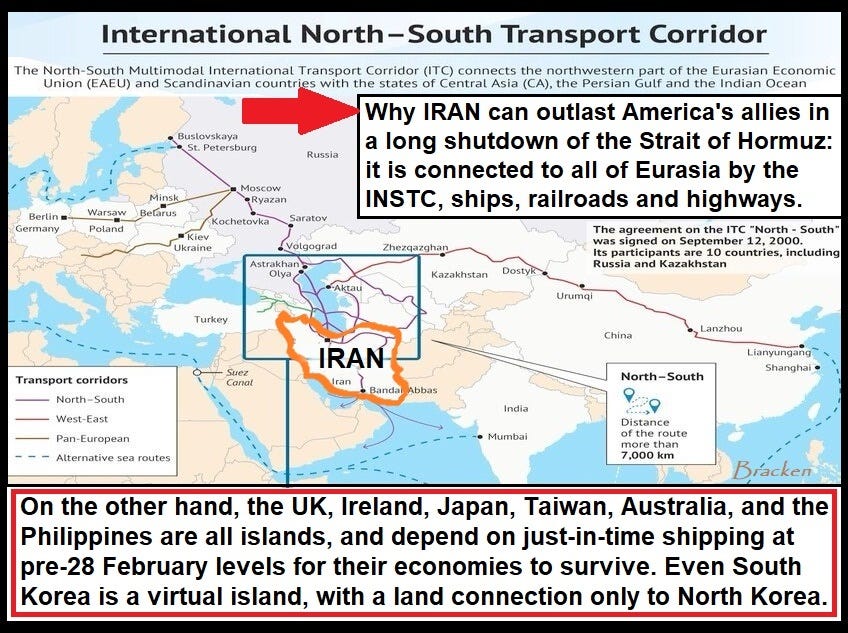
Why Iran can outlast America in this war
This map provides yet more evidence there was no long-game strategy behind Trump's decision to launch the catastrophic 28 Feb sneak attack on Iran.


