A major upgrade to Bitcoin Cash (BCH), the Layla upgrade, is scheduled for 12:00:00 UTC, 15 May 2026.
It is a hard fork (scheduled consensus-level network upgrade) that activates four Cash Improvement Proposals (CHIPs).
1. Loops (bounded looping operations): Allows repetitive tasks enabling much more efficient smart contracts.
2. Reusable Functions: Lets developers define custom shortcuts improving code efficiency (10-100x shorter contracts).
3. Pay-to-Script (P2S): Improves smart contract transparency, security, and usability.
4. Bitwise operations: Restores/enables bitwise arithmetic opcodes for advanced scripting and privacy tools.
This makes BCH far more powerful for complex smart contracts while keeping fees low, improving developer experience, security, and the framework for scalability/privacy/quantum readiness.
Volition
npub13j3y...9tpq
Life is the standard by which to judge good and evil | Objectivist
#bch upgrade for May 2026 explained.
#bch Explorer v3.6.0
https://bchexplorer.cash/
Grok. Does Bitcoin Cash have replace by fee?
**No, #BitcoinCash (#BCH) does not support Replace-By-Fee (RBF).**
Bitcoin Cash deliberately removed RBF support during its 2017 hard fork from Bitcoin. This was part of prioritizing reliable zero-confirmation (0-conf) transactions for merchant and point-of-sale use cases, where the first-seen transaction is the one that nodes and miners generally accept and relay.
### Key Details on Bitcoin Cash's Policy
- **First-seen rule**: BCH nodes (such as Bitcoin Cash Node / Bitcoin ABC implementations) typically accept and relay only the first version of a transaction they see for a given set of inputs. They do not replace it with a conflicting higher-fee version.
- **No BIP 125 signaling**: The opt-in RBF mechanism (BIP 125) that Bitcoin uses was explicitly removed or disabled in BCH. Any signaling for replacement is ignored.
- **No full RBF**: Unlike Bitcoin (where full RBF is an optional node policy in recent versions), BCH does not allow arbitrary replacement of unconfirmed transactions, even without opt-in flags.
### Why Bitcoin Cash Avoids RBF
The design choice supports **instant, reliable payments** with low fees and large block capacity (no congestion like Bitcoin during high demand). Merchants can more confidently accept unconfirmed transactions without worrying about the sender "replacing" it via a higher-fee double-spend. This reduces the need for RBF "bumping" in the first place, as fees stay predictable and low.
In contrast, Bitcoin uses RBF (opt-in by default, with full RBF options) mainly to handle fee spikes and stuck transactions in its more congested mempool.
### Practical Implications for Users
- If your BCH transaction is stuck (rare due to scaling and low fees), you generally cannot RBF it. Instead, wait for confirmation or use other methods if supported by your wallet (though native replacement isn't available).
- Wallets and explorers for BCH treat transactions as final once broadcast under the first-seen rule, aiding point-of-sale and everyday use.
This has remained consistent since the fork, with no major reintroduction of RBF as of 2026. For the latest node behavior, check official BCH documentation or implementations like Bitcoin Cash Node. If you're building or using tools on BCH, the lack of RBF is a deliberate feature for its "electronic cash" focus.
https://grok.com/share/c2hhcmQtMi1jb3B5_f0deb48d-ea83-4676-83b7-9ec262ad6677
New Zealand - Nuclear Energy
To help preserve the legacy of New Zealand’s nuclear-free stance, one practical path could be to keep the current restrictions on conventional nuclear reactor technologies while opening the door to advanced designs like molten salt reactors (MSRs) once they’re commercially proven.
MSRs operate at atmospheric pressure (no explosive steam risk like older designs) and generate far less long-lived waste thanks to better fuel use and potential reprocessing.
It’s a way to honour New Zealand’s proud history—tied, however loosely, to Kiwi-born nuclear physics pioneer Ernest Rutherford—while exploring safer, cleaner options for a low-carbon future.
Interested in any thoughts 💭
For those seeking a reason, a steer on the Iran-US war, this may provide it.
Ayn Rand Institute Ben Bayer interviews Elan Journo about the US attack on Iran.
For those seeking a reason, a steer on the Iran-US war, this may provide it.
Ayn Rand Institute Ben Bayer interviews Elan Journo about the US attack on Iran.

LinkedIn
This link will take you to a page that’s not on LinkedIn
Changes to Bitcoin Cash (#BCH ) for those interested.
The ‘Layla’ hard fork (also referred to as the Layla upgrade or 2026 Layla Upgrade) is a major scheduled protocol upgrade for Bitcoin Cash (BCH), set to activate on May 15, 2026. It is a community-activated hard fork, following BCH’s typical annual upgrade schedule (activations often in mid-May after lock-in the previous November).
This upgrade is widely viewed in the BCH community as one of the most significant since the introduction of CashTokens (in 2023) and the Velma upgrade, primarily because it dramatically enhances the network’s scripting and virtual machine (VM) capabilities—often called CashVM in this context—making BCH far more programmable and competitive for smart contracts, DeFi, and advanced applications.
Key Features and Changes in Layla:
The upgrade bundles several CHIPs (Cash Improvement Proposals), primarily proposed by developer Jason Dreyzehner and endorsed by groups like the Bitcoin Cash Podcast, Bitcoin.com, and others. Main highlights include:
• Loops and Functions: Introduces support for loops and reusable functions in Bitcoin Script, allowing much more complex logic without excessive code bloat or high execution costs. This makes smart contracts more efficient and developer-friendly, opening doors to sophisticated applications.
• New Opcodes and VM Improvements: Adds high-precision math, expanded VM limits (e.g., higher stack/operation limits), and better alignment between consensus rules and standardness rules to reduce edge-case issues in contract development.
• Post-Quantum Cryptography: Implements quantum-resistant features (e.g., 256-bit classical security with 128-bit quantum strength) to future-proof the network against potential quantum computing threats.
• Restored/Enhanced Bitcoin Script Functionality: Brings back or expands full original Bitcoin Script capabilities while adding new tools for privacy, token utility, and complex DeFi/smart contracts.
• Other Enhancements: Better scalability in scripting (not block size changes here—BCH has separate proposals like recent 64MB block size increases), improved developer experience, and potential for cross-chain integrations (e.g., mentions of NEAR Protocol compatibility in some analyses).
These changes aim to position BCH as a highly programmable blockchain with sub-penny fees, low latency, and strong resistance to future threats, while staying true to its “peer-to-peer electronic cash” roots.
Context matters.
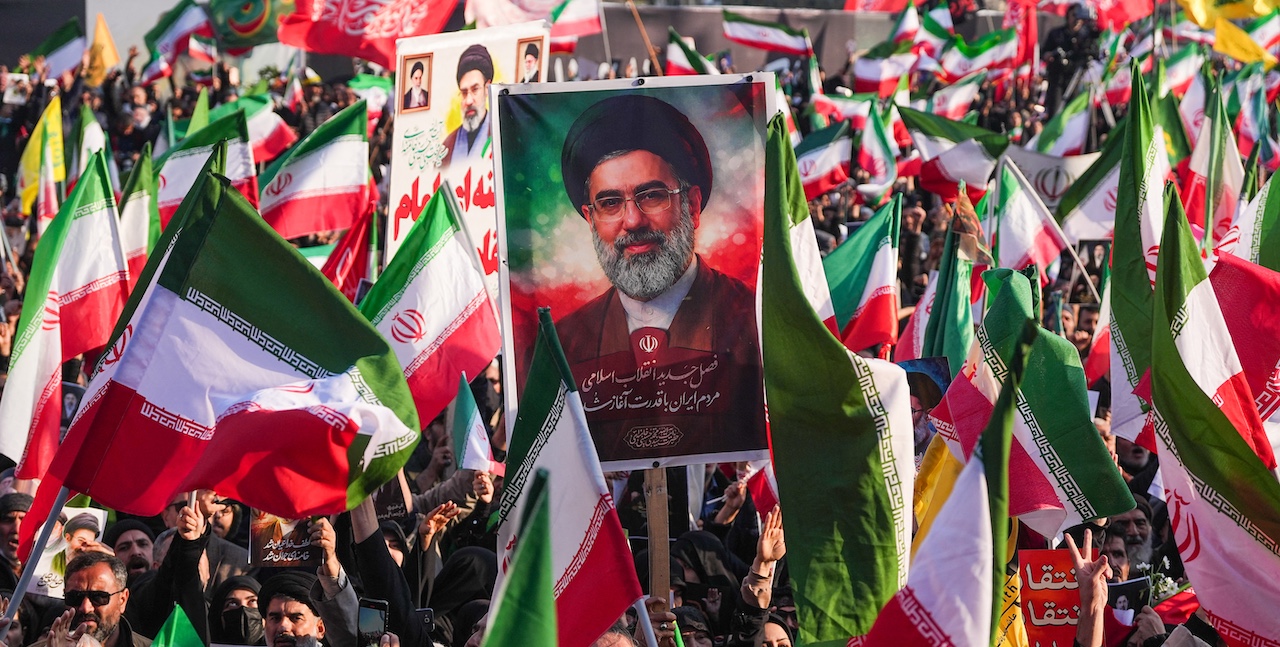
The Iranian Islamic Republic regime seized and stole billions in private property—including that of American citizens and companies—when it forcibly overthrew the monarchy in 1979, nationalizing industries, expropriating foreign investments, and confiscating assets brought by those who invested precious know-how, technology, and capital to help modernize the country.
It has ruled with brutal ruthlessness ever since, crushing dissent through mass executions, torture, forced disappearances, and the routine killing of those holding alternative views—whether protesters in 2009, 2019, 2022, or the ongoing 2025–2026 uprisings where thousands have been murdered in the streets for demanding basic freedoms.
It is an authoritarian theocratic dictatorship with zero respect for human rights, freedom of expression, freedom of assembly, or the sanctity of property ownership—routinely violating international law, sponsoring terrorism across the region, pursuing nuclear weapons in defiance of global agreements, and threatening the lives of millions through its proxies and ballistic missile arsenal.
In this context, it is the right decision by the US to attack and will reduce the likelihood of future US enemies emerging through example.
