
A short personal story about the human potential (Nostr only)
Back when legwarmers were fashionable, Sony Walkmans were new, and “Chariots of Fire” was top of the charts, I was a nervous twelve year old who dreaded school. I didn’t dread all of school, just one part that happened once a month, without fail and without escape.
As part of the uncommonly high emphasis our school placed on ‘oral language’ we had to prepare and recite a universally loathed three-minute speech to the class.
I reviled this day with all my thumping heart, stammering lips and clammy palms. Contracting a “rare illness” did not work - we simply had to do it upon our return; failing to rehearse didn't work – we were made to do it unprepared.
After three woeful speeches, something strange happened. In recounting it to other people today, it feels about as sophisticated as Thomas the Tank Engine achieving his dreams by pumping out “I know I can” – but this is the way it happened, so this is the way I’ll tell it.
Something inside me said, “The only reason you speak badly is because you fear speaking badly. But the reverse is also true. If you expect to speak well – you will.”
Spurred on by this mysterious message, for the next three days, I practiced sounding courageous with my unbroken voice, and practiced looking confident in front of my mum’s full-length mirror until I was out of time.
Speech day arrived.
I opened my mouth, made a joke and waited for the groans. A few people laughed. I was staggered. I’d never told a joke that someone had laughed at before in my life. My confidence grew.
Was my strategy working? Spontaneously, my voice started incorporating what I’d practiced. I noticed the audience smiling and listening attentively. That was a new experience!
This became like a virtuous upward spiral. Every time I noticed the connection with the audience deepen, my confidence in turn would go up, till by the end, the teacher could not believe that I was the same timid 11-year old.
One year later, despite overwhelming shyness, I had just spoken in front of 500 of my peers. In a state of post-speech calm, I heard with disbelief the words “Winner of the speech competition: Daniel Batten!”
The sequence of strategies I practiced back in 1982, however formative, had worked.
Nothing much had changed on the outside. I didn't have any more skills as a speaker. I hadn't learnt delivery. I hadn't learnt how to structure a compelling talk. That stuff is all the UI, important, but not as important as optimizing the underlying code. What I'd done all those years ago was to change a bit of internal coding architecture, so that I could operate without constraints.
Decades later, this would inform how I coached leaders, CEOs and founders of technology companies, and how I coached myself. Yes, we do a bit of work on the UI. But the most effective and immediate work is done refactoring our inner algorithms.
~~~
Question:
Where have you assumed you have a fixed potential based on previous experiences, whereas a small internal tweak in your internal coding (a tweak to a mindset, pattern of belief or intention for example) could allow you to experience new experiences?
🔥JUST IN: New article 🔥
How critics use "Greenwash" as a slur to discourage critical thinking about Bitcoin
How use of the term “Greenwash” Can Discourage critical thinking about Bitcoin – Batcoinz
Q: What's the only industry in the world where 20% is regarded as a pass.
A: Venture Capitalism
Would you expect that by getting a group of educators, coaches and leadership experts together then asking them to sit down at a computer and start coding your latest killer App you’d end up with a great result?
Would you imagine that by getting a group of computer scientists, engineers and financial experts together then asking them to teach leadership, you’d help people become great leaders, in great mental health reach its potential ?
The latter is what the Technology Ecosystem has done for the last 70s years.
In this ecosystem, a 20% success rate is seen as good. The reason given it’s not higher “this industry is just inherently competitive and really hard”
But what if this were an abdication of responsibility, and a reflection of the industry's collective lack of self-awareness?
We already know 65% of technology companies fail due to lack of senior management skills (Sahlman and Gorman)
That means the true potential pass rate is 72%
This is enough to 5x commercial returns to investors in a fund, or angel investors,
In other words, the return of VC companies and angel investment groups globally are 1/5 of their potential.
That means 99% of fund managers the world over are failing their fiduciary duty to maximize LP returns.
“Growing the founder” does not mean mentoring and governance. If we denied elite sports teams elite coaching and replaced it with mentoring and governance, would a decline in win rate to 20% really surprise us?
Most VC firms talk the talk when it comes to “growing the founders”. Yet in my experience it’s the last item on the agenda when during economic tailwinds, the first line-item to be cut in a headwind.
This is next-quarter thinking at its finest.
Statistically, with 20 companies in your portfolio, right now unknown to you
- 1 founder is about to leave
- 1 is not being transparent to the board
- 2 are no longer innovating due to stress
- 1 is about to have a falling out with their CEO or co-founders
- 10 have not grown the next generation of leadership. As a result, come SeriesA raise, it’ll have cost a year’s lost momentum. 5 will not recover
- 5 will limp to exit. In 3 cases, the founder will be in poor mental health
This is your biggest risk. Board meetings once a month is not enough to uncover this risk. Even if you did uncover this risk, you'd have neither the knowledge nor the bandwidth to help them. Nor should you. It's not your job.
But it's someone’s job. And by not finding that person - most of your founder's will preventably fail, and experience a precipitous decline in their mental health. On your watch.
But of course, that's not your problem right? After all, you're doing 5% better than the industry average, and investing in tech companies is just an inherently risky business right?
Or you could take responsibility and get your founders the best standard of elite coach available.

Bitcoin is now the top ESG Asset across 6 metrics.
Yes, ESG is oft-most a scam. It’s also the next rite of passage.
With 33Trillion in ESG funds by 2026, a 1% deployment into BTC triggers a 3x increase in market cap

Education: a personal story
(Nostr only)
I grew up in an old “bach” (a small, modest home) nestled into a lush hillside of native New Zealand bush in the wild isolated coastal township of Bethells Beach, We were 45 minutes away from the main city of Auckland. Our nearest neighbour was a few minutes walk away. And the township was made up of a handful of alternative lifestylers, farmers, and fourth generation locals.
Life was rustic yet charming. We had a long drop toilet. I was bathed in the evenings in a tin bath. There was no running hot water. Instead we boiled rainwater from the tank on an ancient Atlas electric stove. There was 2 rooms, a small one for me, and a slightly larger one for mum. The rich native bush and cadence of birdlife was everywhere. For a child the setting was solitary and idyllic: rich in natural beauty – sparse in people.
Growing up with not so many other kids around – the landscape became my playground; the birds, sand dunes and the beach my playmates. I would wander for hours from a young age in perfect safety, free to explore my world. The environment provided a safe haven for all of my senses to engage. For better or worse, it forged in me a rigorous resourcefulness and a lack of need for the company of others.
My mother went out of her way to nurture the creative impulse in me. From the age of 4 each morning she would lay out a puzzle One in particular was called The Soma Cube. It was a wooden puzzle made out of 8 different pieces, which you had to make into a cube. It was not an easy puzzle and many adults would venture to “help” me. But my mother would pounce on them and fiercely forbid them as though they were threatening the life of her young. In a way, they were – the creative life of her young anyway.
My mother’s parenting had been heavily influence by her own mum who in turn read a book which I found out years later was written in the 1920’s by an educator called Charles Batt. One particular book called “Hands Off The Child” had changed everything for my grandmother, the impact had rippled down the generations. Now today a book with a title like that would be of one particular meaning. But in those days it was a metaphor for not intervening too much in the child’s development. The philosophy of Charles Batt was that a child has inherent creativity and most parents and educators leap in there to “help” and stunt the creativity of the child unwittingly in the process.
Years later I read some research suggesting that a neural pathway is set up if a child has to work out for themselves where the breast is immediately after birth. But when the mother attaches them to the breast, this neural pathway does not start to form. In other words, the very first act of life after birth will define whether the parent is over-parenting, or allowing the child to explore and immediately form new neural connections. It seemed to validate what Batt had said close to 100 years ago.
Anyway, my mother would put this cube out. But never as a cube. She would always take it out of the box and dismantled it first.
I'd never seen the cube fully or inside the box. So I would simply play with these eight fascinating wooden pieces as any child would. I would make buildings, animals, furniture or whatever came into my mind. Or else I would just seen how they fitted together with no goal to create any bigger shape at all. I did this happily for around about 3 weeks. Then one morning I made a shape I hadn’t made before. Something adults called a cube.
Later that morning, mum came over to give me a good morning kiss, but she never made it that far. She froze in her tracks – her eyes fixed on the cube.
“Did you do this?” she ventured. As though there was another explanation of how the cube could have formed during the night.
“Yes” I remember neutrally replying – neither expecting adulation nor feeling any particular sense of occasion. It was just “one more thing that you could make with eight pieces of wood.”
She looked stunned. Perhaps she felt she needed to see this cube appear one more time before she could fully believe what had happened.
So the next night she again deconstructed the cube and removed its box. The next morning a cube again emerged.
What had occurred was my complete freedom to play with these shapes without any sense of objective, had allowed me to reach the objective without a sense of whether this was success and failure, but also make many other things in the process.
I didn't realise that at the time of course, but she was teaching me a principle, which I would find invaluable in later life many times, including when I started and ran my first technology company.
~~~~~~
My questions for you:
What does education mean to you? Is it finding the right answer, or the ability to ask the right question?
Do you think that if more people had the ability to ask the right questions, more people would be bitcoiners?
A story about a turning point in my life.
Imagine how excited I was when the New Zealand Trade Development Board arranged for me to pitch at the University of California’s San Diego Connect program, one of the world’s most successful stages for marrying entrepreneurs with capital.
If you had been with me in San Diego on 3 September that year, you would have seen a life-changing sequence of events. I was suited and booted and I looked sharp. I opened the door and I saw everyone else was in Hawaiian shirts and board shorts.
My clothes were saying, “I’ve dressed to impress.” Their clothes were saying, “I no longer have to impress anyone.”
Inside those shirts and shorts were individuals who between them had witnessed more than a thousand investment pitches. The room contained probably well over US$1 billion of net worth from people who had led multiple successful companies, and who had the means to propel an entrepreneur’s company to the next level, if the pitch was good enough.
I’d read about the importance of visualizing the outcome you want. So, I had visualized these people saying “that was great” at the end of my pitch and deciding then and there to open their checkbooks.
To complete this visualization process, once I entered the room, I zoned in on the hardest-to-impress looking investor I could find, a poker-faced, bespectacled and bearded man named Jay Kunin. He looked like a hard-nosed version of the movie director Peter Jackson. In my mind’s eye, I visualized him fixing his eye on me at the end of my pitch. In my mind’s ear, I heard him say, “That was great” and committing to invest.
This is what happened next. I had just finished my pitch. There was pin-drop silence. My heart was pounding. I was roasting inside my jacket. Then Jay, exactly as I visualized, squinted at me, peered over his glasses and said three fateful words. “Was that it?”
That wasn’t the phrase I’d written for him in my visualization. He continued. “If your technology is as good as you say it is, what’s to stop a better-funded team here in California overtaking you in six months?”
I knew how to handle this. I looked him in the eye, and I said “Jay. That’s a good question. I don’t have an answer for you right now. But I’d be happy to get back to you in a couple of days with the answer you seek.” It’s the sort of evasive answer you give when you’re stumped and are trying to minimize damage.
Then the woman, a venture capitalist, sitting next to him, began. “Given that academics are notoriously hard to sell to, how do you know that your cost of sale won’t be more than your buy price?” I can’t even remember what I said. But it wasn’t good.
What followed was a 20-minute tag-team mauling by 12 dragons in Hawaiian shirts, where I learned that my product was one of the most problematic they had seen. I was a lot further from realizing my idea than I’d hoped.
They were friendly enough when I left, and even invited me back once I had more answers (something they did to everyone, no matter how bad their pitch was). I felt so crushed that by the time I’d stumbled back onto the plane, I’d already begun rationalizing to myself reasons to give up. Of course, I didn’t admit that to myself at the time. But that’s exactly what I had started doing.
Bad as that was, it was what happened next back in New Zealand that shocked me. I told Roger, my business coach, what had happened. He looked at me through his brown beady eyes and asked, “So, what’s next?”
I opened my mouth and started telling the lies that anyone starts telling themselves when they are starting to give up on their dream, lies that sound innocent, realistic and logical – but are in fact toxic to our growth and suffocating to our dreams.
“Well it’s just too hard to get investment. And without investment, I can’t fully commit right now. But it’ll still be on the slow burner.” What he said next changed the direction of my life.
He said, “Dan, in their feedback they gave you a recipe for success. You’re seeing it as an indictment of failure. You left your job for this idea. Ever since I’ve known you this is all you’ve talked about. This idea is your baby. If you stop feeding it, it’ll die. Your idea does not deserve to die!”
Most people think the number one thing that gets between them and their idea reaching its potential is an obstacle on the outside – the economy, lack of resources, lack of capital, lack of proximity to market. That’s not it. That’s the lies we tell ourselves. What stops our idea reaching its potential is when we decide to stop feeding it. Because when that baby called your idea needs feeding, sometimes even tomorrow is too late.
I said, “See that’s why you’re my coach – my idea does not deserve to die. I’m going back into the dragon’s den.” And I found another group to pitch to. And they also tore apart my pitch. But this time they didn’t find nearly as much at fault. This time, I heard their feedback as a recipe for change, not an indictment of failure.
I kept on pitching, until nine months later I was invited into a room of angel investors who had just completed one month of due diligence on our company after hearing my pitch. The lead investor opened his mouth and said, “We’re in.”
That group was called ICE Angels. As it turned out, they were making their first ever investment. Today they are New Zealand’s largest seed investment group. And today, the company they funded is one of New Zealand’s more successful high-tech companies, and exited in 2019. It changed the way that scientists do research into virus evolution and more around the world.
My questions for you:
What ideas have you put on the slowburner?
Do you have people in your like who love you enough to challenge you when you're about to lie to yourself (as I was)
Where have you taken feedback as an indictment of failure, rather than a recipe for success?
Bloomberg, Forbes, TVNZ, MSN, Financial Times, The Hill, The Independent (Ireland), Euro News, MIT Technology Review, One Green Planet, Cornell University, Yahoo Finance and other MSM outlets all published positive press on Bitcoin mining this year.
Probably nothing
Bloomberg -
Bitcoin Miners Draw From Iceland’s Surplus of Renewable Energy

LinkedIn
This link will take you to a page that’s not on LinkedIn
MSN - Bitcoin Mining Going Green?
LinkedIn
This link will take you to a page that’s not on LinkedIn
Financial Times – Mini hydro plants subsidized by Bitcoin mines in Kenya
LinkedIn
This link will take you to a page that’s not on LinkedIn
The Hill - Bitcoin mining is energizing sustainability through green innovation
LinkedIn
This link will take you to a page that’s not on LinkedIn
TVNZ documentary - WFT is Crypto: Bitcoin Mining Episode
LinkedIn
This link will take you to a page that’s not on LinkedIn
Independent (Ireland) – Farmer reducing methane emissions with Bitcoin mining
LinkedIn
This link will take you to a page that’s not on LinkedIn
Euro News – Bhutan is sustainably mining Bitcoin and using it to develop “energy independence”
https://lnkd.in/gSQdzWey
MIT Technology Review – How Bitcoin mining saved a national park
LinkedIn
This link will take you to a page that’s not on LinkedIn
Cornell University - Study proposes use of bitcoin to support renewable energy development
LinkedIn
This link will take you to a page that’s not on LinkedIn
One Green Planet – The sustainable side of bitcoin mining
LinkedIn
This link will take you to a page that’s not on LinkedIn
Yahoo Finance - Marathon Digital Sees Shift in Bitcoin Mining Industry Dynamics With Energy Producers, Renewable Energy
LinkedIn
This link will take you to a page that’s not on LinkedIn
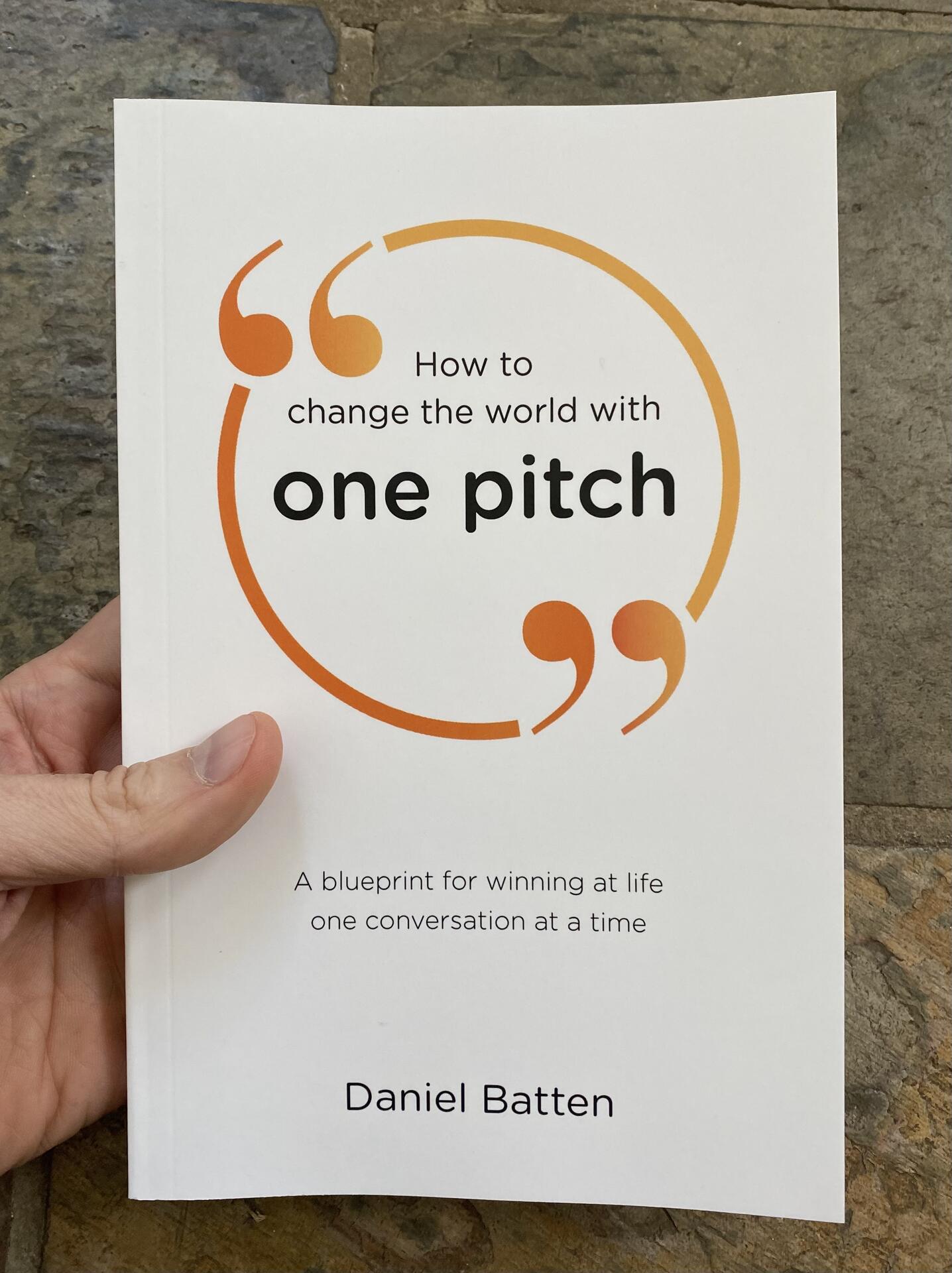
Proud day
Not a bitcoin book. Though it does open-source the blueprint I use for changing false-narratives.
… and it’s got an orange cover.
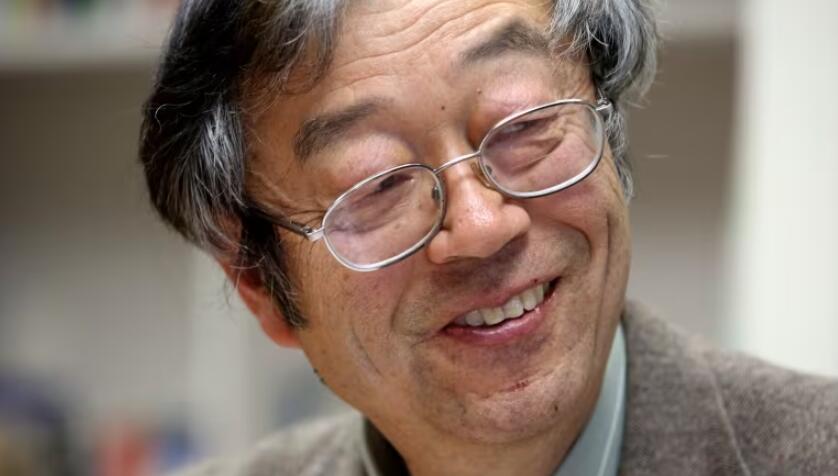
JUST IN:
Bitcoin's CEO Satoshi Nakamoto issues statement
"Unlike Bitcoin, the electricity that powers a Tesla still comes mainly from fossil fuels. Once Telsa can show us data proving their electricity-mix comes mainly from sustainable sources, we'll let them to use Bitcoin to buy Teslas again."
I need your help with something - data !
Context: I’ve been getting feedback that this is the best attempt I’ve made to diffuse the “bitcoin is bad for the environment” FUD-bomb.
The first half picks apart the flaws in the Cambridge model and replaces them with a more reliable model of Bitcoin’s emissions.
The second half looks at why Bitcoin is the greatest ESG asset of all time.
I break down, with data, why Bitcoin is the best ESG asset across 6 categories.
Here’s the data I’m after:
I’m very interested to hear how it lands with pre-coiners
Please feed back to me what they say, so I can see
A. where people still get stuck and
B. what messages resonate the most so I can keep improving how I communicate this message, because if we know what works we can all disarm environmental FUD and increase user adoption of bitcoin faster.
Thanks!
I recently sat down with Nik Bhatia, author of Layered Money, to talk about why Bitcoin is Green Tech.
We cover
1. How I came to realized that Bitcoin mining was the solution to reducing emissions, not a problem
2. How Bitcoin can become the world's first industry to reduce more emissions than it produces (without offsets)
3. Why Carbon Credits and Bitcoin mining are like a Nik Cave and Kylie Minogue duet.
👇
My latest article quantifies the value of changing the ESG narrative on Bitcoin: $1Trillion
(Over $50k addition value per bitcoin)
The Bitcoin Facts that Every Investment Committee Must Know – Batcoinz
Lugano Keynote just got uploaded
“Why Bitcoin is the world’s best ESG Asset”
https://t.co/6iWoxLcXsQJust saw the UN had published a report on Bitcoin mining.
It’s a historical account of Bitcoin mining during 2020-21. (When China and Kazakhstan) were the main hashing nations.
Because the mining map has changed completely since then, it is not relevant to today, more a nostalgic pre-China ban view that shows how fast Bitcoin mining has migrated to sustainable power in a short time.
Any journalists that pick up the report as though it is a statement of the current power mix of bitcoin mining are showcasing how little they have studied the basics of bitcoin mining.
In terms of the implication bitcoin datacenters have a big land footprint, I would say “compared to what?”
Solar panels?
Traditional datacenters.
Bitcoin stacks up well on both counts
Because they consume much more power they have roughly 1/4 the land footprint of a traditional datacenter.
Next.
Just finished Lugano keynote
I’m seeing more and more narrative flips this year.
Finance Magnates had been consistently negative about Bitcoin mining until this month (when it seems the KPMG report completely flipped their thinking)
“Correcting outdated narratives and recognizing Bitcoin's positive contributions to environmental and social challenges will be essential to onboard investors into the digital asset economy.”

Financial and Business News | Finance Magnates
Does Bitcoin or Crypto Mining Still Pay Off?
Cryptocurrency mining, particularly Bitcoin mining, has long piqued the interest and investment of many. I
My latest piece on why Bitcoin is good for the environment just went live on Blockworks
https://blockworks.co/news/environment-planet-mine-bitcoin-methane“What does not kill me makes me stronger” — Friedrick Nietzsche about Bitcoin.
Landfills give you orange PPE gear
It’s as if they are just waiting for Bitcoin

Mainstream media starting to get it