We stand at the crossroads of 2 visions of the future Both will digitize money.
One gives more control to Central Bankers than ever.
The other gives us a shot at freedom, and a world without the intergenerational widening of wealth gaps

BIS recently dusted off its FUD about Bitcoin's supposed vulnerability to quantum computing - a theoretical future blackswan threat to which there are many solutions.
Maybe they should spend a bit more time on current, actual security threats.
European Central Bank head targeted in hacking attempt
https://apnews.com/article/technology-angela-merkel-european-central-bank-4cd599a7502d9617a401155abf054502…
Hack attack on European Central Bank jeopardises personal information
https://theguardian.com/technology/2014/jul/24/european-central-bank-customer-information-hack-attack…
ECB shuts down compromised BIRD website
https://ecb.europa.eu/press/pr/date/2019/html/ecb.pr190815~b1662300c5.en.html…
EUROPEAN CENTRAL BANK WEBSITE HACKED
New all time high
*sharing on Nostr first
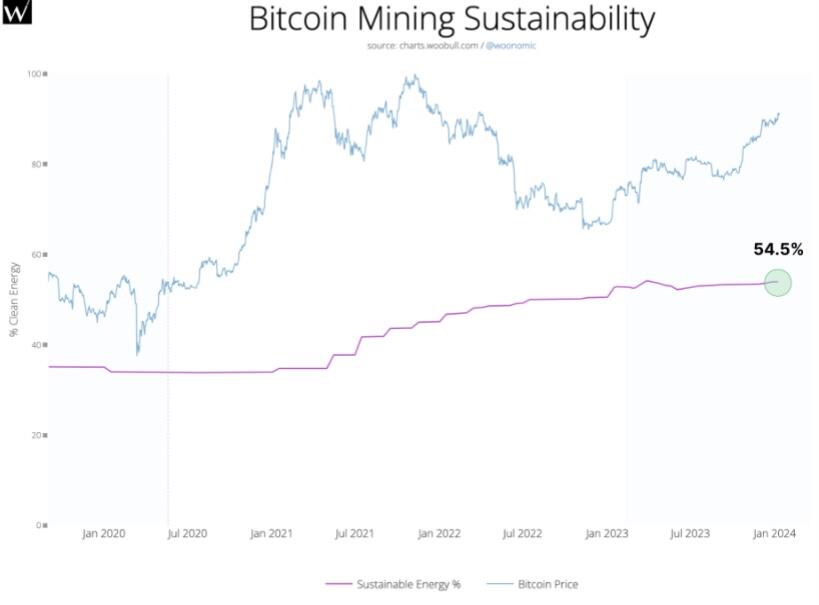
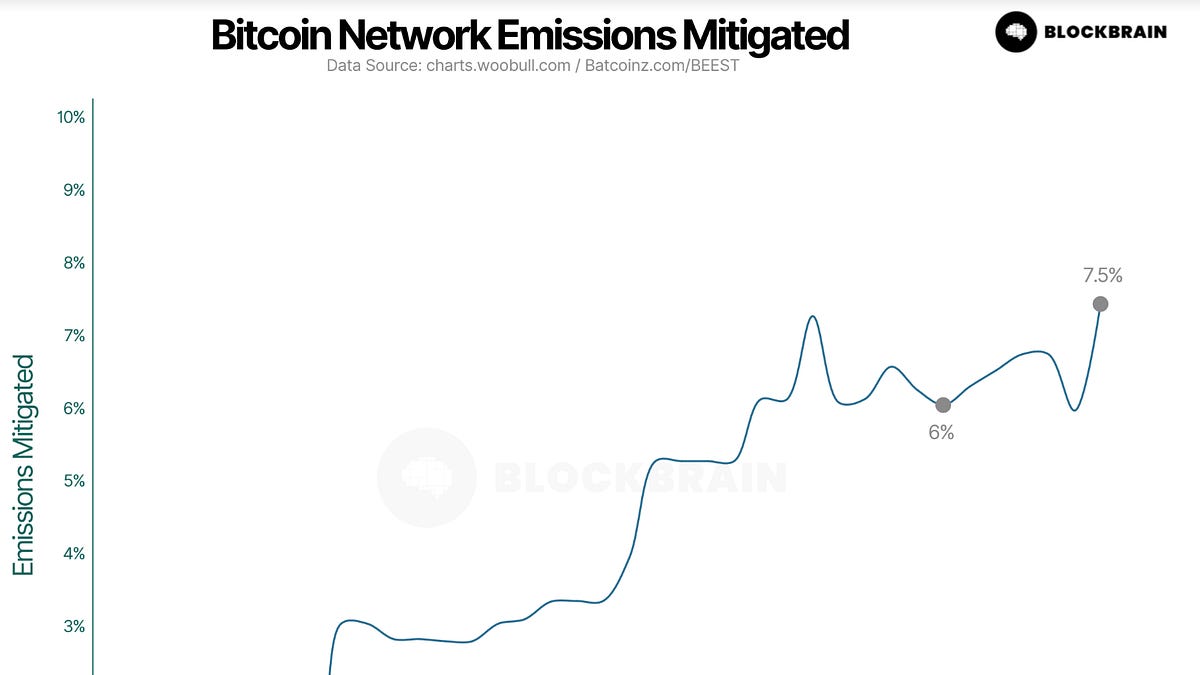
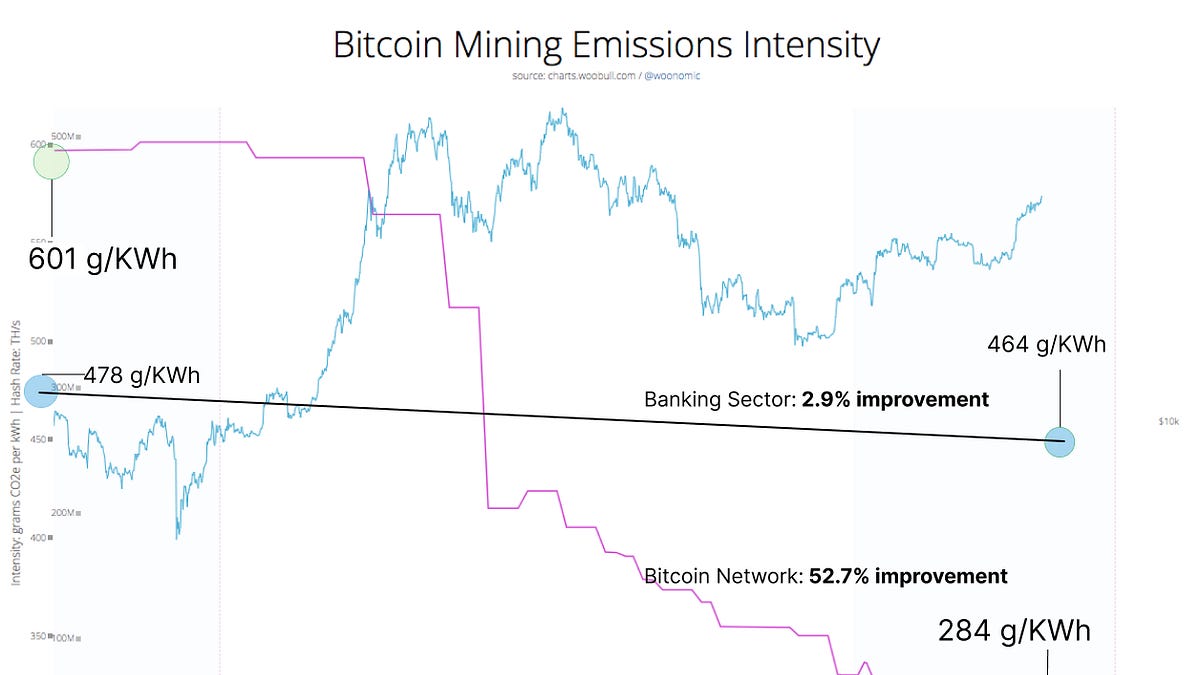
Bitcoin now uses 54.5% sustainable energy, the highest of any global industry
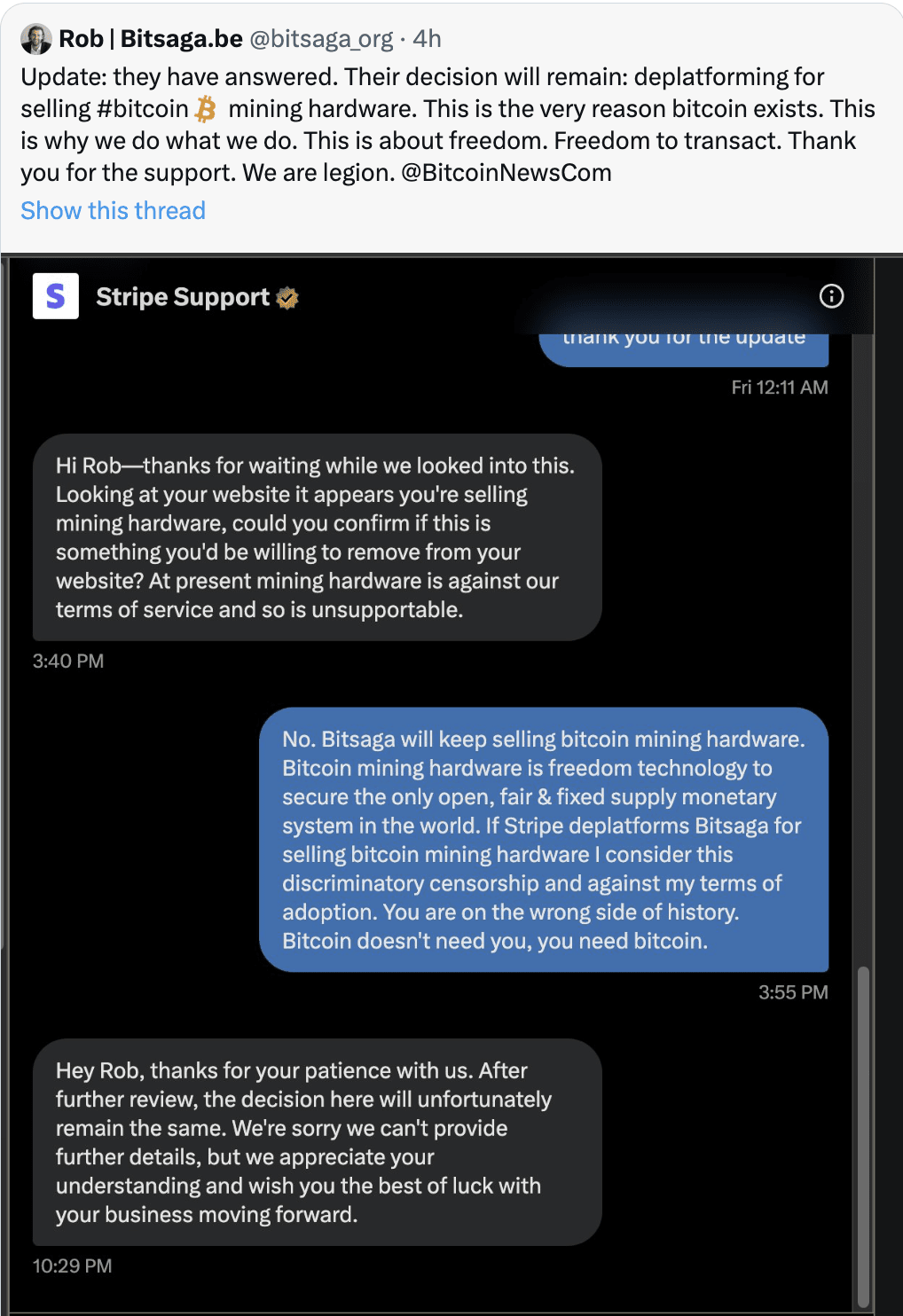
Rob @ Bitsaga: Deplatformed for selling Bitcoin mining hardware
The #Bitcoin ESG Forecast issue # 3 is out
Featuring:
📈New All Time High for sustainable energy
📈New All Time High for methane mitigation
✅ Stories of hope from people using Bitcoin mining
Check your spam filters and inbox
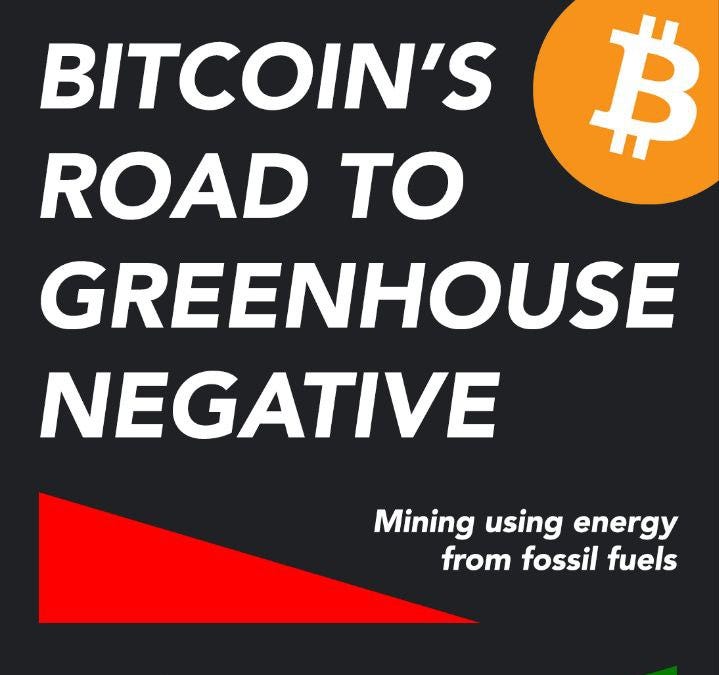
Issue #003: One red, three green
Dear subscriber,
2nd positive article on bitcoin from Financial Times in as many months.
Financial Times is moving from myth-perpetuating to myth-debunking mode
https://www.ft.com/content/59bb430b-a5b1-4469-b05a-482b951109a2I just about fell off my chair.
In what is a significant shift, The Financial Times just published its first cautiously pro-Bitcoin ESG article.
https://www.ft.com/content/b26b5af8-0cf1-424b-bafc-d2ce4760a28cf8-0cf1-424b-bafc-d2ce4760a28c 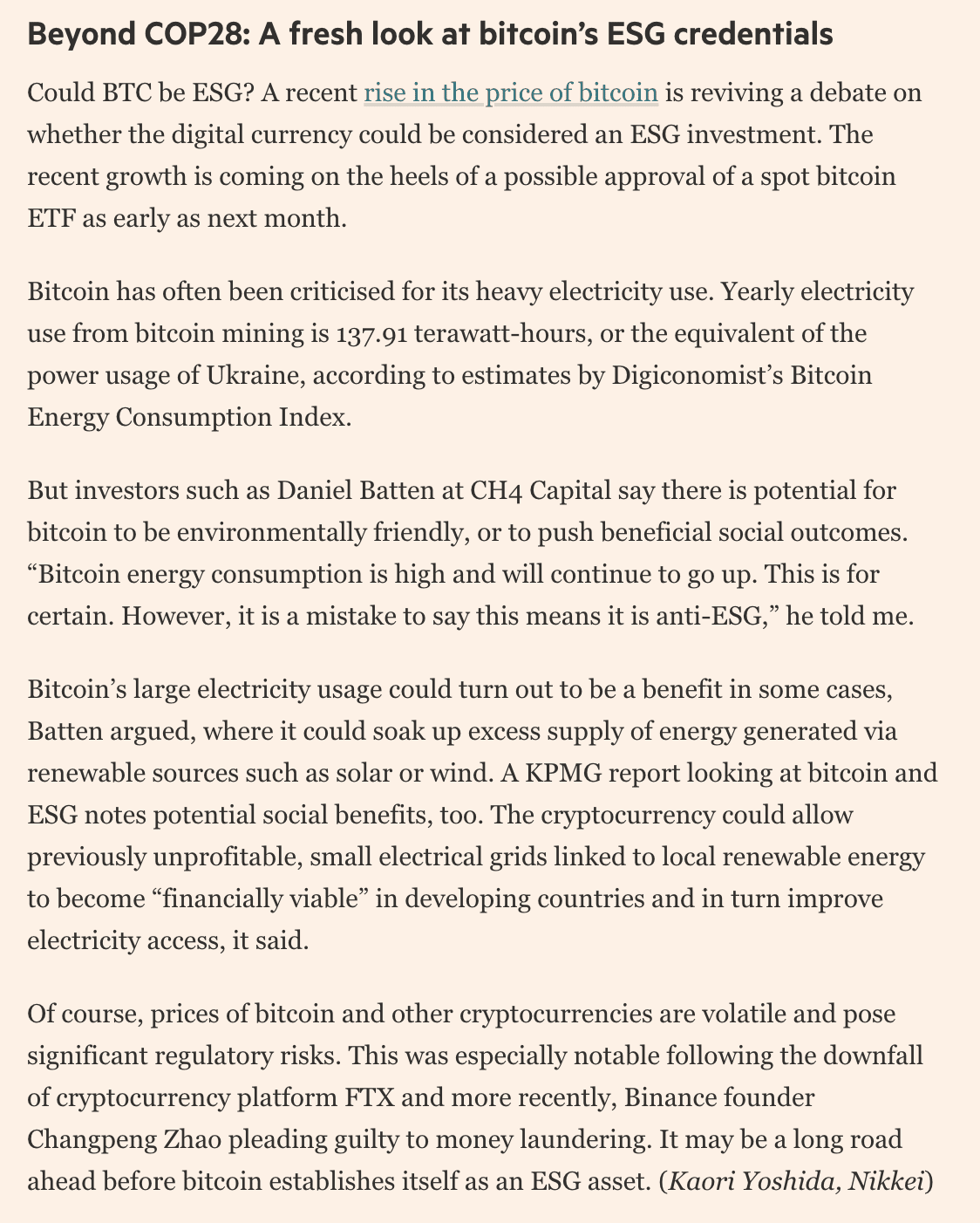

Nostriches, I need your help.
Every tweet I put out on X that has the word “substack” in it, I get crickets. Roughly 10% of the engagement of when I don’t!
I put together a newsletter format of my work recently. I did it because hyperbitcoinization requires a narrative shift in bitcoin and the environment.
There is $23Trillion in ESG investment funds that is getting curious about bitcoin right now. But unless they have good data on why Bitcoin is positive for the environment they can’t invest. If just 1% of these funds got deployed into bitcoin it would life Bitcoin’s market cap to 3x its current level.
So anything you can do here to spread the word freely without an algorithm suppressing content would help a lot, and also be a victory for Nostr
The newsletter is short, punchy, lots of pretty charts, free, and made to be shared by non-bitcoiners to help orangepill them.
Please subscribe, share on Nostr and encourage others to share and subscribe too.
🫡
DSB
Issue #002: All Time Highs
Dear subscriber,
The Bitcoin ESG Forecast is out Check spam filters for the email, or subscribe below Issue
#002: All Time Highs
Issue #002: All Time Highs
Dear subscriber,
My latest piece: yes, Bitcoin is actually already helping water security in one of the world’s driest nations. And it is on track to rinse and repeat this model.

Bitcoin Magazine
How Bitcoin Improves Water Abundance In Water Scarce Nations
Bitcoin can even fix water shortages in water poor nations. Yes, really.
First issue of the Bitcoin ESG Forecast is out !!
Issue #001: The Narrative Is Shifting
Issue #001: The Narrative Is Shifting
Dear Subscriber,
Bitcoin is useless 🙄

Here’s what I share with people who say “Bitcoin has not valid use other than speculative asset”
My first assessment of Bitcoin was "Speculative asset that does nothing useful but uses lots of energy."
Sound familiar?
What I learnt was that it was only my ignorance combined with me inability to imagine the lives of others living outside the West that had me believe this.
The reality is that Bitcoin is in the same pantheon as the smartphone and the Internet itself in terms of its utility. But unlike its predecessors, it helps people in the global South first - the West last.
That's probably why most people (like me) in the West initially fail to see its utility TO THEM, and therefore assume it has no utility TO ANYONE.
Bitcoin analyst Willy Woo estimates there are 100Million+ users of Bitcoin, rising exponentially. Here's a demographic snapshot of who they are and why they use it:
There are 1.2Billion people who are unbanked - 57% of them are women, 90% are people of color.
There are 4Billion people living under autocratic or semi-autocratic regimes, where the financial system can be used against them (eg: state freezing of bank accounts, censoring and surveillance of how you spend money)
There are 8.1M adult women in Afghanistan who are prohibited by law from opening a bank account, starting a business or receiving an income because of their gender
There are >300M people who's economies are experiencing hyperinflation (including Turkey, Lebanon, Argentina, Venezuela)
These are the people who see the utility of Bitcoin first. Not us in the West who take for granted our privilege, human rights, functioning banking system, 99%+ access to banking, and relatively low inflation.
You may be thinking "so what - how does Bitcoin help these people?"
It helps the unbanked, because you don't need a bank. A feature-phone (yes, like the one you had in 1999) plus some basic Bitcoin education is all you need to receive, save and pay. There's a financial revolution happening in Africa right now: the poorest in the world are leapfrogging the banking sector and going directly to Internet-native money (Bitcoin). This is why the continent of Africa is adopting Bitcoin faster than any other continent.
It helps people in autocratic regimes because they cannot be surveilled, censored, de-platformed or frozen by the State. This is why Nigeria is one of the biggest adopters of Bitcoin. It's driven by human rights activism.
It helps women in Afghanistan, because they can (and do) adopt bitcoin Lightening Wallets, which means state discrimination cannot deny them financial equity.
It helps those living with hyperinflation because it allows them to avoid 10 years of life saving being reduced to 1/2 its value inside a year.
That's why of the top 10 nations adopting Bitcoin
1. Top 2 nations are experiencing hyperinflation
2. 7 or the top 8 countries were colonised + have heavy IMF/World Bank loans
3. 8/10 are autocratic or semi-autocratic regimes
4. 7/10 from Africa, Latin America or SE Asia
To more than 1/2 the world, Bitcoin is the most useful technology in a generation.
Central bankers are really good at printing things that are not backed by anything
De Vries’ latest study on bitcoin mining water usage continues this tradition.
This personal story is about the surprising impact on results of dropping your attachment to results!
India played a vital role in my entrepreneurial journey. Only I didn't go to India, "India came to me".
One of the key reasons most Western approaches to sales, influence and pitching are incomplete and ineffective is that they are only just starting to grapple with something that has been understood in the East for millennia: Do not attach to the fruit of your actions.
Steve Jobs, the CEO of what became the largest company in the world by market capitalization, Apple, attributed much of his success to what he learned about influencing others, and himself, on an extended trip to India. When a young Mark Zuckerburg turned to Steve for advice when his company was going through tough times, Steve encouraged Mark to travel to India to spend time in an ashram. That trip proved pivotal to Mark’s success.
In early 2004, after months of trying, I’d finally turned a presentation to investors into a decision to enter due diligence.
I’d never even heard of due diligence before. It sounded serious and rigorous. It was. In terms of skillset, I was wholly unprepared for the specificity, directness and sharpness of the questions that a team of four investors would ask me during that meeting two weeks after our pitch. Fortunately, at the level of mindset, I’d undergone the perfect preparation.
As luck would have it, during that two-week gap between our successful pitch and the follow-up due diligence meeting, I was booked to spend two weeks organizing a tour and flying around the country with none other than Sri Sri Ravi Shankar (Sri Sri as he’s affectionately known). Sri Sri is a multiple nominee for the Nobel Peace Prize, and according to Forbes magazine, is one of the most powerful influencers in India. He’s what’s known in the East as a fully realized master. I was excited at the opportunity. I’d never been up close to a living master before, let alone had the chance to travel with one, talk to one and observe one offstage.
What I learned during that time was the power of presence and the power of non-attachment to the fruits of your labors, and about how to set strong intentions that were likely to come to pass. But more than that, I simply learned more about how to be.
On one occasion, I was in the kitchen preparing breakfast at the homestead where Sri Sri and his travelling entourage, including me, were staying. I suddenly became aware that someone was cooking next to me. I turned to my left, and it was Sri Sri himself
35 completely focused on frying up some zucchinis with spices. Another time he walked into the living area where a grand piano was stationed. He seated himself at the piano and began playing. And I mean playing, being playful with the piano – dancing his fingers like a mischievous cat – in a way that had us all laughing and wanting more.
What on earth does this experience have to do with pitching? Everything. By the time due diligence came, I felt happy for no reason. I wanted investment, but I trusted that whatever happened was for the best, and I simply wanted to do my best. I still remember vividly to this day being asked some of the bluntest questions I’d ever been asked about why I believed our company could succeed.
I remember knowing that as a rookie entrepreneur, I had no experience and no logical basis on which to give the investors an assurance that we would succeed. And yet, in that state of complete non-attachment, I seemed intuitively to know exactly what to say to every single investor present.
At the end – which only took 45 minutes – there was silence. I recall the look of surprise on the face of one of the investors as though he’d expected a knock-out in minutes. But the underdog was not only still standing, but ready to go another 12 rounds.
The lead investor paused, and said, “Well, it looks like you’ve given us no reason not to invest. Let’s have a final meeting in another two weeks where we’ll make our decision.”
That meeting went well. We got investment, created www.geneious.com and the company sold a few years back.
~~
Questions for you:
Do you notice it when someone who is trying to influence you is attached to a particular outcome?
Have you ever failed to influence someone because you were too attached to the outcome?
A short personal story about the human potential (Nostr only)
Back when legwarmers were fashionable, Sony Walkmans were new, and “Chariots of Fire” was top of the charts, I was a nervous twelve year old who dreaded school. I didn’t dread all of school, just one part that happened once a month, without fail and without escape.
As part of the uncommonly high emphasis our school placed on ‘oral language’ we had to prepare and recite a universally loathed three-minute speech to the class.
I reviled this day with all my thumping heart, stammering lips and clammy palms. Contracting a “rare illness” did not work - we simply had to do it upon our return; failing to rehearse didn't work – we were made to do it unprepared.
After three woeful speeches, something strange happened. In recounting it to other people today, it feels about as sophisticated as Thomas the Tank Engine achieving his dreams by pumping out “I know I can” – but this is the way it happened, so this is the way I’ll tell it.
Something inside me said, “The only reason you speak badly is because you fear speaking badly. But the reverse is also true. If you expect to speak well – you will.”
Spurred on by this mysterious message, for the next three days, I practiced sounding courageous with my unbroken voice, and practiced looking confident in front of my mum’s full-length mirror until I was out of time.
Speech day arrived.
I opened my mouth, made a joke and waited for the groans. A few people laughed. I was staggered. I’d never told a joke that someone had laughed at before in my life. My confidence grew.
Was my strategy working? Spontaneously, my voice started incorporating what I’d practiced. I noticed the audience smiling and listening attentively. That was a new experience!
This became like a virtuous upward spiral. Every time I noticed the connection with the audience deepen, my confidence in turn would go up, till by the end, the teacher could not believe that I was the same timid 11-year old.
One year later, despite overwhelming shyness, I had just spoken in front of 500 of my peers. In a state of post-speech calm, I heard with disbelief the words “Winner of the speech competition: Daniel Batten!”
The sequence of strategies I practiced back in 1982, however formative, had worked.
Nothing much had changed on the outside. I didn't have any more skills as a speaker. I hadn't learnt delivery. I hadn't learnt how to structure a compelling talk. That stuff is all the UI, important, but not as important as optimizing the underlying code. What I'd done all those years ago was to change a bit of internal coding architecture, so that I could operate without constraints.
Decades later, this would inform how I coached leaders, CEOs and founders of technology companies, and how I coached myself. Yes, we do a bit of work on the UI. But the most effective and immediate work is done refactoring our inner algorithms.
~~~
Question:
Where have you assumed you have a fixed potential based on previous experiences, whereas a small internal tweak in your internal coding (a tweak to a mindset, pattern of belief or intention for example) could allow you to experience new experiences?