Russia / Venezuela:
Signal's built-in censorship circumvention feature might be able to help if a connection is affected:
Signal Settings > Privacy > Advanced > Censorship circumvention (on)
“The harms of surveillance aren't merely spiritual and psychological – they're material and immediate. The commercial surveillance industry provides the raw feedstock for a parade of horribles, from stalkers and bounty hunters turning up on their targets' front doors to cops rounding up demonstrators with location data from their phones to identity thieves tricking their marks by using leaked or purchased private information as convincers:
The problem with Google's monopolization of the surveillance business model is that they're spying on us. But for a certain kind of competition wonk, the problem is that Google is monopolizing the violation of our human rights, and we need to use competition law to "democratize" commercial surveillance.”
The Citizens and Technology Lab at Cornell is running a survey for a project to study the privacy expectations and content moderation experiences of people who use encrypted messaging apps. https://surveys.citizensandtech.org/216171?lang=en
Every month, I set aside one afternoon to write and reflect about my work and the media space more broadly in a newsletter. It's very helpful as an exercise to pause and reflect. I strongly recommend it.
This month, I wrote about some similarities between audience research and investigative reporting in their purest forms. Some wishful thinking around platform and vendor data certainty, in research along with performative aspects of both fields, has made the two drift apart. In reality, they're actually quite similar.
Journalism is much simpler than we make it out to be. It only gets complicated when we seek to perpetuate systems that aren't of service. This is the real opportunity right now: to disentangle and rebuild.
A media project I consulted with is looking for a UX frontend designer with native Chinese skills to work full time on a new b2b media venture, remotely from anywhere ideally US, (just not Chinese mainland.)
A federal judge in New York ruled that Customs and Border Protection can’t search travelers’ phones without a warrant. The ruling theoretically applies to land borders, seaports, and airports — but in practice, it only applies to New York’s Eastern District.
I'm worried that by the time we're collectively ready to move beyond Big Tech walled gardens, most publications will already be locked into Threads as their primary platform.
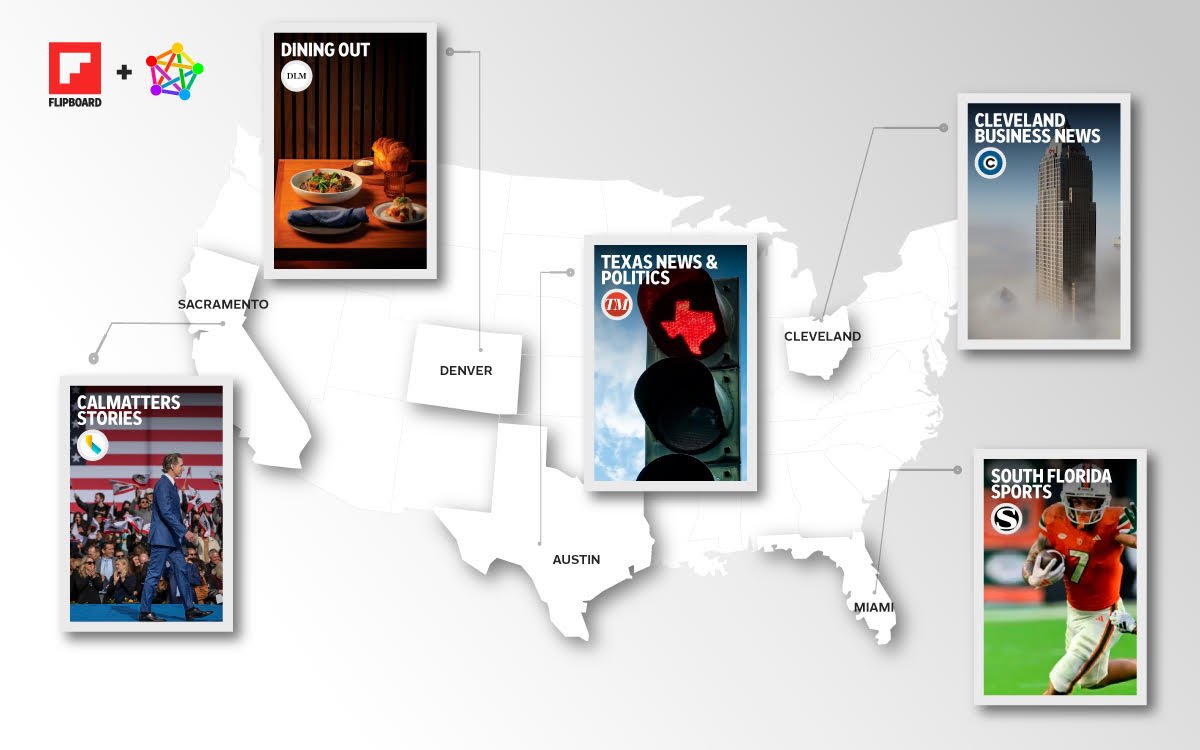
While Flipboard is great at bringing publications to the fediverse, relying on volunteers to do this for their favorite media outlets (like someone in New Jersey does for RFA) isn't sustainable and doesn't grant true ownership.
Could we develop a program that:
1. Establishes nostr identities for news organizations to claim when ready?
2. Utilizes RSS feeds or alternative sources to build a following?
3. Offers support to individual journalists and newsrooms?
4. Pursues web-of-trust verification and actively recommends accounts?
This could extend to other public utilities, such as transit systems or weather services.
Curious if in browser cached models could work as an alternative for on-premise hosting for simple republished tasks in terms of security or if that doesn’t make sense https://xenova.github.io/transformers.js/
“The democratization of publishing has had lots of good effects for the growth of media around the world, the biggest being the proliferation of previously under-represented groups to have a voice. But amongst the worst effects of it has been the perception that it is easy to be in media, have a career in media, raise money in media, build a company in media. “ http://rafat.org/post/180621846031