I did early voting today. I try not to be judgmental, but I wondered things like who the blue-haired, mask-wearing fat lady with cankles and the rainbow t-shirt voted for. Also the black lady who forced her son to come in and vote with her seemingly against his will. And the guy behind me who was asking for an absentee ballot for his mother-in-law in the hospital.
I wished I had gone in to vote wearing a garbage bag shirt.
J.D. Vance told Joe Rogan he uses Signal.
We should make encrypted messengers more mainstream. No good reason not to.
No matter what our newly revised legal system says -- no matter what is believed by Dems or even by Donald Trump -- two dudes cannot in reality marry each other.
Kamala should stay at home as a homemaker to serve and love her husband.
ATTN SMART #PRIVACY SOFTWARE DEVELOPERS (I’m not one of them):
We all know email is not the best solution for private communication.
Rather than patch up a weak protocol (like the good work Proton is doing), can other privacy technologies and protocols — like XMPP, Signal, etc. — be tinkered with and reshaped to look like email?
I’d like something that feels appropriate for long-form communications. I want it to look like email, with simple addresses (XMPP has this) and folders and tags — maybe even a calendar — and be available on mobile and desktop. Something where contacts and messages are kept private — stored on local devices and/or encrypted.
Surely others have considered this kind of email replacement. Right? Or is it impossible?
I like Nostr a lot.
But I think it’s important to remember that its censorship resistance does not necessarily go hand in hand with #privacy.
If our identities are known on Nostr, then “they” can see what we posted years ago (problem: sometimes we change our views, or we say stupid things that can be taken wrongly, or say things out loud that we shouldn’t). And Nostr is also a fine way to create a social graph of people — to see who’s connected to whom.
So wouldn’t it be wisest to have at least two different Nostr IDs? One for the public, and one that’s anonymous for more personal things we’d rather keep private? Otherwise, everything we say will indeed be part of our “permanent record” — something we don’t like when the government does it.
For instance, one might have all sorts of things to say in opposition to Crooked H., Barack Hussein, Brandon, and Commie-la — but would that person want all that tied to his name if it can all be used against him?
Am I thinking about this correctly?
If God were to revise the Ten Commandments so that even politicians could understand them, he would write, "You shall not misspeak."

Private digital communication through #encryption should be standard practice. It should be the default setting.
Whether we "delete" them or not, all SMS text messages are stored indefinitely and are able to be retrieved by others outside of your control. And how many times have we heard of people in the news getting in trouble after authorities comb through their email records?
Many claim they have nothing to hide -- that they aren't doing anything wrong. But having nothing to hide doesn't mean we have no right to privacy; and even though we may not be doing anything wrong, that doesn't mean others would agree (think in terms of certain "women's healthcare clinics," or supporting certain political candidates, or being at a certain place at a certain time that's perceived as a national threat, or using "suspicious" forms of cryptocurrency, or having any alleged "hatred" or "phobia," etc.
If a person lives in a society where there is freedom of speech, no one can guarantee those freedoms will always exist in the same way. Government regimes change over time, sometimes quickly.
If Alice wants to let Bob know she can't make it to dinner because the political or church meeting she's attending is running late, then she may not wish to broadcast that to the world. She may not want that on her permanent digital record, either. Her political or religious views may even change later. She has that right -- the right to #privacy.
We already have user-friendly tools for private digital communications. We should be using them regularly.
For example, here are just some of the ways a person can reach out to me with a reasonable assurance of privacy:
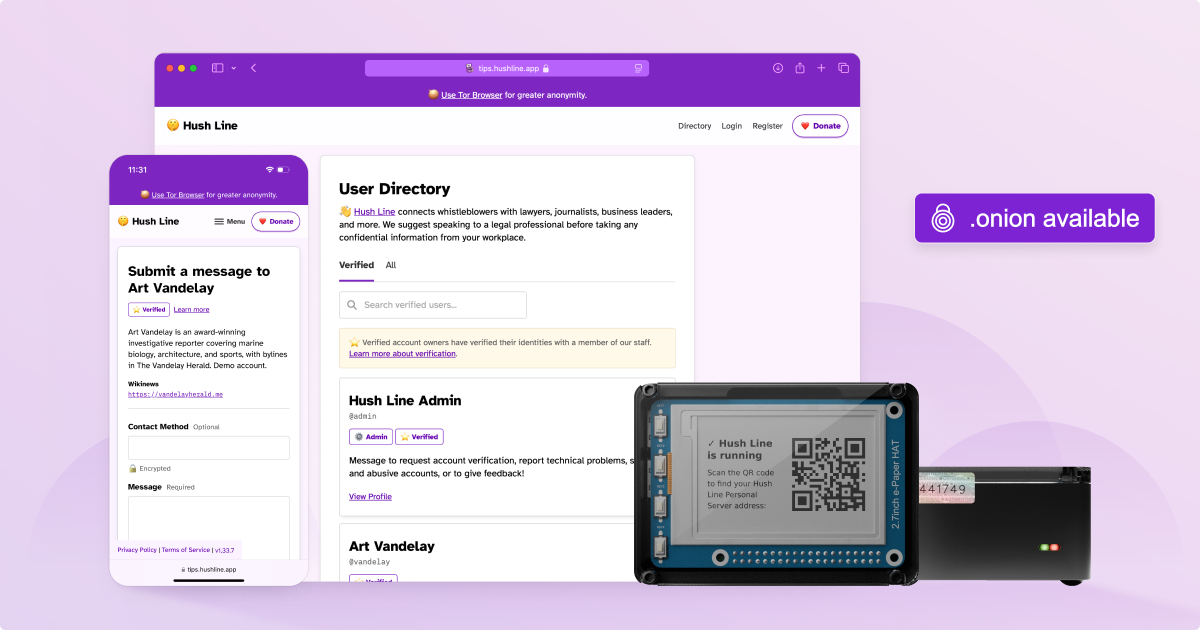
🤫 Hush Line
An open-source whistleblowing platform for organizations and individuals.
Just now checked in for my annual physical checkup -- though it's been several years for me.
I couldn't help but notice that the check-in desk, where the snacking receptionists are, is littered with bags of candy and Doritos and cans of Coke.
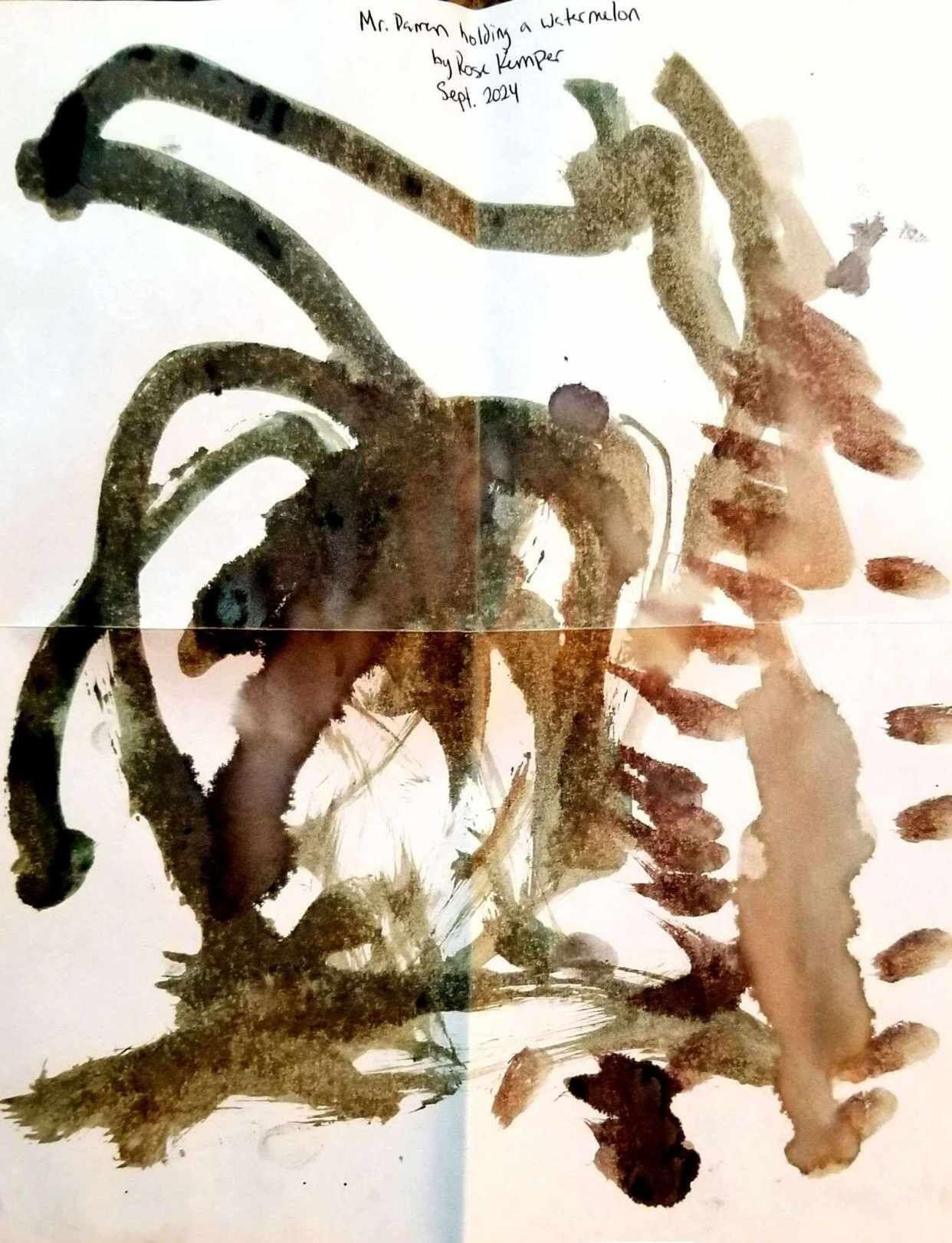
This artistic rendition of a real photo comes from my 3-year-old goddaughter. It is entitled "Mr. Darren Holding a Watermelon."
Would you welcome any police officer or government official to come into your home anytime, unannounced, to see the receipts of things you’ve purchased? Maybe to search through your old shoebox of letters and pictures you received from your wife or your parents? Or perhaps to go through your calendar, your to-do lists, or communications to and from your church or political party?
If not, WHAT DO YOU HAVE TO HIDE?
But if you do value that kind of #privacy, why do you not…
* use encrypted messengers, like Signal, SimpleX, Session, or XMPP-based messengers?
* ditch Gmail and replace it with an encrypted email provider (if you must use email), such as the easy-to-use Protonmail?
* store your digital photos on local drives, or on encrypted cloud services like Proton Drive, PCloud, or other cloud solutions like using Cryptomator?
* ditch popular social media like Facebook, and replace it (if you must) with privacy respecting social media, such as Mastodon, Nostr, Bastyon, or even Gab, Bluesky, or MeWe?
* stop using Office 365 and use the free LibreOffice suite?
* get rid of Instagram and share pics on Pixelfed?
* try using free and open-source Linux on the desktop instead of the ad-infested spyware called Microsoft Windows?
There are so many better choices you can make for your digital activities.
Start taking baby steps toward discovering freedom. Small changes are painless, and you’ll never miss out or look back.
The very best things you can do is go have fun with your friends in person, and go read a book.
Touch some grass and pray.
I miss listening to Rush Limbaugh.
I read a blog post in which the atheist writer said, "Basically I think after you die, nothing else happens. You do just turn into dust."
That leads me to ask, How can thoughts turn into dust? What about your love, your intelligence, your reason, your will? Our spiritual realities can't become physical dust. If they didn't come from dust, they can't return to dust.