Susie Violet's avatar
Susie Violet
npub1hwgw0uznr49t4gullpgfz4m5xnakl5a0l88m3k382xv7ys0tfmlsd503sg
npub1hwgw...03sg
Bitcoin Journalist
Susie Violet's avatar
Susie 9 months ago
We are throwing away clean energy while bills keep rising. Bitcoin mining can be a 24/7 buyer of last resort, turning wasted power into revenue, stabilising the grid and lowering bills without taxpayer subsidies. We’ve told the government and National Grid’s Future Energy Scenarios team. They aren’t listening. Read our paper on Bitcoin Mining as a Demand Side Flexible Response: https://img1.wsimg.com/blobby/go/aea8e937-fd18-400f-afd9-c3513112c757/downloads/d3850229-208c-4385-9b86-2e82fd55cc6c/UK%20Power%20Grid%20Bitcoin%20Mining%20as%20a%20Demand%20Side%20.pdf image
Susie Violet's avatar
Susie 9 months ago
Back from Baltic Honeybadger and feeling more inspired than ever. I moderated the State & Bitcoin panel and spent time with brilliant builders and educators tackling real problems and turning them into practical solutions. What struck me most is that we are all championing bitcoin in our own ways yet united in purpose. If you want signal you will find it at Baltic Honeybadger. @Hodl Hodl ⚡️
Susie Violet's avatar
Susie 10 months ago
When did criticising policy make you a target of the state? Why is a secret government unit policing public opinion? What exactly is happening behind the scenes in government? A secretive government unit, empowered by the Online Safety Act, is quietly flagging and suppressing online criticism of immigration policy. It operates behind closed doors. It is unelected. It is unaccountable. And it is being used to control the narrative under the guise of safety. A front page Telegraph exposé, titled "Exposed: Labour’s plot to silence migrant hotel critics"reveals disturbing details . https://www.telegraph.co.uk/news/2025/07/31/exposed-labour-plot-silence-migrant-hotel-critics/ The article uncovers that a secretive Whitehall unit called NSOIT (the National Security and Online Information Team), formerly known as the Counter Disinformation Unit, has been used by Labour ministers in the Department for Science, Innovation and Technology (DSIT) to flag and monitor social media posts that criticised migrant hotels, asylum seekers, or raised concerns about “two-tier policing.” According to internal government emails dated August 3 - 4, 2024, during the peak of the Southport riots, officials actively flagged posts with “concerning narratives,” warning that they might inflame public tensions. These posts were then forwarded to platforms like TikTok, many of them labelled as urgent, despite simply reporting factual information such as hotel locations or referring to asylum seekers as “undocumented fighting-age males”. One flagged example involved a user sharing a Freedom of Information (FOI) rejection letter regarding migrant hotel sites. Another was a video captioned “Looks like Islamabad but it’s Manchester,” flagged for fuelling racial stereotypes, yet still not unlawful under current speech laws. Although the government insists it did not request content removals, civil liberties advocates, including Big Brother Watch and the Free Speech Union, argue that this behaviour amounts to censorship of lawful dissent, carried out by unelected officials with no statutory oversight, using the infrastructure created by the Online Safety Act. This has the fingerprints of the 77th Brigade all over it, covert monitoring, narrative control, and a quiet war on the public's right to speak freely. This is not safety. It’s censorship and control.
Susie Violet's avatar
Susie 10 months ago
The newly released White House Digital Assets Report represents a clear policy shift. For the first time, Bitcoin is treated as something distinct, quoted, cited, and understood on its own terms. Satoshi is referenced, the whitepaper is cited, and Bitcoin is positioned as the foundation of the digital asset ecosystem. The report outlines Bitcoin’s peer-to-peer structure, its operation without intermediaries, and its role in financial innovation. It goes further than past U.S. publications in explaining what sets Bitcoin apart from the wider crypto sector. It also mentions the Strategic Bitcoin Reserve. While details remain limited, the fact that Bitcoin is being considered a strategic asset, separate from other digital assets, insicates a clear shift in policy tone. For Bitcoiners, this is progress. The framing is more deliberate. The tone is more respectful. And the message is clear: Bitcoin is being taken seriously. The groundwork is laid. What matters now is whether policymakers engage with Bitcoin on its own terms and begin treating it as a serious strategic asset. Meanwhile, in the UK, spot Bitcoin ETFs remain unavailable, and Economic Secretary Emma Reynolds has dismissed the idea of a national Bitcoin reserve: “We don’t believe that’s the right approach for our market… that’s not the path we plan to take.” They say when the U.S. acts, the rest of the world follows. Let’s hope that’s true for the UK, because Bitcoin offers the kind of hope we badly need in a dysfunctional, collapsing system. Read the report here:
Susie Violet's avatar
Susie 10 months ago
The Bank of England and Treasury are costing UK taxpayers eye-watering sums, quietly burning through over £85 billion with £130 billion more on the way. No debate. No scrutiny. Just a stealth bailout of bad bond bets, and we’re footing the bill. The Bank of England is offloading government bonds (gilts) bought during QE instead of holding them to maturity. With gilt prices down, every sale locks in a loss. These losses will soon overtake annual debt interest payments, which are already nearing record highs. These sales flood the market and drive yields up, raising the UK’s borrowing costs. https://www.reuters.com/world/uk/bank-england-poised-slow-qt-after-rise-yields-2025-07-28/ Analysts estimate that simply letting bonds mature instead could save £10–13 billion per year. https://www.ft.com/content/45a441c9-26e0-4de3-b985-faafc5968a49… Though framed as monetary policy, the Bank’s actions have major fiscal consequences. Losses are indemnified by the Treasury, meaning taxpayers cover the bill, with minimal parliamentary scrutiny. They call it monetary policy. What it looks like is economic vandalism rubber stamped in Westminster. This deserves real scrutiny. Where is Parliament? Image credit: @Dominic frisby image
Susie Violet's avatar
Susie 10 months ago
Trump tells Starmer to axe inheritance tax on farms. But the cracks run deeper: soaring debt, collapsing margins, rural land being sold off. Bitcoin is a practical lifeline for farmers. See my Forbes article on the Westminster farmers’ protest, where I explain how Bitcoin can build financial resilience, support rural livelihoods, and restore independence.
Susie Violet's avatar
Susie 10 months ago
“I do find this all fascinating. I don't think we have heard the last of it. This is gonna be the thing of the future!” - Ali Miraj, LBC Today I joined Ali on LBC to talk about Bitcoin including the GENIUS Act, Elizabeth Warren’s concerns, and growing interest from pension funds.
Susie Violet's avatar
Susie 10 months ago
Trump plans to open Bitcoin access to American pensions, unlocking a $9 trillion pool of capital. Just 1% = $90 billion. Then when you look at global AUM which is around $115 trillion you start to see the scale of where this could go. Larry Fink said that 2–5% allocations from sovereign and institutional funds could potentially push Bitcoin to $700K+. Everything’s bleeding into Bitcoin, pensions, ETFs, corporates, even countries. But in the UK? We still can’t buy a spot Bitcoin ETF. And financial advisors still can’t recommend it. 🤨 https://www.ft.com/content/07906211-5ab8-4917-bcad-5397c0bc3170
Susie Violet's avatar
Susie 10 months ago
Two years ago, I warned in City AM that the UK's Online Safety Bill risked undermining privacy and paving the way for government overreach into our digital lives. Today, that concern feels more urgent than ever. Last month, the EU Commission released its ProtectEU roadmap, outlining plans to provide law enforcement with access to encrypted data by 2030. This is not about targeting specific suspects. It is about building the legal and technical infrastructure for mass surveillance. Big Brother Watch have revealed that live facial recognition systems deployed in UK cities are wrong nearly 9 out of 10 times, scanning innocent people without their knowledge or consent. This is already happening in our streets, at stations, even at protests. Now imagine that biometric surveillance linked to a centralised digital currency. Imagine every payment, location, contact and movement tracked, stored and correlated. This is not theoretical. We risk building a society where privacy is gone, autonomy is restricted, and control is centralised in the name of convenience and safety. The combination of decrypted messaging, facial recognition, CBDCs, and mandatory ID checks and full KYC creates a full spectrum surveillance regime. A system where dissent is not crushed by force, but quietly discouraged through constant surveillance. What’s at stake is freedom of thought, movement and expression. We should be defending them, not trading them for the illusion of safety. Once this infrastructure is in place, it is rarely rolled back.
Susie Violet's avatar
Susie 11 months ago
Big Brother Watch has repeatedly warned that the UK is quietly creeping into a surveillance state. Live facial recognition is being deployed across streets, train stations, shopping centres and even at public protests. But this technology is not just targeting criminals. It is scanning millions of innocent people without their knowledge or consent. False alarms with real consequences Studies show that the vast majority of facial recognition matches are false. According to Big Brother Watch, in 80 deployments across the UK, 89.7% of alerts were false positives. In London alone, 150 out of 173 matches by the Metropolitan Police were incorrect, resulting in an error rate of nearly 87%. In some cases, people were stopped, searched or fingerprinted as a result. These mistakes are not harmless. They are invasive, humiliating and difficult to challenge. https://bigbrotherwatch.org.uk/wp-content/uploads/2023/05/Biometric-Britain.pdf It is all connected Facial images from passports, CCTV, phones and even social media are increasingly fed into large government and private databases. Big Brother Watch has raised concerns that a digital pound or central bank digital currency would allow the state to track every payment in real time. Combined with facial recognition and phone surveillance, this creates a fullmap of your movements, your spending and your associations. Your phone is not private Every step we take with a smartphone in our pocket feeds data to corporations and authorities. Location, biometrics, browsing history and more. If that is tied to payment systems and real time identity scanning, we move closer to a system where everything we do can be watched, recorded and judged. Know Your Customer (KYC) rules are already mandating identity checks for basic services. This is not theoretical. It is happening now. Where does this lead? The future we are heading toward is one of forced compliance. A world in which you are monitored constantly. In which you are guilty until proven innocent. In which dissent is quietly suppressed by the knowledge that you are being watched. We are at a turning point If we do not push back, we risk building a society where privacy is gone, autonomy is restricted, and control is centralised in the name of convenience and safety. This goes far beyond retail surveillance. It marks the steady build up of a digital infrastructure designed for monitoring and control. It's 1984 George Orwell warned of a future where every move was watched, every word monitored, and every thought shaped by fear. But even he did not imagine a world where your money could be used to control you. With facial recognition and CBDCs combined, we are building something even more invasive than Orwell foresaw, a system where surveillance is not just constant but transactional, embedded into the very fabric of daily life. When every face is scanned, every step tracked, and every payment recorded, we are not living freely. We are living under watch. Thank you to Big Brother Watch for continuing to shine a light on these issues and holding power to account.
Susie Violet's avatar
Susie 11 months ago
Russia’s new ruble backed stablecoin A7A5 has quietly moved more than $9.3 billion in just four months. It is being used to convert rubles into USDT, bypassing Western sanctions via offshore rails. It’s an expected workaround. In my 2023 article for City A.M., Can BRICS build something with Bitcoin? I discussed whether countries like Russia, China, and Brazil might one day adopt a neutral, open monetary standard rather than trying to replicate fiat in new digital forms. A7A5 shows the BRICS bloc is exploring alternatives to the dollar. But it is not building on openness, neutrality, or long-term resilience. Bitcoin is all of those things. A7A5 is a centralised digital IOU, processed through intermediaries. This is not true de-dollarisation. It is a centralised workaround that functions like a CBDC in disguise, without transparency or trustlessness. So why does it matter? Because Russia has already signalled interest in using Bitcoin for cross-border trade. Finance Minister Anton Siluanov confirmed in December 2024 that Russia is using Bitcoin in foreign transactions. Putin has said crypto has “a right to exist” and could be useful for settlements. A7A5 might not just be a workaround. It could be a stepping stone. By normalising crypto-based trade and softening public resistance, Russia may be laying the groundwork for broader adoption of digital assets - including Bitcoin. The real solution does not require back doors. How long before Russia is using bitcoin? Full article: image
Susie Violet's avatar
Susie 11 months ago
I love ₿itcoin. 🧡
Susie Violet's avatar
Susie 11 months ago
Today, I'm heading into the Roxom studio in London’s Soho to start regular shows on Bitcoin, current affairs, UK policy, and to interview key voices in the space. This is a hugely exciting opportunity and a perfect synergy with my work as CEO of Bitcoin Policy UK and as a journalist. Bitcoin adoption in the UK is happening. ⚡️ image
Susie Violet's avatar
Susie 0 years ago
The UK is pricing out innovation with bloated compliance and unclear rules. Startups are being squeezed out while only the largest firms can afford to stay. Regulators failed to act on industry advice. Companies are leaving, growth is hindered, and we’ve lost any chance of a second-mover advantage. The real question is whether we’ll ever catch up. How did the UK, once a global leader in financial services and computer science, fall so far behind?
Susie Violet's avatar
Susie 1 year ago
Most people don’t find Bitcoin through marketing. They hear it from a friend, fall down a rabbit hole, or get wrecked on something else first. So, how do you market Bitcoin to the masses? 27 May | 12:30 to 1:00 pm | Genesis Stage I’ll be in Vegas for Bitcoin 2025, hosting this panel. This one’s about community, clarity, and cutting through the noise. image
Susie Violet's avatar
Susie 1 year ago
KYC doesn’t just put your data at risk; it puts people at risk. Hackers recently demanded $20 million in Bitcoin from Coinbase, threatening to leak sensitive customer data. While no passwords or private keys were accessed, the attackers obtained full names, addresses, contact details, partial Social Security and bank account numbers, and identity documents. This is the kind of data that can be weaponised for identity theft, fraud, or worse. This is exactly the kind of risk I raised on the compliance panel at the Financial Times Digital Assets Summit last week. While KYC and compliance frameworks are presented as security features, they often do the opposite. They create massive, centralised honeypots of personal data that can and do get breached, sold, or exploited. We’ve seen what can happen when that data gets into the wrong hands. Earlier this year, David Balland, the co-founder of Ledger, was kidnapped along with his wife. His captors cut off one of his fingers and sent it to a business associate to demand crypto ransom. He was rescued by French special forces, but the message was clear: real-world consequences are now linked to digital identity exposure. We need better solutions that don’t force users to sacrifice privacy and safety for access. Compliance shouldn’t come at the cost of security.
Susie Violet's avatar
Susie 1 year ago
Bitcoin was born as freedom money. Decentralised, borderless, and immune to state control. But is that ideal being flipped on its head? Are a growing number of institutional players backed by governments inflating Bitcoin’s value not as a currency of the people but as a Strategic Reserve Asset to prop up the very system it was built to escape? Is the goal to create artificial demand for U.S. dollars and treasuries through stablecoins backed by U.S. debt? Stablecoins are lifelines for many, but what is the real cost? Will certain stablecoins become some of the largest holders of U.S. treasuries, indirectly funding U.S. policy while serving as the gateway to Bitcoin? By linking Bitcoin to stablecoins and those stablecoins to U.S. treasuries...has a pipeline been created to inflate Bitcoin, attract capital, prop up dollar demand, and sell more debt? Is it ironic that the asset created to resist fiat is now being used to save it? On the day Trump was inaugurated, I published this article. Centralisation is a threat. Are we paying close enough attention? image
Susie Violet's avatar
Susie 1 year ago
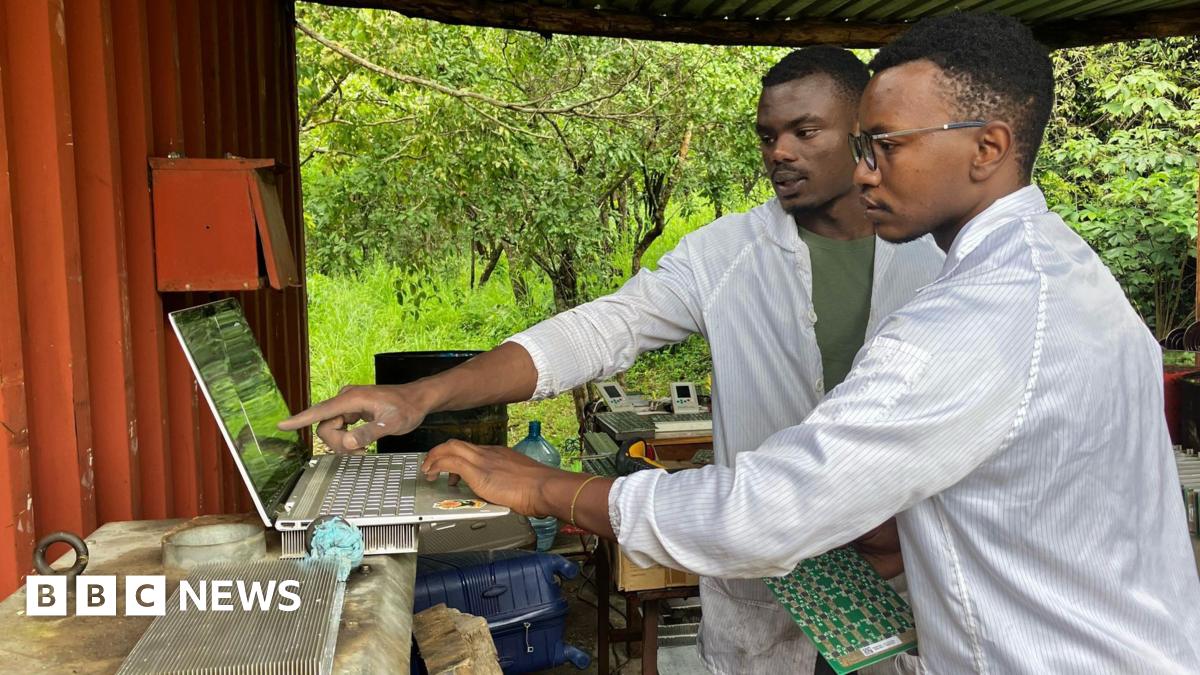
A rare, well-researched positive article on Bitcoin by the BBC and it’s a good one. It covers: - Real-world impact in rural Africa - Wasted renewable energy put to use - Economic boost via electricity access - Profitable and sustainable model by Gridless - Ambitious plans to expand clean energy powered by Bitcoin More of this, please BBC.