nym's avatar
nym
nym@primal.net
npub1hn4z...htl5
nym's avatar
nym 1 year ago
Snowdrop OS - my operating system from scratch, in assembly language Snowdrop OS was born of my childhood curiosity around what happens when a PC is turned on, the mysteries of bootable disks, and the hidden aspects of operating systems. It is a 16-bit real mode operating system for the IBM PC architecture. I designed and developed this homebrew OS from scratch, using only x86 assembly language. I have created and included a number of utilities, including a file manager, text editor, graphical applications, BASIC interpreter, x86 assembler and debugger. I also ported one of my DOS games to it. After all, what kind of an operating system doesn't have games? The Snowdrop OS and the apps are distributed as both a floppy disk (1.44Mb) image, as well as a CD-ROM image. The images contain the following, all programmed from scratch: - a boot loader which loads the kernel into memory - a kernel which sets up interrupt vectors to be used by user apps, and then loads the startup app - user apps, including a shell (command line interface), utilities, test apps, and aSMtris, my Tetris clone Snowdrop OS can also be installed to a hard disk - prompting the user to do so during boot - if it detects one. I hope that Snowdrop can serve other programmers who are looking to get a basic understanding of operating system functions. Like my other projects, the source code is fully available, without any restrictions on its usage and modification. ![](https://m.stacker.news/74559) ![](https://m.stacker.news/74558) originally posted at
nym's avatar
nym 1 year ago
Google's official URL shortcut is compromised g.co, Google's official URL shortcut (update: or Google Workspace's domain verification, see bottom), is compromised. People are actively having their Google accounts stolen. Someone just tried the most sophisticated phishing attack I've ever seen. I almost fell for it. My mind is a little blown. - Someone named "Chloe" called me from 650-203-0000 with Caller ID saying "Google". She sounded like a real engineer, the connection was super clear, and she had an American accent. Screenshot. - They said that they were from Google Workspace and someone had recently gained access to my account, which they had blocked. They asked me if I had recently logged in from Frankfurt, Germany and I said no. - I asked if they can confirm this is Google calling by emailing me from a Google email and they said sure and sent me this email and told me to look for a case number in it, which I saw in the email string. I asked why it said important.g.co and she said it was an internal Google subnet. ![](https://m.stacker.news/74489) OK, so that can't be from a google.com email, right? It must be a spoofed email using g.co, which doesn't have DKIM / SPF turned on - right? Nope. ![](https://m.stacker.news/74490) ![](https://m.stacker.news/74491) originally posted at
nym's avatar
nym 1 year ago
nym's avatar
nym 1 year ago
API Size Matters One-size-fits-all doesn't apply to APIs. Instead, they come in all kinds of shapes and sizes. Even if it's true that during design time people try to come up with small APIs, over time they tend to grow. By size, I'm referring to the number of paths that REST APIs have, and not any other measure like the number of parameters, or the length of the responses. So, what can you consider a "normal" size for an API? ![](https://m.stacker.news/74196) originally posted at
nym's avatar
nym 1 year ago
A Look Back at 2024: F-Droid's Progress and What’s Coming in 2025 With 2024 now behind us, we wanted to take a moment to reflect on the growth and achievements we accomplished as a community last year, and celebrate the incredible support we received from the FOSS community throughout the journey. This year has been a milestone for us, with significant strides in decentralizing app distribution, expanding the F-Droid ecosystem, and solidifying our infrastructure. All of these advancements were made possible thanks to donations, grants, our volunteers and regular contributors. So thank you again to everyone who helped make 2024 another great year for F-Droid. Now let’s take a closer look at what we accomplished. One of the most important initiatives we worked on in 2024 was the continued development of our app decentralization efforts. Our aim is to make F-Droid a more robust and accessible platform, making further in-roads into the hold Big Tech currently has on app distribution. Building on the work we started in 2022, as a part of the Filecoin Foundation for the Decentralized Web grant, we continued to make substantial progress this year in providing developers and end-users with more options to distribute their apps through a decentralized, equitable and privacy-oriented process. The goal for this project is to enable individuals and organizations to mirror and distribute F-Droid apps in a community-driven fashion, reducing reliance on centralized services. This work ties into a larger vision of creating a truly open-source ecosystem for Android apps that is not governed by proprietary companies. In 2024 we completed the following infrastructure upgrades: - Broke out and overhauled core client logic around publishing and consuming repositories. - Made client logic into libraries to make it easy to embed repositories in any app that needs it. - Added support for mirroring repositories onto both IPFS and Filecoin. - Added support in F-Droid client to use mirrors and repositories hosted on IPFS and Filecoin. - Improved F-Droid client “whitelabel builds”. - Enhanced F-Droid client’s existing “nearby” and “app swap” capabilities. - Updated F-Droid’s Repomaker tool (for easy “point and click” curation and publishing of app repos) and add support for IPFS publishing. - Supported iOS apps and progressive web apps (PWA) as packages that can be shipped via repositories. 2024 marked the end of this grant period, however the tools, features and policies established within the scope of the grant, will continue to be developed thanks to donations and other funders who are committed to further decentralizing app distribution. originally posted at
nym's avatar
nym 1 year ago
Goodnight Nostr. Catch you on the flip side.
nym's avatar
nym 1 year ago
$47M Bitcoin wallet linked to Silk Road founder re-surfaces after a decade Conor Grogan, a Director at Coinbase, has identified 430 BTC distributed across various wallets potentially tied to Ross Ulbricht, the founder of the Silk Road marketplace. These Bitcoin holdings, untouched for over a decade, are estimated to be worth $47 million based on current market prices. In a Jan. 22 post on X (formerly Twitter), Grogan pointed out that these funds are not among the more than 100,000 BTC seized by US authorities during Silk Road’s 2013 shutdown.
nym's avatar
nym 1 year ago
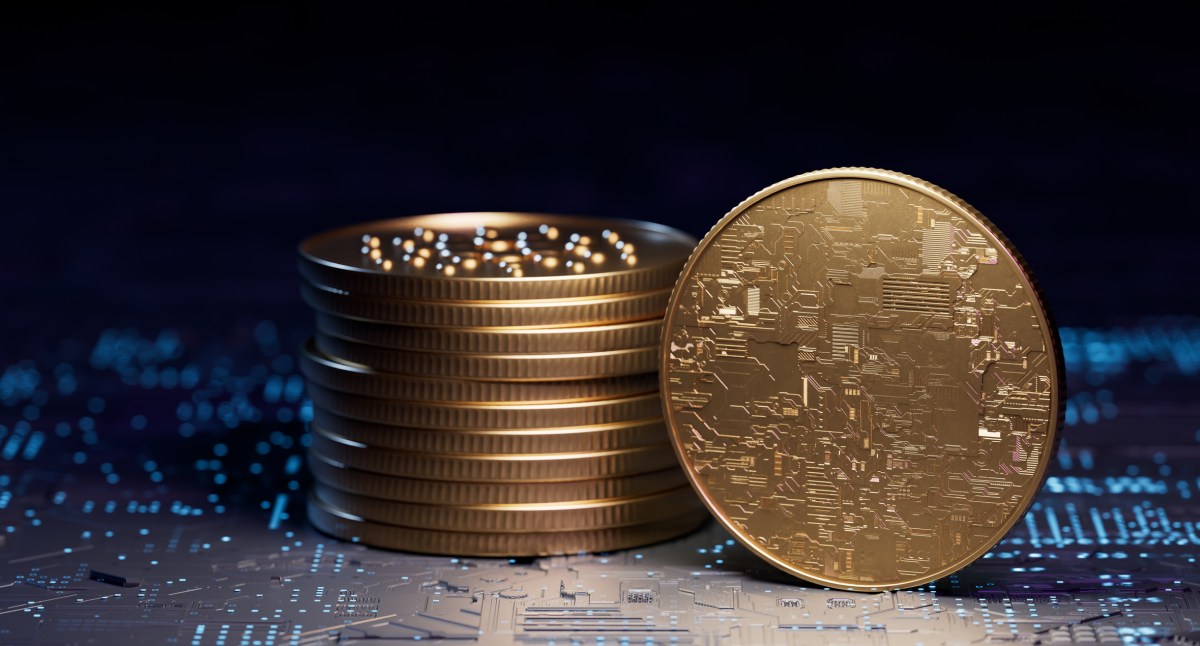
AngelList, CoinList partner to help crypto startups raise and manage funds Crypto is making such a big comeback that AngelList and CoinList are launching a way to help raise capital for crypto-specific founders using crypto coins. They are teaming up to launch crypto special purpose vehicles (SPVs) and crypto roll-up vehicles (RUVs), the companies shared with TechCrunch exclusively on Wednesday. The partnership, they said, will give users a way “to raise with syndicates and manage crypto startup investments the crypto way.” Syndicates are a group of companies or individuals that work together to jointly manage a large financial transaction. AngelList said the users will be able to fund crypto SPVs in stablecoins — currently for a $0 fee. “Investors can fund with USDC, which is easier for crypto investors who don’t operate via banks,” said CoinList CEO Raghav Gulati. USDC is the term for a digital dollar, also known as a stablecoin, that can be redeemed 1:1 for U.S. dollars as it is pegged to the dollar. Tokens can be distributed in kind to LPs and are compatible with “many non-U.S. token issuers and investors.” An integration with CoinList’s software is “coming soon,” the companies said. “The model is significant because investors receive tokens once they are available, instead of receiving cash returns, which is aligned with the crypto ethos of stakeholder participation and self-ownership of assets,” Gulati told TechCrunch. The crypto roll-up vehicles are designed to collect investments that a founder has raised for a particular round. The advantage, the companies said, is that startups don’t have to worry about “managing compliance for many stakeholders” at an early stage. “Crypto startups often seek to bring on many angel investors. With RUVs, dozens of angels who need to sign paperwork, send money, and get proper reporting on an ongoing basis can do so with AngelList Crypto RUVs,” Gulati said. Crypto’s acceptance in the mainstream investor world where AngelList belongs wavered during crypto winter. That’s when all things Web3 fell out of favor and industry bigwigs like Sam Bankman-Fried and Binance founder Changpeng Zhao were sentenced to jail. But between bitcoin hitting record highs and the Trump administration’s clear interest in it, crypto is poised to come back in vogue in broader tech circles. originally posted at