JL's avatar
JL
npub1cgmk...tnyr
I am not a number!
Dr. Mike Yeadon : The real problem of farmers - PART 2. Western governments, controlled by large corporations, are waging war against farmers. Vernon Coleman : "There are, sadly, farmers who still think that what’s happening to them is bad luck, bad weather, incompetent politicians, red tape, tariffs, bureaucracy, unfair taxation and so on." SUAVEK 09.01.26 #mikeyeadon #vernoncoleman
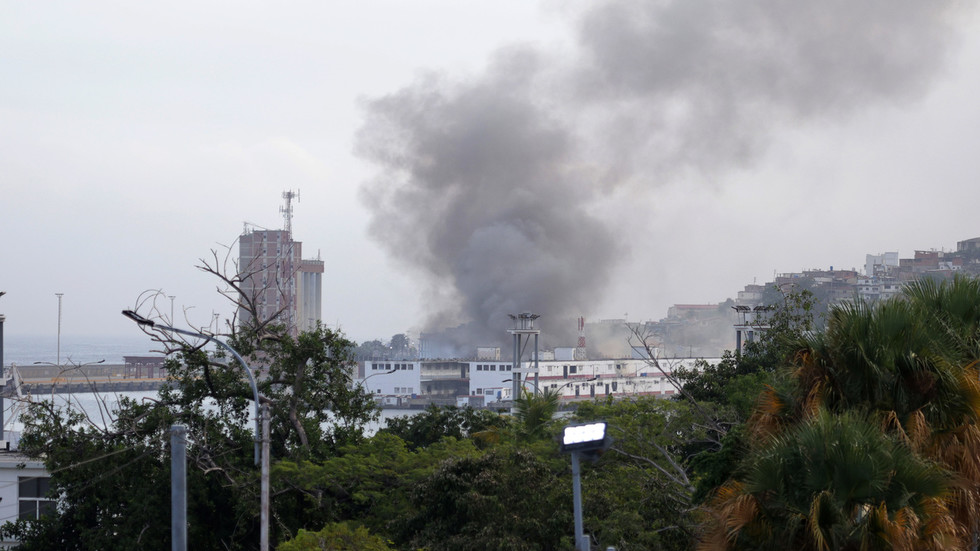
Col Doug Macgregor: US Bad Behavior, What Retaliation Could We Expect? Col Douglas Macgregor argues that U.S. interventions underestimate the realities of operating in hostile, complex environments—the “jungle”—where adversaries are armed, resilient, and deeply rooted. They warn that U.S. actions in places like Venezuela may fail and be eclipsed by a larger conflict with Iran. The discussion highlights Russian reactions to recent U.S. and Ukrainian actions (such as seizing or attacking tankers), citing a statement by Russian commander Apti Alaudinov. He frames U.S. behavior as openly hostile and lawless, asserting that Russia will never be left in peace and will respond decisively under Putin’s leadership. Alaudinov is portrayed as a powerful and symbolic figure: a Chechen Muslim commander loyal to Russia, representing a cohesive Russian state that blends national, military, and Islamic identities, with influence extending into the Middle East, Central Asia, and beyond. This cohesion, the speaker argues, contrasts with U.S. social fragmentation. The core warning is that Russia (and its partners) will respond asymmetrically—not necessarily with direct military confrontation, but through economic, financial, political, and regional actions across Eurasia and the Middle East. The U.S. is criticized as a transient, disruptive power that intervenes briefly, causes damage, and leaves without accountability—an approach that alienates allies and emboldens adversaries. Drawing on historical examples and Charles de Gaulle’s critique of U.S. leadership, the speakers argue that Anglo-American powers wrongly assume global dominance and define their interests as “the whole world.” This mindset, they conclude, is dangerous and unsustainable, and will eventually lead to serious blowback against the United States. Daniel Davis Deep Dive 08.01.26 #danieldavis
US Media Admits CIA Attacking Russia During "Peace" Talks While the United States government poses as “pursuing peace” with Russia regarding the ongoing war in Ukraine, it is now admitted that the US is overseeing a “supercharged” campaign targeting “Russian oil facilities and tankers” aimed at crippling Russia’s economy and its fighting capacity. The New Atlas 08.01.26 #newatlas
Censorship - PART 1. Dr. Mike Yeadon: If there are posts or pieces I’ve written on Substack that you’d want to access in the future, I recommend you download a copy or take screenshots. Uncovering the truth on the internet is becoming increasingly difficult. SUAVEK 08.01.26 #censorship #mikeyeadon
Vaccines, Wi-Fi and Autism: an evolving landscape of research Charting the converging pathways to neuroimmune disruption – in one of the most pressing and complex public health challenges of our time WORLD COUNCIL FOR HEALTH 07.01.25 #autism #vaccines #worldcouncilforhealth
China Readies For Military Confrontation With U.S. In Western Hemisphere Paul and Ken assess how the recent actions of the U.S. in Venezuela has led China to make decisions to defend its interests in the Western Hemisphere to include taking military action against the U.S. Sirius Report 07.01.26 #china #siriusreport
bitchat is a decentralized peer-to-peer messaging application that operates over bluetooth mesh networks. no internet required, no servers, no phone numbers. traditional messaging apps depend on centralized infrastructure that can be monitored, censored, or disabled. bitchat creates ad-hoc communication networks using only the devices present in physical proximity. each device acts as both client and server, automatically discovering peers and relaying messages across multiple hops to extend the network's reach. this approach provides censorship resistance, surveillance resistance, and infrastructure independence. the network remains functional during internet outages, natural disasters, protests, or in regions with limited connectivity.