Henrik Ekenberg's avatar
Henrik Ekenberg
hekenberg@iris.to
npub1uh0f...ehtg
Trader // Small cap investor Sweden
Henrik Ekenberg's avatar
Henrik Ekenberg 11 months ago
If you keep seeing losses or losing streaks as something "bad," you’ll never reach consistency. That mindset leads to twisting your rules, abandoning your strategy, and calling it “learning.” You tell yourself it’s an improvement. But it’s not. It’s just your fear of losing, dressed up as growth. 📉 There is no way to avoid losses. And as long as you react to short-term pain, you’ll stay trapped in a loop — constantly adjusting, constantly chasing, and never stable. Your real enemy is within: the part of you that believes it’s “doing the right thing,” when it’s actually just sabotaging consistency with misguided good intentions. 🎲 Randomness influences short-term results. So any “adjustment” you make based on short-term outcomes? That’s not an improvement — that’s being manipulated by randomness. The answer? 👉 Zoom out. 👉 Think long-term. 👉 Build a strategy you trust — and stick to it over a large sample size.
Henrik Ekenberg's avatar
Henrik Ekenberg 11 months ago
Market not in panic mode. Futures have small drop and vix future is falling. Read the tape. image
Henrik Ekenberg's avatar
Henrik Ekenberg 11 months ago
A pilot doesn't abandon the flight plan mid-journey just because the skies are quiet. Are you navigating the markets with your proven route, or are you just flying by the seat of your pants? (New Metaphors) Regard your trading strategy as that immutable flight plan—a route that has been rigorously tested and calculated for the highest probability of a safe arrival. You are the pilot in the cockpit. Your critical role is not to invent a new destination on a whim, but to execute the established plan, trusting your instruments to guide you through any weather. Don't deviate into uncharted airspace just because you've hit a stretch of calm and feel impatient. That is the quickest path into a storm. A pilot who ignores their flight plan becomes the single greatest danger to the journey, inviting a catastrophic crash. For a trader, that crash is your account hitting zero. Trust your instruments, follow the plan, and navigate with discipline
Henrik Ekenberg's avatar
Henrik Ekenberg 11 months ago
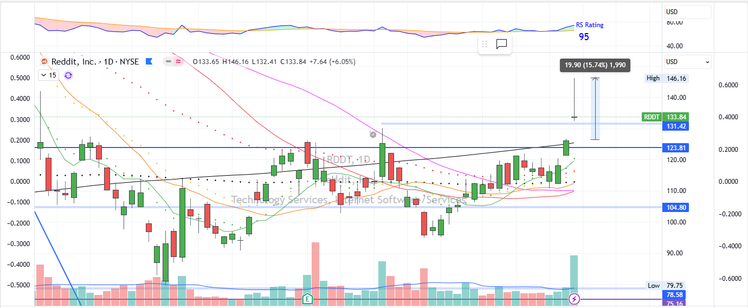
image Let's call yesterday what it was: RDDT was a textbook institutional distribution day. A massive gap up on a surge of volume that gets sold into all day, closing near the low? That's not a dip to buy. That's a giant red flag. The professionals used the excitement and the strength of the gap to unload their shares onto amateurs who were chasing the "good move." The stock is now guilty until proven innocent. The breakout has failed, and the chart is damaged. Here is your new task: Go find a chart of a stock that had a similar powerful reversal day. Analyze what it did over the next two months. Did it collapse? Did it chop sideways for weeks before setting up again? Study the price action of failure. You learn more from autopsies than you do from success stories. Stop looking for your next trade and start building a model book based on what price action is actually telling you. Want feedback on your charts? Feel free to send me your graphs via private message — I’ll be happy to share my perspective.
Henrik Ekenberg's avatar
Henrik Ekenberg 11 months ago
As organizations grow in size and complexity, there is a natural tendency to manage through proxies—indirect measures that stand in for actual results. This is a subtle but dangerous "Day 2" behavior. The most common and insidious proxy is process. Good process exists to serve customers, but if an organization is not vigilant, the process can become "the thing". The focus shifts from achieving a desired outcome to correctly following the prescribed steps #Northvolt failed on this
Henrik Ekenberg's avatar
Henrik Ekenberg 11 months ago
For the vast majority of market participants, the weekend represents a period of rest, a welcome respite from the relentless flow of quotes and news that defines the trading week. For the elite market professional, however, the weekend is transformed. It is not downtime; it is the most critical phase of preparation, where the foundation for the coming week’s success is meticulously laid
Henrik Ekenberg's avatar
Henrik Ekenberg 11 months ago
Trading or Betting? Right now, market conditions are so unstable that opening a trade feels more like placing a bet than making a calculated move. When volatility is high and direction unclear, discipline matters more than action. You don’t need to be in a trade every day. Sitting on your hands can be a strategy too. 📌 Reminder: Trade only when your edge is present — not just because the market is open.
Henrik Ekenberg's avatar
Henrik Ekenberg 11 months ago
The Tel Aviv Stock Exchange 35 Index dropped 1.5% at Sunday’s open, continuing last week’s 1.5% decline. Saudi Arabia’s Tadawul All Share Index fell 2.5%, while Egypt’s EGX 30 Index plunged 7.7%—marking its steepest drop in over a year. With regional exchanges closed on Friday, today’s sharp moves reflect a buildup of uncertainty and risk aversion heading into the new week.
Henrik Ekenberg's avatar
Henrik Ekenberg 11 months ago
Procrastination isn’t laziness—it’s a side effect of comfort. When your environment feels safe, your brain sees no urgency to act. That illusion of security kills momentum and delays growth.
Henrik Ekenberg's avatar
Henrik Ekenberg 11 months ago
Just listen to Market wizard or read about them and you will learn that. What sets elite traders apart from the pack? It’s not just motivation—it’s relentless action!
Henrik Ekenberg's avatar
Henrik Ekenberg 11 months ago
In casinos and financial markets alike, success hinges on maintaining a positive statistical advantage—or “edge”—over a sufficiently large number of trials. For casinos, the edge is built into the rules of each game; it is the mathematical assurance that, over millions of spins, hands, or rolls, the house will collect more than it pays out. For traders, an edge emerges from carefully constructed strategies—quantitative models, fundamental insights, or both—that offer a statistical expectation of profit over time. Yet, both realms must grapple with short-term variance (“luck” in the casino context, “drawdowns” in trading) and the potential for anomalous outcomes that defy expectations. In both environments, operators deploy rigorous statistical monitoring to distinguish ordinary fluctuations from genuine threats to their edge: cheating or mechanical errors in casinos; changing market regimes or model breakdowns in trading.
Henrik Ekenberg's avatar
Henrik Ekenberg 11 months ago
Imagine you’re a carpenter about to build a custom bookshelf. You don’t just grab wood and start hammering—you first measure every board, check the thickness of the shelves, note how tall and wide it needs to be, and ask: “Will it fit under that low ceiling?” In trading, your “bookshelf” is your model book—a collection of chart patterns, setups, and rules that you’ve measured, tested, and documented. You need to know every dimension of each pattern: How deep is the drawdown? How many days does it take to form? What market conditions were present? Without those measurements, you’re hammering blind. #trading
Henrik Ekenberg's avatar
Henrik Ekenberg 11 months ago
Price action and volume seem out of sync—do you see it the same way? Price Flat, Volume Up → Accumulation or distribution under the surface.
Henrik Ekenberg's avatar
Henrik Ekenberg 11 months ago
The true difference between successful traders and average ones? Successful traders show up and execute—even when they’re not motivated. Don’t get me wrong: inspiration and motivation are powerful tools. They help you push further and tap into your best. But they’re not always there. And when they’re not, discipline takes over. Consistency doesn’t come from feelings. It comes from commitment. How is your weekend screening doing?
Henrik Ekenberg's avatar
Henrik Ekenberg 11 months ago
Casinos don’t need to be right every time — they just need enough bets. Traders should do the same.
Henrik Ekenberg's avatar
Henrik Ekenberg 11 months ago
🔥 Engulfing Candles and Market Psychology: A Warning You Shouldn’t Ignore When the market—or an individual stock—drops so sharply that a single candle engulfs the previous 3 to 4 weeks of gains, it's not just another red bar on the chart. It’s a statement. A candle that wipes out multiple weeks of progress in a single move is the market rejecting recent optimism, news, or even the company itself. 📉 What Is an Engulfing Candle? In simple terms: A bearish engulfing candle is a large red (down) candle that completely covers the range of the previous candle—or several of them. When it engulfs multiple weekly candles, it's an even more powerful sign of reversal or breakdown. This usually means: Institutions are selling. Support levels are failing. Recent bullish sentiment is being completely overrun. 🚨 Why This Is a Major Warning Signal When a stock or index prints a down weekly candle that erases the last 3-4 weeks of gains, here’s what it tells you: Rejection of Narrative: The market is no longer buying the bullish story—whether it’s earnings, guidance, macro news, or momentum. Transition to Distribution: It’s a sign that smart money might be exiting quietly while retail investors are still hopeful. Psychological Shift: Buyers who were in profit are now flat or red. Fear replaces confidence. FOMO turns into panic. Potential Trend Change: It often marks the start of a deeper correction or downtrend—especially if it happens on high volume. 📊 Real-World Examples In 2022, many tech stocks had multi-week rallies off bear market lows. Then came one brutal red week that engulfed all progress—and those were often the top before new lows. During earnings seasons, you’ll sometimes see a stock gap up for 2–3 weeks, then drop 10%+ in one day, wiping it all out. That’s a rejection by the market of the bullish interpretation. 🧠 What You Should Do When You See This ✅ Step back: Don't rush to buy the dip. Wait for confirmation and stability. ✅ Check volume: Was the drop on unusually high volume? That’s institutional activity. ✅ Analyze sentiment: Were traders too bullish too fast? Often, this kind of reversal follows euphoria. ✅ Set alerts: Watch if price undercuts key support or if follow-through buying fails. 🎯 Final Thought When a candle swallows 3–4 weeks of bullish action, it's the market saying: "We changed our mind." This is not a time to argue with price. Listen. Watch. Protect capital. If you're patient, a clearer entry or trend will come. image
Henrik Ekenberg's avatar
Henrik Ekenberg 11 months ago
Imagine you're a casino. A casino doesn’t let emotions guide its actions — it doesn’t gamble, it plays the odds. You want to have an edge, just like the casino. That means having full control over your probabilities, knowing exactly when to accept a trade (take a bet) and when to stand aside. But if you keep jumping between systems, how will you ever know if you actually have an edge? 🔁 Without consistency, there’s no control. Without control, there’s no strategy. Do you want to act like the gambler or like the casino? The choice is yours.